Why a Commercial Lawn Care Business Is One of the Best Opportunities in the Green Industry
A commercial lawn care business is a professional service operation that maintains outdoor spaces for businesses, property managers, municipalities, and institutions — typically under recurring contracts rather than one-off jobs.
Here’s a quick snapshot of what makes it worth considering:
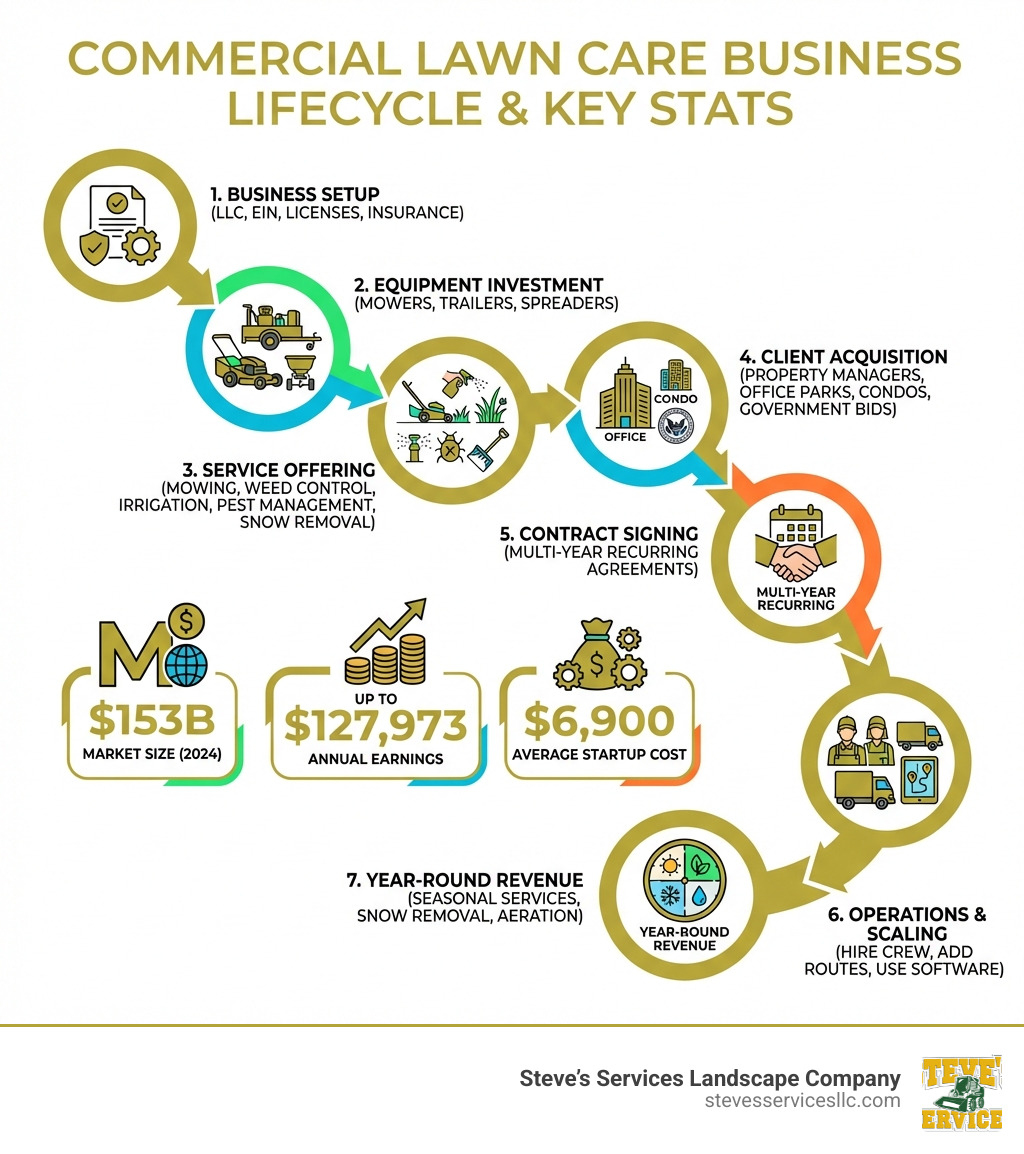
- Recurring revenue — Multi-year contracts provide predictable, steady income
- High earning potential — Experienced operators can earn up to $127,973 per year
- Low barrier to entry — National average startup costs run around $6,900
- Scalable model — Start solo, grow to multi-crew operations over time
- Year-round opportunity — Add snow removal and seasonal services to fill revenue gaps
- B2B relationships — Commercial clients like property managers and office parks offer larger, longer contracts than residential customers
The U.S. lawn care and landscaping market was valued at $153 billion in 2024, with over 661,000 businesses operating across the country. That’s a big industry — and commercial work is where the most stable, scalable money lives.
Whether you’re starting from scratch or moving up from residential mowing, the commercial side of this industry rewards professionalism, reliability, and smart systems. As Chase Stetson, a lawn care entrepreneur, put it: “If you do good work, show up on time, and do what you say — the work will come.”
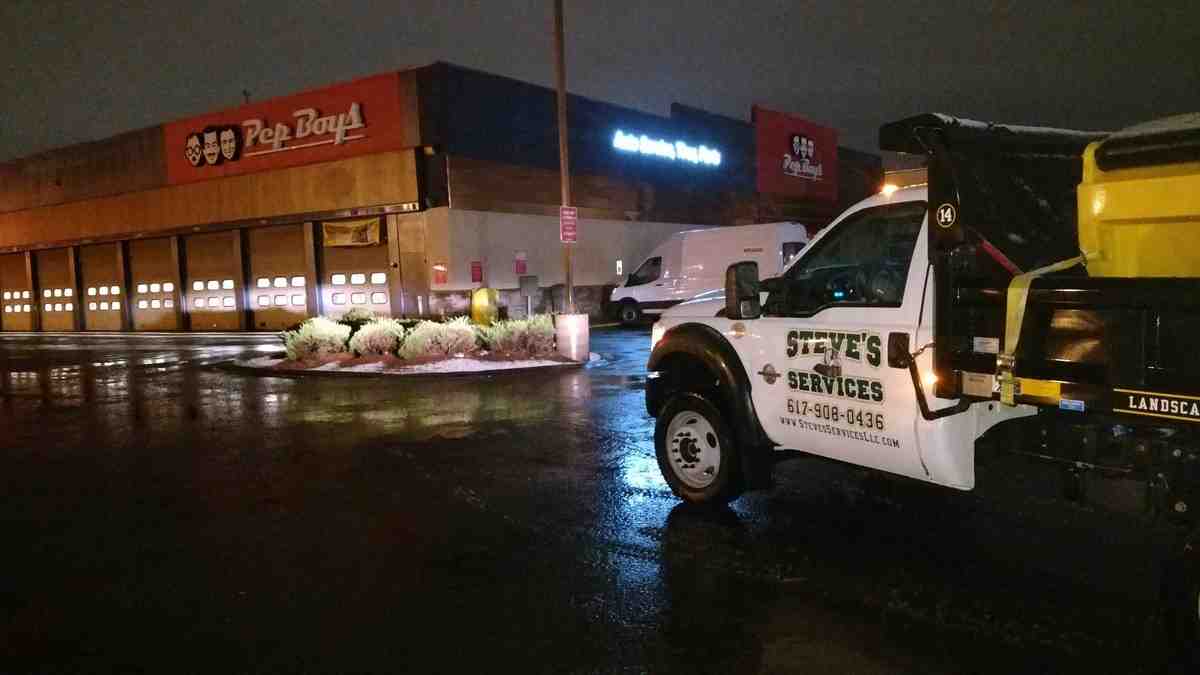
I’m Steve Sylva, owner of Steve’s Services, a landscape company I’ve built over 25 years serving commercial and residential clients across Massachusetts — and in that time, I’ve seen how a well-run commercial lawn care business can grow from a single truck into a thriving, multi-crew operation.
Similar topics to commercial lawn care business:
- Commercial landscaping Burlington MA
- Commercial landscape design company
- Commercial landscaping company
Defining the Commercial Lawn Care Business Model
When we talk about a commercial lawn care business, we are looking at a model built on stability and predictability. Unlike residential work, where a homeowner might cancel because they decided to mow the lawn themselves this week, commercial work is almost always governed by multi-year agreements. These contracts ensure that your crews have a set schedule and your business has a guaranteed cash flow.
As a commercial landscape management company, we focus on property types that require high-level consistency. This includes everything from retail centers and office parks to industrial facilities. The scope of service is broader, often involving not just the grass, but the entire “curb appeal” of a business, which directly impacts their bottom line and professional reputation.
| Feature | Residential Lawn Care | Commercial Lawn Care |
|---|---|---|
| Client Type | Individual homeowners | Property managers, HOAs, business owners |
| Contract Length | Often verbal or per-visit | Typically 1–3 year written contracts |
| Property Size | Usually under 0.5 acres | Can range from 1 to 50+ acres |
| Equipment | Push mowers, small zero-turns | Large zero-turns, stand-on units, tractors |
| Billing | Payment upon completion | Net-30 or monthly retainer billing |
| Service Window | Flexible (daytime) | Often restricted (before/after business hours) |
Essential Services for a Commercial Lawn Care Business
To keep a commercial property thriving, we provide a suite of “Absolute Essential” services. It starts with regular, timely mowing. A professional rule of thumb is to never cut more than one-third of the grass blade length at once; this preserves nutrients and builds heat resistance.
Beyond the mower, a successful commercial lawn care business must offer:
- Weed-and-Feed Applications: Using pre-emergent and post-emergent treatments to keep turf pristine.
- Commercial Hydroseeding: An efficient way to establish large areas of turf quickly. Learn more about our commercial hydroseeding services.
- Irrigation Management: This includes spring start-ups and critical winterization to prevent pipe bursts in our Massachusetts climate.
- Portering and Trash Removal: Keeping the grounds tidy by removing litter, which is essential for retail and office environments.
- Snow Management: In areas like Everett and Malden, commercial snow removal is the key to maintaining revenue during the winter months.
- Integrated Pest Management: Targeting scale, spider mites, and aphids before they destroy expensive ornamental plantings.
Key Differences from Residential Operations
The transition to commercial work requires a shift in mindset. Property size is the most obvious change, but the equipment scale must match. You can’t tackle a 10-acre industrial park with a 30-inch push mower.
Furthermore, apartment facility lawn care requires a focus on safety and noise ordinances, as you are working where people live. Professional communication is paramount; property managers expect digital reports, site-specific regulation compliance, and clear billing cycles (often Net-30), which differs significantly from the “cash on the spot” nature of some residential jobs.
Legal Foundations and Operational Setup
Before you fire up a mower, you need a solid legal foundation. Most experts recommend forming a Limited Liability Company (LLC) rather than a sole proprietorship. An LLC protects your personal assets from business liabilities—a must-have when operating heavy machinery on multi-million dollar properties.
You can find more details on choosing the right path in the SBA business guide. Once your structure is set, you must register for an employer identification number (EIN) through the IRS. This acts as a social security number for your business and is required for opening business bank accounts and hiring employees.
Insurance and Compliance for Your Commercial Lawn Care Business
In the commercial world, insurance isn’t optional; it’s a ticket to the game. Most property managers won’t even let you bid without proof of coverage. As one of the commercial landscaping and snow removal companies in the region, we maintain high standards of coverage to protect our clients and our team.
Essential insurance types include:
- General Liability: The industry standard is $1 million per occurrence and $2 million aggregate. This covers property damage or third-party injuries.
- Workers’ Compensation: Required by law in Massachusetts if you have employees, covering medical costs for on-the-job injuries.
- Commercial Auto: Standard personal insurance won’t cover your trucks while they are working. Aim for a $500,000 to $1 million combined single limit.
Compliance also extends to pesticide laws. In many states, applying any product registered as a pesticide requires a specific license. You can find resources through pesticide safety education programs to ensure your technicians are applying chemicals safely and legally.
Licensing and Certifications
Depending on your specific location—whether you’re in Medford, MA or Revere, MA—you may need a general business license or a specialized landscaping contractor license. Environmental permits are often required for large-scale fertilization or irrigation work.
If you are looking to expand into specialized chemical applications, there are Ontario Pesticide Training resources and University of Guelph prep courses that provide excellent foundational knowledge, even for those operating in the Northeast. Additionally, don’t forget signage permits for your trucks and yard signs, and always check local municipality requirements regarding noise and water usage.
Equipment, Software, and Financial Planning
Investing in a commercial lawn care business requires a higher upfront cost than residential work, but the ROI is significantly greater. While you can start a small residential route for under $1,000, a professional commercial setup—including a reliable truck, trailer, and commercial-grade zero-turn mower—can range from $15,000 to over $100,000.
Key equipment for commercial scaling includes:
- Ride-on Spreaders/Sprayers: These can double the number of properties a single technician can treat in a day.
- Heavy-duty Zero-turns: Look for units with 60-inch to 72-inch decks for maximum efficiency on large acreage.
- Specialized Machinery: As you grow, you may need commercial excavating contractors or your own skid steers for site development and hardscaping projects.
Pricing Strategies and Bidding on Contracts
Pricing is where many new businesses fail. You must calculate your “break-even” point, which includes labor, fuel, equipment maintenance, insurance, and overhead.
Based on internet data, the national average cost for lawn care services is approximately $124, with a typical range between $48 and $206 for standard visits. However, for commercial contracts, prices vary wildly based on acreage and service frequency. We have seen monthly commercial maintenance ranges from $500 to over $15,000 for large-scale complexes (note that these are average internet figures and not specific quotes for Steve’s Services).
When presenting a bid as a commercial landscape design company, professionalism is key. Your bid should be a comprehensive document that outlines the scope of work, frequency of visits, and clear pricing tiers. A competitive analysis of other local providers in areas like Saugus or Stoneham can help you position your value effectively.
Investing in Commercial Lawn Care Business Software
In the modern era, you cannot manage a commercial lawn care business with a paper calendar. Management software like Jobber or Housecall Pro is essential for:
- Scheduling and Route Optimization: Reducing fuel costs and “windshield time” between jobs.
- Automated Invoicing: Ensuring you get paid on time without manual follow-ups.
- Client Portals: Giving property managers a professional way to view estimates, schedules, and pay invoices.
- Real-time Tracking: Knowing exactly where your crews are and how long each job is taking.
Marketing and Scaling Your Empire
Marketing to commercial clients is a different beast than residential door-hanging. It’s about building relationships with decision-makers. Your target markets should include business centers and office parks and retail service centers.
A strong digital presence is non-negotiable. When a property manager searches for commercial landscapers near me, your website and Google Business Profile need to show professional photos, positive reviews, and a clear list of commercial-grade services.
Attracting High-Value Commercial Clients
To land the “big fish,” you need to go where they are. This means:
- LinkedIn Networking: Connecting with local property managers and facility directors in Danvers or Woburn.
- Property Management Companies: Often, one manager oversees dozens of condominium and apartment complexes, making them a high-value referral source.
- Government Bids: Schools, libraries, and manufacturing industrial facilities often put their contracts out for public bid.
- B2B Referrals: Partnering with other service providers (like commercial cleaners or HVAC companies) can lead to mutual lead sharing.
Hiring and Employee Management
Your business is only as good as the people on your mowers. As we’ve seen in the industry, wages have risen steadily, with inexperienced crew members now often starting around $18 per hour compared to $11 a decade ago.
Scaling requires a focus on:
- Technician Training: Ensuring every crew member understands safety protocols and quality standards.
- Retention: Offering living wages and benefits to keep your best people.
- Leadership: Promoting from within to create crew leaders who can manage sites independently.
- Job Opportunities: Maintaining a clear pipeline for landscaping jobs to ensure you are never understaffed during the peak season.
Frequently Asked Questions about Commercial Lawn Care
How much does it cost to start a commercial lawn care company?
Based on national averages, a basic startup costs around $6,900. However, to truly compete in the commercial space with professional-grade equipment, a truck, and a trailer, you should expect to invest between $15,000 and $50,000. This includes your initial insurance premiums, licensing fees, and marketing materials.
What is the average revenue for a commercial operator?
Lawn care business owners can earn up to $127,973 yearly, though this varies by location and experience. Small operators might see $5,000 in monthly revenue, while multi-crew commercial empires can generate seven figures annually. Profit margins typically aim for 5% to 20% after all expenses are accounted for.
How do I price commercial lawn care services?
Pricing should be data-driven. While internet averages suggest a wide range of $48 to over $600 per visit depending on the size of the property, you must calculate your specific labor costs and material markups. Always include a buffer for unexpected repairs and seasonal fluctuations. (Note: These are internet-based averages and do not represent the actual pricing of Steve’s Services).
Conclusion
Building a commercial lawn care business is a journey of professional growth and operational excellence. By focusing on recurring revenue, investing in the right equipment, and maintaining high standards of service, you can create a business that stands the test of time.
At Steve’s Services Landscape Company, we’ve spent decades perfecting this model across Massachusetts, from Everett to Winchester. We believe that a combination of skilled teamwork, personalized solutions, and exceptional customer service is the secret to long-term growth. If you’re looking for a partner to handle your property or simply want to see how the pros do it, explore our commercial landscaping companies near me resources. The grass really is greener on the commercial side — if you’re willing to put in the work to grow it.