Aeration Overseeding and Fertilizing: Perfect 2025 Lawn
The Foundation of a Lush Lawn: Why Aeration, Overseeding, and Fertilizing Matter
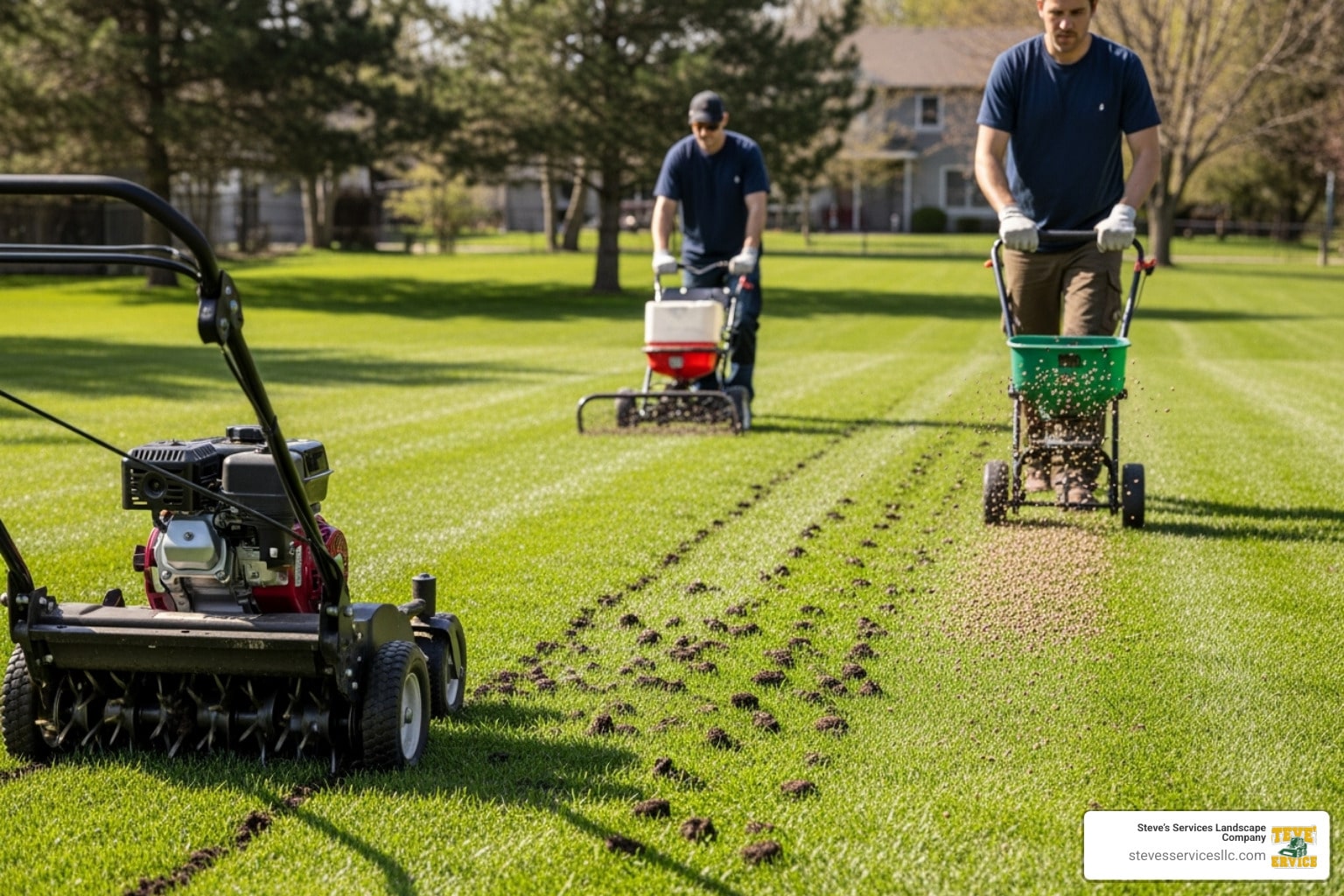
Aeration, overseeding, and fertilizing is a powerful three-step process for creating a healthier, thicker lawn. For the best results on Massachusetts lawns, this service should be performed in early fall (September to early October) in this specific order:
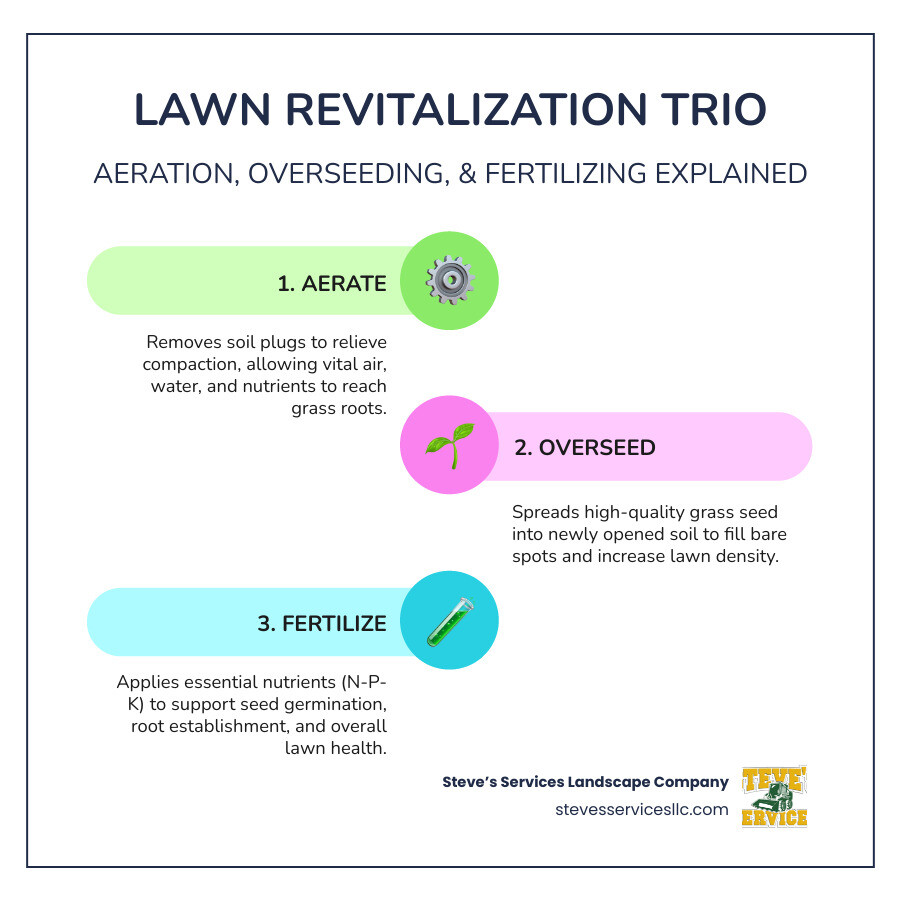
- Aerate: Create small holes in the soil to improve air, water, and nutrient flow to the roots.
- Overseed: Spread grass seed over the aerated lawn to fill in thin areas.
- Fertilize: Apply starter fertilizer to give new seeds the nutrients they need to establish strong roots.
Regular mowing and watering are essential, but your lawn also needs this specialized treatment to stay truly healthy. Most lawns suffer from hidden issues like soil compaction, which suffocates roots; thatch buildup, which blocks water and nutrients; and nutrient deficiency, which weakens the grass.
When left unaddressed, these problems lead to a thin, patchy lawn. Aeration breaks up compacted soil, overseeding introduces resilient new grass, and fertilizing provides the essential nutrient boost for everything to thrive. Together, these services create a lawn that’s healthier from the roots up, resulting in a thick turf that naturally crowds out weeds and better withstands drought.
I’m Steve Sylva, owner of Steve’s Services. With over 25 years in the landscape industry, I’ve seen this comprehensive approach transform struggling lawns into the envy of the neighborhood by addressing the root causes of decline.
Deconstructing the Process: A Look at Professional Lawn Revitalization
A truly healthy lawn starts underground. That’s where aeration, overseeding, and fertilizing does its magic, addressing problems you can’t see like compacted soil and thin turf. At Steve’s Services, we use professional equipment and over 25 years of expertise to deliver lasting change, not just a quick fix.
More info about our Lawn Care Services.
What is Professional Lawn Aeration?
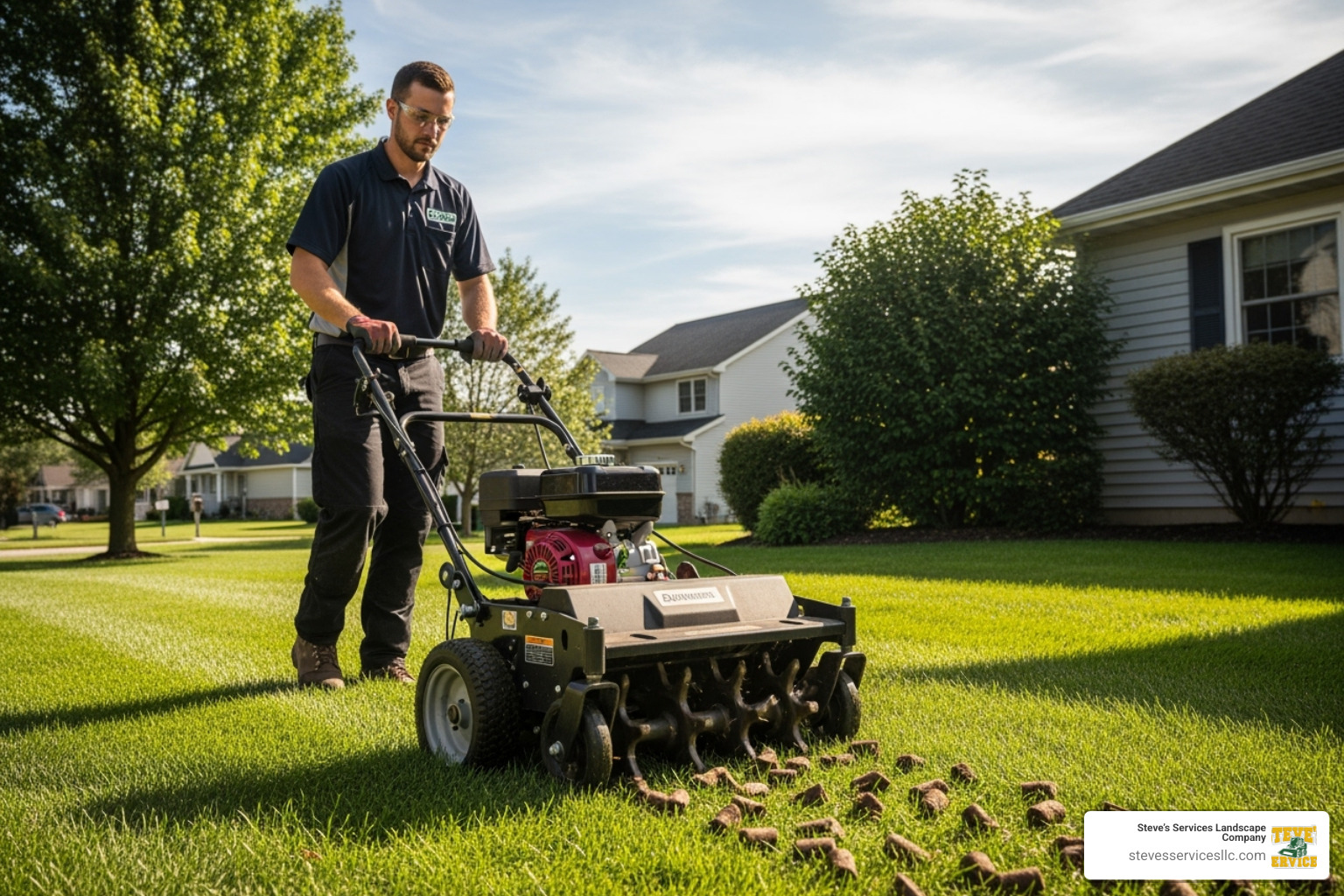
Professional core aeration involves pulling small plugs of soil (about 3 inches deep) across your entire lawn. This process directly solves soil compaction, which occurs from foot traffic and weather, squeezing soil particles and preventing air, water, and nutrients from reaching the roots. This is far superior to spike aeration, which just pokes holes and can actually worsen compaction.
Your lawn likely needs aeration if the soil feels hard, water pools on the surface, the grass is thinning, or you have a thick layer of thatch buildup. Core aeration creates channels that improve water infiltration, boost nutrient uptake, and encourage deeper root growth, making your lawn more resilient and drought-resistant.
For more detailed information about lawn renovation techniques, check out this Lawn Renovation Guide from Missouri Botanical Garden.
The Role of Overseeding in Lawn Density
Overseeding immediately after aeration is key, as it ensures perfect seed-to-soil contact. The aeration holes act as ideal nurseries, protecting seeds and giving them direct access to moisture. This process does two things: it fills in bare patches and introduces resilient grass varieties bred for toughness and disease resistance.
A thick lawn is also your best natural defense against weeds. For Massachusetts, we use professional-grade cool-season grasses like Kentucky bluegrass, perennial ryegrass, and fescues. We use only high-quality grass seed and select the right blend for your property’s specific conditions, from sunny spots to shady areas.
To learn more about establishing new lawns or renovating existing ones, visit our page on New Lawn Installs.
Why Fertilizing Completes the Trio
Fertilizing right after overseeding gives new seedlings the fuel they need to grow. We use a starter fertilizer high in phosphorus (the “P” in N-P-K), which is essential for promoting strong root development. It’s crucial that this fertilizer contains no weed control chemicals, as herbicides will also stop your new grass seed from sprouting.
The main nutrients—Nitrogen (N), Phosphorus (P), and Potassium (K)—promote leaf growth, root development, and overall plant strength, respectively. Many quality fertilizers use slow-release formulas that provide steady nutrition for long-term lawn health. Our professionals determine the optimal blend for your lawn’s specific needs, ensuring it gets exactly what it needs to thrive.
For comprehensive information on how we nourish lawns throughout the season, explore our Fertilizing Services.
Perfect Timing: The Professional Schedule for Aeration, Overseeding, and Fertilizing
In lawn care, timing is everything. Aeration, overseeding, and fertilizing must be done in sync with nature’s schedule to be effective. We plan our services around your grass’s natural growth cycles to ensure it gets what it needs, when it needs it.
The Ideal Seasons for Massachusetts Lawns
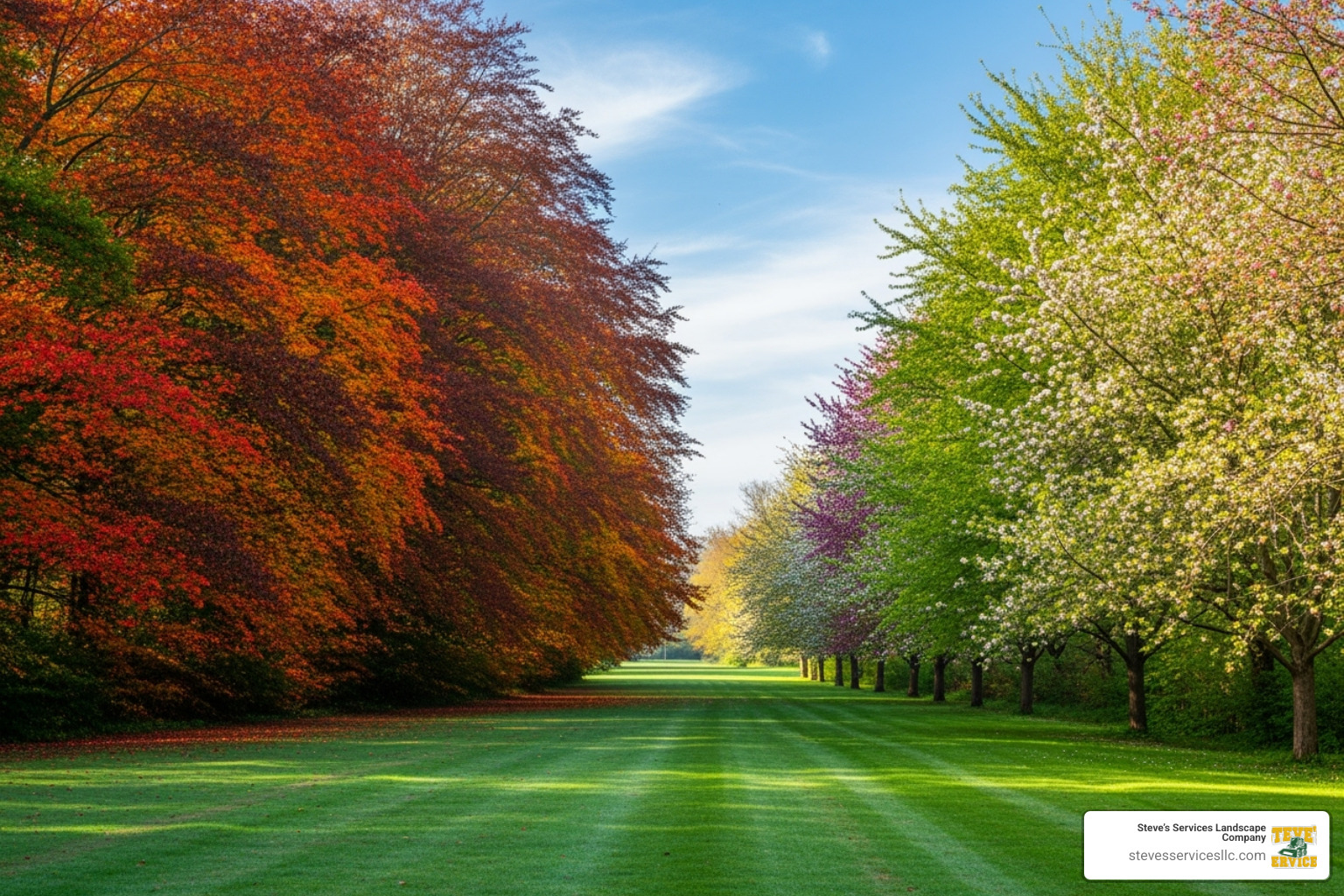
For Massachusetts lawns with cool-season grasses, early fall is the golden window. The combination of warm soil and cool air is perfect for seed germination and root establishment before winter. Spring is a secondary option, but you’ll face more competition from weeds. Summer’s heat and late fall’s cold are unsuitable for new seedlings, often leading to failure or winterkill.
Signs your lawn is ready for treatment include:
- Rock-hard soil
- Thinning, tired-looking grass
- Water puddling after rain
- A thick, spongy thatch layer
If these signs sound familiar, it’s time to schedule professional service. For more information on preparing your lawn for the growing season, visit our Spring Lawn Care page.
The Correct Order of Operations for Aeration, Overseeding, and Fertilizing
The order of operations is critical for success. Here is the professional approach:
- Preparation: We clear debris, ask you to mark sprinkler heads, and mow the lawn short (1-1.5 inches) to ensure good seed-to-soil contact. The soil should be moist but not soggy.
- Aeration First: We use professional core aerators to pull plugs from the soil, relieving compaction and creating pockets for seeds.
- Overseeding Immediately: We broadcast high-quality seed right after aerating to take advantage of the holes, which protect the seeds and improve germination.
- Fertilizing Last: On the same day, we apply a starter fertilizer (high in phosphorus, no weed control) that sinks into the aeration channels to nourish new and existing roots.
This sequence creates the perfect conditions for your lawn to thrive.
What Happens if the Timing is Wrong?
Incorrect timing is a common reason for disappointing results. The main problems include:
- Poor Germination: Seeds struggle to sprout in soil that is too cold or too hot.
- Weak Roots: Grass seeded too late in the fall won’t establish roots deep enough to survive winter, leading to winterkill.
- Increased Weed Competition: Spring seeding forces new grass to compete with aggressive weeds.
- Heat Stress: Summer heat can quickly kill delicate new seedlings.
- Chemical Issues: Applying herbicides too soon can kill new grass, and aerating dry soil is ineffective.
By scheduling service during the optimal window, we give your lawn the best chance to transform into a thick, healthy turf.
Aftercare and Expectations: What Happens After the Service
After we complete the aeration, overseeding, and fertilizing service, the next few weeks are critical for establishing your new lawn. Proper aftercare will ensure your investment pays off with the thick, lush turf you’ve been dreaming of.

Watering Best Practices for New Seed
Proper watering is critical for success. Follow this two-phase approach:
- For the first 1-2 weeks: Water lightly once or twice a day. The goal is to keep the top inch of soil consistently moist for germination.
- After sprouts appear (1″ tall): Switch to deeper, less frequent watering (2-3 times per week). This encourages deep root growth for a more drought-resistant lawn.
Be careful not to overwater, as this can lead to fungal disease. Adjust your schedule based on weather conditions.
Mowing and Traffic Guidelines
Protect your new seedlings to ensure they establish properly.
- Mowing: Wait until the new grass is at least 3 inches tall before the first mow. Use sharp blades and set your mower to a high setting to avoid stressing the young plants.
- Foot Traffic: Keep all heavy traffic off the lawn for at least 2-4 weeks. This prevents soil compaction and protects fragile seedlings.
Those soil plugs left from aeration will break down on their own in 2-4 weeks, recycling nutrients back into the soil. There is no need to rake them up.
The Results: What to Expect and When
Your lawn will look a bit messy at first, but be patient. Here’s a typical timeline:
- New Growth (1-3 weeks): You’ll see tiny green sprouts emerge. Ryegrass is fastest (5-10 days), while Kentucky bluegrass is slower (14-21 days).
- Fuller Lawn (6-8 weeks): The lawn will start to look noticeably thicker, fuller, and more vibrant.
Long-Term Benefits: The result of aeration, overseeding, and fertilizing is a healthier lawn ecosystem. The improved soil structure, resilient grass varieties, and strong roots create a turf that naturally resists weeds, requires less water over time, and stays vibrant all season.
For more information about maintaining your lawn’s health with environmentally responsible practices, check out our Eco-Friendly Lawn Treatment services.
Frequently Asked Questions about Aeration and Overseeding
We hear these questions all the time from homeowners wanting to get the most from their aeration, overseeding, and fertilizing service. Here are straightforward answers to common concerns.
Should the soil plugs be raked up after aeration?
No, do not rake up the soil plugs. They are full of nutrients and will break down naturally in 2-4 weeks, acting as a free top-dressing for your lawn. Rain and mowing will help them break down faster, recycling valuable organic matter back into the soil.
How soon can weed killer be applied after aeration and overseeding?
Wait at least 4-6 weeks after your new grass has sprouted before applying any weed killer. New grass seedlings are extremely sensitive to herbicides. Pre-emergent products will prevent your new grass from growing, and post-emergent killers can damage the young plants. The best defense against weeds is the thick new turf you are growing, which will naturally crowd them out. Hand-pull any weeds that appear during this waiting period.
For more guidance on maintaining your lawn properly, check out our page on The Importance of Proper Lawn Care.
How often should a lawn be aerated and overseeded?
The frequency depends on your lawn’s condition.
- Annually: This is the recommendation for most residential lawns to maintain density and prevent compaction. We typically perform this service in the fall.
- Twice a year: Lawns with heavy foot traffic, dense clay soil, or significant thinning may benefit from both a spring and fall treatment.
A professional assessment is the best way to determine the right schedule for your property. Regular service is preventative maintenance that keeps your lawn healthy year after year. For more information about our comprehensive lawn care programs, visit our Lawn Care Services page.
Achieve Your Dream Lawn with Professional Care
Aeration, overseeding, and fertilizing is a science-backed process that transforms struggling lawns by creating a healthier ecosystem from the roots up. It results in a thick, resilient turf that naturally fights weeds and better handles seasonal stress.
While understanding the process is one thing, executing it perfectly requires professional expertise and specialized equipment. The timing, seed selection, and application techniques all demand years of experience to achieve the best results.
At Steve’s Services Landscape Company, we have over 25 years of experience perfecting these techniques for lawns across Massachusetts, from Everett to Winchester. We provide personalized solutions based on a thorough assessment of your lawn’s unique needs. Investing in professional lawn care is an investment in your property’s value and your peace of mind.
Whether you need a complete overhaul with a New Lawn Install or want to maintain your turf with our Lawn Care Services and Fertilizing Services, we have a solution for you.
Ready to see what your lawn can really look like? Contact us for a comprehensive lawn analysis and quote. We’ll create a customized plan to give you the healthiest, most beautiful lawn on the block.