Basement excavation contractors: 5 Essential Methods for 2025
What Basement Excavation Contractors Do (and Why It Matters)
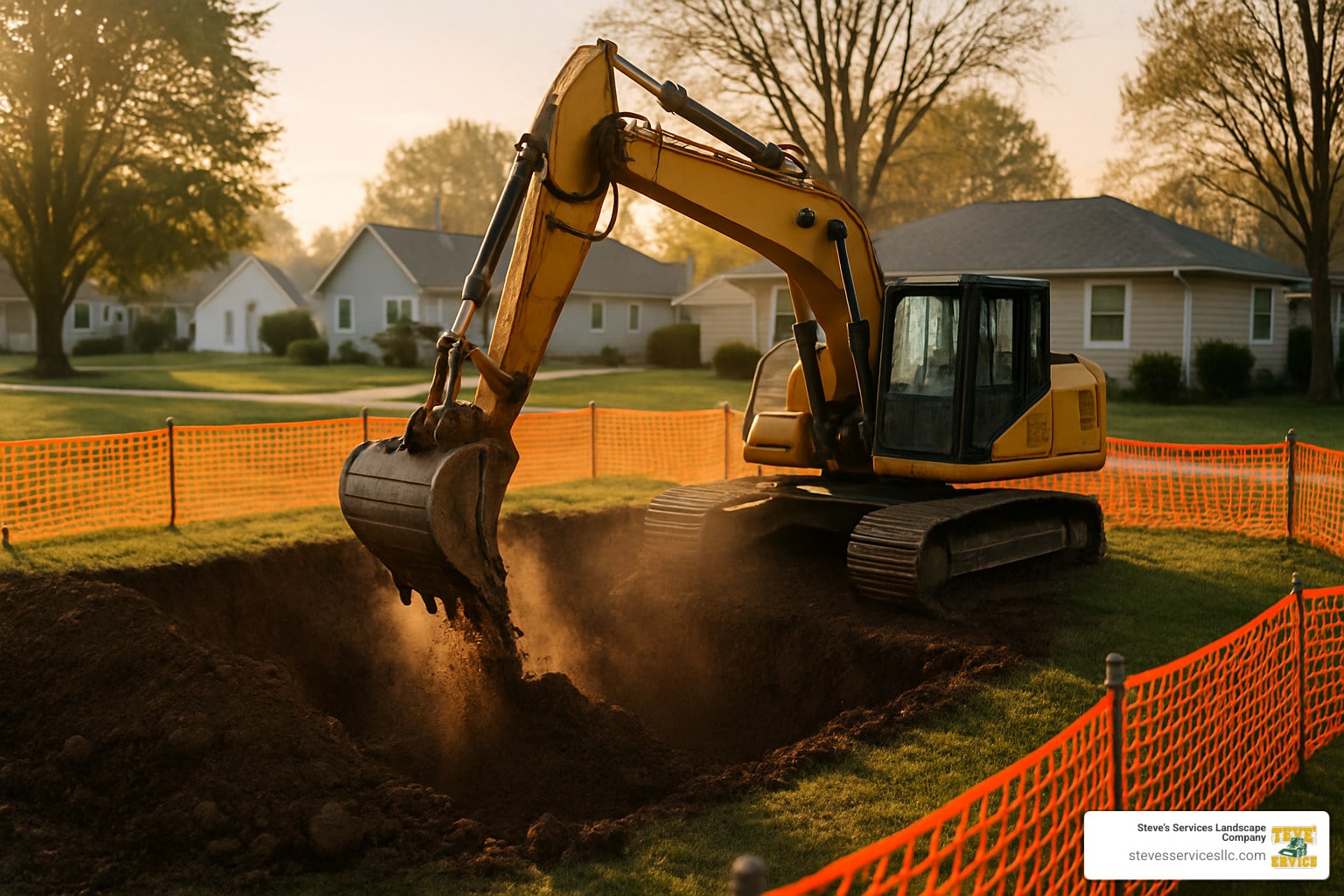
Basement excavation contractors are specialists who dig below ground to create new basements or expand existing ones. They use heavy equipment and advanced methods to safely carve out extra living or storage space under your property—boosting its value and structural strength.
Quick facts for homeowners and property managers:
- Basement excavation contractors handle all digging, soil removal, and support work for your basement.
- They secure permits, follow safety codes, and prevent problems like flooding or structural shifts.
- Most basement digs range from 6 to 10 feet deep and take 2 to 6 weeks.
- Average internet-based costs: $30–$100 per sq ft for new basements; $20,000–$45,000+ under existing homes (prices vary widely by site conditions and don’t reflect Steve’s Services actual pricing).
- DIY is not recommended—mistakes can cause cave-ins, utility hits, or legal issues.
“Basement excavating is a complex and labor-intensive process.”
— Industry Expert
If you’re wondering whether to hire a pro, here’s the bottom line:
| Question | Fast Take |
|---|---|
| What do contractors do? | Dig, reinforce, and prepare sites for safe basements |
| Why not DIY? | DIY risks: cave-ins, fines, costly errors |
| How long does it take? | 2–6 weeks (site dependent) |
| Is it worth it? | Yes—adds value, safety, and space |
My name is Steve Sylva. With over 25 years serving Massachusetts as a trusted landscape and excavation contractor, I’ve seen first-hand how working with qualified basement excavation contractors protects your property investment and delivers long-lasting results.
Understanding Basement Excavation 101
Basement excavation is much more than just digging a big hole and hoping everything turns out okay. It’s a precise, planned process that starts with understanding your soil, the shape of your lot, the structure above, and even the water hidden below your feet. Every step is carefully mapped out to keep your home safe and sound—for decades, not just today.
Let’s break it down: open-cut excavation is the go-to method for most homes, using heavy machinery to carve out a wide area. This works well when there’s plenty of space, but tight sites or older homes may need a gentler touch. That’s where underpinning comes in—reinforcing or extending the foundation so you can dig deeper without risking the house above.
For extra safety, especially in crumbly or loose soils, crews use sloping and benching. This means they cut the sides of the hole at an angle, or in a series of steps (“benches”), so the walls don’t collapse while the work is underway. On big or commercial projects, or in really tricky ground, you might see caisson piles—deep, round supports that keep everything stable.
Before the first bucket of soil is scooped, there’s a critical step: soil testing. A geotechnical report will tell you what kind of earth you’re working with (clay, sand, or something in between), how close the water table is, and whether frost or flooding might be an issue. All these details shape the best way to dig—and help prevent surprises.
If you’re curious about the science behind it, check out this scientific research on soil stability. The verdict? Good soil means a smoother, safer excavation. If the ground’s a little less friendly, expect more shoring, more planning, and a few extra challenges for your basement excavation contractors.
Good dirt = less drama. Bad dirt = more work, but always worth doing right.
Why Basement Excavation Is Important
You might wonder: “Why all this fuss?” Simple. Proper basement excavation:
- Strengthens your foundation, so your home stays secure and steady.
- Controls moisture, keeping out leaks and mold with smart drainage and waterproofing.
- Improves energy efficiency, thanks to extra insulation below ground (your heating and cooling bills will thank you).
- Adds resale value, since homes with finished basements often fetch a premium in the market.
5 Main Excavation Methods Simplified
Over the years, basement excavation contractors have perfected a handful of main methods, each with its own purpose:
- Open trench excavation is the classic—digging a wide, open pit. Fast and efficient, but only if there’s enough room and you have strong shoring in place.
- Underpin dig-down is ideal when you need to deepen an existing basement without disturbing the rest of the house. It’s slow and careful—supporting the existing walls every step of the way.
- Bench excavation uses horizontal steps (“benches”) to dig safely, especially in loose soil, helping prevent those dreaded wall collapses.
- Slab removal comes into play when you need to break up an old concrete slab (like an old crawlspace or basement floor), then dig down further—think of it as a big archaeological dig, but with a lot more horsepower.
- Rock hammering is what you do when New England’s rocky soils throw you a curveball. Specialized machines break up ledge or boulders, clearing the way for your new basement.
Every home is different, and the right method depends on your soil, your lot, and the structure above. That’s why picking experienced basement excavation contractors—like the team at Steve’s Services—is so important. They’ll know exactly which approach to use, and how to keep your project safe, smooth, and on schedule.
Key Factors That Dictate Every Dig
Every successful basement excavation starts with careful planning—there’s a lot more to it than just firing up the excavator. Before any ground gets broken, basement excavation contractors like our team at Steve’s Services take time to look at the big picture.
First comes a site assessment. We walk your property, size up the access points, and check that our equipment will fit (because a mini-excavator is a lot less mini than it sounds when your gate’s too narrow!). We also look for obstacles—think old tree stumps, fences, or anything else that could slow us down.
Next, we handle utility locating. There’s nothing fun about an unexpected “zap” or a geyser in the yard. Hitting water, gas, electric, or sewer lines is a costly mess—so we carefully map every utility before digging.
No project starts without a proper permit checklist. Massachusetts requires building permits for all basement excavation work. If anyone tells you permits are optional, run the other way. Trust us—doing things by the book keeps your project moving and protects your investment.
OSHA safety standards are always front and center. These rules aren’t just red tape—they protect workers and homeowners from real risks like cave-ins or falls.
If your yard tends to be damp or the water table is high, we’ll need to think about dewatering. Pumps and drainage help keep the hole dry while we work (and yes, it’s as much fun as it sounds on a rainy week).
We’re also on the lookout for erosion control—making sure loose soil doesn’t wash away and clog up storm drains or neighboring yards. Along with erosion, groundwater management comes into play if your property sits near the water table. If water wants to sneak into your basement, we plan ahead with extra drainage and waterproofing.
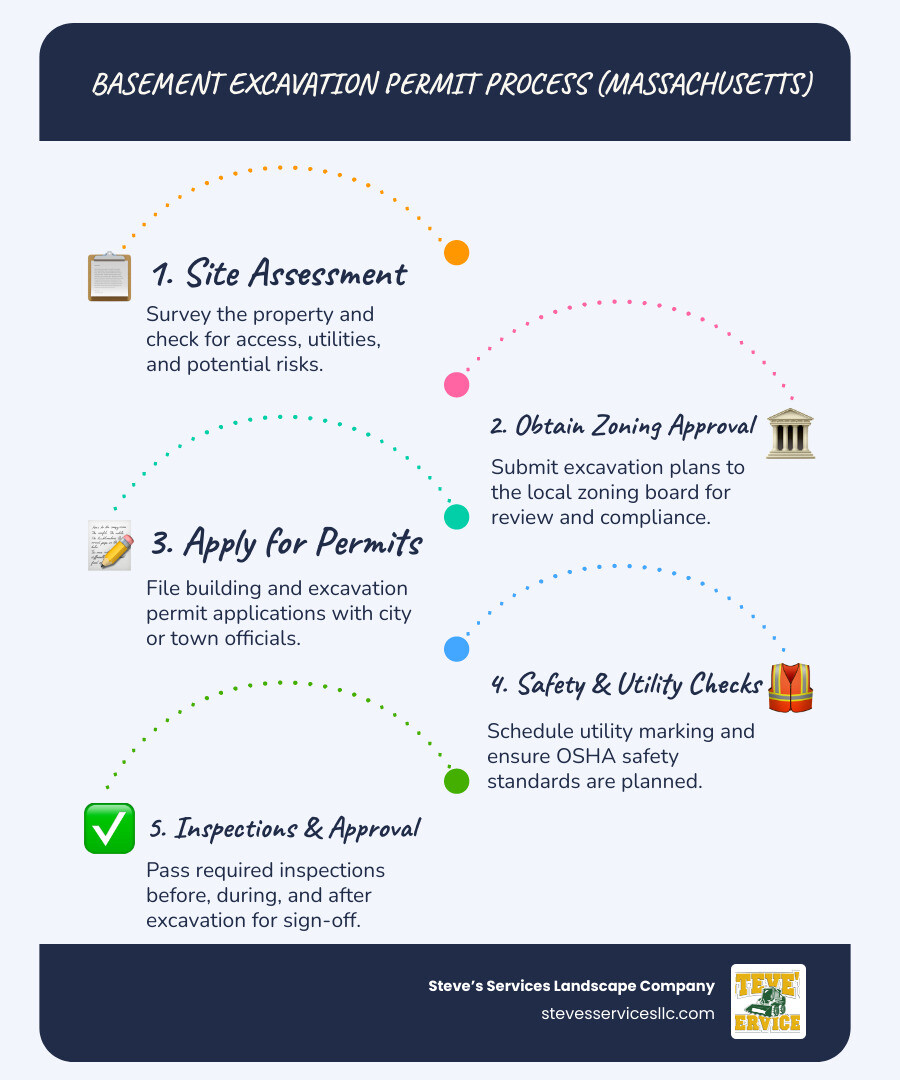
All these factors—site conditions, permits, safety, moisture, utilities—shape how your basement dig will unfold. Basement excavation contractors know that missing even one detail can mean expensive delays, dangerous conditions, or failed inspections.
When you work with Steve’s Services, you get a team that checks every box, follows every rule, and never cuts corners—because your home deserves nothing less.
Basement Excavation Contractors: How to Choose the Right Pro
When it comes to choosing basement excavation contractors, not all teams are created equal. This is a job where experience, preparation, and people skills matter just as much as the heavy machinery. It’s about trust—after all, you’re literally putting your home’s foundation in someone else’s hands.
First, make sure any contractor you consider is properly licensed for excavation and construction in Massachusetts. This isn’t paperwork—it’s your first line of protection if something goes sideways. Equally important is insurance. If there’s an accident or property damage, you’ll want to know you’re not left holding the bag.
Take a good look at the contractor’s equipment fleet. The right crew will have the right tools for the job—think skid steers, mini-excavators, conveyor belts, and haul-off trucks, ready to tackle your site’s unique needs. Ask to see their project portfolio. Past projects, especially those similar in size and soil conditions to yours, are a great indicator of real-world experience.
Don’t be shy about asking for references. Speaking with previous clients gives you insight into the company’s professionalism, attention to detail, and how they handle problems when they pop up (because let’s face it, in construction, surprises happen). Also, a reputable contractor will provide timeline guarantees and take the time to clearly explain how the process will unfold, step by step.
Learn more about what to expect from excavating contractors.
Must-Ask Questions for Basement Excavation Contractors
Before you sign anything, have a friendly conversation with your potential contractor. Here are some key questions to include:
- How many years have you been excavating basements in Massachusetts?
- How large is your crew, and who will be on-site each day?
- How do you handle change orders or unexpected issues?
- Do you have experience working with wet soils or high water tables?
- Is there a warranty on your excavation work?
- How will you keep me updated throughout the project?
A trustworthy contractor will welcome your curiosity and keep you informed from start to finish.
Basement Excavation Contractors vs DIY Risks
It’s tempting to think about DIY, but when it comes to basement excavation, please—don’t do it. This work is risky and complicated, and skipping a pro can land you in real trouble.
The dangers are real: cave-ins can occur without proper shoring, putting lives at risk. Structural failure can ruin your home’s foundation, leading to huge repair bills. Plus, starting without the right permits opens you up to legal liability, fines, and possibly being required to undo all your hard work. Lastly, there’s the hazard of hidden utilities—striking a gas or water line is a mistake nobody wants to make.
Choosing the right basement excavation contractors isn’t just about getting the job done—it’s about doing it safely, legally, and to the standards your home deserves. Take your time, ask the right questions, and pick a partner you trust for a project this important.
Cost, Timeline & Equipment Breakdown
Let’s talk about the big questions on everyone’s mind: What does basement excavation actually cost? How long will it take? And what equipment is rolling onto your lawn?
First, keep in mind that all pricing here is based on average internet data—actual costs for your project at Steve’s Services will depend on your unique site, needs, and goals.
For a brand new basement excavation, you’ll usually see prices from $30 to $100 per square foot floating around online. If you’re digging out underneath an existing home (often trickier), most sources land between $20,000 and $45,000 or more. Working around an existing foundation? Expect a range of $5,000 to $15,000, or $100 to $250 per linear foot. And when it comes to finishing your basement after the dig, average numbers are $7 to $25 per square foot—again, wildly variable based on finishes and features.
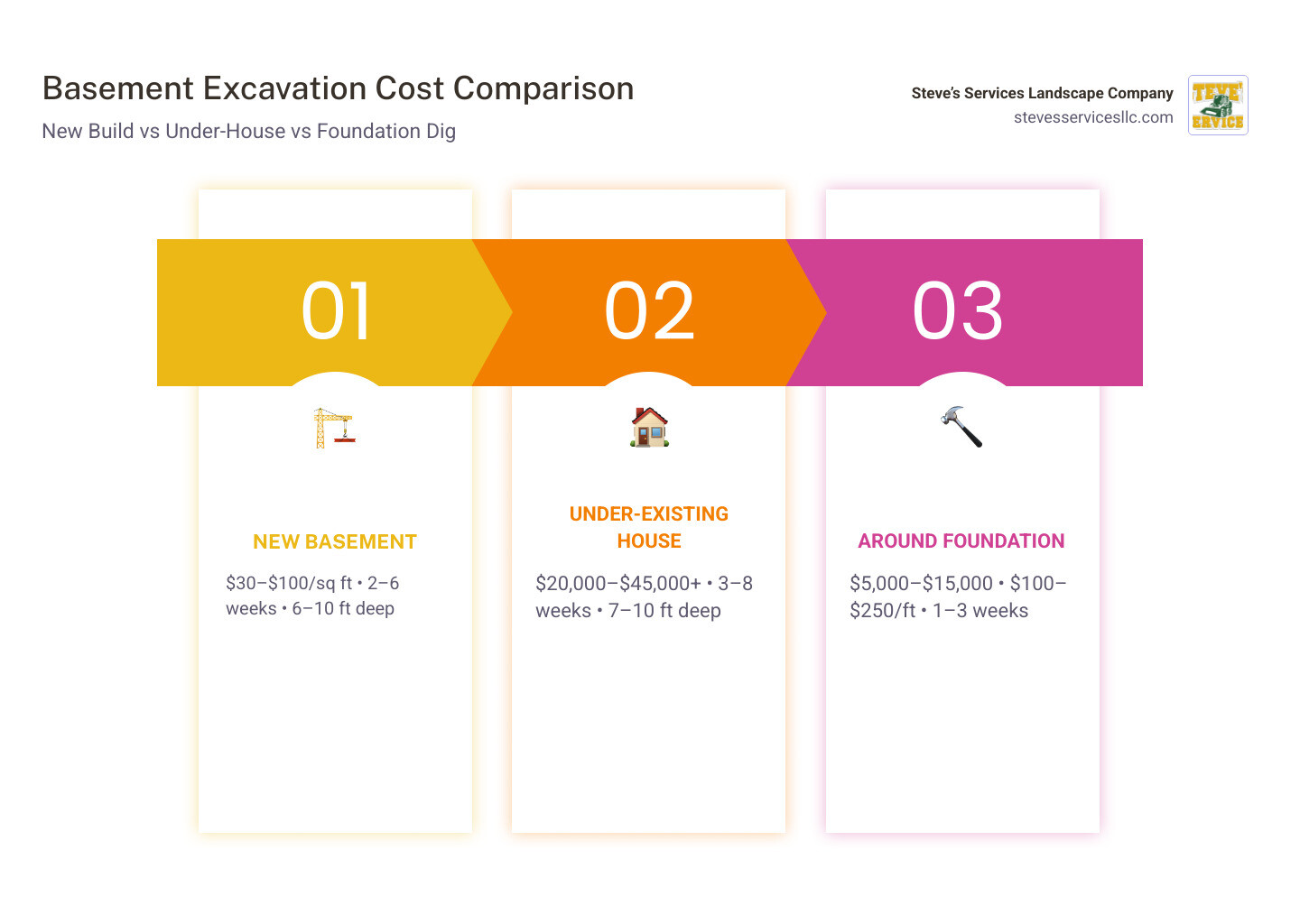
Here’s a quick comparison to put things in perspective:
| Project Type | Cost Range (avg) | Duration | Typical Depth |
|---|---|---|---|
| New Basement | $30-$100/sq ft | 2–6 weeks | 6–10 ft |
| Under-Existing House | $20,000–$45,000+ | 3–8 weeks | 7–10 ft |
These are broad ranges from online research; your actual costs will depend on soil, access, size, and how finished you want things.
Now, what makes one project cost more than another? Project size is a big one—a larger basement means more digging, material, and disposal. Depth matters too: digging deeper (especially below the frost line or water table) adds time, effort, and sometimes special shoring or drainage solutions. If you’re sitting on solid clay or rock, soil hardness will drive up labor and require heavier equipment. Don’t forget disposal fees—hauling away mountains of dirt is no small job! Waterproofing add-ons like membrane systems, French drains, and sump pumps can be a smart investment, but they do add to the bottom line. And one final tip: peak season rates (usually summer) are higher, so off-season digs sometimes save money and get you on the schedule faster.
Wondering about the equipment? For most excavations, you’ll see skid steers, mini-excavators, conveyor systems, and haul-off trucks. Each tool is chosen to suit your property, soil, and space, all operated by seasoned basement excavation contractors who know how to keep your job moving and your yard protected.
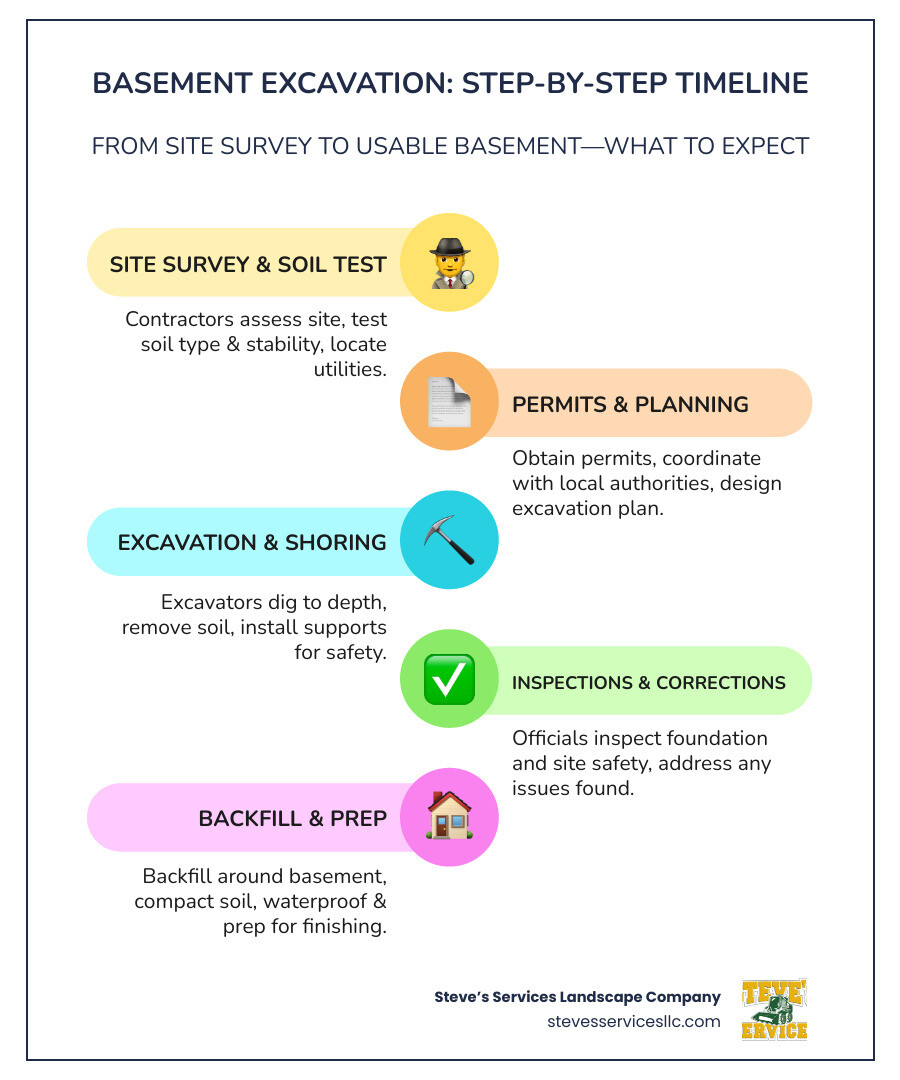
As for the typical timeline, here’s how it usually unfolds:
- Mobilization: We bring in equipment and set up safety barriers.
- Site Survey & Marking: Boundaries, utilities, and lines are double-checked.
- Excavation Phase: Digging, shoring, and soil removal get underway.
- Inspections: Local officials check in at key points.
- Backfill & Compaction: Soil is placed back and compacted to prevent settling.
- Ready for the Next Steps: Foundation, drainage, or basement finishing can now begin.
Most projects land in the 2–6 week range from first dig to backfill, though complex or under-house digs can take a bit longer.
If you’re ready to see how a professional team tackles your project from start to finish, learn more about our excavation services—or reach out anytime for a personalized assessment.
Post-Excavation Essentials: Waterproofing, Drainage & Finishing
Once the digging is done, the real magic—and protection—begins. A basement is only as good as its defense against water, so quality finishing isn’t just about looks. It’s what keeps your new space dry, comfortable, and healthy for years to come.
Waterproofing is step one. We start outside, applying exterior membranes to the foundation walls. Think of this as a raincoat for your basement—it keeps groundwater from seeping in. Next, we install French drains: clever gravel-filled trenches with hidden pipes that send water away from your foundation before it can cause trouble.
In case New England weather tries its best, a sump pump is your basement’s best friend. Tucked into the lowest spot, this workhorse kicks on if water levels start to rise, sending moisture safely out and away. For extra drainage muscle, we use gravel backfill around the foundation, which not only helps with water flow but also relieves pressure against the walls.
But we don’t stop there. Inside, interior sealants and vapor barriers are added. These final touches act like an umbrella under your roof, protecting against lingering moisture and mold—so your new basement stays fresh, not funky.
Read more about our full range of excavation services.
Turning the Hole Into a Healthy Basement
So, how do we turn that “big hole” into a space you’ll actually want to use? After waterproofing and drainage are finished, our team gets to work on the details that make a basement feel like home.
We start with framing—building sturdy walls and outlining new rooms. Then, we add insulation to keep things cozy year-round, which is especially important in Massachusetts. The next step is HVAC rough-in, so your basement isn’t an icebox in winter or a sauna in July.
Don’t forget safety! Egress windows are installed, giving you natural light and a safe exit in emergencies—these are required for any bedrooms. At every phase, we make sure work is up to code, with all necessary inspections for safety and legal peace of mind.
With every detail covered by experienced basement excavation contractors, you can trust your new basement will be as dry, safe, and inviting as the rest of your home.
Frequently Asked Questions About Basement Excavation
How deep can my new basement be in Massachusetts?
In Massachusetts, most basements end up between 6 and 10 feet deep. The actual depth depends on a few key things—like what your town’s building codes allow, where the frost line sits, and how you want to use your new space. If you’re dreaming of tall ceilings or lots of headroom, we can usually dig deeper, but always safely and according to code. Basement excavation contractors will make sure your project meets all requirements before a shovel hits the ground.
What permits are required before an excavation crew can start?
Before any digging begins, you’ll need a building permit from your city or town. Depending on the size and scope of the job, you might also need zoning approval, engineering reports, or environmental sign-off—especially if you’re near wetlands or special-use areas. The good news? When you work with Steve’s Services, we handle all the paperwork, permits, and inspections, so you can relax and watch your project come together the right way.
How much does basement excavation cost on average?
Pricing for basement excavation can range quite a bit, depending on your property and what’s beneath the surface. According to internet averages (remember, these aren’t Steve’s Services’ rates), new basement excavation typically runs from $30 to $100 per square foot. If you need to dig under an existing home, costs often start around $20,000 and can easily exceed $45,000, especially if you have tricky soil, tight access, or extra waterproofing needs. Every project is unique, so we always recommend a detailed site assessment for the most accurate estimate.
If you have more questions or want to know what’s possible for your home, our team of experienced basement excavation contractors is just a call away. You can also read more about excavation services here.
Conclusion
A thoughtfully planned basement excavation is about more than just adding square footage—it’s an investment in your property’s value, comfort, and safety. When you work with basement excavation contractors who know Massachusetts inside and out, you get much more than a hole in the ground. You get peace of mind, expert guidance through every permit and inspection, and the confidence that your home is built on solid ground.
At Steve’s Services Landscape Company, we believe in doing things the right way. Our team brings years of hands-on experience, a commitment to clear communication, and a focus on safety from day one. We’ll walk you through each step, share honest advice, and make sure your new or expanded basement is dry, durable, and built to code.
Whether you’re planning to create more room for your family or dreaming about a brand-new home, let us help you go underground with confidence. When you partner with real pros, your project gets done right—the first time.
Find more about our excavation services and how we can help with your next project.
Serving Everett, Burlington, Danvers, Lynnfield, Medford, Melrose, North Reading, Reading, Revere, Saugus, Stoneham, Winchester, Woburn, Malden, Wakefield, and surrounding Massachusetts communities. Reach out today for a consult—let’s dig in together!