
Why Liquid Grass Seed is Gaining Popularity
Have you ever stared at your patchy lawn and wished you could simply spray on a perfect carpet of grass? The promise of liquid grass seed—a spray-on lawn seeding method that combines grass seed, mulch, fertilizer, and water into a slurry—is appealing. This approach, a homeowner-facing version of professional hydroseeding, has been used by pros for decades to establish lawns quickly.
But are consumer “spray-on seed” products worth it, or just a gimmick? The reality is nuanced. While the method itself offers benefits like faster germination, consistent results typically come from professional hydroseeding using commercial-grade equipment and custom mixtures.
Key advantages of liquid grass seed:
- Faster sprouting than broadcast seeding
- Better moisture retention through protective mulch layer
- Effective on slopes and uneven terrain
- All-in-one application of seed, fertilizer, and soil protection
- More affordable than sod installation
Best used for:
- Repairing bare patches and dog spots
- Seeding slopes prone to erosion
- Establishing grass in small to medium areas
I’m Steve Sylva, owner of Steve’s Services, and over my 25 years in the landscaping industry throughout Massachusetts, I’ve helped countless homeowners transform their lawns using both traditional methods and professional hydroseeding. While consumer products exist, our experience shows professional hydroseeding delivers the most consistent results. Understanding the method, its limitations, and the proper application process is crucial for success.
What is Liquid Grass Seed and How Does It Work?
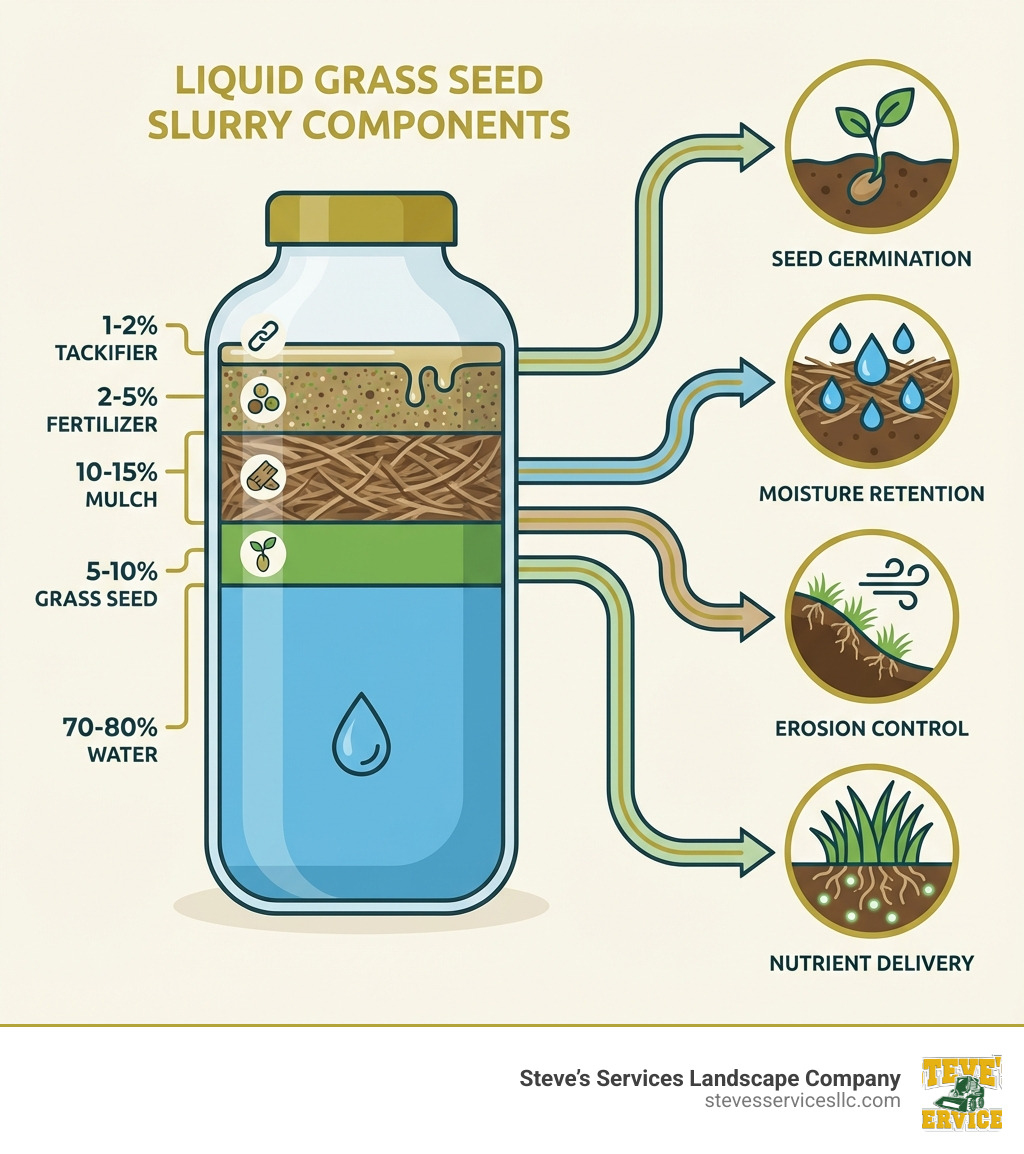
Liquid grass seed, often called hydroseeding, is a lawn establishment method where a slurry of seed, mulch, fertilizer, and binding agents is sprayed onto the soil. The goal is to create an optimal environment for grass seed germination and growth. The fertilizer improves growth, and the mulch bonds the seed to the soil, protects it, and adds nutrients as it decomposes.
For a deeper dive into the professional side of this process, explore our guide on What is Hydroseeding.
Key Ingredients in the Slurry
The effectiveness of any liquid grass seed application hinges on its slurry. Each component plays a vital role:
- Grass Seed Type: The type of grass seed is crucial and must be selected for your local climate and soil. For our Massachusetts communities like Burlington and Danvers, cool-season grasses like Kentucky Bluegrass, Perennial Ryegrass, and Fescues are best.
- Water: The primary carrier, creating a sprayable liquid mixture.
- Mulch (Wood Fiber or Paper): This fibrous material holds moisture, protects seeds, and adds organic matter as it decomposes. Wood fiber offers superior water retention, while paper is more economical. The mulch can absorb up to 10 times its weight in water, which is critical for seedlings.
- Starter Fertilizer: A balanced starter fertilizer (N-P-K) provides essential nutrients to fuel initial growth and root development.
- Tacking Agent (Tackifier): This natural, glue-like substance binds the slurry to the soil, preventing erosion from rain or on slopes.
- Biostimulants: Often included, these additives (like seaweed extracts or humic acids) improve nutrient uptake and stress tolerance.
- Green Dye: A non-toxic green dye is often added for visibility, helping ensure even spray coverage. The color is temporary and fades as the grass grows.
The Science Behind the Spray
The magic of liquid grass seed is how the ingredients work together to create an ideal micro-environment for germination.
- Improved Seed-to-Soil Contact: The slurry encases each seed, ensuring direct contact with the soil for better germination than broadcast seeding.
- Protective Layer: The mulch creates a protective blanket, shielding seeds from sun, wind, and birds while regulating soil temperature.
- Reduced Erosion: The tackifier binds the slurry to the soil, significantly reducing erosion on slopes—a key advantage over traditional seeding, as supported by scientific research on erosion control.
- Optimized Water Absorption and Nutrient Delivery: The water-retaining mulch and starter fertilizer provide a steady supply of moisture and nutrients, promoting faster, stronger growth.
Pros and Cons of Using Liquid Grass Seed
Like any lawn care method, using liquid grass seed has its advantages and limitations. Understanding these can help you decide if it’s the right solution for your specific lawn needs here in Massachusetts.
The Benefits
For many homeowners in our service areas of Burlington, Danvers, and Everett, professionally applied liquid grass seed (hydroseeding) offers several compelling benefits:
- Faster Germination and Establishment: The combination of mulch, moisture, and nutrients promotes quick germination compared to traditional dry seeding.
- Excellent for Slopes and Uneven Terrain: The slurry’s binding agents help prevent seed washout on slopes and uneven terrain, improving erosion control.
- All-in-One Solution: Seed, mulch, and fertilizer are applied together for efficiency and uniform coverage.
- Uniform Application: Professional equipment provides even seed distribution for a more consistent lawn.
Potential Considerations and Limitations
- Site Preparation Is Critical: Success depends on proper soil preparation, grading, and amendments based on soil tests.
- Timing and Aftercare Matter: Hydroseeding still requires diligent watering and limited foot traffic during establishment.
- Not for Existing Lawns: This method is intended for bare soil; spraying over an existing lawn can damage or kill the grass.
- For Larger or Challenging Areas, Professional Service Excels: Steeper slopes, erosion-prone sites, and large areas benefit from commercial-grade equipment and expertise.
For more detailed information about hydroseeding techniques and best practices, the University of Massachusetts Extension provides valuable resources on lawn establishment methods suitable for our climate.
Understanding the Liquid Grass Seed Application Process
Considering liquid grass seed for a small or large project? Here’s what to expect from a professional application in our Massachusetts climate.
Phase 1: Site Evaluation and Soil Preparation
Your technician will assess soil pH, texture, and drainage and may recommend soil testing. The area should be cleared of debris and weeds, graded for proper runoff, and amended with quality topsoil/compost based on test results to create a nutrient-rich, well-draining seedbed.
Phase 2: Material and Equipment Selection
Professionals select seed blends suited to your site conditions (sun/shade, traffic) and local climate—typically cool-season grasses like Kentucky Bluegrass, Perennial Ryegrass, and Fescues in Massachusetts. Commercial hydroseeding equipment ensures even coverage and reliable slurry mixing.
Phase 3: Application and Aftercare
The slurry is applied evenly across the prepared soil to ensure seed-to-soil contact and moisture retention. Aftercare is essential: keep the seedbed consistently moist during early establishment, avoid foot traffic until the turf is established, and wait to mow until the grass reaches about 3–4 inches. Your provider will supply a tailored watering and maintenance plan for your site.
Professional Hydroseeding: When It Makes Sense
For most homeowners in Massachusetts communities like Melrose, Reading, or Wakefield, professional hydroseeding is the best path to a uniform, healthy lawn.
- New Lawn Establishment: Ideal for starting a lawn from scratch with consistent results.
- Large Areas: Commercial equipment provides fast, even coverage for big spaces.
- Slopes and Erosion Control: Robust, custom-mixed slurries help stabilize soil on challenging sites.
- Custom Seed Blends and Amendments: Tailored to your property’s soil, sunlight, and use.
Pricing note: Based on internet data, average costs for professional hydroseeding are reported across a wide range—approximately $0.06 to $0.75 per square foot—depending on region, site prep, seed type, and project size. These are averages from online sources and not actual costs for Steve’s Services. Actual pricing varies by project; contact us for an assessment and quote.
For a reliable outcome in Massachusetts, consider our expert Hydroseeding Services in Massachusetts.
Frequently Asked Questions about Liquid Grass Seed
When is the best time of year to apply liquid grass seed?
In our Massachusetts climate, timing is critical for success.
- Cool-Season Grasses (Kentucky Bluegrass, Fescues, Ryegrass):
- Early Fall (late August–September) is ideal. Warm soil, cool air, and less weed competition create favorable conditions.
- Early Spring (April–May) is the second-best option, but weed pressure is higher.
Aim for soil temperatures between 50–65°F. Avoid peak summer heat or late fall freezes. For more on timing, see our guide on New Lawn Installation.
What kind of results can be expected?
Results from professionally applied liquid grass seed depend on proper prep, timing, and aftercare.
- Germination Time: Initial sprouts commonly appear in 5–14 days, depending on seed type and weather. The green dye is not grass.
- Establishment: With correct aftercare, a lawn can establish in several weeks, though density improves over the first growing season.
- Factors Affecting Success: Soil preparation, watering, appropriate seed choice, and limited foot traffic during establishment are decisive.
Is liquid grass seed best for specific lawn problems?
Yes. Professional hydroseeding is well-suited for:
- New lawn installations
- Repairing bare soil areas and minor erosion on small slopes
- Larger or sloped areas where erosion control and uniform coverage matter
It is not intended to be sprayed over established turf.
Achieve Your Dream Lawn with the Right Approach
Liquid grass seed methods can be highly effective, but consistent, uniform results usually come from professional-grade equipment and expertise. Success hinges on proper soil preparation, the right seed blend for our Massachusetts climate, and diligent aftercare. For dependable results on projects of any size, consider professional help. Steve’s Services offers expert Hydroseeding Lawns services to deliver a landscape you can be proud of.
