What is Hydroseeding: 5 Amazing Benefits in 2025
What is hydroseeding? It’s an innovative lawn care technique that involves spraying a slurry of seeds, mulch, water, and other beneficial additives onto the ground to quickly establish lush, green grass. Compared to traditional seeding, hydroseeding offers a more uniform coverage and is less expensive than laying sod. This method is praised for its cost-effectiveness, rapid germination, and excellent erosion control—making it a preferred choice for both homeowners and commercial property managers aiming for a beautiful, sustainable lawn.
Hydroseeding represents a significant evolution in lawn care, combining modern technology with natural processes to revitalize outdoor spaces swiftly and efficiently. Whether you’re sprucing up a home garden or managing a large commercial landscape, hydroseeding provides a dynamic solution that adapts to various environmental conditions, ensuring vibrant growth and enduring appeal.
I’m Steve Sylva, owner of Steve’s Services with over 25 years of experience in landscape maintenance and installation. My expertise in what is hydroseeding has helped countless clients transform their outdoor areas into lush, vibrant spaces. Let’s dig deeper into how this method can optimize your lawn care.
Similar topics to what is hydroseeding:
– how to prepare lawn for hydroseeding
– cost to hydroseed
– how to care for a hydroseeded lawn
What is Hydroseeding?
Hydroseeding is a modern approach to growing grass that combines efficiency with effectiveness. It involves spraying a special mixture, called a slurry, onto the soil to quickly establish a lush, green lawn. This method is not only faster than traditional seeding but also more affordable than laying sod.
The Process
Hydroseeding starts with preparing the ground, ensuring it’s free of debris and graded properly. Then, a slurry is created and sprayed over the area using a hydroseeder machine. This machine mixes the components and applies them under pressure, ensuring even coverage.
Key Steps:
- Prepare the Soil: Remove debris and grade the land.
- Mix the Slurry: Combine seeds, mulch, water, and additives.
- Spray the Mixture: Use a hydroseeder to evenly apply the slurry.
Slurry Components
The slurry is a blend of several ingredients that work together to promote rapid grass growth and soil stability.
- Grass Seeds: You can customize the seed mix based on your climate and lawn needs. Choose from a variety of grass species or even add wildflowers for a unique touch.
- Mulch: This is crucial for protecting seeds and aiding in moisture retention. Options include wood fiber mulch for durability or paper mulch for cost-effectiveness.
- Water: Essential for turning the mix into a slurry and aiding seed germination.
- Fertilizer: Provides the necessary nutrients for initial growth.
- Optional Additives: Dye for even application and tackifiers to help the mix stick on slopes.
Application Methods
The application of hydroseeding is straightforward yet effective. The slurry is sprayed onto the soil using a high-pressure hose, ensuring that every inch of your lawn receives the necessary nutrients and seeds. This method is versatile and can be used for various projects, from residential lawns to large commercial landscapes.
Advantages of Application:
- Uniform Coverage: Ensures a consistent and lush appearance.
- Erosion Control: Ideal for slopes and areas with loose soil.
- Quick Germination: Seeds begin to sprout in as little as one to two weeks.
Hydroseeding is a powerful technique that not only speeds up the process of growing a beautiful lawn but also improves soil health and prevents erosion. It’s a smart choice for anyone looking to achieve a vibrant and sustainable outdoor space.
Benefits of Hydroseeding
Hydroseeding offers several compelling advantages over traditional seeding and sod. Let’s explore these benefits in detail.
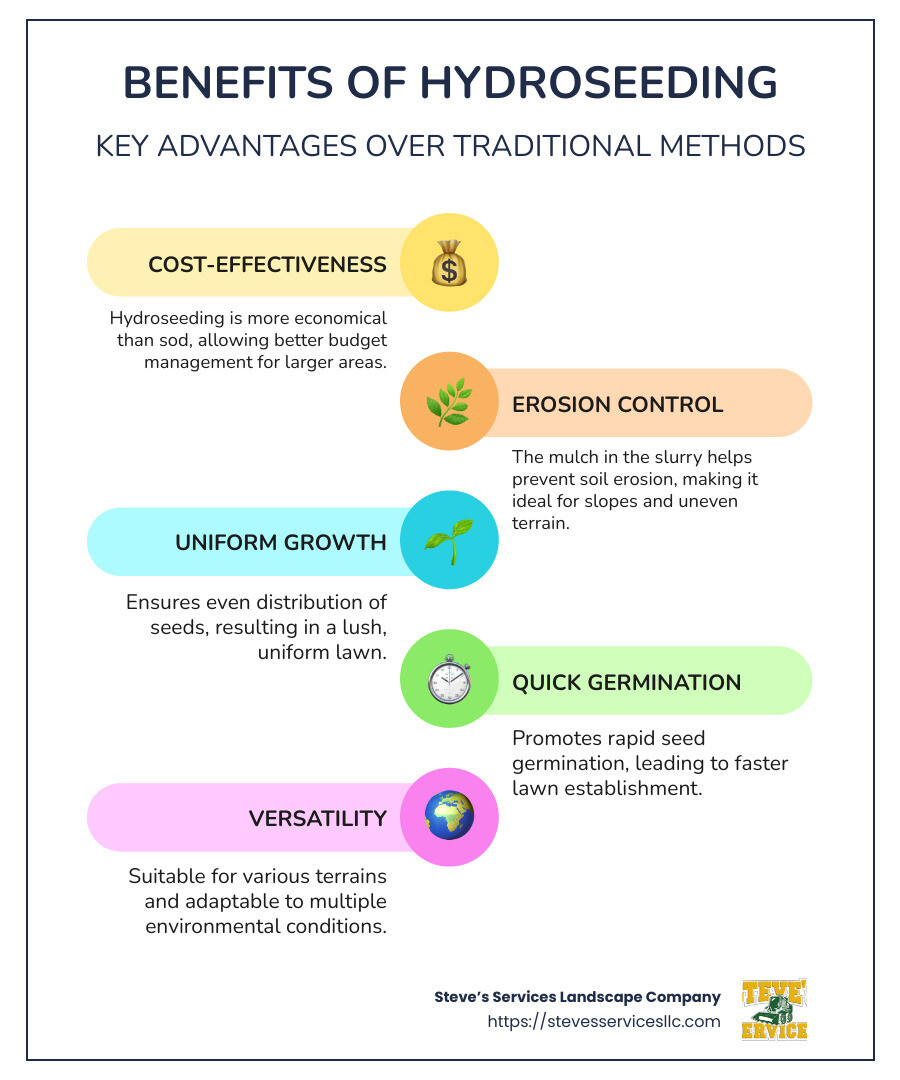
Cost-Effectiveness
Hydroseeding is a budget-friendly option for establishing a new lawn. It costs significantly less than laying sod—often less than a quarter of the price. This makes it an attractive choice for homeowners and businesses looking to cover large areas without breaking the bank. Plus, the labor involved is less intensive than traditional methods, saving you both time and money.
Erosion Control
One of the standout benefits of hydroseeding is its ability to control erosion. The mulch in the slurry acts as a protective layer, stabilizing the soil and preventing it from washing away. This is particularly useful for properties with slopes or loose soil. The protective barrier not only keeps the soil in place but also enriches it over time as the mulch decomposes.
Uniform Growth
Hydroseeding ensures a uniform and lush lawn. The slurry is sprayed evenly across the area, providing consistent coverage. This eliminates the patchiness often seen with traditional seeding and the visible seams common with sod. A well-hydroseeded lawn is both visually appealing and healthier, as it evenly distributes nutrients and seeds.
Quick Germination
Time is of the essence when establishing a new lawn, and hydroseeding delivers rapid results. Grass from hydroseeding can start to germinate in as little as one to two weeks, depending on conditions. This quick turnaround means you’ll see a green, vibrant lawn much sooner than with other methods. The combination of seeds, mulch, and fertilizer in the slurry creates an ideal environment for rapid growth.
Hydroseeding is not just an efficient way to establish a lawn; it’s a strategic investment in your property’s beauty and health. By choosing this method, you benefit from cost savings, effective erosion control, uniformity, and speedy germination—all leading to a lush and inviting landscape.
How to Hydroseed Your Lawn with Professional Help
Transforming your outdoor space with hydroseeding can be efficient and effective when done by professionals. Here’s an overview of the process when you choose expert services like Steve’s Services Landscape Company.
Soil Preparation
Professionals begin by preparing the soil, ensuring all weeds, rocks, and debris are removed. They till the soil to a depth of about 6 inches to enhance drainage and aeration. Adding organic matter like compost is often recommended to improve soil fertility.
Choosing Seeds
Selecting the right seeds is crucial for a successful lawn. Experts can customize a grass blend tailored to your local climate and specific needs, such as drought resistance or shade tolerance. Their experience ensures you get the best advice and results.
Mixing Slurry
The core of hydroseeding is the slurry mixture, which includes grass seeds, mulch, water, fertilizer, and sometimes tackifiers to help the seeds adhere to the soil. The mulch acts as a protective layer, retaining moisture and nutrients, and professionals ensure the right balance for optimal growth.
Spraying Technique
Using specialized hydroseeding equipment, professionals spray the slurry evenly over the prepared soil. This ensures a consistent application, covering every inch of your lawn. Their expertise in spraying techniques guarantees a uniform and lush appearance.
Maintenance Tips
After hydroseeding, keeping the area moist is essential. Professionals provide guidance on watering schedules, especially during dry weather. They advise avoiding foot traffic on the lawn until the grass is well-established, usually after a few weeks.
Essential Tools and Materials for Hydroseeding
- Hydroseeder Machine: Used by professionals for precise slurry application.
- Mulch Types: Options include wood fiber mulch, blended mulch, and paper mulch. Wood fiber is often the most effective.
- Fertilizers: Essential for promoting quick germination and healthy growth.
- Tackifiers: These help the seeds adhere to the soil, especially important on slopes.
Best Time to Hydroseed
Timing is crucial for successful hydroseeding. Professionals recommend spring and fall when the soil is warm and moist. They avoid hydroseeding in extreme temperatures to ensure the best growth conditions.
Seasonal Advice and Climate Considerations
Consider your local climate when planning your hydroseeding project. In areas with harsh winters, early fall is ideal to allow the grass to establish before the cold sets in. In warmer climates, spring provides a full growing season for development.
By choosing professional hydroseeding services, you can achieve a lush, green lawn that enhances your property’s beauty and value. Hydroseeding offers a practical and efficient way to establish a new lawn with minimal hassle, especially when handled by experts.
Comparing Lawn Seeding Methods
When deciding how to grow a lush lawn, you have a few options. Let’s compare hydroseeding with sod and traditional seeding to help you make the best choice.
Hydroseeding vs. Sod
Cost Comparison
Hydroseeding is generally more cost-effective than sod. Sod can be up to four times more expensive because it’s essentially pre-grown grass that you lay down. Hydroseeding, on the other hand, involves spraying a mixture of seeds, mulch, and nutrients, reducing costs significantly, especially for larger areas.
Growth Rate
Sod offers instant results; you can have a green lawn as soon as it’s laid. However, hydroseeding, while not instant, provides faster germination compared to traditional seeding. You can expect to see grass sprouting within a week to ten days, with a full lawn in about five weeks.
Aesthetic Outcomes
Sod might have visible seams and can sometimes look artificial. In contrast, hydroseeding allows for a more natural and uniform appearance as the grass grows directly from the ground, covering the soil evenly without gaps.
Hydroseeding vs. Traditional Seeding
Water Usage
Hydroseeding requires more water initially compared to traditional seeding. The mulch in the hydroseeding mixture helps retain moisture, but you’ll still need to water frequently during the first few weeks to ensure successful germination.
Labor Intensity
Traditional seeding can be labor-intensive, requiring careful soil preparation, seed spreading, and protection from elements like wind and birds. Hydroseeding simplifies this process with a single application that covers the ground evenly, reducing manual labor significantly.
Lawn Quality
While traditional seeding offers a customizable approach, it can lead to patchy growth. Hydroseeding, with its even slurry application, results in a more uniform lawn. The mulch in the mixture also aids in erosion control and helps the seeds establish a strong root system.
By understanding these differences, you can choose the best method for your lawn’s needs, whether you prioritize cost, speed, or the final look.
Common Challenges and Solutions in Hydroseeding
Hydroseeding is a fantastic way to grow a lush and uniform lawn, but like any process, it comes with its own set of challenges. Let’s explore some common issues and how to tackle them effectively.
Water Requirements
One of the main challenges with hydroseeding is the intensive watering needed initially. Unlike sod, which requires about two weeks of watering, a hydroseeded lawn may need up to two months of consistent moisture. This means watering the lawn several times a day, especially during dry spells.
Solution: Install an irrigation system to automate watering and ensure even coverage. This can save time and help maintain the necessary moisture levels for your new lawn to thrive.
Slope Planting
Planting on slopes can be tricky because water tends to run off quickly, making it hard for seeds to stay moist. This can lead to uneven growth or erosion.
Solution: Use a mulch with good water retention properties, like wood fiber mulch, which is heavier and helps hold the seeds in place. You might also need to adjust your watering technique to shorter, more frequent sessions to keep the slope adequately moist.
Initial Lawn Care
During the first few weeks, it’s crucial to keep off the grass. Foot traffic can damage young sprouts and compact the soil, hindering growth.
Solution: Set up barriers or signs to keep children and pets off the lawn until it’s established. Once the grass reaches about 3 inches in height, you can start mowing, but remember to use sharp blades and never cut more than one-third of the grass length at a time.
By addressing these challenges head-on, you can ensure your hydroseeded lawn grows healthy and strong, providing a beautiful, green space for years to come.
Next, we’ll explore some frequently asked questions about hydroseeding to help you make informed decisions for your lawn care needs.
Frequently Asked Questions about Hydroseeding
Is hydroseeding worth the cost?
Absolutely, hydroseeding is often worth the investment for many homeowners and businesses. It’s a cost-effective method compared to laying sod, offering savings of up to 75%. Additionally, hydroseeding provides a more uniform and natural-looking lawn compared to traditional seeding methods. While the initial watering needs are intensive, the long-term benefits of a healthy, lush lawn can outweigh these early efforts.
Can you hydroseed over an existing lawn?
While it is technically possible to hydroseed over an existing lawn, it’s generally not recommended. The slurry used in hydroseeding can potentially harm existing grass. If your goal is to fill in patchy areas, overseeding might be a better option. For the best results, hydroseeding should be done on bare soil to ensure the new grass has the best chance to establish strong roots and grow uniformly.
How long does it take for a hydroseeded lawn to grow?
A hydroseeded lawn typically begins to show growth within 5 to 7 days, depending on factors like weather, watering, and the specific grass seed used. Full establishment usually takes about 4 to 6 weeks. During this time, maintaining consistent moisture is crucial. After about 4 weeks, you can start mowing the lawn once the grass reaches a height of 3 to 4 inches.
Conclusion
At Steve’s Services Landscape Company, we pride ourselves on changing outdoor spaces across multiple Massachusetts communities. Our expertise in hydroseeding offers a modern solution for lawn care, combining cost-effectiveness with exceptional results. By choosing hydroseeding, you invest in a lawn that not only looks beautiful but also thrives in the long term.
The long-term benefits of hydroseeding are clear. This method promotes uniform growth and quick germination, leading to a lush, green lawn that stands the test of time. Unlike traditional methods, hydroseeding provides a robust foundation for your grass, minimizing the risk of patchy areas and soil erosion.
We recommend professional hydroseeding for optimal results. Our skilled team at Steve’s Services ensures each project is custom to meet your specific needs, using the best techniques and materials available. Our comprehensive approach guarantees that your lawn will not only be visually appealing but also healthy and sustainable.
For more information about our hydroseeding services and how we can help you achieve the lawn of your dreams, visit our Hydroseeding Services page. Let us bring our expertise to your lawn care project and create a vibrant landscape you can enjoy for years to come.