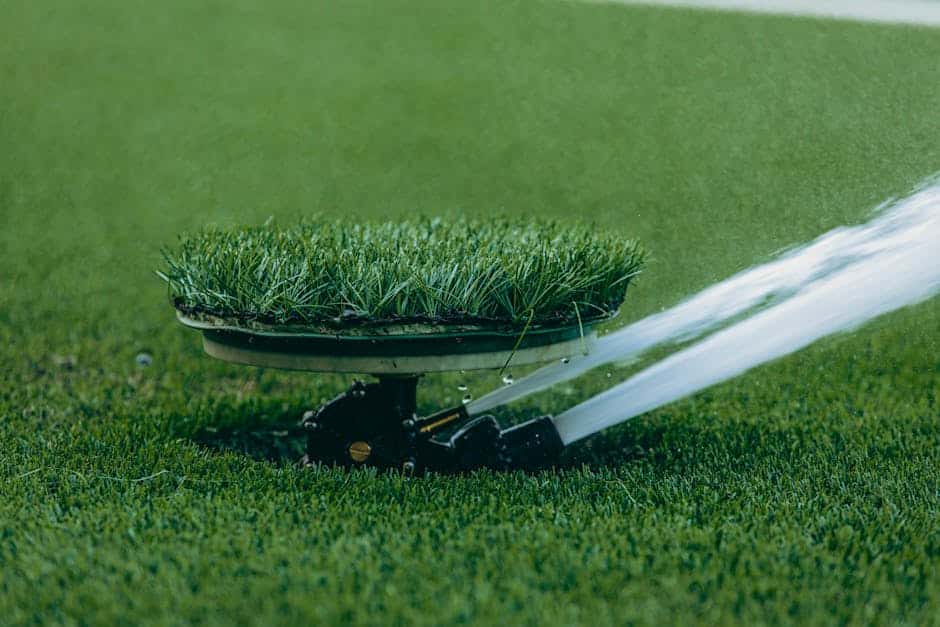
Understanding Spring Sprinkler System Activation
Charge sprinkler system refers to the spring activation process where you reintroduce water to your irrigation system after winter, pressurizing the pipes and testing each zone to ensure everything works properly. Here’s what you need to know:
Quick Answer: What Does “Charging” a Sprinkler System Mean?
- Spring Activation – Turning your irrigation system back on after winter dormancy
- System Pressurization – Slowly reintroducing water to pipes that were drained or blown out
- Zone Testing – Running each irrigation zone to check for leaks, broken heads, or winter damage
- Backflow Testing – Inspecting and testing the backflow preventer (often requires certification)
- Controller Programming – Adjusting watering schedules for the new season
Important: While you can perform basic activation yourself, professional service is strongly recommended due to risks of water hammer damage, broken pipes, backflow preventer compliance issues, and potential contamination of drinking water supplies.
Every spring, homeowners across Massachusetts face the same question: should I activate my sprinkler system myself or call a professional? According to research, professional spring activation typically costs between $160 and $500+ depending on system size (based on internet data, not Steve’s Services pricing), while a mistake during DIY activation can lead to repair bills exceeding $1,000.
I’m Steve Sylva, owner of Steve’s Services with over 25 years of landscaping experience in the greater Boston area. Throughout my career, I’ve seen countless homeowners attempt to charge sprinkler systems themselves, only to face expensive repairs from water hammer damage, broken backflow preventers, or cracked pipes—which is why I always recommend professional spring activation for proper system care.
Quick charge sprinkler system definitions:
- underground sprinkler system maintenance
- installing irrigation system
- how much does it cost to winterize sprinkler system
What “Charging” Your Sprinkler System Really Means
When we talk about “charging” a sprinkler system in the spring, we’re essentially referring to its spring start-up or activation. This annual maintenance task is the critical first step in preparing your irrigation system for the watering season after its winter dormancy. It’s the opposite of winterization, which involves draining the system to prevent freezing damage.
The process involves carefully reintroducing water to the pipes, pressurizing the entire system, and performing a thorough system inspection. This isn’t just about flipping a switch; it’s a methodical procedure designed to check for any damage that might have occurred over the winter months, ensure all components are functioning correctly, and set your system up for efficient, trouble-free operation throughout the warmer season.
During winter, especially here in Massachusetts where temperatures regularly drop below freezing, sprinkler systems are “winterized.” This typically means blowing out all the water from the pipes with an air compressor to prevent ice from forming and cracking the components. When spring arrives, “charging” the system reverses this process. It involves:
- System Pressurization: Gradually refilling the empty pipes with water from your main supply. This step is crucial and must be done slowly to avoid sudden pressure surges.
- Reintroducing Water: Ensuring water flows smoothly through all main lines, valves, and lateral lines to each sprinkler head.
- Annual Maintenance Task: Recognizing this as a regular, necessary part of owning an irrigation system, just like changing the oil in your car.
- Preparing for Watering Season: Getting your system ready to deliver water efficiently to your lawn and landscaping.
- Checking for Winter Damage: A critical component of charging is identifying any issues caused by freezing temperatures, such as cracked pipes, broken sprinkler heads, or malfunctioning valves.
The key difference between “charging” and “winterizing” is simple: winterizing prepares the system for cold by removing water, while charging reactivates it for warm weather by reintroducing water and pressure. Both are vital for the longevity and efficiency of your irrigation system. Without proper charging, you risk not only inefficient watering but also significant damage and costly repairs down the line.
The Sprinkler Activation Process: What’s Involved?
The spring activation process is a detailed affair that goes beyond simply turning on the water. For us, it’s a systematic approach to ensure every part of your irrigation system is ready to perform. Here’s a look at the typical steps involved when we charge sprinkler system:
Key Steps in Professional Sprinkler System Charging
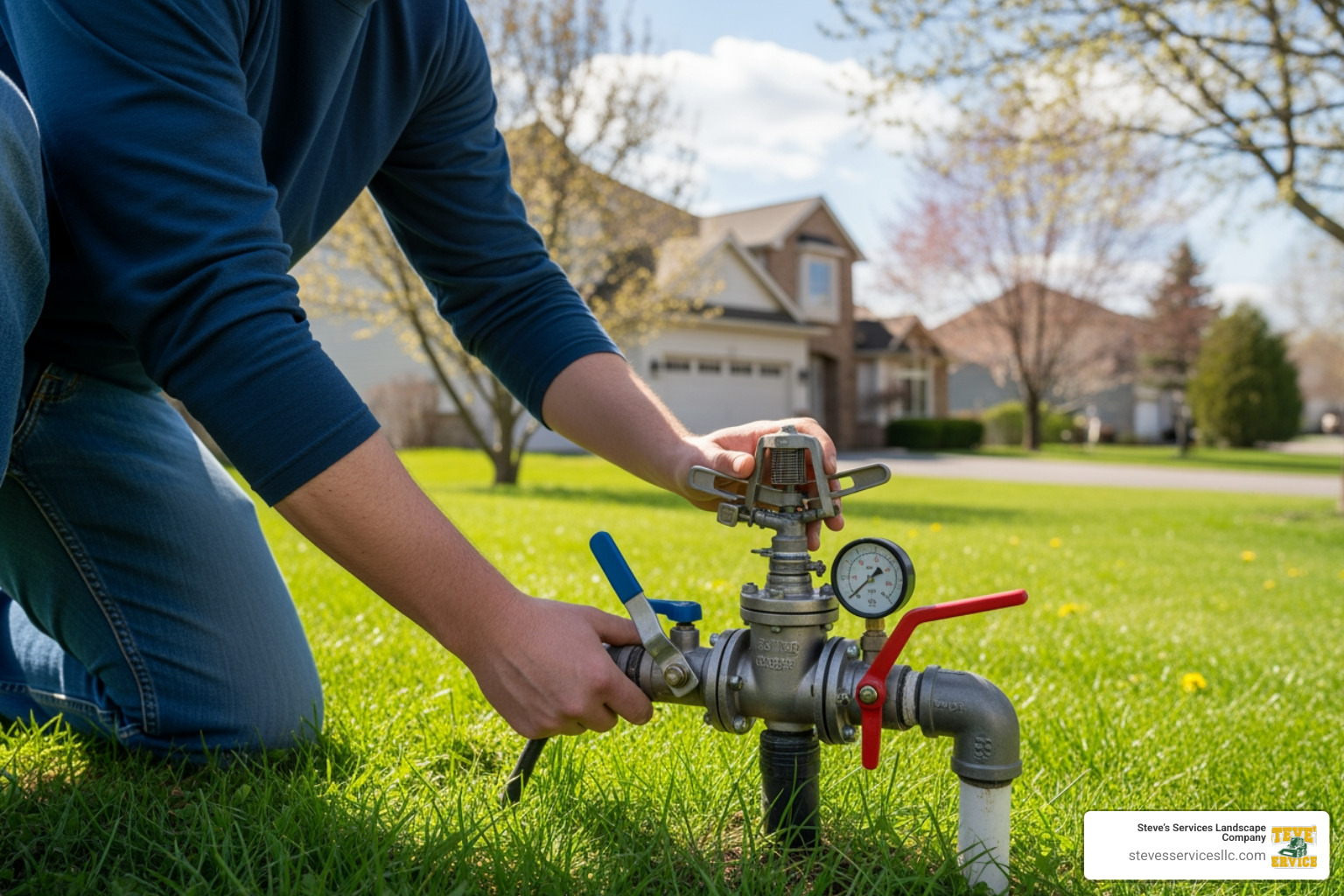
- Locating and inspecting system core components: Our technicians begin by locating the main irrigation valve, the shut-off valve, and the backflow preventer. These are the heart of your system. We perform a meticulous visual inspection for any signs of cracks, leaks, or other winter freeze damage that could compromise the system’s integrity. This includes checking all visible pipes and connections.
- Gradually reintroducing water to the system: This is perhaps the most critical step. We slowly open the main valve, allowing water to trickle back into the empty pipes. This gradual approach is essential to prevent “water hammer,” a sudden pressure surge that can severely damage pipes, valves, and sprinkler heads. We listen carefully for any unusual sounds that might indicate leaks or blockages and check for immediate issues as the system begins to pressurize.
- Testing each zone and inspecting performance: Once the main lines are pressurized, we activate each irrigation zone individually through the controller. As each zone runs, our team carefully inspects every sprinkler head for proper function, ensuring they pop up correctly, rotate as intended, and deliver water in the right spray pattern. We identify any clogged nozzles, broken heads, or areas with inadequate coverage. Adjustments are made on the spot to optimize performance.
- Controller Programming: Finally, we program or adjust your irrigation controller for the new watering season. This includes setting appropriate watering times and days based on local weather patterns, plant needs, and water conservation principles. Modern smart controllers can significantly improve efficiency by adjusting watering schedules based on real-time weather data and soil moisture, which can save our clients hundreds annually on water bills.
This comprehensive approach ensures that when we charge sprinkler system, it’s not just “on,” but operating at its best, ready to provide your landscape with the precise hydration it needs.
The Hidden Dangers: Why Professional Sprinkler System Charging Matters
While the idea of saving a few dollars by doing it yourself might be tempting, the potential risks associated with improper charge sprinkler system activation far outweigh the perceived savings. We’ve seen the costly aftermath of DIY attempts gone wrong.
The dangers include:
- Water Pressure Hazards: Improperly opening the main water supply can lead to a phenomenon known as water hammer. This sudden surge of pressure can act like a shockwave, causing pipes to burst, valves to crack, and sprinkler heads to break. The result is often extensive damage that requires immediate and expensive repairs.
- System Damage Risks: Beyond water hammer, other issues can arise. If the system wasn’t fully winterized, residual water could have frozen, creating hairline cracks in pipes or components that only become apparent when the system is repressurized. These small cracks can quickly turn into major leaks.
- Costly Repairs: A broken main line, a damaged backflow preventer, or multiple cracked sprinkler heads can quickly escalate into a repair bill of several hundred to over a thousand dollars. For instance, a minimum charge for a non-member sprinkler system repair call can be $120.00, and repairing a poly line (plastic pipe) under 5ft can cost around $230.00 (based on internet data, not Steve’s Services pricing). This significantly outweighs the cost of professional activation.
- Water Waste: Even minor leaks or misaligned sprinkler heads can lead to substantial water waste. This not only harms the environment but also inflates your water bills.
- Protecting Drinking Water: Perhaps the most critical safety concern is the backflow preventer. This device safeguards your drinking water supply from contamination.
- Municipal Regulations: Many municipalities in Massachusetts, including those we serve like Everett, Medford, and Stoneham, have strict regulations regarding backflow prevention and require annual testing by certified professionals. Ignoring these can lead to fines and health risks.
The Critical Role of the Backflow Preventer
The backflow preventer is a non-negotiable component of your sprinkler system, acting as a critical barrier between your irrigation system and the public drinking water supply. Its primary function is contamination prevention. Without it, there’s a risk that water from your sprinkler system, which might contain fertilizers, pesticides, or other contaminants, could flow backward into your home’s potable water or even the municipal water supply.
This protection of the public water supply is why its proper functioning is so important. How backflow works is relatively simple: it uses a series of valves to ensure water can only flow in one direction. However, these devices are complex and require regular attention. Most local jurisdictions in Massachusetts mandate required annual testing of backflow preventers. This testing must be performed by certified technicians to ensure compliance and public safety. Failure to comply can result in fines and, more importantly, poses a serious health risk to your community.
Consequences of Improper Sprinkler System Charging
The repercussions of not properly activating your sprinkler system can range from minor annoyances to significant financial burdens:
- Cracked Pipes: The most common and often most expensive consequence. Water hammer or overlooked freeze damage can lead to cracked PVC or poly pipes, requiring excavation and repair.
- Broken Valves: Valves, especially the delicate internal mechanisms, can be damaged by sudden pressure changes, leading to zones that won’t turn on or won’t shut off.
- Damaged Backflow Device: The backflow preventer is particularly vulnerable to water hammer. A damaged device not only fails to protect your drinking water but also requires costly replacement and re-testing. A backflow prevention valve costs between $100 and $600 per piece, not including installation (based on internet data, not Steve’s Services pricing).
- Lawn Flooding: Uncontrolled leaks or continuously running zones can quickly saturate parts of your lawn, leading to standing water, root rot, and mosquito breeding grounds.
- Foundation Damage: Persistent leaks near your home’s foundation can erode soil, compromise structural integrity, and lead to expensive repairs.
- High Water Bills: Even small, undetected leaks can cause your water meter to spin unnecessarily, leading to unexpectedly high water bills.
- Unexpected Repair Costs: What might seem like a simple DIY task can quickly turn into a repair nightmare. Our clients in Burlington, Reading, and Winchester often tell us stories of trying to charge sprinkler system themselves only to call us for an emergency repair.
By choosing professional spring activation, you mitigate these risks, ensuring your system is in expert hands and complies with all local regulations.
Professional Spring Activation: Cost, Benefits, and Peace of Mind
For us at Steve’s Services, professional spring activation is about more than just turning on your sprinklers; it’s about delivering expert inspection, proper tools, time savings, comprehensive maintenance, and insured service. It’s about providing you with peace of mind.
Our experienced technicians understand the intricacies of various irrigation systems. We bring:
- Expert Inspection: Our trained eyes can spot subtle signs of damage or wear that a homeowner might miss, preventing minor issues from becoming major problems. We ensure all components, from the main line to the smallest sprinkler head, are in optimal condition.
- Proper Tools: We have the specialized tools and equipment necessary for safely pressurizing your system, accurately testing backflow preventers, and making precise adjustments to sprinkler heads and controllers.
- Time Savings: Your time is valuable. Let us handle the activation process efficiently, freeing you up to enjoy your spring weekend.
- Comprehensive Maintenance: Spring activation is an opportune time for us to identify and address any potential issues. This proactive approach extends the lifespan of your system and improves its overall efficiency.
- Insured Service: In the rare event that something goes wrong during activation, our services are insured, protecting you from unexpected costs.
Comparing Costs: DIY vs. Professional Service
When considering whether to charge sprinkler system yourself or hire a professional, it’s helpful to weigh the costs and benefits.
DIY Costs:
- Tools: You might need a pressure gauge, a specialized backflow testing kit (often requiring certification to use legally), and various repair parts.
- Time: The process can be time-consuming, especially if you encounter unexpected issues.
- Risk of Expensive Repairs: As discussed, improper activation can lead to significant damage. A repair to a frozen sprinkler backflow valve, for instance, can be quite costly.
- Learning Curve: Understanding how to properly inspect and troubleshoot a sprinkler system requires knowledge that many homeowners don’t possess.
Professional Service Pricing:
A professional spring activation can range from $150 to over $500 depending on system size and complexity (based on internet data and not actual costs for Steve’s Services). This usually includes the full activation process, inspection, minor adjustments, and often the backflow preventer test. While the upfront cost is higher than DIY, it includes expertise, specialized tools, and insurance against accidental damage.
Here’s a comparison table to help you decide:
| Factor | DIY Activation | Professional Activation |
|---|---|---|
| Cost | Low initial outlay (time, basic parts) | Average internet cost $150 – $500+ (depending on system size and complexity, not Steve’s Services pricing) |
| Time | Significant time investment, especially for troubleshooting | Minimal time investment for homeowner, efficient service |
| Risk | High risk of costly damage (water hammer, broken pipes) | Low risk of damage, insured service |
| Expertise | Limited, potential for missed issues | Extensive, trained technicians, comprehensive inspection |
| Tools | May require specialized tools, often rented | Specialized equipment included |
| Compliance | Potential for non-compliance with backflow regulations | Ensures adherence to local regulations, certified testing |
| Peace of Mind | Worry about potential issues and future repairs | Confidence in system integrity and efficiency |
| Inspection Quality | Basic visual checks, easy to miss underlying problems | Detailed, systematic check of all components, proactive issue identification |
For a hassle-free start to your watering season and the assurance that your system is functioning optimally and safely, professional activation is a smart investment for your Massachusetts home.
Frequently Asked Questions about Charging a Sprinkler System
We often get questions from our clients in Lynnfield, Saugus, and Melrose about the nuances of “charging” their sprinkler systems. Here are some of the most common ones:
What are signs my system wasn’t charged correctly?
If your sprinkler system isn’t functioning correctly after activation, it will usually give you clear signs. These can include:
- Low Pressure: Some heads may not pop up fully, or the water stream might be weak and inconsistent. This could indicate a leak, a partially closed valve, or a problem with the water supply.
- Sputtering Heads: Sprinkler heads that sputter or spit water rather than spraying a consistent stream often point to air trapped in the lines, or debris clogging the nozzles.
- Geysers: A sudden gush of water shooting high into the air, or a continuous flow from a single spot in your lawn, is a tell-tale sign of a broken pipe or a disconnected sprinkler head.
- Pooling Water: Puddles forming in specific areas of your lawn, especially when the system is running, indicate leaks in underground pipes or issues with drainage.
- Dry Spots: Conversely, if certain areas of your lawn remain dry despite the system running, it could mean a zone isn’t activating, heads are clogged, or they’re misaligned.
- Unusually High Water Bill: A sudden spike in your water bill, even without obvious signs of leaks, can be a strong indicator of a hidden leak in your irrigation system.
If you observe any of these signs, it’s best to turn off your system and contact a professional for a sprinkler repair estimate to diagnose and fix the issue.
How is charging a drip irrigation system different?
While the overall principle of reactivating after winter is similar, charge sprinkler system for drip irrigation has some distinct characteristics:
- Similar Principles: You still need to slowly reintroduce water to the system to avoid pressure surges and inspect for winter damage.
- Checking Emitters vs. Heads: Instead of checking pop-up sprinkler heads, our technicians focus on inspecting individual emitters or drip lines. We look for clogs, disconnections, or damage to the delicate tubing.
- Flushing Lines to Clear Debris: Drip systems are particularly susceptible to clogs from sediment or debris. A common step during activation is to temporarily remove end caps or flush valves to allow water to flush out any accumulated particles before reattaching them.
- Lower Pressure Systems: Drip irrigation operates at much lower pressures than conventional sprinkler systems. This means that while water hammer is still a concern, the force is less extreme. However, pressure regulators are crucial components in drip systems, and their proper function must be verified.
Drip irrigation is highly efficient for garden beds and shrubs, delivering water directly to the plant roots. Its activation requires a careful eye for small details to ensure each plant receives adequate hydration.
Can I just turn the main valve on quickly?
Absolutely not! This is one of the most common mistakes homeowners make when attempting to charge sprinkler system themselves, and it’s a surefire way to cause significant damage.
- Explaining Water Hammer: Turning the main valve on quickly creates a phenomenon called “water hammer”. When water suddenly rushes into empty pipes, it creates a powerful pressure wave that can travel through the entire system. Imagine slamming a door shut with immense force – that’s what water hammer does to your pipes.
- Shockwave Damage: This shockwave can cause pipes to burst, especially at joints or weaker points. It can also damage delicate components like backflow preventers, sprinkler valves, and even individual sprinkler heads.
- Importance of Slow, Gradual Opening: Our professionals always open the main water supply valve very slowly, allowing the pipes to fill gradually and the pressure to equalize throughout the system. This method prevents the destructive force of water hammer.
- Protecting Pipes and Valves: A slow and steady approach protects your entire irrigation infrastructure, saving you from costly and inconvenient repairs. It’s a small act of patience that yields big benefits in system longevity and performance.
Conclusion: Ensure a Healthy Lawn All Season Long
As we’ve explored, the process to charge sprinkler system in the spring is a crucial annual task for any homeowner with an irrigation system. It’s the essential step that wakes your lawn up from its winter slumber and prepares it for a season of lush, vibrant growth. Proper activation involves more than just turning on the water; it’s a comprehensive inspection and testing procedure that ensures every component of your system is functioning optimally.
The importance of proper activation cannot be overstated. It’s the difference between an efficient, water-saving system and one riddled with leaks, dry spots, and expensive repairs. The risks of improper activation, from the destructive force of water hammer to the critical health implications of a faulty backflow preventer, far outweigh any perceived benefits of a DIY approach. Professional activation, while an investment, offers unparalleled benefits in terms of expertise, thoroughness, and peace of mind.
At Steve’s Services, we understand that a healthy lawn is a source of pride for our clients in Everett, Medford, and all the communities we serve. Our expert technicians are dedicated to ensuring your system is charged correctly and tuned for peak performance, allowing you to enjoy a beautiful, well-watered landscape without worry. For a worry-free spring start-up and a lush lawn all summer, explore our professional irrigation systems services today.