
Why Choosing the Right Residential Home Contractor Matters

Residential home contractors are essential for bringing renovation dreams to life, but choosing the wrong one can lead to disaster. Understanding how to vet a professional is key to protecting your investment and ensuring quality results.
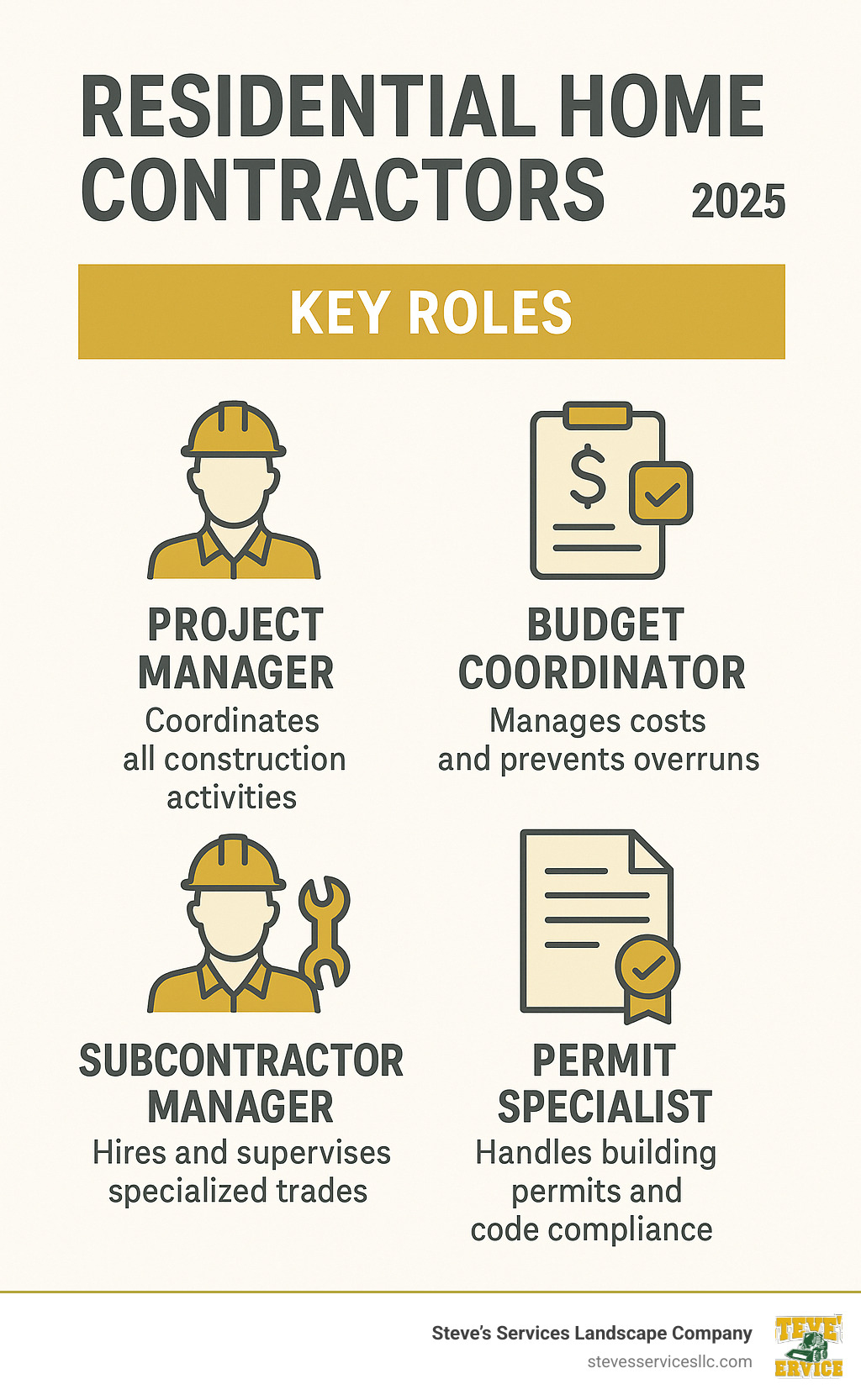
A general contractor acts as your project’s central command, handling key roles like:
- Project Manager: Overseeing all construction from start to finish.
- Budget Coordinator: Managing costs and preventing overruns.
- Subcontractor Manager: Hiring and coordinating trades like electricians and plumbers.
- Permit Specialist: Securing building permits and ensuring code compliance.
Not all contractors meet the same standards. BBB Accredited contractors, for example, undergo a thorough evaluation and adhere to higher standards. Finding the right partner involves more than getting the lowest bid; you need a professional who is licensed, bonded, and insured. These three protections are critical for safeguarding your project and property.
As the owner of Steve’s Services, I’ve spent over 25 years working alongside residential home contractors on landscaping and hardscaping projects. I’ve seen how a great contractor partnership, built on proper vetting and clear communication, is the foundation of a successful project.
Simple residential home contractors glossary:
- find home improvement contractors
- local remodeling contractors near me
- renovation general contractor
Understanding the Role and Services of a General Contractor
When starting a significant home improvement project, a residential home contractor, or general contractor, orchestrates the entire process. They are responsible for ensuring everything comes together smoothly, from managing budgets to coordinating skilled tradespeople.

What Does a General Contractor Do?
A general contractor is your project’s single point of contact and manager, turning your vision into reality. Their responsibilities include:
- Project Management: They oversee the entire project, from initial planning to final completion, managing schedules, progress, and quality control to ensure work meets high standards.
- Budget and Material Management: A good contractor establishes a realistic budget, provides detailed cost breakdowns, and works to prevent overruns. They also handle sourcing all necessary materials, often at better prices.
- Subcontractor Coordination: General contractors hire, schedule, and supervise their network of trusted specialists, including electricians, plumbers, and carpenters.
- Permit and Inspection Handling: They steer the complex process of securing required building permits and coordinating with local inspectors to ensure all work is up to code.
A contractor removes the stress of managing a large project, allowing you to focus on your daily life while your dream home takes shape. To learn more, check out our General Contracting Services page.
When Do You Need to Hire a Contractor?
While DIY is great for small tasks, hiring a residential home contractor is essential for larger, more complex jobs. You should hire a general contractor for:
- Large-Scale Projects: Building a new home, adding a room, or undertaking a complete gut renovation.
- Complex Coordination: Any project requiring three or more specialized trades (e.g., plumbing, electrical, carpentry).
- Structural Changes: Work that involves altering your home’s structure, like removing a load-bearing wall or adding a second story.
- Major Renovations: Projects like kitchen or bathroom remodels with layout changes, or finishing a basement.
If you lack the time, skills, or network to manage every detail, a professional contractor is a wise investment that ensures your project is completed correctly and efficiently. For more resources, explore our guide on Local Remodeling Contractors Near Me.
Common Services Offered by Residential Home Contractors
Residential home contractors manage a wide array of services to improve your living space. Common projects include:
- New Home Builds: Constructing a custom home from the ground up, managing everything from site prep to final finishes.
- Full Remodels: Overhauling an entire house or floor, including reconfiguring rooms and updating major systems.
- Kitchen and Bathroom Renovations: Managing these popular projects that involve multiple trades like plumbing, electrical, and tiling.
- Home Additions: Expanding your living space with a new room or second story, ensuring seamless integration with the existing structure.
- Basement Finishing: Changing an unfinished basement into a functional living area like a family room or home office.
Many contractors also handle exterior renovations, deck building, and garage construction. For a broader look at available professionals, visit our guide on Home Improvement Contractors Near Me.
The Vetting Process: How to Find and Qualify Reputable Residential Home Contractors
Finding the right residential home contractor is a critical process that protects you from project nightmares. A thorough vetting process helps you find a professional who will treat your home with care and deliver on their promises.

Where to Find Potential Contractors
Finding quality residential home contractors starts with knowing where to look. Here are some reliable sources:
- Word-of-Mouth Referrals: Ask friends, family, and neighbors for recommendations. A personal endorsement is often the most trustworthy.
- Online Directories: Use sites like the Better Business Bureau to find accredited contractors with ratings and customer reviews.
- Local Industry Sources: Check with local building associations or ask for recommendations at building supply stores. They know which contractors are reputable.
When you get a referral, ask the reference about the project’s quality, budget, timeline, and communication. Most importantly, ask if they would hire the contractor again.
For additional guidance, check out our guide on how to Find Home Improvement Contractors.
Essential Questions to Ask Your Potential Contractor
Interviewing a contractor is about more than just getting a quote. Ask these essential questions:
- Are you licensed and insured? Ask for proof of their license, liability insurance, and workers’ compensation. You can often verify a contractor’s credentials through state licensing boards.
- Do you have experience with projects like mine? Ensure they have a portfolio of work similar to what you need.
- How do you manage subcontractors? Inquire about their vetting process and if their subcontractors are also licensed and insured.
- What is your communication process? Understand how they will provide updates and handle concerns during the project.
- What are your proposed timelines and payment schedules? A professional will provide a realistic schedule and a payment plan tied to project milestones, not large upfront sums.
Red Flags vs. Green Flags in a Contractor
Knowing what to look for can help you avoid problems. Trust your instincts during the vetting process.
Red Flags (Warning Signs):
- Vague Bids: A lack of detail about costs for labor and materials.
- High-Pressure Tactics: Rushing you into a decision with “limited-time” offers.
- Large Upfront Payments: Demands for a significant portion of the project cost, especially in cash, before work begins.
Green Flags (Good Signs):
- Detailed Proposals: Itemized breakdowns of all costs, materials, and a clear timeline.
- Clear Communication: Responds promptly and answers questions thoroughly.
- Professionalism: Arrives on time, is organized, and provides references readily.
- Positive Reviews: A strong history of satisfied clients across multiple platforms.
From Bid to Build: Navigating the Contract and Project Process
After vetting potential residential home contractors, the next step is understanding their proposals and crafting a solid contract. This stage builds the foundation for your entire project, so getting the details right is crucial.

Decoding the Contractor’s Bid and Proposal
A contractor’s bid is more than a final price; it’s a detailed project map. A strong proposal from a residential home contractor should include:
- Itemized Cost Breakdown: Separate line items for labor (including subcontractors) and materials.
- Allowances: Budgeted amounts for items you haven’t selected yet, like light fixtures or tiles. This provides cost flexibility.
- Permit Fees and Exclusions: A clear list of additional costs like permits and a specific mention of what is not included in the bid.
- Project Timeline: A realistic schedule with key milestones, start dates, and estimated completion dates.
A transparent bid prevents misunderstandings and budget surprises down the road. For more guidance on finding qualified professionals, check out our Licensed Home Improvement Contractors Near Me resources.
The Anatomy of a Strong Contractor Contract
The contract is your project’s rulebook, protecting both you and the contractor. Ensure it contains these key elements:
- Detailed Scope of Work: A specific description of all tasks, materials (including brand names and models), and finishes.
- Total Cost and Payment Schedule: The final price and a schedule of payments tied to project milestones (e.g., framing complete, drywall installed). Avoid large upfront payments.
- Project Timeline: Clear start and target completion dates.
- Change Order Process: A formal procedure for documenting and approving any changes to the original plan, including cost and schedule adjustments.
- Proof of Insurance: Confirmation of the contractor’s liability and workers’ compensation insurance.
- Warranties: Guarantees on both workmanship and materials.
- Dispute Resolution: A clause outlining the steps for resolving disagreements, such as mediation.
- Lien Waivers: Documents provided upon final payment that prove all subcontractors and suppliers have been paid, protecting you from liens against your property.
A thorough contract is the best insurance for a successful renovation.
Managing Your Project: Budget, Timelines, and Dispute Resolution
Even with the best residential home contractors, projects can have unexpected challenges. The key to success is managing your budget, setting realistic expectations, and handling issues with professionalism. This phase is an ongoing partnership between you and your contractor, working toward the same goal.
How to Keep Your Renovation on Budget
Budget overruns are a common fear, but they can be managed with smart planning.
- Start with a Realistic Budget: Research typical costs for your project. For example, a kitchen remodel can range from $20,000 to over $150,000 depending on the scope. Note: These are average costs from internet data, not a direct quote.
- Build a Contingency Fund: Set aside an extra 10-20% of your total project cost for unexpected issues, like finding outdated wiring.
- Communicate Clearly: Be upfront with your residential home contractors about your financial limits. A good partner will help you stay within your budget.
- Limit Change Orders: Finalize as many decisions as possible before work begins. Each change adds to the cost and timeline.
- Discuss Material Costs: Talk to your contractor about how to handle price fluctuations and whether cost-effective alternatives are available.
For foundational work, hiring specialists like our Excavating and Concrete Contractors helps ensure crucial early stages stay on track.
How to Handle Issues and Disputes
Disagreements can happen, but most can be resolved with the right approach.
- Communicate Immediately: Address concerns as soon as they arise. Speak calmly and directly with your contractor. A simple conversation often clears up misunderstandings.
- Document Everything: Follow up verbal discussions with an email summarizing the conversation and agreed-upon solutions. Keep a paper trail for all changes and decisions.
- Refer to the Contract: If communication fails, consult your contract. It’s your guide for scope of work, quality standards, and dispute resolution procedures.
- Use Mediation: If you’re at an impasse, a neutral third-party mediator can help you find a solution without resorting to legal action.
- Seek BBB Assistance: If your contractor is accredited, the Better Business Bureau offers dispute resolution services. You can find a BBB Accredited professional on their website.
Focus on solutions, not blame. A professional contractor wants you to be a satisfied customer and has an incentive to make things right.
Frequently Asked Questions about Residential Home Contractors
Planning a home renovation brings up many questions. Having worked alongside residential home contractors for over 25 years, I’ve heard the same concerns from many homeowners. Here are some straightforward answers to help you move forward with confidence.
What’s a reasonable timeline for a home renovation?
Timelines depend entirely on the project’s scope. Residential home contractors provide estimates, but here are some general guidelines:
- Bathroom Remodel: 3 to 7 weeks
- Kitchen Remodel: 6 to 12 weeks
- Full Home Remodel: 3 to 6+ months
- New Home Construction: 9 to 18 months
Be aware that timelines can be affected by factors outside of anyone’s control, such as permit processing delays, material supply chain issues, and unforeseen problems finded during demolition (like hidden water damage or structural issues).
How much should I expect to pay for a general contractor?
Residential home contractors typically charge a fee of 10% to 20% of the total project cost. This percentage covers their management, overhead, and profit. The exact amount depends on project complexity and regional costs—for example, prices in Massachusetts communities like Burlington or Winchester may be higher than national averages.
Total project costs vary widely. For a kitchen remodel, prices can range from $20,000 for a basic refresh to over $150,000 for a high-end, custom renovation. Note: These are average costs from internet data, not a direct quote. Always get multiple detailed bids to compare what’s included.
What should be included in a contract with a general contractor?
A comprehensive contract protects both you and your contractor. As detailed earlier in this guide, a strong contract is a sign of a true professional. It should always include:
- A detailed scope of work
- Total cost and a milestone-based payment schedule
- Start and target completion dates
- Proof of liability and workers’ compensation insurance
- A formal change order process
- Warranties on workmanship and materials
- A dispute resolution clause
- Lien waiver procedures
Conclusion: Building Your Dream with the Right Partner
Choosing the right residential home contractors is the most critical step in your renovation journey. By thoroughly vetting candidates, insisting on a detailed contract, and maintaining clear communication, you partner with a professional who can turn your dream into a reality.
While a general contractor manages the main build, a truly successful project integrates specialized expertise for foundational and outdoor elements. A beautiful home addition feels incomplete without proper site preparation or a landscape that complements the new design. This is where specialists are essential.
Services like expert Excavating Contractors for site prep, professional Hardscaping Service for patios and walkways, and comprehensive Landscaping Services for curb appeal are crucial. At Steve’s Services, we partner with residential home contractors to provide these key services, ensuring a seamless project from foundation to finish.
We proudly serve Massachusetts communities, including Burlington, Danvers, Everett, Lynnfield, Medford, Melrose, North Reading, Reading, Revere, Saugus, Stoneham, Winchester, Woburn, Malden, and Wakefield. Our team often prepares the site before the build and adds the finishing landscape touches afterward, creating a cohesive and beautiful result.
Ready to ensure your project is a success at every level? We invite you to explore our comprehensive contracting services and see how we can help complete the property change you’ve been dreaming of.