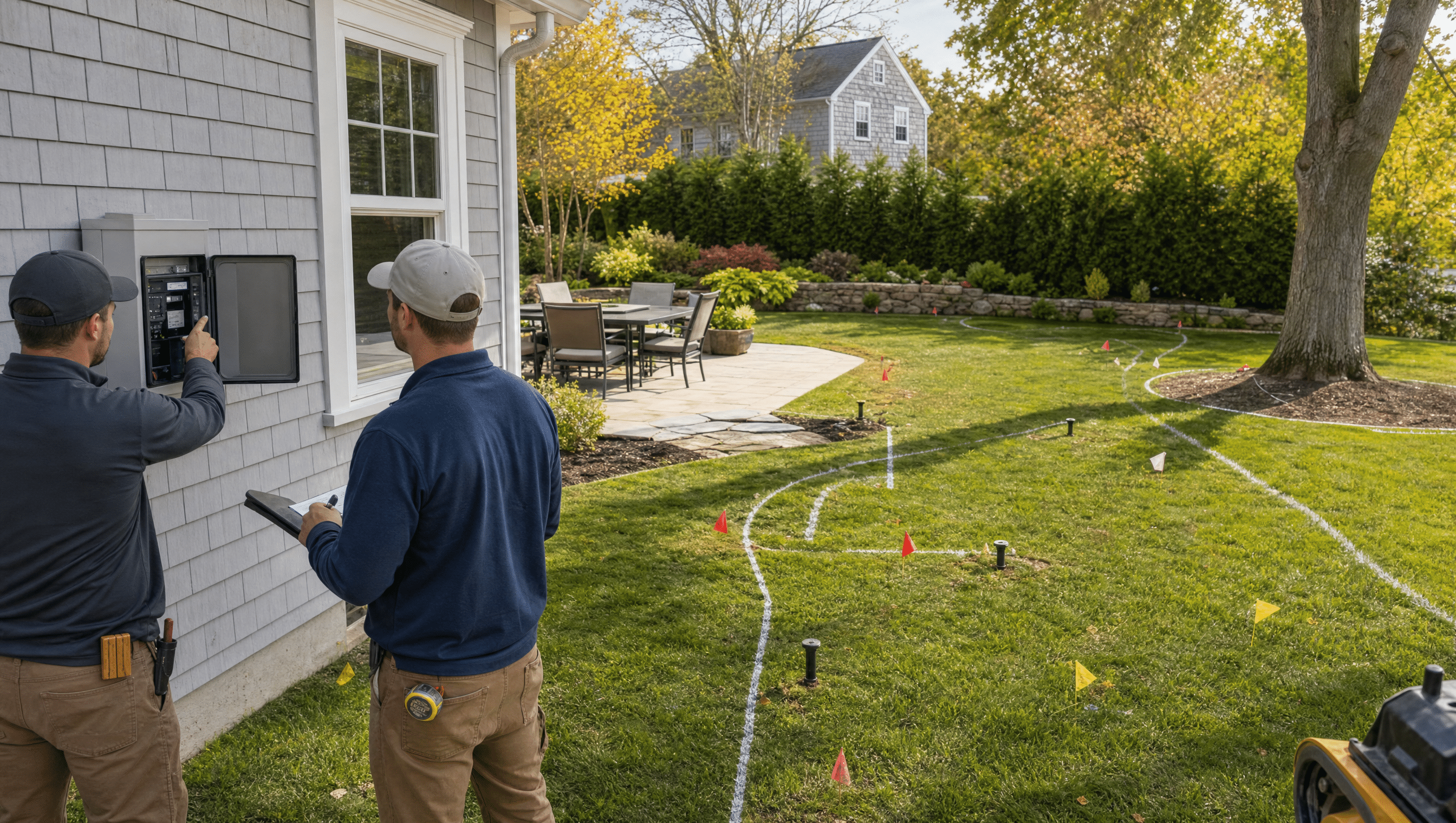
An irrigation system is ready for a new landscape when its water source, capacity, zones, equipment, sleeves, utilities, controller, coverage, and maintenance responsibilities match the final planting and hardscape plan. Testing an old controller is not enough if the landscape use, soil, sun, or grades are changing.
Start with the planting hydrozones
Group lawn, trees, shrubs, perennials, containers, sunny slopes, shade, and moisture-sensitive areas according to compatible needs. New plants need establishment care that may differ from long-term watering. The irrigation designer should know the mature layout, not only the nursery installation size.
| Readiness item | Verify | Do not assume |
|---|---|---|
| Water supply | Available pressure/flow, backflow, meter/well limits, other demand | An existing zone can support added heads |
| Zone design | Plant need, exposure, soil, slope, application method | Lawn and beds should share runtime or equipment |
| Construction coordination | Sleeves, valves, wire, heads, walls, walks, lights, drainage | Crossings can be added after paving without impact |
| Handoff | As-built, controller program, startup, monitoring, winterization | The installer and long-term maintainer share the same scope |
Test the supply under realistic conditions
Document static and operating conditions at the intended point of connection and account for household or site demand. Wells, municipal supplies, pressure-regulating devices, and elevation changes affect design. Backflow and plumbing requirements should be handled by qualified professionals under applicable rules.
Coordinate every buried crossing
Finalize sleeves under walks, patios, driveways, and walls before hardscape closes the route. Massachusetts Dig Safe guidance applies broadly to excavation; private irrigation, lighting, septic, and drainage may need separate locating and documentation.
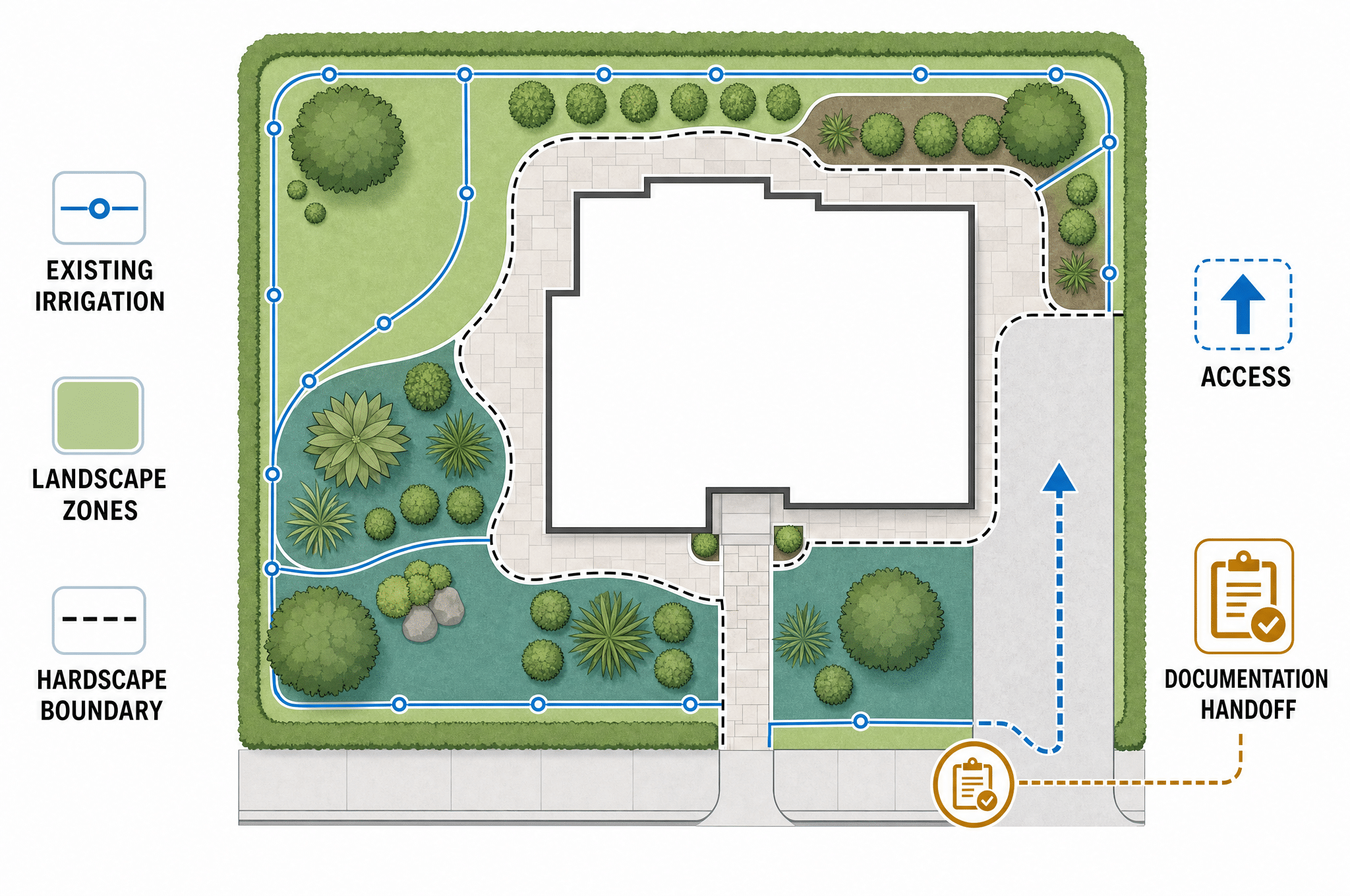
Design for efficiency and plant health
EPA WaterSense notes that certified irrigation professionals are assessed on skills related to design, installation, maintenance, and local climate; see Irrigation with a Pro. Appropriate equipment, pressure control, head-to-head coverage where applicable, drip layout, rain/weather response, and seasonal adjustment matter. Overspray onto walls and pavement wastes water and can create maintenance problems.
Run a pre-planting pressure and coverage hold
- Flush and inspect components before delicate planting is installed.
- Confirm head/line locations against final beds and mature plant sizes.
- Check for leaks, low pressure, misting, runoff, overspray, and blocked patterns.
- Protect valve boxes and heads at final grade.
- Photograph buried routing and record measured offsets.
Define establishment and long-term ownership
State who initially programs the controller, who checks soil moisture, who adjusts after plant establishment, who repairs construction damage, and who winterizes. Watering should respond to weather, soil, plant condition, and restrictions—not remain at the installation-day schedule forever.
Readiness questions
Can old zones be reused?
Only after mapping and testing valves, pipe, wire, equipment, pressure, coverage, and compatibility with the new plan.
Should every bed use drip?
Drip can be effective, but plant layout, soil, maintenance, visibility, filtration, pressure, and winter conditions determine the right application.
When should final programming occur?
Set an establishment program at installation, then schedule documented adjustments as roots develop and seasons change.
Steve’s Services connects irrigation systems with landscape installation, new lawns, and hydroseeding for Malden-area projects.