Commercial Snow Removal Pricing Calculator: Top 5 Secrets
Wondering how to calculate costs for snow removal? You’re in the right place! A commercial snow removal pricing calculator can help businesses and property managers streamline this often complex task, ensuring transparent and accurate quotes. Here’s how to make sense of it all:
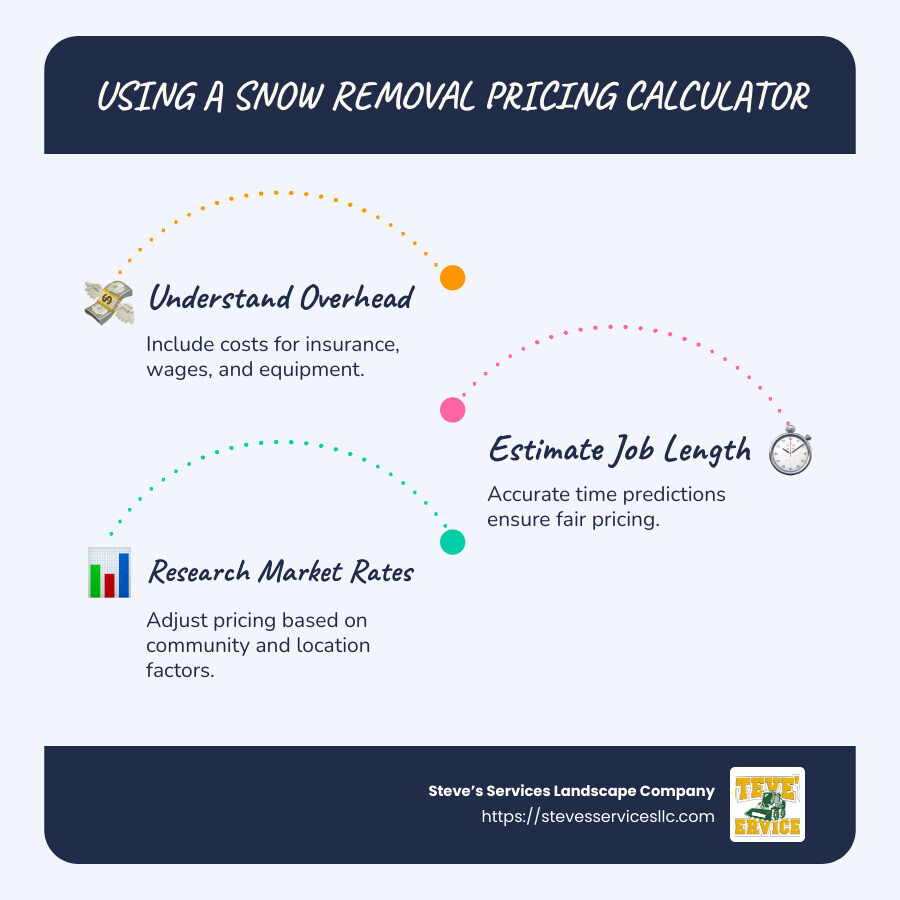
- Overhead costs: Consider insurance, worker wages, and equipment expenses.
- Job length estimation: Accurately predicting project time is key for fair pricing.
- Market rates: Pricing can vary based on the wealth of the community you’re serving.
Understanding these elements can help execute an effective strategy that meets client expectations while keeping profitability in focus.
I’m Steve Sylva, owner of Steve’s Services. With 25 years in the landscaping business, I bring a wealth of knowledge on snow removal strategies and how to use a commercial snow removal pricing calculator effectively. Let’s dive deeper into these considerations to optimize your snow management processes.
Understanding Snow Removal Pricing
When it comes to snow removal, getting the price right is crucial. Let’s break down the key factors that influence pricing:
Overhead Costs
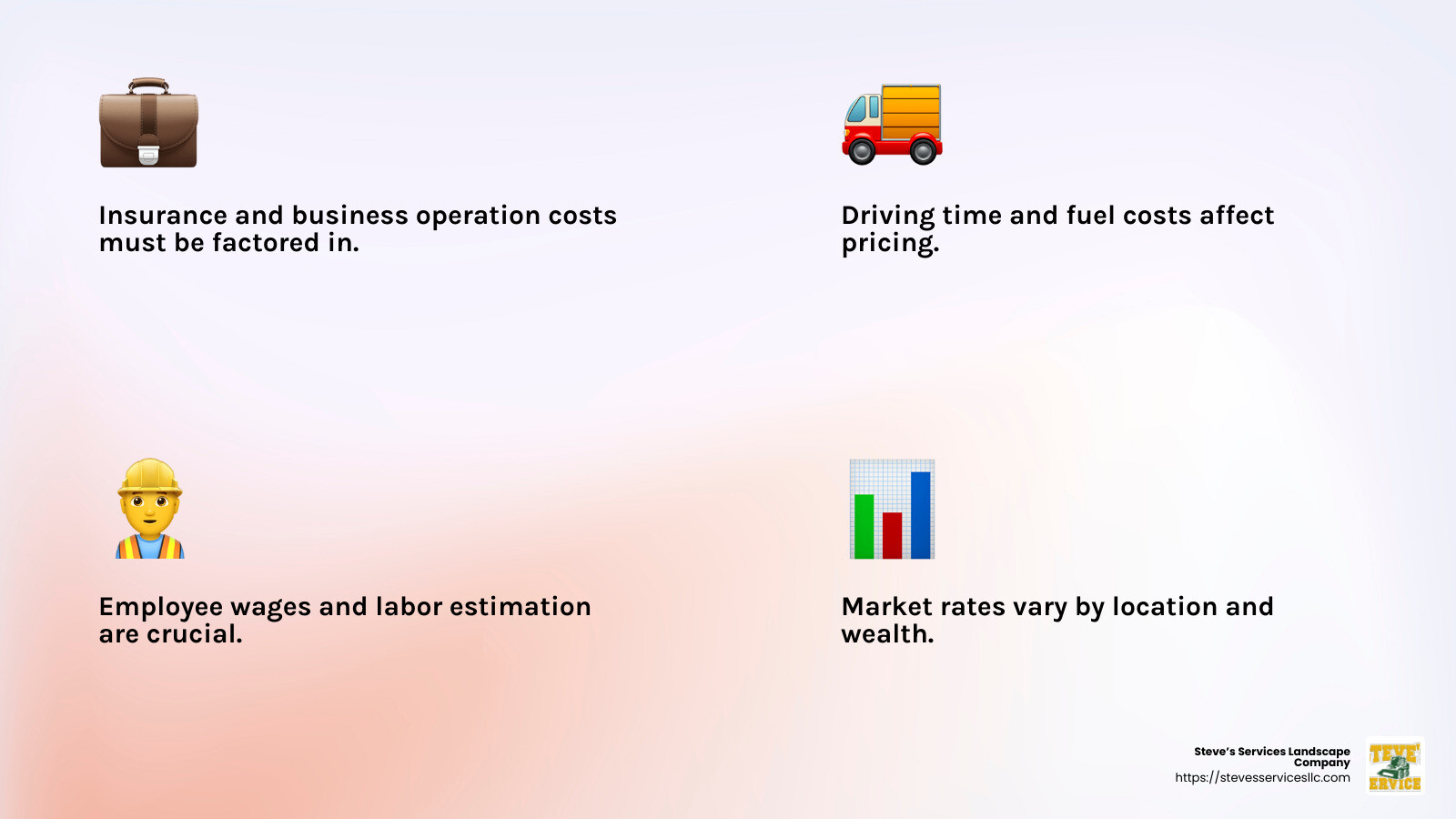
Overhead costs are the backbone of your pricing strategy. These are expenses your business incurs just to keep the lights on. They include:
- Insurance: Vehicle and snow plow insurance are must-haves.
- Driving Time: The time it takes to drive to a site and set up equipment is billable.
- Employee Wages: Your team needs to be compensated fairly.
- Supply Costs: Think deicer and equipment like plows or salt spreaders.
- Fuel: Essential for operating machines.
- Business Operations: Costs rise as your business grows.
Understanding these costs helps you set a fair price that covers all bases.
Job Length Estimation
Accurate job length estimation is key to fair pricing. Here’s how to get it right:
- Competitive Rate: Set a rate that covers your overhead while remaining competitive.
- Labor Calculation: Estimate how long one person would take for a job. Divide this by the number of workers to get a precise estimate.
- Scope of Work: Include all tasks, like plowing and salting, in your estimate.
A well-thought-out strategy ensures that clients are happy with the cost commitment.
Market Rates
Pricing varies based on the location and wealth of the community:
- Location-Based Pricing: Wealthier areas may pay a premium, while less affluent areas might require lower rates.
- Competitive Analysis: Check what others are charging. It helps you avoid reinventing the wheel.
- Strategic Pricing: Tailor your prices based on community wealth for better market alignment.
By understanding these elements, you can set prices that are both competitive and profitable.
With these insights, you’re well on your way to mastering snow removal pricing. Next, we’ll explore the different types of snow removal services and how they affect your pricing strategy.
Commercial Snow Removal Pricing Calculator
When it comes to commercial snow removal pricing, having a reliable calculator can make all the difference. This tool helps you streamline your estimates and ensures accuracy, which is crucial for maintaining profitability and customer satisfaction.
Overhead Costs
Let’s start with overhead costs. These are the expenses that keep your business running smoothly. They include:
- Insurance: Essential for both vehicles and snow plows.
- Driving Time: Time spent traveling to the job site and setting up equipment.
- Employee Wages: Fair compensation for your hardworking team.
- Supply Costs: Deicer, plows, and salt spreaders fall under this category.
- Fuel: Required to power your machines.
- Business Operations: As your business grows, so do these costs.
Understanding these costs is vital. They form the foundation of your pricing strategy and help you cover all necessary expenses.
Job Length Estimation
Accurate estimation of job length is another key factor in pricing. Here’s how to do it:
- Competitive Rate: Ensure your rate covers overheads while staying competitive.
- Labor Calculation: Estimate how long one person would take to complete the job. Then, divide by the number of workers to get a precise estimate.
- Scope of Work: Don’t forget to include all tasks, like plowing and salting, in your calculations.
This approach ensures your pricing is fair and transparent, which builds trust with clients.
Market Rates
Market rates vary based on location and community wealth. Here’s how to steer these waters:
- Location-Based Pricing: Wealthier areas may be willing to pay a premium for services.
- Community Wealth: Less affluent areas might require lower rates to avoid sticker shock.
- Competitive Analysis: Check what other businesses charge to ensure you’re not out of line.
- Strategic Pricing: Tailor your prices to fit the market for better alignment.
By using a commercial snow removal pricing calculator, you can easily incorporate these factors. This tool helps you create accurate estimates, ensuring both competitiveness and profitability.
With a clear understanding of overhead costs, job length, and market rates, you can confidently price your snow removal services. Up next, we’ll dive into the different types of snow removal services and how they influence your pricing strategy.
Types of Snow Removal Services
When it comes to snow removal, businesses have a variety of service options to choose from. Each type has its own pricing model and service scope, so understanding these differences is crucial for making informed decisions.
Snow Plowing vs. Snow Removal
Snow Plowing involves pushing snow to the side using plows, which is typically faster and more cost-effective for large areas like parking lots. It’s ideal when immediate access is needed, but the snow stays on the property.
On the other hand, Snow Removal means completely removing snow from the site, often using trucks to haul it away. This service is usually more expensive than plowing due to the extra labor and equipment involved. It’s best for businesses that can’t accommodate large piles of snow on-site.
Seasonal Contracts vs. Per Event Pricing
Seasonal Contracts are akin to subscription services. Businesses pay a flat fee for the entire winter season, ensuring regular snow removal regardless of the number of snow events. This option offers peace of mind and budget predictability, especially in areas with frequent snowfall.
In contrast, Per Event Pricing charges based on individual snow occurrences. This is suitable for regions with less frequent snow, allowing businesses to pay only when services are needed. It can be more cost-effective if snow events are rare but unpredictable.
Additional Services
In addition to basic snow plowing and removal, businesses might require extra services like Salt Spreading and Emergency Services. Salt spreading helps prevent ice buildup and ensures safety on walkways and lots. It’s a critical service that can be priced per application or included in a seasonal package.
Emergency Services are for those unexpected heavy snowfalls that require immediate attention. These services come at a premium due to their urgent nature, but they ensure business continuity even during severe weather.
Special conditions, like narrow access areas or properties with many curbs, can affect pricing. These complexities might require additional equipment or time, influencing the overall cost.
Response time is another crucial factor. Quick action during snow events can minimize disruptions and improve safety, but it might also add to the cost.
By understanding these service types and their pricing models, businesses can better align their snow removal needs with their budgets. This knowledge, combined with a commercial snow removal pricing calculator, ensures accurate and competitive pricing for all services offered.
Common Snow Removal Service Rates
When it comes to pricing snow removal services, there are several models to consider. Each has its own benefits, depending on the frequency of snow events and the specific needs of a property.
Per Hour
Charging per hour is one of the most straightforward methods. This approach is ideal for properties where the snow depth or area size varies significantly. The total price is calculated using the formula:
Hourly rate x number of workers x estimated hours
For example, if two workers are needed, each charging $100 per hour, and the job is expected to take 4 hours, the total cost would be $800. This method provides flexibility and ensures that clients only pay for the time and resources used.
Per Event
Per event pricing is useful for areas with infrequent but significant snowfall. Here, a flat rate is set for each snowstorm or snow event within a 24-hour period. This model eliminates the need for complicated calculations and is easy for customers to understand. It’s especially beneficial for regions where snowstorms are unpredictable but impactful.
Per Visit
With per visit or per push pricing, clients pay a flat rate every time the service is performed. This model works well when snow events are frequent and predictable, allowing clients to budget effectively for the season. Understanding the average number of snow events in an area can help both service providers and clients plan and allocate resources efficiently.
Per Inch
Charging per inch is a simple concept where the cost is based on the depth of snow. Typically, there are flat rate price breakdowns for different snow depths, such as 1-3 inches or 3-6 inches, with hourly charges kicking in beyond 6 inches. This model is transparent and allows clients to anticipate costs based on forecasted snowfalls.
Multi-Seasonal Contracts
For long-term planning, multi-seasonal contracts offer clients a package deal over several seasons. This model provides stability and can be attractive for businesses looking to lock in rates and ensure consistent service over time. It also allows snow removal companies to plan resources and manage cash flow effectively.
By understanding these pricing models and using a commercial snow removal pricing calculator, businesses can select the most appropriate option for their needs. This ensures they receive the best value while maintaining clear and predictable budgets.
Frequently Asked Questions about Snow Removal Pricing
How do you calculate commercial snow plowing?
Calculating the cost for commercial snow plowing involves several factors to ensure both profitability and fairness. The primary elements include:
- Hourly Rate: This is the base cost per hour of work. It can vary widely depending on the region, the complexity of the job, and the equipment used. For example, rates can range from $50 to $200 per hour for commercial properties.
- Job Length: Estimate the time required for the job accurately. Consider the size of the area and the typical snow depth. An average plow can clear about an acre per hour, so use this as a baseline for time estimation.
- Overhead Costs: These are the expenses necessary to run your business, such as insurance, fuel, and employee wages. Make sure these are covered in your pricing.
- Profitability: After covering costs, ensure your pricing includes a margin for profit. This is crucial for sustaining your business in the long run.
How much should you charge per inch of snow?
Charging per inch of snow is another straightforward method. Here’s how to approach it:
- Flat Rate: Establish flat rate price breakdowns for different snow depths. For instance, you might charge $30 for 1-3 inches, $45 for 3-6 inches, and so on.
- Hourly Charges: For snow deeper than a certain threshold, say 6 inches, consider adding hourly charges. This ensures you’re compensated for the extra time and effort required.
- Snow Depth: Accurately measure the snow depth to apply the correct pricing tier. This transparency helps build trust with your clients.
How much should I charge to spread salt?
Salt spreading is a vital part of snow management, and pricing it correctly is key. Consider these factors:
- Application Rates: Determine how much salt is needed per acre or square foot. A common estimate is about 800 lbs of salt per acre.
- Amount of Salt: Calculate the total amount of salt required based on the size of the area.
- Per Bag Charges: If you purchase salt in bags, include the cost per bag in your pricing. For bulk purchases, divide the total cost by the expected number of applications.
- Cost Factors: Include all costs involved, such as labor for spreading, equipment wear and tear, and transportation.
By considering these aspects, you can develop a pricing strategy that covers your costs and provides value to your clients. Utilizing a commercial snow removal pricing calculator can further improve accuracy and efficiency in your estimates.
Conclusion
At Steve’s Services Landscape Company, we pride ourselves on offering comprehensive services that cater to all your snow management needs. Whether you’re dealing with a light dusting or a major snowstorm, our skilled team is equipped to handle it all, ensuring your property remains safe and accessible throughout the winter months.
What sets us apart is our commitment to providing personalized solutions. We understand that every client and property is unique, so we tailor our services to meet your specific requirements. From crafting the perfect snow removal plan to ensuring timely execution, we work closely with you to deliver results that exceed expectations.
Our dedication to exceptional customer service is at the heart of everything we do. We believe that clear communication and a collaborative approach are essential to a successful partnership. Our team is always here to provide expert advice and keep you informed at every stage of the snow removal process.
By choosing Steve’s Services, you’re not just hiring a snow removal provider; you’re partnering with a team that is deeply committed to your satisfaction. Find how we can make your winter worry-free by visiting our Snow Management Service Page. Let us help you tackle the challenges of winter with confidence and ease.