Why Irrigation Systems in Malden MA Are Worth Getting Right
Irrigation systems in Malden MA come in several forms — and choosing the right one can mean the difference between a lawn that thrives all summer and one that struggles through every dry stretch.
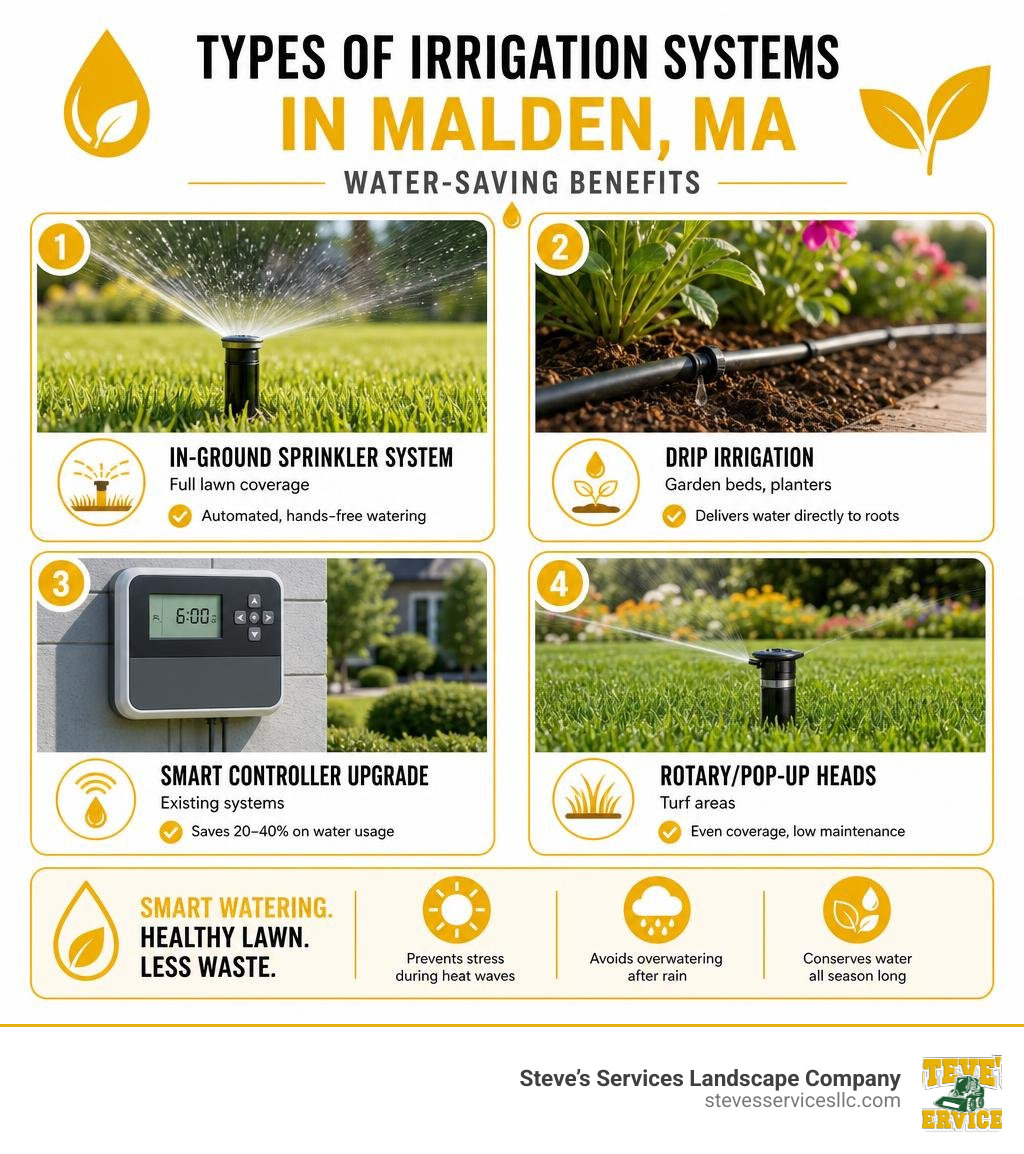
Here’s a quick overview of your main options:
| System Type | Best For | Key Benefit |
|---|---|---|
| In-ground sprinkler system | Full lawn coverage | Automated, hands-free watering |
| Drip irrigation | Garden beds, planters | Delivers water directly to roots |
| Smart controller upgrade | Existing systems | Saves 20–40% on water usage |
| Rotary/pop-up heads | Turf areas | Even coverage, low maintenance |
Malden summers can be unpredictable — stretches of heat and dry spells hit fast, and hand-watering simply can’t keep up. An automatic irrigation system waters your lawn consistently, even when you’re busy or away. It also prevents the two most common homeowner mistakes: underwatering during heat waves and overwatering after rain.
I’m Steve Sylva, owner of Steve’s Services Landscape Company, and I’ve been designing and installing irrigation systems in Malden MA since founding this company in 1995. If you want a system that’s built right the first time and maintained season after season, you’re in the right place.
Basic Irrigation systems Malden MA vocab:
Core Components of Professional Irrigation Systems in Malden MA
To truly understand how Lawn Sprinkler Systems keep your landscape looking like a lush golf course, it helps to look under the hood—or in this case, under the turf. A professional in-ground sprinkler system is a highly engineered network of plumbing, electrical wiring, and specialized water-delivery components working in perfect harmony.

Every reliable installation we perform in Malden, MA, relies on several heavy-duty, professional-grade core components:
- The Water Source & Backflow Preventer: This is the starting point of your system. Because your irrigation system connects directly to Malden’s clean municipal drinking water supply, local regulations require a certified backflow preventer. This device acts as a one-way safety valve, ensuring that no fertilizer, dirt, or stagnant water from your lawn can ever flow back into your home’s drinking water.
- High-Durability Piping (HDPE & PVC): Not all pipes are created equal. For the main lines under constant high pressure, we typically install rigid, heavy-duty PVC piping. For the lateral lines that run to individual sprinkler heads, flexible High-Density Polyethylene (HDPE) or “poly” pipes are the industry standard in New England. Poly piping is highly resilient, allowing it to expand and contract slightly during our freezing winter months without instantly cracking.
- Automatic Control Valves: Think of these as the traffic cops of your irrigation system. Grouped together in underground valve boxes, these electronic valves open and close on command from your controller, releasing water to specific sections (or zones) of your yard.
- Sprinkler Heads (Rotors vs. Sprays): The visible stars of the show. Pop-up spray heads are perfect for smaller, tight lawn areas or flower beds, misting water evenly over a fixed pattern. For larger expanses of grass, we install gear-driven rotary heads (rotors) that slowly rotate back and forth, throwing a precise stream of water over long distances. High-quality heads are designed to sit flush with your turf when turned off, keeping them safely out of the way of lawnmowers.
For a deeper dive into how these underground systems are carefully mapped out and put together, you can read our comprehensive guide on Lawn Sprinkler System Installation | Landscaping Irrigation Services .
How Smart Controllers and Zoning Maximize Water Efficiency
In June 2026, watering your lawn shouldn’t feel like a guessing game. Older irrigation systems relied on basic mechanical timers that turned the sprinklers on rain or shine—leading to soggy lawns, wasted water, and sky-high utility bills. Today, we utilize cutting-edge smart WiFi controllers and soil moisture sensors to bring your lawn care into the digital age.
A smart controller acts as the brain of your yard. By connecting to your home’s WiFi network, it monitors real-time local weather forecasts for Malden. If heavy rain is on the way, the system automatically pauses its scheduled cycle. If we are experiencing a hot, dry summer stretch, it adjusts the run times to prevent your grass from going dormant. Upgrading from a traditional timer to a smart controller can save homeowners between 20% and 40% on their seasonal water usage.
Additionally, we can integrate soil moisture sensors directly into your lawn. These sensors measure actual moisture levels at the root zone. If the soil is already sufficiently damp from a passing shower, the sensor tells the controller to skip the next watering cycle. For more strategies on keeping your system running at peak performance, check out our guide on Maintaining Your Irrigation System Tips and Tricks for Efficiency.
Custom Zoning for Irrigation Systems Malden MA
Every property in Malden is unique. Your front yard might sit in full, baking sunlight for eight hours a day, while your backyard is shaded by mature oak trees. Watering both areas for the exact same amount of time is a recipe for disaster—you’ll end up with a parched front lawn and a muddy, moss-filled backyard.
That’s where custom zoning comes in. When we design an Automatic Sprinkler System, we divide your property into distinct zones based on:
- Sun and Shade Patterns: Sunny turf zones receive deeper, more frequent watering, while shaded zones are programmed for shorter run times.
- Water Pressure Limits: Because residential water pressure is finite, we group sprinkler heads into zones so that only a few heads run at any given time, ensuring optimal water pressure and head rotation.
- Plant Types: Grass has different watering needs than ornamental shrubs or perennial gardens. For delicate garden beds and foundation plantings, we often design custom drip irrigation zones. Drip systems use flexible tubing with built-in emitters to deliver water slowly and directly to the plant roots, virtually eliminating water loss from evaporation and wind drift.
Professional Installation vs. Manual Watering
Many homeowners start out believing that a few cheap plastic sprinklers and a couple of green garden hoses are all they need to keep their grass green. However, dragging hoses around every weekend quickly becomes a tedious chore, and the results are rarely consistent.
Here is how manual watering stacks up against a professionally designed Irrigation System Installation:
| Feature | Manual Hose & Sprinkler | Professional Automatic System |
|---|---|---|
| Time Commitment | High (moving hoses, setting timers, winding cords) | Zero (completely automated and hands-free) |
| Water Distribution | Uneven (creates dry spots and muddy puddles) | Extremely precise (head-to-head coverage) |
| Water Conservation | Low (high evaporation, watering during hot midday sun) | High (smart scheduling, early morning cycles) |
| Property Value | No impact | Increases curb appeal and home resale value |
| Lawn Health | Inconsistent growth, prone to fungal diseases | Deep root growth, thick and vibrant turf |
When you opt for a professional layout, every single sprinkler head is placed with mathematical precision. We ensure “head-to-head” coverage, meaning the spray from one sprinkler reaches all the way to the base of the next one. This eliminates those frustrating brown patches that manual sprinklers leave behind and guarantees a beautiful, uniform green lawn.
Seasonal Maintenance: Spring Start-Up and Fall Winterization
An irrigation system is a major investment in your home’s beauty, and like any mechanical system exposed to the elements, it requires seasonal care to protect it. In New England, our extreme temperature swings mean that professional maintenance is non-negotiable.
Every spring, we perform a comprehensive start-up service to safely wake your system up from its winter slumber. This process involves slowly priming the main lines with water to prevent water hammer (a pressure surge that can rupture pipes), testing every single zone, adjusting sprinkler nozzles for proper coverage, and checking for any underground leaks that may have developed over the winter. If we find any cracked heads or worn-out valves, we perform a prompt Sprinkler System Repair to get your system running efficiently before the summer heat arrives.
Protecting Your Irrigation Systems Malden MA from Freeze Damage
While spring start-ups are exciting, fall winterization is absolutely critical. In Massachusetts, freezing winter temperatures will easily turn any leftover water inside your pipes into solid ice. Because water expands when it freezes, trapped water will violently crack PVC pipes, split poly lines, and destroy expensive valve diaphragms.
To prevent this costly disaster, you should always schedule a professional winterization blow-out between mid-October and early November.
During this service, we shut off the main water connection and hook up a high-volume commercial air compressor to your system. We systematically blow compressed air (regulated to a safe 50 to 80 PSI) through every single zone until all water is completely purged from the lines, valves, and backflow preventer.
Skipping this crucial step can lead to cracked pipes and damaged components that typically cost between $200 and $800 per zone to repair come spring. To find trusted local pros who can handle these delicate seasonal services, you can browse through Yelp’s top-rated local irrigation services.
Cost Considerations for Malden Homeowners
When planning for a new lawn sprinkler system, understanding the financial investment is key. It is important to note that irrigation costs can vary widely depending on the unique characteristics of your property.
Please note: The pricing figures listed below are based on broad, internet-based market averages across the greater Billerica and Boston metro areas. They are intended for general planning purposes and do not represent specific quotes for Steve’s Services.
On average, a typical residential irrigation system in our region costs between $3,000 and $8,000 to install. However, depending on your property’s size and complexity, the overall range is much broader, spanning from $2,000 for a simple, small-yard setup to over $18,000 for expansive estate properties with complex landscaping, multiple retaining walls, and specialized plantings.
Several factors will directly influence your final price:
- Number of Zones: A compact yard might only require 4 zones (averaging around $3,000 to $4,500), while larger properties with 8 to 12 zones generally range from $5,500 to $8,000+.
- Soil Conditions: Rocky, ledge-filled New England soil requires extra labor and specialized trenching machinery compared to soft, sandy soil.
- Smart Upgrades: Adding high-end WiFi smart controllers or specialized soil moisture sensors typically adds an extra $200 to $500 to the initial installation cost, though they quickly pay for themselves in water savings.
If you are ready to invest in a system that keeps your lawn healthy while keeping your water bills in check, we invite you to explore your options with a professional Lawn Sprinkler System Installation.
Frequently Asked Questions about Irrigation and Property Maintenance
How often should sprinkler heads be replaced?
High-quality, professional-grade sprinkler heads are built to last and typically have a lifespan of 10 to 15 years. However, they endure a lot of wear and tear from lawnmowers, foot traffic, and changing weather. We highly recommend having your heads inspected annually during your spring turn-on. Over time, nozzles can become clogged with dirt, internal springs can weaken, and wiper seals can leak, all of which warrant a quick replacement to keep your watering patterns precise.
Do local water utilities in Malden regulate backflow prevention?
Yes, absolutely. The Malden Department of Water Utilities strictly regulates water connections to ensure compliance with the federal Safe Drinking Water Act. Because an irrigation system has the potential to introduce contaminants (such as lawn fertilizers or pesticides) back into the municipal water system, you must have a certified backflow preventer installed. These devices must be tested annually by a licensed professional to ensure they are operating correctly and keeping Malden’s drinking water clean and safe.
How does commercial snow plowing impact my lawn’s irrigation system?
Heavy commercial snow plowing equipment can easily damage shallow irrigation lines or crush sprinkler heads located near driveways, curbs, and walkways. To protect your system, we always install highly visible marker stakes along your driveway and lawn edges before the first snow falls. In the spring, our team performs a detailed post-winter inspection to check for any plow damage, ensuring that any shifted heads or cracked pipes are repaired before you turn the system on for the season.
Conclusion
A beautiful, healthy lawn doesn’t happen by accident—it requires consistent, smart watering that only a professionally designed irrigation system can deliver. At Steve’s Services Landscape Company, we combine over three decades of local experience with top-tier customer care to design, install, and maintain irrigation systems that protect your landscape investment.
Whether you need a brand-new system custom-tailored to your property’s unique sun and shade patterns, a smart controller upgrade to lower your water bills, or reliable seasonal maintenance like spring turn-ons and fall blow-outs, our team is here to help.
We proudly serve homeowners and businesses throughout Malden, MA, and the surrounding North Shore and Greater Boston communities, including:
- Burlington
- Everett
- Lynnfield
- Medford
- Melrose
- Reading
- Revere
- Saugus
- Stoneham
- Wakefield
- Winchester
- Woburn
Ready to say goodbye to dragging heavy hoses across your lawn? Contact us today to request an estimate on our professional Steve’s Services Irrigation Systems and let us help you achieve the greenest lawn on the block!
