Drip Irrigation System: Top 10 Essential Kits 2024
The drip irrigation system is an advanced irrigation approach that efficiently delivers water and nutrients directly to the root zones of plants. Key benefits include:
- Precise water delivery
- Conservation of resources like water and fertilizers
- Increased crop yields
This method is distinguished for its ability to minimize water usage while maximizing plant growth, making it an essential solution for both residential gardens and commercial landscapes.
Understanding the importance and efficiency of drip irrigation systems is crucial for anyone looking to improve their landscaping practices. With this system, water is applied slowly and directly to the soil, which reduces evaporation and ensures plants receive the exact hydration they need. This not only improves plant health but also significantly cuts down on water wastage, offering a sustainable option for landscape management.
I’m Steve Sylva, the owner of Steve’s Services with over 25 years of landscape expertise. Our deep understanding of the drip irrigation system allows us to offer custom solutions for efficient water management in your garden. Let’s dive deeper into how these systems can transform your landscape.
Drip irrigation system word guide:
– garden irrigation systems
– how do irrigation systems work
– irrigation system repair
Understanding Drip Irrigation Systems
Drip irrigation systems are a revolutionary solution in professional landscaping and garden maintenance. They provide water directly to the plant roots, ensuring optimal use of water and nutrients. Here’s an overview of the types, components, and professional installation tips for these systems.
Types of Drip Irrigation Systems
- Emitter Systems: These are the most prevalent type of drip irrigation. Emitters dispense water slowly and precisely to the plant’s root zone, and can be tailored to meet specific plant water requirements.
- Soaker Hoses: Featuring tiny perforations along their length, these hoses allow water to seep out gradually. They are ideal for evenly watering rows of plants or garden beds.
- Drip Tapes: Perfect for row crops, drip tapes are thin-walled tubes with pre-spaced emitters, best used on flat, even terrain.
- Micro-Misting: This system delivers a fine mist over plants, making it suitable for delicate plants that require gentle watering.
Key Components of a Drip Irrigation System
- Emitters: Regulate the water flow to each plant. Available in various flow rates to accommodate different plant needs.
- Tubing: The main conduit that transports water from the source to the emitters. It is flexible and can be installed above or below ground.
- Valves: Control the water flow within the system, allowing for zoning of different garden areas.
- Filters: Crucial for preventing debris from clogging the emitters. Regular maintenance is necessary to ensure efficiency.
- Pressure Regulators: Ensure the water pressure is appropriate for the system, protecting the tubing and emitters from damage.
Professional Installation Tips for Drip Irrigation
- Layout Planning: Before installation, plan the layout carefully. Consider plant types, garden size, and water source location to determine the optimal length and placement of tubing and emitters.
- Tubing Installation: Lay the tubing along the planned route, ensuring it reaches all plants. Secure it with stakes to prevent movement.
- Emitter Placement: Position emitters near the plant roots. For larger plants, use multiple emitters to adequately cover the root zone.
By understanding these aspects of drip irrigation systems, professionals can implement a watering solution that is both efficient and sustainable. This approach not only conserves water but also promotes healthier plant growth. Now, let’s explore the benefits of using a drip irrigation system.
Benefits of Using a Drip Irrigation System
Drip irrigation systems offer a wealth of benefits that make them an excellent choice for gardeners and landscapers alike. Let’s explore the key advantages of using these systems.
Water Conservation Techniques
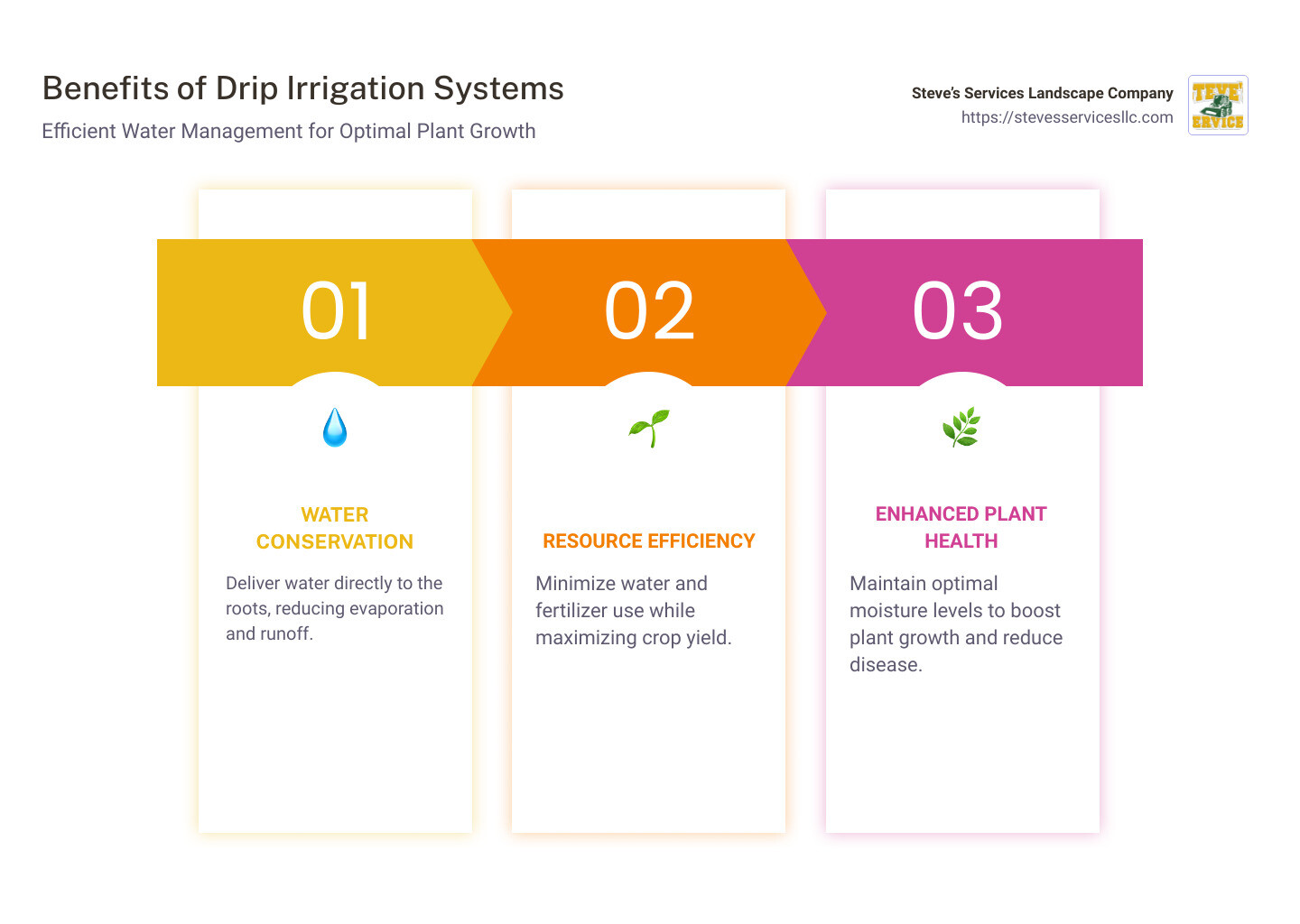
Drip irrigation systems are champions of water conservation. By delivering water directly to the plant’s root zone, they minimize evaporation and ensure that water is used efficiently. This targeted approach reduces water waste, which is crucial in areas with water restrictions.
- Direct Root-Zone Watering: Water goes straight to where it’s needed, reducing the chance of evaporation.
- Reduced Evaporation: Water is applied directly to the soil, not the air, minimizing loss due to heat and wind.
- Minimal Runoff: Since water is applied slowly, it has time to soak into the soil, reducing runoff and soil erosion.
Cost-Effective Irrigation Solutions
Investing in a drip irrigation system can lead to significant savings over time. These systems are designed to be both efficient and long-lasting, which translates into cost savings.
- Lower Water Bills: Reduced water usage means lower bills, a big win for your wallet.
- Reduced Maintenance Costs: With fewer moving parts and less water wastage, maintenance is less frequent and less costly.
- Longevity: Quality components and proper installation ensure that systems last for years, offering a solid return on investment.
Enhancing Plant Health and Productivity
Drip irrigation doesn’t just save water and money—it also promotes healthier plants. By providing consistent moisture directly to the roots, plants can thrive.
- Optimal Moisture Levels: Plants receive the right amount of water, reducing stress and promoting steady growth.
- Reduced Disease Risk: By keeping foliage dry, the system helps prevent fungal diseases that thrive in moist environments.
- Improved Growth: Consistent watering leads to better nutrient uptake and healthier, more productive plants.
The advantages of drip irrigation go beyond just watering your plants; they contribute to a more sustainable and efficient gardening practice. Let’s explore how to choose the right drip irrigation system for your specific needs.
How to Choose the Right Drip Irrigation System
Selecting the right drip irrigation system is crucial for achieving a lush, thriving garden or landscape. At Steve’s Services Landscape Company, we understand the importance of tailoring irrigation solutions to meet your garden’s unique needs. Here’s how to assess your garden’s requirements and choose the best system for your space.
Assessing Garden and Landscape Needs
Every garden is unique, and understanding its specific requirements is the first step in choosing the right system.
- Vegetable Gardens: These typically need more frequent watering, especially during peak growing seasons. A drip system with adjustable emitters can cater to different vegetable types.
- Flower Beds: Flowers often require careful watering to avoid overhydration. Drip systems with micro-misting options can provide gentle irrigation without damaging delicate blooms.
- Lawns: While traditional sprinklers are common for lawns, drip irrigation can be effective for smaller patches or areas with water restrictions.
Evaluating Soil Types
Soil type plays a crucial role in how water is absorbed and retained, influencing the choice of drip irrigation components.
- Clay Soil: Drains slowly, so systems with low-flow emitters are ideal to prevent waterlogging.
- Loam Soil: Balanced drainage and retention make it compatible with a variety of emitter types.
- Sand Soil: Drains quickly, requiring a system with higher flow rates or more frequent watering to maintain adequate moisture levels.
Determining Watering Requirements
To ensure your plants thrive, consider their specific watering needs, the climate, and the system’s capacity.
- Plant Species: Different plants have different water needs. Group plants with similar requirements together to optimize system efficiency.
- Climate Factors: Areas with hot, dry climates may need systems with higher capacity or smart controllers that adjust for weather changes.
- System Capacity: Ensure the system can handle the size of your garden and the number of plants. Overloading a system can lead to inefficient watering and plant stress.
By carefully assessing your garden’s needs, soil conditions, and watering requirements, you can select a drip irrigation system that promotes healthy plant growth and maximizes water efficiency. At Steve’s Services, we offer professional installation and maintenance services to keep your system running smoothly.
Drip Irrigation System Maintenance and Troubleshooting
Maintaining a drip irrigation system is essential for optimal performance and longevity. Here are some key maintenance practices and troubleshooting tips to keep your system in excellent condition.
Regular Maintenance Practices
Consistent maintenance is vital for the efficient operation of your system. Focus on the following areas:
- Routine Inspections: Regularly inspect the system to identify any potential issues early. Check for visible damage, leaks, or blockages in the tubing and emitters.
- System Flushing: Periodically flush the system to remove debris that could clog the emitters. Run water through the lines at high pressure to clear out any sediment or blockages.
- Filter Maintenance: Filters are crucial for preventing debris from entering the system. Clean them regularly to ensure proper water flow and avoid clogs.
- Connection Checks: Verify that all connections are tight and secure. Loose connections can cause leaks and inefficient watering.
Troubleshooting Common Problems
Despite regular maintenance, problems can still occur. Here’s how to address some common issues:
- Clogged Emitters: If water flow is restricted, check for clogged emitters. Clean or replace them as needed. Regular system flushing can help prevent this problem.
- Leaky Connections: Leaks can waste water and reduce system pressure. Tighten any loose fittings and replace damaged components to resolve leaks.
- Pressure Fluctuations: Inconsistent water pressure can impact irrigation efficiency. Use a pressure regulator to maintain steady pressure. If pressure is too low, inspect for leaks or blockages. If too high, adjust the regulator or install one if necessary.
By adhering to these maintenance practices and promptly addressing any issues, you can ensure your drip irrigation system remains reliable and efficient. Next, we’ll explore exciting improvements and accessories to enhance your system.
Drip Irrigation System Improvements and Accessories
Enhancing your drip irrigation system with the right accessories can significantly boost its efficiency and ease of use. Let’s look at some key improvements that can make a big difference.
Automation and Control
Timers and Smart Controllers are game-changers in irrigation management. They allow you to automate watering schedules, ensuring your plants get the right amount of water at the right time.
- Timers: These devices can be set to water your garden at specific times of the day. This is especially useful if you have a busy schedule or are away from home. Timers help prevent overwatering and conserve water by delivering it precisely when needed.
- Smart Controllers: These take automation to the next level. They use weather data and soil moisture information to adjust watering schedules automatically. This means your system can respond to changes in the weather, reducing water waste and optimizing plant health.
Monitoring and Adjustment Tools
To ensure your system is always performing at its best, consider integrating Moisture Sensors and Flow Meters.
- Moisture Sensors: These tools measure the moisture content in the soil and provide valuable data to your irrigation system. With this information, the system can adjust watering based on actual soil conditions, preventing both overwatering and underwatering.
- Flow Meters: Installing flow meters helps you monitor the amount of water used by your system. This is useful for identifying leaks or inefficiencies and can help you track and reduce water usage over time.
Expanding Your System
As your garden grows, your drip irrigation system can grow with it. Expansion Kits and additional components make it easy to scale up.
- Additional Tubing and Emitters: To cover new areas of your garden, you can add more tubing and emitters. This allows you to customize your system to fit the unique layout and needs of your landscape.
- Upgrade Kits: These kits often include everything you need to expand or improve your existing setup. They can include new emitters, connectors, and even advanced components like pressure regulators.
By incorporating these improvements and accessories, you can ensure your drip irrigation system is not only efficient but also adaptable to changing needs. Next, we’ll explore how to choose the right system based on your specific garden requirements.
Conclusion
Choosing the right partner for your landscape needs can make all the difference. At Steve’s Services, we bring long-term benefits to every project, ensuring your outdoor space thrives while conserving resources.
Why Choose Steve’s Services
Skilled Team: Our team is composed of experts who have a deep understanding of landscaping and irrigation. We are committed to delivering top-notch service and ensuring every installation is done right the first time.
Comprehensive Services: We offer a full range of services, from lawn care and landscape maintenance to hardscaping and irrigation system installations. This means you can rely on us for all your landscape needs, ensuring consistency and quality across the board.
Personalized Solutions: We know that every garden and landscape is unique. That’s why we tailor our solutions to meet your specific requirements. Whether you have a small vegetable garden or a sprawling lawn, we design and implement systems that fit your needs perfectly.
Exceptional Customer Service: At Steve’s Services, customer satisfaction is our top priority. We pride ourselves on our responsive and friendly service. From the initial consultation to ongoing maintenance, we’re here to support you every step of the way.
Investing in a drip irrigation system with Steve’s Services not only improves your garden’s health and appearance but also contributes to water conservation and cost efficiency. Our commitment to sustainable practices ensures that your landscape remains beautiful and eco-friendly.
Ready to transform your outdoor space? Contact us today to learn more about our comprehensive irrigation solutions and how we can help you achieve a thriving landscape.