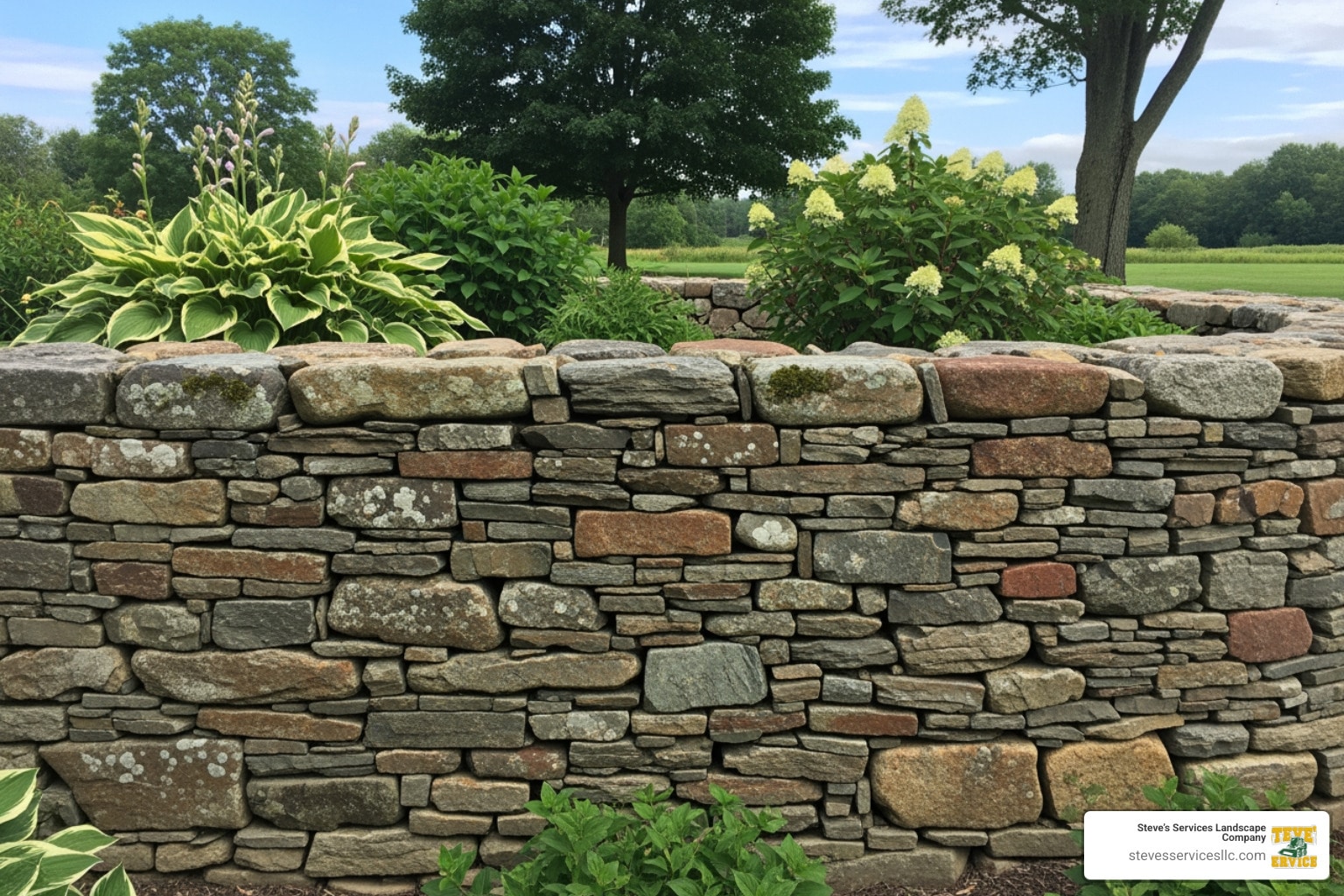
Dry stack stone walls: 100+ Years of Timeless Beauty
The Timeless Appeal: Why Choose a Dry Stack Wall?
Dry stack stone walls are structures made from carefully positioned stones without any mortar. They rely on gravity, friction, and the interlocking of stones to remain stable, a technique used for thousands of years—from ancient field systems in Ireland to the terraces at Machu Picchu.
The technique has seen renewed interest for its durability and natural beauty. Unlike rigid mortared walls that crack under pressure, dry stack construction moves with the earth and drains naturally. In 2018, UNESCO even added the art of dry stone walling to its list of Intangible Cultural Heritage. Here in New England, centuries-old dry stone walls are a characteristic feature of the landscape, still standing strong.
I’m Steve Sylva, owner of Steve’s Services in Malden, MA, and I’ve spent over 25 years helping property owners throughout Massachusetts create lasting hardscape features. Our team specializes in building dry stack stone walls that combine traditional techniques with modern principles to ensure structural integrity and timeless appeal.
Advantages of Mortarless Construction
The absence of mortar is the key to a dry stack wall’s strength. Here’s why it stands out, especially in our New England climate:
- Exceptional Durability: Properly built dry stack walls can last over 100 years, far outliving mortared walls (30-50 years) and concrete blocks (15 years).
- Flexibility: These walls can bend and flex with ground movement and freeze-thaw cycles without cracking, a common failure point for rigid structures.
- Superior Drainage: Natural gaps between stones allow water to pass through, preventing the buildup of hydrostatic pressure that can destroy other walls.
- Natural Aesthetics: The unique character of natural stone offers a rustic beauty that integrates seamlessly into the landscape, an appearance that manufactured materials cannot replicate.
Key Considerations for Your Project
While the benefits are clear, a successful project requires careful planning.
- Installation Time: Building a dry stack wall is a meticulous craft that takes more time and skill than mortared construction. Each stone must be carefully selected and fitted, but this upfront investment ensures longevity.
- Height Limits: We generally recommend dry stack walls not exceed 3 to 4 feet in height without specific engineering. For taller walls, we work with structural engineers to guarantee safety and stability.
- Stone & Site: The right stone choice is critical for both appearance and structure. We also assess every site for specific drainage needs, sometimes incorporating extra measures like drain pipes to manage heavy runoff in areas like Burlington or Medford.
Our expert hardscaping services ensure all these factors are addressed, resulting in a wall that is both beautiful and built to last.
Designing Your Wall: Stone Selection and Style
The beauty of a dry stack stone wall begins with choosing the right stone. This decision impacts stability, construction time, and how well the wall blends with your landscape. After 25 years of building walls across Massachusetts, we know that selecting the right stone is one of the most important parts of any project.
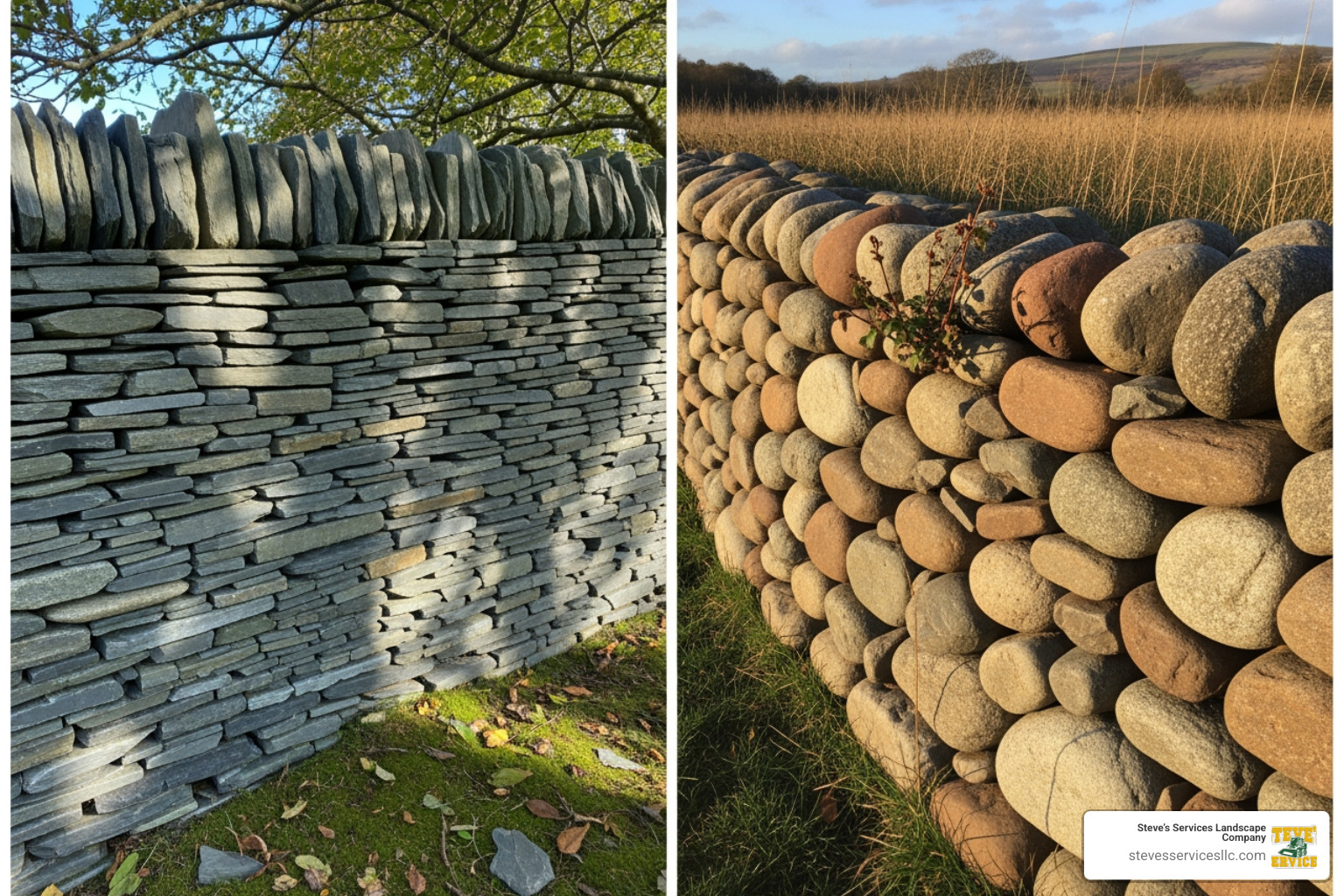
Flat, angular stones like quarried granite or slate create crisp, structured lines and are efficient to stack. In contrast, rounded fieldstone—common on New England properties—offers a softer, more organic look that feels like it has been part of the landscape for centuries. These require more skill to stack properly, but the natural charm is undeniable.
We believe in sourcing stone locally whenever possible. Using materials from near your property in Everett, Saugus, or Woburn reduces environmental impact and ensures your wall truly belongs to the landscape, sharing the same colors and textures as the surrounding environment.
Types of Stone Suitable for Dry Stack Walls
Massachusetts offers a wonderful variety of stone, each with its own character:
- Fieldstone: These irregularly shaped, often rounded stones are abundant in our region and create an authentic, rustic appearance. Their uniqueness makes stacking them a three-dimensional puzzle that requires an expert touch.
- Granite: As New England’s workhorse stone, granite is incredibly dense and weather-resistant. Available in angular or rounded forms, its strength makes it an outstanding choice for walls that need to last for generations.
- Slate: This rock naturally splits into flat pieces that stack beautifully, creating a refined, layered look with tight joints. It comes in shades of gray, blue, green, and even purple.
- Quartzite: Sharing granite’s durability, this hard rock often sparkles in the sunlight due to its quartz crystals, adding a subtle shimmer to your wall.
- Basalt: A dark, dense volcanic rock that, when found in angular forms, creates striking walls with clean lines and a bold presence.
Flat, angular stones naturally create tighter joints and are more straightforward to build with. Rounded stones demand greater expertise to interlock properly, but our experienced team can achieve stability with any stone type.
Matching Stone to Your Landscape Design
Your dry stack stone wall should feel like a natural extension of your property. We consider your home’s architecture, existing landscape, and the desired mood.
Angular stones bring a sense of order and precision, perfect for contemporary homes or formal gardens around patios and walkways. They make a deliberate, crafted statement.
Rounded fieldstones create a softer feel, suggesting they’ve weathered centuries of New England seasons. They work beautifully with traditional homes, cottage gardens, and woodland settings, adding authentic character.
Function also guides the design. Freestanding garden walls offer aesthetic freedom. Retaining walls, however, must do serious structural work. While both stone shapes can be used, the natural interlocking of angular stones often makes them a preferred choice where stability is paramount.
Whether you’re in Lynnfield or North Reading, our team specializes in designing beautiful retaining walls and other features that serve your practical needs while enhancing your property’s natural beauty.
The Professional Process for Building Dry Stack Stone Walls
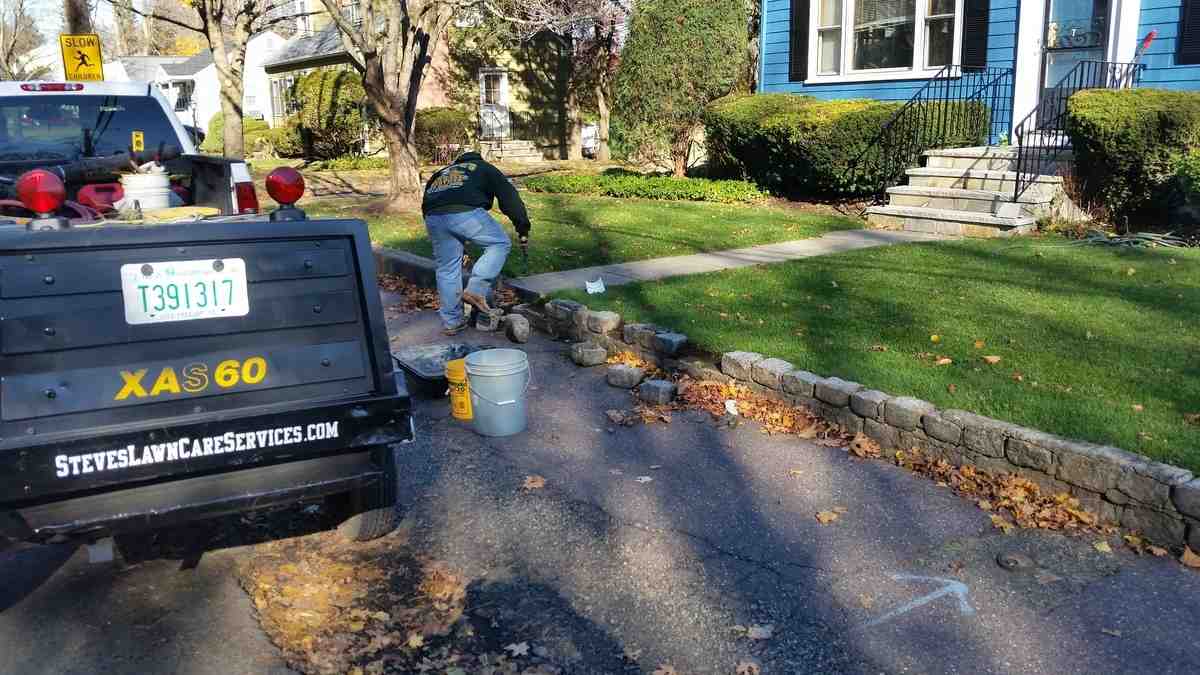
Building a dry stack stone wall is a craft that is equal parts art and engineering. At Steve’s Services, our masons understand the physics, geology, and time-tested principles that ensure the long-term stability of every wall we build across Massachusetts.
Site Preparation and Foundation
The most important part of a wall is the part you’ll never see: its foundation. A solid foundation is the difference between a wall that lasts for generations and one that fails.
We always begin by calling Dig Safe to locate any underground utility lines. Once the site is clear, we excavate a trench. For retaining walls, a key rule is that the base width should be at least half the wall’s final height. We dig below the grade and lay a sub-base of compacted crushed stone, going deeper in clay soils to ensure proper drainage.
Next, we build a compacted gravel footing in layers, using a vibratory compactor to create a firm, level, and free-draining base. This prevents the wall from settling or shifting under the immense weight of the stone. This proper base is critical for longevity.
The Art of Stacking: Principles of Strong Dry Stack Stone Walls
With the foundation prepared, the artistry begins. We follow several key principles refined over thousands of years:
- Breaking Joints: Like in brickwork, vertical joints should never line up in consecutive courses. Each stone must bridge the joint between the two stones below it, distributing weight evenly and preventing weak points.
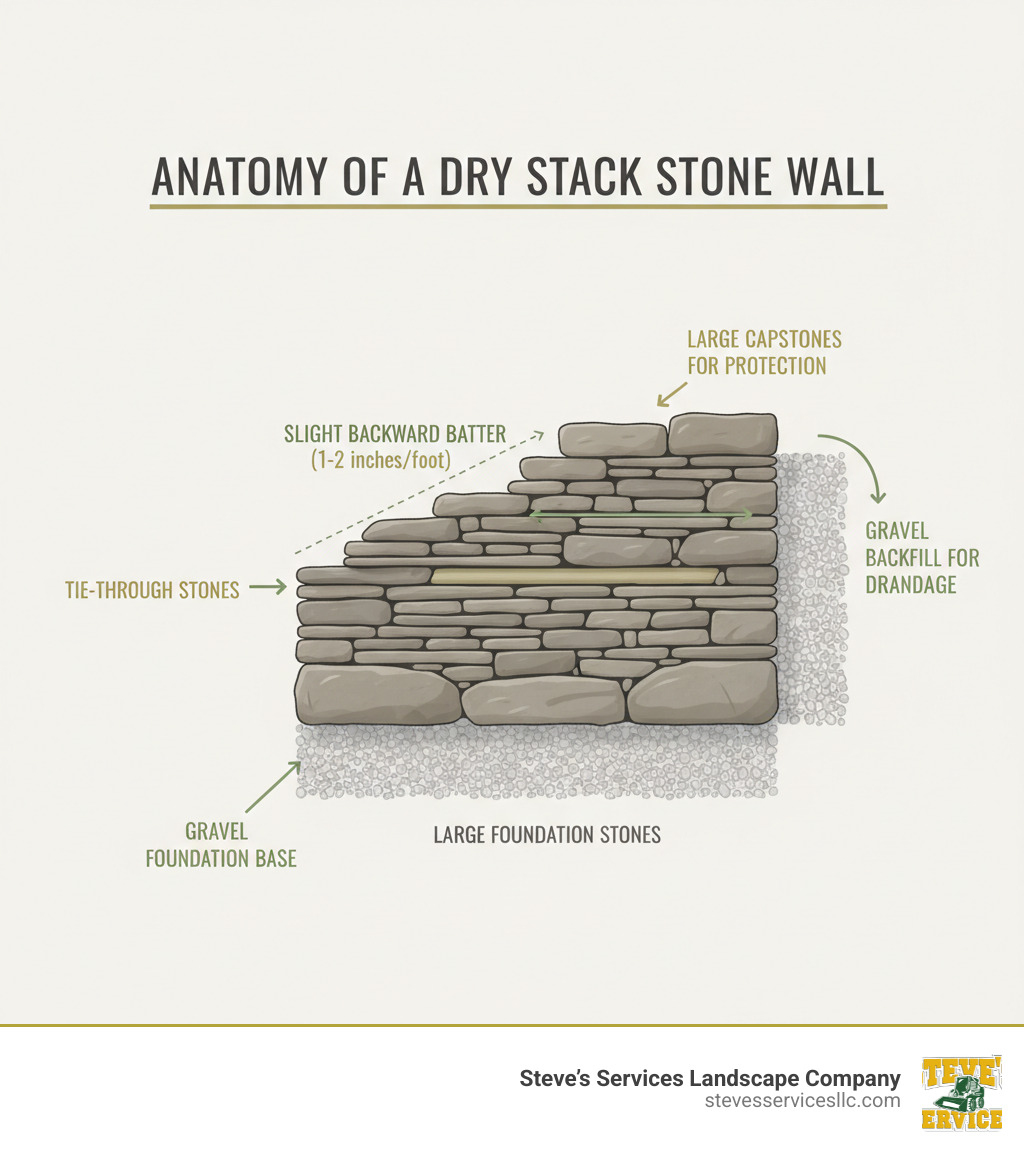
- Tie-Through Stones: These are long stones that extend deep into the wall, binding the front and back faces together. We place them every few feet to ensure the wall acts as a single, solid unit.
- Filling the Core (Hearting): For walls with two faces, we pack the space between with smaller stones. This adds mass, stability, and internal drainage, changing the wall from a hollow shell into a solid structure.
- Selecting and Fitting: Each stone is carefully chosen and placed to sit firmly without rocking. We use small stones called “chocks” to stabilize larger pieces and fill gaps, tightening the wall. Our professional masonry contractors know this attention to detail is what makes a wall great.
Ensuring Longevity: Batter, Drainage, and Capping
Several additional elements ensure your wall stands strong against Massachusetts weather.
- Batter: We build retaining walls with a slight backward lean (about one inch per foot of height). This uses gravity to its advantage, pressing the stones more firmly together as it leans into the earth it’s holding back.
- Drainage: We place a layer of clean gravel backfill behind the wall, separated from the soil by geotextile fabric. This creates a drainage zone, allowing water to escape through the wall’s joints and preventing pressure buildup. In some cases, we add perforated drain pipes for extra protection.
- Capping: Large, flat capstones are placed on top. They lock the upper courses together, protect the wall’s core from moisture, and provide a finished look. On lower walls, they can even serve as seating.
These elements work together as a system, proven over centuries. When we build a dry stack stone wall for your property in Burlington, Medford, or Melrose, we follow these principles because they work.
Applications and Long-Term Care

The beauty of dry stack stone walls lies in their versatility. They can solve practical landscape problems while adding timeless character.
- Retaining Walls: Their flexibility and natural drainage make them ideal for managing slopes and preventing erosion, turning hillsides into usable terraces.
- Freestanding Garden Walls: These walls define spaces, create outdoor rooms, and add vertical interest to a yard without holding back soil.
- Raised Planters: The natural drainage is perfect for plants, and the stone retains warmth, which can extend the growing season.
- Property Boundaries: A dry stack wall offers a sense of permanence and beauty that a typical fence cannot, becoming a historic feature of the landscape.
- Decorative Accents: Even a low wall framing a patio, encircling a fire pit, or edging a walkway can transform the feel of your property with the natural texture of stone.
Maintaining Your Dry Stack Wall
One of the greatest advantages of dry stack stone walls is that they are remarkably low-maintenance. You won’t be spending weekends repairing crumbling mortar.
We recommend a simple routine inspection once or twice a year, usually in the spring and fall. Walk along the wall and look for any stones that may have shifted. In a well-built wall, this is rare, but extreme weather can occasionally cause movement.
If you do notice a shifted stone, our professional repair process is straightforward. Because there is no mortar, we can carefully remove stones down to the problem area and restack them properly. This is much simpler and less costly than repairing a cracked mortared wall.
Managing vegetation is the other main consideration. While small plants in crevices can be charming, remove any tree saplings or large shrubs growing too close to the wall, as their roots can exert pressure over time. Otherwise, a bit of moss or lichen only adds to the natural, aged appearance that makes these walls so beloved.
With these simple practices, your dry stack stone wall in Reading, Stoneham, or Winchester will remain a beautiful and functional part of your landscape for generations.
Frequently Asked Questions about Dry Stack Walls
We love talking with homeowners about their landscape visions, and dry stack stone walls always generate great questions. Here are answers to what we hear most often.
How high can a dry stack wall be built?
This is a crucial question for safety and design. As a general rule, a dry stack stone wall can be safely built up to 3 or 4 feet tall without requiring special engineering. At this height, the wall’s own weight and proper construction provide all the necessary structural integrity.
For walls taller than 4 feet, especially retaining walls holding back soil, professional engineering is necessary. Taller walls face much greater pressure and require a more sophisticated design, such as a wider base (typically at least half the wall’s height) and other reinforcement techniques to ensure they remain safe and stable for decades.
How long do dry stack walls last compared to other types?
The durability is one of the most impressive aspects of a dry stack stone wall. When built correctly, these walls can easily last for over 100 years. You can find centuries-old examples across New England that have endured countless harsh winters.
In comparison, mortared walls typically have a lifespan of 30 to 50 years, as the mortar is a weak point that cracks and deteriorates. Concrete block walls can fail in as little as 15 years, especially if they are subject to frost heave and poor drainage.
The secret is the wall’s flexibility. It moves with the earth and allows water to drain freely, adapting to the very forces that destroy rigid structures.
Is a dry stack wall more expensive?
A dry stack stone wall typically requires a higher upfront investment than options like mortared or timber walls. The process is labor-intensive, requiring skilled masons to fit each stone by hand, and natural stone is a premium material.
However, the long-term value is exceptional. These walls require minimal maintenance and have no future costs for repointing mortar or replacing rotted wood. When you factor in the cost of repairs and eventual replacement of other wall types, the dry stack wall is often the more economical choice over its lifetime.
Furthermore, the return on investment is significant. A beautiful, permanent stone wall adds substantial curb appeal and property value. Buyers recognize quality, and a well-built dry stack wall is a clear sign of a thoughtfully cared-for property, whether in Malden, Revere, or Danvers.
Conclusion: Invest in Timeless Hardscaping for Your Property
When you choose a dry stack stone wall, you are creating a legacy. These structures offer a durability that mortared walls simply cannot match, and their natural beauty only deepens with time, developing a character that speaks to the enduring strength of stone.
The benefits are clear: exceptional longevity of over 100 years, natural flexibility to handle New England’s freeze-thaw cycles without cracking, and a timeless aesthetic that adds significant curb appeal and property value.
However, the difference between a wall that lasts a century and one that fails in a decade comes down to one factor: expert installation. The careful selection of stone, the proper foundation, and the patient fitting of each piece are not details to be skipped. They are the very essence of a structure that will stand strong for generations.
At Steve’s Services, we have dedicated ourselves to mastering this ancient craft. Our team doesn’t just stack stones; we build enduring features that become an integral part of your landscape. We take the time to understand your vision and deliver a solution that honors both your aesthetic goals and your property’s structural needs.
Ready to create something that will last for generations? Contact our expert masonry contractors today to plan your project. Let’s build something timeless together.