Why Front Yard Hedges Are One of the Smartest Landscaping Choices You Can Make
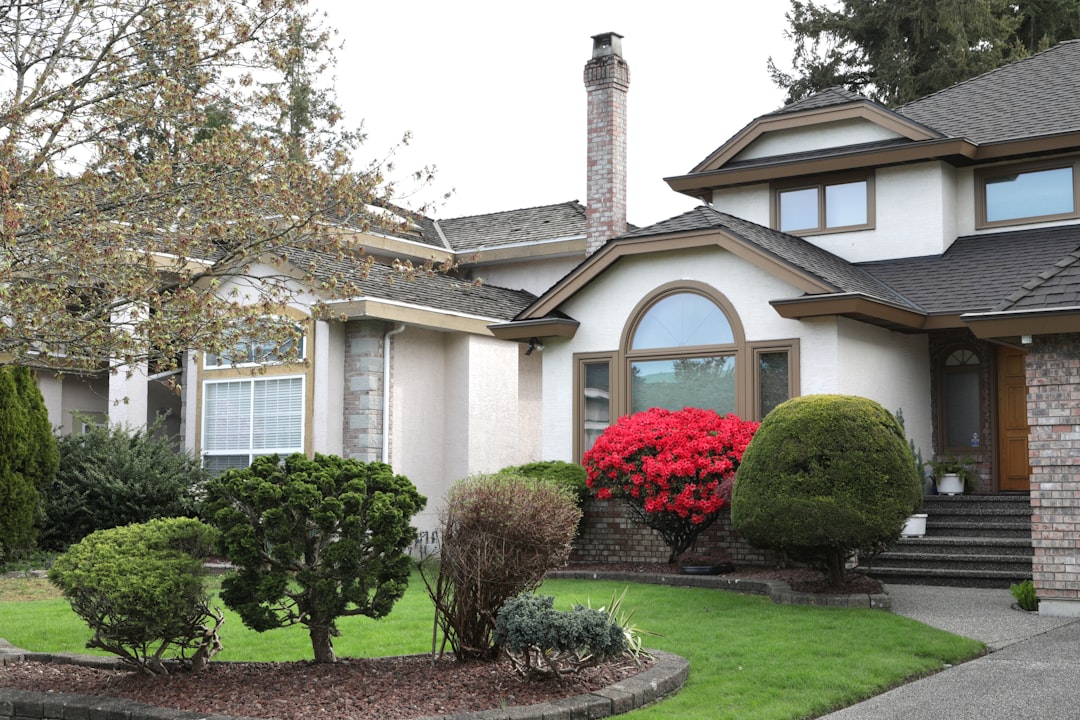
Image Description: A beautifully manicured front yard hedge framing a residential property, showcasing clean lines and vibrant green foliage.
Front yard hedges are one of the most versatile and rewarding additions you can make to your property. Here’s a quick look at the most popular options and what they offer:
| Hedge Type | Best For | Growth Rate | Evergreen? |
|---|---|---|---|
| Boxwood | Formal borders, foundation planting | Slow | Yes |
| Arborvitae | Tall privacy screens | Fast (1-3 ft/yr) | Yes |
| Holly | Year-round structure, deer resistance | Moderate | Yes |
| Viburnum | Flowering screens, wildlife habitat | Moderate | Some varieties |
| Lilac | Fragrance, seasonal color | Fast (~2 ft/yr) | No |
| Cherry Laurel | Dense privacy, shade tolerance | Moderate-fast | Yes |
| Privet | Formal hedges, quick coverage | Fast | Some varieties |
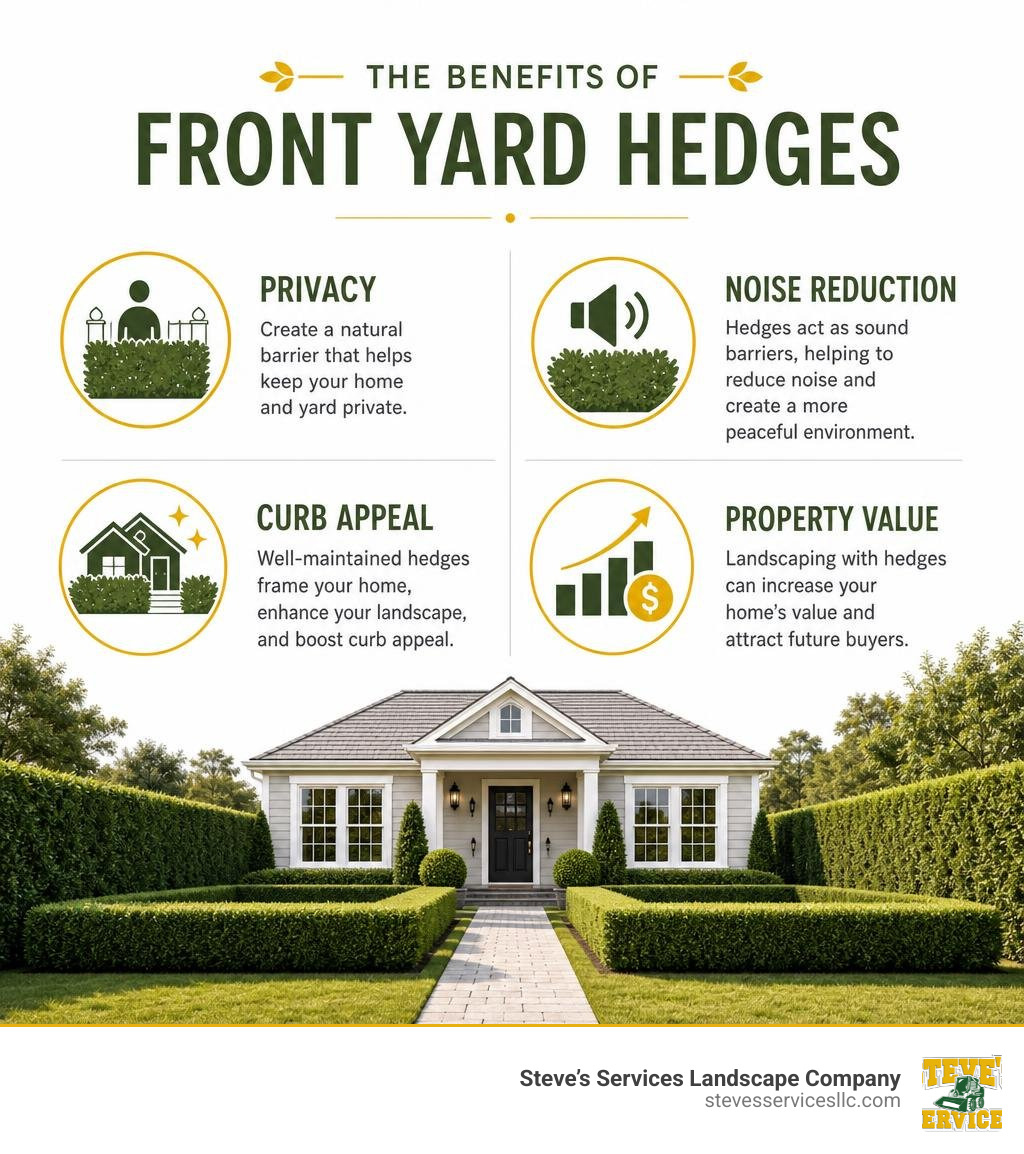
n A well-placed hedge does more than just look good. It can reduce noise by up to 50%, block wind, add privacy, and potentially raise your home’s value by 5-15%. Yet many homeowners aren’t sure where to start — which plants to choose, how far apart to space them, or how to keep them looking sharp year after year.
The good news? Getting it right isn’t complicated once you know the basics.
I’m Steve Sylva, owner of Steve’s Services Landscape Company, and over my 25+ years installing and maintaining front yard hedges across Malden, MA and surrounding communities, I’ve seen which plants thrive in New England’s climate — and which ones become a headache. In the sections below, I’ll walk you through everything you need to know.
Relevant articles related to Front yard hedges:
Designing with Front Yard Hedges: Privacy, Noise Reduction, and Curb Appeal
When we design front yard landscapes in July 2026, we are looking at hedges as much more than just boundary lines. Modern landscape architecture treats front yard hedges as architectural elements that define outdoor rooms, frame beautiful entryways, and balance the hard angles of your home.
One of the biggest shifts we’ve seen in recent years is the move away from single-species “walls of green” toward dynamic, layered designs. Instead of a flat row of identical shrubs, layering combines different heights, textures, and foliage colors to create depth. For example, placing a row of structured, low-growing boxwoods in front of a taller flowering shrub like hydrangea creates an elegant, cascading effect that looks polished in every season. Homeowners seeking inspiration often look to resources like 30 Layered Hedge Front Yard Ideas for a Polished, Private Look – Suite 101 to visualize how these multi-tiered arrangements can completely transform a flat facade.

Beyond aesthetics, a thoughtfully designed hedge solves real-world suburban challenges:
- Privacy Screening: As lot sizes shrink and houses are built closer together in towns like Melrose and Woburn, privacy is at a premium. A dense hedge of evergreen arborvitae or holly blocks direct lines of sight from neighbors and passing vehicles without the harsh, unwelcoming look of a tall wooden fence.
- Noise Reduction: If your home sits on a busy road in Revere or Saugus, traffic noise can ruin your peace. A dense, multi-layered hedge acts as a natural acoustic barrier. Sound waves are absorbed, deflected, and scattered by the flexible leaves and branches, reducing perceived street noise by up to 50%.
- Windbreaks: Cold winter winds can sweep across New England yards, driving up heating costs. A thick evergreen hedge can block up to 90% of wind, creating a sheltered microclimate around your front entrance and protecting delicate foundation plantings.
To achieve these benefits, it is crucial to integrate your hedges into a comprehensive landscape plan. Our team at Steve’s Services provides professional Landscaping Services to help you design a layout that balances functional screening with stunning curb appeal.
Top Shrub Species for Low, Medium, and Tall Living Screens
Choosing the right plant is the most important decision in the entire process. If you pick a species that naturally wants to grow 20 feet tall for a spot under a low front window, you will be locked in an endless pruning war. Conversely, picking a slow-growing dwarf shrub to block a two-story view of your neighbor’s driveway will leave you waiting decades for privacy.
Selecting the Best Species for Front Yard Hedges
When selecting plants for Massachusetts yards, we look for cold-hardy, resilient species that can handle hot summers and freezing winters. Here are the top performers we recommend:
- Boxwood (Buxus spp.): The absolute gold standard for formal, structured hedges. Boxwood is slow-growing, highly cooperative under shears, and holds its deep green color all winter. It is perfect for low borders, framing walkways, or creating neat foundation beds.
- Arborvitae (Thuja spp.): For fast-growing, narrow, and tall privacy screens, nothing beats Arborvitae. Cultivars like ‘Emerald Green’ grow in a tight, columnar shape, making them ideal for property lines where space is tight.
- Holly (Ilex spp.): With their glossy, deep green leaves and vibrant winter berries, hollies provide excellent structure and year-round interest. They are also highly resistant to deer browsing, which is a major plus in semi-wooded areas like Lynnfield and North Reading.
- Cherry Laurel (Prunus laurocerasus): Known for its broad, shiny leaves and rapid growth, Cherry Laurel forms a dense, glossy wall. It is incredibly shade-tolerant, making it a go-to choice for planting under large canopy trees.
- Viburnum: If you want a softer, more natural look, viburnums offer beautiful spring blooms, attractive summer foliage, and berry clusters that attract local birds.
- Lilac (Syringa spp.): For a burst of seasonal color and unmatched fragrance, a lilac hedge is a classic choice. While deciduous, they grow quickly (up to 2 feet per year) and establish a dense, woody screen.
To protect both your home and your investment, we recommend reading through Foundation Hedges: Best Shrubs to Frame and Protect Your Home to understand how to select species that won’t crowd your siding or damage your home’s exterior. Once installed, keeping these species at their ideal size requires seasonal care, which is where our professional Bush and Shrub Trimming services come in.
Evergreen vs. Deciduous Shrub Varieties
A common dilemma is choosing between evergreen and deciduous shrubs. Evergreens retain their leaves year-round, providing uninterrupted privacy and wind protection through the bleak winter months. Deciduous hedges drop their leaves in late autumn, but they compensate by offering spectacular seasonal shifts—vibrant spring flowers, lush summer greenery, and brilliant fall colors.
To help you compare, we’ve broken down the key differences:
| Feature | Evergreen Hedges | Deciduous Hedges |
|---|---|---|
| Winter Appearance | Dense green foliage; excellent winter structure | Bare branches; silhouette interest (sometimes colorful bark) |
| Seasonal Variation | Highly consistent; subtle spring growth spurts | Dramatic shifts; flowers, autumn color, berries |
| Growth Rate | Generally slower (except for species like Leyland Cypress) | Often faster; can establish a screen in fewer seasons |
| Light Penetration | Blocks light year-round; heavy shade underneath | Allows winter sunlight to pass through to the home |
| Maintenance | Regular shearing to maintain formal shapes | Rejuvenation pruning in late winter is highly tolerated |
For a deeper dive into how to manage these plant types through the seasons, consult The Essential Guide to Growing Hedges – Fine Gardening.
Professional Planting, Spacing, and Maintenance Best Practices
A beautiful hedge is made in the preparation and planting. Simply digging a row of holes and dropping in shrubs is a recipe for uneven growth, root rot, and patchy coverage.
Proper Spacing and Soil Preparation
To ensure a seamless green wall, plants must be spaced close enough that their branches interlace, but far enough apart that they aren’t choked of light and air. A great professional rule of thumb is to space shrubs at two-thirds of their intended mature height. For example, if you want a formal hedge maintained at 6 feet tall, space the individual plants 4 feet apart from center to center.
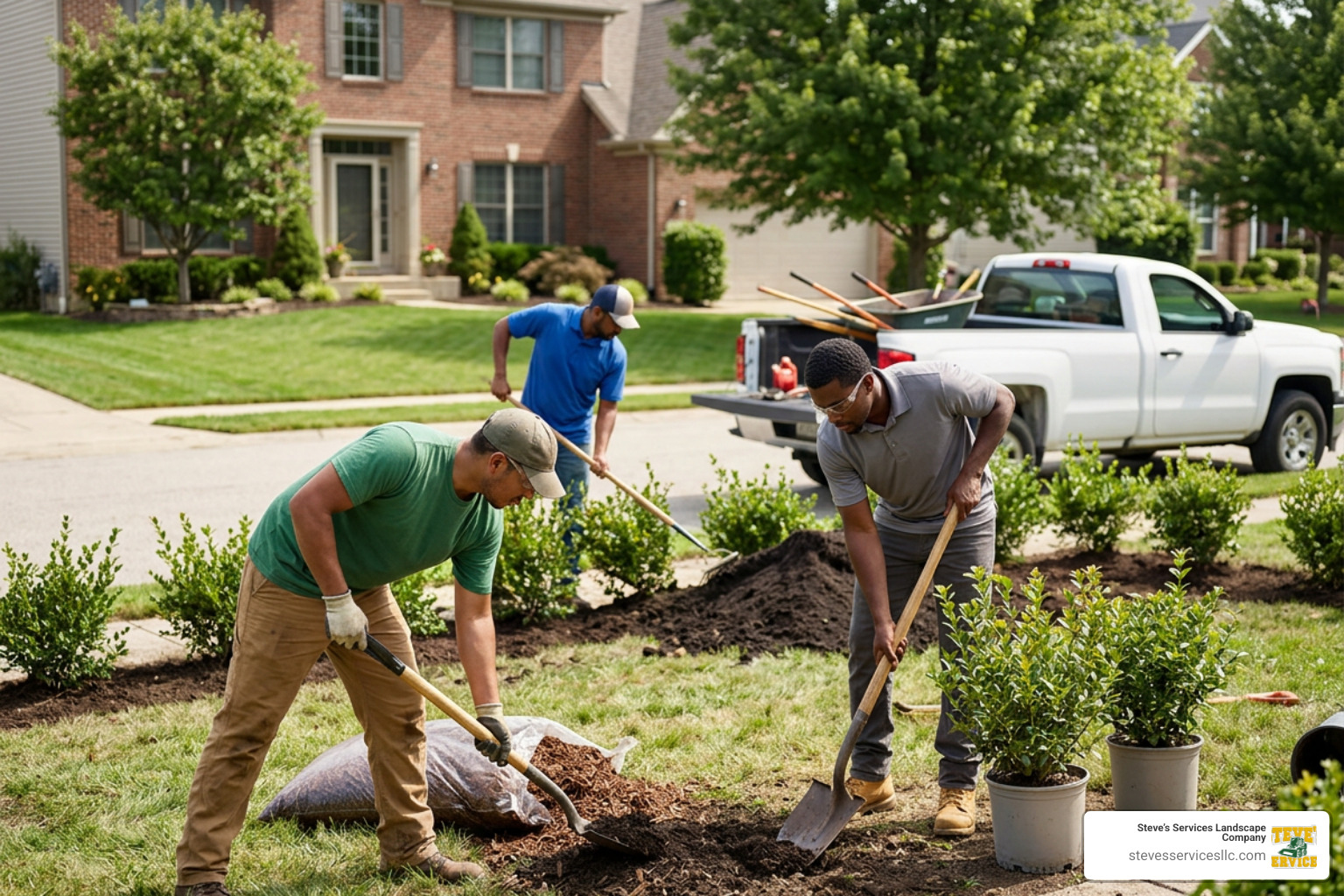
Before planting, the entire run of the hedge bed—not just individual holes—should be prepared:
- Soil Testing and Amendment: New England soil can range from heavy clay to sandy loam. We recommend digging a trench twice as wide as the root balls and amending the native soil with one-third organic compost to improve drainage and nutrients.
- Clearance and Setbacks: Never plant a hedge directly against your home or a property fence. For foundation plantings, the center of the shrub should sit at least 2 to 5 feet away from the house wall (depending on mature size) to allow for airflow, maintenance access, and to prevent moisture from trapping against your siding.
- Watering and Establishment: Newly installed hedges require deep, slow watering for at least an hour per week during their first two growing seasons.
Because proper installation requires heavy equipment and precise layout calculations, many homeowners search for Landscapers Near Me to ensure the job is done right. Partnering with a team that offers expert Professional Hedge Trimming from day one ensures your young plants are trained correctly to grow dense from the ground up.
Common Mistakes to Avoid with Front Yard Hedges
Over the years, our crews have been called to remediate or completely rip out hedges that became neighborhood eyesores due to simple design errors. The most common mistakes include:
- Ignoring Mature Size: Buying a cute, 1-gallon shrub at a nursery without realizing it matures to 12 feet wide. Within five years, it will block your windows, swallow your front walkway, and crowd out your lawn.
- The “Just Trim It More” Mentality: Trying to keep an aggressive, fast-growing plant small by shearing it constantly. As noted in Front Yard Problems Caused by Fast-Growing Hedges – The Garden Scene, excessive outer shearing blocks sunlight from reaching the interior, leaving you with a hedge that looks green on the outside but is completely bare and woody on the inside.
- Improper Shearing Shapes: Trimming a hedge so the top is wider than the base. This casts a shadow on the lower branches, causing them to lose their leaves and leave the bottom of your hedge patchy and thin. Always trim your hedges with a slight taper—narrower at the top, wider at the base—so sunlight reaches every leaf.
By avoiding these pitfalls and applying 10 Smart Strategies for Hedge Trimming Services, you can keep your living screen healthy, dense, and perfectly scaled to your front yard.
Frequently Asked Questions About Front Yard Landscaping
What is the average cost to install front yard hedges?
When planning a landscape upgrade, budget is always a key factor. Based on internet-based averages across the industry, professional hedge installation typically ranges from $1,500 to $8,000+, depending on the length of the run, the species selected, and the size of the plants at the time of installation.
For a simple, low-growing border using smaller, 1-gallon shrubs, costs will sit at the lower end of the spectrum. However, if you are looking to install a mature, instant-privacy screen using 6-foot-tall evergreen arborvitae or specimen hollies, the project requires heavy machinery, extensive soil preparation, and significant professional labor. For large-scale properties or complex, multi-layered designs, a comprehensive installation can range from $1,500 to $25,000+. Please keep in mind that these figures are broad, internet-based market averages and do not represent specific quotes for Steve’s Services.
How often do front yard hedges need to be trimmed?
The trimming frequency depends entirely on the plant species and the look you want to achieve:
- Formal Hedges (e.g., Boxwood, Privet): To maintain crisp, geometric lines, these typically require one major trim in late spring after the first flush of new growth has hardened, followed by a lighter touch-up trim in mid-to-late summer.
- Informal/Flowering Hedges (e.g., Lilac, Viburnum): These require much less maintenance. They should only be pruned once a year, immediately after they finish blooming, to avoid cutting off next year’s flower buds.
Pro tip: We recommend avoiding any major hedge pruning from April through June to protect local songbirds that use dense hedges as nesting sites.
Do hedge roots damage home foundations?
In almost all cases, the root systems of standard hedging shrubs (like boxwood, holly, and dwarf evergreens) are fibrous and non-invasive, meaning they will not damage a sound, poured-concrete foundation.
However, problems can arise if shrubs are planted too close to the house. Roots naturally grow toward moisture. If you have existing cracks in an old stone foundation or poor gutter drainage that pools water against your home, roots may find their way into those gaps. Maintaining a proper setback of at least 3 to 5 feet from the foundation wall prevents these issues, ensures adequate airflow to prevent mold on your siding, and allows room for home maintenance.
Conclusion
Your front yard is the first thing visitors and neighbors see. By choosing the right species, spacing them correctly, and keeping up with seasonal maintenance, front yard hedges can elevate your home’s curb appeal while providing unmatched privacy and quiet.
However, designing and planting a living wall that remains healthy and beautiful for decades is a major undertaking. From testing soil drainage to calculating precise spacing and executing precise, tapered trims, professional expertise makes all the difference.
At Steve’s Services Landscape Company, we have been helping homeowners throughout Malden, MA, and neighboring communities like Winchester, Stoneham, Medford, and Burlington design, install, and maintain gorgeous landscapes for over a quarter of a century. Let us take the hard work off your hands so you can simply enjoy the view.
Ready to transform your front yard? Explore our professional Steve’s Services Landscape Maintenance programs or contact us today to schedule a consultation with our local design experts!