
Everett Lawn Pest Control: 7 Powerful Tips for Paradise 2025
The Hidden Invaders Damaging Your Everett Lawn
Looking for Everett lawn pest control services? Here’s what you need to know:
- Most common lawn pests in Everett, MA: Chinch bugs, grubs, sod webworms, and crane fly larvae
- Average cost: $89-$225 per treatment (based on internet averages)
- Best time for treatment: Spring for prevention, summer for active infestations
- Top services include: Targeted treatments, perimeter protection, and seasonal monitoring
- Professional advantage: Correct pest identification and custom treatment plans
Your beautiful Everett lawn faces a unique set of challenges thanks to Massachusetts’ distinctive climate. Everett lawn pest control is not a one-size-fits-all solution, as the New England conditions create ideal breeding grounds for pests that can quickly transform your lush green grass into a patchy, damaged eyesore.
The region’s cold, snowy winters drive rodents to seek shelter, while humid summers trigger increases in ant and mosquito activity. Without proper intervention, these pests don’t just damage your lawn’s appearance – they compromise its root system and overall health.
Many homeowners attempt DIY treatments only to find themselves stuck in a frustrating cycle of temporary improvements followed by resurgences. Professional pest control services use targeted approaches based on the specific pests affecting your property and Everett’s unique environmental conditions.
I’m Steve Sylva, owner of Steve’s Services Landscape Company with over 25 years of experience providing comprehensive Everett lawn pest control solutions that protect your investment while ensuring the safety of your family, pets, and the environment.
Understanding Everett’s Lawn Pest Threats
There’s something special about living in Everett, Massachusetts—the historic charm, vibrant community, and distinctive New England climate. Unfortunately, that same climate creates the perfect storm for lawn pests in Everett. The dance between moisture and temperature throughout our seasons creates what I like to call a “pest paradise” that can quickly turn your lush green lawn into a patchwork of damage.
I’ve seen it countless times over my years in Everett lawn pest control—what starts as a small yellow spot can transform into widespread brown patches faster than you can say “chinch bug.” Understanding what’s attacking your lawn is half the battle in protecting it.
Most Common Pests in Everett, MA
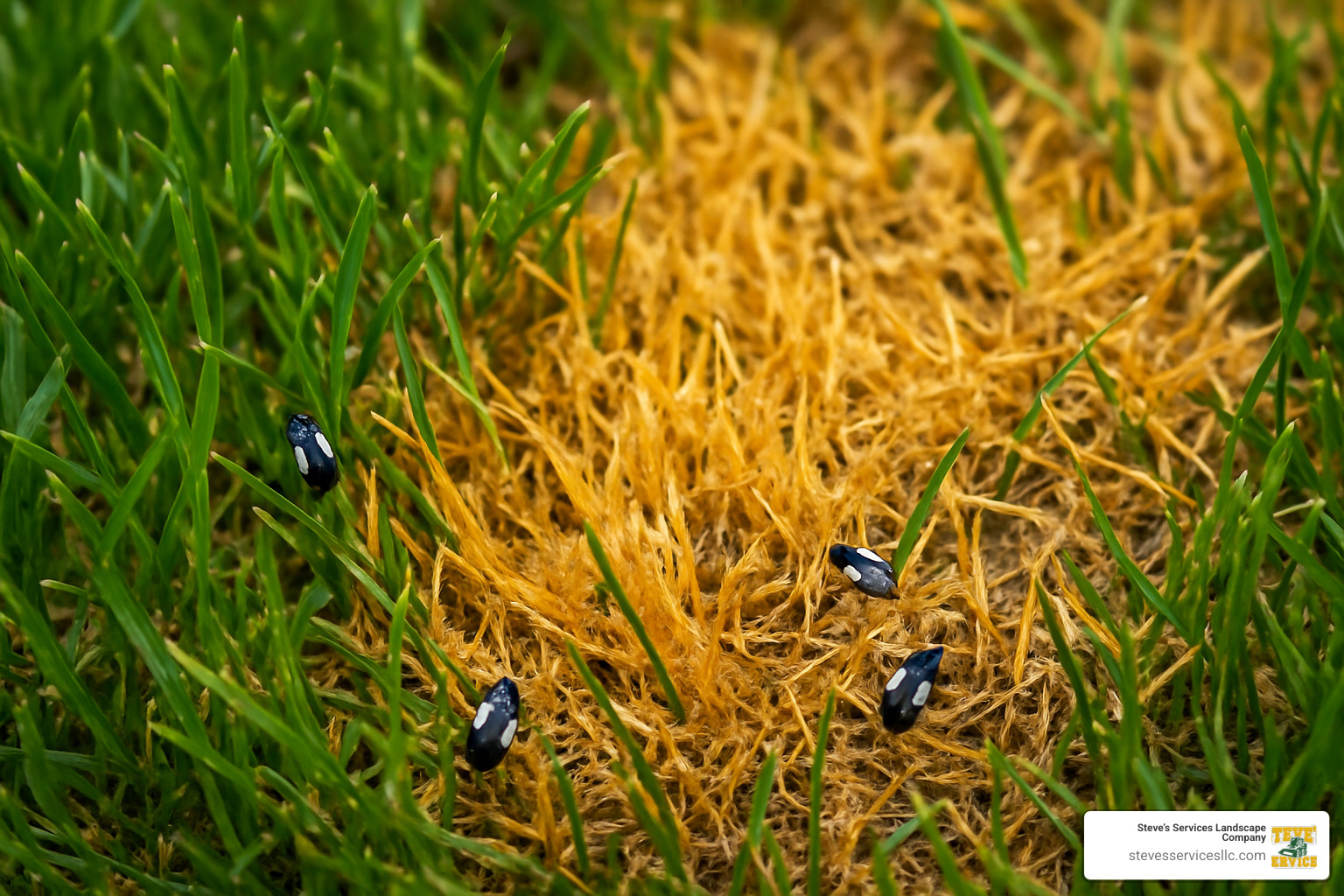
Those tiny chinch bugs might be only 1/5 inch long, but don’t let their size fool you. These vampires of the insect world pierce grass blades, suck out the plant fluids, and inject toxins that cause your grass to yellow and die. You’ll notice their damage as expanding yellow patches that eventually turn brown—like a disease spreading across your lawn.
Grubs are the teenagers of the beetle world—always hungry and causing trouble. These C-shaped larvae feast on grass roots about two inches below the surface. When they’ve had their fill, your grass loses its lifeline to water and nutrients. The telltale sign? Brown patches that peel up like a loose carpet when you tug on them. Our Massachusetts soil conditions can create perfect environments for these pests.
Have you noticed birds suddenly taking a keen interest in your lawn? They might be after sod webworms—caterpillars that feed on grass blades at night and hide in silk-lined tunnels during the day. These sneaky pests create irregular brown patches and thin spots that can make your lawn look neglected even when you’re doing everything right.
Those giant mosquito-looking insects flying around in late summer aren’t actually mosquitoes—they’re crane flies. Their larvae (often called “leatherjackets”) feed on grass roots and crowns, causing significant damage particularly in wetter areas of your property. It’s like having underground lawn demolition crews working 24/7.
Moles create those frustrating tunnels and mounds as they hunt for insects. Ironically, they’re often attracted to lawns already suffering from grub infestations—adding insult to injury for homeowners dealing with multiple pest problems.
Several species of ants can damage Everett lawns by creating nests, moving soil, and sometimes farming aphids that damage grass. The moisture-loving carpenter ants and odorous house ants particularly thrive in our Massachusetts environment.
While mosquitoes don’t directly damage your lawn, they breed in standing water and rest in tall grass, effectively turning your yard into their personal resort. They’re the uninvited guests that can make summer evenings unbearable.
How Everett’s Climate Fuels Infestations
Our unique Everett, MA climate creates the perfect conditions for lawn pests in several ways:
The seasonal moisture patterns we experience, particularly during spring and fall, creates ideal breeding conditions for moisture-loving pests like crane fly larvae. This dampness also supports fungal growth that weakens lawns, making them more vulnerable to pest invasion.
Our dramatic temperature fluctuations between seasons create stress periods for lawns that pests can exploit. The freeze-thaw cycles of New England winters can weaken turf, making it more susceptible to spring pest invasions.
The summer humidity in Massachusetts can make lawns more susceptible to pest damage. Chinch bugs particularly thrive during these humid periods, and their damage is often mistaken for simple drought stress—leading homeowners to water more instead of treating the actual problem.
Different lawn pests reach their peak activity at different times in Everett, MA:
- Grubs typically cause the most damage in late summer and early fall
- Chinch bugs become most active during the warmer, humid periods of summer
- Sod webworms are most destructive in mid to late summer
- Crane fly larvae cause damage primarily in spring and fall
According to scientific research on climate impact on turf pests, these patterns are likely to intensify with changing climate conditions, making professional Everett lawn pest control increasingly important.
Red Flags of an Active Infestation
Catching a pest problem early can save your lawn and your wallet. Here are the warning signs I tell all my customers to watch for:
Chewed turf roots result in grass that pulls up easily, like a loose carpet. If you can lift sections of your lawn with minimal effort, you’re likely dealing with grubs or other root-feeding pests.
Thinning grass and irregular patches that don’t respond to watering often indicate sod webworm or chinch bug activity. These patches might start small but can expand rapidly if left untreated.
A sudden bird feeding frenzy on your lawn isn’t just a charming nature moment—it’s often a sign that birds have finded a buffet of grubs or sod webworms just below the surface.
The appearance of mole tunnels and mounds often indicates an underlying grub problem. Moles are nature’s pest control specialists, but their landscaping techniques leave much to be desired.
Uneven lawn color with patches of yellow or brown grass amid otherwise healthy turf is a classic sign of chinch bug damage. These discolored areas typically appear first in the hottest, sunniest parts of your lawn.
Sometimes you can spot the visible insects themselves during peak activity periods. Try the “coffee can test” by removing both ends of a coffee can, driving it into the soil, and filling it with water. This will force chinch bugs and other pests to float to the surface, giving you visual confirmation of your unwelcome guests.
Early detection of these warning signs allows for prompt intervention through professional Everett lawn pest control services, potentially saving you from extensive lawn damage and costly restoration work. When it comes to lawn pests, the old saying really is true: an ounce of prevention is worth a pound of cure.
Everett lawn pest control: Professional Solutions & Process
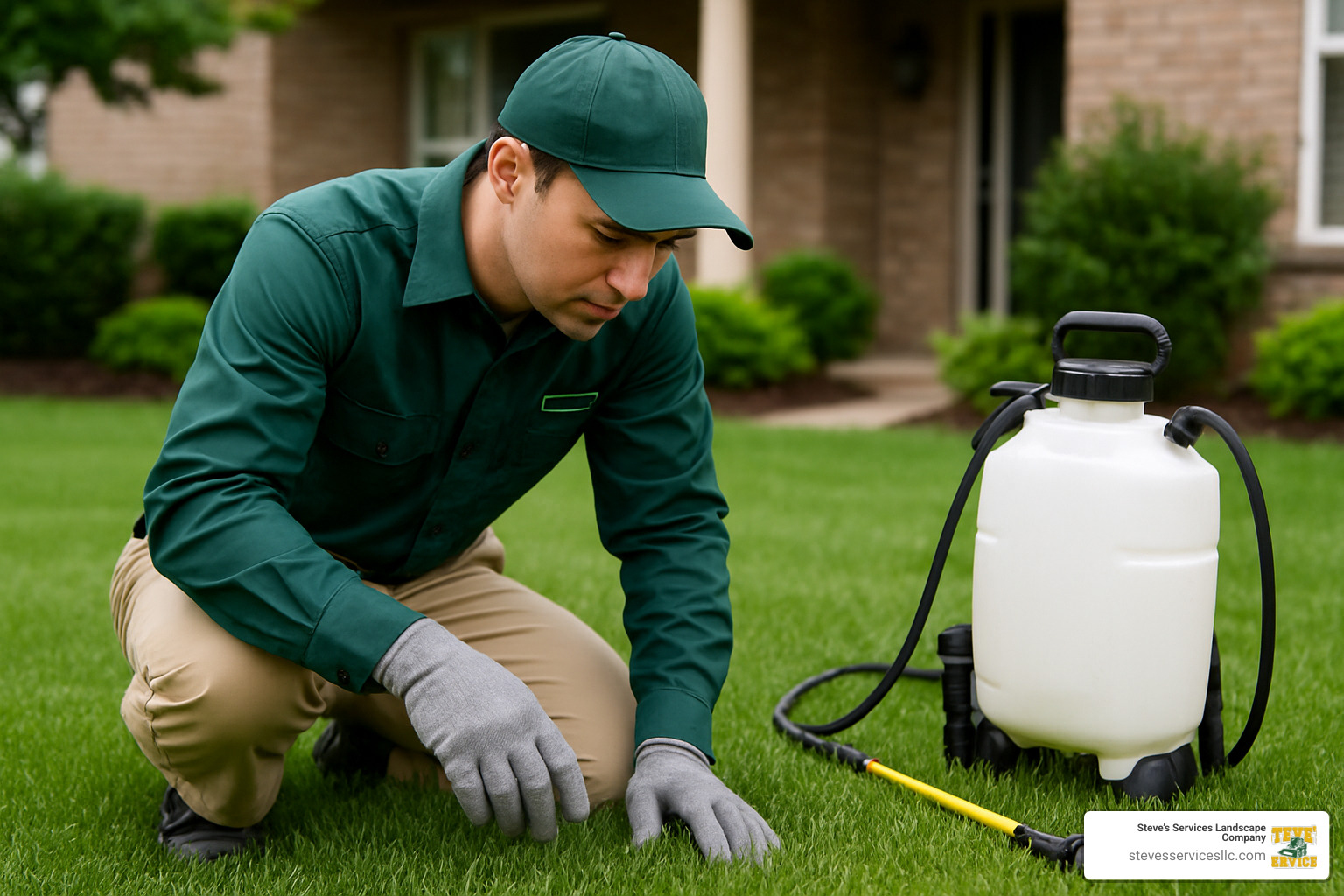
When your lawn starts showing those telltale signs of pest damage, it’s time to call in the professionals. At Steve’s Services Landscape Company, we’ve spent years perfecting our Everett lawn pest control approach to address the unique challenges our Massachusetts climate presents.
Think of our process as detective work that leads to healing. First, we conduct a thorough inspection to identify exactly what’s munching on your grass. Unlike DIY approaches where you might be guessing at the culprit, our trained technicians can spot the difference between chinch bug damage and grub activity at a glance.
After identifying the specific pests at work, we develop a custom treatment plan considering your lawn’s health, the extent of infestation, and any environmental factors specific to your property. We’re especially careful about safety considerations for your family, pets, and those important beneficial insects that help keep your garden thriving.
Why Everett Lawn Pest Control Beats DIY Attempts
I’ve seen it countless times – determined homeowners armed with store-bought sprays, ready to battle whatever’s damaging their lawn. Unfortunately, these DIY campaigns often lead to frustration and wasted money.
The problem isn’t lack of effort – it’s lack of expertise. Everett lawn pest control requires specific knowledge about our local pest populations. Many homeowners misidentify the problem entirely, mistaking chinch bug damage for drought stress or treating for the wrong pest altogether.
Even with the right diagnosis, consumer-grade products simply don’t match the effectiveness of professional formulations. It’s like trying to fix a broken bone with a bandage – you might cover the problem, but you’re not solving it.
The real hidden cost of DIY approaches emerges over time. What starts as a $30 bottle of spray can turn into hundreds in repeated treatments and eventually lawn restoration when those treatments fail. Meanwhile, professional services provide targeted, effective solutions based on decades of local experience.
| DIY Approach | Professional Service |
|---|---|
| Guesswork identification | Expert diagnosis |
| Limited-effectiveness products | Commercial-grade solutions |
| Reactive treatment | Preventive strategy |
| Risk of misapplication | Precision application |
| Potential environmental harm | Environmentally responsible methods |
What to Expect During an Everett Lawn Pest Control Service Visit
When you schedule an Everett lawn pest control visit with us, the process is smooth and straightforward. We’ll start by providing simple preparation instructions – typically just ensuring gates are accessible and pets are kept inside during the treatment.
On arrival, our technician will conduct a comprehensive inspection of your lawn, looking not just at damaged areas but at the overall health of your turf. We often take soil samples to analyze conditions that might be contributing to your pest problems or affecting how treatments will work.
The actual treatment application is a precise science. Our technicians use calibrated equipment to ensure exact application rates, targeting the specific pests identified during inspection. This isn’t a “spray and pray” approach – it’s targeted intervention based on scientific principles.
After treatment, we’ll provide a detailed safety briefing about re-entry times, though most of our treatments allow you back on your lawn once they’ve dried (typically 1-2 hours). You’ll receive a written report outlining our findings, treatments applied, and recommendations for ongoing lawn care practices that help prevent future infestations.
Depending on the severity of your problem, we’ll schedule follow-up monitoring to ensure the treatment is working as expected. Most service visits take between 30 minutes to an hour, depending on your property size and the complexity of the pest issues.
Keeping Kids, Pets & Pollinators Safe
Nothing matters more than the safety of your family – including the four-legged members. Our Everett lawn pest control approach prioritizes safety without compromising effectiveness.
We select products with low toxicity profiles and quick drying times, applying them with techniques that minimize drift and exposure. Whenever possible, we use targeted spot treatments rather than blanket applications, reducing the overall chemical load on your property.
For our buzzing friends and other beneficial insects, we take special precautions. We time applications to avoid peak pollinator activity, use formulations that minimize impact on bees, and create buffer zones around flowering plants. Our team stays current with the latest EPA guidelines for safe pest control, ensuring we’re always using the most up-to-date, environmentally responsible methods.
We understand you might have concerns about chemical applications around your home. That’s why we’re always available to answer questions about our products and processes. We believe in complete transparency – because your peace of mind matters just as much as your pest-free lawn.
Our commitment to safety extends beyond just product selection. Our technicians receive ongoing training in application safety and environmental protection, ensuring that every treatment we provide meets the highest standards for family, pet, and pollinator safety.
Integrated & Eco-Friendly Approaches for Sustainable Lawns
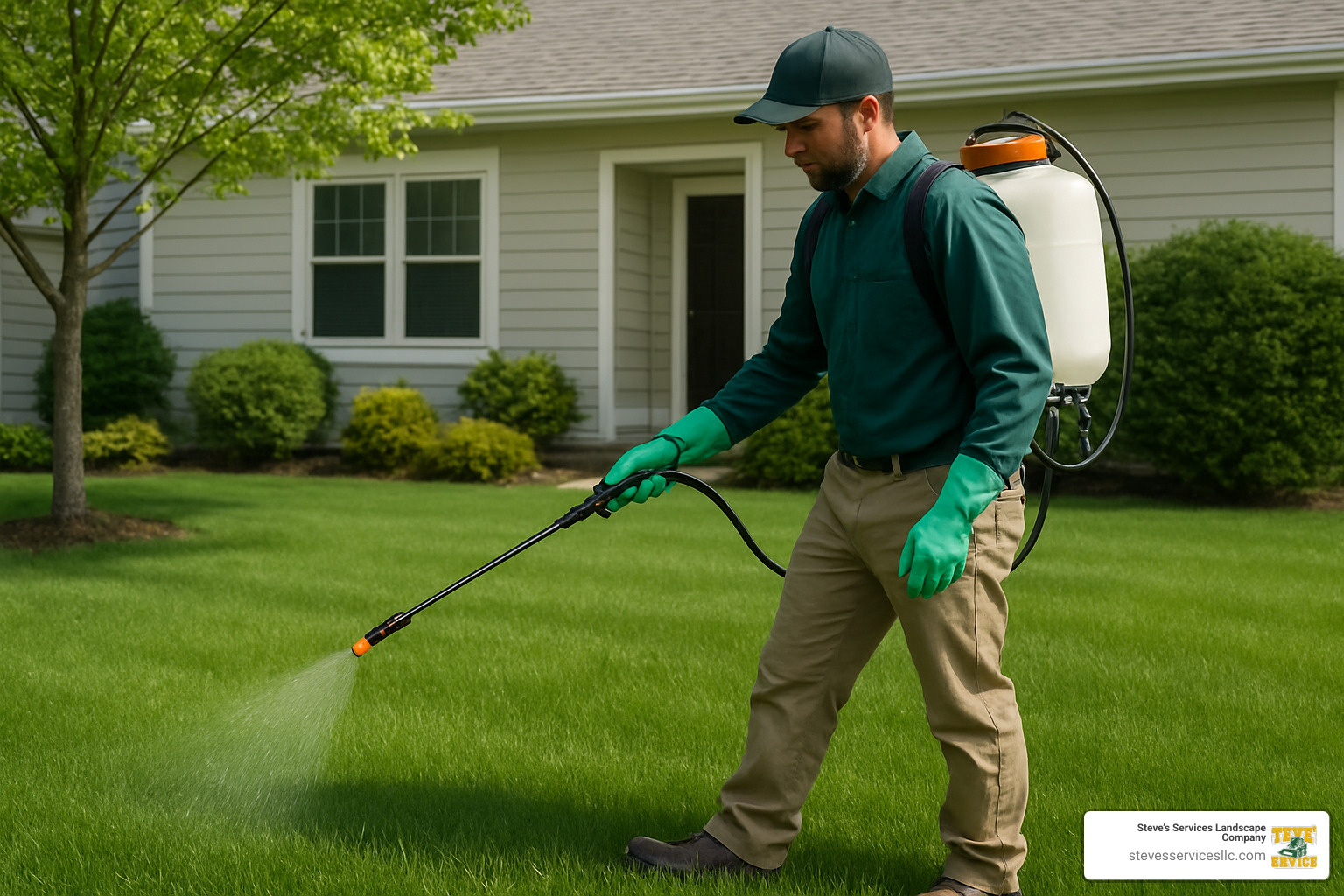
At Steve’s Services, we firmly believe that effective Everett lawn pest control shouldn’t force you to choose between a beautiful lawn and environmental responsibility. Over the years, we’ve developed and refined our approach to Integrated Pest Management (IPM) – a thoughtful, balanced method that lets us tackle pest problems while treading lightly on our local ecosystem.
What makes IPM special is how it considers the whole picture of your lawn’s health. Rather than immediately reaching for the strongest chemicals, we start with prevention and work our way up only as needed. This approach feels right at home in Everett’s Massachusetts ecosystem, where maintaining natural balance leads to healthier, more resilient lawns in the long run.
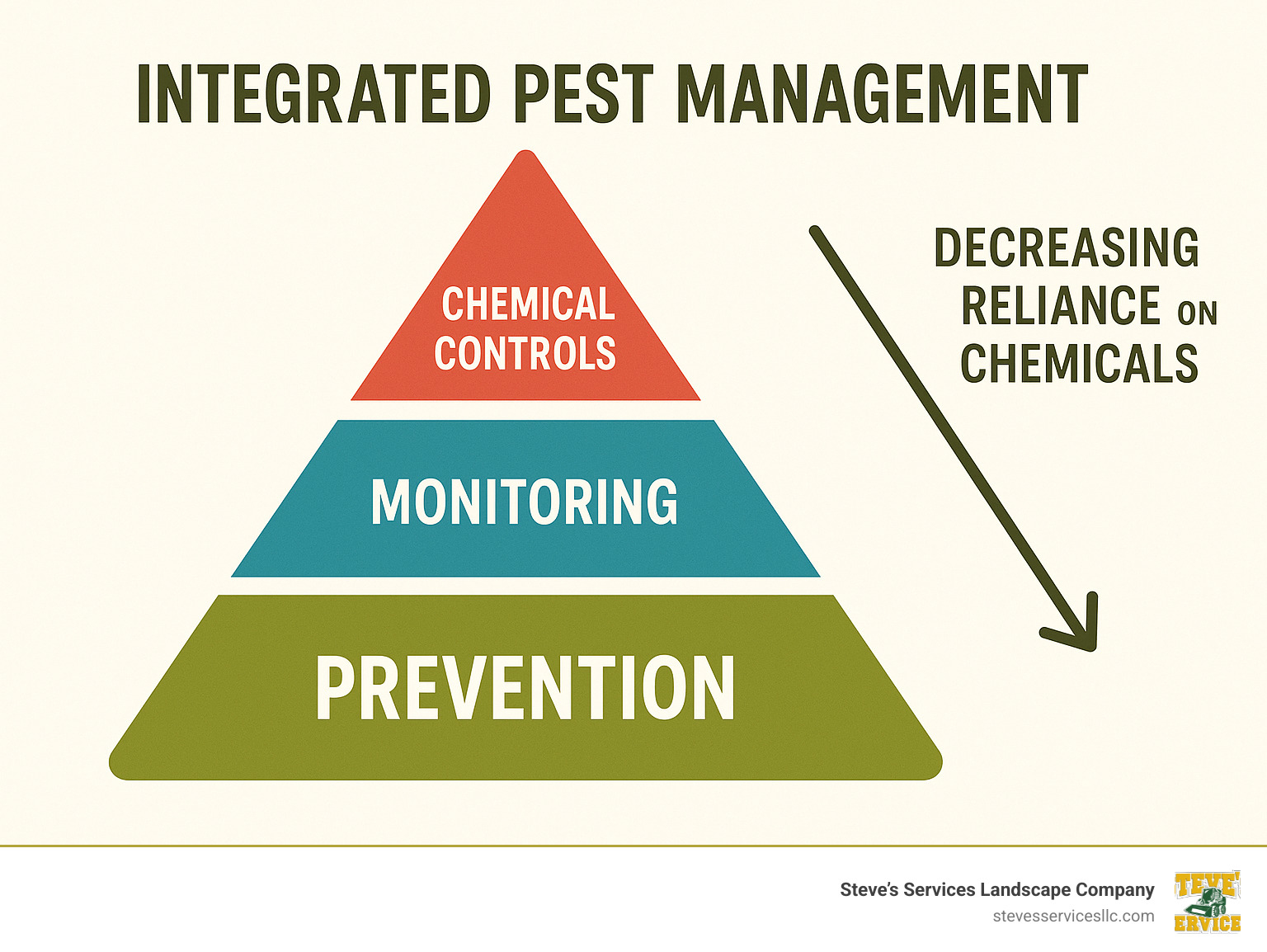
Our eco-friendly toolbox includes some fascinating natural solutions. We often introduce beneficial nematodes – microscopic organisms that hunt down and eliminate grubs while leaving your lawn unharmed. We’ll help you implement smart cultural practices like maintaining proper mowing height (typically 3-3.5 inches for Everett lawns) and establishing watering schedules that discourage pest activity.
Sometimes the simplest approaches work wonders – physical barriers can prevent certain pests from establishing themselves in the first place. And when we do need to use products, we select reduced-risk formulations with the lowest possible environmental impact while still getting the job done.
What truly sets our approach apart is our focus on soil health. We view your soil as a living ecosystem, not just dirt. By nurturing beneficial microorganisms and creating the right conditions for them to thrive, we establish a natural defense system against many common lawn pests. Healthy soil creates healthy grass, which naturally resists pest pressure.
Linking Pest Control With Fertilization & Aeration
Picture your lawn as an athlete – when it’s well-nourished and in peak condition, it naturally fights off illness. The same principle applies to pest resistance. That’s why we don’t view Everett lawn pest control as a standalone service but as part of a holistic approach to lawn wellness.
A properly fertilized lawn develops deeper, stronger roots that can better withstand pest attacks. Before recommending any fertilizer, we conduct thorough soil testing to understand exactly what your lawn needs – not too much, not too little, but just right. This precision prevents the excessive growth that can actually attract certain pests, while ensuring your grass has the strength to recover quickly from any damage.
Compacted soil is like a welcome mat for lawn pests. When soil becomes dense and hard, grass struggles while many pests thrive. Our core aeration service creates breathing room in your soil, allowing water, nutrients, and oxygen to reach the roots where they’re needed most. After aeration, we often see dramatic improvements in root development and natural pest resistance.
The magic happens when these services work together. Pest control makes fertilization more effective because nutrients reach healthy grass rather than being diverted to repair damage. Meanwhile, proper fertilization and aeration make pest control more effective by creating conditions where beneficial organisms can thrive and pests struggle to establish themselves. It’s a virtuous cycle that builds on itself season after season.
For those interested in maximizing their lawn’s health, we recommend checking out our comprehensive lawn installation services that incorporate these principles from the ground up.
Going Green Without Sacrificing Results
More and more Everett homeowners are asking us how they can maintain a beautiful lawn while being mindful of environmental impact. The good news? You don’t have to choose between a gorgeous lawn and your environmental values.
Our organic lawn care programs deliver impressive results without synthetic chemicals. We use nutrient-rich organic fertilizers derived from natural sources that feed your soil’s ecosystem rather than just the grass. These slow-release formulations provide steady nutrition that builds lawn health over time.
One of our favorite treatments is compost tea applications – a living brew of beneficial microorganisms that suppresses disease and creates vibrant soil. For pest-specific concerns, we offer essential oil-based solutions that deter insects naturally, and beneficial nematode treatments that target grubs while leaving beneficial organisms untouched.
Our specialized micro-nutrient blends address specific deficiencies in your soil, strengthening grass at the cellular level to better withstand pest pressure. These targeted treatments can provide benefits for up to twelve months, encouraging the deep root development that’s crucial for natural pest resistance.
Water management plays a surprisingly important role in natural pest control. We’ll help you develop smart irrigation practices that keep your lawn healthy while avoiding the excess moisture that many pests love. In some cases, we incorporate soil surfactants that improve water penetration and create more uniform soil moisture – conditions that favor grass over pests.
Perhaps most importantly, our approaches are designed to create a balanced ecosystem where natural predators like beneficial insects can thrive, providing free pest control services. From ground beetles that eat slugs to parasitic wasps that control caterpillars, these helpers are your lawn’s best defense.
While our green approaches might take a bit longer to show dramatic results compared to conventional treatments, they build lasting resilience in your lawn and contribute to a healthier environment for your family, pets, and the wider Everett community.
Preventing Future Infestations & Seasonal Strategy
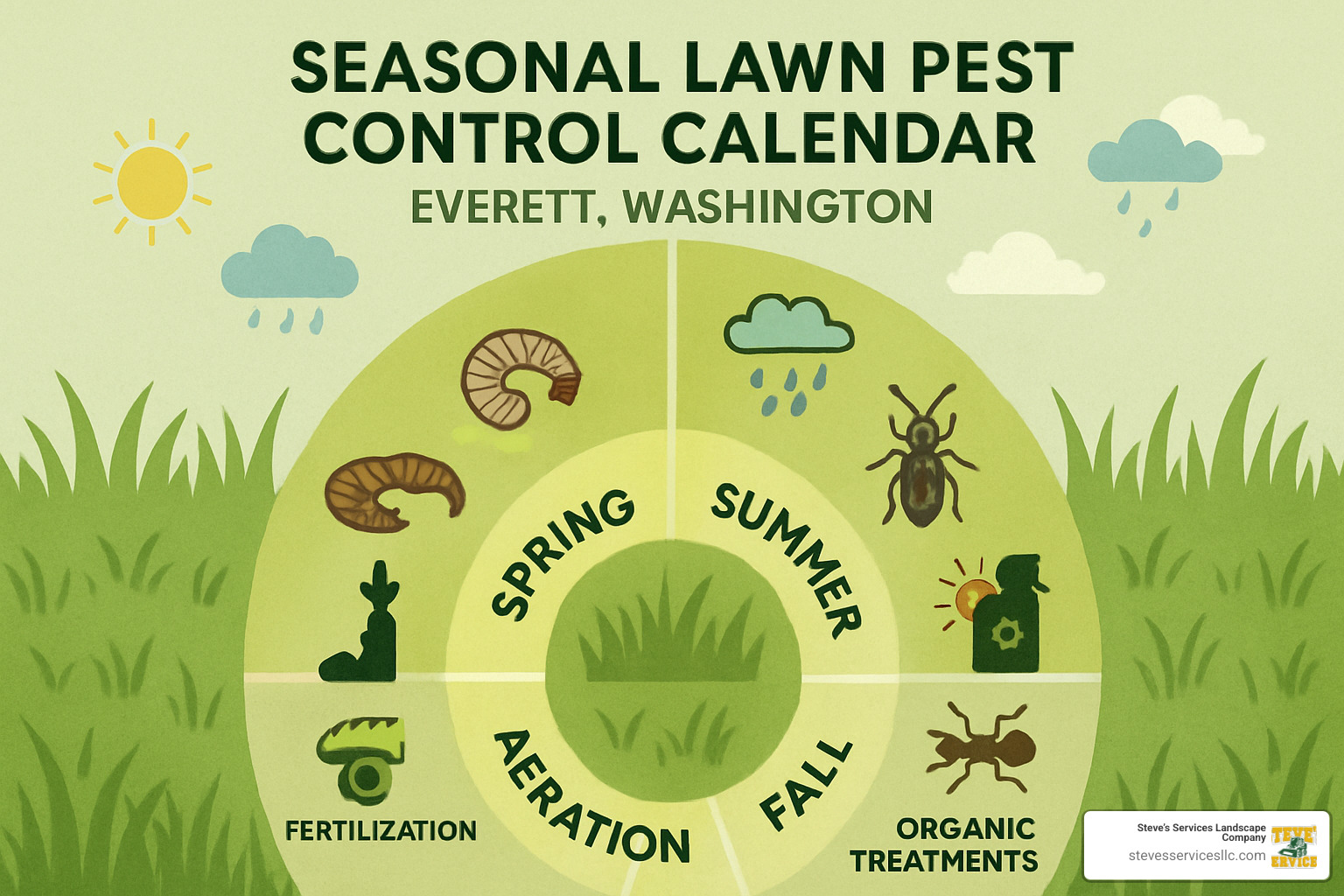
When it comes to Everett lawn pest control, the most successful approach is one that thinks ahead. Like most things in life, prevention beats reaction every time. Here in Massachusetts, our unique seasonal patterns create a predictable rhythm of pest activity that smart homeowners can work with rather than against.
I’ve seen countless Everett lawns transformed simply by getting the timing right. Each season brings its own unique challenges and opportunities for keeping your lawn pest-free.
The Everett Pest Calendar: Staying One Step Ahead
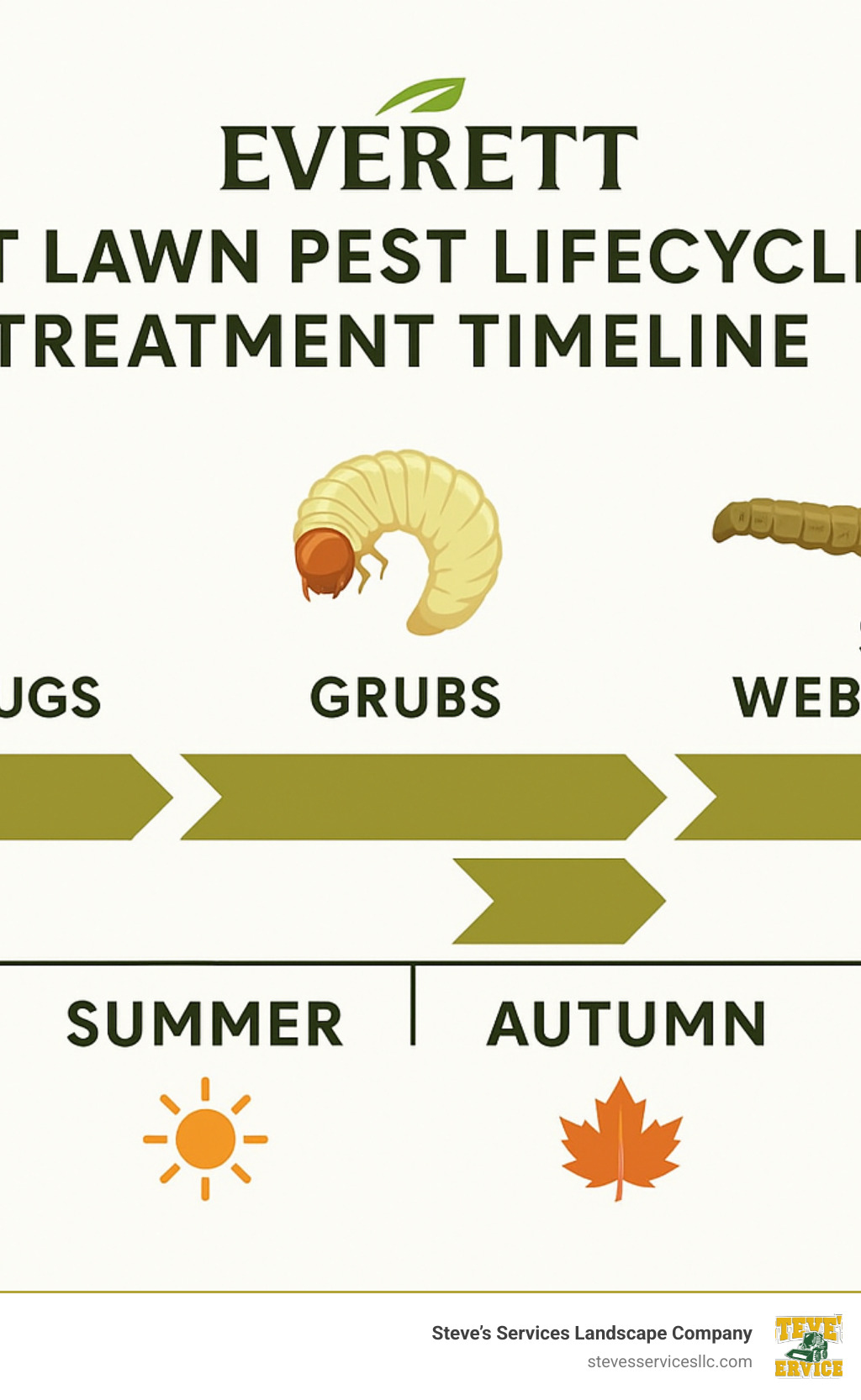
Spring wakes up more than just your flower beds. As March rolls around, ant colonies shake off their winter slowdown and begin expanding their territory. Those pesky crane fly larvae (leatherjackets) that have been dormant all winter resume their feeding frenzy on your grass roots. Meanwhile, sod webworms emerge from hibernation, hungry and ready to damage your turf.
This makes spring the perfect moment for a comprehensive lawn assessment and preventive treatments. We often tell our clients that what you do in spring sets the tone for your entire lawn’s health through the year.
Summer brings heat and humidity in Massachusetts, and with it, peak activity for some of our most destructive pests. Chinch bugs thrive during these warmest months, creating those frustrating brown patches that won’t respond to extra watering. Newly hatched grubs begin their feeding cycle on grass roots, and mosquito populations explode anywhere water can collect. During summer, we typically focus on targeted treatments for active infestations before they can spread.
Fall is a critical transition time. Adult beetles are busy laying eggs that will become next year’s grub population. As temperatures drop, rodents start looking for cozy winter accommodations – often at your expense. This makes autumn ideal for preventative grub control applications and perimeter treatments to keep winter pests at bay.
Even winter deserves attention in your Everett lawn pest control strategy. The harsh New England winters mean rodents are desperately seeking shelter, making this season crucial for exclusion methods. This quieter season gives us the perfect opportunity to plan next year’s approach and prepare for early spring pest emergence.
Between-Visit Homeowner Heroes: What You Can Do
Professional Everett lawn pest control provides the foundation, but what you do between our visits makes a tremendous difference. Think of it as a partnership – we provide the expertise and treatments, while you maintain the protective barrier through smart lawn care practices.
Thatch management is more important than most homeowners realize. That layer of dead grass between soil and living grass? When it exceeds half an inch, it becomes prime real estate for pests. Regular dethatching or proper mowing practices keep this layer in check.
Your mowing habits matter tremendously. Keeping grass at the proper height (typically 2.5-3.5 inches for Everett lawns) encourages deeper roots and greater resilience. I always remind clients of the “one-third rule” – never remove more than a third of the grass blade in a single mowing. Your grass will thank you.
Smart watering makes a huge difference too. Deep but infrequent irrigation (about 1-1.5 inches weekly) encourages roots to grow down rather than staying shallow. Early morning is always best, reducing the fungal diseases that can weaken your lawn and make it more vulnerable to pests.
Don’t underestimate the power of simply removing debris promptly. Those grass clippings and fallen leaves aren’t just unsightly – they’re potential pest condominiums. Clean lawns give pests fewer places to hide and breed.
Nurturing healthy soil microbes creates your own underground army against pests. Adding compost or compost tea introduces beneficial organisms that naturally suppress many pest populations. It’s like having millions of tiny pest controllers working 24/7.
Finally, regular overseeding maintains a dense turf that naturally resists both weeds and pests. In Everett, MA, early fall typically provides the ideal conditions for new seed to establish before winter.
Everett’s Seasonal Pest Control Checklist
To help our clients maintain pest-free lawns year-round, we’ve developed a simple seasonal approach to Everett lawn pest control:
Spring (March-May) is inspection time. Schedule your comprehensive lawn check-up, apply preventive treatments for crane fly larvae and webworms, and start monitoring for ant activity. It’s also the perfect time to assess winter damage and address any thin areas through overseeding. Don’t forget early-season mosquito prevention – they multiply faster than you think!
Summer (June-August) requires vigilance. Keep an eye out for chinch bug damage, especially in sunny, drought-stressed areas of your lawn. These warm months often require targeted treatments for active infestations. Maintain proper mowing height to reduce heat stress, and check irrigation systems regularly. Standing water is mosquito heaven, so eliminate it wherever possible.
Fall (September-November) is prevention season. This is when we apply preventative grub control to disrupt their lifecycle before they can damage your lawn next year. Perimeter treatments help prevent rodents from moving in as temperatures drop. It’s also the perfect time for core aeration to improve soil health and reduce compaction that stresses your lawn. Don’t forget that fall fertilization strengthens roots before winter!
Winter (December-February) might seem quiet, but maintaining rodent prevention measures remains crucial. Keep your lawn clear of debris and fallen branches that can harbor pests, and use this quieter season to plan next year’s integrated pest management strategy. Winter is also when outdoor pests often try to move indoors, so address any indoor pest issues that may be related to outdoor populations.
By following this seasonal rhythm, your lawn receives the right treatments at the right time, maximizing effectiveness while minimizing environmental impact. For more comprehensive information about keeping your yard in top shape during seasonal transitions, check out our Lawn Care Clean Up services.
The most beautiful lawns in Everett don’t happen by accident – they’re the result of thoughtful, timely care that works with nature’s cycles rather than against them.
Cost, Provider Selection & Customer Experiences
When considering Everett lawn pest control services, understanding the cost factors and how to select the right provider is essential for achieving the best results for your investment.
Based on internet averages (not Steve’s Services actual rates), typical lawn pest control services in Everett, MA range from $75-$225 per visit, with comprehensive annual programs ranging from $600-$1,800+ annually. These costs vary based on:
- Size of the property
- Type and severity of pest infestation
- Treatment frequency required
- Additional services included (such as fertilization or aeration)
- Quality of products used
While cost is certainly a consideration, it shouldn’t be the only factor in your decision. The cheapest option often doesn’t provide the most value, especially if it results in continued pest problems or requires additional treatments.
Premium programs that include regular monitoring, preventive treatments, and integrated lawn care services typically provide better long-term value despite higher initial costs. These comprehensive approaches address not just the symptoms but the underlying causes of pest problems.
How to Choose the Right Everett Lawn Pest Control Partner
Selecting the right service provider for your Everett lawn pest control needs involves evaluating several key factors:
Credentials and Licensing: Ensure the company has proper state licensing and that technicians have received professional training and certification. In Massachusetts, pest control operators must be licensed through the Massachusetts Department of Agricultural Resources.
Local Experience: Companies with experience in Everett specifically will understand the unique pest pressures and climate conditions that affect treatment strategies. Look for a provider with at least 5-10 years of local experience.
Transparent Pricing: Reputable companies provide clear, detailed estimates without hidden fees or upselling pressure. Be wary of prices that seem too good to be true—they often are.
Eco-Friendly Options: The best providers offer environmentally responsible treatment options and follow Integrated Pest Management principles to minimize chemical use.
Responsive Communication: Quality service providers respond promptly to inquiries, clearly explain their treatment approaches, and provide detailed documentation of services performed.
Bundled Service Options: Companies that offer comprehensive lawn care services beyond just pest control can provide more integrated solutions that address the root causes of pest problems.
Service Guarantees: Look for providers who stand behind their work with satisfaction guarantees and will return at no additional cost if pest problems persist after treatment.
Reference Checks: Ask for references from current customers in your specific area of Everett, and check online reviews for consistent patterns of customer satisfaction.
At Steve’s Services Landscape Company, we meet all these criteria and have built our reputation on providing comprehensive, effective, and environmentally responsible pest control solutions for Everett homeowners.
Real-World Success Stories
The true measure of any Everett lawn pest control service is the results it delivers for real customers. Here are some examples of how our integrated approach has helped Everett homeowners overcome common lawn pest challenges:
Yellow-Patch Rescue: A homeowner in North Everett contacted us about expanding yellow patches in their previously lush lawn. Our inspection revealed a severe chinch bug infestation that had been misdiagnosed as drought stress. After implementing our targeted chinch bug treatment protocol and adjusting the irrigation schedule, the lawn showed significant improvement within three weeks and had fully recovered by the end of the season.
Mole-Tunnel Elimination: A client in the Everett area had been struggling with extensive mole damage for over two years despite trying numerous DIY solutions. Our approach involved first addressing the underlying grub population that was attracting the moles, followed by a comprehensive mole control program. Within one month, mole activity had ceased entirely, and the lawn was restored through our renovation services.
Chinch Bug Reversal: A homeowner near Everett Square had been applying store-bought insecticides without success against what turned out to be a resistant chinch bug population. Our professional-grade treatments, combined with cultural practices to improve lawn health, stopped the damage within days and prevented recurrence through our ongoing maintenance program.
Lawn Revitalization Timeline: A new homeowner in Everett inherited a lawn with multiple pest issues, including grubs, sod webworms, and ants. Through our comprehensive approach that included pest control, core aeration, overseeding, and fertilization, we transformed the property over a single growing season. The timeline showed visible improvement at 30 days, significant recovery at 60 days, and a fully restored, healthy lawn by 90 days.
These success stories demonstrate that effective Everett lawn pest control requires not just treating the pests themselves but addressing the overall health and resilience of the lawn ecosystem.
Frequently Asked Questions about Everett Lawn Pest Control
What risks come with ignoring lawn pests?
Let’s face it—it’s tempting to hope those little yellow patches in your lawn will just go away on their own. Unfortunately, ignoring lawn pests is a bit like ignoring a leaky pipe—what starts as a small problem can quickly become a costly disaster.
Beyond just making your lawn look patchy and unhealthy, untreated pest infestations can lead to soil erosion problems, especially during Massachusetts’ rainy seasons. As pests destroy your grass roots, nothing remains to hold that precious topsoil in place, and before you know it, you’ve got runoff issues and an increasingly uneven lawn.
Many homeowners don’t realize that severe infestations often kill large sections of lawn completely, forcing you into costly reseeding or resodding. Trust me, replacing your entire lawn costs significantly more than addressing pest problems early!
If you’ve noticed mole tunnels, that’s another red flag. These critters aren’t just making your lawn bumpy—they can cause structural damage by tunneling near foundations, potentially creating drainage issues that affect basements and crawl spaces. I’ve seen cases where ignoring a simple grub problem led to thousands in foundation repairs.
Perhaps most frustrating is the way lawn pests become household invaders. Those ants enjoying your lawn today might be marching through your kitchen tomorrow. And once pests establish themselves on your property, they’ll happily spread to neighboring yards, which won’t exactly make you the neighborhood favorite.
Real estate experts consistently note that damaged, pest-riddled lawns can reduce property values by 5-10%. That’s a significant hit just for ignoring some little bugs!
Early intervention with professional Everett lawn pest control is always the smarter financial move in the long run.
Are professional treatments safe for children and pets?
As a parent and pet owner myself, I completely understand this concern. It’s probably the question I hear most often from homeowners considering professional Everett lawn pest control services.
At Steve’s Services, we believe effective pest control shouldn’t come at the expense of your family’s safety. We exclusively use EPA-approved products that have undergone rigorous testing for residential use. But our approach goes beyond just using approved products—we implement several safety measures to ensure peace of mind:
Our technicians are trained in targeted application techniques that focus precisely on problem areas rather than blanket-treating your entire property unnecessarily. This minimizes chemical usage while maximizing effectiveness.
Most of our lawn treatments are safe for re-entry once completely dry, typically within 1-2 hours. For certain treatments, we might recommend keeping pets off the lawn for 24 hours as an extra precaution. We always provide clear, straightforward safety instructions before and after every treatment.
We understand some families have specific concerns, which is why we offer organic and reduced-risk options that provide effective control with minimal environmental impact. Many modern pest control formulations are specifically designed to target certain insect nervous systems that don’t exist in mammals, making them much safer than products from decades past.
I always tell customers that proper application by trained professionals, combined with following simple safety guidelines, creates a situation where the benefits far outweigh any minimal risks. Your kids can still roll around in the grass—just give us a little drying time first!
How often should Everett lawns be treated for pests?
There’s no one-size-fits-all answer to this question, which is actually good news—it means you’re not paying for treatments you don’t need. The ideal frequency for Everett lawn pest control depends on several key factors unique to your property.
First, we need to consider the seasonal pest pressure in your specific neighborhood. Everett’s varying elevations, proximity to the Mystic River, and urban/suburban mix creates micro-climates where pest activity can differ significantly even between neighboring properties.
Your lawn’s existing health plays a major role too. A robust, well-maintained lawn naturally resists pests better than stressed turf. Properties with healthy soil biology and good cultural practices often require less frequent interventions than those already struggling with multiple issues.
Environmental factors matter tremendously—things like soil type, sun exposure, drainage patterns, and proximity to natural areas all influence how attractive your lawn is to different pests throughout the year.
For most Everett properties, we typically recommend starting with a comprehensive inspection and initial treatment, followed by quarterly preventive applications that align with seasonal pest cycles. This approach provides continuous protection while giving us flexibility to adjust based on your lawn’s specific needs.
Some situations might require more frequent initial treatments—for example, if you’re dealing with an active infestation that needs to be brought under control quickly. Other properties with established healthy lawns and minimal pest pressure might maintain excellent conditions with just seasonal treatments.
During your initial consultation, we’ll assess your unique situation and design a treatment schedule that makes sense for your property, your concerns, and your budget. The goal isn’t to sell you the most treatments possible—it’s to create the healthiest lawn with the most efficient approach.
Conclusion
Picture it: your Everett lawn, lush and green, free from unsightly damage and pesky invaders. This isn’t just a dream—it’s absolutely achievable with the right approach to Everett lawn pest control. Throughout this guide, we’ve explored how our unique Massachusetts climate creates specific challenges that require thoughtful, targeted solutions.
The truth is, effective lawn pest management isn’t about quick fixes or one-time treatments. It’s about understanding the delicate ecosystem that exists right in your yard and working with nature rather than against it. When we combine professional treatments with proper seasonal care and a bit of homeowner diligence, the results can be truly transformative.
At Steve’s Services Landscape Company, we’ve spent over 25 years getting to know every inch of Everett’s soil, weather patterns, and yes, even its pests! This deep local knowledge informs our comprehensive approach, which includes:
- Pinpoint pest identification and customized treatment strategies
- Earth-friendly product selection and careful application
- Seamless integration with complete lawn care services
- Smart seasonal treatments that target pests at their most vulnerable
- Vigilant monitoring with adjustments as your lawn’s needs change
Your lawn is so much more than just grass—it’s where summer barbecues happen, where kids play catch, and where you unwind after a long day. It’s an extension of your home that deserves protection, not just for aesthetic reasons but for your family’s enjoyment and your property’s value.
The journey toward a healthier lawn begins with understanding what you’re up against. That’s why we always start with a thorough assessment of your current situation. What pests are active? What conditions might be making your lawn more susceptible? How can we address immediate concerns while preventing future problems?
Don’t wait until those small yellow patches become a full-blown infestation. When it comes to Everett lawn pest control, being proactive isn’t just more effective—it’s actually more economical in the long run. Those small preventative treatments can save you from costly lawn restoration down the road.
Ready to transform your outdoor space into the pest-free paradise you’ve been dreaming of? We’d love to help. Contact Steve’s Services Landscape Company today to schedule a consultation with one of our Everett lawn pest control specialists. Together, we’ll develop a plan custom specifically to your lawn’s needs and your family’s lifestyle.
Your beautiful, resilient lawn awaits—let’s make it happen!
More info about landscaping in Everett
