
Fall lawn fertilizer: 2025 Ultimate Guide
Why Fall is the Best Time to Feed Your Lawn
As the crisp autumn air arrives in Massachusetts and the vibrant foliage signals a change in seasons, many homeowners believe their lawn care duties are winding down. However, for your lawn, the most critical season is just beginning. While the explosive top growth of summer slows, your grass shifts its energy downward, focusing on strengthening its root system. This biological pivot makes fall the single most important time to provide your lawn with the nutrients it needs. Feeding your lawn in the fall isn’t just about a final meal before winter; it’s a strategic investment that pays dividends for months to come.
A proper fall fertilization program, custom to our unique New England climate, accomplishes several crucial goals. First, it helps the turf recover from the stress of summer heat, drought, and foot traffic. Second, it fuels the development of a deep, robust root system, which is the foundation of a healthy lawn. These stronger roots will be better equipped to find water and nutrients during the following year’s dry spells. Finally, it provides the grass with the essential energy reserves to survive the harsh winter and burst into a lush, green carpet next spring, well ahead of untreated lawns. This proactive approach is the secret to achieving a truly resilient and beautiful lawn year after year.
Understanding Your Lawn’s Needs: Timing and Grass Types
Before choosing a fall lawn fertilizer, you need to know which kind of grass you’re caring for. In Massachusetts, almost every lawn is a cool-season blend of Kentucky bluegrass, fescue, or ryegrass. These varieties are perfectly adapted to our climate, experiencing their most vigorous growth in the cooler temperatures of spring and fall. They absolutely thrive on fall feedings, using the nutrients to build a strong foundation for the year ahead.
Warm-season species—Bermuda, St. Augustine, zoysia—are rare here and follow a different calendar, but the comparison helps explain the critical importance of timing:
| Grass Type | Growth Peak | Fall Activity |
|---|---|---|
| Cool-season | 60–75 °F | Roots surge in Sept.–Nov. |
| Warm-season | 80–95 °F | Slowing down by Sept. |
When to Fertilize Cool-Season Grasses
The fall feeding strategy for our local lawns is typically a two-step process. The first application, in early fall (around September), is all about recovery. It delivers a dose of nitrogen to help the grass heal from summer damage, repair bare patches, and ramp up photosynthesis to produce a rich green color.
A follow-up “winterizer” application in late October or early November has a different goal. As air temperatures drop, top growth ceases, but the soil remains warm enough for roots to continue absorbing nutrients. This late-season meal focuses on building root strength and storing carbohydrates for winter. A good rule of thumb is to apply this second feeding when you notice your mowing frequency has slowed to every two or three weeks. A turf professional will monitor soil temperatures, aiming to apply fertilizer when the ground is still above 40°F but after the final mow of the season.
When to Fertilize Warm-Season Grasses
If you happen to maintain a specialty warm-season area, your approach must be different. Fertilizing these grasses too late in the season can encourage weak growth that will be immediately damaged by the first frost. Instead, apply a single, balanced, lower-nitrogen product in early fall (September). This allows the grass to absorb and store some nutrients before it enters its full winter dormancy.
For more background, see understanding cool-season and warm-season grasses and our tips for new lawn installation.
Decoding the Bag: Choosing the Right Fall Lawn Fertilizer
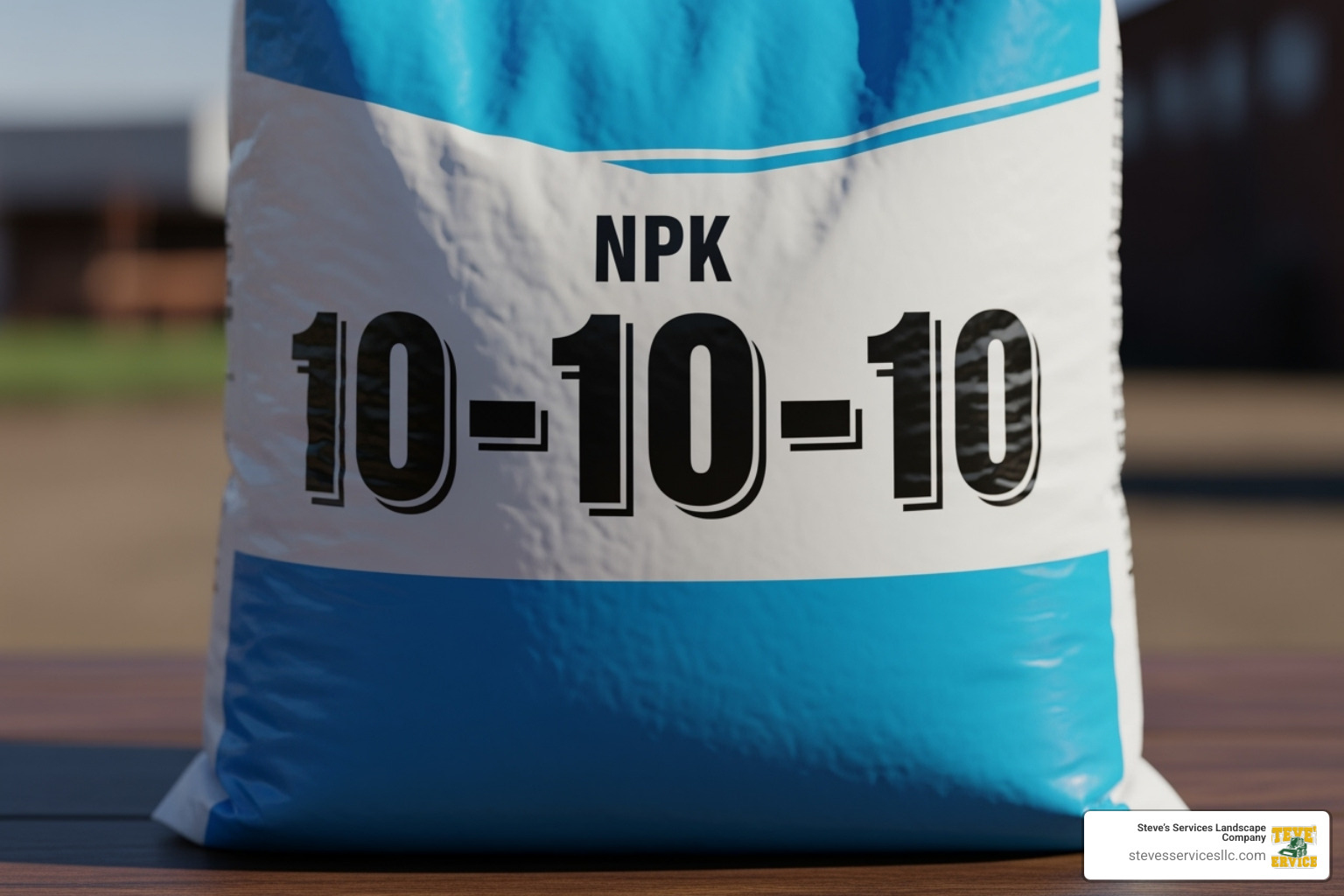
The three numbers on every fertilizer bag (N-P-K) represent the percentage by weight of Nitrogen (N), Phosphorus (P), and Potassium (K). Understanding their roles is key to selecting the right product for the right time.
- Nitrogen (N): The driver of leaf growth and green color. In fall, we emphasize slow-release nitrogen. Unlike quick-release forms that cause a sudden surge of vulnerable top growth, slow-release nitrogen provides a steady, controlled feeding over several weeks. This nourishes the lawn as it recovers and stores energy without promoting weak growth that can be damaged by frost.
- Phosphorus (P): Essential for energy transfer and, most importantly, for establishing strong roots and seedlings. Its role is critical for new lawns and for the root development phase in the fall. However, phosphorus is a potential pollutant in waterways, so its application should be based on a demonstrated need from a soil test.
- Potassium (K): Often called the “stress nutrient,” potassium is the key to winter hardiness. It helps regulate the plant’s internal processes, improves tolerance to cold and drought, and strengthens cell walls to fight off disease. Think of it as a winter coat for your grass, preparing it for the harsh months ahead.
The Importance of a Soil Test
While the ratios below are excellent general guidelines, the only way to know exactly what your lawn needs is with a professional soil test. A soil test is like a blood test for your lawn. It not only reveals the existing levels of N-P-K but also measures the soil’s pH. Soil pH is a critical factor because it determines how efficiently your grass can absorb the nutrients you apply. Massachusetts soils tend to be acidic, and if the pH is too low, nutrients become “locked up” in the soil, unavailable to the plant. A soil test can tell you if you need to apply lime to correct the pH, ensuring your fertilizer investment isn’t wasted.
Quick-Pick Ratios for Massachusetts Lawns
Early Fall (Sept.)
- 20-8-8 or 24-4-12: Higher in nitrogen to jump-start green-up, repair summer damage, and encourage recovery.
Late Fall (Oct.–Nov.)
- 13-25-12: Higher in phosphorus to fuel aggressive root development before winter.
- 12-0-18: An excellent choice when a soil test shows adequate phosphorus, providing extra potassium for maximum cold protection.
Warm-Season (early fall only)
- 10-10-10 or 15-5-10: A balanced blend of nutrients that supports the plant without pushing new blade growth as it prepares for dormancy.
Always confirm with a soil test for best results. For professional help, visit our Lawn Feed Fertilizer or Fall Fertilizer pages.
Trees, Shrubs & Perennials
Your ornamental plants have different dietary needs than your turfgrass. Blanketing garden beds with high-nitrogen lawn fertilizer can harm them by promoting weak, leggy growth or even burning their roots. Always use products specifically formulated for trees, shrubs, or bulbs. More details at fertilizing trees or shrubs and planting bulbs in the fall.
Common Pitfalls of DIY Fall Fertilization
After two decades in the field, we consistently see the same well-intentioned mistakes that can turn a DIY fertilization attempt into a costly problem. Understanding these pitfalls highlights the value of professional expertise.
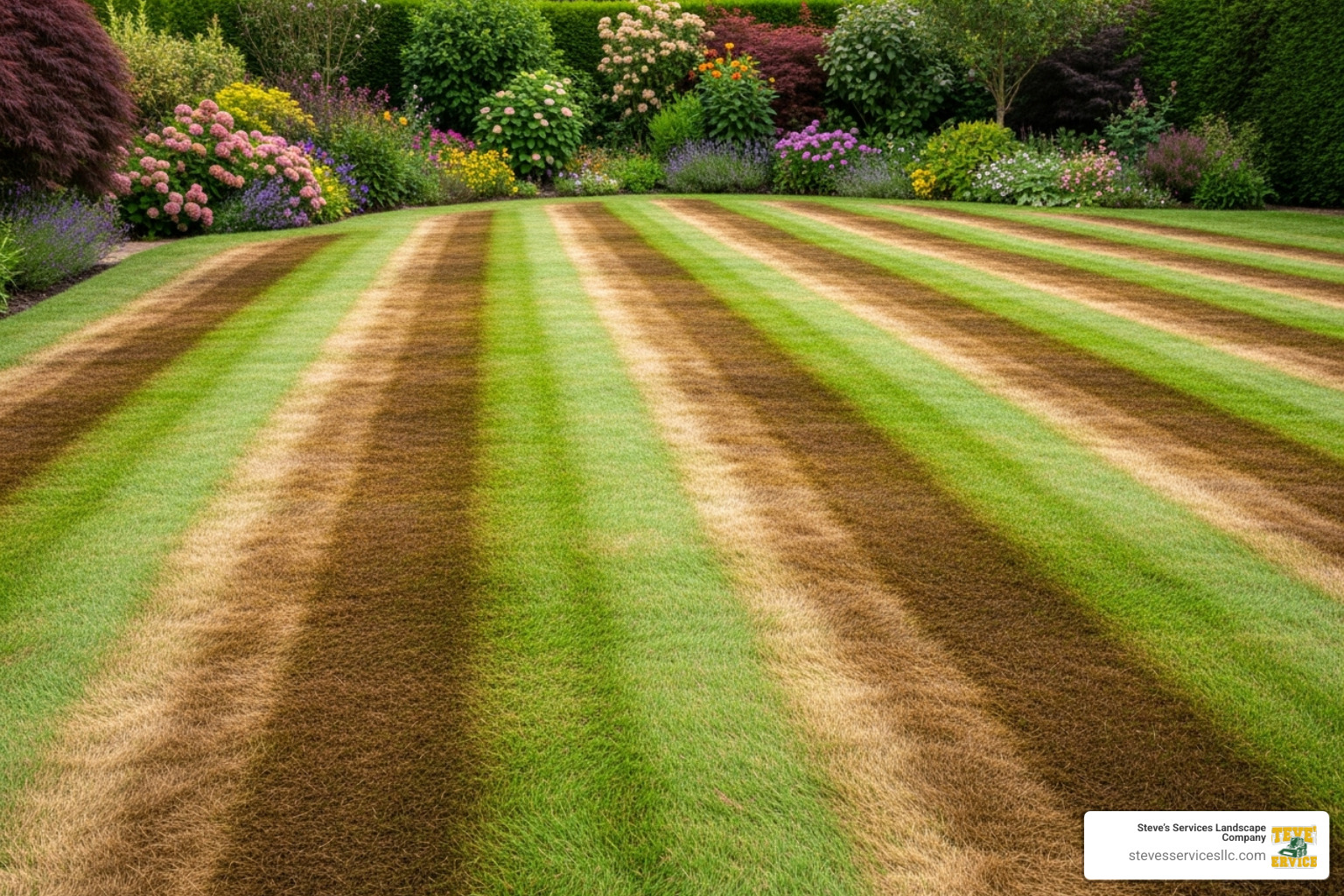
- Over-fertilizing: More is not better. Applying too much fertilizer, especially nitrogen-rich formulas, can cause “fertilizer burn.” This happens when the high concentration of mineral salts in the fertilizer draws moisture out of the grass blades, leaving behind brown, dead stripes or patches. It’s a waste of money and can take weeks for the lawn to recover.
- Poor timing: Timing is everything. Applying fertilizer too early in the fall when temperatures are still high can promote weak, disease-prone growth. Applying it too late, after the ground has frozen, is completely ineffective. The nutrients cannot be absorbed by the dormant roots and will either sit on the surface or wash away with the first snowmelt, contributing to pollution.
- Ignoring grass type: As we’ve discussed, cool-season and warm-season grasses have opposite growth cycles in the fall. Using a high-nitrogen fertilizer designed for a Massachusetts cool-season lawn on a dormant warm-season grass is pointless for the turf and can instead fuel the growth of aggressive winter weeds.
- Uneven coverage: The classic DIY mistake results in a lawn with green and yellow stripes. This is caused by improper spreader use and overlap. Calibrating a household spreader is tricky, and they often fail to deliver a uniform application rate, leading to a patchy, unsightly appearance that screams “amateur job.”
- Applying before heavy rain: While fertilizer needs to be watered in, applying it just before a heavy downpour is a recipe for disaster. The force of the rain will wash the granules away before they can be absorbed by the soil. This nutrient runoff flows directly into storm drains, polluting local Massachusetts streams, ponds, and rivers and contributing to harmful algae blooms. Learn more about this threat in Nutrient Pollution: A Persistent Threat to Waterways.
Why Professional Application Matters
Leaving fall fertilization to licensed professionals eliminates these risks. We use calibrated, commercial-grade equipment to ensure precise, even coverage every time. Our team monitors weather patterns and soil conditions to apply the right product at the optimal moment for absorption. Through soil analysis, we create a custom blend for your lawn’s specific needs, preventing waste and protecting the environment. Our trained crews are meticulous about keeping fertilizer off driveways and sidewalks, ensuring it stays on the lawn where it belongs and out of our local waterways.
Need help? See our Fertilizing Services and remember to winterize irrigation lines with our guide on How to Blow Out Irrigation System.
Frequently Asked Questions about Fall Lawn Fertilizer
How many times should I fertilize my lawn in the fall?
A turf-care professional will generally schedule two applications for cool-season lawns in Massachusetts. The first, in early fall (September), focuses on recovery from summer stress. The second, a late-fall “winterizer” (late October/early November), is for building root strength and energy reserves. These are typically spaced about 6–8 weeks apart. Exact timing can vary based on soil temperature, grass variety, and recent weather.
Can I use a fall fertilizer in the spring or summer?
It’s not recommended. Fall formulas are specifically blended for the unique needs of a lawn entering dormancy. They are often higher in potassium for winter hardiness and use slow-release nitrogen for steady feeding. Spring fertilizers are designed for rapid green-up and top growth, while summer formulas may focus on stress management with lower nitrogen. Using the wrong product at the wrong time can lead to poor results or even damage your lawn. Your lawn specialist will recommend season-specific products for the best results.
Should leaves be removed before fertilizing?
Yes, absolutely. A thick layer of leaves will prevent fertilizer granules from reaching the soil where the roots can access them. It can also smother the grass, block sunlight, and promote fungal diseases over the wet winter months. Professional crews clear leaves and debris before applying any product to ensure maximum effectiveness. Leaf management is a critical part of our comprehensive fall service visits.
Do I need to water my lawn after applying fertilizer?
Yes, watering is a crucial step. A light watering (about a quarter-inch of water) after application does two things: it washes any fertilizer granules off the grass blades to prevent potential leaf burn, and it helps move the nutrients down into the soil and root zone. If light rain is forecast within 24-48 hours of application, you can let nature do the work for you. However, avoid fertilizing before a heavy downpour, which can wash the product away.
Is fall fertilizer safe for my pets and children?
When applied correctly, professional-grade fertilizers are safe. However, it is always best practice to keep children and pets off the lawn until the product has been watered in and the grass has completely dried. This prevents them from getting granules on their paws or shoes and tracking them indoors. Our technicians will always provide specific instructions for your family’s safety after an application.
Ensure a Healthy Lawn Next Spring
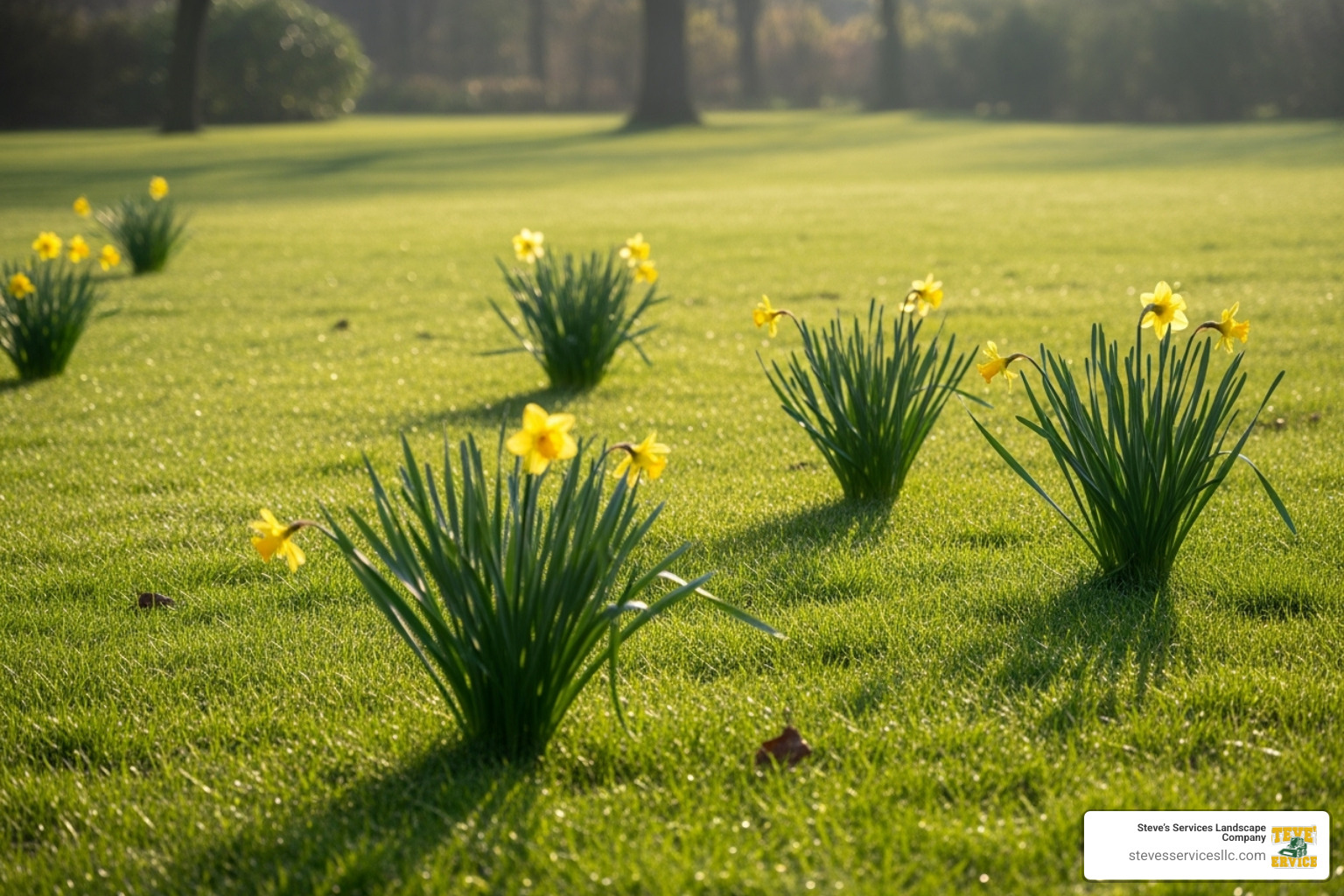
When spring arrives and your neighbors are still staring at patchy, slow-to-green lawns, yours will be the envy of the neighborhood. That’s the power of a proper fall lawn fertilizer application—it’s the single most effective thing you can do to give your grass a head start on the growing season.
The magic happens underground during those cold winter months. While your lawn looks dormant on the surface, the roots are busy using the nutrients you provided in the fall. They’re building a deeper, more extensive network, storing energy, and preparing for an explosive and uniform green-up when the soil warms.
Think of fall fertilization as a powerful investment account for your lawn. The stronger root systems you build now mean superior drought resistance when the summer heat returns. The improved nutrient storage translates to faster recovery from winter damage and a richer, deeper green color. The increased density and vigor create a thick turf that naturally crowds out weeds, reducing the need for herbicides next year. This leads to a healthier, more resilient lawn that requires less intervention throughout the year.
Professional lawn care from a local expert eliminates the guesswork and guarantees optimal results. Our team at Steve’s Services has spent over 25 years perfecting fall fertilization techniques specifically for Massachusetts lawns. We understand the unique challenges of New England’s acidic soils and harsh winters. We know precisely when to act and what products to use to prepare your lawn for the challenges ahead.
The timing, the formulation, the application rate—every detail matters. Get it right, and you’ll see the stunning difference next spring. Your lawn isn’t just grass; it’s the foundation of your outdoor living space. By preparing it correctly in the fall, you set the stage for a beautiful, resilient landscape that improves your home’s curb appeal and value.
For expert care and custom fertilization plans in the Everett, MA area and surrounding communities including Burlington, Danvers, Lynnfield, Medford, Melrose, North Reading, Reading, Revere, Saugus, Stoneham, Winchester, Woburn, Malden, and Wakefield, trust the local pros. Contact Steve’s Services for a consultation on our professional landscaping services.
The investment in proper fall nutrition pays dividends that extend far beyond a quick spring green-up. You’ll spend less time fighting weeds, less money on summer watering, and less effort maintaining your lawn throughout the year. That’s the kind of return on investment that makes sense for any homeowner.