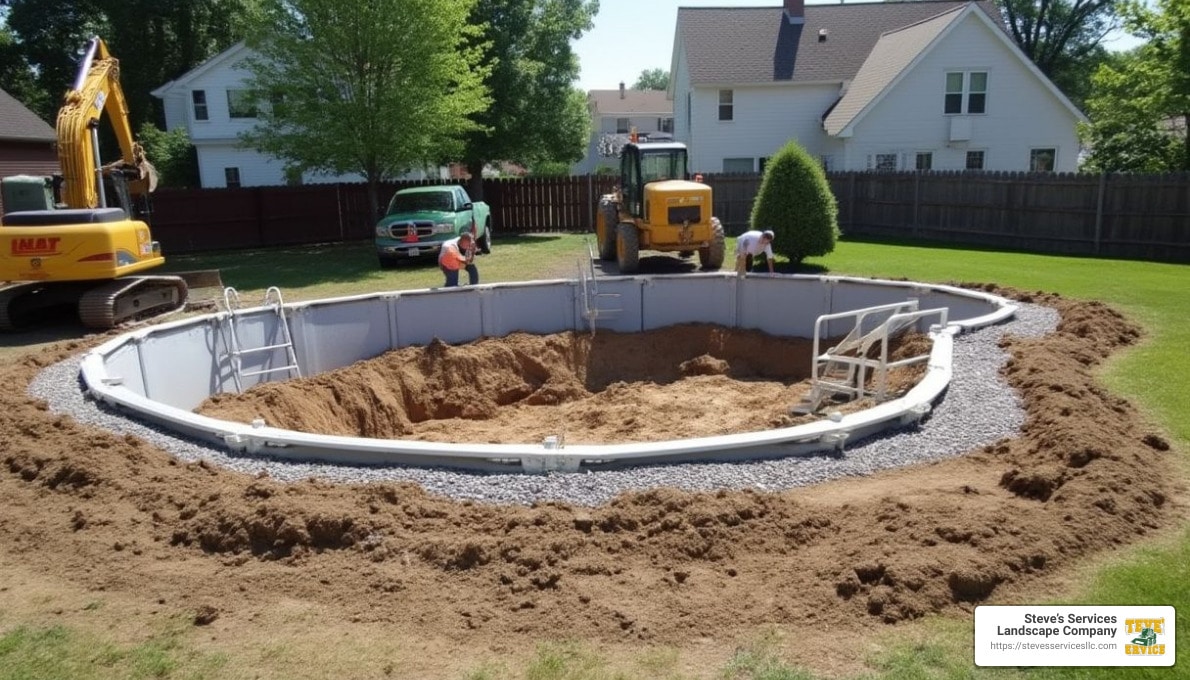
Get Rid of Inground Pool: Top 5 Easy Removal Tips
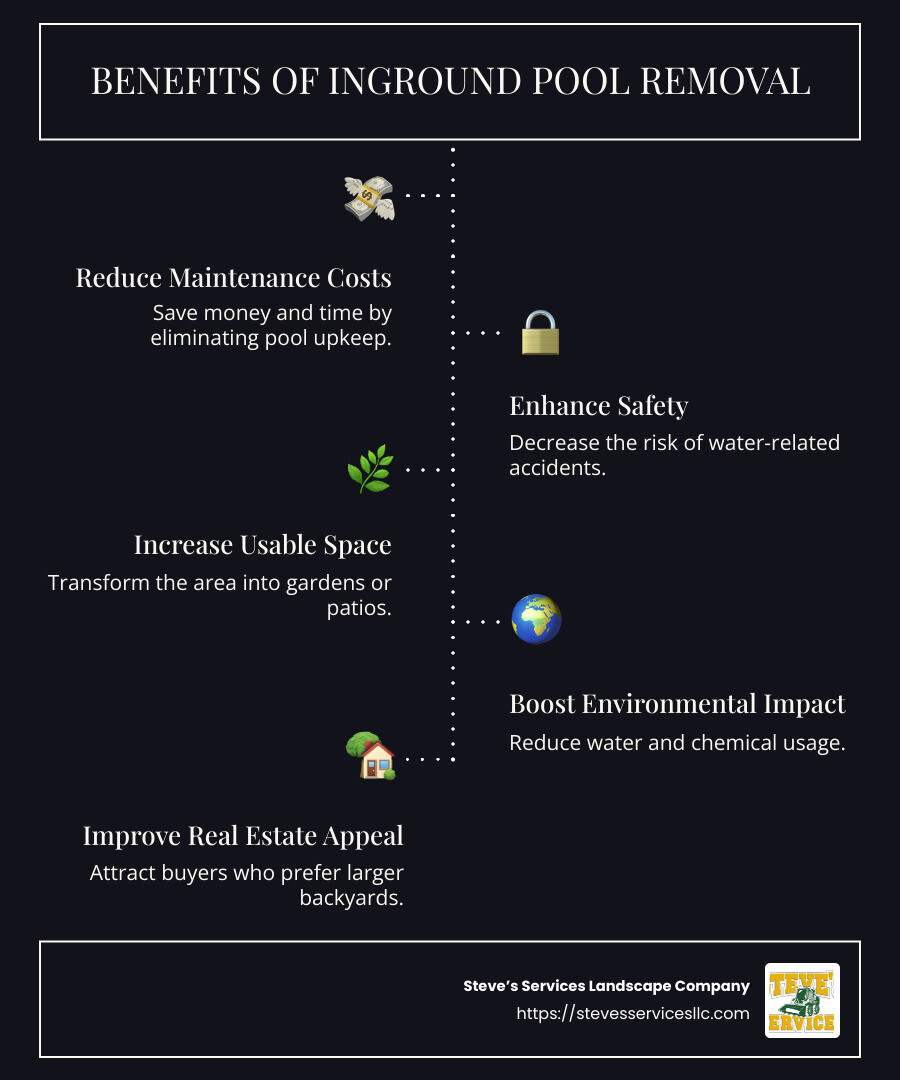
To get rid of inground pool might be a decision prompted by various reasons ranging from high maintenance expenses to the desire for more yard space. If you’re considering this change, here’s a quick overview of the benefits:
- Reduce Maintenance Costs: Pools require ongoing upkeep which can be costly in both time and money.
- Improve Safety: Without a pool, the risk of water-related accidents decreases significantly.
- Increase Usable Space: Removing a pool can open up your space for gardens, patios, or other landscaping improvements.
- Boost Environmental Impact: Less water and chemical usage contribute positively to the environment.
- Improve Real Estate Appeal: Many buyers may prefer a larger backyard over a pool they’re unlikely to use.
As a property owner in Massachusetts, the benefits of removing an inground pool could substantially impact your home’s comfort and value.
I’m Steve Sylva, the owner of Steve’s Services Landscape Company. With over 25 years of experience in creating dream outdoor spaces, I’ve seen how removing a pool can revitalize a property. We guide you through the entire process, ensuring it’s smooth and efficient.
Find more about get rid of inground pool:
– how much does it cost to close a pool
– how much does it cost to remove an inground pool
Why Remove Your Inground Pool?
Removing an inground pool can be a significant decision, and there are several compelling reasons why homeowners choose to do so. Let’s explore the most common motivations:
High Maintenance Costs
Inground pools demand regular care and attention. This includes cleaning, chemical balancing, and equipment repairs. According to industry estimates, the average annual cost for pool maintenance can range from $1,200 to $1,800. These expenses can add up quickly, especially if unexpected repairs arise. By choosing to get rid of your inground pool, you can save a substantial amount of money in the long run.
Safety Concerns
Safety is a top priority for many homeowners, especially those with young children or pets. Pools pose a risk of drowning and other water-related accidents. Removing the pool eliminates these dangers, providing peace of mind for families. Without a pool, your backyard becomes a safer space for everyone.
Space Issues
A pool can take up a significant portion of your yard, limiting your options for other outdoor activities. By removing it, you can reclaim valuable space and transform it into a garden, patio, or play area. This newfound space can improve your lifestyle and increase the functionality of your outdoor environment.
Environmental Concerns
Pools require large amounts of water and chemicals to maintain. Reducing water usage is not only cost-effective but also environmentally friendly. By eliminating your pool, you contribute positively to the environment by conserving water and reducing chemical runoff.
Selling Home
If you’re thinking about selling your home, a pool might not be the asset you think it is. Some potential buyers see pools as a maintenance burden rather than a luxury. Removing the pool can make your property more appealing to a broader audience, potentially increasing your chances of a quick sale.
In summary, whether it’s for financial savings, safety, space, or environmental reasons, removing your inground pool can offer numerous benefits. As you consider this step, you’ll be opening up possibilities for a more enjoyable and functional outdoor space.
Methods to Get Rid of Inground Pool
Getting rid of an inground pool can be approached in two main ways: partial removal and complete removal. Each method has its own steps, pros, and cons. Let’s break them down.
Partial Removal (Filling In)
Partial removal, also known as filling in, is a popular option because it’s more affordable and faster to complete. Here’s how it works:
- Draining the Pool: Use a pump to remove all the water. Ensure the water is directed to a sewer point to comply with local regulations.
- Breaking the Top Layer: The top layer of the pool, often made of concrete or similar material, is broken up. This is usually 18 to 36 inches of the pool’s surface.
- Filling with Gravel: The pool cavity is filled with gravel or sand. This helps with drainage and provides a stable base.
- Compacting Soil: Finally, soil is added on top, and the area is compacted to prevent future settling.
Pros:
– Cost-effective: It’s the cheapest way to remove a pool.
– Quick: Typically completed in 2-3 days.
Cons:
– Disclosure Required: Future buyers must be informed about the partial removal.
– Potential Risks: If not done correctly, there could be issues like sinkage or swelling. Hiring an engineering technician can help mitigate these risks.
Complete Removal
Complete removal is a more thorough method, ensuring the entire pool structure is removed. Here’s what it involves:
- Draining the Pool: Like partial removal, the pool is drained using a pump.
- Demolishing the Structure: All pool materials, including concrete, fiberglass, and re-bar, are demolished and removed.
- Removing Debris: The debris is hauled away to ensure the site is clear.
- Backfilling with Soil: The empty space is filled with soil or gravel, which is then compacted to create a solid foundation.
Pros:
– No Disclosure Needed: Unlike partial removal, complete removal doesn’t typically affect property value.
– Reduced Risks: There’s a lower chance of sinkage since the entire structure is removed.
Cons:
– More Expensive: This method is costlier due to the extensive work involved.
– Time-Consuming: It takes longer to complete compared to partial removal.
Both methods have their own benefits and challenges. Choosing the right one depends on your goals, budget, and future plans for the space. Once you’ve decided, the next step is to steer local regulations and permits to ensure a smooth removal process.
Step-by-Step Guide to Removing Your Inground Pool
Local Regulations and Permits
Before proceeding with the removal of your inground pool, it’s essential to consult with professionals who understand local regulations. Most areas require a demolition permit for pool removal, ensuring the process adheres to local zoning ordinances and safety standards. Steve’s Services Landscape Company can assist you in navigating these requirements and understanding the costs involved.
Certain areas may have specific rules about pool removal, such as requiring a complete removal instead of a partial one. Our team can verify these details for you to prevent any future complications.
Draining the Pool
The initial step in professional pool removal is draining the pool. Our team uses specialized pumps to efficiently remove all the water, ensuring it is directed to an appropriate sewer point in compliance with local regulations. We prioritize safety, monitoring the draining process to prevent flooding or damage to surrounding areas.
Demolishing the Pool Structure
Once the pool is drained, our experts begin the demolition process. This involves breaking up the pool’s structure—whether concrete, fiberglass, or other materials. We use heavy machinery operated by licensed contractors to ensure the task is completed safely and efficiently.
After breaking up the structure, all debris is removed by our team. This includes hauling away concrete pieces, fiberglass, and any other materials, with proper disposal to meet environmental and legal standards.
Backfilling and Compacting
Following the demolition and debris removal, we proceed to backfill the area. Our team fills the empty space with a mix of gravel and soil. Gravel aids in drainage, while soil provides a stable surface.
Compacting the soil is a critical step, and we use proper compacting techniques to ensure the ground is solid and won’t settle over time. Depending on the size and depth of the pool, this might involve using heavy equipment or manual methods.
For optimal results, we recommend having an engineering technician oversee the compacting process. Their expertise can help prevent future issues like sinkage or uneven settling.
By following these professional steps, Steve’s Services Landscape Company ensures your pool removal is safe and effective. Now, let’s explore some creative alternatives to filling in an inground pool.
Alternatives to Filling In an Inground Pool
So, you’ve decided to get rid of your inground pool. But what should you do with the space? Here are some exciting alternatives that can transform your backyard into a functional and beautiful area.
Deck Conversion
Imagine turning that empty pool space into a sleek deck—a perfect spot for BBQ hangouts. A deck not only offers a great place to entertain but also integrates seamlessly with your existing landscaping. Hiring a professional can ensure the deck is built to last and complements your garden.
Garden Change
If you love plants, consider converting the pool area into a lush garden. You could plant a flower garden or even a vegetable garden. After pool removal, fill the space with topsoil and compact it well to prevent sinking. This can turn your backyard into a vibrant, productive space.
Sunken Fire Pit
A sunken fire pit can be a fantastic feature for family entertainment. This setup provides a cozy spot for gatherings and adds a unique touch to your landscape. With professional help, you can ensure the transition from pool to fire pit is smooth, with proper underground filling and seamless landscaping.
Pond Creation
If you’re looking for something different, how about a cement pond? This can be a tranquil water feature or a home for koi fish. That you’ll need pond equipment and possibly a filtration system. A pond can be a peaceful addition to your yard, but remember, it requires some maintenance.
Patio Installation
Lastly, consider installing a patio. Pouring a custom-shaped concrete patio can offer versatile use for your backyard. Whether it’s for lounging, dining, or playing, a patio is a practical choice. With the right design, you can enjoy outdoor living to the fullest.
Each of these options provides a unique way to repurpose your backyard space, adding both beauty and functionality. Next, we’ll answer some common questions about the process of getting rid of an inground pool.
Frequently Asked Questions about Getting Rid of Inground Pool
How difficult is it to remove an inground pool?
Removing an inground pool is a challenging process. It involves several complex steps: draining the pool, demolishing the structure, and dealing with the debris. This is why professional help is highly recommended. Experts ensure the removal is done safely and efficiently, minimizing risks like property damage or improper backfilling. Safety is crucial, especially when heavy machinery is involved.
Does removing an inground pool decrease home value?
Whether removing a pool affects your home’s value depends on several factors. Consider the age and condition of the pool and equipment. In some neighborhoods, a pool might be a desirable feature, while in others, it might not be as valued. Real estate trends in your area play a significant role. Consulting with a local real estate agent can provide insights into how a pool removal might impact your property’s marketability.
How much does it cost to remove an inground pool?
The cost of removing an inground pool varies due to several cost factors. These include the pool’s type, size, and location. On average, you might expect to pay between $5,000 and $20,000 for removal. Getting estimates from multiple contractors is wise to ensure you’re getting a fair price. Make sure the estimate includes all necessary details, like debris removal and site restoration.
Conclusion
Removing your inground pool can be a transformative decision for your home and lifestyle. The benefits of removal are plentiful. You can reclaim valuable backyard space, reduce maintenance costs, and eliminate safety concerns. Plus, getting rid of your inground pool can improve your property’s appeal, especially if pools aren’t popular in your neighborhood.
At Steve’s Services Landscape Company, we understand the complexities involved in pool removal. Our skilled team is committed to providing personalized solutions that meet your specific needs. We ensure a seamless experience from start to finish, focusing on safety, efficiency, and exceptional customer service.
Ready to transform your backyard? Contact us for a consultation and receive a detailed quote custom to your project. Our experts are here to guide you through every step of the process, ensuring your vision becomes a reality.
Learn more about our services and schedule your consultation today!