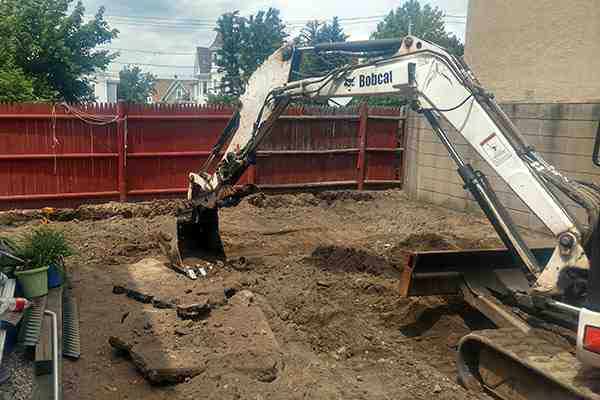
Why Hiring the Right Pool Removal Contractors Matters for Your Property
Pool removal contractors are licensed professionals who demolish, excavate, and backfill unwanted swimming pools — restoring your yard to usable space. If you need a quick answer, here’s what to know:
Quick answers for homeowners looking to remove a pool:
- What they do: Drain the pool, demolish the structure, haul away debris, and backfill the site
- Cost range: Roughly $1,100–$18,500+ for above-ground pools; $35,000–$185,000+ for inground pools (based on internet averages — not a quote from Steve’s Services)
- Time to complete: Most projects take a few days to a couple of weeks
- Permits required: Yes, in most municipalities — a good contractor handles this for you
- Who to hire: Look for licensed, insured contractors with verified reviews and local experience
An unused pool can quietly become one of the biggest burdens on your property. It costs money to maintain, raises safety and liability concerns, and can actually hurt your home’s resale appeal in many markets. For Massachusetts homeowners especially, a pool that sits unused for most of the year often makes more sense to remove than to keep.
The good news? The right contractor can turn that eyesore into a clean, open backyard — ready for a patio, garden, or lawn — faster than most people expect.
I’m Steve Sylva, owner of Steve’s Services Landscape Company in Malden, MA, with over 25 years of experience transforming outdoor spaces across the Greater Boston area — including coordinating with pool removal contractors to prepare sites for landscaping and hardscaping work. That hands-on experience gives me a clear picture of what separates a quality removal job from one that causes headaches down the road.
Pool removal contractors word roundup:
Understanding the Different Methods of Pool Decommissioning
When you decide it’s time to say goodbye to your swimming pool, you aren’t just looking at one “demolition” button. There are actually several ways to handle the job, and the method you choose depends on your budget and what you plan to do with the yard afterward.
Whether you are in Burlington, MA or Lynnfield, MA, local regulations and your future landscaping goals will dictate the best path. More info about pool demolition can help you visualize how these heavy machines actually transform your space.
Partial Pool Fill-In vs. Full Removal
This is the most common choice homeowners face.
Partial Pool Fill-In (The “Landscaping” Choice):
In a partial removal, pool removal contractors remove the top 18 to 36 inches of the pool structure (the “coping” and the upper walls). The bottom of the pool is then shattered or perforated with large holes to ensure proper drainage. The remaining cavity is filled with a mix of gravel, dirt, and topsoil.
- Best for: Homeowners who want to plant grass, a garden, or install a light patio.
- Pros: It is faster and significantly more affordable than a full removal.
- Cons: You cannot build a heavy structure (like a home addition or a garage) on this spot because the remaining concrete could lead to uneven settling. You also have to disclose this “non-engineered” fill when you sell your home.
Full Removal (The “Clean Slate” Choice):
This involves removing every single piece of concrete, steel, and liner from the ground. The entire hole is then backfilled with engineered soil and compacted in layers.
- Best for: Those planning to build a new structure or who want zero restrictions on future property use.
- Pros: No disclosure issues during a home sale and maximum structural integrity.
- Cons: It is the most expensive and time-consuming option.
Learn about filling in pools to see which method fits your long-term backyard vision.
Abandonment in Place
“Abandonment” is a technical term for filling in a pool without removing the shell. However, it isn’t as simple as just dumping dirt in the water. To do this correctly, pool removal contractors must drill multiple large drainage holes in the bottom of the pool. If you skip this step, the pool shell becomes a “bathtub” that collects groundwater, leading to a swampy, unstable mess in your backyard.
In towns like Everett or Malden, abandonment usually requires a city inspection after the holes are drilled but before the dirt goes in. This ensures the property won’t have drainage issues ten years down the line. Concrete pool demolition details provide a deeper look at the heavy machinery—like hydraulic hammers—needed to punch through that thick concrete.
How Much Do Pool Removal Contractors Charge?
Talking about money is never fun, but it’s the first question everyone asks. It is important to note that the figures below are average costs based on internet data and do not represent a specific quote from Steve’s Services. Prices in the North Shore and Greater Boston area can vary based on local disposal fees and site accessibility.
| Pool Type | Average Cost Range (Low) | Average Cost Range (High) |
|---|---|---|
| Above-Ground | $1,100 | $18,500+ |
| Inground (Partial) | $35,000 | $105,000+ |
| Inground (Full) | $55,000 | $185,000+ |
Note: High-end pricing reflects complex projects with limited access, large sizes, or integrated features like built-in spas.
How much does it cost to remove an inground pool is a common search for a reason—the range is massive!
Average Costs for Inground and Above-Ground Models
Above-ground pools are the “quick wins” of the demolition world. They are typically made of metal frames and vinyl liners, which can be disassembled and hauled away for a few thousand dollars. However, if the pool is surrounded by a large wooden deck or has a concrete base, the price climbs toward that $18,500 mark. Above-ground pool removal costs are generally much lower because there is less excavation involved.
Inground pools are a different beast. Installing one today can cost between $39,000 and $70,000 on average, with some luxury setups reaching well over $145,000. Removing them is equally labor-intensive. You are paying for heavy equipment, skilled operators, and the massive amount of “fill” material needed to turn a 20,000-gallon hole into a flat lawn.
Factors Influencing Your Final Quote
Why is one neighbor’s quote $40,000 while yours is $80,000? It usually comes down to these factors:
- Site Access: Can the contractor get a full-sized excavator into your backyard? If they have to use “mini” equipment because your gate is narrow, the job takes twice as long.
- Permit Fees: In Massachusetts, permit costs can range from $0 to $1,000 depending on the town (Burlington vs. Revere, for example).
- Debris Disposal: Concrete is heavy. The further the contractor has to drive to a recycling facility, the higher the trucking fees.
- Utility Lines: If gas or electrical lines were buried poorly, moving them safely adds to the labor.
Cost of removing an inground swimming pool is something we recommend discussing with a pro who can see your yard in person.
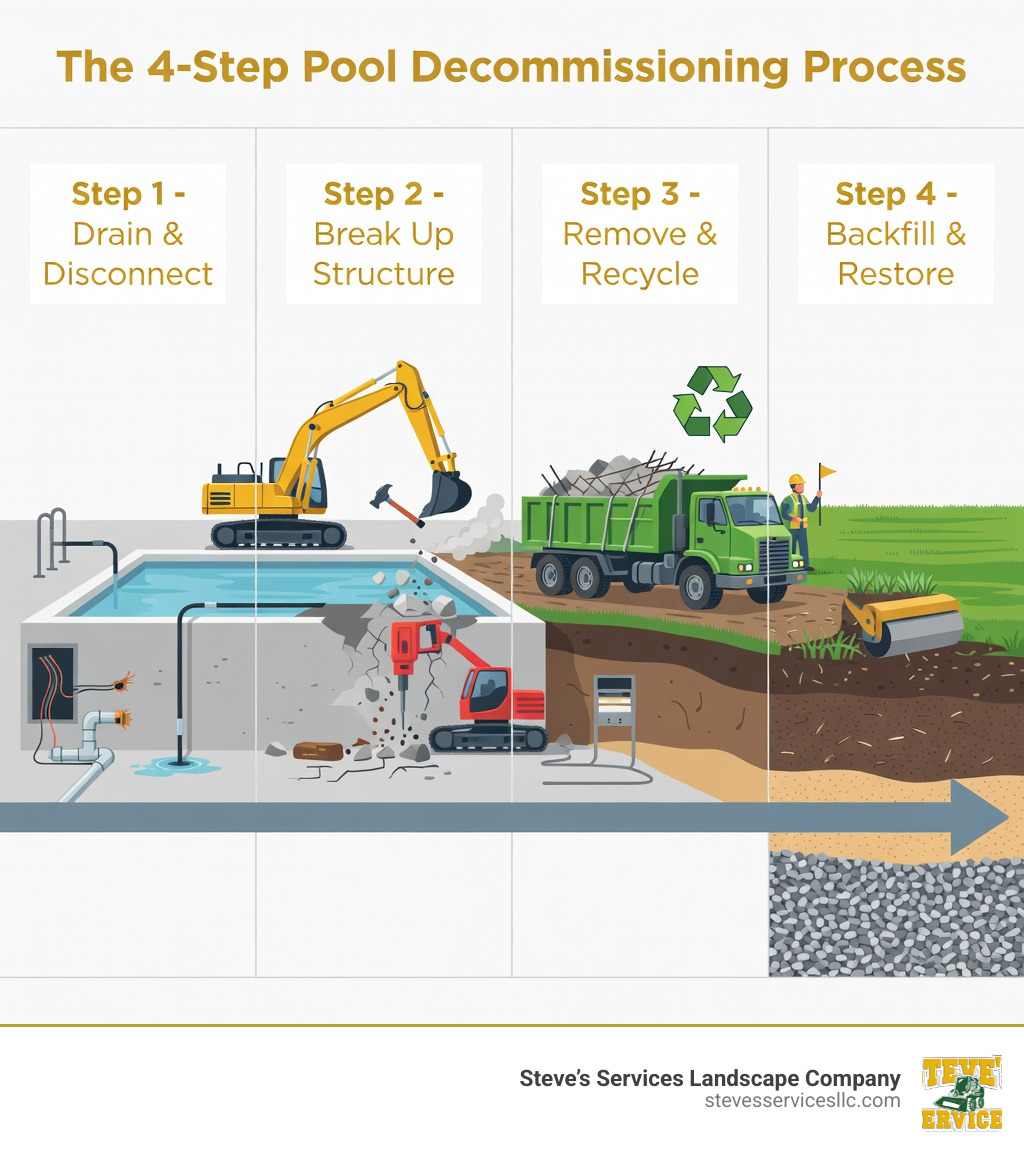
The Step-by-Step Process of Professional Pool Demolition
Watching pool removal contractors work is actually pretty fascinating—it’s a mix of brute force and careful engineering.
Site Preparation and Safety Inspections
Before the first piece of concrete is cracked, the “prep” phase happens:
- Draining: The pool must be completely drained. This usually happens a few days before the crew arrives.
- Utility Disconnection: Gas lines for heaters and electrical lines for pumps and lights must be capped and made safe.
- Permits: Your contractor should handle the municipal permits. This isn’t just paperwork; it’s a legal requirement to ensure the work meets local safety codes.
How to remove an inground swimming pool involves more than just a sledgehammer. It requires a plan that protects your home’s foundation and your neighbors’ property. See some pool removal before and after examples to understand the scale of the transformation.
Backfilling and Final Landscaping
Once the pool is demolished and the debris is hauled away, you’re left with a giant hole. This is the most critical part of the job.
- Layers and Compaction: You can’t just dump 50 truckloads of dirt in the hole. It must be filled in layers (lifts) and compacted with heavy machinery to prevent the ground from sinking later.
- Grading: The site must be graded so water flows away from your house.
- The “After”: Once the site is stable, you can convert swimming pool to patio or plant a lush new lawn.
Why You Should Hire Professional Pool Removal Contractors
It might be tempting to think, “I’ll just rent a backhoe and do it myself.” Please, for the sake of your property value and your sanity, don’t.
Benefits of Hiring Expert Pool Removal Contractors
Professional pool removal contractors bring more than just big trucks. They bring:
- Expertise in Drainage: They know how to ensure your backyard doesn’t become a pond the first time it rains in Saugus.
- Recycling: Reputable companies often recycle up to 100% of the concrete and metal they haul away, keeping it out of landfills. This aligns with sustainable materials management practices recommended by the EPA.
- Liability Protection: If a DIYer hits a gas line, it’s a catastrophe. If a licensed professional is on-site, they have the insurance and training to handle the risks.
Professional pool demolition services ensure that the job is “done once, done right.”
How to Choose the Right Pool Removal Contractors for Your Project
When vetting companies in areas like Woburn or Stoneham, look for these three things:
- Licensing and Insurance: Ensure they are a licensed General Engineering Contractor and carry Workers’ Compensation for their crew.
- Reviews: Look for companies with hundreds of 5-star reviews. Consistency is key.
- Specific Experience: Ask, “How many pools have you demolished?” You want a team that has done hundreds, not just a few.
Find swimming pool demolition contractors who understand the specific soil conditions and regulations of the North Shore.
Frequently Asked Questions about Pool Removal Contractors
Do I need a permit for pool demolition?
Yes. In almost every town we serve, from Danvers to Winchester, a permit is required. These permits ensure that the pool is decommissioned safely and that the backfill won’t cause future structural or environmental issues. A quality pool removal service will usually include permit processing in their quote.
How long does a typical pool removal project take?
For an above-ground pool, it can be as fast as one day. For an inground pool, the demolition and backfilling usually take 3 to 7 days. However, the entire “project” timeline—including permitting and final landscaping—can take 2 to 4 weeks. Weather delays (especially our Massachusetts winters!) can also play a factor. If you’re looking for demolition contractors near me, ask about their current lead times.
Will removing my pool increase my property value?
In many cases, yes. While a pool can be a selling point for some, for many buyers, it represents a liability and a massive maintenance chore. Removing an aging, high-maintenance pool often increases the number of interested buyers and can help your home sell faster. It’s about turning a “burden” into a “blank canvas.” Get rid of an inground pool to reclaim that valuable square footage for a more modern outdoor living space.
Conclusion
Removing a pool is a major decision, but it’s often the best move for homeowners who want to reclaim their backyard and reduce their monthly expenses. From the initial permits to the final blade of grass, working with experienced pool removal contractors ensures that your property remains safe, stable, and beautiful for years to come.
At Steve’s Services Landscape Company, we’ve seen how a pool removal can breathe new life into a home in Medford, Wakefield, or Melrose. Once the pool is gone, the real fun begins—designing the patio, fire pit, or garden you’ve always wanted.
If you are ready to reclaim your yard, contact our swimming pool demolition experts today. We’ll help you navigate the process and ensure your “after” is even better than you imagined.