
concrete pool demolition: 7 Powerful Reasons to Remove Yours
Reclaiming Your Yard: Understanding Concrete Pool Demolition
Concrete pool demolition is the process of removing an unwanted inground swimming pool to reclaim your yard space, eliminate maintenance costs, and potentially increase property value.
Quick Guide to Concrete Pool Demolition:
1. Average Cost: $5,000-$15,000 (national average: $6,000)
2. Methods:
– Partial removal: $3,500-$10,300 (demolish top portion, drill drainage holes)
– Complete removal: $6,100-$16,400 (entire structure removed)
3. Timeline: Typically 3-5 days
4. Permits Required: Yes, costs vary by location ($200-$500)
5. Best For: Unused pools, high maintenance costs, safety concerns
Many homeowners find themselves considering pool removal when maintenance costs exceed enjoyment, or when the space could better serve other purposes. An aging concrete pool can quickly become a financial burden, with repairs, chemicals, and utility costs adding up year after year.
“We aren’t pool people, but the house came with a pool and we loved the house, so we dealt with the yearly maintenance hassles until the pool started to leak,” shared one homeowner who ultimately decided that demolition was the most practical solution.
Whether you’re looking to create more usable yard space, eliminate safety hazards, or simply stop spending money on a feature you rarely use, concrete pool demolition offers a permanent solution.
I’m Steve Sylva, owner of Steve’s Services Landscape Company with over 25 years of experience in landscape change projects including concrete pool demolition throughout Massachusetts communities like Malden, Everett, and surrounding areas.
Relevant articles related to concrete pool demolition:
– pool demolition and removal
– swimming pool demolition contractors
Why & When to Demolish a Concrete Pool
There comes a point in many pool owners’ lives when the backyard oasis becomes more of a burden than a blessing. At Steve’s Services, we’ve helped hundreds of Massachusetts homeowners reclaim their yards through concrete pool demolition. Here are the most common reasons our clients choose to remove their pools:
Signs It’s Time to Remove Your Pool
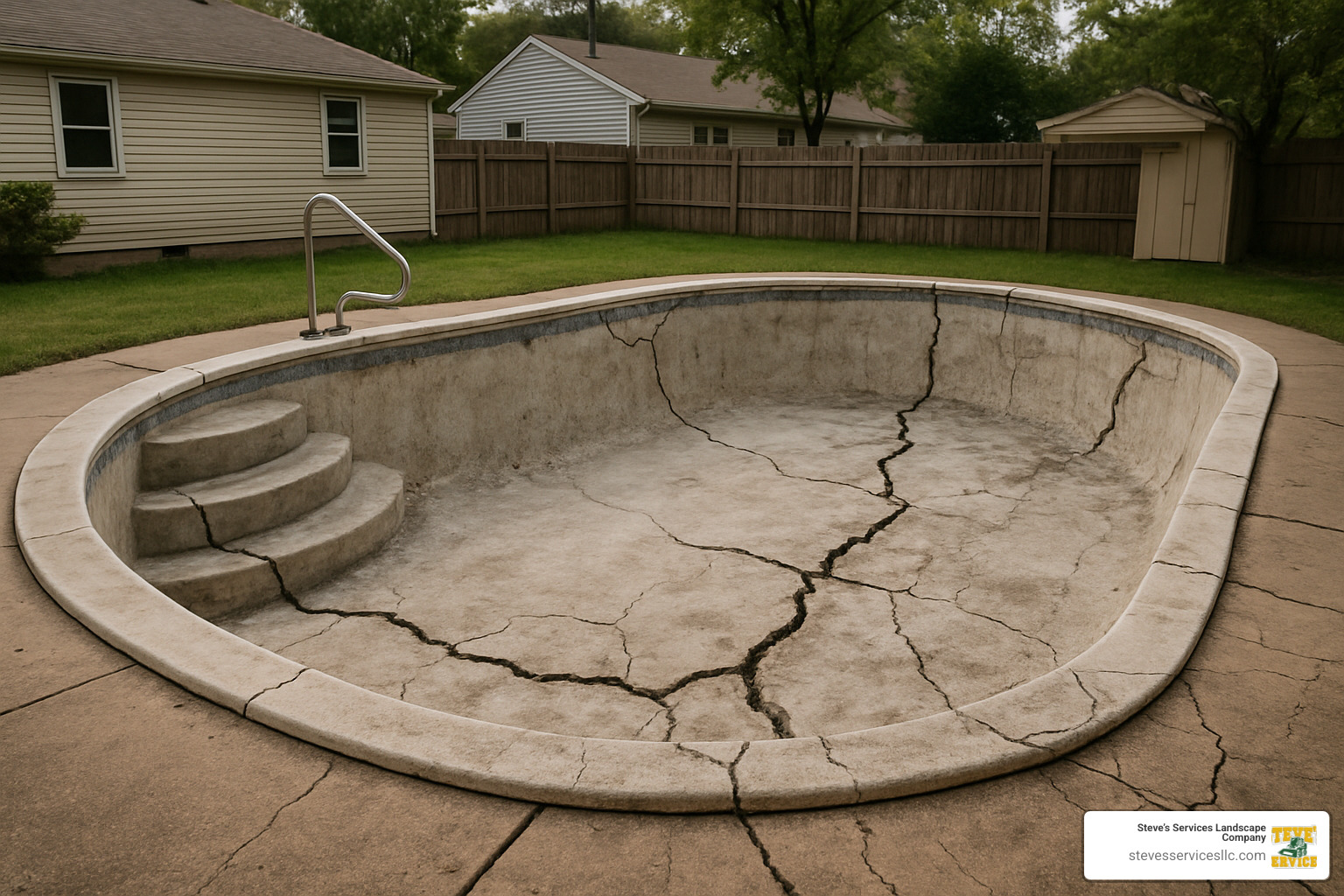
That gorgeous poolside retreat you once enjoyed has seen better days, hasn’t it? When your concrete pool starts showing its age, the signs become impossible to ignore.
Structural damage often appears as significant cracks in the shell or visible shifting of the structure. One Malden homeowner called us after finding a crack that had expanded to nearly an inch wide over just one winter season. The repair estimate? A jaw-dropping $8,500.
Persistent leaks are another telltale sign. “I felt like I was filling my pool and watering my neighbor’s lawn simultaneously,” joked a client from Everett who noticed her water bill climbing month after month. When you’re constantly topping off your pool, both your water bill and patience wear thin.
Those looming repairs don’t stop with the shell. Outdated pumps, heaters, and filtration systems not only consume excessive electricity but eventually fail completely. After our harsh Massachusetts winters, we regularly hear from homeowners facing pool equipment replacement costs in the thousands.
Perhaps the most common reason? The unused asset. “Our pool became an expensive bird bath,” one Winchester client told us. “We realized we were spending over $2,500 annually on chemicals, utilities, and minor repairs for something we used maybe five times each summer.” When your cost-per-swim reaches astronomical levels, demolition starts making financial sense.
Add to this the safety liability concerns, especially for households with young children or those planning to sell to families, and you can see why many homeowners opt for removal. In Massachusetts, pool owners face strict liability laws that can make insurance costs and personal stress skyrocket.
Financial & Lifestyle Advantages
The benefits of concrete pool demolition extend far beyond eliminating weekly maintenance chores.
Your insurance agent will likely have good news for you after pool removal. Lower insurance premiums are common, as you’re eliminating a significant liability risk from your property. One Melrose family saw their annual premium drop by nearly $400 after their pool was removed.
In some Massachusetts municipalities, removing a pool may actually result in lower property taxes as it can reduce your property’s assessed value. While no one wants their home value to decrease, the corresponding tax savings can be substantial over time.
The space reclamation is perhaps the most immediately satisfying benefit. The average inground pool and surrounding deck consume 600-1,000 square feet of yard space. Imagine changing that area into a flourishing garden, a sprawling play space for kids, or an neat entertainment patio. The possibilities are endless!
Easier landscaping becomes a welcome reality without having to work around harsh pool chemicals that damage plants or dealing with the never-ending battle against debris in the water. Your gardening efforts can finally thrive without chlorine drift killing your plants.
If you’re considering selling your home in the future, pool removal might actually help. While pools can be selling points in some markets, they often limit your buyer pool (no pun intended). Many prospective buyers see pools as maintenance nightmares and safety liabilities they’d rather avoid.
“I regret not removing the pool 13 years earlier,” one Winchester homeowner told us after completing their concrete pool demolition project. “The new lawn area has given our family so much more enjoyment than the pool ever did.”
Want to learn more about the process? Check out our detailed guide on how to get rid of an inground pool or explore the cost of removing a pool to help with your planning.
Concrete Pool Demolition Methods & Professional Workflow
When it comes to concrete pool demolition, homeowners have two main options: partial removal (the “fill-in” approach) or complete removal. Each method has its own set of benefits, costs, and implications for your property’s future.
Pros & Cons of Partial vs. Complete Removal
Let me walk you through the differences between these two approaches. I’ve helped countless Massachusetts homeowners make this decision, and it really comes down to your specific situation and future plans.
| Factor | Partial Removal | Complete Removal |
|---|---|---|
| Cost | $3,500-$10,300 | $6,100-$16,400 |
| Timeline | 3-5 days | 5-7 days |
| Future Building | Not recommended | Possible with proper compaction |
| Disclosure | Required when selling | Required when selling |
| Property Value | Moderate improvement | Maximum improvement |
| Permits | Required | Required |
| Best For | Budget-conscious homeowners who won’t build structures | Homeowners wanting maximum property value or planning construction |
With partial removal, we break up the bottom portion for drainage, demolish the top 2-3 feet of pool walls, and fill the remaining cavity with clean material. It’s the more affordable option and creates less disruption to your yard. As one of our Malden clients put it, “We saved nearly $5,000 going with partial removal, and our new garden is thriving where the pool once was.”
The downside? You’ll have limitations on future land use. If you’re dreaming of adding a shed or gazebo in that spot someday, this might not be your best bet.
Complete removal involves breaking up and hauling away the entire pool structure—concrete, steel, plumbing, the works. While it costs more and takes longer, it gives you complete freedom for future property use. Many real estate professionals prefer this approach when resale value is a priority.
“We opted for complete removal because we wanted to add a detached garage eventually,” shared a homeowner from Everett. “The extra cost was worth the peace of mind.”
Step-by-Step Concrete Pool Demolition Process
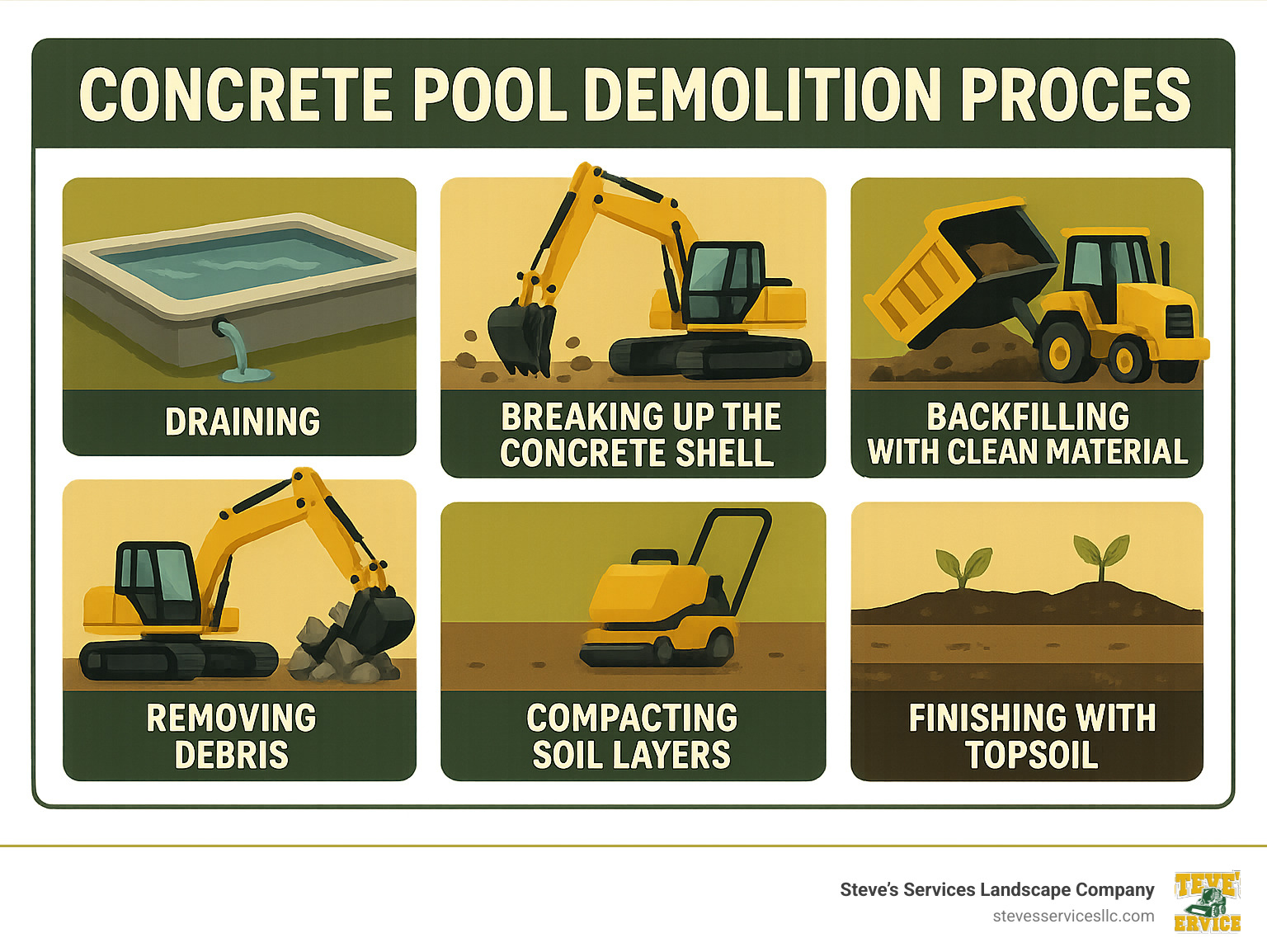
Whether you choose partial or complete concrete pool demolition, here’s what you can expect when our team arrives at your property:
First, we handle all site preparation and permitting. This includes securing necessary permits (typically $200-$500 in Massachusetts), marking underground utilities, creating equipment access paths, and removing any obstacles. We’ll also give your neighbors a friendly heads-up about the upcoming work.
Next comes pool drainage, which must follow local regulations. We disconnect all electrical systems at the breaker box, cap any gas lines, and remove pool equipment like pumps and filters.
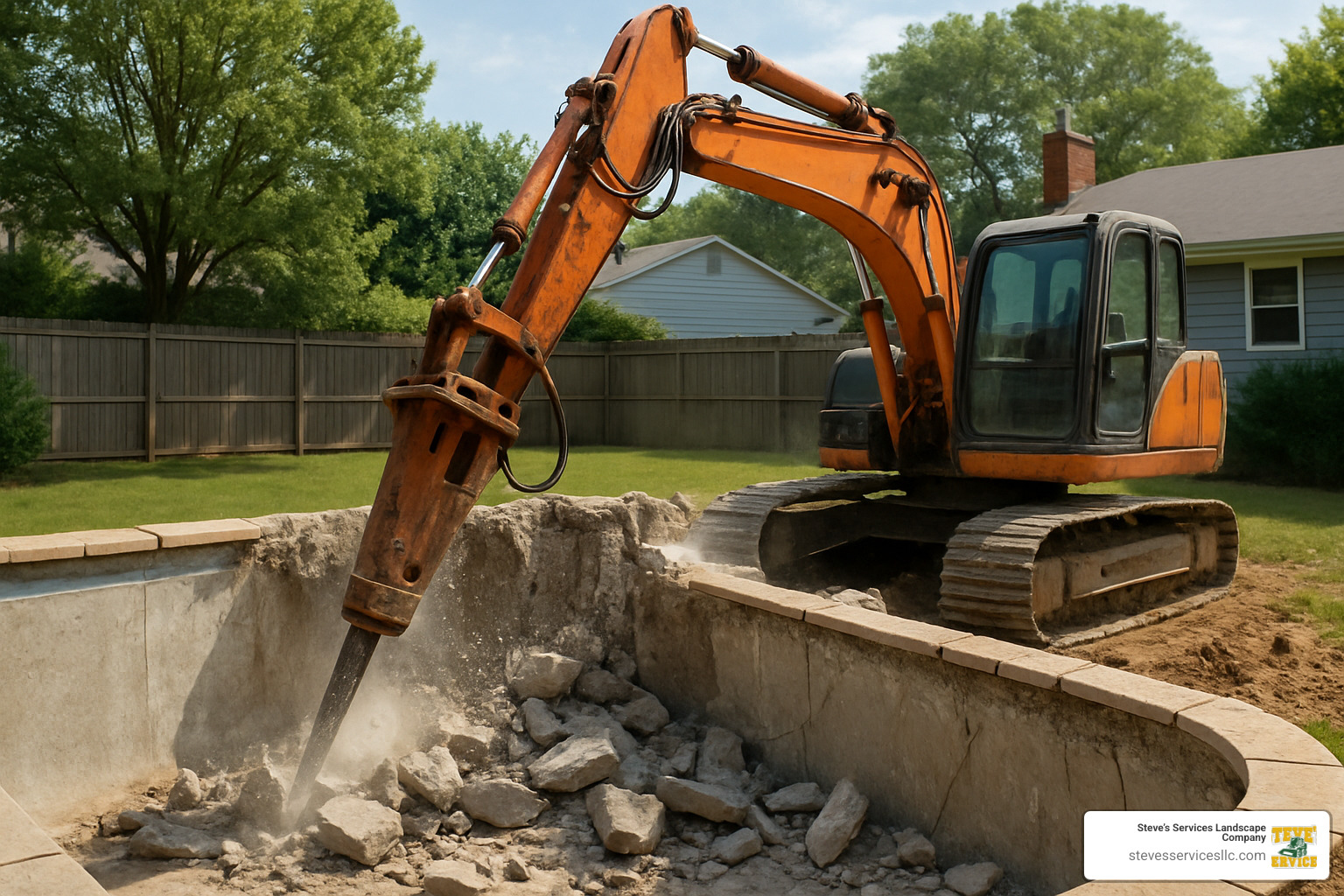
The actual demolition is where things get exciting. For partial removal, we break at least 20 holes in the pool floor to ensure proper drainage and demolish the top portion of sidewalls. With complete removal, we break up the entire concrete shell and remove all rebar. Our specialized equipment makes quick work of even the toughest concrete.
Debris removal follows, with concrete chunks loaded into dump trucks and hauled away for recycling. We also remove all pool plumbing and electrical components during this phase.
The backfilling process is crucial for preventing future problems. We use clean material (often crushed concrete, gravel, or clean fill) in carefully compacted layers, finishing with 4-6 inches of quality topsoil ready for planting.
Finally, proper compaction and grading ensure your new yard space won’t develop sinkholes or drainage issues down the road.
“I was amazed at how methodical the process was,” one Revere homeowner told us. “What looked like chaos at first was actually a carefully orchestrated change. The crew took extra time compacting each layer of fill, explaining that this attention to detail would prevent any future settling.”
At Steve’s Services, we’ve refined this process through years of experience, ensuring your yard change goes smoothly from start to finish. Whether you’re looking to create a garden oasis or simply reclaim your outdoor space, we’ll guide you through every step of your concrete pool demolition project.
Permits, Costs, Safety & Debris Disposal
Before you can start tearing out that old pool, you’ll need to steer permits and local regulations. Here in Massachusetts, every town has their own requirements, but I’ve helped hundreds of homeowners through this process.
Most towns require a basic demolition permit that typically costs between $200-$500. Don’t be surprised if they also ask for site plans showing your pool’s location and how the land will look after we’re done. The building department wants to make sure your yard won’t turn into a sinkhole!
“The permitting process seemed overwhelming until Steve walked me through it,” shared Maria from Malden. “He knew exactly which forms we needed and handled everything with the town.”
When it comes to inspections, be prepared for multiple visits from your local building official. They’ll typically want to see the site before demolition, check drainage holes for partial removals, inspect during the backfilling process, and verify the final grading looks good.
One often overlooked detail is water discharge rules. Most Massachusetts towns allow you to drain dechlorinated pool water into storm drains or let it soak into your yard—as long as you don’t flood your neighbors! At Steve’s Services, we handle all these permitting requirements throughout Everett, Malden, Medford and surrounding communities, making the process hassle-free for our clients.
Budget Breakdown & Influencing Factors
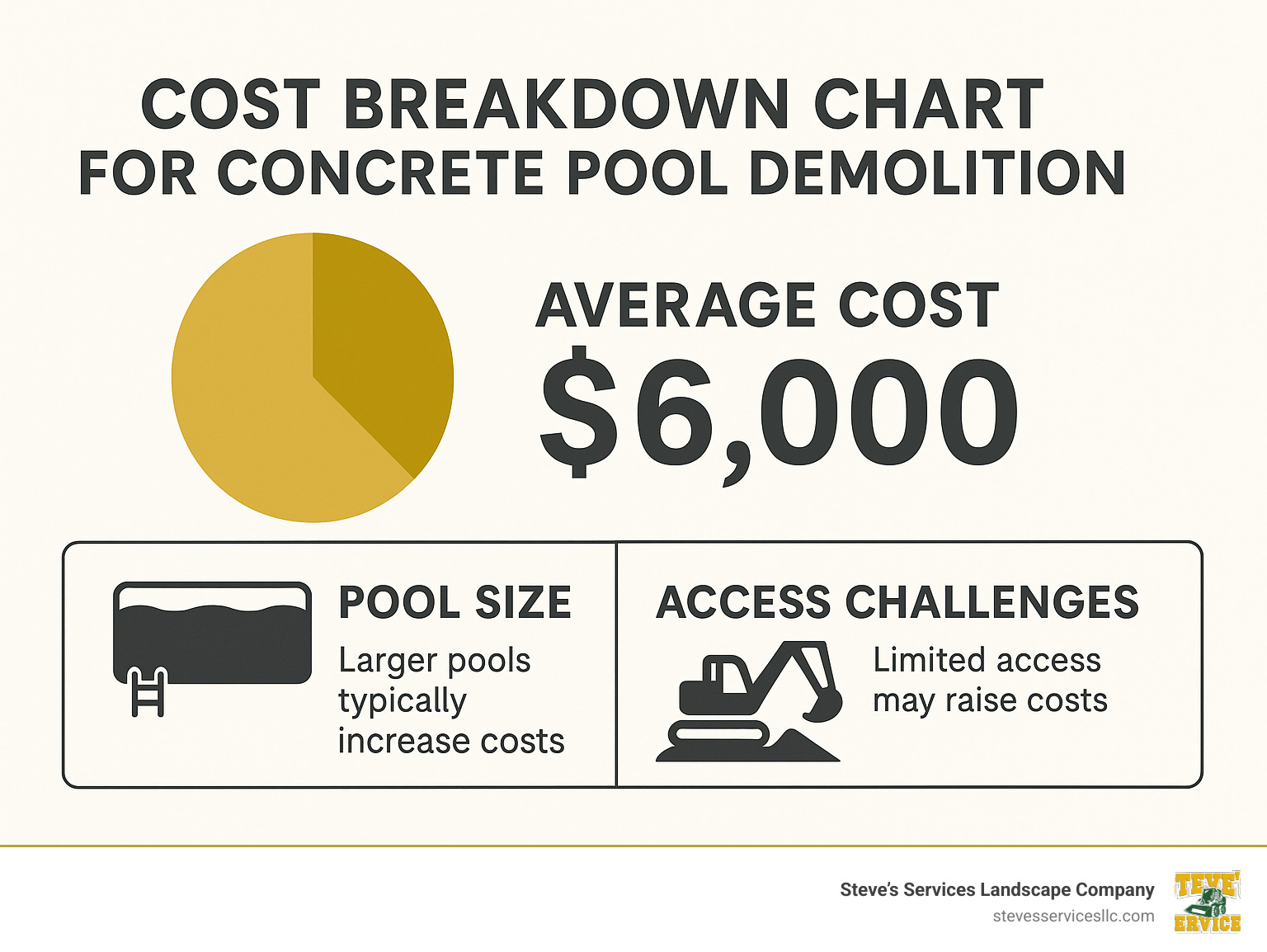
Let’s talk money—the part everyone wants to know about! Concrete pool demolition costs can vary dramatically based on several factors. While the national average hovers around $6,000, I’ve seen Massachusetts projects range anywhere from $5,000 to $20,000.
The biggest cost factor is simply size—larger pools need more labor, machine time, and fill material. On average, expect to pay about $13.50 per square foot. Access to your pool matters tremendously too. If we can drive our equipment right up to the pool, that’s ideal. But if we’re squeezing through a narrow gate or working around mature trees, we’ll need specialized equipment or approaches that increase costs.
The method you choose makes a huge difference in your final bill. Complete removal typically costs 40-60% more than partial removal because we’re hauling away the entire structure instead of just the top portion.
Don’t forget about connected features! Removing a concrete deck adds $2-$5 per square foot, pool house demolition can run $1,000-$5,000, and electrical system removal might cost $500-$1,500.
The quality of fill material also impacts your budget. Standard fill dirt runs $8-$15 per cubic yard, while gravel or crushed stone costs $15-$30 per cubic yard. If your site needs engineered fill for future building plans, expect to pay $20-$40 per cubic yard.
Here’s a money-saving tip: consider winter demolition. Many contractors (myself included) offer better rates during the off-season when we’re not as busy with other landscape projects.
Please note that these are average costs based on internet data and not actual costs for Steve’s Services. For an accurate quote custom to your specific project, we recommend scheduling an on-site assessment.
Safety Protocols & Required Equipment
Safety isn’t just a buzzword in concrete pool demolition—it’s absolutely essential. When we’re breaking up thousands of pounds of concrete with heavy machinery, there’s no room for cutting corners.
Professional demolition crews wear comprehensive personal protective equipment including hard hats, safety glasses, dust masks, high-visibility clothing, steel-toed boots, and hearing protection. This isn’t just for show—concrete dust can cause serious respiratory issues, and flying debris is a real concern.
“I was impressed by how seriously Steve’s crew took safety,” mentioned Tom from Revere. “They completely fenced off the work area to keep my kids and dog away from the equipment, and they constantly sprayed water to keep the dust down.”
The equipment required for proper pool removal is substantial. We typically use excavators with hydraulic hammers to break up the concrete, Bobcats to move materials, dump trucks for hauling, and specialized compaction equipment to ensure the filled area won’t settle later. For partial removals, we need concrete saws to make clean cuts in the upper portion of the pool.
One of the most critical safety steps happens before demolition even begins—marking and protecting underground utilities. The last thing anyone wants is to accidentally cut through a gas line or electrical cable. Our crews are trained to work carefully around these services and ensure professional disconnection of all pool-related utilities.
Debris Disposal & Recycling Options
When we demolish a typical backyard pool, we’re looking at 50-100 tons of concrete debris, plus vinyl, fiberglass, metal, and various plumbing components. That’s a lot of material to deal with responsibly!
At Steve’s Services, we’re big believers in sustainable disposal practices. Concrete pool demolition doesn’t have to mean filling up landfills. Broken concrete can actually be crushed and reused as backfill material for your own project (saving you money on fill costs), processed at recycling facilities into aggregate for new construction, or even used in erosion control projects.
“I was relieved to learn that most of my old pool wouldn’t end up in a landfill,” said Janet from Winchester. “Steve’s team recycled the concrete and even the metal components like rebar and pool ladders.”
Metal recycling is another area where we can often generate credits that help offset removal costs. When recycling isn’t possible or practical, disposal fees typically range from $150-$500 depending on volume and local landfill rates.
By combining demolition with smart recycling practices, we can often save homeowners significant money while being environmentally responsible. It’s a win-win approach that aligns with our company values and helps our clients feel good about their project’s environmental impact.
For more information about concrete removal costs across different projects, check out this detailed guide from Forbes on concrete removal costs.
More info about pool removal before and after
Life After Demolition: Land Use, Property Value & Contractor Selection
Once your concrete pool demolition is complete, you’ll have a blank canvas to transform your outdoor space. This transition period is crucial for maximizing your property’s value and functionality.
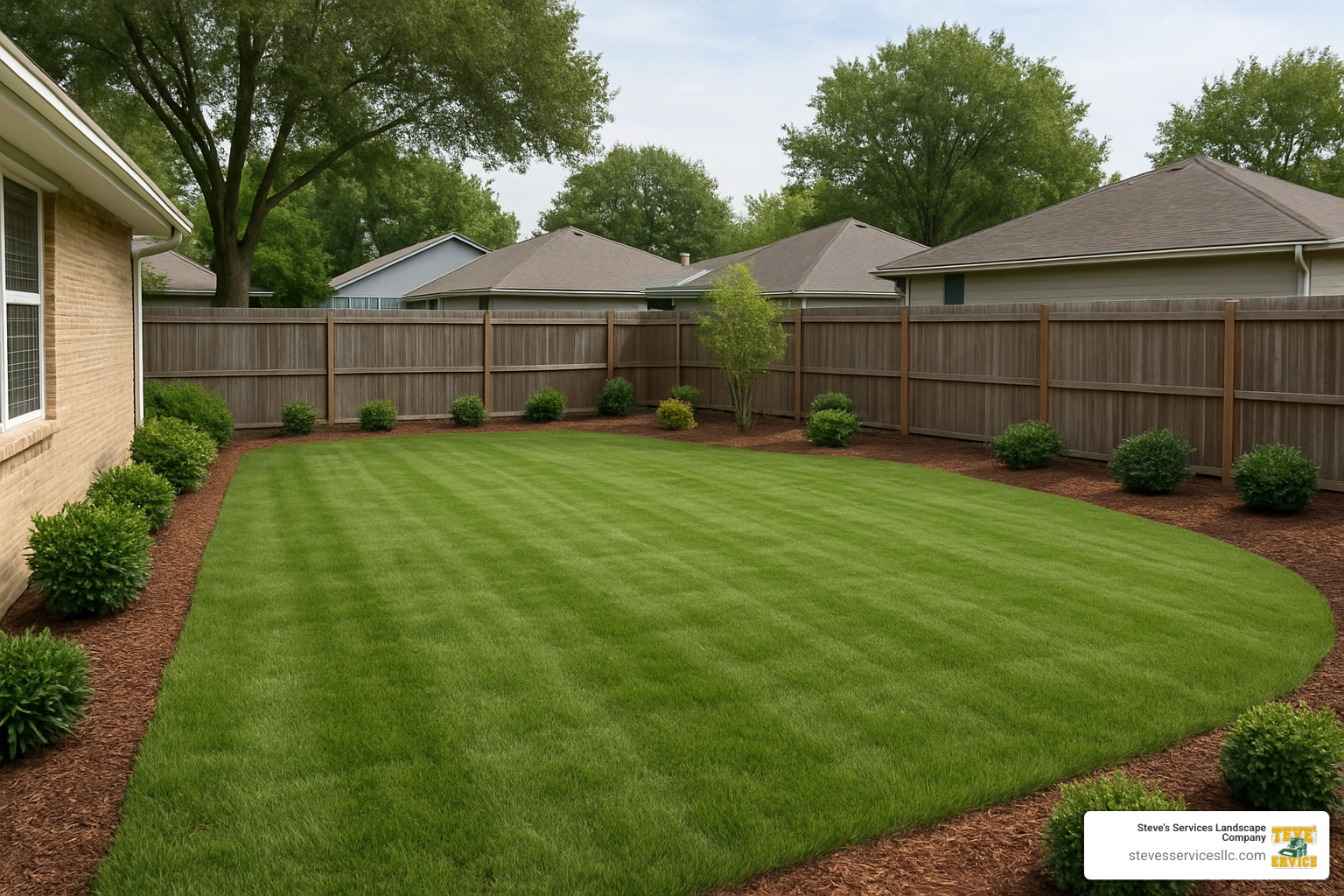
Future Building & Settling Concerns
The way you’ve removed your pool directly impacts what you can do with the space afterward. If you’ve opted for partial removal, there are some important limitations to keep in mind. Building structures like sheds or additions directly over partially removed pools isn’t recommended, though lighter features like gazebos or pergolas might work with proper footings. Patios and walkways generally pose no problems and are popular choices among our clients.
Complete removal, while more expensive, opens up significantly more possibilities. With proper engineering oversight, you can build almost any structure on a completely removed pool site. You may need soil compaction tests before construction begins, especially for larger structures.
“We used phased rain settling between fill layers,” explained one Massachusetts homeowner we worked with. “The contractor would add fill, then let natural rainfall help compact it before adding the next layer. Three years later, we haven’t noticed any sinking whatsoever.”
Proper documentation is essential regardless of which removal method you choose. Massachusetts law requires disclosure of removed pools when selling your home, so keep all permits, inspection reports, and details about the removal method. These records not only satisfy legal requirements but also provide reassurance to future buyers.
Selecting the Right Concrete Pool Demolition Contractor
The contractor you choose can make or break your concrete pool demolition project. This isn’t a job for just any landscaper or general contractor—it requires specialized experience and equipment.
First, verify credentials thoroughly. Any reputable contractor should have valid Massachusetts Home Improvement Contractor registration, substantial liability insurance (at least $1 million), workers’ compensation coverage, and equipment insurance. Don’t be shy about asking for proof—legitimate professionals expect these questions.
Experience matters tremendously in this specialized field. Ask how many pool removals they’ve completed, not just how long they’ve been in business. Request before-and-after photos of completed projects and, most importantly, contact information for recent clients. A quick conversation with previous customers can reveal valuable insights about timeliness, communication, and quality.
Equipment ownership is another consideration that many homeowners overlook. Contractors who own their equipment rather than renting often provide better rates and have more flexibility with scheduling. They’re also more likely to have backup equipment if something breaks down mid-project.
“We almost went with the lowest bidder until we realized they’d be renting all their equipment,” shared a Malden homeowner. “The slightly higher-priced contractor owned everything they needed and could start immediately, while the cheaper option had a two-week equipment rental delay.”
Look for comprehensive service that includes handling all permitting paperwork, coordinating utility disconnections, managing debris removal and recycling, proper filling and compaction, and basic site restoration. The contract should clearly outline all these elements with fixed pricing, a clear payment schedule, timeline commitments, and warranties on settling issues (typically 1-2 years).
At Steve’s Services, we handle pool demolition projects throughout our Massachusetts service areas with this comprehensive approach, giving homeowners peace of mind throughout the process.
Money-Saving Tips & Common Challenges
While concrete pool demolition represents a significant investment, some strategic planning can help manage costs without cutting corners on quality.
Timing your project for the off-season (late fall or winter) often yields discounts, as contractors are typically less busy during these months. Bundling your pool removal with other landscape renovation projects can also create efficiencies and reduce overall costs. If complete removal isn’t necessary for your future plans, partial removal offers substantial savings while still eliminating pool maintenance headaches.
Be prepared for potential complications that might arise during your project. Access issues frequently challenge even the most experienced contractors—narrow gates, mature trees, or structures can limit equipment access, sometimes requiring special approaches or partial hand demolition. Hidden plumbing or electrical lines not documented in original plans can create unexpected problems.
Groundwater intrusion presents another common challenge, especially in areas with high water tables. This might require additional pumping and drainage solutions that weren’t initially anticipated. Weather delays are almost inevitable in New England—rain or freezing conditions may temporarily pause work, so build some flexibility into your timeline.
“What seemed like a simple pool removal became more complex when we finded the previous owner had installed an unauthorized electrical line,” shared a Stoneham homeowner we worked with. “Thankfully, our contractor had the expertise to handle it safely and keep the project moving.”
Older pools sometimes contain unexpected construction methods or materials that only become apparent during demolition. Working with an experienced contractor who’s seen these surprises before can make all the difference in how smoothly your project progresses.
For more information about changing your property after pool removal, check out our pool removal before and after gallery to see the possibilities.
Conclusion & Top Questions Answered
Concrete pool demolition represents a significant investment in your property’s future. While removing a pool may seem daunting, the long-term benefits often far outweigh the temporary disruption and cost. From reclaiming valuable yard space to eliminating ongoing maintenance expenses and liability concerns, pool removal can transform both your property and your lifestyle.
At Steve’s Services Landscape Company, we’ve helped hundreds of homeowners throughout Everett, Malden, Medford, and surrounding Massachusetts communities successfully steer the pool removal process. Our experienced team handles everything from the first permit application to the final grading, ensuring you can quickly start enjoying your newly reclaimed yard space.
Most of our concrete pool demolition projects are completed within 3-7 days, though this timeline can vary based on your specific situation. We pride ourselves on clear communication throughout the process, so you’ll always know exactly what’s happening and when to expect completion.
Concrete Pool Demolition FAQs
Q: How long does concrete pool demolition typically take?
A: For standard residential pools, the process usually takes 3-7 days total. Partial removal generally requires 3-5 days, while complete removal may extend to 5-7 days depending on your pool size, access conditions, and weather. We’ll provide you with a specific timeline during our initial consultation.
Q: Can I demolish my concrete pool myself?
A: We strongly advise against DIY pool demolition. The process requires specialized equipment, permit knowledge, proper disposal methods, and technical expertise in drainage and compaction. Improper removal can lead to serious property damage, safety hazards, and potential legal issues that could cost far more than professional removal.
Q: How much does it cost to get permits for pool demolition in Massachusetts?
A: Permit fees typically range from $200-$500 depending on your specific municipality. Some towns may also require additional engineering reviews or inspections that can add to this cost. At Steve’s Services, we handle all the permitting paperwork for you, saving you time and ensuring everything is properly documented.
Q: Can I build a house addition or garage where my pool used to be?
A: If you opt for complete pool removal with proper engineering oversight and compaction, yes. For partial pool removal, we generally don’t recommend building structures heavier than a shed or gazebo over the site due to potential settling issues. During our consultation, we can discuss your future plans and recommend the best approach for your specific needs.
Q: Will removing my pool increase my property value?
A: It depends on your specific market and buyer preferences. In many Massachusetts communities, removing an older, maintenance-intensive pool often increases marketability and value, especially for family homes. Properties with limited yard space particularly benefit from pool removal, as many buyers prefer usable outdoor space to the commitment of pool ownership.
Q: What happens to all the concrete from my demolished pool?
A: With our environmentally conscious approach, we typically recycle concrete at specialized facilities where it’s crushed for reuse in construction projects. Sometimes we reuse broken concrete as part of the fill material (for partial removals). Any non-recyclable materials are properly disposed of according to local regulations. We believe in responsible disposal practices that minimize environmental impact.
Q: How do I know if my yard is suitable for pool demolition equipment?
A: During our initial consultation, we’ll assess access points, obstacles, slopes, and space constraints. Even properties with challenging access can usually accommodate pool demolition with the right approach and equipment selection. We’ve successfully completed demolitions in some of the tightest spaces throughout Massachusetts!
Ready to reclaim your yard and eliminate the ongoing costs of pool ownership? Contact Steve’s Services Landscape Company today for a free consultation on your concrete pool demolition project. Serving Everett, Malden, Medford, and all surrounding Massachusetts communities, we’ll help you transform your outdoor space into the yard you’ve always wanted.
Swimming Pool Demolition Services
