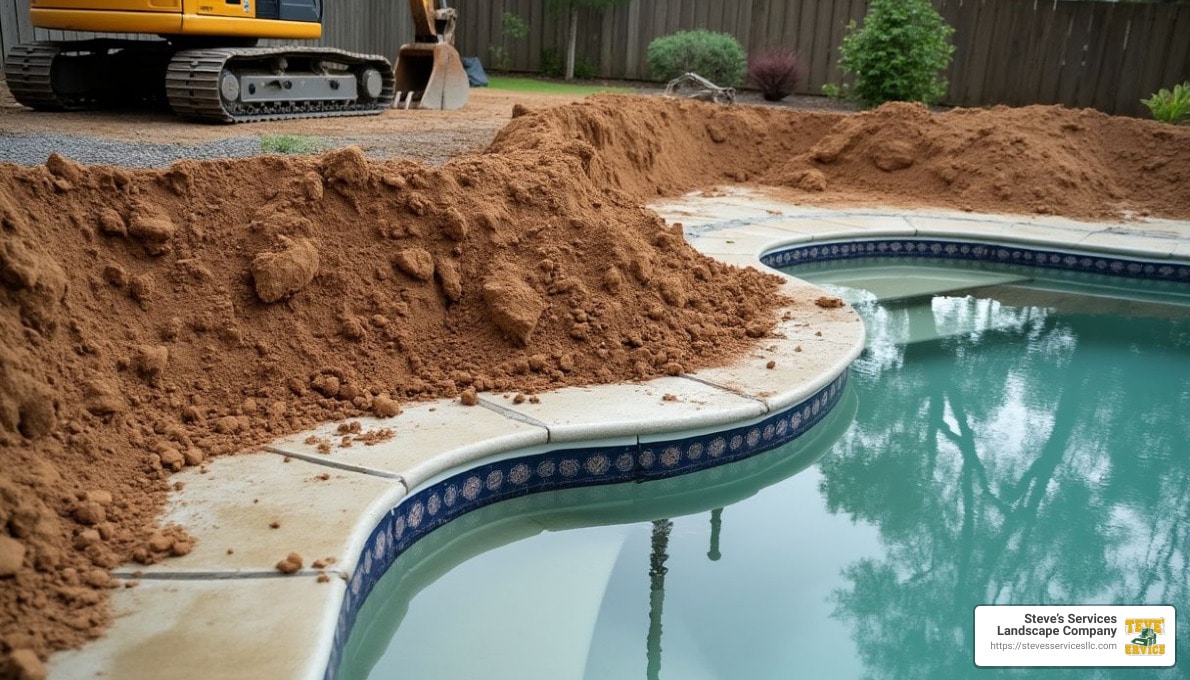
Filling in Pools: 5 Crucial Steps to Avoid Mistakes
Filling in pools can be a daunting task, but getting it right is crucial for maintaining a safe and attractive backyard. Homeowners often opt to fill in their pools to repurpose the space for other outdoor activities or to alleviate the burden of maintenance costs. Key steps include safely draining the pool, breaking down walls, backfilling correctly, and ensuring proper drainage. Neglecting these can lead to common pitfalls like soil sagging, standing water, and contributing to localized flooding.
Proper attention to detail in pool filling is essential for avoiding issues like sinkage and improper seepage, which can endanger your yard and pose safety hazards. By understanding the process, from disconnection to backfilling, homeowners can prevent swampy conditions, structural issues, and compliance problems with local regulations. If your pool fills in poorly, it can lead to significant repair costs or complicate future renovations.
I’m Steve Sylva, owner of Steve’s Services Landscape Company, with 25 years of experience in landscaping and pool filling projects. Our team specializes in proper pool filling methods, assisting homeowners in making their yards safe and buildable again.
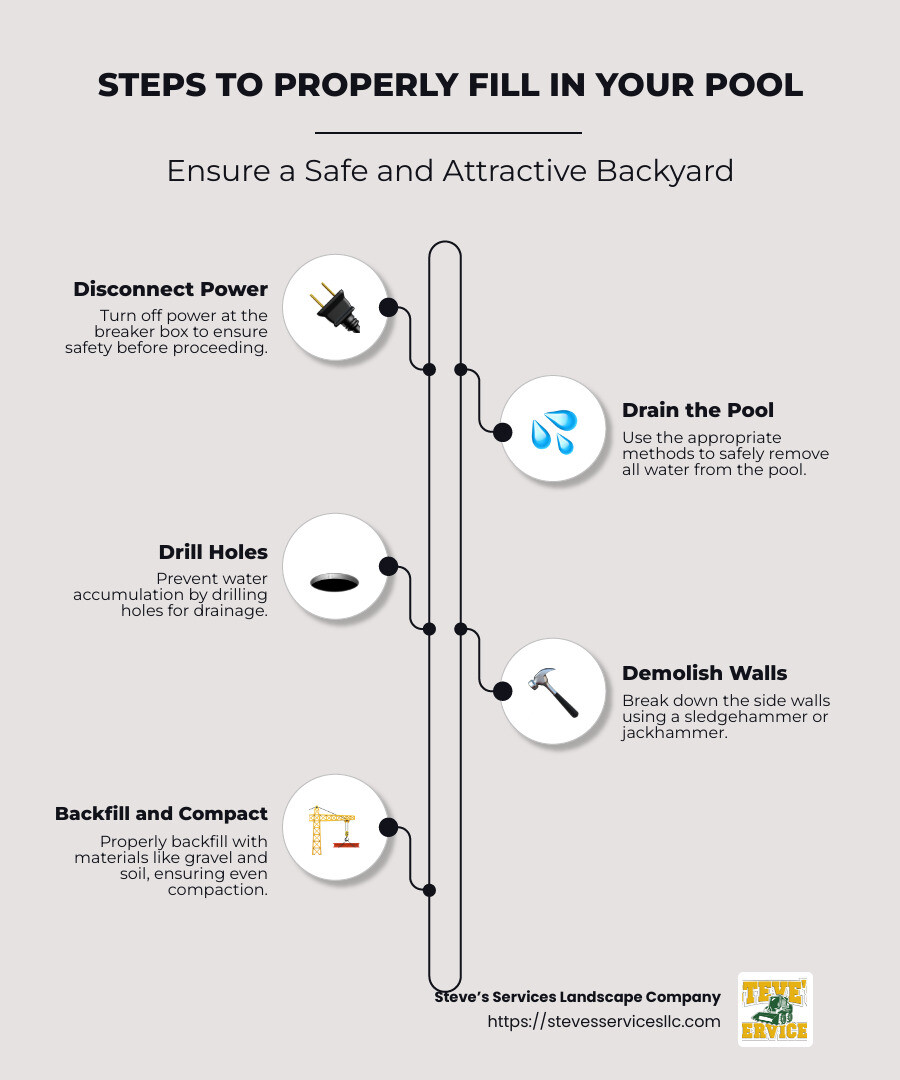
Filling in pools terms at a glance:
– cost to get rid of inground pool
– get rid of inground pool
– how much does it cost to close a pool
Why Fill In Your Pool?
Safety Hazards
An unused pool can be a major safety risk. Pools that are not properly maintained can become breeding grounds for pests and bacteria, posing health risks to your family and pets. Additionally, an empty or neglected pool is a potential danger zone. Children or pets could accidentally fall in, leading to injuries or worse. By filling in pools, you eliminate these risks and create a safer environment for everyone.
Maintenance Costs
Owning a pool isn’t cheap. Regular maintenance, cleaning, and chemical treatments can add up to significant expenses over time. If you’re not using your pool often, these costs can feel like a waste of money. Many homeowners find that filling in their pool reduces their monthly expenses and frees up funds for other priorities.
Space Utilization
Imagine changing that unused pool area into a vibrant garden, a play area for kids, or even a relaxing patio space. Filling in pools allows homeowners to reclaim valuable yard space. This newfound area can be customized to fit your lifestyle and needs, making your backyard a more enjoyable and functional part of your home.
Resale Value
A pool might seem like a great selling point, but not everyone sees it that way. Some potential buyers view pools as a liability due to the maintenance and safety concerns. In certain markets, a filled-in pool can actually increase your home’s appeal by offering a blank canvas for new owners to design their dream outdoor space. This flexibility can be a strong selling point, potentially boosting your property’s resale value.
Steps to Properly Fill In Your Pool
When it comes to filling in pools, hiring professionals is crucial to ensure safety and avoid future problems. Here’s how experts like Steve’s Services Landscape Company can do it properly:
Disconnecting Power and Draining the Pool
First, professionals will power off the pool by disconnecting the breaker box to ensure no electricity runs to the pool equipment. Safety first!
Next, they will drain the pool using specialized equipment. A submersible pump is typically used to remove the water efficiently, directing it to an appropriate drainage area.
Drilling Holes and Demolishing Side Walls
Once the pool is empty, experts will drill holes in the bottom to prevent water collection, which can cause future issues like swelling soil or structural damage. They use the right tools to break through the pool’s surface safely.
After drilling, they will demolish the side walls. Only the top portion of the walls is removed, leaving the bottom intact. This allows for a flat surface when the pool is filled in.
Backfilling and Compacting
For backfilling, professionals choose the right materials. Gravel is often used because it provides excellent drainage and compacts well. A mix of sand and fill dirt may also be used. They add layers of the chosen material into the pool cavity.
Compacting is key to prevent sinking or settling. Experts use a tamper or a water tamping method to compact each layer thoroughly, ensuring stability and helping avoid future sinkholes.
Finishing with Soil and Sod
Finally, the backfilled area is covered with topsoil. This provides a nutrient-rich base for whatever you choose to do next—whether it’s planting a lawn or starting a garden. Professionals can lay down sod for an instant green lawn or sow grass seeds for a more budget-friendly approach.
By hiring professionals to follow these steps, you can transform a safety hazard into a usable space that improves your property’s value and appeal.
Next, let’s look at common pitfalls to avoid during this process.
Common Pitfalls to Avoid
Filling in pools is a big task that can lead to major headaches if not done right. Here are some common pitfalls you should avoid:
Sagging Soil
One of the most frequent issues homeowners face after filling in a pool is sagging soil. This happens when the fill material isn’t compacted properly. Over time, the soil settles, creating dips and uneven ground. To prevent this, compact the fill material in layers. Use a tamper or a water tamping method to ensure each layer is stable.
Swampy Soil
Improper drainage can lead to swampy soil, turning your backyard into a soggy mess. If water can’t escape, it pools on the surface, especially after rain. This is why drilling holes in the pool’s bottom before backfilling is so important. These holes allow water to drain away, reducing the risk of a swampy lawn.
Improper Drainage
Even with holes drilled, improper drainage can still be a problem if not planned well. Ensure that the fill material, such as gravel, allows water to move freely. You might also need to install drainage pipes or systems to guide water away from the area. This step is crucial to avoid long-term water retention issues.
Settling Issues
Settling is another common problem that occurs when the fill material isn’t compacted enough. This can lead to an uneven surface and potential damage to any structures or landscaping on top. To combat this, compact the fill material thoroughly and allow time for natural settling before finishing with topsoil and sod.
By being aware of these pitfalls and taking the necessary precautions, you can ensure a smooth and successful pool filling project. Up next, let’s dive into the cost considerations and how to budget for this project effectively.
Cost Considerations
When it comes to filling in pools, understanding the costs involved is essential. Let’s break down what you need to consider, especially when deciding between hiring professional services and attempting a DIY approach.
Professional Services
Hiring professionals to fill in your pool might seem costly upfront, but it often saves you money in the long run. Professionals have the experience and equipment needed to do the job right. They can avoid common pitfalls like sagging soil and improper drainage, which can lead to expensive repairs later. According to HomeAdvisor, the average cost for professional pool removal ranges from $3,000 to $7,000, depending on the pool size and location.
DIY Risks
While doing it yourself might seem like a cheaper option, it comes with significant risks. Operating heavy machinery without experience can lead to accidents or damage to your property. Moreover, improper filling can result in issues like settling soil, which can cost thousands to fix. If you’re not well-versed in excavation work, the costs of mistakes can quickly add up, making a DIY project more expensive than hiring a pro.
Average Costs
The cost of filling in pools varies widely based on several factors, including pool size, location, and the method used. On average, you might spend between $2,000 and $10,000. Partial pool removal tends to be cheaper but could lead to issues down the line, such as water retention and unstable ground. Full removal is more expensive but often provides better long-term results.
HomeAdvisor Insights
HomeAdvisor provides a wealth of information on the costs associated with pool removal. They highlight that full pool removal is generally more expensive but can significantly increase your property’s value and usability. It’s important to weigh these factors when budgeting for your project.
In summary, while the upfront cost of hiring professionals might be higher, it often pays off in the long run by avoiding costly mistakes. Next, let’s explore some frequently asked questions about filling in pools to further guide your decision-making process.
Frequently Asked Questions about Filling In Pools
Is filling in a pool a good idea?
Filling in a pool can be a smart move for several reasons. Home value is a key consideration. In some markets, having a filled-in pool might make your home more appealing to buyers. This is especially true if the pool was old or required significant maintenance. However, keep in mind that in warmer climates or neighborhoods where pools are a norm, having a pool might actually boost your home’s value by 5% to 8%.
Market considerations are essential. Research your local real estate market to see how pools impact home sales in your area. If pools are not common, filling in might be a great way to make your property more attractive to potential buyers who prefer more yard space.
What is the best material to fill in a pool?
Choosing the right material is crucial for a successful pool fill-in. Gravel is often considered the best option because it provides instant compaction and excellent drainage. Unlike dirt, gravel doesn’t settle much over time, reducing the risk of future sagging or voids.
Fill dirt, which is a mix of dirt, tailings, and topsoil, can also be used. The recommended ratio is 80% dirt and tailings to 20% topsoil. This combination offers a stable base with a nice surface for planting grass or installing sod.
What is the cheapest way to fill in an inground pool?
If cost is a primary concern, using fill dirt is generally the most economical choice. It’s cheaper than gravel but requires more attention to compaction to prevent settling. Be aware that while fill dirt is budget-friendly, it might lead to future issues like settling if not compacted properly.
Gravel may have a higher upfront cost, but it minimizes long-term problems, potentially saving money on future repairs. Always weigh the initial costs against the potential expenses of addressing issues later.
In conclusion, while filling in a pool can be a cost-effective and practical decision, choose the right materials and consider how it impacts your home’s value and marketability.
Conclusion
Filling in a pool can transform your outdoor space into a more versatile and low-maintenance area. However, it’s not as simple as it might seem. The process involves several critical steps, from drilling holes to ensure proper drainage to compacting the fill material to prevent future settling issues. Each step is crucial to avoid common pitfalls like sagging soil or swampy conditions.
This is where professional help becomes invaluable. Hiring experts ensures that the job is done right the first time, saving you from potential headaches down the road. Professionals have the experience and equipment needed to handle the complexities of pool removal and backfilling. They can assess your specific situation and choose the right materials, ensuring that your landscape remains stable and attractive.
At Steve’s Services Landscape Company, we pride ourselves on delivering personalized solutions custom to your needs. Our skilled team is dedicated to providing exceptional service, ensuring that your pool fill-in project is completed with precision and care. We offer comprehensive services that cover everything from excavation to lawn care, making us your one-stop solution for changing your outdoor space.
If you’re considering filling in your pool, let us help you make the process smooth and hassle-free. Contact us today to learn more about how we can support your project with our expert knowledge and outstanding customer service.