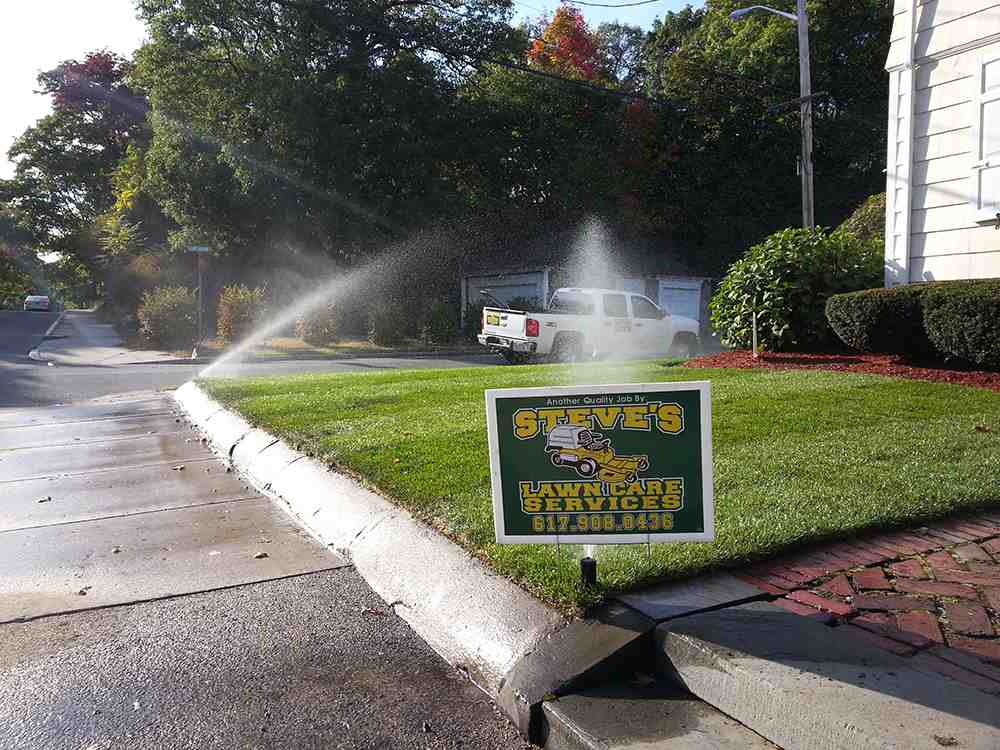
Why Home Sprinkler Installation Is One of the Smartest Upgrades for Your Property
Home sprinkler installation is one of the most effective ways to protect your lawn, your property, and your family — all at the same time.
Here is a quick overview of what you need to know:
| Topic | Key Facts |
|---|---|
| Lawn irrigation systems | Automate watering, save water, boost curb appeal and property value |
| Residential fire sprinklers | Reduce property damage risk by up to 70%, cost $2–$7/sq ft on average |
| Best time to install | During new construction or major renovation |
| Professional vs. DIY | Lawn irrigation can be professionally installed; fire sprinklers always require a licensed contractor |
| Typical lawn system cost | $2,500–$15,000 depending on property size and complexity (internet averages) |
| Maintenance required | Spring startup, seasonal adjustments, and annual winterization |
A well-designed sprinkler system does more than keep your grass green. It saves you time, reduces your water bill, and can even lower your homeowner’s insurance premium.
But there are two very different types of home sprinkler systems — lawn irrigation and residential fire suppression — and most homeowners confuse them. This guide covers both clearly, so you know exactly what you need and what to expect.
I’m Steve Sylva, owner of Steve’s Services, a landscape company based in Malden, MA with over 25 years of experience in professional home sprinkler installation and irrigation system design across suburban Massachusetts. In that time, I’ve seen what separates a system that thrives for decades from one that fails in the first season — and I’m here to share all of it with you.
Easy home sprinkler installation word list:
Understanding the Types of home sprinkler installation
When homeowners in Everett or Burlington start researching home sprinkler installation, they are usually looking for one of two things: a way to keep their grass green or a way to protect their family from fire. While they both use water and pipes, they are entirely different beasts in terms of engineering, codes, and purpose.
Lawn irrigation focuses on the exterior, ensuring your grass, gardens, and trees receive the precise amount of hydration they need. On the other hand, residential fire sprinklers are life-safety systems designed to suppress a fire in its earliest stages. According to the NFPA, fire sprinklers can reduce the risk of property damage by a staggering 70 percent.
If you are building a new home, Getting Fire Sprinklers installed during the construction phase is the most cost-effective approach. For those looking to upgrade their existing landscape, a professional irrigation system is the gold standard.
Key Differences in Purpose and Design
The design philosophy behind these two systems couldn’t be more different. An irrigation system is built for efficiency and distribution. We use various types of irrigation systems to ensure that every square inch of your lawn gets water without wasting a drop. These systems use pop-up heads that retract flush with the ground so you can mow right over them.
In contrast, fire suppression systems are built for reliability and heat activation. They don’t run on a timer; they wait for a specific temperature (usually around 135 degrees Fahrenheit) to trigger. While irrigation pipes in Massachusetts are often PVC or poly pipe, fire systems may use black steel, copper, or specialized CPVC to meet strict safety standards.
| Feature | Lawn Irrigation System | Residential Fire Sprinkler |
|---|---|---|
| Primary Goal | Healthy landscape & water conservation | Life safety & property protection |
| Activation | Programmable timer/Smart controller | Heat-sensitive bulb or link (135°F) |
| Location | Outdoors (underground) | Indoors (ceilings/walls) |
| Piping | PVC or Poly pipe | CPVC, Copper, or Steel |
| Maintenance | Seasonal (Winterization/Startup) | Annual inspections & flow tests |
Residential Fire Sprinkler Requirements
Installing a fire system isn’t just about putting pipes in the ceiling; it’s about adhering to the NFPA 13D standard. This standard is specifically designed for one- and two-family dwellings. One of the core requirements is that the water supply must be able to support at least two operating sprinklers for a minimum of 10 minutes.
If your home in Lynnfield or Melrose relies on a private well, a professional must verify that the well has the capacity to meet this 10-minute demand. Furthermore, systems utilizing CPVC piping must undergo a rigorous hydrostatic test at a minimum pressure of 150 PSI for 30 minutes to ensure there are no leaks. Because of these high stakes, Home Fire Sprinkler Installation is never a DIY project.
Planning and Designing Your Professional Irrigation System
Before we ever put a shovel in the ground for a home sprinkler installation, we spend a significant amount of time in the planning phase. A poorly planned system results in “brown spots” in the summer and wasted water on your sidewalk.
We start by creating a scale drawing of your property (usually 1 inch = 10 feet). We mark the house, driveways, and every tree or flower bed. Crucially, we must determine your home’s water pressure (PSI) and flow rate (Gallons Per Minute or GPM). If your water pressure is too low, the heads won’t pop up; if it’s too high, they’ll mist and blow away in the wind. Understanding these metrics is essential for long-term lawn-sprinkler-systems health.
Determining Watering Zones for home sprinkler installation
Your yard isn’t one uniform environment. The front yard might be a sun-baked slope, while the backyard is a flat, shaded oasis. Because of this, we divide the irrigation-system-install into “zones.”
A zone is a group of sprinkler heads controlled by a single valve. We determine these based on:
- Sun Exposure: High-sun areas need more frequent watering than shaded spots.
- Plant Type: Grass needs different amounts of water than perennial gardens.
- Elevation: On sloped yards, water pressure actually decreases as elevation increases. We plan zones to ensure the top of the hill gets just as much water as the bottom.
- Soil Structure: Clay soils hold water longer, while sandy soils drain quickly.
Selecting the Right Piping and Materials
In Massachusetts, our climate dictates our material choices. For the main lines—the pipes that are under constant pressure—we typically use Schedule 40 PVC. It is durable, handles high pressure well, and is the industry standard for a best-lawn-sprinkler-system.
For the lateral lines (the pipes leading to the heads), many contractors in colder climates use “poly pipe” because it is flexible and less likely to crack if a tiny bit of water remains during a freeze. However, for the most robust home sprinkler installation, we prefer the rigidity and longevity of PVC for the entire framework when possible, ensuring all connections are primed and cemented with a quarter-turn to guarantee a permanent seal.
Key Components of a High-Efficiency home sprinkler installation
A modern home sprinkler installation is a marvel of efficiency. It’s no longer just “pipes and sprayers.” Today’s automatic-sprinkler-system-installation involves several high-tech components working in harmony.
- Pop-up Rotors: These rotate back and forth, delivering water over large areas. They are great for the big backyards we often see in Reading and North Reading.
- Spray Heads: These stay in one place and provide a steady fan of water, perfect for smaller, narrow strips of grass.
- Swing Joints: These flexible connections between the pipe and the head allow the head to “give” if a heavy mower or car tire rolls over it, preventing the pipe from snapping.
Control Valves and Manifolds
The “brain” of the plumbing is the valve manifold. This is where the main water line splits into your individual zones. Each zone has its own control valve that opens and closes based on signals from the controller.
A critical part of irrigation-sprinkler-system-installation is the backflow preventer. This device ensures that the water sitting in your irrigation pipes—which might contain fertilizers or lawn chemicals—never flows backward into your home’s clean drinking water. Most local codes in towns like Wakefield and Stoneham strictly require these to be tested annually.
Smart Controllers and Sensors
The days of “set it and forget it” timers are over. Modern automatic-lawn-sprinkler-systems use Wi-Fi-enabled smart controllers. These controllers check local weather forecasts in real-time. If there is a 90% chance of rain in Medford tomorrow, the system simply won’t turn on, saving you money.
We also install rain sensors and soil moisture sensors. A rain sensor acts as a mechanical “kill switch” that stops the system the moment it starts pouring. This prevents the embarrassing (and wasteful) sight of sprinklers running during a thunderstorm.
The Professional home sprinkler installation Process
When we arrive for a home sprinkler installation, the process is methodical and designed to minimize disruption to your property. While a DIYer might spend weeks struggling, a professional crew can often complete an average-sized house in 4 to 6 days.
The first step is always marking the layout with stakes and string. Then, we move on to the most labor-intensive part: the trenching. For a high-quality lawn-sprinkler-system-installation, trenches must be between 6 and 12 inches deep to protect the pipes from aeration equipment and frost.
Safety and Site Preparation
Safety is our number one priority. Before we dig a single inch, we “Call Before You Dig” (811) to have all underground utilities marked. Digging into a gas line or an electrical conduit isn’t just a mistake; it’s a catastrophe.
During installing-irrigation-system prep, we also look for obstacles like walkways. Rather than tearing up your beautiful stone path, we often use a technique involving water pressure and a jet nozzle to “bore” a hole underneath the walkway, allowing us to slide the pipe through without disturbing the surface.
System Testing and Final Adjustments
Once the pipes are in the ground and the heads are attached, we don’t just bury them. We perform a manual flush of every valve to clear out any dirt or PVC shavings that could clog the heads. Then, we conduct a hydrostatic pressure test.
We adjust each head for “head-to-head coverage.” This means the spray from one head should reach the base of the next one. This overlap is the only way to ensure 100% uniform watering. After we’re satisfied, we backfill the trenches and carefully replace the sod. If you’ve followed a proper how-to-install-a-lawn-sprinkler-system methodology, your lawn should look like we were never there within two weeks.
Investment Costs and Long-Term Maintenance
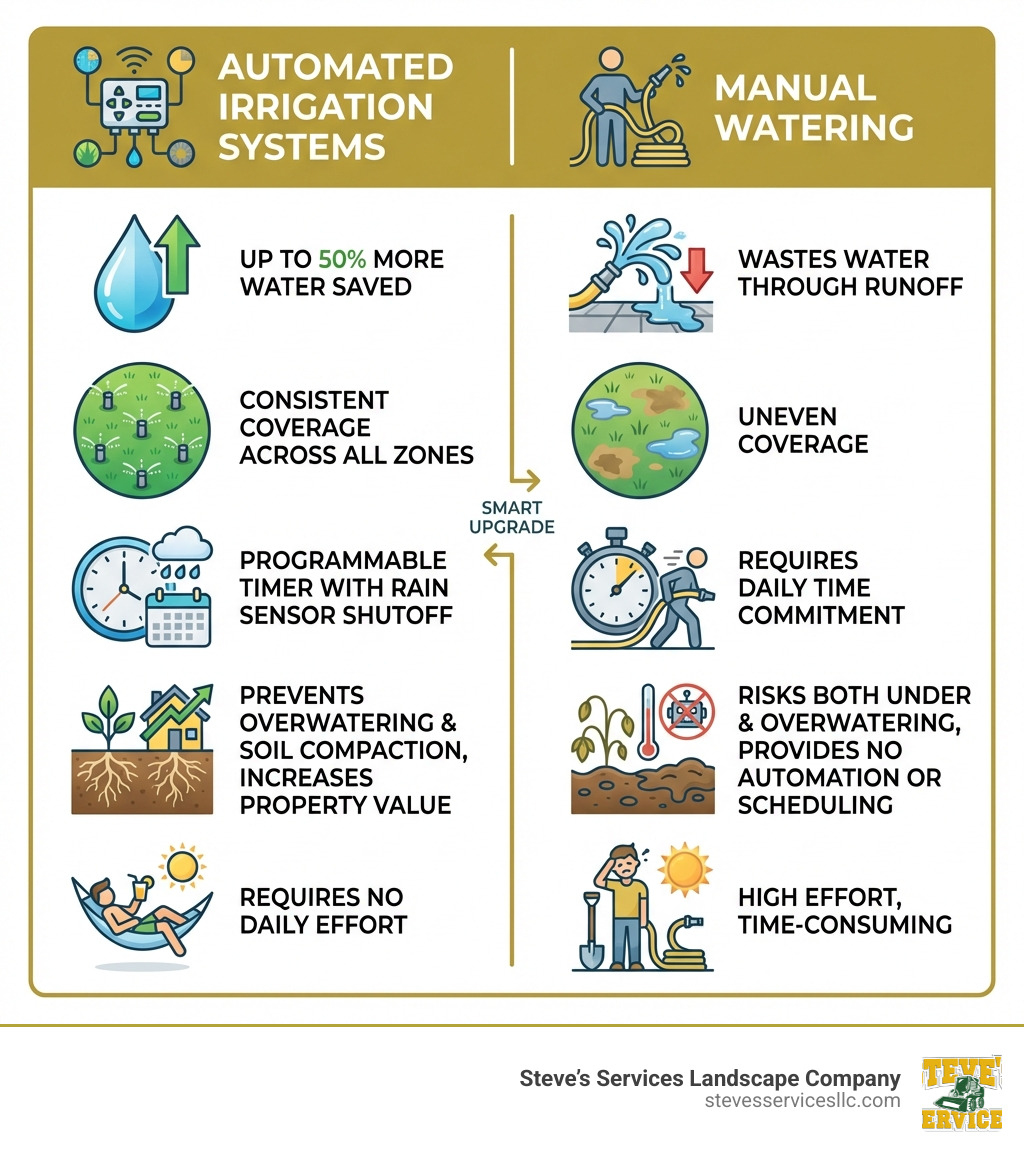
Understanding the cost of home sprinkler installation is about looking at both the upfront investment and the long-term savings. While it might seem like a large expense, the efficiency of an automated system often pays for itself in reduced water bills and increased property value.
For a deep dive into the numbers, check out our sprinkler-system-cost-complete-guide.
Average Installation Costs
Based on internet data, the average cost for a professional lawn irrigation system ranges from $2,500 to $15,000. This is a wide range because every yard in Danvers or Revere is different. Factors that drive the price to the higher end include large acreage, difficult soil (like the rocky soil common in some parts of MA), and the number of zones required.
For fire sprinklers, the national average is approximately $1.35 per square foot for new construction, though retrofitting an existing home can be significantly more expensive, ranging from $2 to $21 per square foot depending on the complexity of the home’s architecture.
Note: These are average costs based on internet data and are not actual costs for Steve’s Services. For a precise quote, we always recommend a site visit.
For more on square footage pricing, see our guide on average-cost-to-install-sprinkler-system-per-square-foot.
Essential Maintenance and Seasonal Care
In Massachusetts, winterization is the most critical maintenance task. Because water expands when it freezes, any water left in your pipes will crack them during a typical January freeze. Every autumn, we use a high-volume air compressor to “blow out” the system, ensuring every drop of water is removed.
In the spring, we perform a “Spring Startup.” This involves slowly re-pressurizing the irrigation system, checking for any leaks that may have occurred over the winter, and re-adjusting the heads to ensure they haven’t shifted. Regular maintenance ensures your system lasts for decades rather than just a few years.
Frequently Asked Questions about Home Sprinklers
Can I install a fire sprinkler system myself?
Absolutely not. Unlike a lawn system, a fire sprinkler system is a life-safety device that must be engineered to exact specifications. It requires a licensed fire-sprinkler contractor who understands local building codes and NFPA 13D standards. In many jurisdictions, including those around Everett and Malden, you cannot obtain a certificate of occupancy without a professionally certified installation.
How does a sprinkler system increase property value?
A professional home sprinkler installation increases curb appeal instantly by ensuring a lush, green lawn year-round. Beyond aesthetics, savvy buyers love the “automated convenience.” They see an irrigation system as a sign that the home has been well-maintained. It’s a “plug-and-play” landscape that they don’t have to worry about.
What are the most common installation mistakes to avoid?
The biggest mistake is poor zone planning—trying to put too many heads on one valve. This leads to low water pressure where the heads barely pop up. Other common errors include shallow trenching (which leads to broken pipes from lawn mowers) and ignoring “head-to-head” coverage, which creates dry patches in the middle of your yard.
Conclusion
A professional home sprinkler installation is an investment in your home’s future. Whether you are looking to protect your family with a fire suppression system or simplify your life with a high-efficiency irrigation setup, doing it right the first time is key.
At Steve’s Services, we’ve spent decades helping homeowners in Woburn, Winchester, and throughout the North Shore achieve the perfect balance of beauty and safety. We don’t just “put pipes in the ground”—we design custom solutions that save water, save money, and give you back your weekends.
Ready to transform your landscape? Request a professional irrigation consultation with our expert team today!