
The Blueprint for Your Project’s Success
When you’re looking for general contracting companies near me, finding the right partner is the key to a smooth project.
General contractors are problem solvers who manage the entire construction process, from permits and inspections to coordinating subcontractors. They take the stress off your shoulders for any large home improvement, remodel, or new build.
Here’s how to begin your search for general contracting companies near me:
- Online Directories: Websites like BBB.org or Contractor Connection offer lists of vetted professionals. Contractor Connection, for example, has a network of over 6,000 contractors and has received J.D. Power recognition for customer service.
- Local Search: Use online maps and search engines to find contractors in your area.
- Referrals: Ask friends, family, or neighbors for trusted recommendations.
As the owner of Steve’s Services, I’ve spent over 25 years in landscape and hardscaping, often collaborating with general contracting companies near me on outdoor construction projects. My team and I understand the importance of quality, reliability, and clear communication in any build.
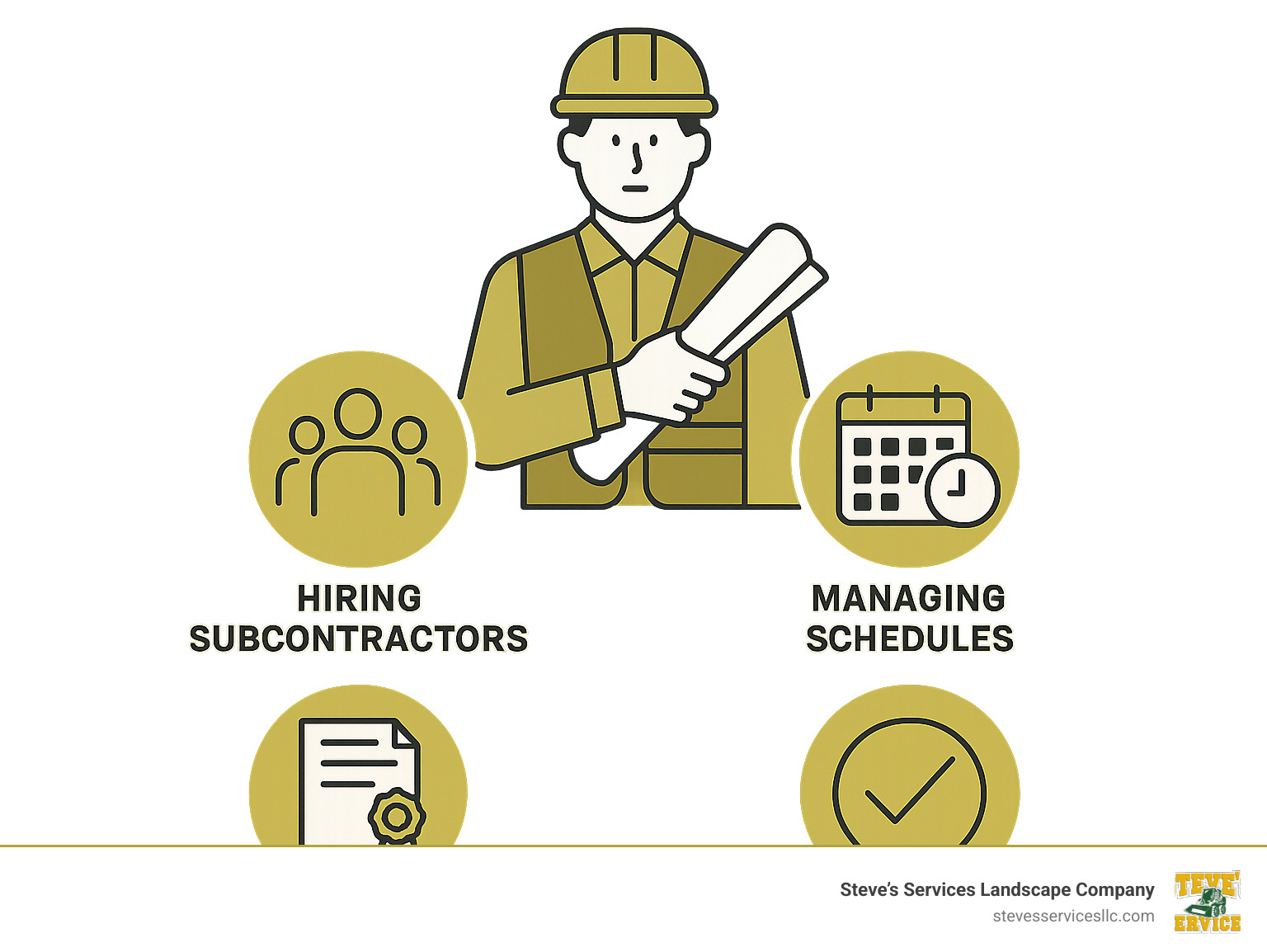
Quick look at general contracting companies near me:
How to Find Reputable General Contracting Companies Near Me
Finding a reputable general contractor requires research, but the effort pays off in peace of mind and a successful project. We always emphasize vetting for our own hardscaping projects and recommend the same approach for you.

Start with a local search for “general contracting companies near me.” This will bring up local businesses with reviews. Specialized online directories like Contractor Connection are also helpful, as they match you with vetted professionals and may offer benefits like a 5-year workmanship warranty.
Word-of-mouth referrals from friends and family are invaluable for accounts of a contractor’s professionalism. Once you have a few names, check their online reviews on Google, Houzz, or Yelp. Look for patterns in feedback; consistent complaints are a red flag.
Finally, ask to see a contractor’s portfolio to determine if their style and quality align with your vision. A strong portfolio showcases their problem-solving skills and attention to detail. For more resources, check out our guide on Find Home Improvement Contractors.
How to check the reputation of general contracting companies near me
Checking a contractor’s reputation is a vital step to ensure you hire a professional who will deliver on their promises.
- Online Reviews and Testimonials: Look beyond star ratings to the content of reviews. Praise for punctuality, communication, and craftsmanship is a good sign, while repeated complaints about delays or hidden costs are a warning.
- Better Business Bureau (BBB) Ratings: The BBB assigns ratings from A+ to F based on a company’s complaint history and transparency. An A+ rating indicates integrity. You can easily check a contractor’s BBB rating on their website.
- Past Client References: A reputable contractor will provide references. Ask them specific questions about timeliness, budget, communication, and how unexpected issues were handled.
- Visiting Completed Projects: If possible, ask to visit a recently completed project. This offers an unparalleled look at the quality of their work and craftsmanship.
What services do general contractors offer?
A general contractor is your primary point of contact, managing the entire construction process. For large projects, remodels, or new builds, hiring one is a crucial decision.
The services offered by general contracting companies near me are extensive, covering both residential and commercial needs:
- Project Management: They oversee the entire project, from planning and budgeting to final walkthroughs. This includes managing schedules, budgets, and quality control.
- Permitting and Inspections: Contractors handle all necessary permits and inspections, ensuring your project complies with local building codes and safety regulations.
- Site Work: This includes safe demolition, site clearing, preparation, and any necessary excavation.
- Structural Work: They build the project’s skeletal structure, including framing, ensuring it’s sound and up to code.
- MEP (Mechanical, Electrical, Plumbing): They coordinate licensed specialists to install HVAC, electrical, and plumbing systems correctly and safely.
- Finishes: This covers all interior and exterior finishes, from drywall and painting to roofing and siding, ensuring a high-quality result.
- Subcontractor Coordination: A key role is hiring and managing their network of trusted, skilled subcontractors for specialized trades.
- Specialized Construction: Many contractors specialize in areas like custom homes, kitchen/bath remodels, or commercial projects like healthcare facilities or corporate interiors.
A general contractor simplifies the complex construction process. To learn more about the diverse services we offer, you can visit our Contracting Services page.
The Vetting Process: 10 Critical Questions for Your Contractor
Choosing the right general contractor is like picking a business partner for your project. Skipping the vetting process can lead to cost overruns, shoddy work, or an abandoned project.
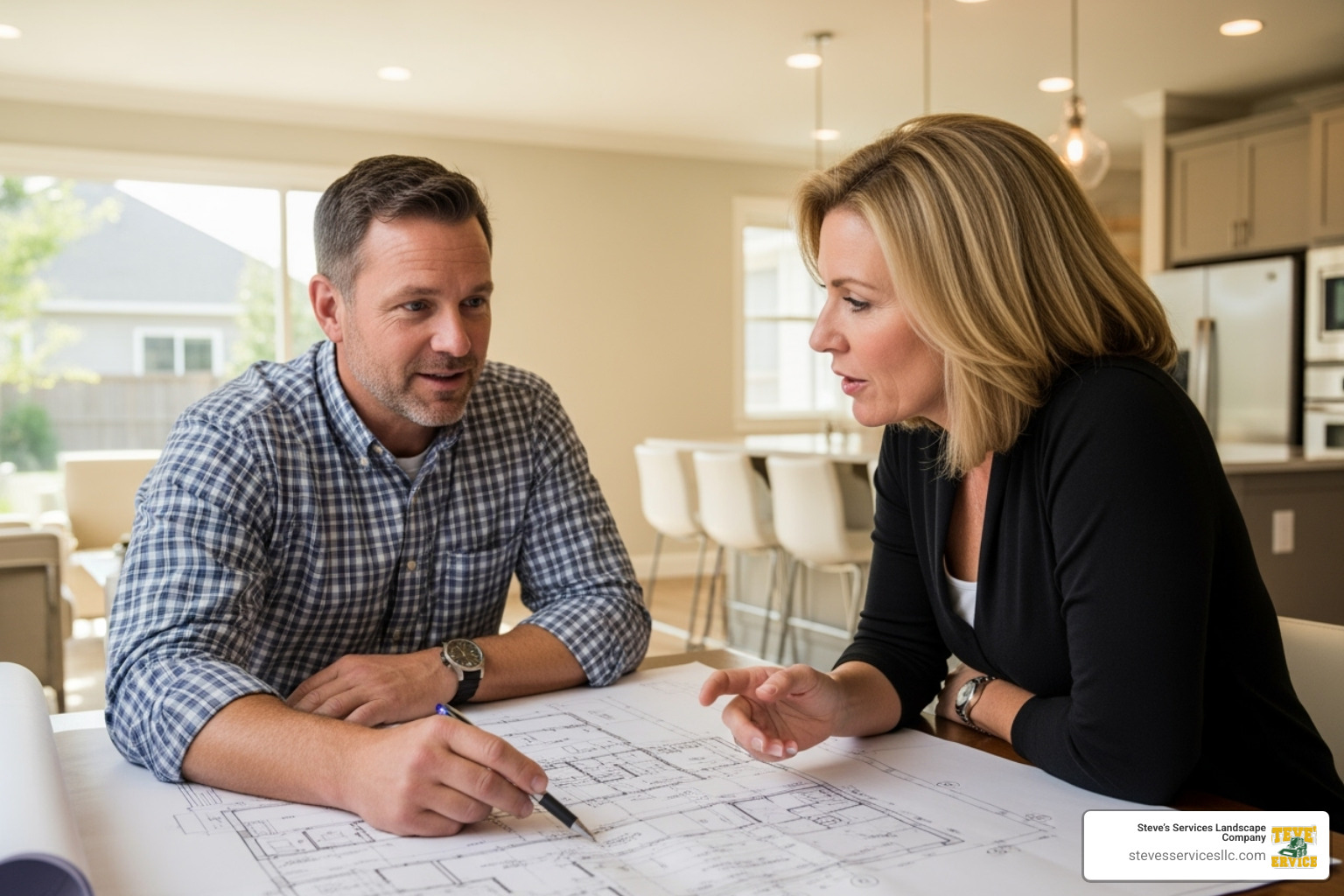
Asking the right questions upfront is key. A reputable contractor will welcome your questions; if they seem annoyed or give vague answers, that’s a red flag.
When searching for general contracting companies near me, focus on experience, integrity, and clear communication. For more guidance, check out our resource on Licensed Home Improvement Contractors Near Me.
[LIST] of Essential Questions to Ask a Potential Contractor
Here are the 10 most important questions to ask any contractor you’re considering.
1. How long have you been in business, and what similar projects have you completed?
Experience matters. A contractor with years in the business has likely built solid relationships with suppliers and subcontractors. More importantly, ask for relevant experience. If you’re planning a kitchen remodel, you want a contractor who specializes in kitchens. Ask to see photos of at least three similar projects.
2. Can you provide proof of licensing and insurance?
This is essential. A legitimate contractor must carry general liability insurance, workers’ compensation, and the proper local licenses. Ask to see current certificates and consider calling their insurance company to verify that the coverage is active.
3. Who will work on my project, and how do you choose your subcontractors?
Most general contractors use subcontractors for specialized trades. Ask about their vetting process. The best contractors have long-standing relationships with trusted subcontractors, which means better coordination and consistent quality.
4. Can you provide references and show me examples of your work?
Any good contractor will share recent references. Call them and ask detailed questions: Was the project on time? How were unexpected issues handled? Would they hire them again? If possible, ask to see a completed project in person.
5. What’s the realistic timeline for my project?
Get a detailed timeline with major milestones. A good contractor will be honest about potential delays and explain what might cause them. Your own decisions on materials and fixtures also affect the timeline.
6. What type of contract will we sign?
Get everything in writing. The contract should detail the scope of work, materials, timeline, payment schedule, and change order process. Understand whether you’re signing a fixed-price or cost-plus contract.
7. What warranties do you offer?
A contractor who stands behind their work will offer clear warranties on materials and workmanship. Understand what’s covered, for how long, and how to make a claim if needed.
8. How do you handle changes and potential cost overruns?
Changes are almost inevitable. Ask how the contractor handles change orders. Ideally, any change should be documented, priced, and approved in writing before the work begins. Discuss how unexpected issues will be communicated and priced.
9. What’s your payment schedule?
Never pay large amounts upfront. A typical schedule involves an initial deposit (10-20%), with subsequent payments tied to completion milestones. The final payment should be made only when everything is done to your satisfaction. Be wary of contractors who demand 50% or more upfront.
10. How do you handle problems or disputes?
Ask about their communication and problem-solving process. Will you have a dedicated project manager? The best contractors have clear processes for addressing issues before they escalate, communicating regularly and documenting everything.
Managing Your Project: Budget, Timelines, and Contracts
Once you’ve selected your general contractor, the next phase is about managing the budget, timeline, and contract. Clear communication is critical as your vision takes shape. A great contractor simplifies the complex construction process through transparency and smart solutions. For those tackling major home overhauls, our insights on finding the right Renovation General Contractor can offer more guidance.

How to stay within budget when hiring general contracting companies near me
Staying within budget requires a team effort between you and your contractor. Here’s how to approach it:
- Establish a firm budget: Know what you can comfortably afford before calling general contracting companies near me.
- Build a contingency fund: Set aside 10-20% of your total project budget for unexpected issues that inevitably arise during construction.
- Get a detailed cost breakdown: A transparent list from your contractor shows where your money is going and helps you spot potential savings.
- Discuss material sourcing: Contractors often have access to wholesale pricing, which can lead to significant savings. Discuss options to balance quality and cost.
- Communicate clearly: Good communication prevents misunderstandings that can lead to expensive changes.
- Avoid last-minute changes: Finalize your design and material choices before work begins. If a change is necessary, ensure it’s documented in writing with updated costs and timelines.
Understanding Project Timelines and Contracts
Project timelines vary based on complexity. A small refresh might take weeks, while a new home can take a year or more. Your contractor should provide a realistic timeline. Factors affecting the schedule include project complexity, material availability, permit schedules, and your own timely decisions.
Contracts are the legal blueprint for your project, protecting both you and the contractor.
- Fixed-Price Contracts: These set a single price for the entire project, offering cost certainty.
- Cost-Plus Contracts: You pay for actual costs plus a fee, offering more flexibility for changes.
Regardless of the type, ensure your contract is comprehensive and includes a detailed scope of work, material specifications, a payment schedule, a change order process, warranty information, a dispute resolution plan, and a project timeline. Always get everything in writing, as a clear contract is the foundation for a successful project.
Frequently Asked Questions about General Contractors
It’s completely normal to have a few questions bubbling up when you’re thinking about a big home project. We hear a lot of similar questions from homeowners looking for general contracting companies near me. So, let’s dive into some of the most common ones. Our goal is to help you feel super confident as you start on your construction journey!
What are the qualifications to become a registered general contractor?
The rules for becoming a registered general contractor vary by state and city, as there is no single national standard. Generally, local governments establish requirements to ensure contractors are professional and that homeowners are protected.
While specific rules differ, common qualifications often include:
- Age and Literacy: Being at least 18 years old and able to read and write English to understand contracts and safety rules.
- Background Investigation: A check to ensure “good moral character” and trustworthiness.
- Financial Stability: Proof of sufficient funds to handle project costs.
- Insurance: This is critical for your protection and typically includes General Liability Insurance (often $1 million or more), Workers’ Compensation Insurance, and Disability Insurance.
- Business Registration: A proper business structure (like an LLC or corporation) and an Employer Identification Number (EIN).
This process ensures your contractor is skilled, financially sound, and properly insured. Always check the specific requirements for your local area. You can often find this information on state websites, like this Example of state requirements.
What is a typical payment schedule for a general contractor?
A reputable contractor will provide a clear, written payment schedule in your contract. The structure typically includes:
- Initial Deposit: Paid after signing the contract to cover initial costs like permits and materials. This is commonly 10-30% of the total project cost. A crucial rule is to never pay in full upfront.
- Milestone Payments: These are payments made as specific stages of the project are completed (e.g., foundation poured, framing complete). This ensures you are paying for work as it progresses. For longer projects, these might be structured as more frequent progress-based payments.
- Final Payment: This last payment is made after the project is complete and you have done a final walk-through to address any minor “punch list” items.
Always ensure your payment schedule is tied to completed work, not arbitrary dates.
How do general contractors handle disputes or issues during construction?
Even with the best plans, issues can arise during construction. How a contractor handles these challenges reveals their professionalism.
A good contractor will rely on clear communication, providing a dedicated point of contact who is responsive to your concerns. They will also maintain thorough documentation of all conversations, decisions, and changes, creating a clear record.
Your contract should include dispute resolution clauses, outlining a process that may include negotiation, mediation (using a neutral third party to facilitate a solution), or arbitration (where a neutral third party makes a binding decision).
A professional contractor takes a problem-solving approach, working proactively to find practical solutions and manage their subcontractors to fix any issues. If you encounter a problem, communicate it immediately and follow up in writing.
Conclusion: Laying the Foundation for a Successful Build
Finding the right general contracting companies near me can feel like a daunting task, but it doesn’t have to be. Throughout this guide, we’ve walked through the essential steps together – from that initial online search to asking those critical questions that separate the professionals from the rest.
The journey starts with knowing where to look. Online directories, local searches, and good old-fashioned word-of-mouth referrals are your best friends here. But the real work begins when you start vetting potential contractors. Checking their reputation through BBB ratings, online reviews, and past client references isn’t just busy work – it’s your insurance policy against headaches down the road.
Remember those 10 critical questions we covered? They’re not just conversation starters. They’re your roadmap to understanding whether a contractor has the experience, licensing, insurance, and communication skills to handle your project. A contractor who welcomes these questions is usually one you can trust.
Managing your budget and timeline requires partnership. The best general contractors don’t just build – they educate. They help you understand why that 10-20% contingency fund matters, how change orders work, and what realistic timelines look like for your specific project.
At Steve’s Services, we’ve spent over 25 years perfecting outdoor spaces across Massachusetts communities like Everett, Burlington, and Medford. While our expertise lies in hardscaping and landscape services, we often work alongside general contractors on projects that blend indoor and outdoor living. We understand what makes a great contractor – clear communication, quality workmanship, and treating your project like it’s their own.
The right general contractor becomes your partner, not just your service provider. They’re the ones who turn your vision into reality while keeping you informed, on budget, and confident in the process.
Whether you’re planning a major renovation or dreaming of an outdoor oasis, having the right team makes all the difference. For comprehensive hardscaping and outdoor construction projects, trust our experienced team. Contact us today!
