Local Commercial Contractors: Your #1 Guide to Success
Why Choosing the Right Local Commercial Contractor Makes or Breaks Your Business
Local commercial contractors handle construction, renovation, and maintenance for business properties. Picking the right team keeps your project on schedule and protects your reputation. Here’s a streamlined checklist:
- Verify licensing & insurance – Confirm a current state license and at least $10 million in liability coverage.
- Match their experience to your industry – Retail, office, medical, and more all have unique code requirements.
- Review recent, local projects – A quality portfolio proves they can deliver in your market.
- Collect written estimates – Three detailed bids help you spot gaps or hidden costs.
- Prioritize local knowledge – Contractors who work with nearby permit offices keep approvals moving.
Industry pros agree: “Commercial projects are high-stakes. One bad job can undo years of brand-building.”
Why Local Matters
- Regulatory insight – Familiarity with municipal codes avoids costly violations.
- Faster mobilization – Nearby crews resolve on-site issues quickly.
- Supplier relationships – Local networks can lower material lead-times.
- Post-project support – Quick warranty visits and ongoing maintenance.
Over 25+ years in Massachusetts, I’ve seen top-tier contractors finish within 5 % of budget, while unqualified teams miss by 20 % or more.
Related topics:
- find home improvement contractors
- general home improvement contractors
- licensed home improvement contractors near me
What to Expect from a Commercial Contractor
A commercial contractor is a licensed pro focused on business properties. Unlike residential builders, they juggle larger footprints, stricter codes, and the need to keep your doors open.

Core Services
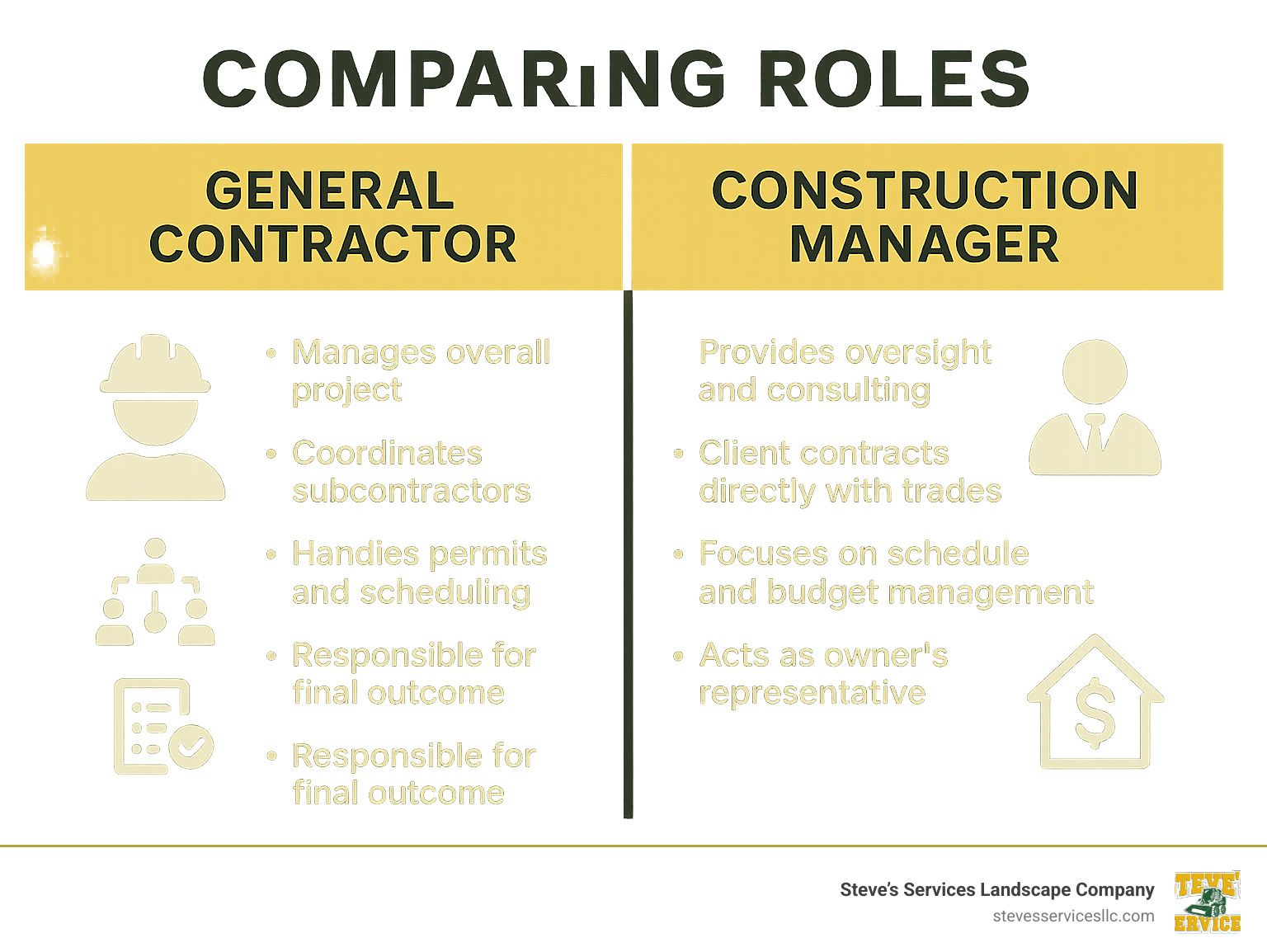
- General contracting – One point of contact for permits, subs, and schedule.
- Pre-construction – Feasibility studies, cost estimates, value engineering.
- Design-build – Single contract for design and construction speeds delivery.
- Construction management – Oversight and quality control when you contract trades directly.
- Renovations & tenant improvements – Phased work to limit downtime.
See how we apply similar rigor to exterior work in our Contracting Services.
Industries Served
Retail, offices, restaurants, medical, industrial, and education each carry unique compliance rules. Choosing a contractor who knows your sector prevents painful learning curves. For exterior specialties, explore Commercial Landscaping for Office Buildings and Manufacturing Industrial Facilities.
Why Hiring Specialized Local Commercial Contractors is Crucial
Commercial jobs involve complex MEP systems, heavy-duty materials, and OSHA safety requirements. Experienced local commercial contractors coordinate these moving parts while staying code-compliant.
The Risks of an Unqualified Hire
- Delays that stall openings
- Budgets blown by 20 %+
- Safety fines and liability
- Work needing costly re-do’s
The Upside of a Pro
- Quality control and warranties
- Realistic schedules and cost tracking (often within 5 % of estimate)
- Long-term value through durable materials
- Peace of mind so you can run your business
Want to see how professional partnerships pay off outdoors? Check the Benefits of Hiring a Professional Landscape Company or learn about the design-build process.
How to Find and Vet the Best Local Commercial Contractors
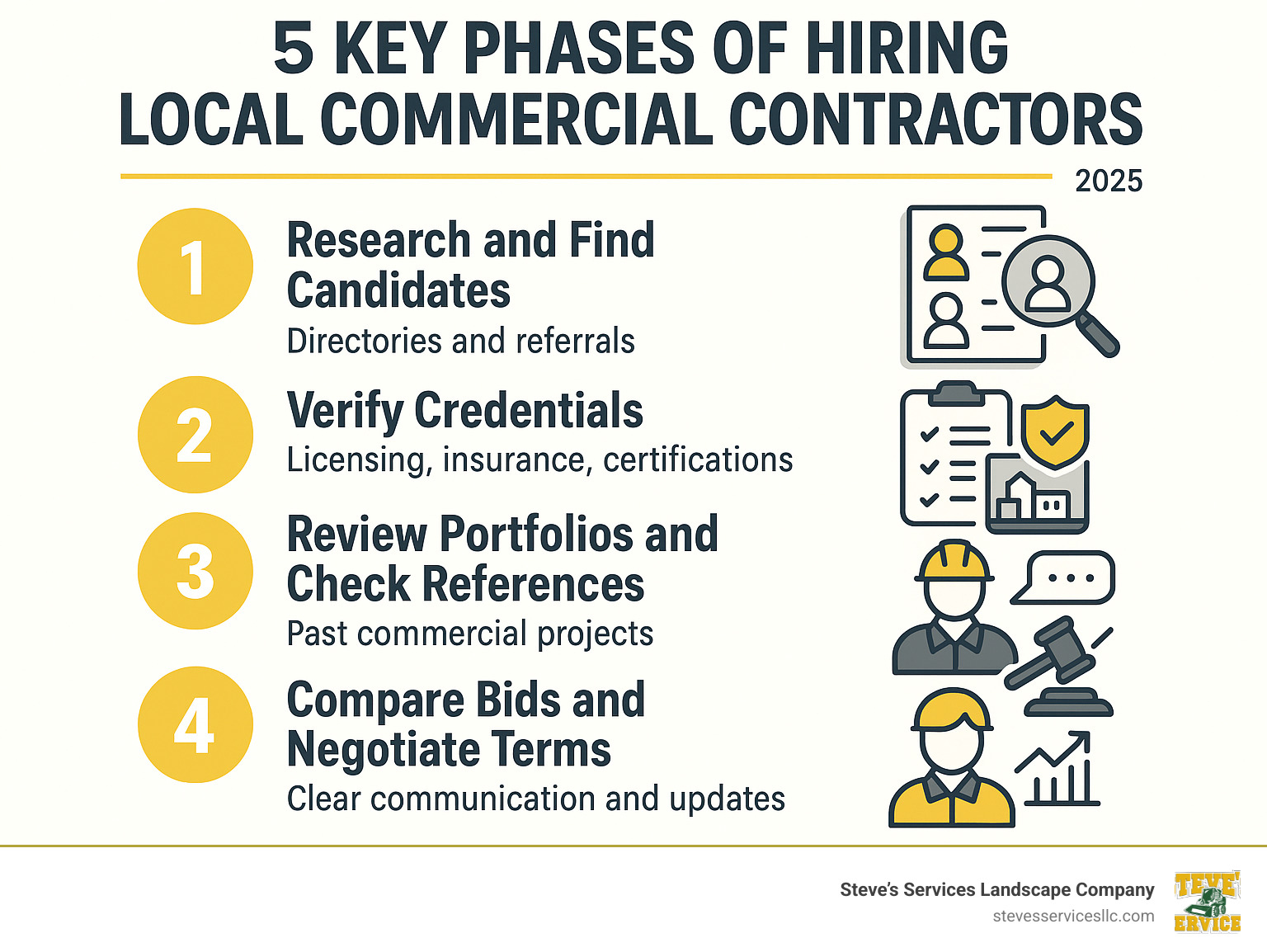
A thorough search up front saves headaches later. Start by defining your scope, timeline, and budget; then follow this two-step approach.

1. Build a Shortlist
- Online directories with reviews
- Local business associations and chambers
- Referrals from owners, architects, or suppliers
- Additional resources: Find Home Improvement Contractors and Houzz
2. Vet Each Candidate
- Confirm license, bonding, and $10 million liability insurance
- Look for 10 + years’ experience and projects like yours
- Call references; tour completed sites if possible
- Gauge communication speed and clarity
Evaluating Bids
Professional bids itemize labor, materials, permits, and timeline. Reject vague quotes and extreme lowballs. Milestone-based payment schedules and a clear change-order process protect both parties.
Planning Your Project and Managing the Process
Solid planning prevents overruns. Professional local commercial contractors guide you through scope, budget, timeline, and permitting so construction runs smoothly.
Key Planning Steps
- Define scope & priorities – Detail finishes, systems, and phasing.
- Set a realistic budget – Include a contingency for surprises.
- Develop a timeline – Account for permits and material lead-times.
- Prepare the site – Services like Excavation or Foundation Digging may precede vertical work.
During Construction
A dedicated project manager issues weekly progress reports, enforces OSHA safety, and resolves issues before they derail schedules. Clear communication keeps your business operations in the loop.
The right contractor becomes a partner, steering challenges so you can focus on customers instead of construction.
Frequently Asked Questions about Commercial Contractors
Do I need a permit for my commercial project?
The short answer is: probably yes. Most commercial construction and renovation projects require permits from your local municipality, and skipping this step can lead to serious headaches down the road.
Building permits are typically required for new construction, structural modifications, additions, and major renovations. These permits ensure your work meets local building codes and safety standards – something that’s especially important for commercial properties where public safety is at stake.
You’ll also need electrical permits for any electrical work, including new circuits, panel upgrades, or lighting installations. All electrical work must be performed by licensed electricians and inspected for safety compliance. Similarly, plumbing permits are required for any plumbing modifications like new fixtures, pipe relocation, or system upgrades.
Don’t forget about mechanical permits for HVAC system installations or modifications. These permits ensure proper installation and energy efficiency compliance – crucial for commercial spaces where comfort and energy costs matter.
Here’s the good news: professional local commercial contractors handle the permitting process as part of their services. They understand local requirements, maintain relationships with permit offices, and ensure all work meets code requirements. Attempting to skip permits can result in fines, legal issues, and problems when selling your property – definitely not worth the risk.
How much does commercial construction cost?
Commercial construction costs are all over the map, and honestly, that’s because every project is unique. The complexity of commercial work means pricing varies dramatically based on your specific needs.
Based on internet data, commercial construction costs typically range from $50 to over $500 per square foot. Basic tenant improvements might run $50-$150 per square foot, while standard office construction usually falls between $100-$300 per square foot. High-end retail or restaurant spaces can cost $200-$500 per square foot, and specialized facilities like medical offices or labs can exceed $1,000 per square foot.
Please note: These are average costs based on internet data and not actual costs for Steve’s Services. Actual pricing varies significantly based on specific project requirements, location, and current market conditions.
Several factors significantly impact what you’ll actually pay. Location plays a huge role – urban areas typically have higher labor and material costs than rural locations. Project size matters too, with larger projects often benefiting from economies of scale.
Material quality is another major factor. Commercial-grade materials cost more than residential alternatives, but they provide better durability and performance in commercial environments. Complexity also drives costs up – projects requiring specialized systems or unique designs cost more than straightforward construction.
The timeline you need can affect pricing too. Rushed projects often cost more due to overtime labor and expedited material delivery.
This is why detailed estimates from professional contractors are so valuable. They break down all costs, helping you understand exactly what you’re paying for and avoid unexpected expenses.
How long does a typical commercial renovation take?
Commercial renovation timelines depend on your project’s scope and complexity, but I can give you some realistic expectations based on common project types.
Small projects under 1,000 square feet – like basic tenant improvements, simple office renovations, or minor retail updates – typically take 2-6 weeks. Medium projects between 1,000-5,000 square feet, including complete office renovations, restaurant build-outs, or medical office conversions, usually require 6-12 weeks. Large projects over 5,000 square feet, such as major renovations or complex specialty facilities, often take 3-6 months.
Several factors can affect these timelines, and understanding them helps you plan better. Permitting delays can add 2-8 weeks depending on project complexity and how efficiently your local government processes applications. Professional contractors submit complete applications to minimize these delays.
Material availability is increasingly important in today’s market. Specialty materials or custom items may require extended lead times, and current supply chain issues can impact even common materials.
Your contractor’s schedule matters too. Established contractors often book projects weeks or months in advance, so planning ahead helps ensure availability when you need to start.
Weather conditions can affect exterior work and some interior projects, particularly during winter months. Scope changes during construction can extend timelines, which is why professional contractors use change order procedures to minimize impact.
Finally, coordination requirements with your ongoing business operations may extend the timeline. Most local commercial contractors understand that minimizing business disruption is crucial and will work with you to schedule work during off-hours or in phases to keep your business running smoothly.
Conclusion: Building a Partnership for Your Business’s Success
Choosing the right local commercial contractors isn’t just about getting a job done—it’s about protecting your business reputation and ensuring your investment pays off for years to come. After 25+ years in the commercial construction industry, I’ve seen how the right contractor can transform a stressful project into a smooth, successful experience.
The stakes are simply too high to cut corners on contractor selection. Your business reputation, customer experience, and bottom line all depend on quality workmanship completed on time and within budget. A botched commercial project doesn’t just cost money—it can damage relationships with customers, employees, and stakeholders.
Remember these crucial principles as you move forward with your project. Always verify licensing, insurance, and bonding before signing any contracts. A contractor’s willingness to provide this documentation immediately tells you everything you need to know about their professionalism.
Experience in your specific industry matters more than you might think. A contractor who’s worked on restaurants understands kitchen ventilation requirements and food safety codes. One who’s handled medical facilities knows about patient privacy and accessibility standards. This specialized knowledge prevents costly mistakes and ensures your project meets all regulatory requirements.
Professional contractors provide detailed estimates, clear contracts, and transparent communication throughout the entire process. They don’t surprise you with hidden costs or vague timelines. Instead, they break down every aspect of your project so you know exactly what you’re paying for and when work will be completed.
While it might be tempting to choose the lowest bid, quality workmanship and materials provide better long-term value than bargain-basement alternatives. Professional contractors typically stay within 5% of their original estimates, while unqualified contractors can exceed budgets by 20% or more through poor planning and change orders.
Proper planning and project management separate successful projects from disasters. Professional contractors have completed hundreds of projects and understand how to steer common challenges before they become expensive problems. They handle permits, coordinate trades, and manage timelines so you can focus on running your business.
At Steve’s Services, we bring this same level of professionalism and expertise to exterior commercial projects throughout Massachusetts. Whether you need comprehensive landscape maintenance, professional hardscaping installation, or reliable snow management services, we understand that your business success depends on partners who deliver what they promise.
We’ve built our reputation on quality work, transparent communication, and long-term partnerships that support our clients’ success. Your commercial property’s exterior is often the first impression customers have of your business, and we take that responsibility seriously.
For a partner that handles all your commercial property’s exterior needs, explore our comprehensive Contracting Services and find how professional partnerships create lasting value for your business.