
How to Remove a Inground Swimming Pool: Top 5 Stress-Free Tips
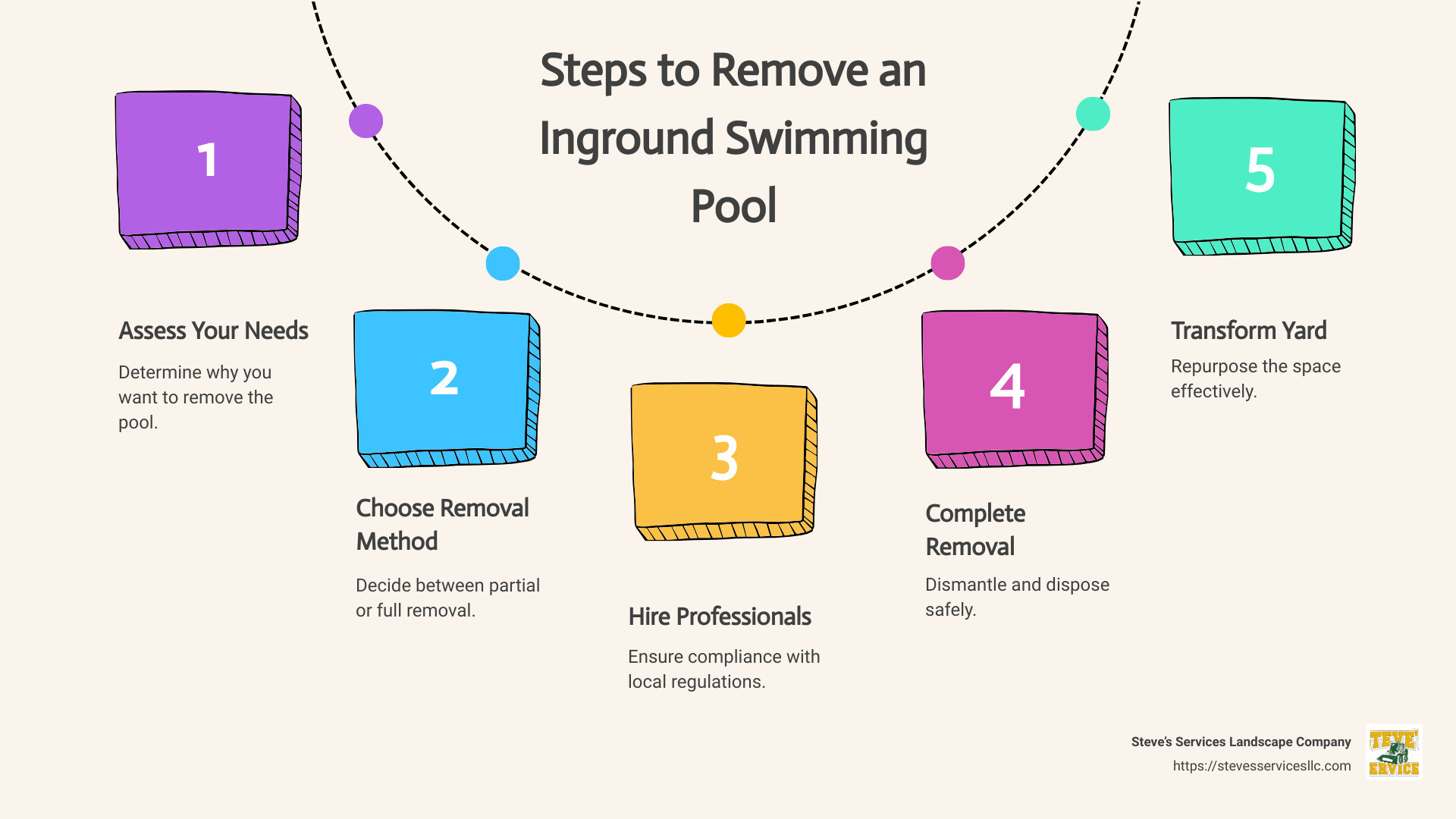
How to remove an inground swimming pool can be a daunting question for homeowners, but understanding the process is the first step toward a successful project. Whether you’re motivated by high maintenance costs, safety concerns, or simply need more yard space, removing a pool can transform your property and even boost its resale value. Here’s a quick breakdown:
- Assess Your Needs: Determine why you want to remove the pool.
- Choose Removal Method: Decide between partial or full removal.
- Hire Professionals: Ensure compliance with local regulations.
- Complete Removal: Safely and effectively dismantle and dispose.
Removing a pool may seem like a monumental task, but with the right guidance, it can be done efficiently and safely.
I’m Steve Sylva, and with over 25 years in the landscaping and hardscaping industry, I’ve assisted numerous clients in Massachusetts with how to remove a inground swimming pool efficiently. At Steve’s Services, our expertise ensures a seamless removal process, and we are dedicated to meeting your needs.
Must-know how to remove a inground swimming pool terms:
– filling in pools
– how much does it cost to close a pool
– cost to get rid of inground pool
Why Remove an Inground Swimming Pool?
Safety Concerns
Having a pool can be risky, especially if you have young children or pets. According to the Centers for Disease Control and Prevention, drowning is a leading cause of injury or death among young children. Removing your pool can significantly reduce this risk, giving you peace of mind.
Pools also require strict safety measures, like fences and covers, to prevent accidents. Keeping up with these measures can be stressful and costly. By choosing to remove your pool, you can eliminate these safety concerns altogether.
Maintenance Costs
Pools are not only high-maintenance but also expensive. On average, pool maintenance can cost around $1,400 annually, not including water, electricity, or repairs. Adding these expenses can bring the total yearly cost to between $3,000 and $5,000. For many, this is a significant financial burden.
In regions with seasonal climates, additional costs like opening and closing the pool each year add up. Removing your pool can save you both time and money, allowing you to allocate resources elsewhere.
Yard Space
A pool can take up a lot of valuable yard space. If you find yourself wishing for more room for other activities, removing your pool can free up space for a garden, a deck, or even a play area for kids. Imagine changing your backyard into a beautiful entertainment area with a fire pit or a stunning wildlife garden that attracts birds and butterflies.
Resale Value
While pools can be a selling point for some buyers, they don’t always add value to a home. In fact, many real estate agents suggest that pools do not significantly boost a home’s resale value. In some cases, they may even deter potential buyers due to the maintenance and safety concerns involved.
Removing an unused pool can make your property more appealing to a broader range of buyers. It can also improve the overall aesthetics of your yard, potentially increasing your home’s marketability.
By addressing these factors, you can make an informed decision about whether removing your inground swimming pool is the right choice for you.
How to Remove an Inground Swimming Pool
Deciding to remove your inground swimming pool is a big step, but it’s one that can bring many benefits. Whether you choose partial removal or full removal, understanding the process is key.
Partial Pool Removal
Partial pool removal, also known as the fill-in method, is a cost-effective option for those looking to reclaim yard space without the full expense of a complete demolition. This method involves draining the pool, breaking up the top layer, and filling the space with materials like gravel or sand.
Pros:
- Cost-effective: This is the most affordable way to remove an inground pool, typically taking just 2-3 days.
- Speed: Faster than full removal, allowing you to repurpose your yard quickly.
Cons:
- Potential Risks: If not done properly, partial removal can lead to issues like sinkage or swelling. Future buyers must be informed about the pool’s previous existence, as improper fill-in can cause land stability problems.
Full Pool Removal
Opting for a full pool removal means complete demolition of the pool structure. This involves breaking down and hauling away all materials like steel, concrete, and vinyl. The area is then filled with soil and compacted to ensure stability.
Pros:
- Resale Benefits: With no remnants of the pool left, the property becomes more appealing to potential buyers. It’s like the pool was never there, eliminating concerns about seepage or land instability.
- Flexibility: The cleared space offers unlimited possibilities for future landscaping or construction projects.
Cons:
- Higher Cost: Full removal is more expensive due to the labor and disposal costs involved.
- Time-Consuming: The process can take about 5 days, depending on the pool’s location and accessibility.
Demolition Process
Regardless of the method you choose, the demolition process is a critical step. Skilled workers use specialized tools to ensure safety and efficiency. For partial removal, holes are drilled for drainage before breaking down the top part of the pool. In full removal, the entire structure is demolished and removed.
Choosing the right method depends on your budget, future plans for the space, and whether you intend to sell your home. Both options have their benefits and drawbacks, but with the right guidance, you can make the best decision for your needs.
Steps Involved in Pool Removal
Removing an inground swimming pool is a complex task best handled by professionals. Here’s a simple guide to understanding the process, emphasizing the importance of expert assistance.
1. Check Building Codes
Before starting, check your local building codes. Different areas have different rules about pool removal. Some require a demolition permit, while others might have specific guidelines on how to fill the pool. Contact your local municipality to ensure you’re following all regulations. This step prevents any legal issues down the line.
2. Drain the Pool
Start by draining the pool. This involves removing all the water safely. Be sure to check local laws on water disposal, as some areas have restrictions. Draining is essential before any demolition can begin.
3. Conduct Utility Checks
Before demolition, perform utility checks. Ensure there are no underground utilities like electrical lines or water pipes in the demolition area. This step is crucial to avoid damaging essential services, which could lead to costly repairs.
4. Demolition
The demolition process varies depending on whether you choose partial or full removal. For partial removal, break up the top layer of the pool and create drainage holes. In full removal, demolish the entire structure, including concrete, fiberglass, and any other materials. Skilled workers with the right equipment ensure this step is done safely and efficiently.
5. Backfilling
Once the demolition is complete, it’s time for backfilling. Fill the empty space with gravel, sand, or soil. In full removal, compact the soil to prevent future sinking or seepage. Proper compaction ensures the ground is stable, making it safe for future landscaping or building projects.
These steps, when followed correctly by professionals, lead to a successful pool removal. Always consult with experts to ensure each step is done safely and according to local regulations. This approach not only saves time but also protects your property from potential issues.
Pool Removal Costs and Considerations
When planning how to remove an inground swimming pool, understanding the costs and considerations is crucial. Here’s what you need to know.
Cost Factors
The cost of pool removal can vary widely. Factors include:
- Type of Removal: Partial removal is cheaper than full removal. Full removal involves more labor and disposal, making it more costly.
- Size of the Pool: Larger pools require more work and materials, increasing costs.
- Materials Used: Pools made from concrete, fiberglass, or vinyl have different removal costs. Concrete is typically the most expensive to remove due to its durability.
- Location: If your pool is in a hard-to-reach area, costs may rise due to the need for special equipment or additional labor.
Pool Size
The size of your pool significantly impacts removal costs. A small pool might only cost a few thousand dollars to remove, while a large one could run up to $20,000. Always get multiple quotes to ensure you’re getting a fair price.
Material
Different pool materials affect the complexity and cost of removal:
- Concrete: Durable but costly to break down.
- Fiberglass: Requires cutting into manageable pieces, which can be labor-intensive.
- Vinyl: Often the simplest and cheapest to remove, but still requires careful handling to avoid damage to surrounding areas.
Accessibility
Accessibility to the pool site can greatly influence the cost and effort involved:
- Easy Access: If machinery can easily reach the pool, removal is simpler and cheaper.
- Restricted Access: Narrow gates, fences, or landscaping can complicate access, potentially increasing costs due to the need for smaller, specialized equipment or manual labor.
Additional Considerations
- Permits and Regulations: Always factor in the cost of permits, which vary by location.
- Landscaping Post-Removal: Consider the cost of landscaping or repurposing the space after removal, which can add to the overall expense.
Understanding these factors helps you plan your budget effectively and ensures a smoother pool removal process. Always consult with professionals to get accurate estimates and avoid unexpected expenses.
Frequently Asked Questions about Pool Removal
Can I remove an inground pool myself?
While it is technically possible to remove an inground pool yourself, it’s not advisable. The process involves heavy machinery, complex tasks, and potential safety risks. Draining the pool, breaking up concrete or fiberglass, and safely disposing of debris are challenging tasks. Without professional experience, you could face injuries or property damage.
Hiring professionals ensures the job is done safely and efficiently. Experts know local regulations and have the right equipment to handle the job. They also manage unforeseen issues, saving you time and stress.
Does removing a pool decrease home value?
The impact of removing a pool on your home value varies. In some neighborhoods, pools are a desirable feature, especially in warmer climates. However, in areas where pools are less common, removing one might not affect resale value negatively.
A pool can be costly to maintain, and some buyers prefer more yard space. In these cases, removing a pool might even increase your home’s appeal. Always consult with a real estate agent familiar with your area to understand how pool removal could impact your home’s value.
What can I do with the space after pool removal?
Once you’ve removed your pool, you have several options for repurposing the space:
- Convert to a Patio: Create a functional outdoor living space. Use durable materials like concrete for longevity.
- Build a Garden: Transform the area into a vegetable or flower garden. Ensure proper drainage and soil compaction.
- Install a Deck: Improve your outdoor space with a wooden or composite deck. This is a great way to enjoy your yard and entertain guests.
- Create a Pond: If you want a water feature, consider turning the area into a decorative pond. This can be a relaxing addition to your garden.
Each option has its own considerations, such as cost and maintenance. Choose what best fits your lifestyle and budget, and consult professionals for advice on executing your vision.
Conclusion: How to Remove a Inground Swimming Pool
Removing an inground swimming pool can seem like a daunting task, but with Steve’s Services Landscape Company, the process is made simple and stress-free. Our team of experts is committed to guiding you through every step, ensuring that your project is completed with precision and care.
We understand the complexities involved in pool removal, from navigating local building codes to safely managing demolition and backfilling. Our professional guidance ensures compliance with all regulations, eliminating worries about potential safety risks or legal issues. We handle the heavy lifting, so you don’t have to.
Choosing us means choosing a partner who listens to your needs and delivers personalized solutions. We take pride in our exceptional customer service and transparent communication, keeping you informed and involved throughout the entire process. Our goal is to transform your outdoor space into something you will love and enjoy for years to come.
Whether you’re looking to reclaim yard space, reduce maintenance costs, or improve your property’s resale value, our skilled team is here to help. Let us make your pool removal experience as smooth and hassle-free as possible.
Find how our excavating services can turn your vision into reality. Contact us today to learn more about how we can assist with your inground pool removal and other landscaping needs.
