
Grass Seed Hydroseeding: Top 3 Proven Lawn Methods 2025
Why Your Lawn Installation Method Makes All the Difference
Grass seed hydroseeding offers a faster, more reliable alternative to traditional seeding while costing significantly less than sod installation. This spray-applied method combines grass seed, mulch, fertilizer, and water into a protective slurry that promotes rapid germination and prevents erosion.
Quick Comparison of Lawn Installation Methods:
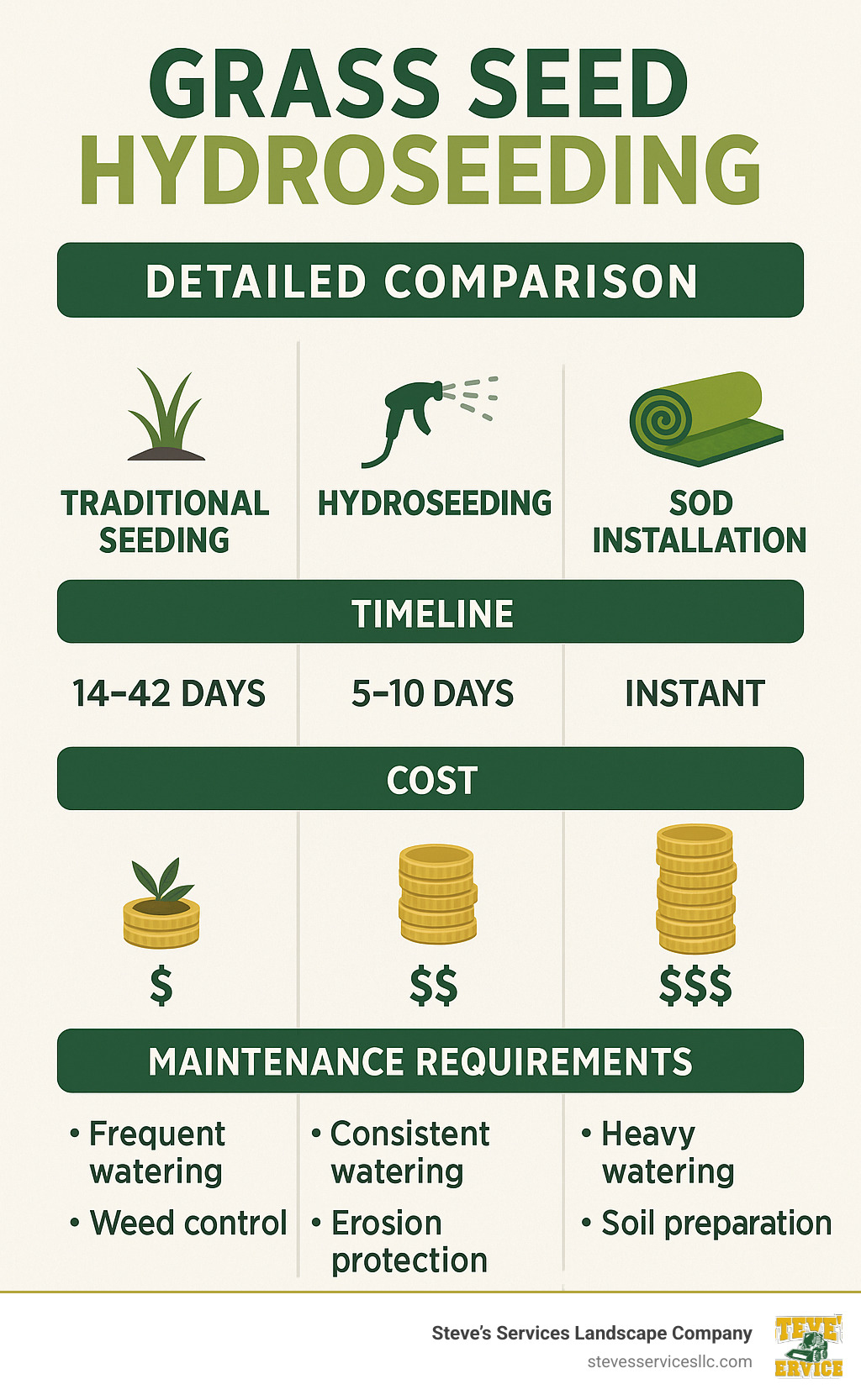
• Traditional Seeding: $0.02-$0.15 per sq ft | 14-42 days to establish | Lowest cost, slowest results
• Grass Seed Hydroseeding: $0.06-$0.25 per sq ft | 5-10 days to sprout | Balanced speed and cost
• Sod Installation: $0.31-$2.50 per sq ft | Instant green | Highest cost, immediate results
The method you choose impacts everything from your upfront investment to long-term maintenance needs. Factors like soil conditions, slope stability, timeline requirements, and budget constraints all play crucial roles in determining the best approach for your property.
Steve Sylva here – with over 25 years of landscaping experience through Steve’s Services, I’ve helped countless Massachusetts homeowners choose between seeding, grass seed hydroseeding, and sod based on their unique property needs and goals. In this guide, I’ll break down the real-world pros and cons of each method so you can make the smartest choice for your lawn.
Why Choosing the Right Method Matters
Your lawn installation choice affects far more than just your wallet. Soil health plays a crucial role – compacted or poor-quality soil benefits tremendously from the soil amendments included in hydroseeding slurry, while established, healthy soil might work perfectly fine with traditional seeding.
Budget considerations extend beyond initial costs. While sod requires the highest upfront investment, it needs intensive watering for 2-3 weeks. Grass seed hydroseeding requires consistent moisture for about a month, and traditional seeding demands patience through potentially multiple growing seasons to achieve full coverage.
Climate factors in Massachusetts mean timing is everything. Our variable spring weather and potential late frosts can devastate traditional seeding, while the protective mulch blanket in hydroseeding shields young grass from temperature fluctuations. For families with children and pets, the 3-5 week waiting period before foot traffic becomes a major lifestyle consideration.
Lawn Installation Options 101
When you’re ready to transform your bare yard into a lush green space, you’ve got three main paths to choose from. Each method has its own personality and works best in different situations.
Traditional broadcast seeding is the old-school approach – think of it as planting a garden. You prepare the soil, scatter grass seed by hand or with a spreader, and then cross your fingers while Mother Nature does her thing. It’s simple, straightforward, and easy on the wallet.
Grass seed hydroseeding takes a more high-tech approach. Picture a specialized truck spraying a green smoothie of grass seed, mulch, fertilizer, and water across your yard. This slurry mixture creates a protective blanket that gives seeds everything they need to thrive from day one.
Sod installation is like rolling out a carpet – you’re literally laying down strips of mature, pre-grown grass. It’s instant gratification at its finest, but your wallet will definitely feel the difference.
The establishment speed tells the real story of these methods. Traditional seeding requires patience – sometimes weeks pass before you see meaningful progress. Grass seed hydroseeding typically shows green sprouts within a week and establishes about 50% faster than regular seeding. Sod gives you that “wow factor” immediately, though the roots still need 2-3 weeks to properly settle into their new home.
For erosion control, grass seed hydroseeding really shines. Those steep slopes where regular seed would wash away in the first heavy rain? The protective mulch in hydroseeding holds everything in place. Sod can be tricky to install on slopes, and traditional seeding often becomes an expensive lesson in gravity.
What Is Seeding?
Traditional seeding is all about getting bare seed to make direct contact with your soil. You’ll spread seeds using either the old-fashioned hand-broadcasting method or a mechanical spreader, depending on your yard size and personal preference.
Success hinges on that crucial seed-to-soil contact. Without it, seeds just sit on the surface like confused travelers without a map. This means your soil prep needs to be spot-on – no shortcuts allowed.
The watering routine becomes your new part-time job. Seeds need consistent moisture but not so much that they float away or rot. It’s a delicate balance that requires attention every single day.
Slow germination is just part of the deal with traditional seeding. Those seeds are vulnerable to birds (who see them as an all-you-can-eat buffet), wind, rain, and temperature swings for weeks. Many homeowners end up reseeding bare spots, which can actually make this “budget-friendly” option more expensive than expected.
Grass Seed Hydroseeding vs Sod Snapshot
Grass seed hydroseeding creates a protective slurry mixture that’s like giving your grass seed a five-star hotel experience. The combination includes grass seed, mulch, fertilizer, water, and often special tackifiers that help everything stick together. This mixture provides immediate protection and optimal growing conditions from the moment it hits your soil.
Sod delivers that instant carpet effect that makes your neighbors do double-takes. You go from dirt to gorgeous lawn in a single day. However, this convenience comes with a premium price tag and limits your grass variety options to whatever the sod farm has available.
Here’s how the three methods stack up:
| Method | Cost per sq ft* | Germination Time | Maintenance Level | Best For |
|---|---|---|---|---|
| Traditional Seed | $0.02-$0.15 | 14-42 days | High | Small areas, tight budgets |
| Grass Seed Hydroseeding | $0.06-$0.25 | 5-10 days | Medium | Large areas, slopes, erosion control |
| Sod | $0.31-$2.50 | Instant (2-3 weeks to establish) | High initially | Immediate results needed |
*Prices quoted are wide national averages sourced from publicly available internet data and do not represent actual quotes from Steve’s Services Landscape Company.
The cost-time-maintenance relationship is the key to making your decision. Traditional seeding demands the most time and ongoing attention. Grass seed hydroseeding offers a sweet spot of reasonable cost with faster, more reliable results. Sod front-loads your investment but requires intensive watering and care during those critical first weeks.
For detailed information about our hydroseeding process, visit More info about Hydroseeding Lawns.
Grass Seed Hydroseeding: The Science Behind the Spray
Think of grass seed hydroseeding as creating the perfect nursery for your future lawn. The process combines grass seed with a carefully balanced slurry that includes wood fiber mulch, fertilizer, water, and specialized additives that work together like a well-orchestrated team.
The mulch component acts like a protective blanket, holding moisture against the soil and keeping temperatures steady – no more worrying about seeds drying out on hot afternoons or getting shocked by cold nights. Meanwhile, the fertilizer boost provides an immediate nutrient kick that gets seeds off to a strong start, much faster than they’d manage on their own.
Tackifiers might sound fancy, but they’re simply ingredients that help everything stick where it belongs. This means your investment won’t wash away with the first heavy rain, even on slopes where traditional seeding would be a lost cause.
Here’s something you might not expect – that green dye isn’t just for show. It actually provides UV protection during those vulnerable first days when seeds are most sensitive to sun damage. Plus, it helps us ensure we’ve covered every inch of your property evenly.
The real beauty is how the mulch breaks down over time, adding organic matter back into your soil and improving its health for years to come. According to scientific research on erosion control, this method significantly outperforms traditional seeding for preventing soil loss and promoting faster establishment.
How Grass Seed Hydroseeding Works
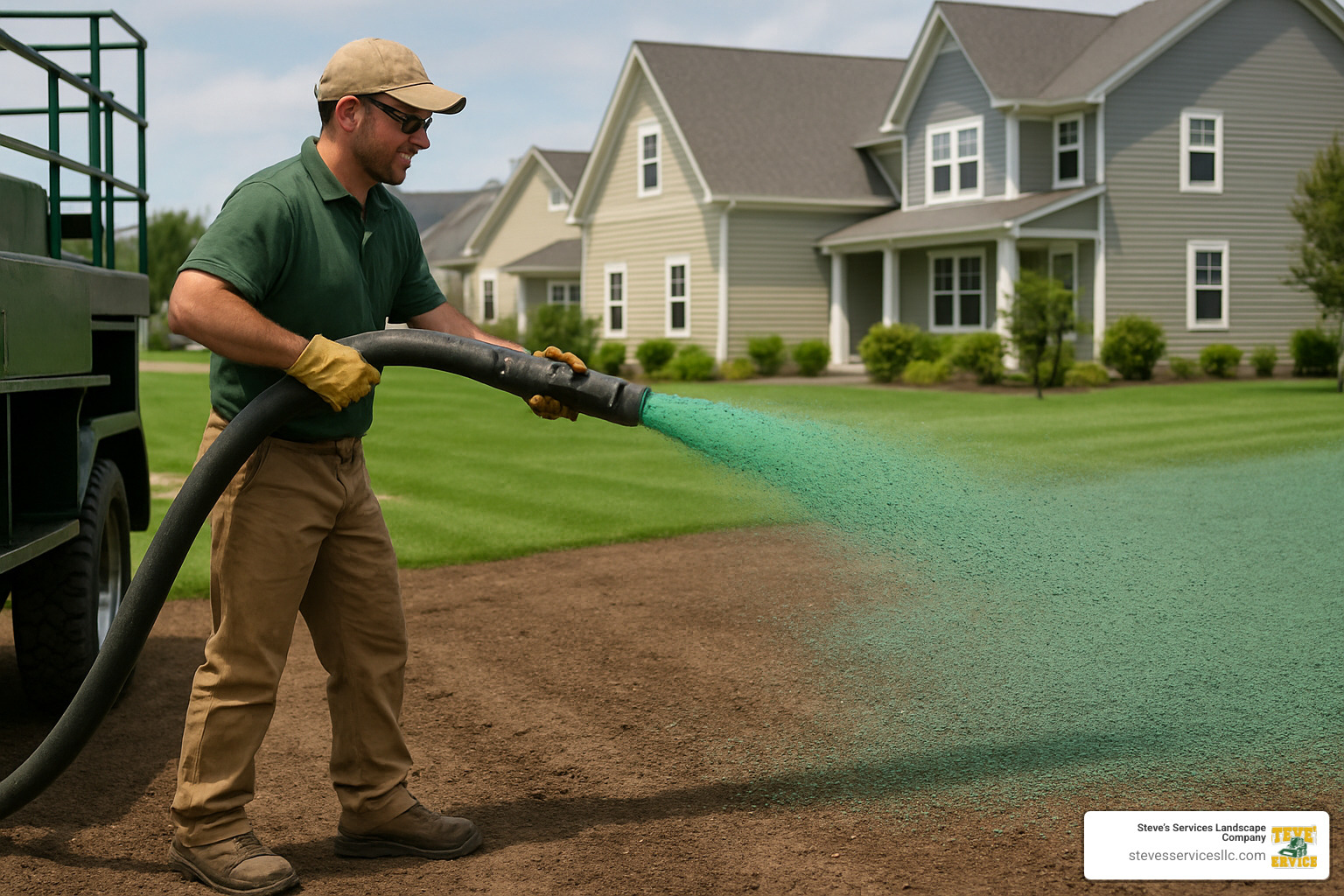
The magic happens through pressure-spray application using specialized equipment that ensures every square foot gets the same treatment. Unlike scattering seed by hand (where you inevitably get thick spots and bare spots), the hydraulic system delivers perfectly even coverage across your entire lawn area.
The moment that slurry hits your prepared soil, seed-soil bonding begins. The tackifiers immediately help seeds nestle into direct contact with soil particles, creating the intimate connection they need for successful germination. No more seeds blowing around in the wind or getting carried off by light rain.
Fast germination happens because each seed sits in its own little moisture blanket. The wood fiber mulch can absorb up to 10 times its weight in water, keeping seeds consistently moist even if you miss a watering day or two. This consistent moisture is the secret to seeing those first green shoots in just 5-7 days instead of waiting weeks.
The protective layer also moderates soil temperature, preventing the extreme heat or cold that can shock seeds and delay germination. It’s like giving your lawn a perfect climate-controlled environment right from day one.
For more details about our specific hydroseeding process, check out What is Hydroseeding?.
Benefits & Limitations of Grass Seed Hydroseeding
Quick sprouting is what gets most homeowners excited about grass seed hydroseeding. Under good conditions, you’ll see green fuzz appearing within a week, and by two weeks, you’ll have a real lawn taking shape. Compare that to traditional seeding, where you might wait a month or more for similar coverage.
Custom blends let us match your grass exactly to your yard’s conditions. Shady backyard? We’ve got seed mixes that thrive in low light. Sunny front yard that gets heavy foot traffic? We’ll use tougher varieties that can handle the wear. Steep slope that’s been washing away? The slope stability provided by the mulch matrix will finally give you the green coverage you’ve been dreaming of.
The uniform coverage you get from hydraulic application eliminates those frustrating thin spots and bare patches that seem inevitable with hand-seeding. Your lawn will look professionally installed because, well, it was.
But let’s be honest about the limitations. Initial watering requirements are serious business – you’ll need to keep that new lawn consistently moist for the first 2-3 weeks. Miss too many watering sessions, and you could lose your investment.
You cannot walk on the area early – plan on staying off your new lawn for 3-5 weeks while roots establish. This can be challenging if it’s your main outdoor space or if you have kids and pets who don’t understand “keep off the grass.”
Price ranges from $0.06-$0.25 per square foot according to national averages we’ve researched, though your actual costs will depend on factors like site preparation needs and seed selection. For a typical 5,000 square foot lawn, expect to invest around $1,000 – a significant middle ground between cheap traditional seeding and expensive sod installation.*
*Prices quoted are wide national averages sourced from publicly available internet data and do not represent actual quotes from Steve’s Services Landscape Company.
Traditional Seeding: Tried-and-True but Time-Intensive
There’s something deeply satisfying about the old-fashioned approach of broadcast spreading grass seed across freshly prepared soil. Traditional seeding has been helping homeowners grow beautiful lawns for generations, and while it requires more patience than grass seed hydroseeding, it remains a solid choice for the right situations.
The process itself is straightforward – you prepare your soil, spread the seeds using either a hand-held spreader or mechanical equipment, and then wait for nature to work its magic. Overseeding existing lawns works particularly well with traditional methods, letting you gradually thicken sparse areas or introduce new grass varieties without starting completely over.
Soil preparation becomes absolutely critical with traditional seeding since those tiny seeds need direct contact with loose, well-prepared earth to germinate successfully. Think of it like planting a garden – the better you prepare the soil, the better your results will be.
Here’s where things get challenging: bird loss is a real problem. Those feathered friends see your freshly seeded lawn as an all-you-can-eat buffet. Wind and rain can also scatter or wash away seeds before they have a chance to establish roots, sometimes requiring you to reseed patchy areas.
The long wait is perhaps the biggest drawback. While grass seed hydroseeding typically shows results in 5-10 days, traditional seeding can take several weeks to show significant growth, and achieving that thick, lush lawn you’re dreaming of might take multiple growing seasons.
The low cost advantage is undeniable though. Traditional seeding offers the most budget-friendly path to a new lawn, with materials costing significantly less than other installation methods.
When Classic Seed Wins
Small lawns under 1,000 square feet often make traditional seeding the smart choice. When you’re dealing with a compact area, the equipment setup costs for hydroseeding can seem excessive compared to the simple approach of hand-spreading quality seed.
Tight budgets definitely favor traditional seeding. A single 50-pound bag of quality grass seed can cover anywhere from 2,000 to 5,000 square feet depending on your application rate, representing substantial savings compared to other lawn installation methods.
Patient owners who genuinely enjoy the gradual process of watching their lawn develop often gravitate toward traditional seeding. There’s real satisfaction in nurturing grass from tiny seeds to a mature, established lawn, even if the journey takes longer than you initially expected.
Light-traffic areas like decorative slopes, rarely used side yards, or purely aesthetic spaces work perfectly for traditional seeding. Since these areas don’t need to handle daily foot traffic, the extended establishment time doesn’t interfere with your family’s outdoor activities or lifestyle.
Roll Out Sod: Instant Green at Premium Cost
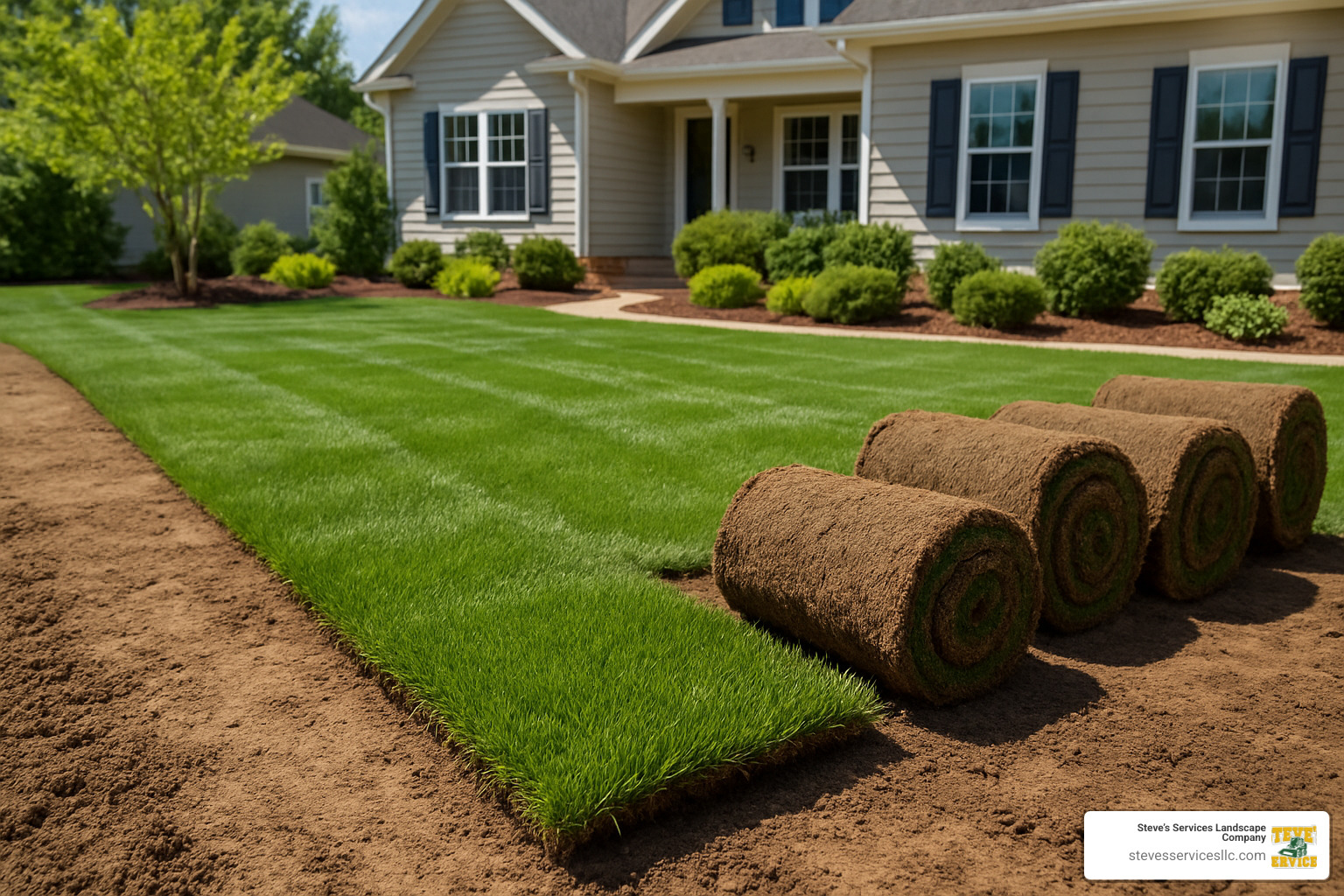
Sod installation provides mature turf grown at specialized farms, harvested with a thin layer of soil and root structure intact. This mature grass creates an instant seamless look that immediately transforms your landscape.
The heavy labor involved in sod installation shouldn’t be underestimated. Each roll weighs 35-50 pounds and must be installed within 24 hours of harvest to prevent deterioration. Proper soil preparation remains crucial – uneven ground creates air pockets that prevent root establishment.
Transplant shock affects newly installed sod, requiring intensive watering and careful monitoring during the first month. Root establishment takes 2-3 weeks, during which the sod remains vulnerable to damage from foot traffic or irregular watering.
High prices reflect the production costs, harvesting, transportation, and installation labor involved. Based on our research of national averages, sod costs range from $0.31-$2.50 per square foot, making it the most expensive lawn establishment method.
Pros & Cons of Sod
Immediate curb appeal represents sod’s primary advantage. New construction homes, real estate staging, and special events all benefit from instant green coverage that photographs beautifully from day one.
The mature root system acts as a natural weed barrier during establishment, preventing many annual weeds from gaining foothold. This built-in weed suppression reduces maintenance during the critical first growing season.
Limited variety selection constrains customization options. Sod farms typically grow only the most popular grass types for their region, eliminating specialty blends or drought-tolerant varieties that might better suit your specific conditions.
Transport logistics create timing pressures and potential quality issues. Sod must be installed immediately upon delivery, requiring careful coordination and potentially rushed installation that compromises results.
Cost, Timing & Environmental Impact Comparison
When Steve and I sit down with homeowners to discuss lawn installation options, the conversation almost always starts with three questions: “What will this cost me?” “How long will it take?” and “How much work will this be?”
Let’s be honest – these are exactly the right questions to ask. Your lawn installation method affects your wallet both upfront and for years to come. Traditional seeding might seem like a bargain at first glance, but factor in potential reseeding, extended watering costs, and the time investment, and those savings can evaporate quickly.
Grass seed hydroseeding hits that sweet spot many Massachusetts homeowners are looking for. Yes, you’ll pay more than basic seeding, but you’re buying speed, reliability, and peace of mind. When we hydroseed a lawn, we’re essentially giving your grass seed a protective cocoon that dramatically improves success rates.
Sod represents the “instant gratification” option. You’ll pay premium prices, but you’re essentially buying a mature lawn that someone else spent months growing. The catch? Those roots still need to establish in your soil, which means you’re not completely off the hook for intensive care.
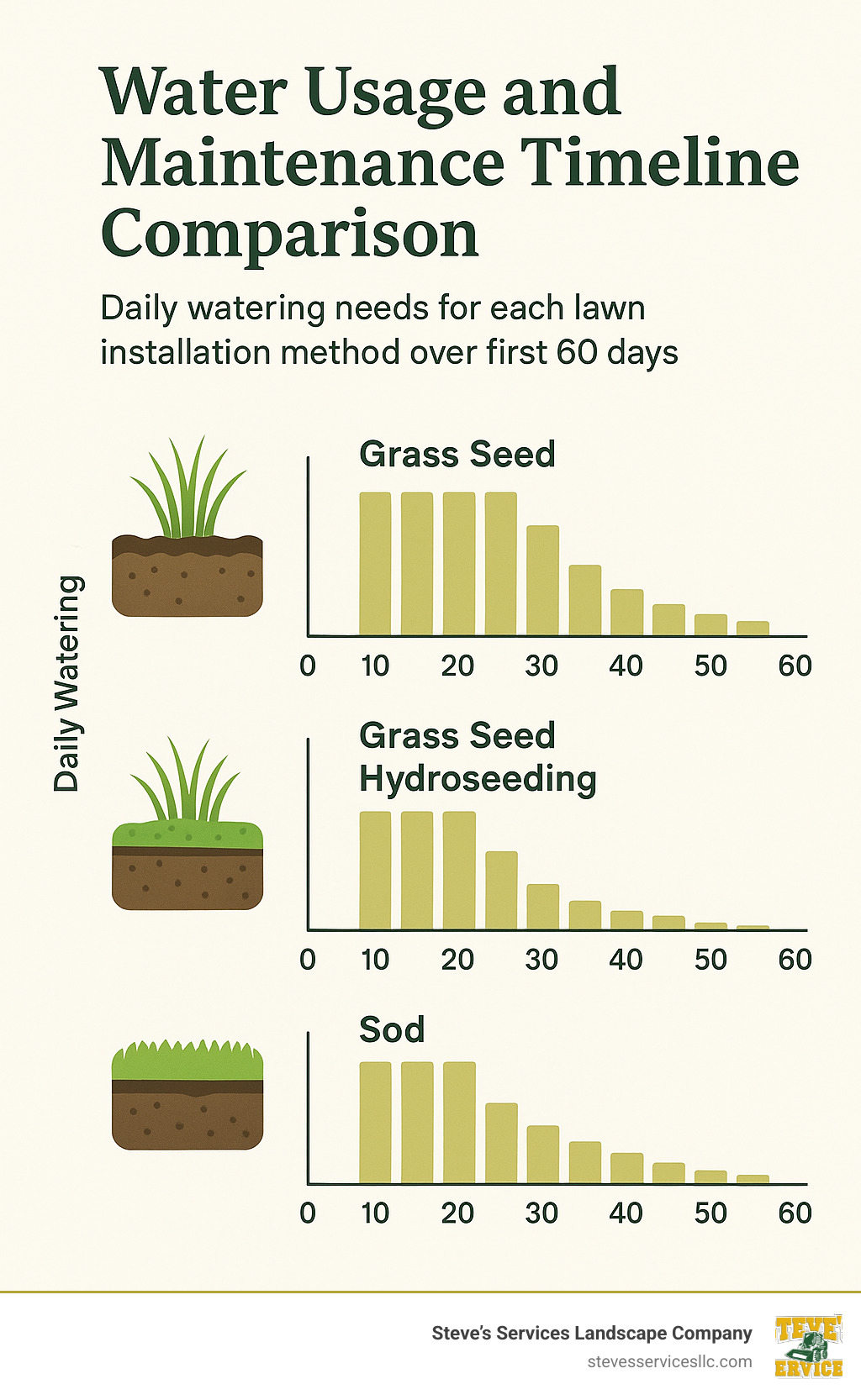
Water usage tells an interesting story that many homeowners overlook. Traditional seeding can keep you tied to daily watering for months, especially if germination is patchy and you need to reseed areas. Grass seed hydroseeding frontloads the water requirements – you’ll water intensively for about a month, then transition to normal lawn care. Sod demands heavy watering during those critical first weeks while roots establish, but the timeline is more predictable.
For detailed cost information specific to our hydroseeding services, visit Cost to Hydroseed.
Dollars & Days Breakdown
Here’s where the rubber meets the road. Traditional seeding costs just $0.02-$0.15 per square foot for materials, but that 14-42 day establishment period can stretch much longer if conditions aren’t perfect. I’ve seen homeowners end up reseeding twice because of bird damage or washout, which quickly erodes those initial savings.
Grass seed hydroseeding runs $0.06-$0.25 per square foot based on national averages we’ve researched, though actual costs vary significantly based on site conditions and seed selection. What you’re really buying is predictability – most lawns show green shoots within a week and achieve full establishment in 2-4 weeks.
Sod installation commands $0.31-$2.50 per square foot including materials and installation. That instant green carpet comes at a price that’s often 3-10 times higher than other methods. For a typical 5,000 square foot lawn, you’re looking at $1,500-$12,500 compared to $300-$1,250 for grass seed hydroseeding.
The maintenance equation changes everything. Traditional seeding demands the most ongoing attention – you’re essentially babying that lawn for an entire growing season. Grass seed hydroseeding requires intensive care for about a month, then transitions to normal lawn maintenance. Sod needs careful monitoring during establishment, but once those roots take hold, you’re managing a mature lawn.
Carbon footprint considerations matter more to homeowners these days. Sod requires significant fuel for transportation and has the highest environmental impact. Grass seed hydroseeding uses locally-sourced materials when possible and creates minimal transportation demands. Traditional seeding has the lowest environmental impact but may require multiple applications if initial attempts fail.
*Prices quoted are wide national averages sourced from publicly available internet data and do not represent actual quotes from Steve’s Services Landscape Company.
Choosing the Right Method for Your Yard
Every yard tells a different story, and the best lawn installation method depends on reading those unique details correctly. After helping hundreds of Massachusetts homeowners transform their properties, I’ve learned that success comes from matching the method to your specific situation rather than choosing based on price alone.
Yard size makes a huge difference in what makes sense financially. If you’re working with a small area under 1,000 square feet, traditional seeding often wins because bringing in hydroseeding equipment for a tiny patch doesn’t make economic sense. But once you hit that sweet spot of 1,000-10,000 square feet, grass seed hydroseeding really shines – you get professional results without the premium price tag of sod.
Large properties present interesting choices. While sod creates dramatic instant impact, the costs can be eye-watering when you’re covering acres. That’s where grass seed hydroseeding proves its worth, delivering reliable results across large areas without breaking the bank.
Slope angle often makes the decision for you. I’ve seen too many traditional seeding projects on slopes turn into expensive lessons about gravity and erosion. Anything steeper than 15 degrees pretty much eliminates broadcast seeding as an option. Grass seed hydroseeding handles slopes up to 45 degrees beautifully – the tackifiers in the slurry keep everything in place while the mulch prevents washout.
Sod installation on steep terrain? Possible, but you’ll pay dearly for the extra labor and potential waste from pieces that don’t stay put.
Shade versus sun exposure affects more than just grass selection. Dense shade areas really benefit from the custom seed blends we can create with hydroseeding. We might emphasize fine fescue varieties that actually prefer shade, something you can’t do with the limited sod options available.
Soil testing reveals the hidden story beneath your feet. Compacted clay soil, pH problems, or nutrient deficiencies all influence which method will succeed. Poor soils actually benefit from the soil amendments and organic matter included in grass seed hydroseeding slurry, while healthy, well-prepared soil supports any establishment method.
Erosion risk can’t be ignored, especially here in Massachusetts where spring rains can be intense. If your property has any drainage issues or runoff concerns, the immediate protection provided by hydroseeding’s mulch blanket becomes invaluable.
For detailed guidance on getting your soil ready, check out How to Prepare Lawn for Hydroseeding.
Climate & Grass Type Match
Living in Massachusetts means dealing with USDA zones 5-7, where our grass needs to handle everything from humid summers to harsh winters. Cool-season varieties are non-negotiable here, but the specific blend makes all the difference.
Custom blending represents one of grass seed hydroseeding‘s biggest advantages. Instead of settling for whatever single variety the sod farm grows, we can create mixes custom to your exact conditions. A typical blend might include Kentucky bluegrass for that thick, lush look, perennial ryegrass for quick establishment and durability, and fine fescue for shade tolerance and drought resistance.
Cool-season mixes perform dramatically better than single varieties in our challenging New England climate. When one grass type struggles during a particular weather pattern, the other varieties in the blend keep your lawn looking good. It’s like having insurance built right into your grass selection.
Drought tolerance has become increasingly important as we face more frequent dry spells and potential water restrictions. With hydroseeding, we can emphasize water-efficient varieties without sacrificing appearance. Tall fescue blends, for example, develop deep root systems that access moisture other grasses can’t reach.
The timing flexibility of grass seed hydroseeding also helps with our unpredictable spring weather. The protective mulch blanket shields young grass from late frosts that could devastate traditional seeding or stress newly installed sod.
Timeline & Lifestyle Considerations
Real life doesn’t always wait for the perfect lawn installation schedule. Children’s play needs and pet traffic create immediate pressure that influences both method selection and timing. I’ve worked with families who chose sod despite the higher cost because they needed their kids and dogs to have yard access quickly.
But here’s something interesting – while sod provides instant green, it’s actually more fragile during establishment than many people realize. Those first few weeks require careful monitoring and restricted use. Grass seed hydroseeding takes a bit longer to establish but often creates more durable lawns in the long run.
Event deadlines drive many decisions. Wedding receptions, graduation parties, or real estate showings create non-negotiable timelines. Sod delivers for these situations, but if you have 6-8 weeks to work with, grass seed hydroseeding can achieve beautiful results at a fraction of the cost.
Long-term care preferences matter more than most homeowners initially consider. Seeded lawns, whether traditional or hydroseeded, develop deeper root systems because they grow in place from day one. This creates more drought-resistant, low-maintenance lawns over time. Sod, while providing instant gratification, sometimes develops shallow root systems that require more ongoing irrigation and care.
The foot traffic timeline for grass seed hydroseeding requires patience – you’ll need to wait 3-5 weeks before regular use. But families who can manage this waiting period often end up with more resilient lawns that better handle the chaos of active households.
For complete post-installation care guidance that ensures your investment pays off, visit How to Care for a Hydroseeded Lawn.
Frequently Asked Questions about Lawn Installation
How soon can I mow or walk on a hydroseeded lawn?
Your new grass seed hydroseeded lawn needs time to develop strong roots before it can handle foot traffic or mowing. Think of those first few weeks like a newborn – everything looks great on the surface, but the important development is happening underground where you can’t see it.
Mowing becomes safe after about 4 weeks when your grass reaches 3-4 inches in height. I always tell my clients to wait until they can barely resist the urge to cut it – that’s usually the perfect timing. When you do take that first cut, only remove one-third of the blade length. Going shorter stresses those young plants just when they’re working hardest to establish.
Foot traffic should stay minimal for 3-5 weeks to give roots time to anchor properly. I know it’s tempting to walk across your beautiful new lawn, but those extra few weeks of patience pay off with decades of durability.
Heavy-use areas where kids play or dogs run need even more time – about 6-8 weeks before returning to normal activity levels. The good news is the protective mulch blanket gives you visual cues. When it starts breaking down and grass clearly dominates what you see, your lawn can handle light traffic.
For detailed guidance on timing that first cut perfectly, check out Mowing Hydroseeded Lawn.
Will weeds invade my new lawn?
This question keeps many homeowners awake at night, but the reality is more encouraging than you might expect. Grass seed hydroseeding uses seed with 98% purity according to industry standards, so weed contamination from the seed itself stays minimal.
The real challenge comes from your existing soil, which contains what we call a “seedbank” – dormant weed seeds that have been waiting for the right conditions to sprout. When you prepare soil and add water for your new grass, some of these hitchhikers wake up too.
Here’s the good news: proper fertilizing and consistent watering favor grass growth over most weeds. Your grass seed gets a head start with the nutrients in the hydroseeding slurry, while weeds have to fend for themselves. The thick mulch blanket also acts like a security guard, suppressing many annual weeds during those critical first weeks.
The best long-term weed control comes from growing thick, healthy grass that naturally crowds out unwanted plants. Dense lawns win the competition for space, nutrients, and sunlight – leaving weeds with nowhere to establish.
If you notice patchy areas developing that might welcome weeds, visit Hydroseeded Lawn Patchy? for troubleshooting tips.
What’s the best season to install each method?
In Massachusetts, spring and fall are your golden windows for lawn installation. These seasons offer moderate temperatures and typically reliable rainfall that reduce stress on new grass while promoting steady, healthy growth.
Summer installations require serious commitment, especially with sod. The mature root system in sod makes it particularly vulnerable to transplant shock during hot weather. If you absolutely must install during summer heat, expect your water bill to reflect the intensive irrigation needs.
Grass seed hydroseeding handles late-season timing better than traditional seeding because the protective mulch provides some cold protection. Still, frost risk makes very late fall installations risky for any seeded method.
Traditional seeding becomes nearly impossible once frost threatens because exposed seeds have no protection from temperature swings that can kill germination.
The watering demands peak during summer installations regardless of which method you choose. That’s why most experienced homeowners target spring and early fall – you get better results with less work and lower water costs. Mother Nature does most of the watering for you during these ideal seasons.
Conclusion
Choosing the right lawn installation method doesn’t have to feel overwhelming when you understand the trade-offs. Grass seed hydroseeding consistently delivers the best balance of speed, cost, and reliability for most Massachusetts properties – giving you faster results than traditional seeding while costing significantly less than sod installation.
The decision matrix really comes down to your priorities. If you need instant gratification and have the budget for it, sod provides immediate results. If you’re working with tight finances and can wait patiently, traditional seeding gets the job done economically. But if you want reliable, relatively fast results at a reasonable price, grass seed hydroseeding hits that sweet spot perfectly.
Beyond the immediate benefits, hydroseeding offers impressive sustainability advantages that keep giving back over time. The reduced water needs after establishment save money on utility bills, while the decomposing organic mulch continues improving your soil health for years. The erosion control benefits protect not just your property but also local waterways – something we take seriously here in Massachusetts.
After 25+ years of helping homeowners across Burlington, Danvers, Everett, Lynnfield, Medford, Melrose, North Reading, Reading, Revere, Saugus, Stoneham, Winchester, Woburn, Malden, and Wakefield, I’ve seen how the right installation method transforms both properties and peace of mind. New England’s unpredictable weather and challenging soil conditions require expertise that comes from local experience.
At Steve’s Services Landscape Company, we don’t just apply grass seed hydroseeding – we customize seed blends specifically for your property’s unique conditions. Whether you’re dealing with steep slopes, shady areas, heavy clay soil, or high-traffic zones, we’ve solved similar challenges countless times throughout our Massachusetts communities.
Ready to get started on your lawn change? Our team provides honest consultations that help you make the smartest choice for your specific situation and budget. We’ll walk your property, assess your soil conditions, and recommend the installation method that makes the most sense for your timeline and goals.
For comprehensive information about our hydroseeding services and to schedule your consultation, visit More info about hydroseeding services. Let’s create the lawn you’ve been dreaming about – with results that will make your neighbors wonder what your secret is.
