How much does it cost to winterize sprinkler system #1
Why Professional Sprinkler Winterization is a Smart Investment
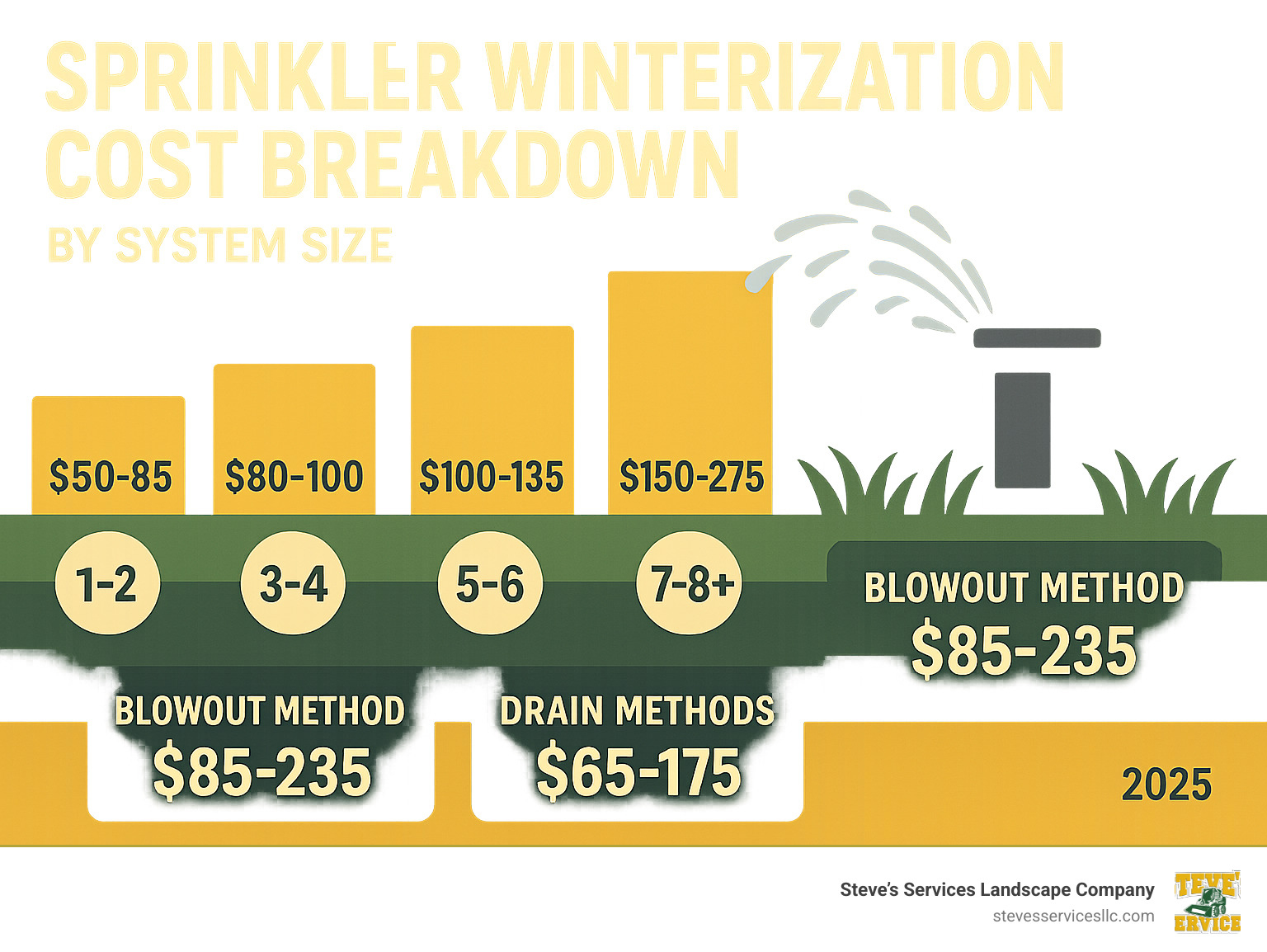
How much does it cost to winterize sprinkler system services ranges from $56 to $275 nationwide, with most homeowners paying between $90 and $150 for professional service. The final cost depends on your system size, number of zones, and winterization method used.
Quick Cost Breakdown:
- Average Cost: $90-$150
- Small Systems (1-2 zones): $50-$85
- Medium Systems (3-4 zones): $80-$100
- Large Systems (5-6 zones): $100-$135
- Extra Large Systems (7-8+ zones): $150-$275
- Blowout Method: $85-$235
- Manual/Automatic Drain: $65-$175
Note: These are average costs based on internet data and not actual costs for Steve’s Services.
Winter in Massachusetts can be brutal on irrigation systems. When water freezes in your sprinkler lines, it expands and can crack pipes, damage valves, and destroy sprinkler heads. What starts as a $100 winterization service can become thousands in spring repairs if you skip this critical maintenance.
As Steve Sylva, owner of Steve’s Services with over 25 years of landscape experience in the Boston area, I’ve seen too many homeowners learn the hard way about how much does it cost to winterize sprinkler system repairs versus prevention. Understanding winterization costs upfront helps you make smart decisions about protecting your irrigation investment.
How much does it cost to winterize sprinkler system terms made easy:
- how much does a water sprinkler system cost
- sprinkler backflow preventer replacement cost
- water sprinkler repair cost
How Much Does It Cost to Winterize a Sprinkler System Professionally?
When fall leaves start dropping and you’re wondering how much does it cost to winterize sprinkler system professionally, you’re asking the right question at the right time. Getting ahead of winter’s freeze is one of the smartest moves you can make as a homeowner with an irrigation system.
Based on national averages from across the country, most homeowners pay between $90 and $150 for professional sprinkler winterization. But here’s the thing – costs can swing pretty wide depending on your specific situation. You might pay as little as $45 for a tiny, simple system, or you could see bills reaching $400 or more for large, complex setups with lots of zones.
These are average costs based on internet data and not actual costs for Steve’s Services.
The typical sweet spot falls between $60 and $120 for most residential systems. Some industry sources put the national average around $93, with a common range of $56 to $137. Others report an average closer to $78, typically ranging from $60 to $95 per visit.
You might see some companies quote by square footage – usually $0.01 to $1.50 per square foot – but most pros (including our team) prefer charging by the number of watering zones. Why? Because it’s really about the system complexity, not just yard size. A compact property might have eight zones with fancy features, while a huge lawn might only need three simple zones.
Labor costs factor into your final bill too. Most landscaping companies charge between $75 and $150 for winterization services. If you go with a plumber instead, expect rates from $40 to $200, though they’re often on the higher end since their training covers more than just irrigation systems.
Think of professional winterization as insurance for your sprinkler system. It’s a small investment now that protects you from potentially massive repair bills come spring.
More info about our irrigation services
How does the number of zones affect how much it costs to winterize a sprinkler system?
Here’s where things get interesting – and where your bill starts making more sense. Each zone in your sprinkler system needs individual attention during winterization. More zones mean more time, more connections to check, and generally a more complex system overall.
The zone count is honestly the biggest factor in determining how much does it cost to winterize sprinkler system services will run you. Each zone requires the technician to activate it separately, blow out all the water, and make sure everything’s properly drained.
| Number of Zones | Average Cost Range (National) |
|---|---|
| 1-2 Zones | $50 – $85 |
| 3-4 Zones | $80 – $100 |
| 5-6 Zones | $100 – $135 |
| 7-8 Zones | $150 – $250 |
| 9-12 Zones | $150 – $275 |
| Each Additional Zone (over 6-12) | +$5 – $10 |
If you’ve got a 3-4 zone system, you’re looking at around $100 for a complete blowout and inspection. But if your property has 7 or 8 zones, that price jumps to around $250 because of the extra work involved.
Many companies add $5 to $10 per additional zone once you get past their base package. Some might charge an extra $8 per zone if you have more than six zones total. This tiered pricing isn’t companies trying to squeeze more money out of you – it genuinely reflects the time and effort needed to properly protect larger, more intricate systems.
The good news? Once you know your zone count, pricing becomes pretty predictable year after year.
How much does it cost to winterize a sprinkler system with different draining methods?
Not all winterization methods are created equal, and the approach your pro uses definitely affects both cost and effectiveness. Let’s break down the main methods you’ll encounter.
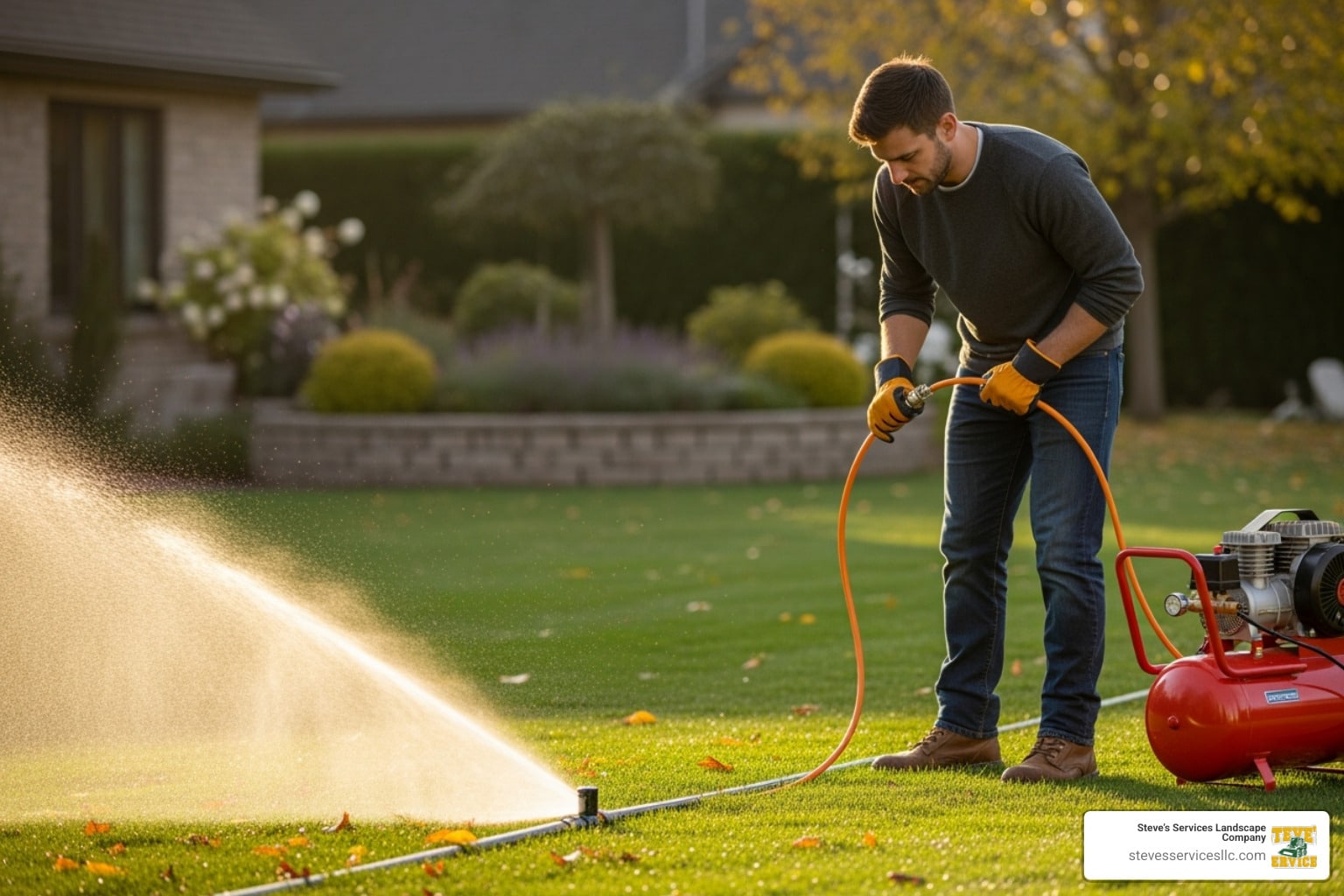
The blowout method is the gold standard – and what we strongly recommend even if your system has other draining options. This involves using a powerful air compressor to force every drop of water out of your sprinkler lines, heads, and valves. Professional blowout services typically cost $85 to $235, and here’s why it’s worth every penny.
Even if your system has manual or automatic drain valves, tiny amounts of water can still hide in low spots within your pipes. When that water freezes, it expands and creates micro-cracks or full ruptures that’ll cost you big money come spring. The blowout method gives you complete peace of mind that your system is bone dry.
Compressed air requirements matter here. Professionals use air compressors delivering serious power – usually 80 to 100 CFM (cubic feet per minute) – to quickly and thoroughly clear each zone. The air gets blown through at 50 to 80 PSI (pounds per square inch), which is enough pressure to push out even stubborn water pockets.
Manual drain methods rely on gravity and drain valves at the lowest points of your piping. If a pro handles this type of winterization, you’re looking at $65 to $150. The catch? It depends on perfect pipe slopes and proper drainage, which isn’t always reality in the real world.
Automatic drain systems have built-in valves that open when system pressure drops. Professional service for these systems runs $75 to $175, mainly involving checking that the valves work correctly. But even with automatic drains, most pros recommend a blowout anyway – especially here in Massachusetts where winters can be brutal.
Bottom line: the blowout method costs a bit more upfront but offers the best protection for your irrigation investment.
More info about our landscape maintenance
Key Factors That Influence Sprinkler Winterization Prices
Understanding how much does it cost to winterize sprinkler system services goes beyond just counting zones and choosing methods. Several key factors can bump up your final bill or help you save money if you plan ahead.
Yard size plays a bigger role than you might think. While we charge primarily by zones, larger properties typically have more extensive irrigation systems with additional zones. A cozy 5,000 square foot yard might only need $50 worth of winterization, but sprawling 20,000 square foot properties can easily hit $200 or more simply because they require more zones to keep everything green.
System accessibility can make or break your technician’s day – and your wallet. If your main shut-off valve is buried behind overgrown shrubs, tucked away in a cramped crawl space, or hidden under a pile of fall leaves, expect to pay extra. Clear, easy access to all system components keeps labor time down and costs reasonable.
Your geographic location significantly impacts pricing. Here in Massachusetts, especially in communities like Burlington, Winchester, and Woburn where we work, labor rates reflect our higher cost of living compared to rural areas. Local demand and competition also influence what you’ll pay for professional winterization services.
Timing is everything when it comes to getting the best deal. Schedule your winterization in early fall, and you might snag early bird pricing or avoid the rush. Wait until that first hard freeze warning hits the weather forecast, and you could face emergency service fees as companies scramble to help panicked homeowners protect their systems.
Emergency service fees are exactly what they sound like – expensive. When you call us in a panic because temperatures are dropping fast and you forgot to winterize, those after-hours or rush fees can easily double your costs. Planning ahead always pays off.
Smart homeowners often save money through service packages and annual maintenance plans. Bundling your winterization with spring activation, system tune-ups, or other seasonal services typically costs less than scheduling everything separately. Annual maintenance plans, ranging from $140 to $400 nationally, offer priority scheduling, discounted repairs, and peace of mind knowing your system gets regular professional attention.
More info about our fall clean-up services
The Hidden Costs of Skipping Winterization
Skipping professional winterization is like playing Russian roulette with your irrigation system – and your wallet always loses. After 25 years in the landscape business around Boston, I’ve seen too many homeowners learn this lesson the hard way.
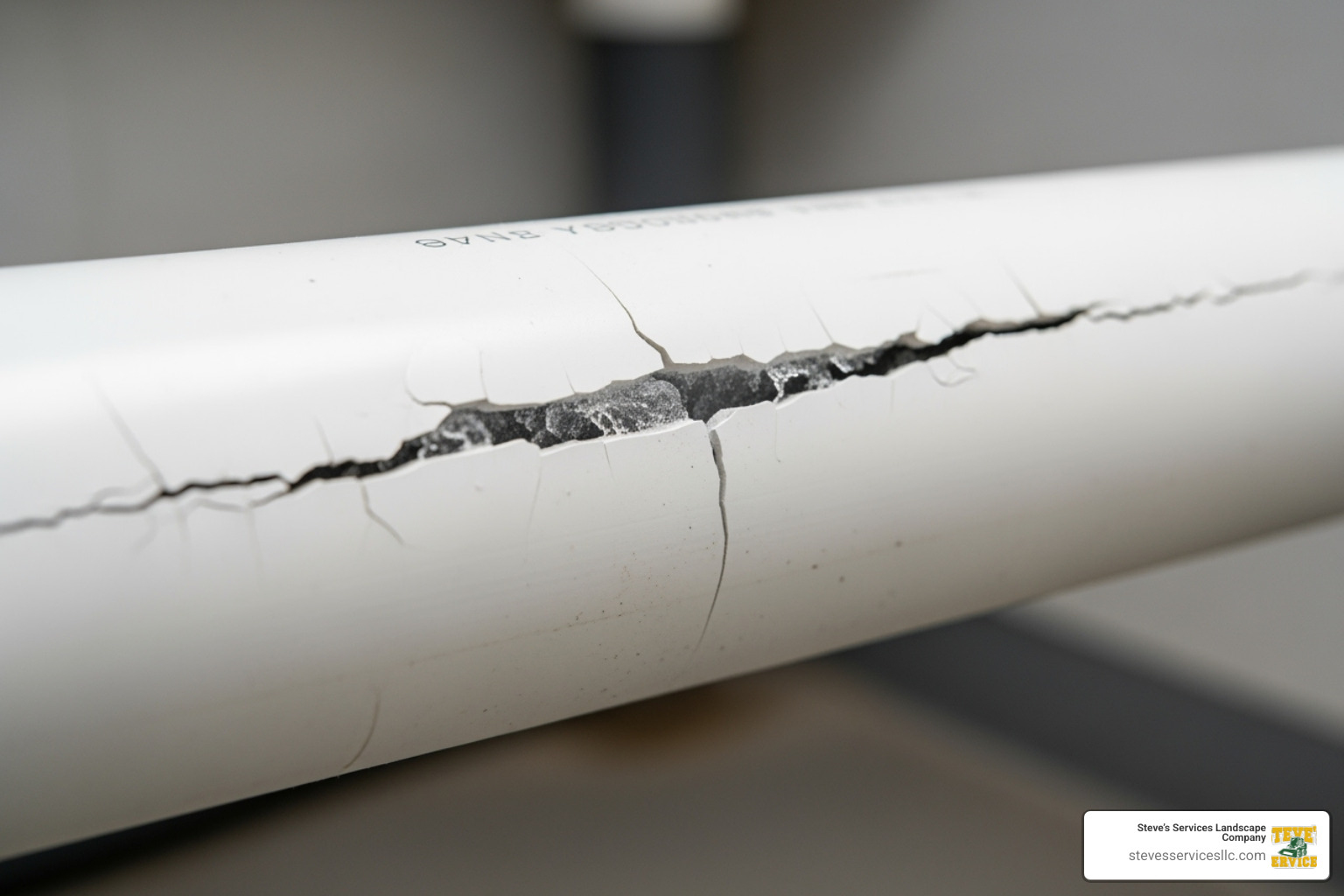
When water freezes, it expands with tremendous force – enough to crack even the toughest PVC pipes and destroy expensive system components. What seemed like a smart way to save $100 in the fall becomes a nightmare of costly repairs come spring.
Potential repair costs for freeze damage typically range from $110 to $365 nationally, but extensive damage can skyrocket these numbers. Broken pipes are often the first casualty, costing $150 to $350 per damaged section plus $1 to $3 per linear foot for replacement PVC. That’s just for one section – imagine if multiple areas freeze and crack.
Damaged sprinkler heads might seem minor, but they add up fast. Each replacement head costs $55 to $95 for installation, with the parts themselves running $6 to $13. When a hard freeze takes out half your heads, you’re looking at hundreds in repairs.
Valve replacement costs between $69 to $320 per valve when freeze damage strikes these critical flow-control components. Even more expensive is backflow preventer repair, which can hit $650 or more, with full replacement ranging from $455 to $1,660.
The scariest cost is water damage risk. A burst main line doesn’t just affect your sprinkler system – it can flood your lawn, damage landscaping, and even threaten your home’s foundation. These restoration costs can reach thousands of dollars, making that skipped winterization look pretty foolish.
In worst-case scenarios, replacing an entire freeze-damaged sprinkler system costs between $1,800 and $5,200. Suddenly, professional winterization seems like the bargain of the century.
The high cost of sprinkler repairs
Add-On Services and Related Costs
Smart homeowners often bundle their sprinkler winterization with other essential seasonal services. This approach saves money through package deals while ensuring your entire landscape gets the care it needs heading into winter and beyond.
Spring activation is the natural bookend to winterization, costing $45 to $150 nationally. This service involves turning your water back on, checking for winter damage, testing all zones, and fine-tuning the system for another growing season. Many companies offer discounts when you book both fall winterization and spring activation together.
Sprinkler system tune-ups during spring activation make perfect sense, typically costing $75 to $180. This involves inspecting and adjusting sprinkler heads, clearing clogs, and ensuring optimal water distribution. Regular tune-ups catch small problems before they become expensive repairs.
Backflow testing is legally required in many Massachusetts communities we serve. This specialized service costs $60 to $150 on average and ensures your drinking water stays safe from contamination. Some companies offer discounts when you bundle this with other irrigation services.
Fall is also prime time for lawn care services that complement winterization. Lawn aeration costs $100 to $350 nationally and creates small holes in your soil, allowing water and nutrients to reach grass roots more effectively before winter dormancy sets in.
Dethatching removes the layer of dead grass and organic matter that can prevent water from reaching soil. At $160 to $225 on average (or about $190 per hour), this service pairs perfectly with aeration for maximum lawn health benefits.
Overseeding fills in bare spots and improves grass density, typically costing $0.04 to $0.18 per square foot or averaging $1,085 for typical lawns. When combined with aeration and dethatching, overseeding gives your lawn the best chance to thrive next spring.
Note: These are average costs based on internet data and not actual costs for Steve’s Services.
More info about our spring yard clean-ups
Frequently Asked Questions about Sprinkler Winterization
Over the years, we’ve heard just about every sprinkler winterization question imaginable! Whether you’re a first-time homeowner or just new to having an irrigation system, these are the questions that come up most often when people are wondering how much does it cost to winterize sprinkler system services and what’s involved.
When is the best time to winterize a sprinkler system?
The short answer? Before the first hard freeze hits your area. But let me explain what that really means and why timing matters so much.
A hard freeze happens when temperatures drop to 32°F or below and stay there for several hours straight. This gives the cold enough time to penetrate the ground and reach your underground pipes. Once that happens, any water left in your system becomes a ticking time bomb.
Here in Massachusetts, we know how quickly winter can sneak up on us. One day you’re enjoying a beautiful October afternoon, and the next morning there’s frost on your windshield. That’s why the ideal time for winterization is during the late fall, typically between mid-October and early November in our area.
Of course, regional climate differences play a huge role in timing. If you’re in a warmer climate, you might have until late November or even December. But if you’re dealing with New England weather like we are, don’t push your luck!
Here’s my best advice: schedule in advance. Don’t wait until the weather forecast shows freezing temperatures. By then, every landscape company in town is booked solid with panicked homeowners trying to squeeze in last-minute appointments. Plus, scheduling early often means better pricing and more flexible appointment times.
What is included in a typical professional winterization service?
When you hire professionals for winterization, you’re getting much more than someone just blowing air through your pipes. It’s a systematic process designed to protect every component of your irrigation system.
Shutting off the water supply is always the first step. We locate your main irrigation shut-off valve and completely turn off water flow to the system. This prevents any new water from entering while we’re working.
Next comes draining the backflow preventer. This critical component protects your home’s drinking water from contamination, but it’s also one of the most expensive parts to replace if it freezes. We carefully drain it and often add insulation for extra protection.
The heart of the service is blowing out all zones with compressed air. Using powerful compressors that deliver the right pressure (usually 50-80 PSI), we systematically work through each zone of your system. This forces every drop of water out of pipes, sprinkler heads, and valves. It’s not just about pushing air through – it’s about doing it safely without damaging your pipes.
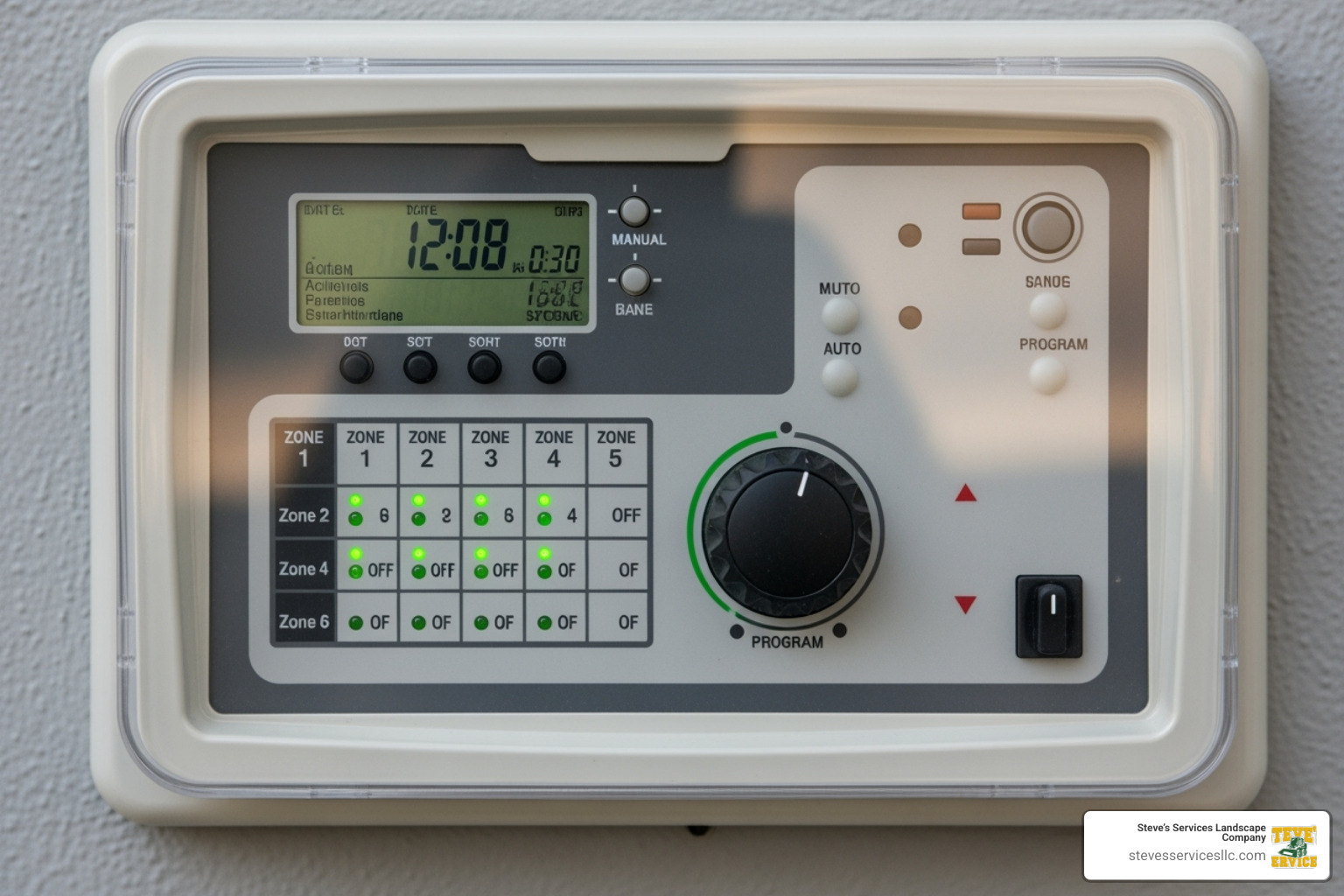
Shutting down the controller ensures your system won’t accidentally try to run during winter months. We’ll either turn it completely off or set it to “rain mode,” depending on your system type.
Finally, we provide a system inspection report. While we’re working on your system, we keep an eye out for any visible issues, leaks, or worn components that might need attention come spring. It’s like getting a mini health check for your irrigation system.
Will my sprinklers freeze at 32 degrees?
Yes, absolutely! This is one of those questions where I wish the answer was different, but water freezes at exactly 32°F, and your sprinkler system is no exception.
When water freezes, it expands with tremendous force – enough to crack pipes, split valves, and destroy sprinkler heads. Even a single night of freezing temperatures can cause damage if there’s water trapped anywhere in your system.
The tricky part is that soil temperature matters too. Your underground pipes might stay warmer than the air temperature for a while if the ground hasn’t frozen yet. But exposed components like backflow preventers, above-ground pipes, and sprinkler heads? They’re at risk the moment temperatures drop below freezing.
Here’s what really gets homeowners into trouble: even tiny amounts of water left behind can cause big problems. That little bit of water sitting in a low spot of your pipes will expand when it freezes, potentially causing a crack that you won’t find until spring startup. Then what seemed like money saved on winterization becomes hundreds or thousands in repair costs.
This is exactly why professional winterization is so important in climates like ours. We don’t just remove most of the water – we remove ALL of it. That complete peace of mind is worth every penny when you consider the alternative.
Protect Your System with Professional Winterization

When you look at that beautiful green lawn in your yard, it’s hard to imagine the intricate system working beneath the surface to keep it thriving. Your sprinkler system is a significant investment – one that deserves protection from winter’s harsh grip.
Throughout this guide, we’ve explored how much does it cost to winterize sprinkler system professionally, and the numbers tell a clear story. With average costs ranging from $90 to $150 nationally, professional winterization is one of the smartest investments you can make as a homeowner. Compare that modest expense to the potential $1,800 to $5,200 it could cost to replace an entire system damaged by freezing, and the choice becomes obvious.
Professional service brings invaluable peace of mind. When you work with experienced professionals like our team at Steve’s Services, you’re not just paying for a service – you’re investing in expertise. We’ve spent over 25 years serving communities throughout Massachusetts, from Everett to Winchester, and we’ve seen what happens when homeowners try to cut corners on winterization.
The value of professional service extends beyond just the technical work. Our skilled technicians use commercial-grade equipment that delivers the right CFM and pressure to thoroughly clear your lines. We understand the unique challenges that Massachusetts winters present, and we know how to protect your system accordingly.
Avoiding costly spring repairs is perhaps the most compelling reason to invest in professional winterization. We’ve helped countless homeowners who learned the hard way that skipping this service can lead to thousands in unexpected repair bills. Cracked pipes, damaged valves, and ruined sprinkler heads are expensive surprises no one wants to find when spring arrives.
At Steve’s Services, our comprehensive approach and personalized solutions ensure your system receives the attention it deserves. We don’t just blow air through your lines and call it done. We provide thorough service that includes proper system shutdown, complete water removal, and a basic inspection to identify any potential issues before they become problems.
Don’t let a mild fall fool you into thinking you can skip this crucial maintenance. Winter can arrive suddenly in our area, and when it does, you’ll rest easy knowing your irrigation investment is protected.
Contact us for your sprinkler system needs