How to Install a New Lawn: Top 5 Easy Steps in 2024
Benefits of Installing a New Lawn
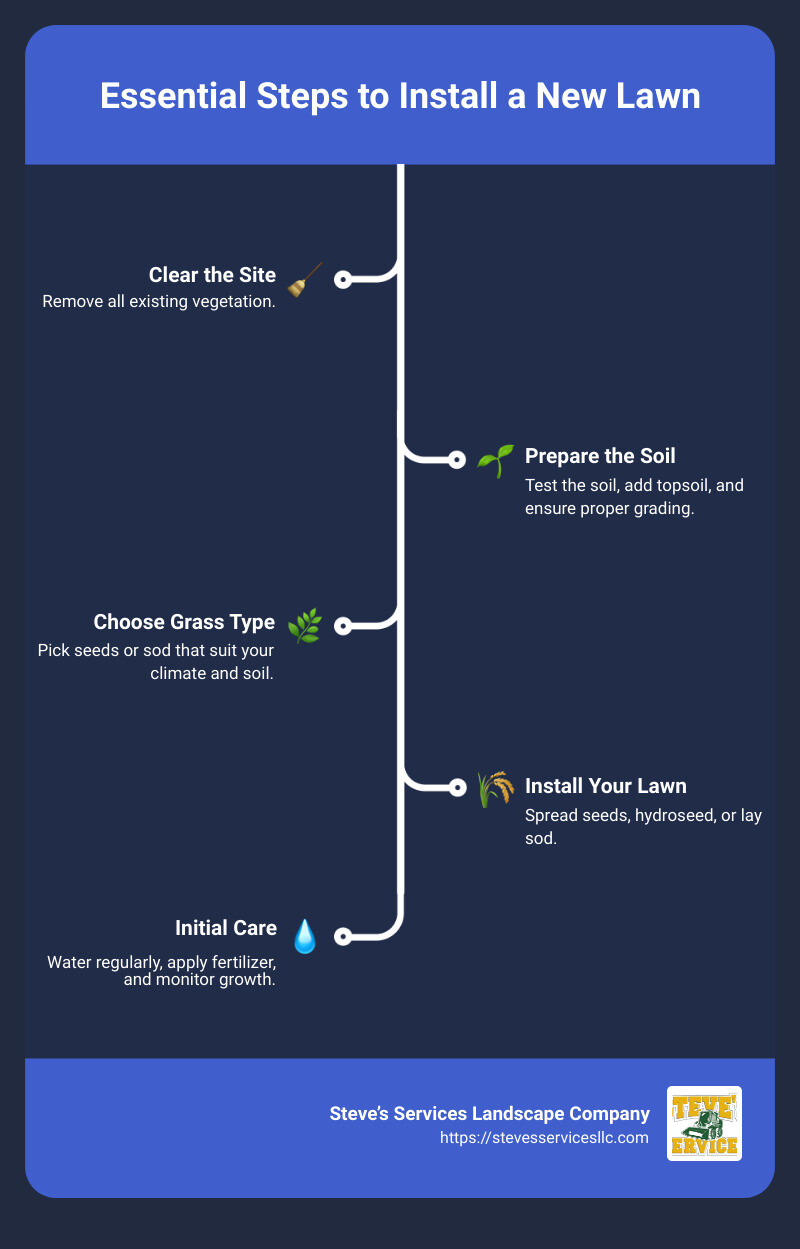
How to install a new lawn is a common question for homeowners and property managers who want a green, welcoming outdoor space. Here is a quick overview of the essential steps for installing a new lawn:
- Clear the Site: Remove all existing vegetation.
- Prepare the Soil: Test the soil, add topsoil, and ensure proper grading.
- Choose Grass Type: Pick seeds or sod that suit your climate and soil.
- Install Your Lawn: Spread seeds, hydroseed, or lay sod.
- Initial Care: Water regularly, apply fertilizer, and monitor growth.
A new lawn transforms your property, boosting its curb appeal, providing a recreational space, and enhancing environmental health.
I’m Steve Sylva, with over 25 years of experience in lawn care. I’ve helped countless clients learn how to install a new lawn and maintain it for optimal growth.
Preparing for Your New Lawn Installation
Site Clearance
Before you start planting, the first step is to clear the site. Use a sharp shovel to remove any existing grass or weeds. For larger areas, renting a sod cutter can speed up the process. Remove all debris, rocks, and roots to ensure a smooth surface. This step is essential to prevent any old vegetation from interfering with your new lawn.
Soil Testing
Testing your soil is crucial for understanding its pH and nutrient levels. You can either get your soil analyzed by your county’s cooperative extension service or use a DIY soil test kit. The ideal soil pH for most grasses is between 6.0 and 7.0. If your soil is too acidic (pH under 6.0), add ground limestone. If it’s too alkaline (pH over 7.0), add compost, composted manure, or sulfur.
Soil Preparation
Once your soil is tested and you know what amendments are needed, it’s time to prepare the soil. Use a tiller to break up compacted soil and mix in any necessary amendments. Your goal is to achieve soil particles about the size of peas or marbles. This creates a welcoming environment for new grass seeds.
- Topsoil and Compost: Avoid bringing in new topsoil, as it may contain weed seeds. Instead, improve soil quality by mixing in compost or specialized lawn soil like Scotts® Turf Builder® Lawn Soil™.
- Leveling: Use a bow rake to even out the surface. Remove any remaining rocks or debris and fill in low spots to create a smooth, level area for your new lawn.
Optimal Planting Times
Timing is key when it comes to planting a new lawn. For cool-season grasses like Kentucky bluegrass, perennial ryegrass, or tall fescue, the best time to plant is in spring or early fall. Warm-season grasses such as zoysia, centipede, or bermudagrass should be planted in early summer when the soil is warm.
By following these steps, you’ll set a strong foundation for a lush, healthy lawn. Next, we’ll dive into the different methods for installing your new lawn, whether you choose seeding, hydroseeding, or sod installation.
How to Install a New Lawn
Choosing the Right Type of Grass
Choosing the right type of grass is crucial. It sets the stage for a successful lawn.
Cool-season grasses like Kentucky bluegrass, perennial ryegrass, and tall fescue thrive in cooler temperatures. The best time to plant them is in spring or early fall. These grasses are perfect for regions with cold winters and moderate summers.
Warm-season grasses such as zoysia, centipede, and bermudagrass need warm soil to germinate. Plant these in early summer for the best results. They are ideal for areas with hot summers and mild winters.
If you’re unsure which grass type suits your area, use a Grass Seed Identifier to match the grass type to your local conditions.
Soil Preparation Techniques
Proper soil preparation is the backbone of a healthy lawn. Follow these steps to get your soil ready:
- Topsoil: Adding a layer of quality topsoil can significantly improve soil structure. Aim for 2-3 inches of topsoil to create a nutrient-rich base.
- Compost: Mix in compost to enhance soil fertility. Compost adds organic matter, improves soil texture, and boosts microbial activity.
- pH Balancing: Test your soil’s pH. Most grasses prefer a pH between 6.0 and 7.0. If your soil is too acidic (pH under 6.0), add ground limestone. If too alkaline (pH over 7.0), add compost or sulfur. Always follow product instructions for best results.
- Fertilizers: Use a starter fertilizer to give your grass a nutrient boost. A slow-release fertilizer like 18-24-12 is ideal. It provides essential nutrients to help young grass establish strong roots.
Lawn Seeding Methods
There are three main methods to plant a new lawn: traditional seeding, hydroseeding, and sod installation. Each has its pros and cons.
Traditional Seeding
- Preparation: Prepare the soil as mentioned above. Use a broadcast spreader to evenly distribute the seed.
- Raking: Lightly rake the soil to ensure good seed-to-soil contact. Be careful not to bury the seeds deeper than 1/8 of an inch.
- Topdressing: Scatter a light layer of straw over the seeds. This keeps them warm, retains moisture, and protects from birds.
- Watering: Water regularly to keep the soil moist. Depending on the weather, you may need to water up to 20 minutes three times a day until the seeds germinate.
Hydroseeding
- Preparation: Follow the same soil preparation steps as traditional seeding.
- Mixing: Add seeds, papery mulch, water, and fertilizer to the hydroseeder tank. The agitator inside the tank mixes everything.
- Spraying: Spray the mixture evenly over the prepared soil.
- Advantages: Hydroseeding covers large areas quickly and the mulch helps seeds germinate better.
Sod Installation
- Preparation: Prepare the soil as above.
- Laying Sod: Lay the sod pieces tightly together, much like installing a hardwood floor. Make sure the roots are in good contact with the soil.
- Sod Rollers: Use a sod roller to press the sod into the soil. This step is optional but can help with root contact.
- Watering: Water the sod frequently. You may need to water up to 20 minutes three times a day for the first two weeks.
By choosing the right method and following these steps, you’ll set the stage for a lush, healthy lawn.

Next, we’ll explore the best practices for new lawn care, from watering guidelines to mowing tips.
Best Practices for New Lawn Care
Watering Guidelines
Watering is crucial for a new lawn. For the first few weeks, keep the top inch of soil consistently moist. Water lightly but frequently, about three to four times a day for 10 minutes each session. This helps seeds germinate and sod to establish roots.
Once the grass starts to grow, reduce the frequency but increase the duration. Aim to water deeply twice a week, soaking the soil to about 6-8 inches. This encourages deep root growth. Avoid watering in the evening to minimize the risk of fungal diseases.
Mowing Tips
Wait until your new lawn reaches about 3 inches in height before the first mow. Use a sharp mower blade and remove only the top one-third of the grass blades. Mow high and often to keep the lawn thick and healthy. Cutting too short weakens the grass and allows weeds to invade.
Change your mowing pattern each time to prevent soil compaction and promote upright growth. This simple trick can make a big difference.
Fertilization Schedule
About six weeks after installation, it’s time for the first round of fertilizer. Use a balanced fertilizer tailored to your lawn’s needs. A soil test can help determine what nutrients are lacking.
Apply fertilizer every 6-8 weeks during the growing season. This regular feeding keeps your grass lush and green. Make sure to follow the instructions on the fertilizer package for the best results.
Weed Control
Weeds can be a challenge for a new lawn. Use a combination of pre-emergent and post-emergent herbicides to keep them at bay. Pre-emergent herbicides prevent weed seeds from germinating, while post-emergent herbicides tackle existing weeds.
For a natural approach, consider mulching with straw to suppress weeds and retain moisture. Regular mowing and proper fertilization also help the grass outcompete weeds.
By following these best practices, you’ll give your new lawn the best chance to thrive. Next, we’ll discuss regular maintenance and seasonal care to keep your lawn looking its best all year round.
Maintaining Your New Lawn
Regular Maintenance
Watering: Proper watering is key. For new lawns, water three to four times daily in short bursts to keep the soil moist without waterlogging. After a few weeks, reduce frequency but increase the duration. This helps roots grow deeper.
Mowing: Wait until your lawn reaches about 3 inches before the first mow. Always use sharp mower blades and never cut more than one-third of the grass blade length. This reduces stress and keeps your lawn healthy.
Fertilizing: About six weeks after installation, apply a balanced fertilizer. Use a soil test to determine the specific needs of your lawn. Regular feeding every 6-8 weeks during the growing season supports lush, dense grass.
Seasonal Care
Spring: Apply a pre-emergent herbicide to prevent weed seeds from germinating. Start your watering and fertilization schedule. This is also a good time for aeration to relieve soil compaction.
Summer: Keep an eye on watering, especially during hot, dry spells. Consider adding mulch to retain moisture and suppress weeds. Mow regularly but avoid cutting the grass too short to prevent stress.
Fall: Fertilize to help your lawn recover from summer stress and prepare for winter. This is also a good time for overseeding thin areas. Aerate if you didn’t do it in spring.
Winter: Reduce mowing and watering as the grass goes dormant. Keep the lawn clear of debris to prevent mold and disease.
Troubleshooting Common Issues
Weed Control: Use a combination of pre-emergent and post-emergent herbicides to manage weeds. Regular mowing and proper fertilization also help the grass outcompete weeds.
Thatch Buildup: Thatch is a layer of dead grass and roots that can block water and nutrients. If it exceeds half an inch, dethatch your lawn to improve its health.
Pest Management: Keep an eye out for pests like grubs and chinch bugs. If you notice damage, consider using natural or chemical treatments to control the infestation.
Disease Prevention: Avoid watering in the evening to reduce the risk of fungal diseases. Proper aeration and balanced fertilization also help prevent diseases.
By following these tips, you’ll keep your new lawn vibrant and healthy year-round. Next, we’ll discuss when it might be time to call in a professional for help.
When to Call a Professional
Steve’s Services Landscape Company
When it comes to installing a new lawn, sometimes it’s best to call in the experts. Steve’s Services Landscape Company is a trusted name in lawn installation, known for their professionalism and expertise. They offer a range of services tailored to meet your specific lawn needs.
When DIY Isn’t Enough
While DIY lawn installation can be rewarding, it’s not always the best option. Here are some scenarios where professional help is essential:
- Complex Soil Issues: If your soil has poor drainage, extreme pH levels, or is heavily compacted, professional soil preparation is crucial.
- Large Areas: Installing a lawn over a large area can be overwhelming. Professionals have the equipment and manpower to handle big projects efficiently.
- Time Constraints: If you’re short on time, hiring professionals ensures your lawn is installed quickly and correctly.
- Special Requirements: Certain grass types and installation methods, like hydroseeding, require specialized knowledge and equipment.
Professional Assessment
A professional assessment can save you time and money in the long run. Here’s what to expect from a professional evaluation:
- Soil Testing: Experts conduct thorough soil tests to determine nutrient levels, pH balance, and soil composition. This helps in selecting the right grass type and soil amendments.
- Site Analysis: Professionals evaluate the site for sunlight, shade, and water availability to recommend the best grass type and installation method.
- Customized Plan: Based on the assessment, professionals create a customized plan that includes soil preparation, grass type selection, and a detailed installation process.
By choosing a professional service like Steve’s Services Landscape Company, you ensure your lawn is installed correctly and efficiently, giving you peace of mind and a beautiful, healthy lawn.
Next, we’ll answer some frequently asked questions about installing a new lawn.
Conclusion: How to Install a New Lawn
Review
Installing a new lawn can seem like a daunting task, but with the right preparation and knowledge, it can be a rewarding experience. From choosing the right type of grass to preparing the soil and selecting the best seeding method, each step is crucial for the success of your lawn. The key is to follow a systematic approach and pay attention to details.
Importance of Patience
Growing a beautiful lawn from seed or sod requires patience. Grass seeds need time to germinate and establish strong roots. During the first few weeks, your lawn may look uneven or patchy. This is perfectly normal. Keep watering consistently and follow proper maintenance practices. Over time, you’ll see the grass fill in and become lush and green.
Long-term Benefits
A well-maintained lawn offers numerous long-term benefits. It enhances your property’s curb appeal, provides a safe space for recreational activities, and contributes to environmental health by reducing soil erosion and improving air quality. A healthy lawn also increases the value of your home, making it a worthwhile investment.
By following these guidelines and being patient, you can enjoy a beautiful, thriving lawn for years to come.
Next, we’ll answer some frequently asked questions about installing a new lawn.
Frequently Asked Questions about Installing a New Lawn
What is the best time of year to install a new lawn?
Timing is crucial for successful lawn installation. For cool-season grasses like Kentucky bluegrass and tall fescue, early fall (late August to mid-September) is ideal. The cooler temperatures and increased rainfall create perfect conditions for seed germination and root development. Spring is also an option but be mindful of potential summer heat stress.
For warm-season grasses like Bermuda and zoysia, late spring to early summer is best. These grasses need warm soil to germinate and thrive, so wait until soil temperatures are consistently around 60°F (15°C) or higher.
How do I choose the right type of grass for my lawn?
Choosing the right grass depends on your region, soil type, and how you plan to use your lawn. Here are some tips:
- Cool-season grasses like Kentucky bluegrass, fescue, and perennial ryegrass are best for regions with cold winters and moderate summers.
- Warm-season grasses like Bermuda, zoysia, and centipede are suited for hot climates and can handle drought conditions well.
Consider the amount of sunlight your lawn will get and its foot traffic. For example, Bermuda grass is excellent for high-traffic areas, while fescue is more shade-tolerant.
Consulting with a local nursery or landscaping expert can help you make the best choice for your specific conditions.
What are the essential steps in preparing the soil for a new lawn?
Proper soil preparation is key to a successful lawn installation. Here are the essential steps:
- Clear the Site: Remove any existing grass, weeds, rocks, and debris. For large areas, renting a sod cutter can save time.
- Test Your Soil: Check the pH and nutrient levels. Most grasses prefer a pH between 6.0 and 7.0. Amend the soil as needed to correct any imbalances.
- Loosen the Soil: Use a tiller or scarifier to loosen the soil down to about 7 inches. This improves drainage and helps roots establish more easily.
- Add Amendments: Incorporate organic matter like compost to improve soil texture and fertility.
- Level the Surface: Use a bow rake to even out the soil, removing any remaining rocks or debris.
Following these steps ensures a well-prepared seedbed, giving your new lawn the best start possible.
For professional assistance with your new lawn installation, visit Steve’s Services Landscape Company. Our experts are ready to help you achieve a lush, healthy lawn.