
Lake friendly lawn care: Ultimate Guide for Pristine 2025
Why Your Lawn is Directly Connected to Lake Health
Lake friendly lawn care is essential because every yard is part of a larger watershed. Every drop of water—and everything it carries—eventually flows into nearby lakes and waterways.
Core Lake-Friendly Principles:
- Soil Testing: Applying only the nutrients a lawn needs based on a soil analysis.
- Phosphorus-Free Fertilizers: Using formulas that prevent harmful algal blooms.
- Proper Mowing Height: Mowing at 2.5-3 inches to create deeper, more absorbent roots.
- Grasscycling: Leaving clippings on the lawn to act as a natural fertilizer.
- Efficient Watering: Watering deeply but infrequently to encourage strong roots.
- Buffer Zones: Maintaining an unfertilized area near water bodies.
- Native Plants: Choosing species that require fewer inputs and filter runoff naturally.
The impact of conventional lawn care is staggering. U.S. homeowners apply over 3 million tons of synthetic fertilizers and 70 million pounds of pesticides annually. An estimated 65 percent of these chemicals find their way into our lakes, rivers, and underground aquifers.
This runoff fuels explosive algae growth that depletes oxygen, creating dead zones where fish can’t survive. Crystal-clear swimming holes can turn into green, smelly water that’s unsafe for recreation.
The good news is that lake friendly lawn care doesn’t mean sacrificing a beautiful yard. It means working smarter to create a lawn that’s healthier for your family and the environment.
I’m Steve Sylva, owner of Steve’s Services in Malden, MA. With over 25 years in the landscaping industry, I’ve helped countless homeowners transition to lake friendly lawn care practices that protect our local waterways while maintaining gorgeous outdoor spaces. The key is understanding that a truly healthy lawn requires less intervention, not more.
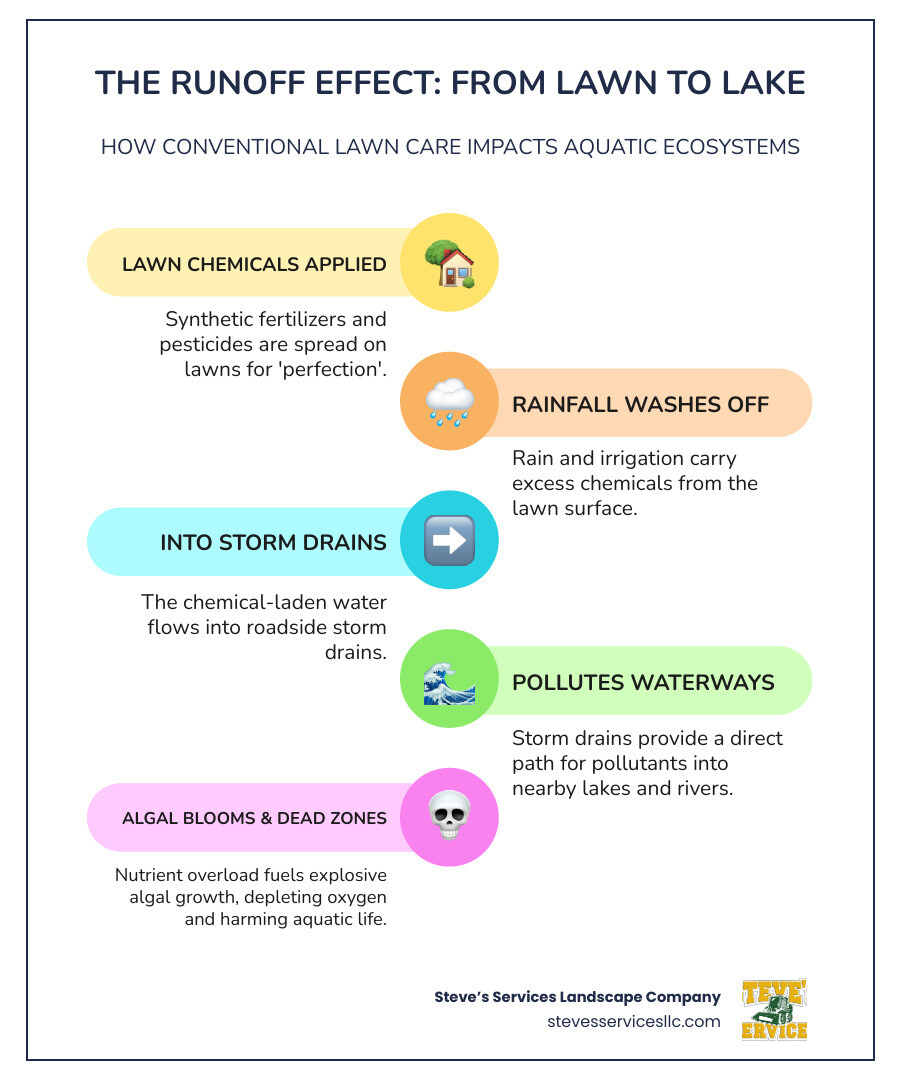
The Problem with “Perfect” Lawns: How Conventional Care Harms Lakes
The pristine, emerald-green lawn we often admire can represent a chemical cocktail that’s slowly poisoning our lakes. Our obsession with flawless lawns has created an environmental crisis flowing directly into our waterways. Every time it rains, the chemicals applied to achieve that perfect look wash away, carrying a toxic burden that our lakes simply can’t handle.
Nutrient Overload: The Fertilizer Effect
Nitrogen and phosphorus—the main ingredients in most lawn fertilizers—are essential for plant growth. But when over-applied, they become environmental villains. A sobering statistic reveals that 40-60% of nitrogen from fertilizer runs off or leaches away, ending up in ground or surface water. Nearly half of what you pay for may be heading straight for the nearest lake.
Once these excess nutrients hit the water, they trigger eutrophication. The algae multiply rapidly, forming thick, green mats known as harmful algal blooms. These blooms, especially those from toxic cyanobacteria, can make water unsafe for swimming, fishing, or even drinking.
When these massive blooms die, their decomposition sucks oxygen from the water, creating dead zones where fish can’t breathe. About half of North American lakes now suffer from this nutrient overload. Nitrates can also contaminate drinking water wells, posing serious health risks, especially to infants. The problem is widespread, as seen with eutrophication in Lake Erie.
Fortunately, it doesn’t have to be this way. Our fertilizing services focus on giving your lawn exactly what it needs—nothing more, nothing less.
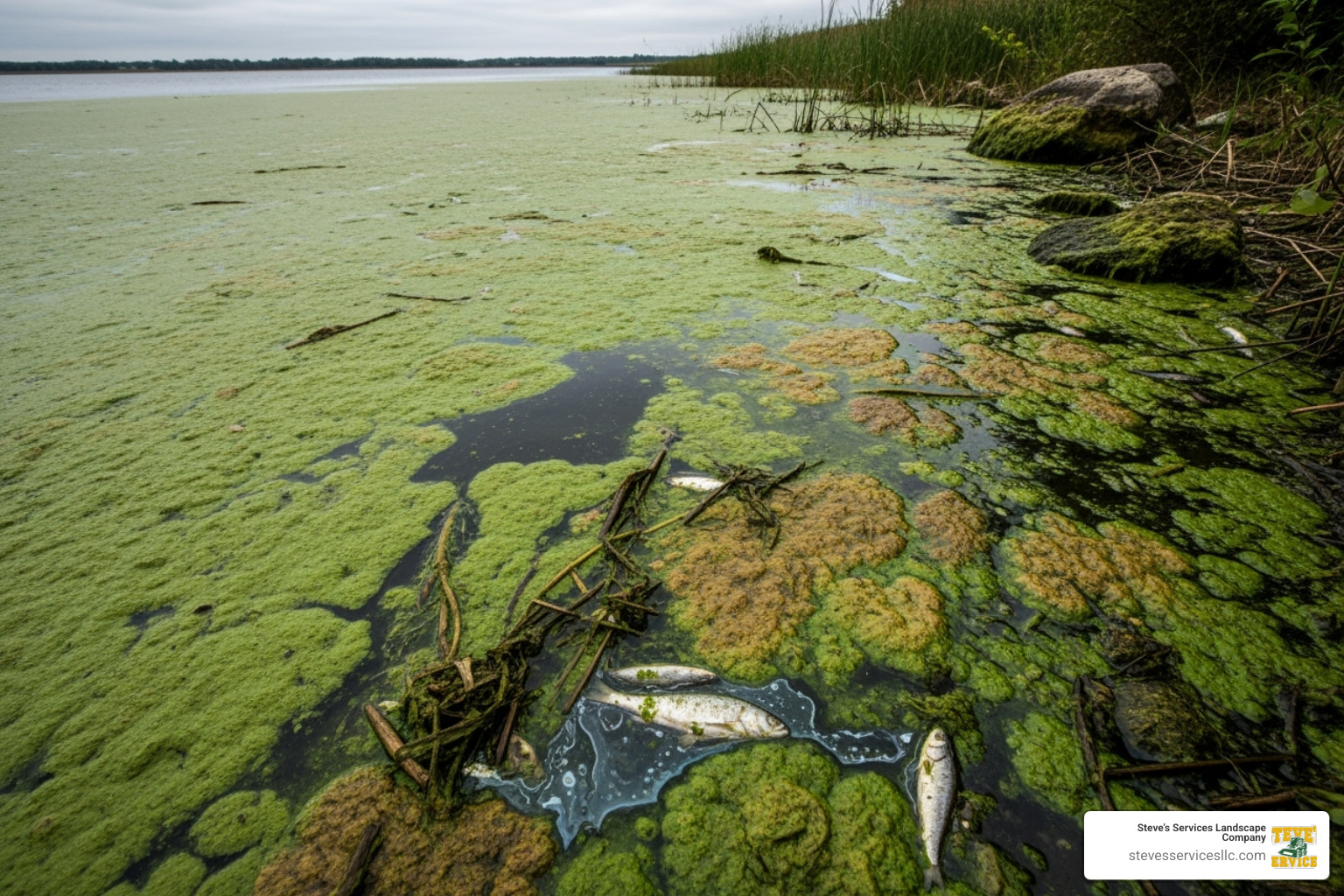
The Hidden Dangers of Pesticides and Herbicides
Pesticides and herbicides may deliver a weed-free look, but they create havoc in our ecosystems. When these chemicals wash into lakes, they harm aquatic life and disrupt entire food webs. Fish may lose their ability to smell predators or find spawning grounds, while the insects they feed on are wiped out.
These chemicals also harm beneficial insects like bees and butterflies, which are crucial for pollination. Glyphosate, a common weed killer, has been shown to damage bee colonies.
The health risks extend to our own families. Kids and pets playing on treated grass can track residues indoors. Studies have linked common lawn chemicals like 2,4-D to thyroid problems in humans and lymphoma in dogs. The World Health Organization has classified 2,4-D as a possible carcinogen, and glyphosate as probably carcinogenic.
According to The U.S. Environmental Protection Agency, Roundup likely harms 93% of threatened and endangered species. This highlights the widespread threat these chemicals pose.
Water Waste and Soil Degradation
Conventional lawn care issues extend beyond chemicals. Summer water consumption for lawns can account for 30 to 60 percent of a household’s total water use, much of which is applied inefficiently and contributes to polluted runoff.
Perhaps most tragically, harsh chemicals destroy soil microbes—the organisms that keep soil healthy and fertile. Without them, soil becomes compacted and loses its ability to absorb water. This creates a vicious cycle: as soil loses its natural fertility, it requires more fertilizer, and as it becomes more compacted, it needs more water. The lawn becomes dependent on external inputs.
Healthy soil should be alive with organisms that cycle nutrients naturally. Working with this system, rather than against it, creates beautiful lawns that help protect our lakes. Our irrigation systems are designed to deliver water efficiently while protecting soil health.
The Core Principles of Lake-Friendly Lawn Care
Lake friendly lawn care represents a shift in mindset from fighting nature to working alongside it. Think of it as becoming a partner with your yard. This approach benefits everyone: your family gets a safer place to play, you save money on treatments, and our local lakes stay clean for future generations.

Work with Nature, Not Against It: A Focus on Soil Health
The secret to a gorgeous lawn isn’t what’s applied to the grass, but what’s happening in the soil beneath it. Healthy soil is the foundation of everything; when the soil is right, the lawn can thrive with minimal intervention.
A professional approach begins with a soil test. This analysis reveals exactly what a lawn needs—and, just as importantly, what it doesn’t. Many Massachusetts soils already have enough phosphorus, so adding more is wasteful and harmful to lakes. You can learn more about soil needs from your local Cooperative Extension office, such as this resource from Cornell Cooperative Extension.
Building organic matter through composting and aeration creates a healthy environment for the beneficial microbes, worms, and fungi that make soil alive. Healthy soil holds water better, feeds grass naturally, and promotes deep, resilient root systems. This foundational work is often part of our spring yard clean-ups, where we assess soil health and create a nature-based plan.
Reduce and Rethink Inputs: The “Less is More” Approach
One of the most liberating aspects of lake friendly lawn care is that the healthiest lawns often receive the least intervention. Minimizing synthetic fertilizers is possible when you focus on soil health first, as a lawn with deep roots can find its own nutrients and water.
Avoiding pesticides and herbicides protects not just our lakes but also beneficial insects, soil organisms, and the kids and pets who play on the grass. A healthy lawn is naturally more resistant to pests and diseases.
Water conservation becomes almost automatic with these principles. Deep-rooted grass in healthy soil needs far less water than shallow-rooted, chemically dependent turf. The goal is resilience, not sterile perfection. A few dandelions are a sign of a diverse ecosystem, not a failure.
Create a Natural Filter: The Power of Buffer Zones
For properties near water, buffer zones are a powerful tool. These natural areas act like a landscape’s kidneys, filtering pollutants before they reach the lake.
A simple 10-foot unfertilized strip along a shoreline can dramatically reduce nutrient runoff. A wider 10-25 foot buffer zone planted with native species creates an even more powerful natural filter that improves over time.
These zones prevent soil erosion, capture stormwater, and provide habitat for birds and butterflies. Shoreline protection with natural vegetation is far more effective than artificial barriers, as the deep roots of native plants hold soil in place and slow runoff. Creating these natural barriers is a key part of our landscaping services, protecting the waters we all enjoy.
Actionable Steps for a Lake-Safe Lawn
Transitioning your lawn into a lake-protecting powerhouse is about making thoughtful, strategic changes that work with nature. These practical steps, often implemented by professionals, help create a beautiful lawn that keeps our waterways clean and healthy.
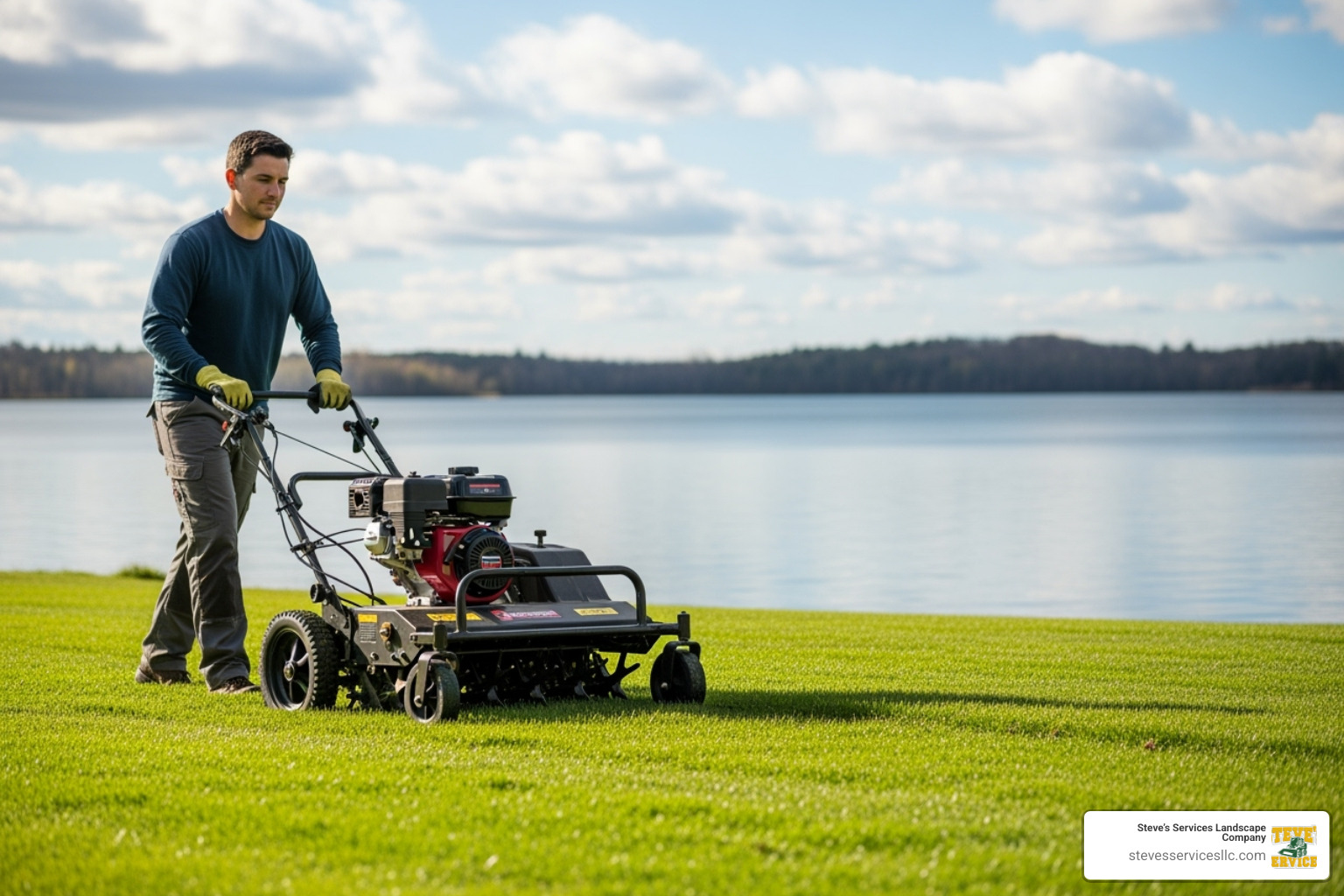
Smart Mowing and Mulching for a Resilient Turf
Your mower is a powerful tool in a lake friendly lawn care system. How grass is cut directly impacts its ability to filter runoff and stay healthy with fewer inputs.
A core technique is to mow high, keeping grass blades 2.5 to 3 inches tall. Taller grass develops deeper roots that act like sponges, soaking up water and nutrients. The extra height also shades the soil, keeping it cool and naturally crowding out weeds. Using sharp mower blades is also crucial, as a clean cut prevents stress and disease.
Another powerful practice is grasscycling, which involves leaving grass clippings on the lawn. These clippings are packed with nitrogen and water, and returning them to the lawn is equivalent to one or two fertilizer applications per season. The same principle applies to fall leaves; mulching them into the lawn with a mower feeds the soil and improves its structure. Our fall yard clean-ups can help implement this strategy effectively.
The Right Way to Approach Fertilizing in a lake friendly lawn care plan
In a lake friendly lawn care plan, fertilization is a precise science. A professional approach always begins with a soil test. Many homeowners are surprised to learn their soil already has plenty of phosphorus, the main culprit behind algal blooms. For this reason, phosphorus-free fertilizers—indicated by a zero in the middle number on the bag—are often the best choice.
When nitrogen is needed, slow-release formulations are ideal. These products feed the lawn gradually, preventing the nutrient rush that washes away in the rain. Timing is also critical. Fall fertilization focuses on root development, which improves water absorption and reduces runoff. Fertilizing should never be done when heavy rain is forecast or when the ground is frozen, as this sends nutrients straight into our waterways.
Managing Weeds and Pests the Lake-Friendly Way
Lake friendly lawn care changes the perspective on a “perfect” lawn. Instead of viewing every dandelion as an enemy, we can see them as indicators of soil health.
A thick, healthy lawn is the best weed prevention strategy. Vigorous, dense grass naturally outcompetes most weeds. For those that do appear, spot treatments and hand-pulling are far superior to broadcast spraying, which needlessly exposes the entire lawn to chemicals.
Different weeds can indicate specific soil conditions. For example, dandelions often point to low calcium, while clover suggests a nitrogen deficiency. Addressing the underlying soil issue is a more sustainable solution than just killing the weed. For persistent problems, gentler alternatives like iron-based herbicides are available. It’s about choosing strategic solutions over chemical force, recognizing that a few weeds are a small price to pay for a healthy lake.
Beyond the Grass: Advanced Lake-Friendly Landscaping
While refining lawn care practices makes a difference, we can amplify our commitment to lake friendly lawn care by thinking bigger. Sometimes the most impactful change isn’t what we do to our grass—it’s what we choose instead of grass.
Creating a more lake-friendly landscape often means less maintenance, not more. Every square foot of a property can either help or hurt local waterways.
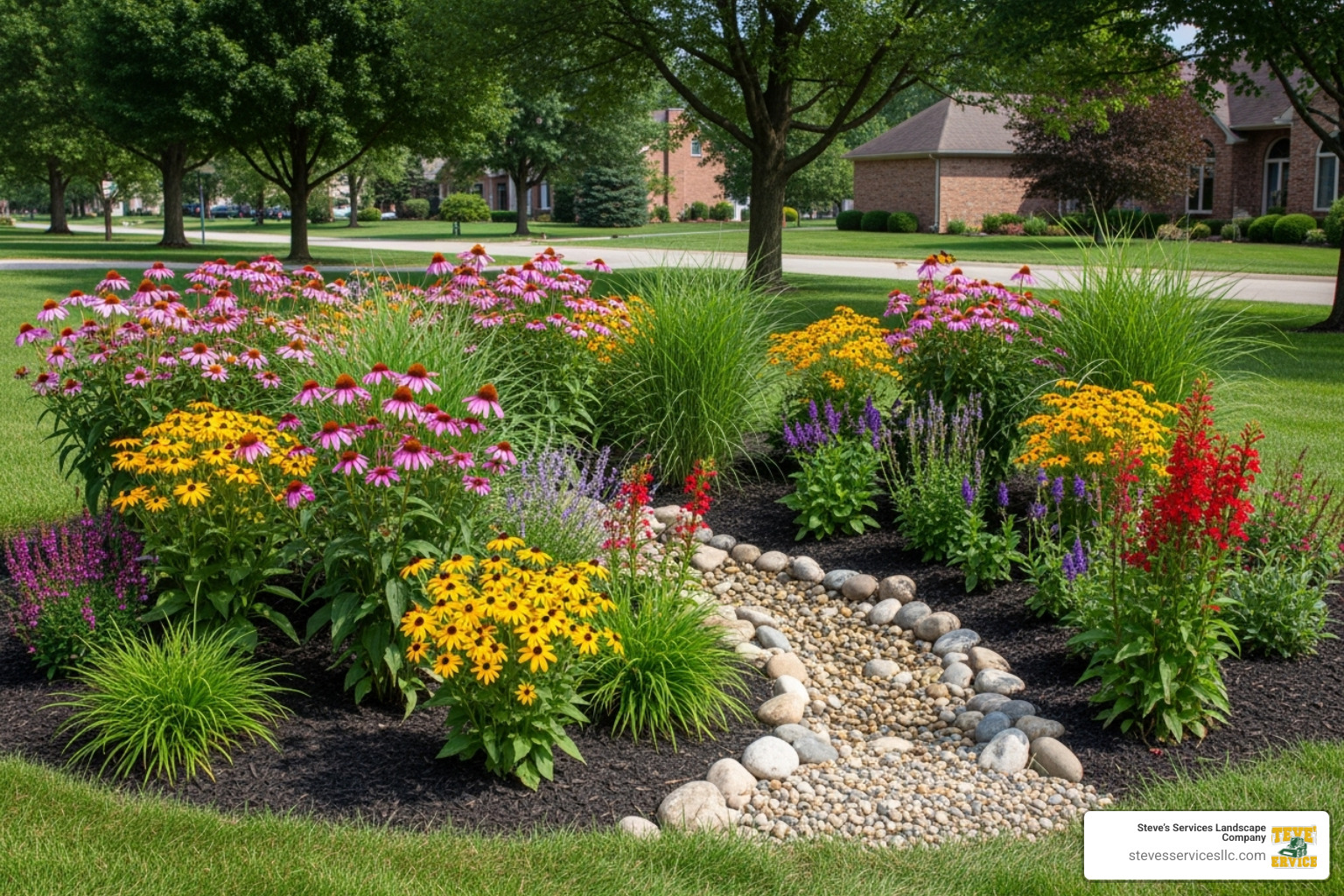
Embracing Alternatives to the Traditional Lawn for a lake friendly lawn care approach
A core tenet of advanced lake-friendly landscaping is that not every inch of a yard needs to be traditional turf. The most beautiful and functional landscapes often mix grass with creative alternatives that require far less water, fertilizer, and effort.
Reducing the lawn’s footprint is a smart move. Steep slopes or shady areas where grass struggles are perfect candidates for alternatives. Native groundcovers like wild ginger and native sedges spread naturally, crowd out weeds, and require little care once established.
For play areas, clover lawns are a great option. Clover is soft, stays green during dry spells, and feeds itself by pulling nitrogen from the air—no fertilizer needed. Fine and tall fescue grasses are another smart choice, as they do very well with little fertilizer and water, and are acceptable under shade.
Rain gardens are the ultimate in functional landscaping. These shallow depressions, filled with native plants, are engineered to capture runoff from roofs and driveways, allowing water to soak into the ground. Our new lawn installs can incorporate any of these sustainable alternatives.
The Critical Role of Native Plants and Permeable Surfaces
By using native plants and permeable materials, we let nature manage water and control pollution.
Native plants are adapted to thrive in Massachusetts soil and weather. They develop deep root systems—some reaching 10 feet or more—that create channels for water, prevent erosion, and filter pollutants. They also offer superior drought tolerance and provide essential wildlife habitat.
For shoreline buffers, natives like willows and elderberry are essential. They stabilize banks and intercept runoff. Permeable surfaces for walkways and patios allow rainfall to filter into the ground instead of rushing toward storm drains. Modern permeable pavers offer the same style as traditional hardscaping with significant environmental benefits. Our patios and decks can incorporate these smart materials without compromising on aesthetics.
Frequently Asked Questions about Lake-Friendly Practices
When homeowners consider lake friendly lawn care, many questions and concerns arise. Here are answers to the most common worries I encounter.
Do I have to give up my green lawn to be lake-friendly?
Absolutely not. This is the biggest myth about eco-conscious lawn care. A truly healthy, dense lawn is one of the best defenses against runoff. When grass has deep roots and is supported by healthy soil biology, it acts like a natural sponge, absorbing rainwater instead of letting it carry pollutants into storm drains. The focus shifts from chemical dependency to building a resilient, naturally green lawn that protects our lakes.
Are ‘organic’ or ‘natural’ products always safe for lakes?
This is a great question. While organic products are often better choices, the label “organic” doesn’t automatically mean “lake-safe.” The key issue is nutrient content, especially phosphorus. Some organic fertilizers are loaded with phosphorus, which will still cause harmful algal blooms if it washes into our lakes. This is why a soil test is the critical first step. “Lake-friendly” is about proper practice, not just products. It means giving your lawn only what it needs and ensuring excess nutrients don’t wash away.
Are there specific rules for properties on a lake?
Yes, and this is very important for waterfront property owners. Most lakefront properties are subject to specific regulations that go beyond general lawn care guidelines. In Massachusetts, these can include setback requirements prohibiting fertilizer use within a certain distance of the shoreline (e.g., 25 feet) or mandatory buffer zone plantings. Some communities require permits for any major landscaping changes near the water. I always recommend checking with your local conservation commission or lake association before starting a project. These rules are in place to protect our shared waterways.
Transitioning Your Lawn and Protecting Our Waterways
Making the switch to lake friendly lawn care is a gradual evolution, not an overnight overhaul. Giving your lawn time to adjust to healthier practices will yield the best long-term results.
As we’ve explored, our yards are directly connected to the health of our local waterways. Conventional lawn care often leads to nutrient overload and chemical runoff that harms our lakes. However, lake friendly lawn care offers a better way. By focusing on healthy soil, mowing high, and being strategic about inputs, you create a lawn that is naturally resilient and requires less intervention.
The benefits are widespread. Your family gets a safer space to play, free from chemical residues. Your lawn becomes more drought-tolerant and disease-resistant. The local ecosystem thrives with cleaner water and healthier wildlife. There’s deep satisfaction in knowing your yard is part of the solution.
This transition is a process. You might start with a soil test this spring, switch to phosphorus-free fertilizer in the fall, and gradually raise your mower height. Each small change builds momentum toward a healthier landscape.
For homeowners in Everett, MA, and surrounding communities like Burlington, Danvers, Lynnfield, Medford, Melrose, North Reading, Reading, Revere, Saugus, Stoneham, Winchester, Woburn, Malden, and Wakefield, working with a professional landscaping company like Steve’s Services can make the transition seamless. We understand the unique challenges of New England lawns and can help you implement these strategies effectively.
Ready to transform your property into a beautiful, lake-friendly oasis? The lakes in our community are counting on us. Explore our landscape maintenance services to get started on your journey toward healthier, more sustainable lawn care.
