
Why Proper Lawn Spray Application Matters for Your Massachusetts Property
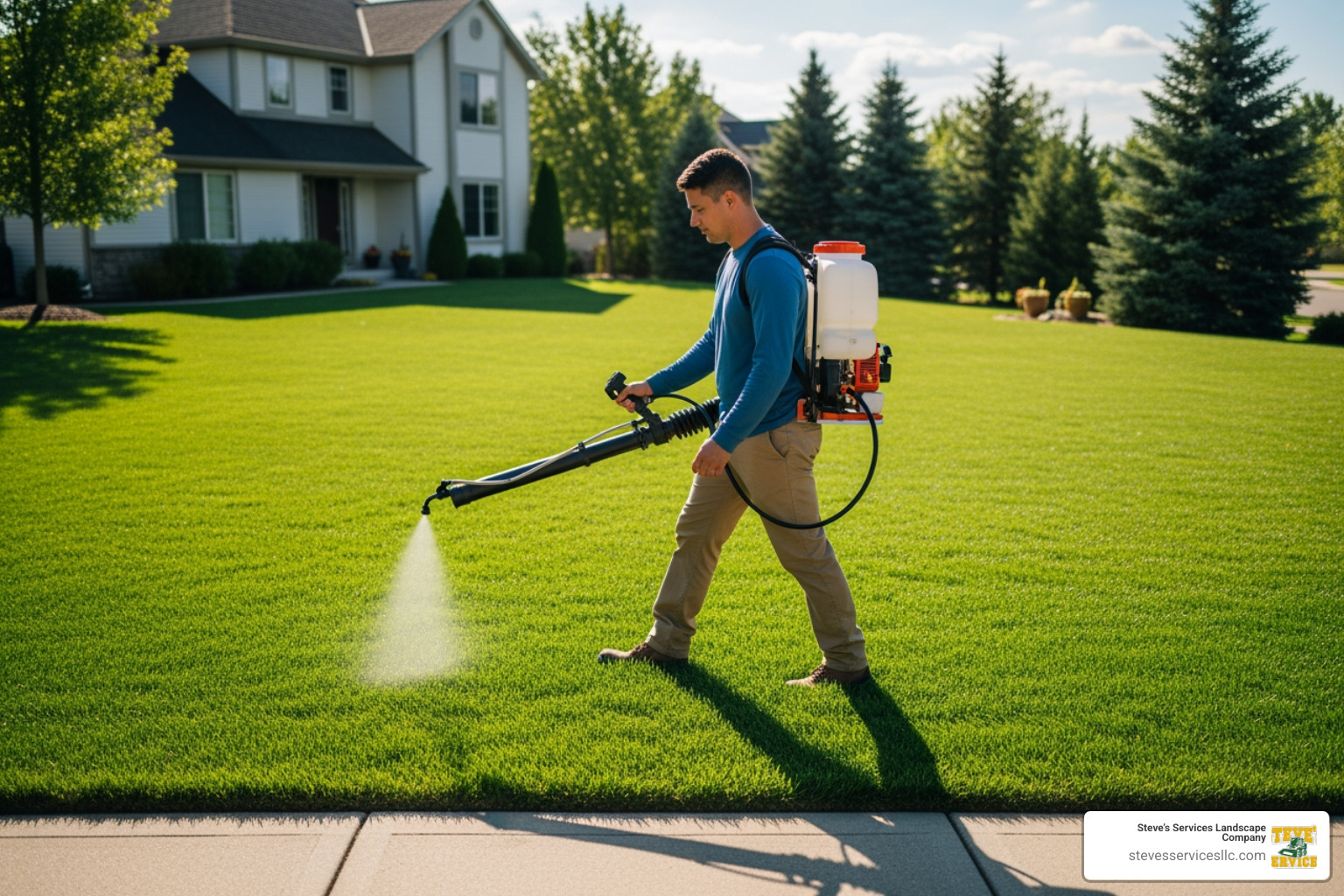
Lawn spray application is a targeted method of applying liquid herbicides or fertilizers to your turf to control weeds and promote healthy grass growth. Here’s what you need to know:
Key Steps for Safe and Effective Lawn Spray Application:
- Identify your weeds – Determine if they’re broadleaf, grassy, or sedges
- Choose the right herbicide – Select pre-emergent (prevents seeds from germinating) or post-emergent (kills existing weeds)
- Apply at the right time – Spring (April-June) or fall (September-October) when weeds are actively growing
- Use proper safety equipment – Wear gloves, eye protection, and protective clothing
- Keep people and pets off treated areas – Wait until the spray has dried completely
- Water correctly – Don’t water for 2-4 hours after application
- Monitor results – Expect visible wilting in 24-48 hours and full weed death in 7-14 days
Even the most meticulous homeowner faces weed problems. Dandelions, crabgrass, and clover seem to appear overnight, turning a beautiful lawn into a patchy, unsightly mess. While professional lawn treatment can deliver impressive results, the process involves more complexity than simply spraying chemicals on your grass.
Safety matters. Over 75 percent of all pesticide applications are made as liquid sprays, and these products are legally binding – you must follow label instructions exactly. Applying too little means weeds survive and you’ll need to retreat. Applying too much can damage your grass, waste money, and create environmental hazards.
Effectiveness matters too. Timing is critical. For example, crabgrass seeds begin germinating when soil temperature hits 52°F, so pre-emergent herbicides must be applied just before that threshold. Apply too early or too late, and you’ve missed your window.
This guide will walk you through the professional approach to lawn spray application, from understanding different weed types and herbicides to proper application techniques and seasonal timing strategies.
I’m Steve Sylva, owner of Steve’s Services, and over my 25+ years in the landscape industry, I’ve seen countless DIY lawn spray application attempts go wrong – from burned grass to ineffective treatments that waste time and money. Through proper training and professional-grade equipment, I’ve helped hundreds of Massachusetts homeowners achieve weed-free lawns safely and effectively.
Essential Lawn spray application terms:
Understanding Weeds and Herbicides
Before we even think about a lawn spray application, we need to understand our adversaries: weeds! Weeds are tenacious plants that absorb resources quicker than grass and adapt to survive in challenging environments. Identifying them is the first crucial step in effective weed control, as different weeds respond to different treatments. We classify them into three main categories: broadleaf, grassy, and sedge weeds.
Three Classes of Weeds
Knowing these classes helps us choose the right battle plan. The University of California’s IPM program provides an excellent overview:
- Broadleaf Weeds: These weeds typically have wider leaves and often display branched stems as they emerge. Common examples in Massachusetts include dandelions, clover, plantain, and thistle. They produce two seed leaves when they sprout.
- Grassy Weeds: As their name suggests, these weeds look like grass but are unwelcome guests. They have long, narrow leaves and typically grow from a single seed. Crabgrass and quackgrass are prime examples that plague many Massachusetts lawns.
- Sedge Weeds: Often mistaken for grass, sedges have triangular stems (you can feel the difference by rolling them between your fingers) and grow faster than your lawn, creating an uneven texture. Yellow nutsedge is a common culprit.
Beyond their appearance, weeds also differ in their life cycle:
- Annual Weeds: These complete their entire life cycle (germination, growth, flowering, seeding, and death) within one growing season. Crabgrass is a classic annual weed.
- Perennial Weeds: These weeds live for more than two years, often returning year after year from the same root system. Dandelions and thistles are stubborn perennials that can survive winter and regrow in spring.
Once we’ve identified the specific weeds in your lawn, we can select the most appropriate herbicide.
Herbicide Types
Herbicides come in various forms and functions, each designed for specific situations:
- Liquid vs. Granular:
- Liquid herbicides are typically mixed with water and applied with a sprayer. They offer precise coverage and are quickly absorbed by the weed’s foliage. This is the most common form for lawn spray application.
- Granular herbicides are dry pellets spread over the lawn. They often need to be watered in to activate and reach the soil. These are frequently combined with fertilizers in “weed and feed” products, though we often find that precise application timing for these combined products can be tricky.
- Selective vs. Non-Selective Herbicides:
- Selective herbicides are our best friends for lawn care! They are designed to kill specific types of weeds (like broadleaf weeds) without harming your desirable turfgrass. This allows us to target invaders while keeping your lawn lush.
- Non-selective herbicides kill virtually any plant they contact, including your lawn. We use these with extreme caution and precision for spot treatments on weeds growing in cracks, driveways, or areas where no plant growth is desired. They are generally not used for broadcast lawn spray application.
- Pre-Emergent vs. Post-Emergent Herbicides: This distinction is about timing and the weed’s life stage. We’ll dive into this next!
Pre-Emergent vs. Post-Emergent Herbicides
The difference between pre-emergent and post-emergent herbicides lies in when they strike.
- Pre-Emergent Herbicides: These are the ultimate preventative measure, acting as an invisible shield against weed seeds. They form a chemical barrier in the soil that prevents weed seeds from germinating and sprouting. They are especially effective against annual weeds that come back from seed, like crabgrass. The key here is timing: they must be applied before the weed seeds begin to germinate. For crabgrass and other summer annuals, this critical moment is when the soil temperature (not the air temperature!) consistently hits 52°F. Apply too late, and the seeds have already started their journey.
- Post-Emergent Herbicides: These herbicides are for established weeds that are already visible in your lawn. They work by being absorbed through the weed’s foliage (leaves) and then translocating (moving) throughout the plant to kill it, often down to the roots. Post-emergent herbicides are most effective when weeds are young and actively growing, as they are more vulnerable at this stage.
How Post-Emergents Work
Post-emergent herbicides, like the ones we use in our lawn spray application, are designed to attack existing weeds. When applied, the active ingredients are absorbed by the weed’s leaves. From there, they interfere with the weed’s internal processes, such as photosynthesis or growth regulation. This disruption leads to wilting, discoloration, and eventually, the death of the weed. The speed of action depends on the specific herbicide, weed type, and environmental conditions. We’ve seen visible wilting in as little as 24 hours, with weeds dying over a 4-week period. You’ll typically see significant results within seven to 14 days, though stubborn weeds may need repeated treatments at 10- to 20-day intervals to eradicate them completely.
The Professional Lawn Spray Application Process
At Steve’s Services, our professional lawn spray application process is a blend of science and art. It relies on high-quality equipment, precise calibration, strict safety protocols, and deep understanding of product labels.
Every pesticide label is a legally binding agreement between us and the manufacturer. We follow these guidelines carefully to ensure responsibility, safety, and effectiveness. Weather is another critical factor; we avoid applying herbicides in very hot weather (over 86°F or 30°C) or if rain is forecast within the next 2 to 4 hours, as this can lead to reduced effectiveness or herbicide runoff and drift. Windy conditions are also a no-go for us, as wind can easily carry herbicide droplets to non-target plants.
Preparing for a Professional Lawn Spray Application
Proper preparation is key to a successful lawn spray application and is a step we never skip.
- Mowing Schedule: We generally recommend mowing your lawn about 1-2 days before a liquid herbicide application. This allows the weeds to have enough leaf surface to absorb the herbicide effectively but prevents fresh cuts from stressing the grass or allowing the herbicide to wash off immediately. We also maintain a grass height of 2.5 to 3 inches, as taller grass can help shade out new weed growth.
- Watering Requirements: For optimal herbicide absorption, the soil should be slightly moist but not waterlogged. We often advise a light watering 1-2 days before spraying, or we apply early in the morning when dew is present. This ensures the weeds are actively growing and can readily take up the treatment. We make sure not to apply to drought-stressed areas.
- Clearing Debris: Before any lawn spray application, we clear leaves, sticks, and other debris from the lawn. This ensures that the herbicide makes direct contact with the weeds and grass, allowing for even coverage and maximum effectiveness. For larger debris or seasonal clean-ups, our spring and fall yard clean-ups can help get your lawn in prime condition.
- Identifying and Protecting Desirable Plants: This is a crucial step for us. We carefully identify any desirable plants, flowers, shrubs, or vegetable gardens adjacent to the treatment area. To protect them from herbicide drift, we use spray shields or drift guards, or temporarily cover them with plastic sheeting. We treat your prized hydrangeas with as much care as your lawn!
Application Techniques and Safety
When it comes to lawn spray application, our team adheres to strict safety protocols and employs precise techniques.
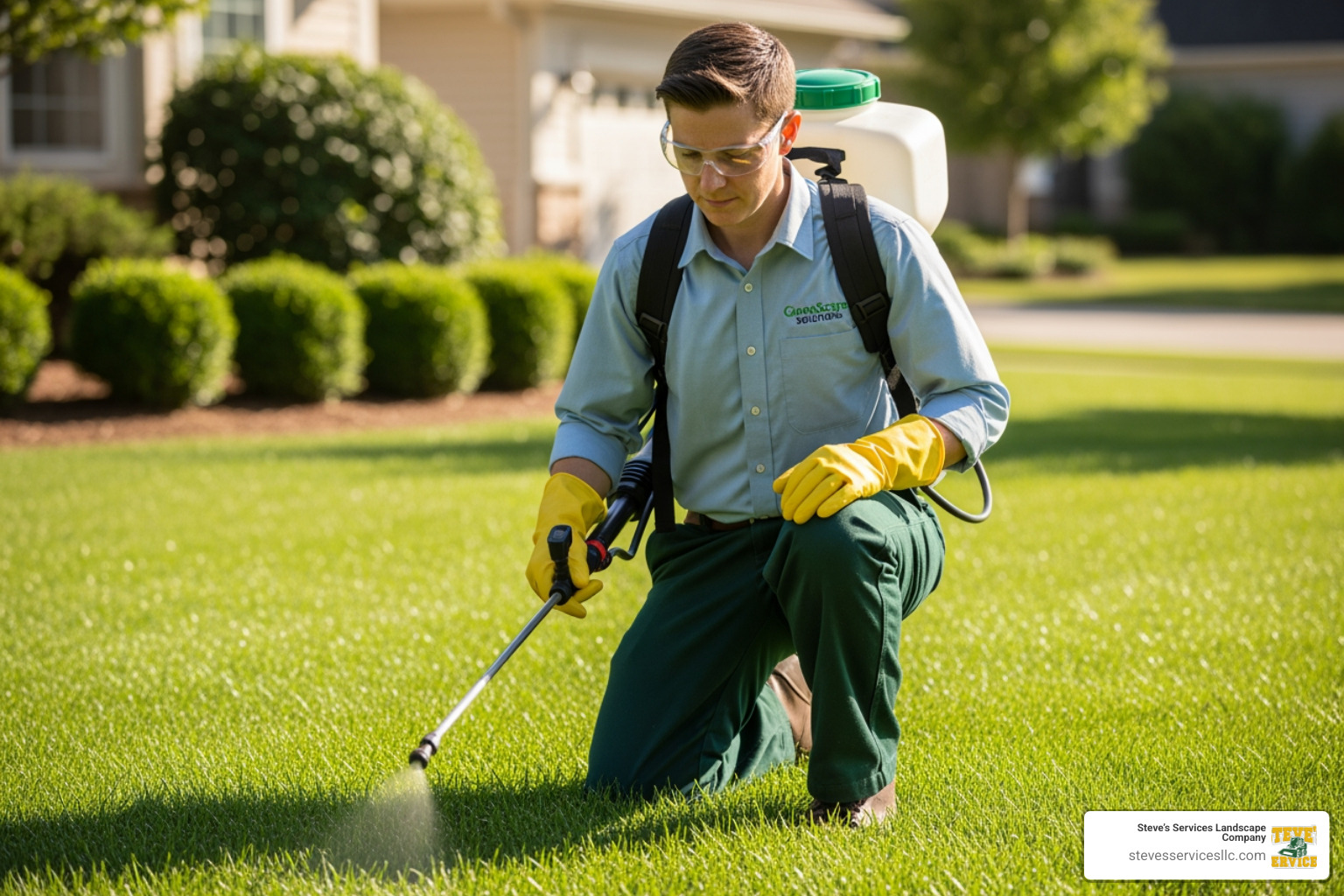
- Personal Protective Equipment (PPE): Safety is paramount. Our technicians always wear appropriate PPE, which includes eye protection, chemical-resistant gloves, long-sleeved clothing to minimize skin exposure, and sometimes a mask, depending on the product. This protects our team and ensures responsible handling.
- Broadcast vs. Spot Treatment:
- Broadcast application involves treating the entire lawn area. We use this method when there’s a widespread weed infestation. It requires careful calibration of our sprayers to ensure uniform coverage without over-applying.
- Spot treatment targets individual weeds or small clusters. This is ideal for minor weed problems or for hitting those stubborn weeds that pop up unexpectedly. Our technicians use precise aim to apply the herbicide directly to the weed, minimizing contact with desirable grass.
- Sprayer Calibration: This is where the “science” of lawn spray application truly shines. We regularly calibrate our equipment, such as hose reel sprayers, to ensure we apply the exact amount of product needed. This involves:
- Consistent Walking Pace: Our technicians are trained to maintain a steady walking speed. Too fast, and we under-apply; too slow, and we risk over-application, which can harm your lawn.
- Proper Spray Height: We maintain a consistent spray height, typically about 2 feet above the grass, to ensure the spray pattern overlaps correctly and provides even coverage.
- Nozzle Selection: We select appropriate nozzle types that produce the right droplet size to maximize coverage on the weeds while minimizing drift.
- Protecting Gardens and Hardscapes: We take extra precautions around flower beds, trees, and hardscaped areas like patios and walkways. For example, our team is careful to avoid drift onto your beautiful perennial gardens or newly installed hardscaping services.
- Safe Herbicide Storage: All our herbicides are stored safely and securely in their original containers, upright with caps tightly closed. They are kept away from excessive heat or freezing temperatures, and out of reach of children and pets, in accordance with manufacturer guidelines.
Post-Lawn Spray Application Care and Safety
The work isn’t over once the spray leaves the nozzle! Post-application care is just as important for both effectiveness and safety.
- Drying Time: We always advise keeping people and pets off treated areas until the spray has completely dried. This typically takes 4-24 hours, depending on humidity and temperature. Once the spray has dried, people and pets can safely re-enter the area.
- Watering Schedule Post-Application: For most liquid herbicide applications, we recommend that you do not water your lawn for at least 2 to 4 hours after application. This allows the herbicide sufficient time to be absorbed by the weeds. Watering too soon can wash away the product and reduce its effectiveness.
- Cleaning Equipment: After each lawn spray application, our equipment is thoroughly cleaned. Sprayers are rinsed multiple times with soap and water to prevent cross-contamination and ensure longevity. We use dedicated sprayers for herbicides and other products to avoid any accidental damage to desirable plants.
- Monitoring Results: We monitor the treated areas closely. You can expect to see visible effects on the weeds, such as wilting or yellowing, within 24-48 hours of spraying. Most weeds will show significant decline within seven to 14 days, but complete weed death can take up to 4 weeks, depending on the weed type and environmental conditions. If stubborn weeds persist, reapplication may be necessary after a suitable interval. Also, we recommend waiting at least three days before cutting your grass to allow the herbicide time to work fully.
Timing is Everything: A Seasonal Guide for Effective Treatment
Just like cooking a perfect meal, timing is crucial for a successful lawn spray application. Applying the right product at the wrong time can be a wasted effort, or worse, cause damage. We aim to apply herbicides when weeds are actively growing, as this is when they are most vulnerable and will readily absorb the treatment. In Massachusetts, we generally focus on spring and fall applications.
Spring Application (April – June)
Spring is a time of renewal, but also when many weeds begin their annual assault. Our spring lawn spray application strategy focuses on two key approaches:
- Targeting Early Weed Growth: As temperatures rise in April and May, many broadleaf weeds like dandelions and clover begin to emerge. This is an excellent window for post-emergent applications when these weeds are young and actively growing, making them easier to control.
- Pre-Emergent Application: For annual grassy weeds like crabgrass, the critical time for pre-emergent application is just before the soil temperature consistently reaches 52°F. This typically falls between late April and early June in our Massachusetts service areas (Burlington, Everett, Lynnfield, Medford, Melrose, Reading, Saugus, Stoneham, Wakefield, Winchester, Woburn, Malden, Revere, Danvers, North Reading). We help ensure this barrier is in place to prevent crabgrass seeds from ever seeing the light of day! If you’re looking to establish a new, weed-free lawn, spring is also an ideal time for new lawn installs.
- Prepping Lawn for Summer Stress: We also use spring applications to fortify your lawn for the harsh summer months. Products designed to improve root strength and heat resilience can be applied every 4-6 weeks to prepare your grass for potential drought and heat stress.
Fall Application (September – October)
While spring gets a lot of attention, fall is arguably the most effective time for lawn spray application, especially for perennial weeds.
- Ideal Time for Perennial Weeds: Perennial broadleaf weeds like dandelions and thistles are busy storing nutrients in their roots during the fall to prepare for winter dormancy. When we apply post-emergent herbicides in the fall (typically mid-September to mid-October), these weeds readily absorb the product, which then translocates deep into their root systems, ensuring a more complete kill.
- Reducing Spring Weed Pressure: A successful fall treatment means significantly fewer weeds emerging next spring, giving your lawn a head start. It’s a proactive approach that pays dividends. After all, a thorough fall yard clean-up isn’t just about leaves; it’s about preparing for a healthier lawn next season.
- Summer Considerations: Summer is generally not the ideal time for widespread herbicide application. High temperatures (above 85°F) can cause herbicides to evaporate quickly or even stress and damage your turf. However, certain heat-loving weeds might require targeted spot treatments, and some specialty products are designed for summer use. We always assess the specific conditions and weed types before recommending summer applications.
Beyond the Spray: Maintaining a Healthy, Weed-Resistant Lawn
While a professional lawn spray application is a powerful tool, it’s just one part of a comprehensive strategy for a beautiful, weed-free lawn. At Steve’s Services, we believe in Integrated Pest Management (IPM), which emphasizes promoting overall lawn health to naturally resist weeds. As the University of Delaware Cooperative Extension wisely states, a “vigorous, healthy turf shades weed seeds so they don’t germinate.”
We offer full landscape maintenance services that incorporate these principles:
- Proper Mowing Height: We never cut more than one-third of the grass blade height at a time. Mowing at a taller height (typically 2.5-3 inches) shades the soil, making it harder for weed seeds to germinate and helping your grass outcompete invaders.
- Correct Watering Techniques: Deep, infrequent watering encourages grass roots to grow deeper, making your lawn more resilient to drought and better able to outcompete weeds. We aim for 1-1.5 inches of water per week, applied in one or two sessions, rather than frequent shallow watering.
- Soil Health and Aeration: Healthy soil is the foundation of a healthy lawn. We offer soil testing to identify nutrient deficiencies or pH imbalances that might favor certain weeds. Aeration helps alleviate soil compaction, allowing water, nutrients, and air to reach the grass roots more effectively, promoting stronger growth.
- Fertilization: A well-fed lawn is a strong lawn. Proper fertilization provides the necessary nutrients for dense, vigorous turf that naturally crowds out weeds. We tailor our fertilization programs to your lawn’s specific needs and the season.
- Overseeding to Crowd Out Weeds: Thin or bare spots are an open invitation for weeds. Overseeding regularly helps maintain a dense turf, filling in gaps and giving weeds less room to establish themselves.
5 Key Lawn Health Practices to Naturally Prevent Weeds
- Mow High: Keep your grass at 2.5-3 inches to shade out weed seeds.
- Water Deeply: Promote strong, deep root systems with infrequent, thorough watering.
- Fertilize Smart: Provide essential nutrients for dense turf growth.
- Aerate Annually: Improve air, water, and nutrient penetration to roots.
- Overseed Regularly: Maintain a thick lawn that naturally outcompetes weeds.
Frequently Asked Questions about Lawn Spraying
How long does it take to see results from a lawn spray application?
The speed at which you see results from a lawn spray application can vary depending on the type of herbicide used, the specific weed, and environmental conditions. However, we typically see:
- Visible effects (wilting) on the weeds within 24 to 48 hours of spraying.
- Significant decline in most weeds within seven to 14 days.
- Complete die-off of weeds over a 4-week period.
Stubborn weeds may require repeated treatments. We always monitor results and advise on any necessary follow-up applications.
Are there risks associated with using herbicides on my lawn?
Yes, there are inherent risks associated with using herbicides on your lawn, particularly for people, pets, and the environment, if the products are not used correctly. This is precisely why professional lawn spray application is so valuable.
As a government health agency notes, using pesticides responsibly is crucial. More information on pesticide safety can be found here. Our professional team minimizes these risks through:
- Proper Training: Our technicians are trained in safe handling, mixing, and application techniques.
- Appropriate Equipment: We use professional-grade equipment that allows for precise application and reduces drift.
- Adherence to Safety Standards: We strictly follow all product label instructions, which are legally binding, and adhere to industry best practices for PPE and environmental protection.
- Targeted Application: We only apply herbicides where and when necessary, utilizing selective products that target weeds without harming your grass.
While some homeowners explore alternatives like homemade vinegar solutions, these often lack consistent effectiveness and can be harmful to soil or non-target plants without proper understanding. We believe a healthy lawn, supported by Integrated Pest Management, is the best natural defense against weeds, reducing the overall need for chemical intervention.
When should I consider hiring a professional for weed control?
While we’ve provided a lot of information on lawn spray application, we understand that not everyone has the time, equipment, or expertise to tackle weed control effectively. You should consider hiring a professional for weed control if:
- You have widespread or stubborn weed problems: If your lawn is overrun with persistent weeds that DIY methods haven’t touched, professional treatment might be necessary.
- You lack the proper equipment: Professional-grade sprayers and granular spreaders are calibrated for precision and efficiency, which most homeowners don’t have access to.
- You are concerned about safety: Handling and applying herbicides requires strict adherence to safety protocols and the use of PPE. If you’re uncomfortable with this, a professional service eliminates the risk to you and your family.
- You want to ensure the most effective and efficient results: Our experienced technicians understand weed identification, herbicide selection, proper timing, and application techniques specific to the Massachusetts climate and common local weeds. We can achieve results faster and more efficiently than most DIY attempts.
- You simply don’t have the time: Lawn care can be time-consuming. Let us handle the hard work so you can enjoy your beautiful lawn without the hassle.
Achieve a Flawless Lawn with Expert Help
Achieving a truly beautiful, weed-free lawn is more complex than it might seem, requiring a deep understanding of weed biology, herbicide chemistry, environmental factors, and precise application techniques. A professional lawn spray application isn’t just about eliminating weeds; it’s about doing so safely, effectively, and as part of a long-term strategy for a healthy landscape.
At Steve’s Services, we pride ourselves on our skilled team, comprehensive services, and personalized solutions for homeowners and businesses across Massachusetts, including Burlington, Danvers, Everett, Lynnfield, Medford, Melrose, North Reading, Reading, Revere, Saugus, Stoneham, Winchester, Woburn, Malden, and Wakefield. We’re committed to delivering exceptional customer service and helping you maintain a vibrant, weed-resistant lawn.
Don’t let stubborn weeds detract from your outdoor space. Let us put our expertise to work for you, ensuring your lawn is not just beautiful, but healthy from the roots up.
Contact us for professional hydroseeding services and let’s discuss how we can transform your lawn today!
