
Property Manager Snow Removal: Critical Safety 2025
Why Property Manager Snow Removal is Critical for Safety and Liability
Property manager snow removal is a critical responsibility for commercial and residential property managers in winter. The primary goals are to maintain safe walking surfaces, prevent slip-and-fall claims, and ensure accessibility for tenants, visitors, and emergency services.
Key Property Manager Snow Removal Responsibilities:
- Legal Duty of Care – Maintain safe premises for all occupants and visitors
- Liability Protection – Document all snow and ice removal activities with timestamps
- Compliance – Follow local ordinances and state laws for snow clearing timeframes
- Emergency Access – Keep fire hydrants, exits, and emergency routes clear
- Proactive Planning – Develop comprehensive snow response plans before winter arrives
- Contractor Management – Vet and contract qualified snow removal services with proper insurance
The stakes are high, as incidents involving snow and ice can lead to costly lawsuits. While some states have “snow in progress” doctrines, property owners must clear snow within a reasonable time after storms end. Success hinges on preparation, clear contracts, and meticulous documentation. The challenge isn’t just finding reliable contractors, but also managing tenant expectations and liability.
I’m Steve Sylva, owner of Steve’s Services. For over 25 years, I’ve helped property managers in Massachusetts communities steer property manager snow removal. My experience shows that successful winter management requires planning, execution, and documentation to protect both tenants and property investments.
Simple property manager snow removal word guide:
- how to add snow removal services to a landscaping business
- plowing services near me
- snow shoveling cost
Understanding Your Responsibilities and Legal Liabilities
As property managers, we have a significant legal duty of care to ensure the safety of everyone on our properties. This falls under premises liability, where a slip-and-fall on ice can lead to costly lawsuits and reputational damage. This responsibility is legal, not just moral, requiring awareness of local ordinances and state laws that dictate when and how snow must be removed, including public sidewalks abutting your property. Improper snow and ice management can lead to slips and injuries.

For a deeper dive into these responsibilities, we often refer to resources like Robson Forensic’s article on Snow & Ice Removal: Property Manager Responsibilities. It’s a comprehensive guide that underscores the importance of a proactive approach.
Key Legal Aspects of property manager snow removal
A key legal concept is the ‘snow in progress’ defense, available in a limited number of states. It suggests a property owner’s duty to clear snow arises within a “reasonable timeframe” after a storm ends, not during. However, relying on this is risky, as “reasonable timeframe” is debatable. It’s always best to clear hazards as soon as possible once a storm subsides. Thorough documentation with timestamps is vital for defending against slip-and-fall claims and demonstrating due diligence to insurance providers.
Tenant insurance programs can also mitigate liability by streamlining claims for tenant-related incidents. An experienced insurance broker is another invaluable ally, helping steer complex liability issues, explore deductible options, and advocate for your interests during claims.
Assessing Needs Based on Property Type
Snow removal needs vary by property. When assessing property manager snow removal requirements, we consider each property’s unique traits:
- Retail Centers: High foot traffic demands consistent snow removal and de-icing to ensure customer safety and accessibility. Large parking lots and entrances need constant attention.
- Office Parks: Clearing paths during peak commute times is crucial for employee safety. The focus is on safe access to buildings and parking areas.
- Residential Complexes: For apartments, condos, or HOAs, clear walkways, driveways, and parking areas are a top priority. Critically, emergency access routes must be kept clear for first responders.
The property’s size, expected snowfall in our Massachusetts locations (like Burlington, Danvers, and Everett), and layout all influence the snow removal plan.
Developing a Comprehensive Property Manager Snow Removal Plan
Effective property manager snow removal starts months before the first snowflake with a comprehensive plan. There’s no room for improvisation when safety and liability are on the line.
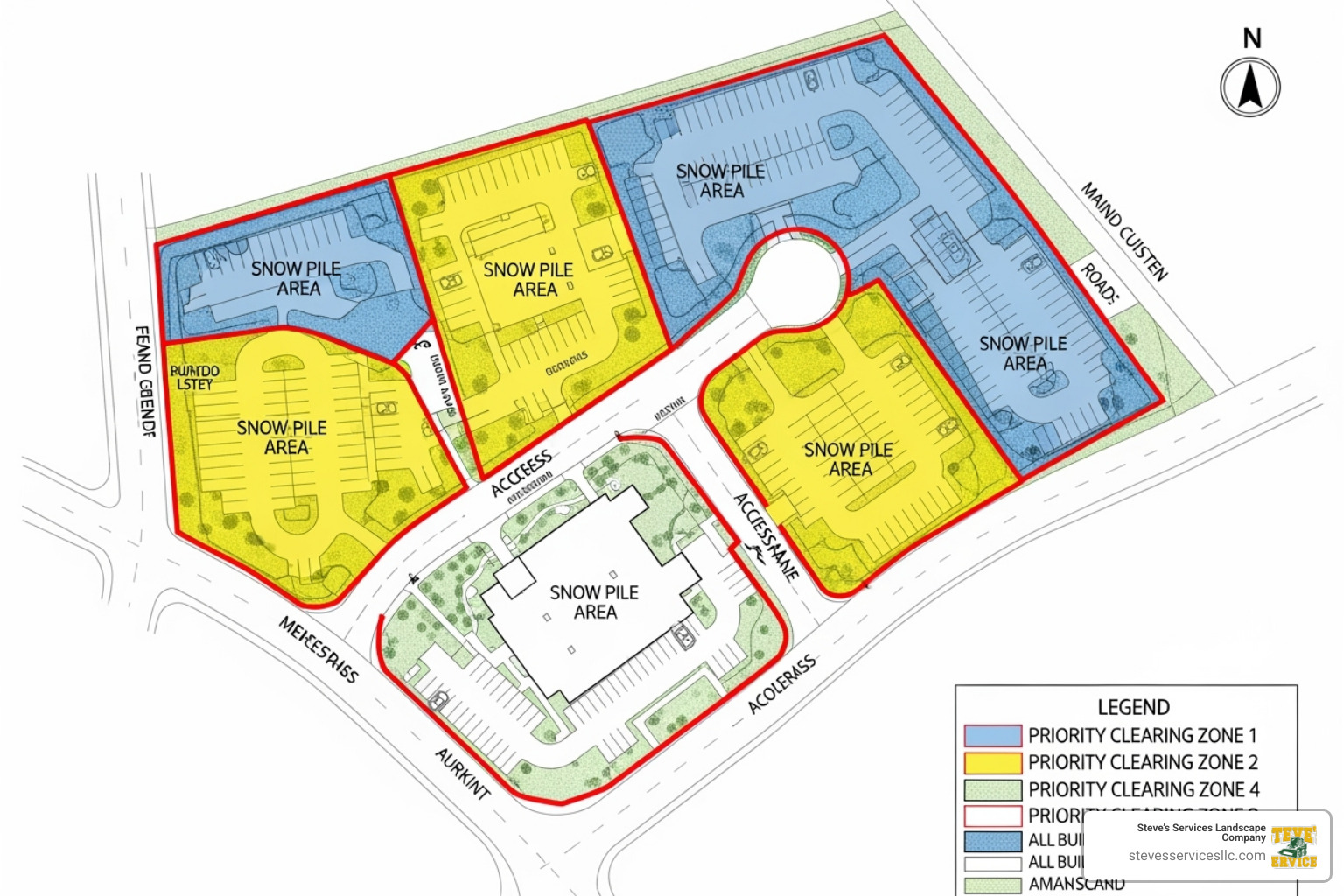
Pre-season preparation is key. This involves thorough site inspections to identify trouble spots like drifting snow or icy patches. Hazard identification considers foot traffic, emergency access, and refreezing areas. A solid communication plan keeps tenants and contractors informed, while policy development provides a framework for quick decisions.
Creating Your Snow and Ice Response Plan (SIRP)
A Snow and Ice Response Plan (SIRP) is a detailed roadmap that eliminates guesswork. Key components include:
- Trigger depths: Clear thresholds for when services begin (e.g., plowing at 1 inch of snow).
- Service levels: Defines priorities, such as clearing high-traffic entrances first.
- Equipment requirements: Matches the right tools to the task, from large plows to smaller snow blowers.
- De-icing strategy: Considers surface types, environmental impact, and temperature effectiveness, using liquid de-icers or rock salt as appropriate.
- Snow pile management: Designates storage areas that won’t create new hazards from melting and refreezing.
- Environmental impacts: Includes sustainable practices to protect local waterways and landscaping.
For property managers looking to understand the full scope of commercial snow operations, our Commercial Snow Plowing page provides additional insights into professional snow management approaches.
Proactive and Sustainable Practices
A proactive strategy prevents problems. Pre-treatment with liquid brine before a storm prevents snow and ice from bonding to surfaces, making removal easier and reducing chemical use.
Modern eco-friendly de-icers are gentler on concrete and landscaping. Calibrated salt spreaders ensure the correct amount of material is used, avoiding waste and environmental harm. Finally, protecting landscaping requires training crews to be mindful of plants and grass during snow removal.
Property managers interested in broader environmental considerations can explore resources on Turning Environmental Regulatory Challenges into Opportunities, which shows how proactive environmental strategies benefit properties in multiple ways.
Selecting and Contracting a Professional Snow Removal Service
Selecting the right snow removal contractor is a critical decision. Not every company with a plow is qualified for commercial property manager snow removal, and an unqualified one can be a liability. The key is to start your search in the summer. This gives you ample time to vet contractors, compare quotes, and secure a reliable partner before the first storm hits and the best providers are booked.

The vetting process is worth the time, as you’re buying liability protection, not just a service. For an overview of professional snow removal, see our page on More info about Commercial Snow Removal.
Criteria for Choosing a Reliable Contractor
When evaluating contractors, look for these qualities:
- Experience and Reputation: Seek contractors with a proven track record through harsh winters and positive references from other property managers.
- Certification: Certifications like ISO or CSP (Certified Snow Professional) indicate adherence to strict quality and safety standards.
- Insurance Verification: This is non-negotiable. Require a certificate of insurance for General Commercial Liability (at least $1 million) and Workers’ Compensation. Ensure your property is named as an additional insured and verify they have specific winter coverage, as landscaping insurance is often insufficient.
- Equipment Fleet: A well-maintained fleet of owned equipment, including various plow sizes and de-icing spreaders, shows they are a serious operation.
- 24/7 Availability: Snow doesn’t keep business hours. Your contractor must be available around the clock with clear communication protocols during storms.
- Local Knowledge: A contractor familiar with Massachusetts weather and local ordinances can anticipate issues and ensure compliance.
If you’re managing property in our service area, you can find more specific information at More info about snow removal in Everett, MA.
Essential Elements of a Snow Removal Contract
A solid contract is your best protection. It should clearly define:
- Scope of Work: Exactly what services are included (plowing, shoveling, de-icing) and which areas are covered (parking lots, walkways, emergency routes).
- Service Triggers: Specific measurements for when work begins (e.g., “Plowing at 2 inches of accumulation”).
- Pricing Structure: A clear breakdown of costs, whether per-push, seasonal, or hourly, with no hidden fees.
- Liability and Indemnity Clauses: These crucial clauses define who is responsible in case of an accident.
- Proof of Insurance: The contract must require the contractor to maintain and provide proof of insurance throughout the season.
- Waiver of Subrogation: This prevents the contractor’s insurer from suing you after paying a claim.
For more on what makes a strong contract, visit our resource on More info about Commercial Snow Removal Contracts.
Choosing the Right Contract for your property manager snow removal needs
Selecting the right contract type is key to managing your winter budget.
- Per-Push (Per-Event): You pay a fee each time the crew services your property. This can be cost-effective in light snow years but can lead to unpredictable, high costs in heavy winters. Per-push clients may also receive lower priority during major storms.
- Seasonal: You pay a fixed fee for the entire season, regardless of snowfall. This provides budget certainty and typically ensures priority service. It’s best for properties with regular snowfall where predictable costs are crucial.
- Time & Materials (Hourly): You pay for the actual time and materials used. This requires close monitoring to avoid charges for inefficiency and may result in service delays during busy periods.
Please note: The pricing mentioned for these contract types are average costs based on internet data and not actual costs for Steve’s Services. Average costs for per-push can range from $50 to $500+ per event depending on property size and services. Seasonal contracts can range from $500 to $10,000+ per season, while hourly rates might be $75 to $250+ per hour for equipment and crew.
The choice ultimately depends on your property’s location, size, and your risk tolerance for budget variability. For more insights on contract types, industry resources like those from three types of snow removal contracts provide additional perspective on making the right choice.
Execution, Documentation, and Communication
A great plan and contractor are just the start. Ongoing monitoring, documentation, and communication are crucial for ensuring safety and mitigating liability.

Best Practices for Documentation
Meticulous documentation is your best defense against slip-and-fall claims. Your strategy should include:
- Snow Removal Logs: Record dates, times, areas cleared, and de-icing agents used.
- Timestamps: Every entry must be time-stamped to prove service was performed in a “reasonable timeframe.”
- Photographic Evidence: Take time-stamped photos/videos of cleared areas after service, hazardous conditions before, and any incident scenes.
- Weather Condition Reports: Correlate service logs with official weather reports to justify your response.
- Incident Reports: Immediately document any incidents with witness statements and photos, and report them to your insurance provider.
This documentation helps defend against claims, standardize procedures, and improve future performance.
Communicating with Tenants and Visitors
Clear communication manages expectations and promotes safety.
- Pre-season Notifications: Inform tenants of the snow plan and their responsibilities (e.g., moving cars).
- Storm Updates: Provide timely updates on clearing times and ongoing operations during storms.
- Parking Restrictions: Communicate any necessary parking restrictions clearly and in advance.
- Reporting Hazards: Create a simple process for tenants and visitors to report icy spots.
- Setting Realistic Expectations: Remind tenants that perfect, immediate clearing isn’t always possible during heavy storms, emphasizing the goal of safety within a reasonable timeframe.
Frequently Asked Questions about Property Manager Snow Removal
Here are answers to the most common questions about property manager snow removal.
Who is ultimately responsible for a slip-and-fall on a commercial property?
As the property owner or manager, you bear the primary responsibility for keeping the premises safe, even with a hired contractor. The law views this as a non-transferable duty of care. If your contractor performs poorly, you could still face liability.
However, this often results in shared liability. The contractor is responsible for failing to meet contract terms. This is why the importance of contracts with clear indemnity clauses is crucial. A well-drafted agreement defines responsibilities and liability, protecting you from bearing the full burden of an incident.
When is the best time to hire a snow removal contractor?
The best time is summer hiring. Waiting until early fall is often too late, as the best contractors are already booked.
Hiring in the summer gives you time to properly vet companies, compare proposals, and check references without rushing. You avoid the last-minute rush that leads to poor decisions. Many contractors also offer early-bird discounts for summer signings. Securing reliable service early means you’re prepared long before the first storm warning.
What are the biggest red flags when hiring a snow removal company?
Be wary of these warning signs:
- Lack of Insurance: A contractor must provide certificates for General Liability and Workers’ Compensation and name you as an additional insured. This is non-negotiable.
- Vague Contracts: Professional agreements are detailed, defining service triggers, response times, and covered areas. Avoid one-page, fuzzy contracts.
- Poor Communication: If a contractor is unresponsive during the hiring process, they will likely be unreachable during a blizzard.
- Inadequate Equipment: A professional operation has a fleet of properly sized and maintained equipment, not just a single pickup truck with a plow.
- Unwillingness to Provide References: Reputable contractors are happy to share references from satisfied clients. Evasiveness is a major red flag.
Trust your instincts during the vetting process. It’s better to keep looking than to get stuck with an unreliable property manager snow removal service when you need it most.
Conclusion
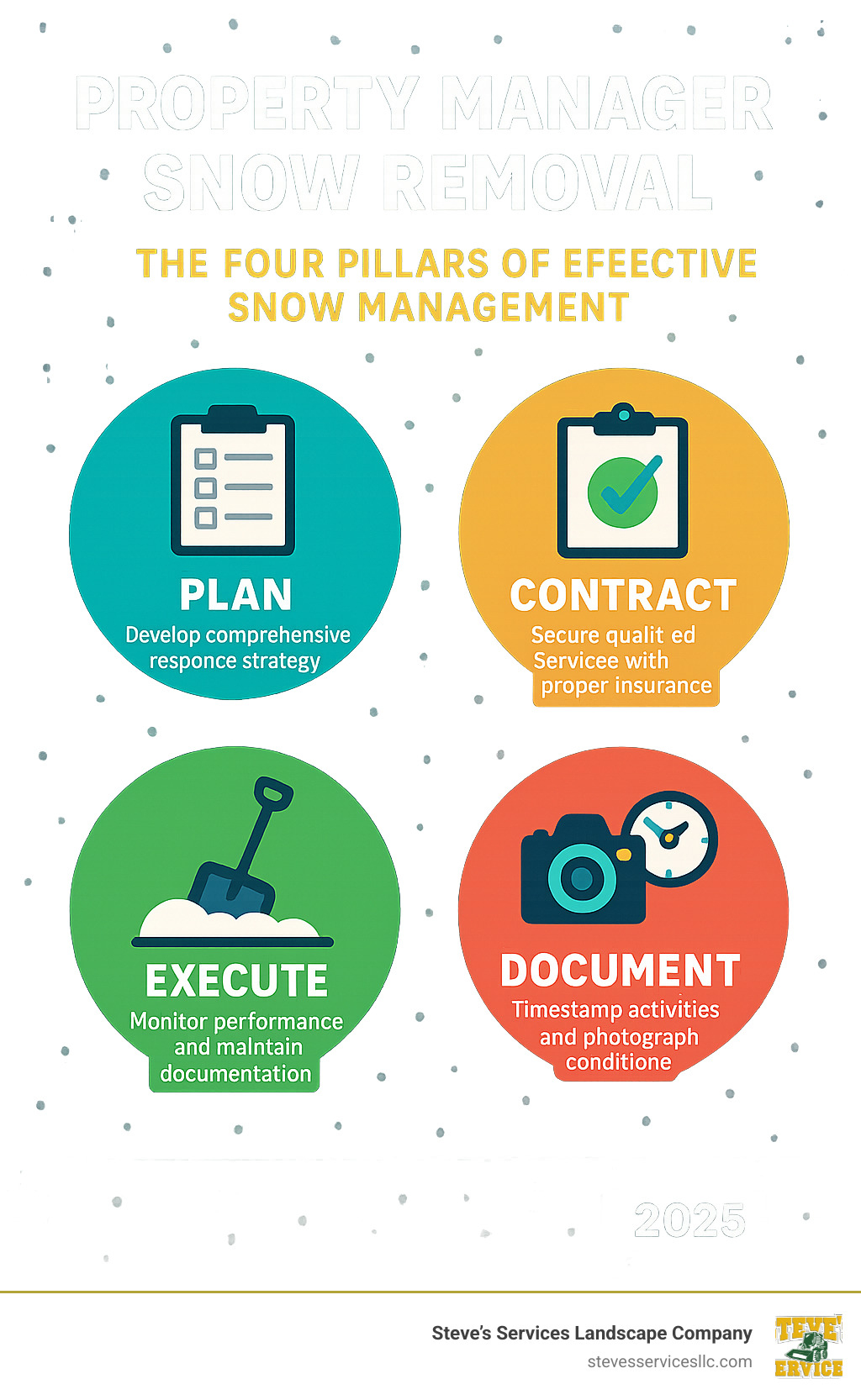
Successful property manager snow removal rests on four pillars: proactive planning, vetting professionals, creating clear contracts, and meticulous documentation. Mastering these elements protects your tenants, property, and peace of mind.
A confident approach to winter starts with preparation. This means having a Snow and Ice Response Plan (SIRP) ready, thoroughly vetting contractors for insurance and experience, and creating bulletproof contracts that eliminate guesswork. Meticulous documentation with timestamps and photos provides a crucial defense against liability claims.
At Steve’s Services, we have helped property managers in Massachusetts communities like Everett, Burlington, Danvers, and Lynnfield steer winter for over 25 years. We understand that every property has unique challenges.
Winter doesn’t have to be a headache. With the right partner and proper planning, you can ensure safety and protect your investment. We can help turn winter weather from a source of stress into a manageable part of your routine.
Ready to face winter with confidence? Contact us for comprehensive Snow Management services and let our expertise work for you.
