
Why Outdoor Spring Cleanup Sets the Tone for Your Entire Season
Outdoor spring cleanup is one of the highest-leverage things you can do for your lawn and garden each year. Done right, it prevents weeds, protects pollinators, and saves you real money down the road.
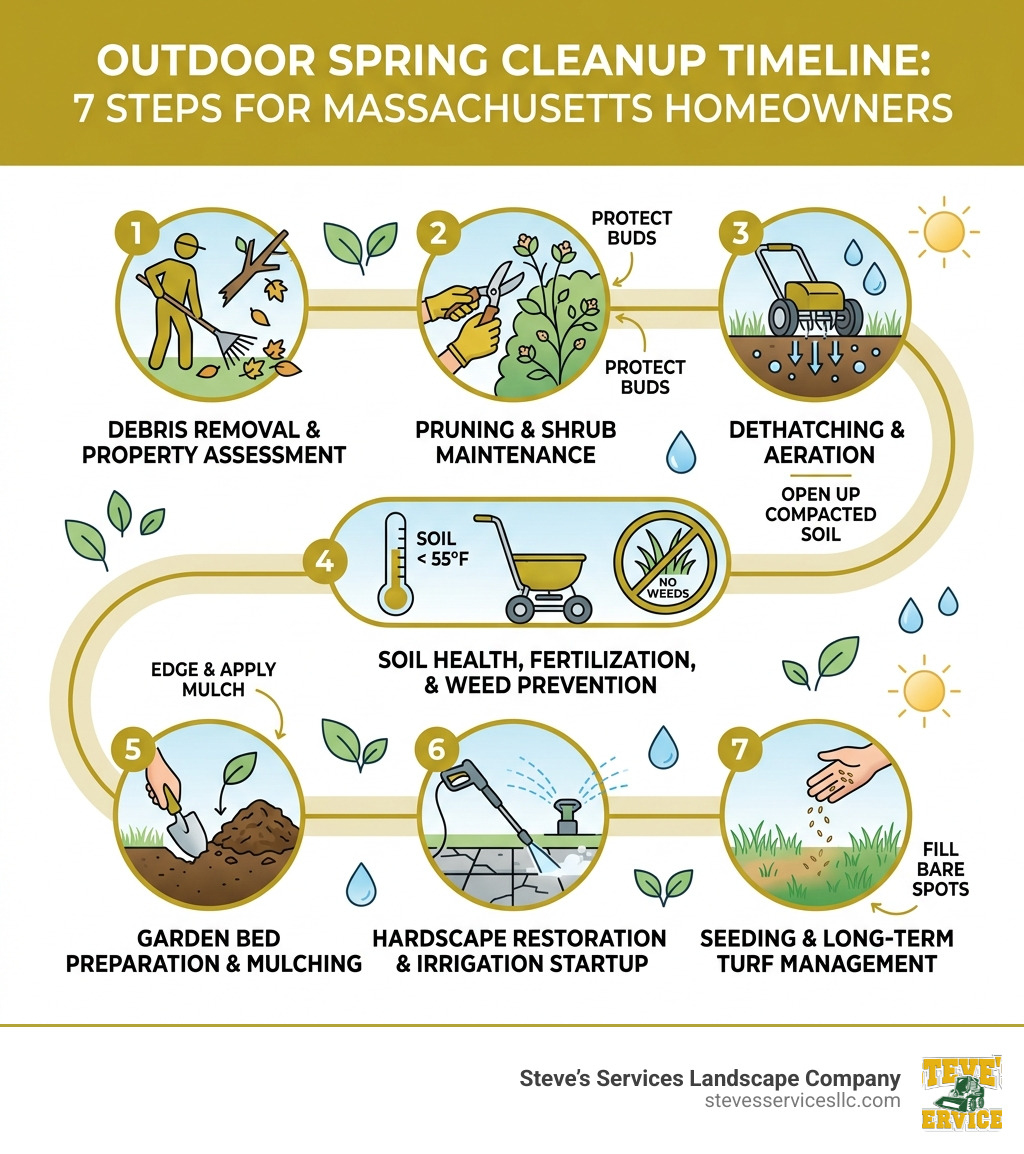
Here are the 7 steps to a perfect spring lawn:
- Debris removal and property assessment – Clear winter damage, leaves, and branches
- Pruning and shrub maintenance – Time cuts around bloom cycles to protect buds
- Dethatching and aeration – Open up compacted soil for air, water, and nutrients
- Soil health, fertilization, and weed prevention – Apply pre-emergent before soil hits 55°F
- Garden bed preparation and mulching – Edge, weed, and apply 2-3 inches of fresh mulch
- Hardscape restoration and irrigation startup – Clean pavers, check joints, and test your system
- Seeding and long-term turf management – Fill bare spots and build turf density for summer
Timing matters more than most homeowners realize. Raking too early compacts wet soil and disturbs overwintering pollinators. Raking too late lets weeds get a head start. Research shows that investing just 10-15 hours in spring yard work now can save you hundreds of dollars in professional weed control and lawn repair later in the season.
The Massachusetts climate adds its own layer of complexity. Cool-season grasses common in the Greater Boston area don’t begin active growth until soil temperatures reach 50°F – and that window shifts every year.
I’m Steve Sylva, owner of Steve’s Services Landscape Company in Malden, MA, and with over 25 years of hands-on experience managing outdoor spring cleanup for residential and commercial properties across Middlesex County, I’ve seen what separates a lawn that thrives all summer from one that struggles by July. In this guide, I’ll walk you through each step our team follows to get New England lawns ready for the season.
Outdoor spring cleanup word guide:
The Science of Timing Your Outdoor Spring Cleanup
When it comes to a successful outdoor spring cleanup, the “when” is just as important as the “how.” In our region, including towns like Melrose and Winchester, the urge to get outside often hits during the first warm weekend in March. However, jumping the gun can actually do more harm than good.
The science of spring cleanup revolves around two main factors: soil temperature and moisture. If the ground is still soggy from snowmelt or April showers, walking on it or using heavy equipment can lead to severe soil compaction. This suffocates grass roots before they even have a chance to wake up. According to experts at This Old House, waiting for the soil to dry out and thaw completely is the first rule of professional landscaping. Furthermore, spring yard clean up ideas often focus on balancing aesthetic goals with the biological needs of your plants.
Indicators for Starting Your Outdoor Spring Cleanup
Instead of looking at the calendar, we look at nature’s own “clocks.” These phenological indicators tell us exactly when the environment is ready for maintenance.
- The Forsythia Rule: When you see the bright yellow blooms of Forsythia bushes in Malden or Saugus, it’s a signal that soil temperatures are approaching 50°F to 55°F. This is the optimal window for many cleanup tasks.
- The Grass Growth Test: Cool-season lawns begin active growth when the soil hits 50°F. If you see the grass starting to push up new, green blades, it’s generally safe to begin a light spring yard clean up checklist.
- Overnight Temperatures: We wait until overnight temperatures are reliably in the 50s. A good rule of thumb: if it’s still too cold to plant a tomato (which shuts down below 50°F), it might be too early for heavy leaf removal.
Protecting Local Ecosystems During Outdoor Spring Cleanup
One of the biggest mistakes homeowners make is cleaning up “too clean” too early. Over 40% of our native bees and butterflies overwinter in the very leaf litter and hollow stems we are tempted to rake away in March.
By delaying your outdoor spring cleanup until temperatures are consistently above 50°F, you allow these beneficial insects to emerge safely. Many pollinators, such as mason bees and butterfly chrysalides, depend on that debris for protection against late-season frosts. As noted by Almanac.com, a “messy” garden in early spring is actually a sign of a healthy, biodiverse ecosystem. We recommend leaving the leaves in your garden beds until you see active pollinator movement in your neighborhood.
Step 1: Professional Debris Removal and Property Assessment
Once the ground is firm and the pollinators have stirred, we begin the physical labor of the outdoor spring cleanup. This starts with a thorough property walk-through to identify winter damage. New England winters are notorious for heavy ice and wind, which often leave behind a graveyard of fallen branches and “winter burn” on evergreens.

Our team uses high-powered blowers and specialized raking techniques to clear away the matted layers of leaves that can cause “snow mold”—a fungal disease that thrives under wet debris. We pay special attention to the corners of the yard where wind-blown trash and sand from winter road treatments tend to accumulate. Removing this debris is the foundation of our landscape cleanup services, ensuring that sunlight and oxygen can reach the turf and soil surface.
Step 2: Expert Pruning and Shrub Maintenance
Pruning is both an art and a science. In the spring, our goal is to remove the “Three Ds”: dead, damaged, and diseased wood. This not only improves the appearance of your shrubs but also prevents pests from taking hold in weakened branches.
For deciduous hedges and non-flowering shrubs, late winter or early spring is the ideal time to shape them before they expend energy on new growth. However, when it comes to flowering plants, the rules change. We always check the structural integrity of larger trees during this phase, as heavy snow loads can often create hairline fractures in limbs that pose a safety risk. You can find more detail on these techniques in our guide on everything you need to know about professional yard cleanup services.
Timing Pruning for Maximum Bloom
The most common mistake we see is “bloom-killing” pruning. To avoid this, you must know if your plant blooms on “old wood” (buds set last year) or “new wood” (buds that grow this spring).
- Spring Bloomers (Old Wood): Plants like Lilacs, Forsythia, and Rhododendrons should not be pruned during your initial outdoor spring cleanup. If you cut them now, you are cutting off this year’s flowers. Wait until immediately after they finish blooming.
- Summer Bloomers (New Wood): Plants like Butterfly Bush or Rose of Sharon can be cut back aggressively in early spring. They will grow new stems and bloom beautifully by July.
- Perennials: We typically cut dead perennial stalks down to 2-3 inches above the ground to make room for new shoots, as discussed in our spring yard clean ups overview.
Step 3: Advanced Lawn Care: Dethatching and Aeration
After a long winter of being buried under snow and subjected to foot traffic, your lawn’s soil is likely compacted. Compacted soil prevents water, oxygen, and nutrients from reaching the roots.
Thatch is the layer of organic matter (living and dead) that sits between the green grass blades and the soil surface. A little thatch (less than half an inch) is healthy, but too much acts like a waterproof tarp over your lawn. During a professional lawn care clean up, we evaluate whether your lawn needs dethatching or aeration.
| Feature | Dethatching | Core Aeration |
|---|---|---|
| Primary Goal | Remove surface organic buildup | Relieve deep soil compaction |
| Method | Vertical raking/slicing | Removing “plugs” of soil |
| Best For | Spongy lawns with thick debris | Hard, compacted soil/heavy traffic |
| Timing | Early spring (once grass is growing) | Spring or Fall |
| Nutrient Access | Moderate improvement | Maximum improvement to root zone |
Step 4: Soil Health, Fertilization, and Weed Prevention
A beautiful lawn starts underground. During the outdoor spring cleanup, we often recommend a soil test to check pH levels and nutrient deficiencies. In our service areas like Reading and Stoneham, soil can often be acidic, requiring a lime application to balance the pH.
Applying fertilizer too early is a waste of money; the grass needs to be actively growing to absorb the nutrients. We wait until the lawn shows signs of life before applying a slow-release nitrogen blend. This ensures the grass gets a steady “meal” rather than a quick burst that mostly feeds the weeds. Our spring yard clean up services prioritize this long-term health over quick, temporary greening.
Managing Crabgrass and Invasive Species
Crabgrass is the nemesis of a perfect lawn, and prevention is the only real cure. Crabgrass seeds germinate when soil temperatures reach 55°F to 60°F for several consecutive days.
To be effective, a pre-emergent herbicide must be applied before this germination window. If you wait until you see the crabgrass, it’s already too late for pre-emergents. We monitor local soil temperatures closely to time this application perfectly, usually coinciding with the end of the Forsythia bloom.
Step 5: Garden Bed Preparation and Professional Mulching
Nothing transforms a property faster than freshly edged and mulched garden beds. This isn’t just about “curb appeal”—it’s about plant health.
First, we redefine the edges of your beds using a mechanical edger or a sharp spade. This creates a clean “V” trench that prevents grass from creeping into your flowers. Next, we apply a 2-3 inch layer of high-quality mulch. Proper yard cleanup and mulching provides three critical benefits:
- Moisture Retention: Reduces the need for watering by up to 50%.
- Weed Suppression: Blocks sunlight from reaching weed seeds.
- Temperature Regulation: Keeps roots cool in the summer and protected from late spring frosts.
Pro-tip: Avoid “volcano mulching.” Piling mulch against the trunk of a tree can cause rot and disease. Always keep mulch a few inches away from the base of the plant.
Step 6: Hardscape Restoration and Irrigation Startup
Your outdoor spring cleanup shouldn’t stop at the grass line. Winter salt and sand can take a toll on your patios, walkways, and driveways. We use professional-grade blowers and low-pressure washing to clear debris from paver joints and stone surfaces.
This is also the time to inspect your hardscaping services for any shifting or “heaving” caused by the freeze-thaw cycle. Once the hardscapes are clean, we turn our attention to your irrigation systems. A spring startup involves:
- Slowly pressurizing the main line to prevent water hammer.
- Checking every zone for broken heads or leaks.
- Adjusting spray patterns to ensure water hits the lawn, not the sidewalk.
- Setting the controller for early spring weather (you need much less water in May than in July!).
Step 7: Seeding and Long-Term Turf Management
If your lawn has bare patches from salt damage or heavy snow piles, spring is a great time for “spot seeding.” However, for larger areas, we often recommend new lawn installs or hydroseeding lawns if the damage is extensive.
Because our local grass types are “cool-season” (like Kentucky Bluegrass and Fescue), they love the mild temperatures and frequent rain of a New England spring. We use high-quality, weed-free seed blends and often top-dress bare areas with a thin layer of compost to ensure high germination rates. Increasing your turf density now is the best natural defense against summer heat and weed invasions.
Investment and Professional Service Costs
Investing in a professional outdoor spring cleanup is an investment in your property’s value. While some homeowners choose the DIY route, the specialized equipment and horticultural knowledge required for a truly comprehensive cleanup often make professional services more cost-effective in the long run.
Note: Pricing figures are internet-based averages for 2026 and do not represent specific quotes for Steve’s Services. Professional cleanup services typically range from $350 to $3,500+ depending on acreage, the number of garden beds, and the depth of service (e.g., adding aeration or mulching).
Factors that influence spring clean up yard cost include the amount of debris to be hauled away, the total linear feet of bed edging, and the volume of mulch required. For a 1/4 acre lot with standard landscaping, you can expect to be on the lower end of the range, while large estates or commercial properties with extensive ornamental plantings will fall on the higher end.
Frequently Asked Questions
How does commercial snow management impact spring cleanup requirements?
Heavy equipment used in commercial snow management can lead to significant soil compaction and turf damage along perimeter edges. Professional spring restoration must address these “plow scars” through specialized aeration and soil amendments to repair salt-saturated areas. We often see “salt burn” where snow was piled high, requiring specific gypsum treatments to flush the sodium out of the soil so new grass can grow.
When is the best time to schedule professional services in Middlesex County?
In the North Shore and Greater Boston areas, scheduling typically begins in late March for an April execution. Waiting for the ground to thaw completely prevents soil compaction from heavy machinery, ensuring the root systems of cool-season grasses remain undamaged. Because the spring window is short, we recommend booking your service at least 4-6 weeks in advance.
What are the risks of premature lawn mowing in early April?
Mowing before the grass reaches a height of three inches or before the soil temperature consistently hits 50 degrees can scalp the lawn and stunt root development. This leaves the turf vulnerable to crabgrass infestation as soil temperatures rise toward the 55-degree germination threshold. Your first mow should be “high”—never remove more than the top 1/3 of the grass blade.
Conclusion
A successful outdoor spring cleanup is the bridge between a dormant winter landscape and a vibrant, healthy summer yard. By following these seven steps—or partnering with a professional team that understands the unique needs of Massachusetts soil and climate—you ensure your property is the envy of the neighborhood.
Steve’s Services Landscape Company provides expert seasonal transitions for residential and commercial properties throughout Malden, Burlington, Everett, Lynnfield, Medford, Melrose, Reading, Revere, Saugus, Stoneham, Wakefield, Winchester, and Woburn. By utilizing professional-grade equipment and horticultural expertise, we ensure your New England landscape thrives from the first thaw of April 2026 through the heat of summer. Ready to get started? Explore our Spring Yard Clean-ups services and let us handle the heavy lifting this season.
