
Understanding Natural Hemlock Mulch: What You Need to Know
Natural hemlock mulch is a premium organic mulch made from the bark of Eastern Hemlock trees, prized for its rich reddish-brown color, slow decomposition rate, and multiple garden benefits.
Key Facts About Natural Hemlock Mulch:
- What it is: Shredded or double-ground bark from Eastern Hemlock trees (Tsuga species)
- Color: Natural reddish-brown to auburn that retains its vibrancy longer than most mulches
- Benefits: Superior weed suppression, moisture retention, soil insulation, and natural pest resistance
- Safety: Non-toxic and safe for pets, children, and vegetable gardens (unlike poisonous hemlock plant)
- Application: Apply 2-3 inches deep, keeping it away from plant stems
- Best for: Acid-loving plants like azaleas, rhododendrons, and blueberries
- Longevity: Decomposes slowly, requiring less frequent replacement than other organic mulches
When it comes to landscaping, mulch plays a critical role in maintaining healthy garden beds. It conserves soil moisture, moderates temperature, suppresses weeds, and prevents erosion. Among the many mulching options available, hemlock mulch stands out as a favorite among professional landscapers and homeowners alike for its aesthetic appeal, functional benefits, and environmental friendliness.
Unlike dyed mulches that fade quickly or cedar mulch that can be cost-prohibitive, natural hemlock mulch offers an excellent balance of durability, beauty, and value. As a byproduct of the lumber industry, it’s also a sustainable choice that reduces waste while enriching your garden.
As Steve Sylva, owner of Steve’s Services with over 25 years of landscaping experience in Massachusetts, I’ve seen how natural hemlock mulch transforms properties while supporting long-term plant health. Throughout this guide, I’ll share expert insights on why hemlock mulch is an excellent investment for your landscape.
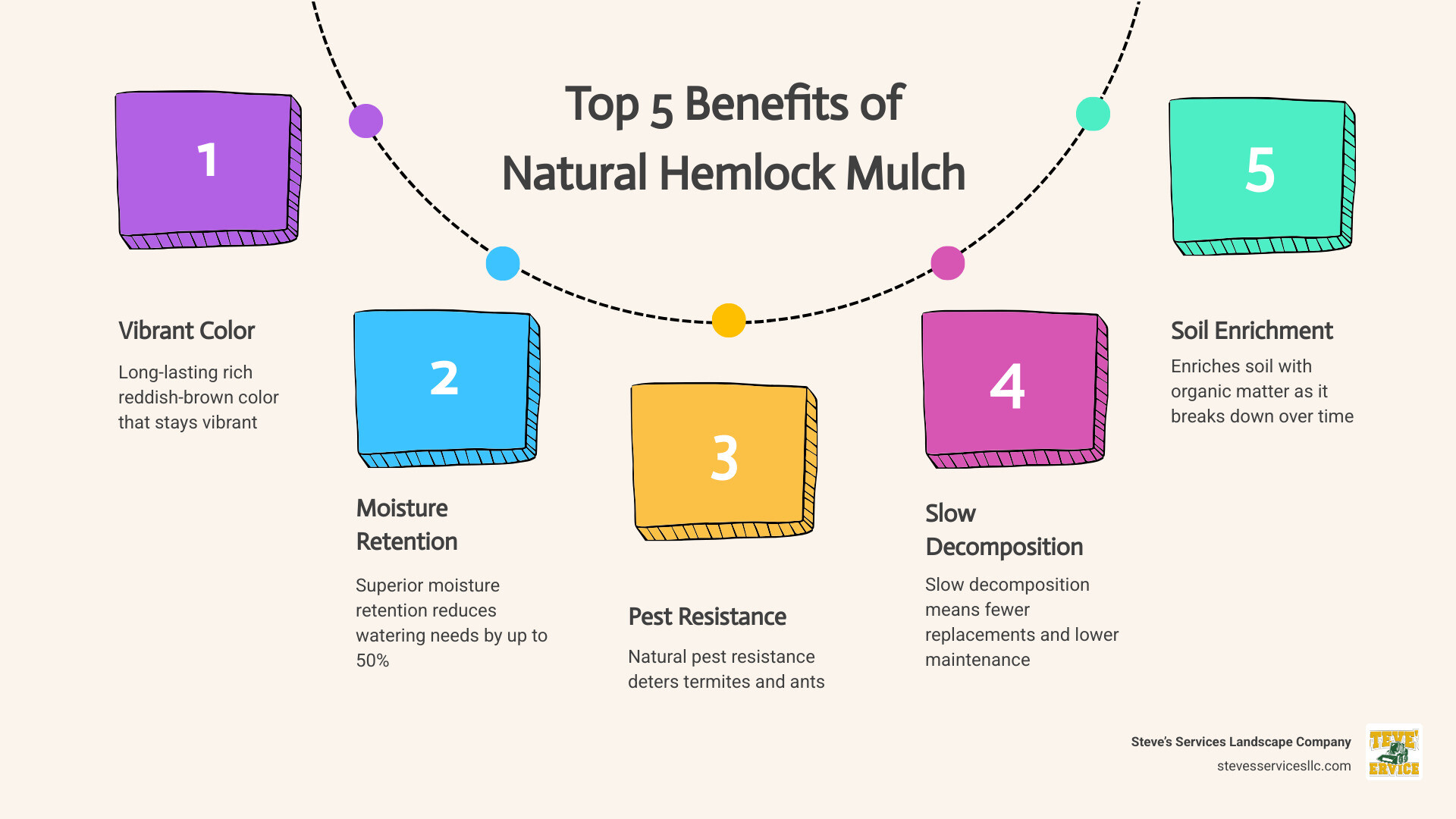
Natural hemlock mulch vocab explained:
What is Hemlock Mulch and Why is it a Premium Choice?
When we talk about natural hemlock mulch, we’re referring to a product that’s celebrated for its distinctive qualities and numerous advantages in the garden and landscape. It’s more than just ground wood; it’s a carefully processed material with unique characteristics that set it apart.
What is Natural Hemlock Mulch and Where Does It Come From?
Natural hemlock mulch is derived primarily from the bark and sometimes the wood of the hemlock tree, a conifer native to North America. Specifically, the Eastern Hemlock tree (Tsuga canadensis) is the source of the high-quality bark that gives this mulch its unique texture and rich, rusty dark brown to reddish-brown color. This is entirely different from the poisonous herbaceous plant often referred to as “hemlock” (Conium maculatum); the tree-derived mulch is safe for your landscape and family. You can learn more about the hemlock tree itself.
This premium mulch is typically available in shredded or double-ground forms. The double-grinding process ensures a finer, more uniform texture that not only looks attractive but also helps the mulch knit together, resisting wind and water displacement. Pure hemlock mulch, as offered by many reputable suppliers, contains no added coloring and is all-natural, allowing its inherent beauty to shine through. The subtle, pleasant aroma of fresh hemlock mulch is another unique quality that many homeowners appreciate, adding a sensory dimension to their outdoor spaces.
A significant aspect of hemlock mulch’s appeal is its origin as a byproduct of the lumber industry. This means that using hemlock mulch is often a sustainable choice, as it repurposes materials that might otherwise be considered waste, contributing to responsible forest management and reducing our environmental footprint.
How Hemlock Mulch Contributes to Soil Health Over Time
Beyond its immediate aesthetic benefits, natural hemlock mulch plays a crucial, long-term role in fostering healthy soil. As an organic material, its decomposition process is a slow but steady act of enrichment.
Over time, as the hemlock bark slowly breaks down, it releases valuable organic matter into the soil below. This organic matter is like a superfood for your garden, improving soil structure and increasing its fertility. It helps heavy clay soils become more porous, allowing better air and water penetration, while giving sandy soils more body and water-holding capacity. This contributes to a healthier environment for plant roots to thrive.
The decomposition also gradually releases nutrients back into the soil, feeding your plants naturally. While newly applied mulch might temporarily tie up some nitrogen during the initial stages of microbial breakdown if it’s mixed into the soil, when applied as a top layer, it typically enriches the soil without causing nutrient deficiencies for established plants. For more information on how mulch benefits your garden, explore our guide on garden mulch.
Furthermore, hemlock mulch’s ability to retain soil moisture is paramount for soil health. By forming a protective layer over the soil, it reduces evaporation, keeping the soil consistently moist. This not only reduces your watering needs but also creates a more stable, hospitable environment for beneficial soil microorganisms, which are vital for nutrient cycling and overall soil vitality.
The Best Benefits of Natural Hemlock Mulch
Natural hemlock mulch isn’t just a pretty face in the garden; it’s a workhorse that delivers a multitude of benefits for both the appearance and health of your landscape. We’ve seen countless Massachusetts homeowners transform their properties with this versatile material.
Superior Aesthetics and Longevity
One of the most compelling reasons homeowners and landscapers choose natural hemlock mulch is its unparalleled aesthetic appeal. Its vibrant auburn to rich reddish-brown color provides a sophisticated backdrop that makes green foliage and colorful blooms truly pop. It offers a professional, polished finish to any landscape, elevating curb appeal instantly.
What truly sets hemlock mulch apart in the aesthetic department is its exceptional colorfastness. Unlike many other organic mulches that fade to a dull gray within months, hemlock bark mulch retains its rich color for a significantly longer period. This means your landscape will look fresh and vibrant throughout the season, reducing the need for frequent replenishment just to maintain color. The fine, shredded texture also helps create a uniform and appealing surface. For more details on the visual impact of different barks, check out our insights on bark for mulching.
Functional Advantages for a Healthy Garden
Beyond its beauty, natural hemlock mulch is a champion of garden health, offering several functional advantages that contribute to thriving plants and less work for you.
- Moisture Retention and Reduced Watering Needs: In the often-dry Massachusetts summers, retaining soil moisture is crucial. Hemlock mulch forms a protective barrier over the soil, significantly reducing water loss due to evaporation. This means less frequent watering for your plants, saving you time, water, and money. It keeps the soil consistently moist, which is ideal for healthy root development.
- Effective Weed Control: A 2-3 inch layer of hemlock mulch is highly effective at suppressing weed growth. By blocking sunlight from reaching weed seeds, it prevents them from germinating and competing with your desirable plants for water and nutrients. This drastically cuts down on weeding time, allowing you more time to enjoy your garden.
- Root Insulation: Massachusetts experiences a wide range of temperatures, from chilly winters to hot summers. Hemlock mulch acts as an insulating blanket for plant roots. In summer, it keeps the soil cooler, preventing heat stress. In winter, it helps protect roots from extreme cold and sudden temperature fluctuations, minimizing frost heave and damage.
- Natural Pest Repellent: One of the more fascinating benefits of hemlock mulch is its natural resistance to certain garden pests. The natural oils present in hemlock bark deter insects like termites and carpenter ants, making it a less attractive option for these unwelcome guests compared to some other wood mulches. It can even help repel slugs and ticks, contributing to a more comfortable and pest-free outdoor environment for your family.
Hemlock Mulch vs. Other Common Mulches
Choosing the right mulch can feel like a daunting task with so many options available. However, understanding how natural hemlock mulch stacks up against its common counterparts can help you make an informed decision for your Massachusetts landscape.
Comparing Natural Hemlock Mulch to Other Popular Options
Let’s take a closer look at how hemlock mulch compares to other popular options:
| Mulch Type | Color Longevity | Decomposition Rate | Pest Resistance | Soil Benefits |
|---|---|---|---|---|
| Natural Hemlock | Excellent (rich reddish-brown, holds color) | Slow | Good (deters termites, ants, slugs, ticks) | Enriches soil with organic matter, slightly acidic, improves structure |
| Cedar Mulch | Good (fades slower than some, but faster than hemlock) | Slow | Good (natural oils deter some insects) | Enriches soil, but can be more alkaline |
| Pine Bark Mulch | Moderate (fades to gray over time) | Moderate | Moderate (can attract some insects as it decomposes) | Enriches soil, acidic, good for acid-loving plants |
| Dyed Hardwood Mulch | Varies (can fade quickly, colors can be artificial) | Moderate to Fast | Low (can attract insects, lower quality wood) | Enriches soil, but source wood quality and treatment can be questionable |
- Cedar Mulch Comparison: While cedar mulch also boasts some natural pest-repellent qualities due to its aromatic oils and has a decent decomposition rate, hemlock often has a more vibrant, longer-lasting color. Some experts suggest hemlock offers a slightly better decomposition profile for enriching soil compared to cedar. Both are excellent choices, but for a richer, more enduring color, we often lean towards hemlock.
- Pine Bark Mulch Comparison: Pine bark mulch, available in various forms from fine to large nuggets, is another popular option, especially for acid-loving plants, as it is also acidic. However, pine bark tends to fade to a grayish color more quickly than hemlock and generally decomposes at a moderate rate. For those seeking a vibrant, long-lasting reddish-brown hue and slower decomposition, hemlock often takes the lead. If you’re considering pine bark, you can find more information on pine bark mulch bulk near me.
- Dyed Mulch Concerns: Dyed mulches, popular for their bold colors like black and red, became widespread in the 1960s. While the dyes themselves (carbon-based for black, iron oxide for red) are generally not considered toxic to plants, the primary concern with dyed mulches often lies in their source material. Many dyed mulches are made from recycled wood, which can sometimes come from construction and demolition sites or old pallets. Before 2003, some of this wood might have been treated with Chromated Copper Arsenate (CCA), a chemical that is now restricted. While newer dyed mulches are less likely to contain CCA, it can still be difficult to determine the origin and treatment history of recycled wood. Dyed mulches also tend to fade quickly when exposed to UV light and moisture, requiring more frequent refreshers to maintain their appearance. For a deeper dive into these considerations, the University of Massachusetts Amherst provides insights on colored bark mulch.
- Other Mulch Types: It’s also worth noting that some mulches can pose risks. For instance, cocoa mulch, while aromatic, can be toxic to dogs if ingested, making natural hemlock mulch a safer choice for family-friendly gardens with pets.
In summary, while every mulch has its place, natural hemlock mulch offers a compelling combination of long-lasting beauty, slow decomposition, and natural pest resistance, making it a superior choice for many homeowners in Massachusetts.
Best Practices for Applying and Maintaining Hemlock Mulch
Proper application and maintenance are key to maximizing the benefits of natural hemlock mulch and ensuring your landscape remains healthy and beautiful. As landscape professionals, we often see common mistakes that can hinder a mulch’s effectiveness.
How to Apply Hemlock Mulch for Maximum Effect
Applying natural hemlock mulch correctly is simple but crucial:
- Prepare the Area: Before spreading any mulch, we always recommend thoroughly weeding the garden bed. This prevents weeds from growing up through the new mulch layer. If there’s old mulch, we assess its condition. If it’s still in good shape, a fresh top-up might suffice; otherwise, clearing it can be beneficial.
- Ideal Application Depth: For optimal weed suppression, moisture retention, and insulation, we recommend applying a layer of natural hemlock mulch that is 2 to 3 inches thick. A layer too thin won’t be effective, while a layer too deep (more than 3-4 inches) can potentially reduce oxygen and water availability to plant roots, threatening plant vigor.
- Keep Mulch Away from Stems and Trunks: This is perhaps one of the most critical rules of mulching. Always keep mulch a few inches (2-4 inches) away from the base of plant stems and tree trunks. Piling mulch directly against them creates a “mulch volcano,” which can trap moisture against the bark, leading to rot, disease, and creating a perfect habitat for rodents (like voles) that can girdle and kill trees by eating their bark. This is a serious concern, as highlighted by resources like Treemergency: Mulch Volcanos are Erupting in Landscapes!.
- Water After Application: While not always strictly necessary, a light watering after applying your hemlock mulch can help settle it, reduce dust, and ensure it begins to create that beneficial moisture barrier.
- Extend to the Drip Line: For trees and shrubs, extend the mulch layer out to, or even slightly beyond, the drip line of the plant’s canopy. This maximizes the benefits for the entire root zone.
If you’re looking for professional assistance with the entire process, including delivery and spreading, our team at Steve’s Services offers comprehensive mulch delivery and installation services throughout Massachusetts.
Considerations for Climate, Soil, and Cost
Natural hemlock mulch performs admirably across various conditions, making it a versatile choice for properties in Burlington, Danvers, Everett, and all our service areas in Massachusetts.
- Climate Considerations:
- Cold Climates: In regions with cold winters, like ours in Massachusetts, hemlock mulch’s insulating properties are invaluable. It helps protect plant roots from extreme cold and sudden temperature changes, providing a buffer against freezing and thawing cycles that can stress plants.
- Hot Climates: During our hot Massachusetts summers, hemlock mulch excels at retaining soil moisture. This reduces water evaporation from the soil, keeping plant roots cooler and healthier, and significantly cutting down on your watering requirements.
- Soil Type: Hemlock bark mulch is naturally slightly acidic. This characteristic makes it an ideal choice for acid-loving plants such as azaleas, rhododendrons, blueberries, and hydrangeas, helping to maintain their preferred soil pH balance. While it’s slightly acidic, it typically doesn’t drastically alter the pH of large garden beds when applied as a top dressing, but it’s a bonus for those specific plants.
- Cost: The cost of natural hemlock mulch can vary based on quality, supplier, and whether you purchase it bagged or in bulk. While prices are always subject to market fluctuations, you can expect average costs to range from approximately $40 to $150+ per cubic yard for bulk delivery, not including delivery fees or installation. This is an average based on internet data and not actual costs for Steve’s Services. Factors like the fineness of the grind (e.g., double-ground) and the purity of the hemlock content can influence the price. For large projects, purchasing in bulk is almost always more cost-effective. Learn more about your options with bulk mulch delivery.
Frequently Asked Questions about Hemlock Mulch
We often get asked specific questions about natural hemlock mulch from homeowners and landscapers across Massachusetts. Here are some of the most common inquiries and our expert answers.
Is natural hemlock mulch safe for pets and children?
Yes, absolutely! Natural hemlock mulch is one of the safest mulching options for environments where pets and children play. This is a crucial point of clarification: the mulch comes from the hemlock tree (Tsuga species), which is non-toxic. It is entirely different from the highly poisonous herbaceous plant Conium maculatum, commonly known as poison hemlock.
Our hemlock mulch is all-natural and not treated with artificial dyes or chemicals, ensuring it’s harmless if accidentally ingested by curious pets or children. This non-toxic nature makes it a superior choice compared to some other mulches, such as cocoa mulch, which can be toxic to dogs due to its theobromine content. You can confidently use natural hemlock mulch in family-friendly gardens, play areas, and even around vegetable gardens, just ensuring to leave space around vegetable stems during application.
How often should I replace hemlock mulch?
One of the significant advantages of natural hemlock mulch is its slow decomposition rate compared to many other organic mulches. This means it requires less frequent replenishment throughout the year, saving you time and money.
While it decomposes slowly, we generally recommend a light annual top-up, typically in the spring. This helps maintain the desired 2-3 inch thickness for optimal weed suppression and moisture retention, and it refreshes the vibrant color. A full replacement of the mulch layer may only be needed every 2-3 years, depending on factors like climate, exposure, and the initial depth of application.
Between full replacements, you can periodically rake the mulch to prevent compaction and improve air circulation. This also helps to redistribute the mulch and can refresh its appearance by bringing some of the less faded material to the surface. Signs it’s time to replenish include a thinning layer, increased weed growth, or a noticeably faded color that no longer provides the desired aesthetic.
Where can I buy high-quality hemlock mulch?
When sourcing natural hemlock mulch for your Massachusetts property, look for high-quality, pure hemlock products to ensure you receive all the benefits we’ve discussed.
You can typically purchase high-quality hemlock mulch from:
- Local Landscape Supply Centers: These businesses specialize in landscaping materials and often carry premium mulches.
- Garden Nurseries: Many nurseries offer a selection of mulches, including hemlock, especially those focusing on high-quality gardening products.
- Bulk Delivery Services: For larger projects, purchasing in bulk from a reputable landscape supply company like Steve’s Services is often the most economical and convenient option. We offer bulk mulch delivery near me for homeowners and businesses across our service areas, including Everett, Medford, and Reading.
When buying, always confirm that you are getting pure hemlock mulch, not a mixed wood product or industrial scrap, as these might not offer the same longevity, color retention, or pest resistance. High-quality hemlock mulch is made specifically from hemlock bark, ensuring its distinctive characteristics.
Conclusion
As we’ve explored, natural hemlock mulch is far more than just a decorative ground cover. It’s a premium, hardworking organic material that offers a remarkable blend of aesthetic appeal, functional benefits, and environmental responsibility for your landscape. From its rich, long-lasting reddish-brown color that improves curb appeal to its superior ability to suppress weeds, retain moisture, insulate roots, and naturally repel pests, hemlock mulch proves itself to be a truly exceptional choice. Its slow decomposition enriches your soil over time while requiring fewer top-ups, making it a low-maintenance solution for a vibrant, healthy garden.
For homeowners and landscapers throughout our Massachusetts service areas, including Winchester, Woburn, and Malden, choosing natural hemlock mulch means investing in a landscape that thrives and looks its best season after season. We, at Steve’s Services, are proud to be your local experts in creating and maintaining beautiful, healthy outdoor spaces. Our extensive experience has shown us the transformative power of quality materials like hemlock mulch.
If you’re ready to lift your garden’s aesthetic and health, or if you need professional guidance on selecting and applying the right mulch for your property, our team is here to help. We offer comprehensive landscaping services, including expert mulch delivery and installation, designed to bring your vision to life. Let us help you open up the full potential of your outdoor living areas with the timeless beauty and proven benefits of natural hemlock mulch.
