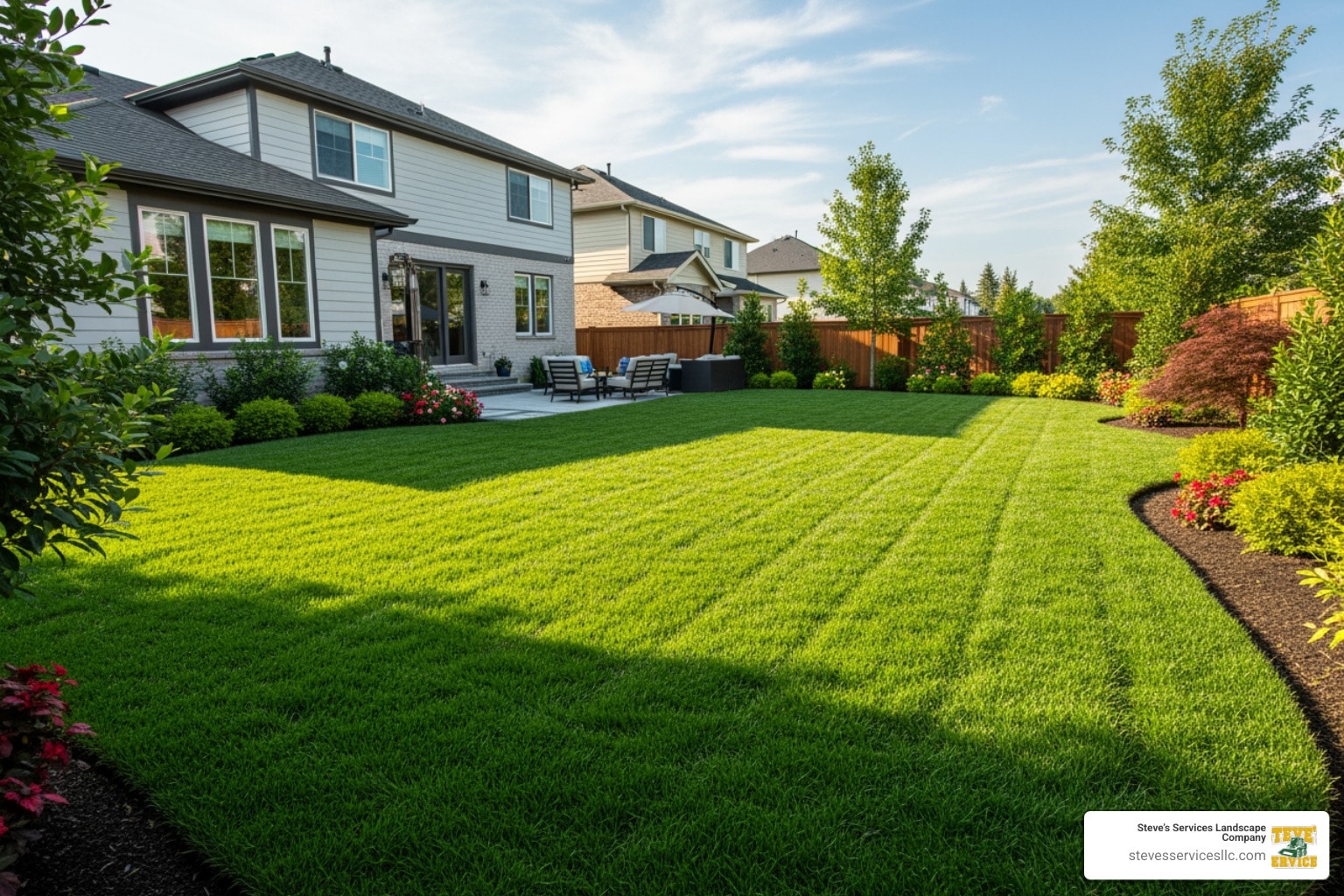
Why Choosing the Best Fertilizer for Centipede Sod Matters
Choosing the best fertilizer for centipede sod means respecting its unique, low-maintenance nature. Nicknamed “the lazy man’s grass,” this warm-season turf thrives on minimal feeding, growing slowly and naturally suppressing weeds. However, this quality also makes it uniquely sensitive to fertilization mistakes.
Quick Answer: Top Fertilizer Characteristics for Centipede Sod
- N-P-K Ratio: 15-0-15 (nitrogen-phosphorus-potassium)
- Annual Nitrogen: 1-2 pounds per 1,000 square feet maximum
- Phosphorus: Zero or minimal (unless soil test shows deficiency)
- Potassium: Moderate to high for disease resistance
- Iron: Often needed as supplement for rich green color
- Type: Slow-release granular preferred for established lawns
- Timing: Apply after spring green-up when soil reaches 65°F, avoid late summer nitrogen
What makes centipede grass low-maintenance also makes it sensitive. Too much nitrogen causes disease and thatch buildup. Phosphorus depletes critical iron, turning your lawn yellow. Even timing matters—fertilizing too early or too late can damage the grass.
The key to a healthy centipede lawn isn’t feeding it more—it’s feeding it right. This means understanding its specific nutrient needs, respecting its preference for acidic soil (pH 5.0-6.0), and avoiding the one-size-fits-all fertilizers that harm centipede.
I’m Steve Sylva, owner of Steve’s Services, and over my 25+ years maintaining lawns across suburban Massachusetts, I’ve learned that choosing the best fertilizer for centipede sod starts with understanding that less is truly more. Whether you’re establishing new sod or maintaining an existing lawn, the right professional approach makes all the difference.
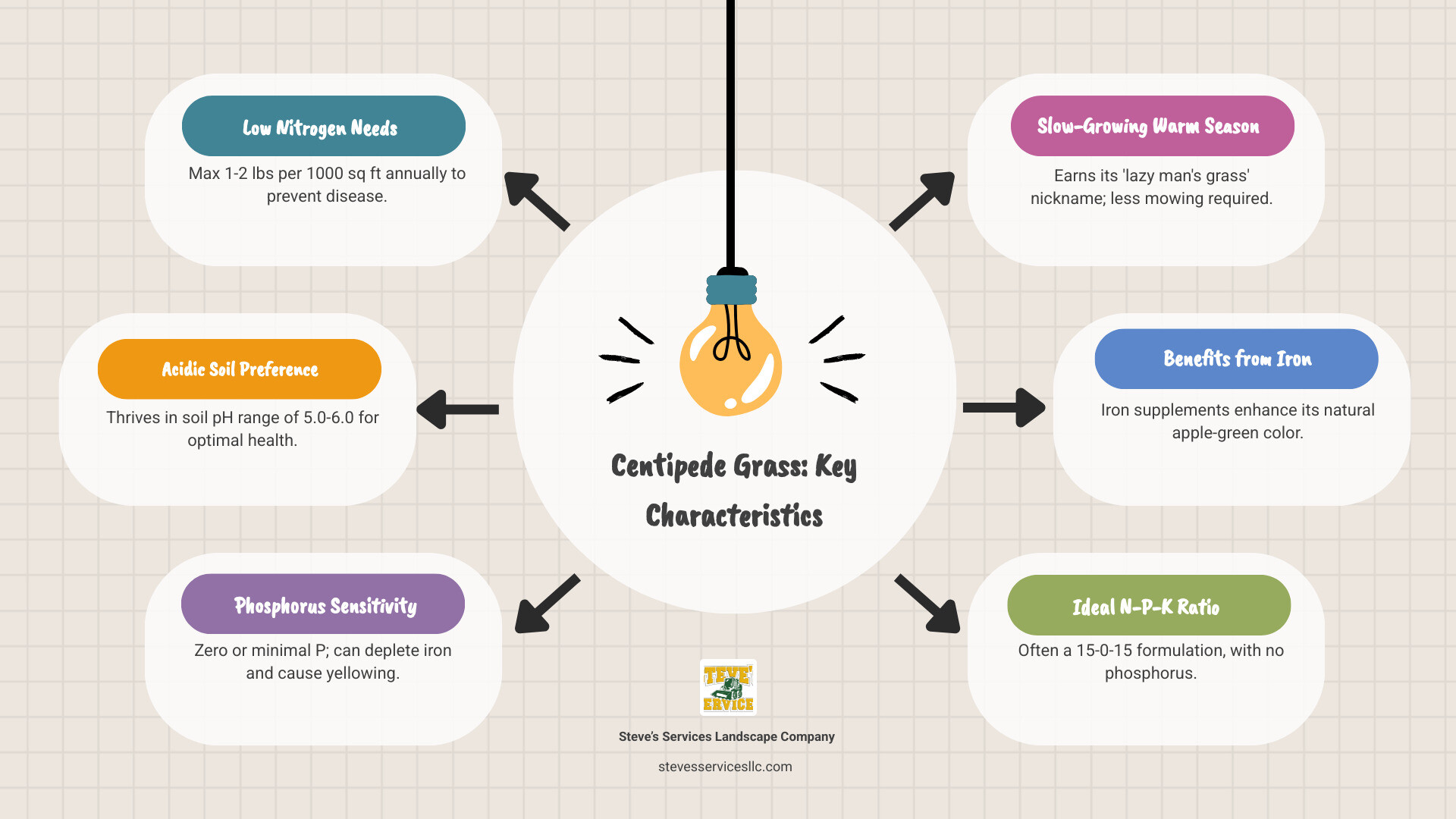
Must-know best fertilizer for centipede sod terms:
Understanding Centipede Grass’s Unique Nutrient Needs
Centipede grass stands out due to its remarkably low nutrient requirements. Unlike other grasses that crave high levels of nitrogen, centipede thrives on a lean regimen. This low-maintenance nature is a blessing, but it demands precision during fertilization. Problems arise when centipede is treated like a nutrient-hungry lawn. Too much nitrogen can cause a flush of weak growth susceptible to disease, while excess phosphorus—common in general fertilizers—can deplete iron and turn the lawn an unsightly yellow.
Centipede grass generally requires only 0.5 to 2 pounds of nitrogen per 1,000 square feet annually. While its overall needs are modest, certain nutrients are critical. Potassium is vital for strengthening the grass against drought and disease, preparing it for Massachusetts winters. Iron is often a necessary supplement to maintain its characteristic green color. Understanding these unique needs is the first step in proper lawn care. Research from institutions like Clemson University confirms its low fertilizer requirements and sensitivity to over-application.
The Ideal N-P-K Ratio
Fertilizer bags display three numbers: N-P-K, for Nitrogen (N), Phosphorus (P), and Potassium (K). For established centipede grass, the ideal ratio is typically 15-0-15, which caters directly to its sensitivities:
- Nitrogen (N): Promotes green growth. Centipede needs it in controlled amounts (no more than 1-2 pounds per 1,000 sq ft annually) to avoid weak growth and thatch.
- Phosphorus (P): The “0” is crucial for established lawns. While important for new root growth, excess phosphorus in mature turf ties up essential micronutrients like iron, causing yellowing. A phosphorus-free formula is recommended unless a soil test shows a deficiency.
- Potassium (K): Vital for overall plant health, stress tolerance, and disease resistance. It helps centipede grass withstand drought and prepare for winter.
When looking for the best fertilizer for centipede sod, that “0” in the middle is a key indicator for established lawns.
The Critical Role of Soil pH and Micronutrients
Centipede grass thrives in acidic soil, with an ideal pH range of 5.0 to 6.0. When the soil pH is too high (alkaline), the grass struggles to absorb essential micronutrients, even if they are present. The most common symptom is iron deficiency, which appears as a sickly yellowing of the grass blades.
If a soil test reveals a high pH, our lawn care experts can apply soil amendments like sulfur to gradually lower it. This professional application ensures the soil reaches the ideal acidic range, allowing the grass to absorb the nutrients it needs. A soil test can also determine if other micronutrients like manganese are needed. For a quick green-up, professional iron supplements (ferrous sulfate or chelated iron) can be applied to correct yellowing caused by high pH or excess phosphorus.
Choosing the Best Fertilizer for Centipede Sod
Choosing the best fertilizer for centipede sod depends on your lawn’s age and soil composition. The essential first step is always a professional soil test. A soil test provides a detailed analysis of your lawn’s nutrient levels and pH, eliminating guesswork that can lead to damaging a sensitive grass like centipede.
Fertilizers are categorized in several ways:
- Granular vs. Liquid: Granular fertilizers are pellets that release nutrients over time, while liquid fertilizers are sprayed for quicker absorption. For established centipede, slow-release granular options are generally preferred for their gentle, consistent feeding.
- Slow-release vs. Quick-release: Slow-release formulas provide a steady supply of nutrients, preventing growth surges and burn risk, making them ideal for centipede. Quick-release formulas offer an immediate boost but are riskier.
- Organic vs. Synthetic: Organic options improve soil health over time, while synthetic fertilizers offer precise, faster nutrient delivery. A professional service can recommend the best type for your lawn’s specific needs.
Here is a comparison of slow- and quick-release fertilizers:
| Feature | Slow-Release Fertilizers | Quick-Release Fertilizers |
|---|---|---|
| Nutrient Delivery | Gradual, consistent feeding over weeks/months | Immediate burst of nutrients |
| Growth Response | Steady, even growth; less risk of growth surge | Rapid green-up; potential for excessive growth |
| Burn Risk | Low, due to slow nutrient release | Higher, especially if over-applied or not watered in |
| Application Frequency | Less frequent (e.g., every 6-8 weeks) | More frequent (e.g., every 3-4 weeks) |
| Best For | Established centipede lawns, consistent health, soil building | Addressing acute deficiencies (use with extreme caution on centipede) |
For more detailed information, see our insights on sod fertilizer.
For New Centipede Sod Installation
When installing new centipede sod in your Everett, MA, home, the goal is to encourage robust root development. A professional new sod installation includes crucial soil preparation. Our process involves applying a specialized starter fertilizer (e.g., a 5-10-30 formulation) to the soil before the sod is laid. This step, handled by our expert team, ensures the new roots have immediate access to the phosphorus and potassium needed for rapid, strong establishment. This professional feeding protects your investment and paves the way for a healthy lawn. For more guidance, refer to our article on the best fertilizer for new sod.
For Established Centipede Lawns
Once your centipede lawn is established, our fertilization approach shifts to maintenance, focusing on sustaining health without overfeeding. This is where a 15-0-15 N-P-K ratio is ideal. We recommend phosphorus-free, slow-release granular fertilizers that provide a steady, gentle supply of nutrients. This supports the grass’s natural slow growth and minimizes burn risk.
Even with the right fertilizer, centipede lawns can yellow due to high pH or residual phosphorus. In these cases, our service may include professional iron supplements. Applying liquid chelated iron or ferrous sulfate can quickly restore the beautiful apple-green color without adding unnecessary nitrogen. Your soil type also matters; sandy soils may require a modified fertilization schedule, which a professional soil test and lawn care expert can determine.
The Centipede Fertilization Calendar: When and How to Apply
A successful centipede lawn in Massachusetts depends on applying the right fertilizer at the right time. Our professional maintenance program is designed to align with centipede’s natural growth cycle, providing what it needs when it needs it, and avoiding harmful applications.
As a warm-season turf, centipede greens up in late spring, grows through summer, and goes dormant in winter. This cycle dictates our fertilization schedule. We adapt principles from resources like NC State’s Centipede Maintenance Calendar to our local climate, focusing on timing relative to the grass’s behavior.
If you prefer to leave the complex timing and application to experts, our professional fertilizing services ensure your centipede lawn receives optimal care all year.
A Professional Fertilization Schedule
Timing is everything, especially in a climate like Massachusetts where spring can arrive late.
- Spring Application (Post Green-Up): This is the most important feeding. We wait until your lawn has fully greened up and the soil temperature is consistently 65°F and rising (typically late spring in Massachusetts). Applying fertilizer too early forces tender growth that is vulnerable to late frosts. Our service includes a light application of a balanced, phosphorus-free fertilizer (like 15-0-15) to kickstart healthy growth.
- Summer Monitoring: We generally avoid fertilizing during the extreme heat of summer (when temps are consistently over 85°F), as this can stress the grass. If a soil test indicates a deficiency, a very light application may be performed by our team during a cooler period.
- Fall Application (Potassium Focus): As fall approaches, our focus shifts from growth to resilience. Nitrogen applications cease by late summer to prevent new growth that can’t harden off before winter. Instead, our fall service may include a potassium-rich application 4-6 weeks before the first frost to improve winter hardiness and disease resistance.
The Professional Application Advantage
Using even the best fertilizer for centipede sod is ineffective if applied incorrectly. Professional application eliminates the guesswork and risk.
- Precision and Expertise: We start with a soil test to create a custom treatment plan. This ensures we apply exactly what your lawn needs, preventing the common problems caused by over- or under-fertilizing.
- Specialized Equipment: Our team uses calibrated, commercial-grade spreaders to guarantee even coverage across your entire lawn. This prevents the unsightly streaks, burn spots, and uneven growth common with DIY applications.
- Safety and Activation: After applying granular fertilizer, proper watering is crucial to move nutrients to the roots and prevent burn. Our experts provide clear guidance on this step to ensure the treatment is both safe and effective.
For more details on our process, especially for new lawns, see our guide on how to fertilize new sod.
Common Fertilization Pitfalls and How to Avoid Them
Centipede grass is forgiving in many ways, but it holds a grudge against improper fertilization. Many issues, collectively known as “Centipede Decline,” can be traced back to fertilization mistakes. Symptoms like thinning turf, yellowing, and increased weeds are signs that a professional assessment of your fertilization regimen is needed.
The Dangers of Over-Fertilizing
Over-fertilizing is the number one cause of poor performance in centipede lawns. For this grass, more is not better.
- Nitrogen Burn: Too much quick-release nitrogen can scorch grass blades, turning them brown or black.
- Excessive Thatch Buildup: High nitrogen levels cause rapid growth that creates a thick thatch layer, which chokes the lawn by blocking water and nutrients and harboring pests.
- Increased Disease Susceptibility: The weak, rapid growth spurred by excess nitrogen makes the lawn vulnerable to fungal diseases like Large Patch.
- Weak Root Systems: Pushing top growth diverts energy from developing deep, resilient roots, making the grass less tolerant of drought and stress.
- Iron Depletion: Excess phosphorus, common in all-purpose fertilizers, locks up iron in the soil, causing the lawn to turn yellow.
To avoid these dangers, a professional lawn care program adheres to the strict annual nitrogen limits and uses phosphorus-free formulas based on a soil test.
Why ‘Weed and Feed’ Products Are Risky for the best fertilizer for centipede sod
“Weed and feed” products seem convenient, but they are a significant risk for centipede grass. General-purpose versions can be highly damaging.
The primary issues are:
- Herbicide Sensitivity: Centipede grass is sensitive to many common herbicides found in these products. Applying them at the wrong time or temperature can severely injure or kill your turf.
- Mismatched Timing: The best time to fertilize centipede rarely aligns with the best time to control weeds, making the all-in-one timing of these products ineffective and dangerous.
- Incorrect Formulation: These products are not designed for the specific low-nutrient needs of centipede grass, often delivering too much nitrogen and unwanted phosphorus.
This is why our professional lawn care programs avoid these combination products. We employ a strategy of separate, targeted treatments. Your lawn receives the precise fertilizer it needs, while weeds are managed with different products that are proven safe for centipede grass and applied at the most effective time. This integrated approach delivers superior results and protects your turf. For more on lawn feeding strategies, explore our resources on lawn feed for new lawn.
Frequently Asked Questions about the best fertilizer for centipede sod
We often hear similar questions from homeowners in Massachusetts about their centipede lawns. Here are some of the most common ones we address:
How do I make my centipede grass a darker green?
First, it’s important to know that healthy centipede grass has a natural, lighter apple-green color. Trying to force it darker with nitrogen will only cause disease and thatch.
However, if your lawn is a sickly yellow-green, it’s likely suffering from an issue like iron deficiency, often caused by high soil pH or excess phosphorus. The best approach is a professional diagnosis. Our experts can perform a soil test to confirm the cause. We then apply targeted professional treatments, such as liquid chelated iron or soil amendments, to safely restore your lawn’s healthy, natural apple-green color without the risks of over-fertilization.
Can I use a general all-purpose lawn fertilizer on my centipede sod?
We strongly advise against using a general all-purpose lawn fertilizer on centipede sod. Here’s why:
- High Nitrogen Content: Most general fertilizers contain far more nitrogen than centipede grass can safely handle, leading to weak growth, disease, and thatch.
- Unnecessary Phosphorus: These fertilizers almost always contain phosphorus, which is detrimental to established centipede grass as it depletes iron and causes yellowing.
- pH Imbalance: Some all-purpose products can alter soil pH, moving it out of the acidic range that centipede prefers.
To ensure the health of your lawn, always rely on a professional service that uses fertilizers specifically formulated for centipede grass (like a 15-0-15 ratio) based on a soil test.
How much does professional lawn fertilization cost?
The cost of professional lawn fertilization for centipede sod varies based on lawn size, its condition, the specific treatments needed, and your location within Massachusetts.
Based on national average internet data (and not actual costs for Steve’s Services), homeowners might expect to pay anywhere from $120 to over $480 for a single professional fertilization treatment. Some services might offer seasonal packages that reduce the per-application cost.
Factors influencing the cost include:
- Lawn Size: Larger lawns require more product and time.
- Location: Prices can vary between towns like Everett, Burlington, or Winchester.
- Service Frequency: A one-time application will differ from a full seasonal program.
- Additional Services: Combining fertilization with weed control, pest management, or soil amendments will affect the overall cost.
For a comprehensive breakdown of costs, you can review our lawn fertilization cost guide. For an accurate quote for your specific lawn in the Greater Boston area, it’s always best to contact us directly.
Conclusion: Achieve Your Dream Centipede Lawn
Cultivating a lush, healthy centipede lawn in Massachusetts is entirely achievable when you understand and respect its unique needs. The journey to the best fertilizer for centipede sod is truly about adopting a “less is more” philosophy. We’ve learned that this means prioritizing low nitrogen, avoiding unnecessary phosphorus, and focusing on potassium and iron at the right times.
Remember these key principles:
- Low Nitrogen: Stick to 1-2 pounds of nitrogen per 1,000 square feet annually for established lawns.
- No Phosphorus (for established lawns): Unless a soil test dictates otherwise, opt for phosphorus-free fertilizers to prevent iron depletion.
- Optimal Timing: Fertilize after spring green-up (when soil hits 65°F and all frost danger has passed), and apply potassium in the fall for winter hardiness, but cease nitrogen applications by late summer.
- Soil pH: Maintain a slightly acidic soil pH between 5.0 and 6.0.
- Iron for Color: Supplement with iron if your lawn shows signs of yellowing.
- Separate Treatments: Avoid risky “weed and feed” products; manage weeds and feed your lawn separately.
Above all, the single most valuable tool in your centipede lawn care arsenal is a soil test. It removes all guesswork, providing a precise roadmap for your lawn’s specific nutritional requirements.
For expert help with lawn care and new lawn installs in the Everett, MA area, and surrounding communities like Lynnfield, Saugus, or Woburn, trust the professionals at Steve’s Services. Our experienced team understands the nuances of centipede grass in our local climate and can provide personalized solutions to keep your lawn looking its best.
Ready to enjoy a beautiful, low-maintenance lawn? Explore our sod installation services to get started, or contact us for professional fertilization and lawn care custom to your centipede sod.