
What is Hydroseeding Grass: 5 Best Benefits Today
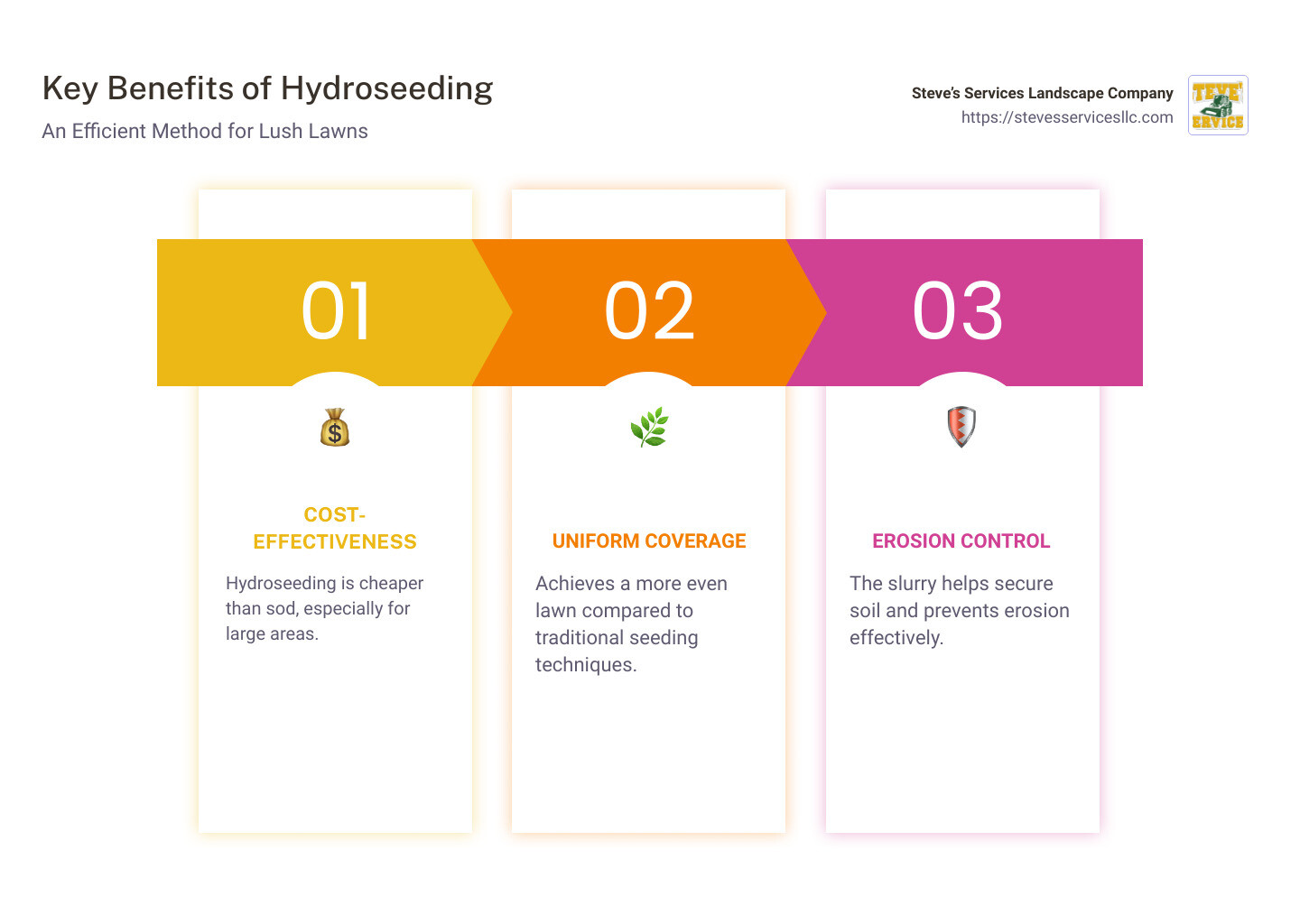
What is hydroseeding grass? Simply put, it’s a modern and efficient method of planting grass by spraying a nutrient-rich slurry directly onto the soil. This slurry, a blend of grass seeds, water, mulch, and fertilizer, promotes rapid growth and provides protection against soil erosion. Here are some key benefits of hydroseeding:
- Cost-effective: Cheaper than sod installation for large areas.
- Uniform coverage: Produces a more even lawn compared to traditional seeding.
- Erosion control: Slurry helps secure the soil and prevent erosion.
- Customizable: Choose specific grass types best suited to your region.
At Steve’s Services Landscape Company, we specialize in hydroseeding as part of our mission to bring lush, green lawns to communities across suburban Massachusetts. With over 25 years in the landscaping industry, our expertise ensures your lawn receives the best care custom to your specific needs. After all, it’s not just about laying grass; it’s about crafting a thriving outdoor environment for your property.
What is hydroseeding grass terms to know:
– commercial hydroseeding
– residential hydroseeding
– hydroseeding services near me
What is Hydroseeding Grass?
Hydroseeding grass is a modern technique for planting grass using a nutrient-rich slurry sprayed directly onto the soil. This method is not only efficient but also cost-effective, offering a great alternative to traditional seeding and sod.
Components of Hydroseeding Slurry
The heart of hydroseeding is the slurry mix, which combines several essential components:
- Grass Seeds: You can choose from a variety of grass seeds, custom to your climate and soil conditions. This customization ensures that your lawn thrives in its specific environment.
- Mulch: Mulch is crucial as it helps the seeds stick to the soil, protecting them from wind and sun. It also provides nutrients as it decomposes. There are different types of mulch, such as wood fiber mulch, which is highly effective, and paper mulch, which is more budget-friendly.
- Fertilizer: This gives your grass the nutrients it needs to grow strong and healthy. While the initial fertilizer in the slurry kickstarts growth, additional fertilization will be necessary as the grass matures.
- Water: Water is a key component, turning the mixture into a slurry that can be easily sprayed. It also keeps the seeds moist, promoting faster germination.
- Dye: An optional component, dye helps ensure even application by showing where the slurry has been sprayed.
- Tackifier: Another optional ingredient, tackifiers help the slurry stick better to the soil, particularly useful in areas prone to erosion.
Benefits of Hydroseeding
Hydroseeding offers several advantages that make it an attractive option for lawn installation:
- Cost-Effective: Compared to sod, hydroseeding is much more affordable, especially for larger areas. It provides a lush, green lawn without breaking the bank.
- Fast Installation: The process is quicker than traditional seeding, with grass often visible within a week. This rapid germination means you can enjoy your new lawn sooner.
- Erosion Control: The mulch in the slurry acts as a protective layer, preventing soil erosion and helping the seeds stay in place.
- Customizable: You can tailor the slurry mix to include specific grass types and additives that suit your local climate and soil conditions. This customization ensures optimal growth and a beautiful lawn.
At Steve’s Services Landscape Company, we leverage these benefits to deliver superior results for our clients, ensuring that each lawn is not only beautiful but also sustainable and resilient.
How Does Hydroseeding Work?
Step-by-Step Hydroseeding Process
Hydroseeding is a straightforward process that combines science and art to create a lush lawn. Here’s how it works:
- Soil Preparation: Start with a clean slate. Remove any debris, rocks, and weeds from the area. This ensures that the seeds have direct contact with the soil for better germination. Grading the soil is also important to ensure even water distribution.
- Slurry Preparation: The slurry is the magic mix of grass seeds, mulch, water, fertilizer, and sometimes dye and tackifier. This concoction is mixed in a hydroseeder machine, which keeps everything well-blended.
- Spraying the Slurry: Once the slurry is ready, it’s sprayed evenly across the prepared soil using the hydroseeder. The dye in the slurry helps you see where it has been applied, ensuring full coverage without missing any spots.
- Maintenance: After application, watering is crucial. Keep the soil consistently moist to encourage seed germination. Initially, this might mean watering several times a day. Gradually, reduce the frequency as the grass establishes itself.
When to Hydroseed
Timing is everything in hydroseeding. The ideal period varies depending on the type of grass you choose:
- Cool-Season Grasses: These grasses thrive in cooler climates and are best seeded in late summer to early fall. This timing allows them to establish roots before the winter chill.
- Warm-Season Grasses: For these, late spring to early summer is optimal. The warm soil temperatures during this period promote quick germination and growth.
In general, spring and fall are the preferred seasons for hydroseeding because of the moderate temperatures and increased rainfall, which reduce the need for supplementary watering.
By following these steps and choosing the right timing, hydroseeding can transform your bare soil into a vibrant, green oasis. At Steve’s Services Landscape Company, we ensure each step is executed with precision for the best results.
Pros and Cons of Hydroseeding
Hydroseeding is a popular method for establishing a lush, green lawn. It comes with several advantages and a few disadvantages. Let’s explore the details.
Advantages of Hydroseeding
Cost Savings
Hydroseeding is more cost-effective than laying sod, especially over large areas. Once the equipment is set up, covering a big space is quick and efficient, saving both time and money.
Disease Resistance
Unlike sod, which often consists of a single type of grass, hydroseeding allows for a blend of grass types. This diversity helps the lawn resist diseases better than a monoculture would.
Adaptability
One of the standout benefits of hydroseeding is its adaptability. You can select a seed mix that suits your specific soil conditions, whether it’s shaded, dry, or challenging in other ways. This customization ensures a lawn that’s custom to your environment.
Aesthetics
Hydroseeded lawns can be more visually appealing than sod. You have the freedom to choose finer-bladed grasses or a mix that offers a natural look, free from the seams that sod can sometimes show.
Disadvantages of Hydroseeding
Intensive Watering
A key drawback of hydroseeding is the need for intensive watering. Newly hydroseeded lawns require consistent moisture, often needing watering several times a day for the first few weeks to ensure proper germination.
Weed Growth
The ideal conditions created for grass seeds can also encourage weed growth. This means you might need to spend extra time removing weeds by hand or using selective herbicides.
Foot Traffic Restrictions
While your new lawn is getting established, it’s important to keep off the grass. This can be challenging if you have kids or pets, as the grass needs a few weeks to root well before it can handle regular foot traffic.
Hydroseeding offers many benefits, from cost savings to adaptability, but it requires careful maintenance, especially in the early stages. At Steve’s Services Landscape Company, we guide you through every step to ensure your hydroseeded lawn thrives.
Hydroseeding vs. Other Methods
Choosing the right method to establish your lawn can be a daunting task. Let’s compare hydroseeding with traditional seeding and sod to help you make an informed decision.
Hydroseeding vs. Traditional Seeding
Cost and Convenience
Traditional seeding is generally the cheapest way to start a lawn. However, it’s not always the most convenient. Hydroseeding, while slightly more expensive, offers a balance between cost and ease. The slurry mix used in hydroseeding ensures even coverage, reducing the labor involved compared to manually spreading seeds.
Growth Rate and Uniformity
Hydroseeding provides faster germination and more uniform growth than traditional seeding. The slurry mix includes mulch and fertilizers, which help seeds sprout quickly and evenly. In contrast, traditional seeding can lead to patchy growth, requiring more time and effort to achieve a uniform lawn.
Customization
Both methods allow for customization in grass types, but hydroseeding offers better control over the final look. The ability to mix different seeds in the slurry means you can tailor the lawn to your specific needs and climate, resulting in a more resilient and attractive lawn.
Hydroseeding vs. Sod
Cost and Instant Lawn
Sod provides an instant lawn, which is its primary advantage. However, this comes at a high cost—up to four times more than hydroseeding. If budget is a concern, hydroseeding offers a lush lawn at a fraction of the price, though it requires a few weeks for full establishment.
Maintenance
Hydroseeding demands more initial maintenance, particularly in watering. A newly hydroseeded lawn needs consistent moisture to thrive. Sod, while easier at first, can require significant upkeep later, as it may not adapt as well to your soil conditions.
Aesthetics
Aesthetically, hydroseeded lawns often look more natural. They lack the seams that can make sod appear artificial. Additionally, the ability to choose a mix of grass types in hydroseeding means the lawn can be custom to look lush and uniform, enhancing its visual appeal.
In summary, hydroseeding offers a middle ground between cost and convenience, providing faster and more uniform growth than traditional seeding, and a more natural look at a lower cost than sod. At Steve’s Services Landscape Company, we help you steer these choices to create the lawn you desire.
Frequently Asked Questions about Hydroseeding
What are the disadvantages of hydroseeding?
While hydroseeding offers many benefits, it does have some drawbacks to consider:
- Intensive Watering: Newly hydroseeded lawns require a lot of water initially to ensure proper germination and establishment. This can be challenging, especially during dry periods or in areas with water restrictions.
- Weed Growth: The ideal conditions for grass seed germination also favor weeds. You might see some unwanted plants sprouting alongside your new grass, necessitating additional weed control measures.
- Foot Traffic Restrictions: It’s important to keep off the newly hydroseeded area for several weeks. This can be inconvenient if you have kids or pets who love to play outside.
- Challenging on Slopes: Hydroseeding can be less effective on sloped areas, as water runoff can wash away the seeds before they have a chance to take root.
Can you hydroseed over an existing lawn?
Hydroseeding over an existing lawn is not recommended. For the best results, it’s crucial to start with bare soil. This allows the slurry mix to bond effectively with the ground, promoting healthy root development. If you want to improve an existing lawn, it’s better to consider overseeding or other lawn renovation techniques.
How long does it take to get grass after hydroseeding?
Grass from hydroseeding typically begins to sprout within 7 to 10 days. However, the time it takes to fully establish a lush lawn can vary based on factors like grass type, weather conditions, and how well the area is maintained. Generally, you can expect a full, vibrant lawn in about 4 to 6 weeks with proper care and watering.
Conclusion
In summary, hydroseeding grass is an efficient, cost-effective method for establishing a lush, green lawn. It combines grass seeds, mulch, fertilizer, water, and other components into a slurry that’s sprayed onto the soil. This technique not only speeds up the germination process but also helps prevent soil erosion and offers a more uniform lawn compared to traditional seeding methods.
Hydroseeding is particularly beneficial for large areas and offers customization options that can cater to different climates and soil conditions. However, keep in mind the initial need for intensive watering and the potential for weed growth as the lawn establishes.
At Steve’s Services Landscape Company, we specialize in providing comprehensive hydroseeding services custom to your specific needs. Our expert team ensures that every project is handled with precision and care, from soil preparation to maintenance advice. Whether you’re looking to transform a residential lawn or a commercial landscape, we have the skills and resources to deliver outstanding results.
If you’re considering hydroseeding for your next lawn project, we recommend consulting with professionals to achieve the best outcome. Our team at Steve’s Services is here to help you create the lawn of your dreams with our personalized solutions and exceptional customer service. Contact us today to learn more about how hydroseeding can improve your outdoor space.
