
18-24-12 fertilizer: Unlock 1 Strong Start
Why Your New Lawn Needs the Right Starter Fertilizer
18-24-12 fertilizer is a specialized starter fertilizer designed primarily for new lawns, new sod, and reseeding projects. Here’s what you need to know:
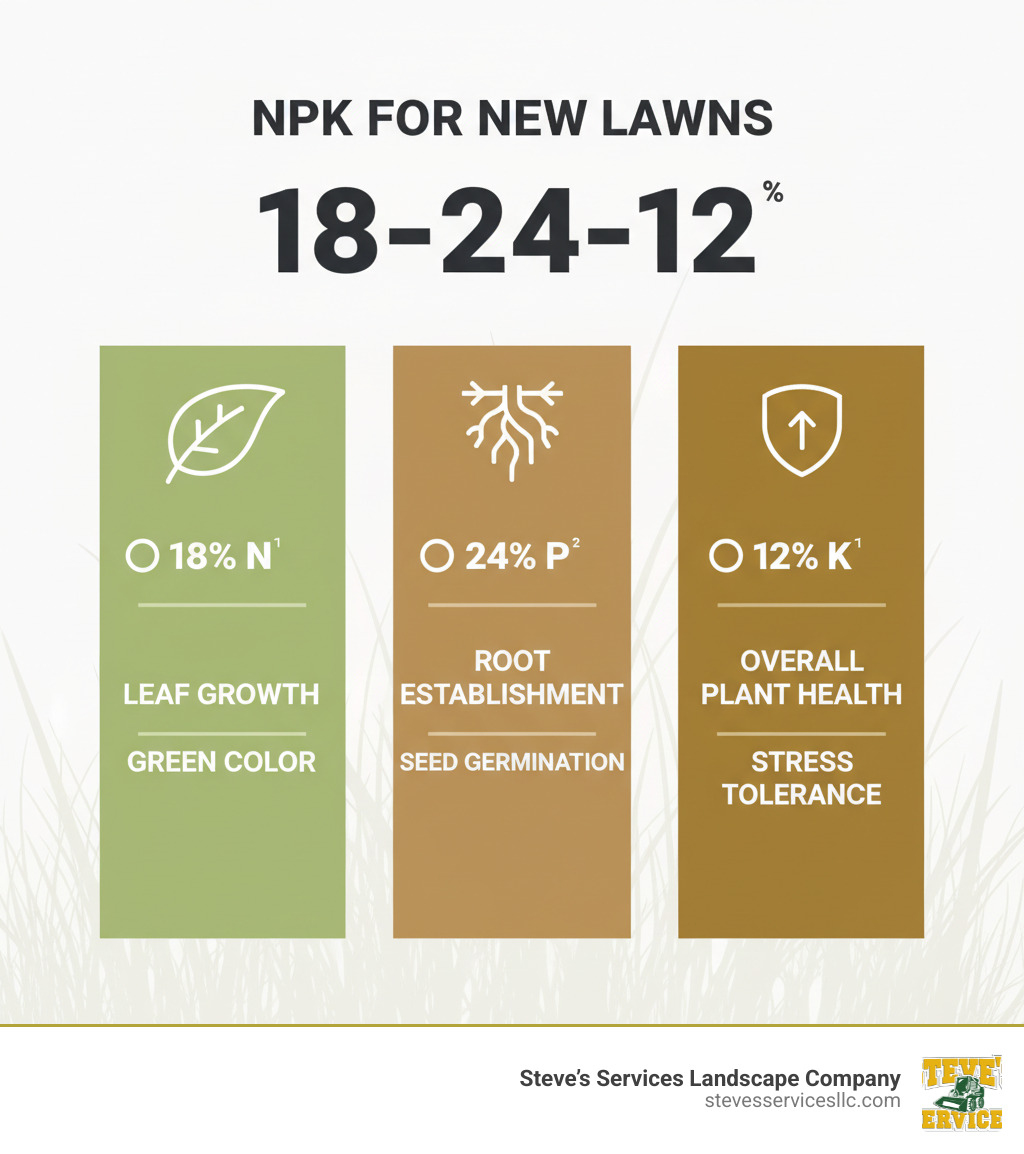
- NPK Ratio: Contains 18% Nitrogen, 24% Phosphorus, and 12% Potassium
- Primary Use: Promotes rapid root establishment in new grass
- Best Application Time: Spring or Fall during new lawn installation or overseeding
- Coverage: Typically covers 8,000-12,500 square feet per 50 lb bag
- Key Benefit: The high phosphorus content (24%) accelerates root development and improves seed germination
- Ideal For: Tall Fescue, Bermuda, and Zoysia grass types
- Advanced Options: Many formulations include 25-50% slow-release nitrogen to provide steady feeding for up to 12 weeks
The success of any new lawn project—whether sod, seed, or patching—depends on root establishment. Without a strong root system, new grass can’t access water and nutrients, resulting in weak turf vulnerable to stress, disease, and weeds.
That’s where starter fertilizers come in. Unlike maintenance fertilizers, starter formulas like 18-24-12 contain significantly higher phosphorus—the key nutrient for root growth and energy transfer. This gives new grass the foundation it needs to establish quickly and thrive.
Research and professional experience confirm that proper fertilization at installation is critical for a new lawn. Manufacturers engineer 18-24-12 formulations to “promote root establishment and improve spring green-up” by providing “the nutrients needed to grow a healthy root system in new lawns.”
I’m Steve Sylva, owner of Steve’s Services Landscape Company. With over 25 years in the industry, I’ve seen that proper 18-24-12 fertilizer application at establishment is the key to success. Knowing how to use this formula helps us deliver the thriving, healthy lawns our Massachusetts clients expect.
Decoding the Numbers: What is 18-24-12 Fertilizer?
When you pick up a bag of 18-24-12 fertilizer, the numbers represent the percentage by weight of three essential macronutrients: Nitrogen (N), Phosphorus (P), and Potassium (K). This NPK ratio is the universal language of fertilizers.
In a 50-pound bag of 18-24-12, you get 18% nitrogen, 24% phosphorus, and 12% potassium, with the rest being inert materials for even distribution. What makes this a special starter fertilizer is its high phosphorus content (24%), which is significantly more than in most maintenance formulas.
This high phosphorus content is why 18-24-12 fertilizer excels at establishing new lawns. While other fertilizers maintain existing turf, this starter formula focuses on building the foundation. Most formulations are granular, making application straightforward. The granules dissolve with water, releasing nutrients into the soil for new roots to access.
For a broader look at how we approach lawn nutrition throughout the year, check out our guide on fertilizing.
The Role of Nitrogen (N)
Nitrogen (18%) is responsible for the lush, green growth we all want. As a key component of chlorophyll, it gives grass its vibrant color and powers photosynthesis.
The 18% nitrogen in 18-24-12 fertilizer fuels healthy leafy growth and chlorophyll production. This balanced amount supports steady top growth and vibrant color without forcing rapid, weak growth, allowing the phosphorus to do its critical work of building roots underground.
The Power of Phosphorus (P)
The middle number—24%—is why 18-24-12 fertilizer is the premier starter formula. Phosphorus is the star of the show for good reason.
Phosphorus is essential for root establishment and seed germination. It’s crucial for energy transfer within the plant, converting nutrients into growth energy. For new seed, this means faster germination. For new sod, it helps roots quickly anchor into the soil to access water and nutrients.
Without enough phosphorus, new grass can’t develop the strong, deep root system it needs to survive, leaving it vulnerable to drought, heat, and disease. This is why we recommend high-phosphorus formulas in our guide to the best fertilizer for new sod.
The Keystone: Potassium (K)
The final number—12%—represents potassium, which is critical for long-term success by building overall plant health and resilience.
Potassium acts as your lawn’s immune system and stress manager. It regulates water use, making grass more tolerant of drought and temperature swings. It also strengthens cell walls to improve disease resistance and overall stress tolerance, which is vital for young grass during establishment.
In 18-24-12 fertilizer, the 12% potassium gives new grass the tools to handle stress from weather or foot traffic, helping ensure your investment pays off for years to come.
Key Benefits for New and Existing Turf
Think of your lawn like a building: a strong foundation is everything. That’s why we use 18-24-12 fertilizer for new lawn installations in Massachusetts. Its high phosphorus content builds a robust underground root system—something regular fertilizers can’t match—setting your lawn up for long-term success.
When you lay down new sod or plant grass seed, the plants are in a race against time to establish roots. 18-24-12 fertilizer provides what they need for this critical first phase. The 24% phosphorus drives energy into root development, helping new grass send roots deep into the soil where they can access water and nutrients.
While ideal for new lawns, we also use 18-24-12 fertilizer to help established lawns recover after harsh winters, giving them a strong spring green-up. If a soil test reveals a phosphorus deficiency, this formula can correct the issue and restore vigor.
Understanding the Benefits of an 18-24-12 Fertilizer Ratio
There’s real science behind why 18-24-12 fertilizer works so well for new grass. The ratio is specifically designed to support rapid establishment and improved vigor.
For new seed, high phosphorus accelerates germination and root development. For new sod, it encourages the grass to quickly “knit” into the soil, transitioning from its original soil layer to your ground. This rapid establishment means your lawn fills in faster, develops better density, and resists weed invasion.
The 12% potassium contributes to improved hardiness, which is critical in Massachusetts. Grass nourished with potassium handles temperature swings better, resists diseases more effectively, and recovers faster from foot traffic. If you’re exploring options for Sod Fertilizer, these benefits explain why starter formulas deliver impressive results.
Advanced Formulations: Slow-Release and Micronutrients
Not all 18-24-12 fertilizer is identical. Modern formulations incorporate technologies that make them safer and more effective.
The biggest advancement is slow-release nitrogen. Unlike traditional fertilizers that can cause fertilizer burn by releasing nitrogen all at once, slow-release formulas feed your lawn gradually. Delivered via coatings like Sulfur-Coated Urea, this technology provides steady nutrition for up to 12 weeks, virtually eliminating burn risk and reducing the need for frequent applications.
Some products use particularly sophisticated coating technologies—you can see more about the technical specifications for advanced coatings that control exactly how nutrients release over time.
Beyond NPK, many 18-24-12 fertilizer blends now include micronutrients like iron, manganese, and zinc. Plants need these in smaller amounts, but they are essential. Iron is especially popular for producing a deep, rich green color. These micronutrients act as insurance, filling nutritional gaps in your soil and ensuring new grass has everything it needs.
Professional Application Guidelines
Knowing what 18-24-12 fertilizer can do is one thing—applying it correctly is another. At Steve’s Services, our 25+ years of experience have taught us that precision matters. Proper application technique, timing, and safety protocols are often the difference between a thriving new lawn and a struggling one.
A soil test is the essential first step in any professional fertilization program. It reveals your soil’s nutrient levels, pH, and organic content. Without this data, fertilizing is just guesswork, which can waste money, harm the environment, or damage your lawn.
Many established Massachusetts lawns already have adequate phosphorus, and some municipalities even restrict its use to protect waterways. A soil test confirms if your lawn actually needs the high phosphorus in 18-24-12 fertilizer. This data-driven approach avoids guesswork and protects our local environment.
Beyond soil testing, proper application timing and accurate coverage rates are critical. We follow strict safety protocols to protect your family, pets, and the environment while delivering the nutrition your lawn needs.
When and Where to Apply
In Massachusetts, the best time to apply 18-24-12 fertilizer is during spring or fall when installing new sod, seeding a new lawn, or overseeding. These seasons offer ideal conditions for grass establishment.
Spring applications work well as soil temperatures rise above 55 degrees Fahrenheit. Seeds germinate quickly, and new sod can establish roots before summer heat. Fall is often even better, as cool air and warm soil create perfect conditions for aggressive root growth. The grass builds a strong foundation to carry it through winter. Our guide on Fall Lawn Fertilizer provides more detailed timing recommendations.
18-24-12 fertilizer works particularly well for grass types common in our Burlington, Everett, Malden, and Woburn service areas, like Tall Fescue. The high phosphorus helps it develop the deep root system that makes it so resilient. It’s also effective for Bermuda or Zoysia varieties.
However, not all grass types benefit from high phosphorus. Centipede grass, for example, prefers low-phosphorus formulas. While not common in Massachusetts, it’s a reminder that knowing your grass type matters. We can help identify your grass if you’re unsure.
Application Rates and Safety
A 50-pound bag of 18-24-12 fertilizer typically covers 8,000 to 12,500 square feet, but this varies by manufacturer. Reading the product label is non-negotiable, as every formulation is slightly different. Smaller bags are available for smaller projects.
Using a properly calibrated broadcast spreader ensures even distribution, preventing striping or patchy growth.
For pet and child safety, always water in the fertilizer immediately after application. This dissolves the granules and moves the nutrients into the soil. Once the area is completely dry—usually within a few hours—it’s generally safe for pets and children to return to the lawn. Wet granules can stick to paws and skin, so patience is key. We always communicate these safety protocols to our clients. For more information, see our page on Lawn Feed Fertilizer.
How 18-24-12 Compares to Other Lawn Fertilizers
Choosing the right fertilizer can be confusing. The key is understanding your lawn’s specific needs, which change with its age and condition. 18-24-12 fertilizer is a specialized tool, not a one-size-fits-all solution.
Just as a baby’s diet differs from a teenager’s, your lawn’s nutrient needs change with age. 18-24-12 fertilizer is a starter formula, with high phosphorus for new grass root development. In contrast, maintenance fertilizers for established lawns often have higher nitrogen for green growth or a balanced ratio, depending on soil test results.
When recommending a fertilizer, we consider starter versus maintenance needs, specific nutrient requirements, and overall soil health. It’s about giving your lawn what it actually needs at its current stage of life.
Comparing 18-24-12 Fertilizer with Other Fertilizer Types
This table shows how 18-24-12 fertilizer compares to other common NPK ratios for lawn care:
| NPK Ratio | Primary Use | Best Season (for MA lawns) | Key Benefit |
|---|---|---|---|
| 18-24-12 | New lawns, sod, seeding (Starter) | Spring/Fall | Strong root development & quick establishment |
| 16-4-8 | Established lawns, general maintenance | Spring/Summer | Balanced green-up & sustained growth |
| 10-10-10 | General purpose, balanced feeding | Spring/Fall | All-around nutrient boost |
| 18-18-18 | General purpose, balanced liquid feed | Throughout growing season | Rapid nutrient uptake, overall health |
| 18-6-12 | Established lawns, slow-release green-up | Spring/Summer | Extended green color, reduced mowing frequency |
| 20-0-10 | Established lawns, primarily for greening | Summer | Rapid greening, minimal phosphorus/potassium |
Note: This table compares general fertilizer types and their common uses based on NPK ratios. Specific product formulations may vary.
Notice that while 18-24-12 excels at starting new grass, a fertilizer like 16-4-8 is better for maintaining an established lawn. Some formulas contain zero or low phosphorus because many established Massachusetts lawns don’t need it. Adding more would be wasteful and could contribute to environmental runoff, which is why understanding your soil’s condition is so critical.
Choosing the Right NPK Ratio
Choosing the right NPK ratio depends on two factors: soil test results and your lawn goals. A professional soil test is non-negotiable; it’s like a doctor running tests before prescribing medication. Without it, you’re fertilizing in the dark.
A soil test will tell us if your soil is deficient in phosphorus, making 18-24-12 fertilizer a perfect choice for a new lawn. Or, it might reveal other needs. This information is invaluable for making decisions that benefit your lawn and the environment.
Your lawn goals also matter. Are you establishing a new lawn? 18-24-12 fertilizer is likely your best bet. Are you maintaining an established lawn? A different, nitrogen-focused formula would be more appropriate. New grass has fundamentally different needs than mature turf—it’s building its root system from scratch and needs that phosphorus boost.
Our team at Steve’s Services can help you interpret soil test results and align them with your lawn’s needs. With over 25 years of experience in the Massachusetts area, we know how the right fertilizer at the right time can transform a lawn.
Frequently Asked Questions about 18-24-12 Fertilizer
Over the years at Steve’s Services, we’ve answered hundreds of questions about lawn fertilization. Here are the answers to what homeowners in our Massachusetts service areas most commonly ask about 18-24-12 fertilizer.
When is the best time to use 18-24-12 fertilizer?
The best time is during spring or fall when you’re seeding a new lawn, laying sod, or overseeding. These seasons offer ideal conditions for root growth without the stress of extreme temperatures.
Spring application is great for establishing new lawns as the soil warms. Fall is often even better, as the cool air and warm soil promote strong root development before winter.
18-24-12 fertilizer is a specialized tool for situations where establishing roots is the primary goal, not a general-purpose fertilizer for year-round use.
Is 18-24-12 fertilizer safe for my pets and children?
Yes, when applied according to professional standards. The key is to water the fertilizer in thoroughly after application. This moves the nutrients into the soil and off the grass blades.
Once the treated area has dried completely, it’s generally safe for pets and children to return to the lawn. We recommend keeping everyone off the lawn for at least a few hours until it’s fully dry to minimize contact with the granules.
Can I use 18-24-12 on my established lawn?
Generally, no. 18-24-12 fertilizer is a starter formula designed for new lawns needing root development. Established lawns with mature root systems typically don’t need this much phosphorus.
The only exception is if a soil test reveals a specific phosphorus deficiency. Applying unneeded phosphorus is wasteful and can harm the environment by causing runoff into local waterways. For most established lawns, a maintenance fertilizer with a different NPK ratio is the better choice.
Achieve a Healthier Lawn with Expert Care
Starting a new lawn is an investment, and 18-24-12 fertilizer provides the best possible foundation. Its high phosphorus content builds the deep root system that separates thriving lawns from struggling ones. Whether you’re laying sod, seeding, or patching, this starter formula ensures your grass establishes quickly and grows strong.
Strong roots lead to better drought tolerance, improved disease resistance, and a denser, more resilient turf that stays beautiful year after year. That’s the kind of new lawn success we’ve helped our clients achieve for over 25 years.
While understanding fertilizer basics is valuable, there’s no substitute for professional expertise. Every lawn is unique, with soil composition varying from one yard to the next. What works perfectly for your neighbor might not be ideal for your situation.
That’s where Steve’s Services comes in. We serve homeowners and businesses throughout the Massachusetts communities of Burlington, Danvers, Everett, Malden, Melrose, Reading, Stoneham, Woburn, and beyond. Our team doesn’t just apply fertilizer; we analyze your soil, grass type, and goals to provide personalized solutions based on soil test results and decades of experience.
If you’re planning to install new sod, overseed, or start a lawn from scratch, let us help you get it right from the beginning. A professional consultation removes the guesswork and gives you peace of mind. Get expert help with your new sod lawn and let our skilled team show you what comprehensive, customer-focused lawn care really looks like.
Your dream lawn is closer than you think—it just needs the right start.
