Cost of Removing Inground Swimming Pool: 3 Shocking Facts
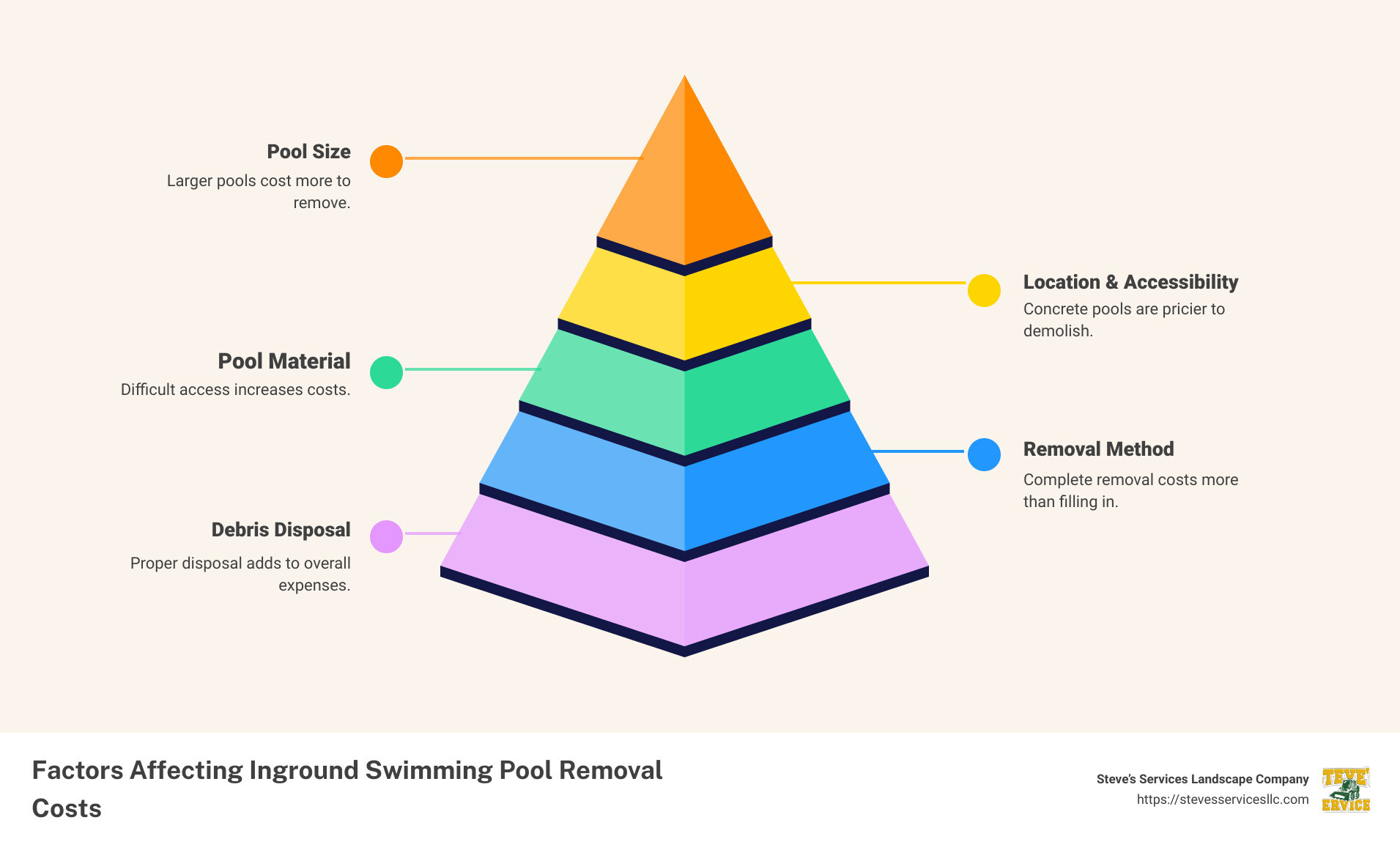
When it comes to cost of removing inground swimming pool, several factors come into play that can significantly influence your expenses. From pool size and material to your property’s location and accessibility, each element carries weight in determining the final price. Here’s a quick overview for those seeking straightforward answers:
- Pool Size: Larger pools cost more to remove.
- Location & Accessibility: Hard-to-reach locations increase costs.
- Pool Material: Concrete pools are pricier to demolish than vinyl or fiberglass.
- Removal Method: Complete removal is costlier than filling in.
The decision to remove an inground pool isn’t solely about cost—it’s also about enhancing your property’s value. Many homeowners find that removing an unused pool creates prime real estate for innovative landscaping or leisure spaces, potentially boosting property appeal and value.
I’m Steve Sylva, owner of Steve’s Services with over 25 years of industry experience. At Steve’s Services, we understand the intricacies of the cost of removing inground swimming pool projects and are dedicated to delivering quality results that align with your vision and budget. Now, let’s dive deeper into what affects the cost of your pool removal.
Know your cost of removing inground swimming pool terms:
– filling in pools
– how much does it cost to close a pool
– how much does it cost to remove an inground pool
Cost of Removing Inground Swimming Pool
Removing an inground swimming pool is a significant decision that comes with costs. Let’s break down what you can expect to pay and why.
Average Cost
The average cost of removing an inground swimming pool ranges from $5,000 to $7,000. This price includes debris disposal and site grading. However, the total can vary based on several factors, such as pool size and location. It’s essential to get multiple quotes to understand the cost for your specific situation.
Full Removal vs. Partial Removal
There are two main methods for pool removal: full removal and partial removal.
- Full Removal: This involves completely demolishing the pool structure and removing all debris. It’s the more expensive option, costing anywhere from $10,000 to $15,000 on average. Full removal is often necessary if you plan to build on the site in the future.
- Partial Removal: This method is less costly, ranging from $3,000 to $6,000 for small to medium-sized pools. It involves breaking down parts of the pool and filling it with dirt and gravel. Partial removal is suitable for those not planning to build over the old pool area.
Debris Disposal
Disposing of pool debris is a crucial part of the removal process. It can add to the overall cost, especially if local disposal fees are high. The type of material—concrete, fiberglass, or vinyl—also affects disposal costs. Concrete is typically more expensive to dispose of due to its weight and the effort required to break it down.
When planning your pool removal, consider these costs and how they fit within your budget. At Steve’s Services, we ensure transparency in pricing and provide detailed quotes so you understand where your money goes. Up next, we’ll explore the factors that further affect pool removal costs.
Factors Affecting Pool Removal Costs
Understanding the factors that influence the cost of removing an inground swimming pool can help you plan your project and budget more effectively. Let’s explore the key elements that can impact the total cost.
Pool Size
The size of your pool is a major factor in determining the removal cost. Larger pools require more labor, time, and equipment to demolish, which increases the expense. Simply put, the bigger the pool, the bigger the bill.
Location and Accessibility
Where your pool is located and how accessible it is can significantly affect costs. If your pool is in a hard-to-reach area, like a backyard with limited access, contractors may need specialized equipment, leading to higher charges. Additionally, if you live in a region with a high cost of living, expect higher labor and disposal fees.
Pool Materials
The materials used in your pool construction also play a role. Pools made from concrete or gunite are generally more expensive to remove than those made with vinyl or fiberglass. This is because concrete and gunite are tougher materials, requiring more effort and machinery to break down.
Demolition Method
The method of demolition—full removal or partial removal—will also impact the cost. Full removal involves taking out all the pool materials and backfilling the hole, which is more expensive. Partial removal, on the other hand, involves breaking down parts of the pool and filling it with dirt, costing less but leaving the area unsuitable for future construction.
Each of these factors contributes to the overall cost and complexity of the pool removal process. It’s crucial to consider them when planning your project. In the next section, we’ll explore alternatives to pool removal, giving you more options to consider for your backyard change.
Alternatives to Pool Removal
Not ready to say goodbye to your pool forever? There are some great alternatives to full removal that can save you time and money. Let’s explore these options:
Fill In the Pool
Filling in your pool is a less invasive and less costly alternative to complete removal. This process involves draining the pool, drilling holes for drainage, and then filling it with dirt and gravel. Partial removal is often part of this process, where only the top few feet of the pool structure are removed before backfilling.
- Pros:
- Cheaper than full removal
- Quicker process
- Leaves space for future landscaping
- Cons:
- Area may not be suitable for building
- Potential for ground settling over time
Fiberglass Pool Replacement
If you’re looking to upgrade rather than remove, consider replacing your existing pool with a fiberglass pool. Fiberglass pools offer a host of benefits, such as:
- Low Maintenance: They resist algae growth and don’t need resurfacing.
- Energy Efficiency: Compatible with salt systems, saving energy in the long run.
- Quick Installation: Faster to install than vinyl or concrete pools.
Switching to fiberglass can transform your backyard without the hassle of a total pool removal.
Vinyl Liner Pool
Another alternative is to opt for a vinyl liner pool. These pools are known for their flexibility in design and lower initial costs compared to fiberglass or concrete options.
- Pros:
- Customizable shapes and sizes
- Softer surface, gentle on feet
- Lower upfront costs
- Cons:
- Liner replacement every 5-9 years
- More susceptible to tears and punctures
Each of these alternatives offers unique advantages depending on your needs and budget. Whether you choose to fill in your pool or replace it with a fiberglass or vinyl liner model, you have options that can refresh your outdoor space without the hefty costs of full removal. In the next section, we’ll answer some frequently asked questions about pool removal to further guide your decision-making process.
Frequently Asked Questions about Pool Removal
Does removing a pool decrease home value?
Removing a pool can impact your property’s value, but it largely depends on your neighborhood and the preferences of potential buyers. In areas where pools are common and desirable, taking out a pool might make your home less attractive to buyers who value that feature. However, in regions where pools are less popular or seen as a maintenance burden, removing a pool could actually improve your home’s appeal.
Pro Tip: Before deciding, consider consulting with a local real estate agent. They can offer insights into how a pool affects property values in your area.
How hard is it to remove an inground pool?
Removing an inground pool is a complex task that involves heavy machinery, permits, and expertise. It’s not a typical DIY project. Attempting it yourself can lead to costly mistakes, like damaging underground utilities or improper backfilling, which can cause future landscaping issues.
Professional Help is crucial. A licensed contractor will handle the demolition safely, ensuring all regulations are met and minimizing risks of damage to your property. They will also manage the disposal of debris, which can be a significant part of the process.
What can I do with an unwanted inground pool?
Changing the space left by an unwanted pool opens up a world of possibilities for your yard. Here are some ideas:
- Create a Garden Oasis: Convert the area into a lush garden with native plants. This can improve your home’s curb appeal and provide a peaceful retreat.
- Install a Patio or Deck: Use the space for outdoor entertaining. A patio or deck can be a great spot for barbecues, dining, or just relaxing.
- Build a Play Area: If you have kids, consider turning the pool area into a safe play zone with a sandbox, swings, or a small playhouse.
- Design a Zen Space: Add a water feature, like a small pond or fountain, to create a serene environment for meditation and relaxation.
These alternatives not only make use of the space but also add value and functionality to your home. Whether it’s a garden or a play area, the possibilities are endless.
Conclusion
Choosing to remove an inground pool is a significant decision, but it can be an opportunity to improve your outdoor space and increase your property’s value. At Steve’s Services Landscape Company, we understand the complexities involved in pool removal and offer expert solutions custom to your needs.
Our professional services ensure that every step of the process is handled with precision and care. We pride ourselves on delivering exceptional customer satisfaction by focusing on clear communication, transparency, and collaboration with our clients. Our skilled team is equipped to tackle even the most challenging projects, ensuring your pool removal is done safely and efficiently.
Once your pool is removed, the possibilities for changing your yard are endless. Whether you envision a lush garden, a family-friendly play area, or a serene Zen space, our team can help bring your vision to life. We are committed to providing personalized solutions that not only meet but exceed your expectations, turning your outdoor space into a beautiful and functional area for you and your family to enjoy.
Partner with us for your pool removal project and find how our expertise can make a difference. Visit our excavating contractors service page to learn more about how we can assist you in creating the perfect outdoor environment.