Masonry Services: 10 Proven Ways to Avoid Costly Mistakes 2025
What Makes Masonry Services Essential for Your Property
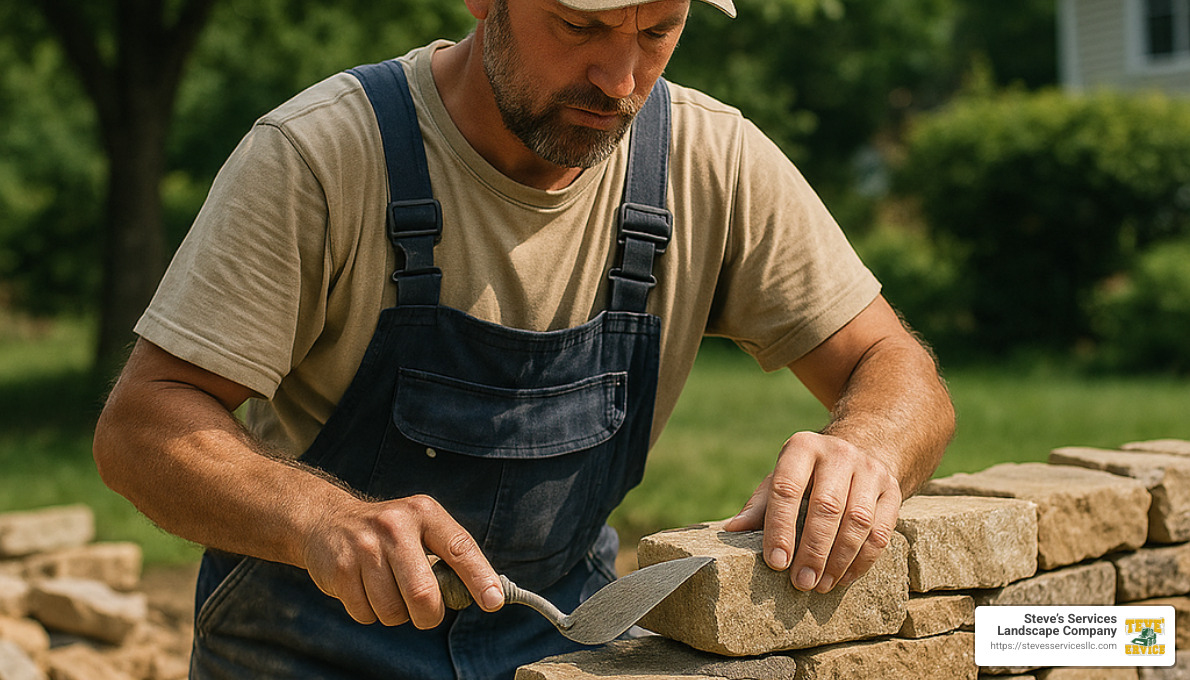
There’s something magical about a perfectly laid brick wall or a stunning stone fireplace that catches your eye and stands firm through decades of New England weather. That’s the beauty of masonry services – they create structures that don’t just shelter us, but tell stories across generations.
When we talk about masonry services, we’re referring to the art and science of building with some of earth’s most durable materials. From the brick veneer that gives your home character to the stone retaining wall holding back your hillside, masonry work combines beauty with incredible structural strength.
The range of possibilities is truly impressive. Need a new outdoor kitchen where memories will be made for years to come? Masonry services have you covered. Noticed crumbling mortar between your bricks? Professional tuckpointing can restore integrity while preserving the original charm. From chimney rebuilds that ensure your family’s safety to custom stone patios that transform your outdoor living space, masonry professionals bring specialized skills that few other trades can match.
What makes masonry truly remarkable is its longevity. While other building materials might last decades, properly constructed masonry can last centuries. The ancient pyramids still stand after thousands of years – now that’s durability you can trust! Modern masonry brings this time-tested approach to your Massachusetts home, providing exceptional protection against our challenging freeze-thaw cycles, superior fire resistance, and natural energy efficiency that keeps your home comfortable year-round.
Beyond the practical benefits, quality masonry work dramatically improves your property’s curb appeal and market value. A beautifully crafted stone entrance or a perfectly restored brick facade doesn’t just look impressive – it signals to potential buyers that your home has been built and maintained with care.
I’m Steve Sylva, and throughout my 25+ years in the landscape industry, I’ve seen how quality masonry services transform properties. That’s why I’ve built partnerships with Massachusetts’ finest masonry professionals, ensuring our hardscaping clients receive seamless service from concept to completion.
Explore more about Masonry Services:
– brick mason near me
– masonry and concrete contractors near me
– masonry contractors near me
Masonry 101: Definition, Materials & Weather Factors
When you gaze at the ancient Pyramids of Giza or the majestic Colosseum in Rome, you’re witnessing the remarkable staying power of masonry. Even modern marvels like Chicago’s Monadnock Building (the world’s tallest load-bearing brick structure) showcase why Masonry Services have remained vital throughout human history.
At its heart, masonry is beautifully simple: individual units bonded together with mortar to create structures that can last centuries. This modular approach gives us both incredible strength and endless design possibilities that few other building methods can match.
What Is Masonry Work?
Masonry work is more than just stacking bricks—it’s a skilled craft requiring deep knowledge of materials, techniques, and structural principles that have been refined over generations.
A typical masonry project flows through several key stages: careful design and planning, thoughtful material selection, precise layout work, skilled unit placement following time-tested bonding patterns, expert mortar application, proper curing, and finally, thorough cleaning and sealing.
As one mason with over 44 years under his tool belt once told me, “Masonry built and maintained properly can last for centuries, even in harsh climates like New England.” Despite all our technological advances, there’s simply no substitute for the skilled hands of an experienced mason.
Core Building Materials
The building blocks of masonry each bring their own unique charm and strength to your project:
Clay Brick offers that warm, timeless appeal that never goes out of style. Made from fired clay, traditional bricks provide excellent fire resistance while coming in countless colors, sizes, and textures. Their versatility makes them perfect for everything from garden walls to grand homes.
Natural Stone delivers best beauty and durability. Granite stands up remarkably well to harsh weather, while limestone offers a softer, classic appearance that’s easier to carve. Sandstone brings distinctive granular texture and varied colors, and marble creates neat visual interest with its signature veining.
Concrete Masonry Units (CMUs) might not have the romance of natural materials, but these workhorses (often called concrete or cinder blocks) provide tremendous structural capability at a lower price point. Today’s CMUs come in decorative finishes that can convincingly mimic natural stone.
Cultured Stone gives you the look of natural stone without the weight or cost, making it ideal for veneer applications where you want the beauty without structural concerns.
Mortar is the unsung hero binding everything together. This mixture of cement, lime, sand and water comes in different types (N, S, M, O, or K) offering varying strengths for different applications. According to research on bond patterns, the way masonry units are arranged significantly impacts both structural integrity and visual appeal.
How Weather Affects Masonry
While masonry is incredibly durable, Mother Nature remains its greatest challenge—especially in regions with dramatic seasonal shifts like Massachusetts.
Freeze-Thaw Cycles create the most damage to masonry structures in our region. When water seeps into tiny cracks and freezes, it expands by about 9%, creating tremendous pressure. Over repeated cycles, this can cause spalling (where the surface flakes away), cracking, and deterioration of mortar joints.
Moisture Intrusion brings its own problems beyond freezing damage. Excess moisture can lead to efflorescence (those chalky white deposits that appear on brick), encourage mold growth, and potentially damage interior structures behind your masonry walls.
UV Degradation slowly attacks colored mortars and certain masonry materials over time. Those same sun rays can also break down sealants and waterproofing compounds that protect your masonry investment.
A Chicago-based masonry expert once explained it perfectly: “Local climate conditions—such as cold Chicago winters—accelerate masonry deterioration, making maintenance critical.” This wisdom applies equally to Massachusetts, where our harsh winters put masonry to the ultimate test year after year.
That’s why at Steve’s Services, we approach every Masonry Services project with a deep understanding of how New England weather impacts these structures. We select materials, design solutions, and implement maintenance plans that account for our unique climate challenges—because beautiful masonry should be enjoyed for generations, not just seasons.
Masonry Services Breakdown: From New Construction to Tuckpointing
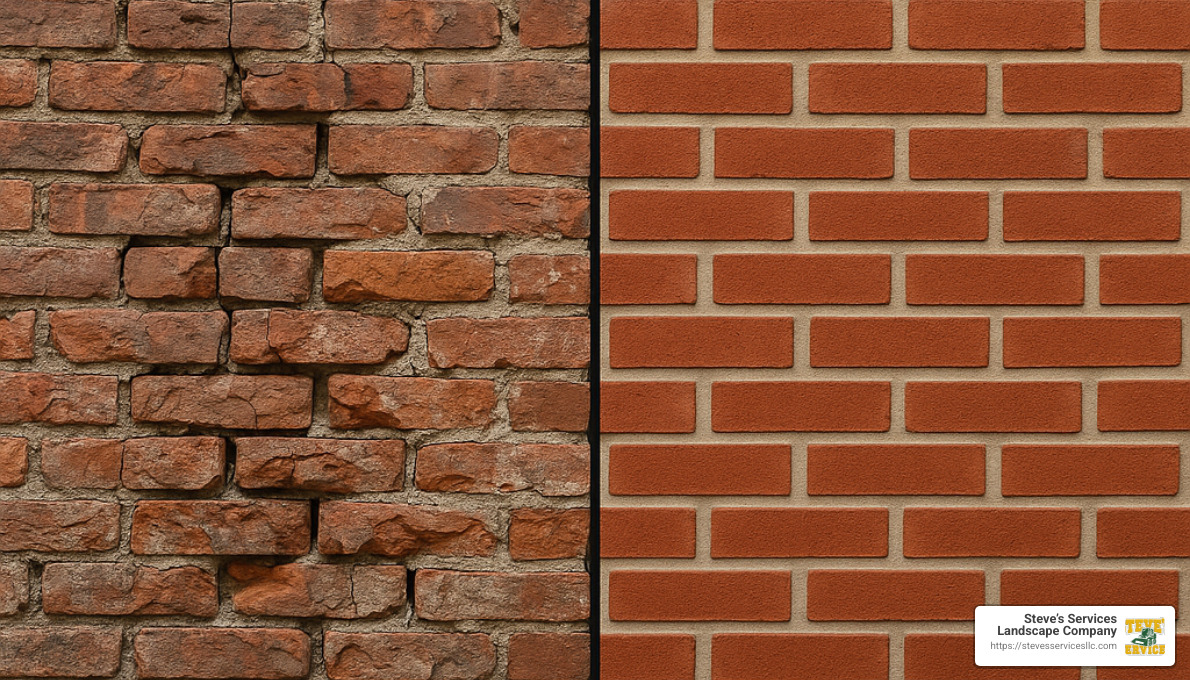
When you hear “Masonry Services,” you might picture someone laying bricks in a neat row, but the craft encompasses so much more. Let me walk you through the different services that fall under this skilled trade – from building beautiful new structures to preserving historic ones.
Brick & Stone Masonry Services
There’s something timeless about brick and stone that other building materials simply can’t match. Whether it’s the warm, earthy tones of clay brick or the unique character of natural stone, these materials create spaces that feel both solid and inviting.
Walls and facades form the backbone of masonry work. I’ve seen well-constructed brick walls stand firm for generations – some European masonry structures have weathered the elements for centuries! Beyond their durability, brick and stone walls provide natural insulation, keeping homes cooler in summer and warmer in winter.
Fireplaces and chimneys aren’t just functional heating elements – they become the heart of a home. A properly built masonry fireplace creates a gathering spot that families cherish for generations. The specialized knowledge required here goes beyond basic masonry, as these structures must withstand extreme temperature fluctuations while remaining structurally sound.
Outdoor living spaces like patios, fire pits, and garden walls extend your living area into nature. As one delighted homeowner told us, “They really listened to what we wanted and weren’t afraid to tackle our unconventional ideas. Our stone patio feels like it’s always been part of our landscape.”
The decorative elements – those beautiful arches, columns, and accent walls – are where masonry truly becomes art. These touches transform ordinary structures into extraordinary ones, often becoming the features that make your property memorable.
Concrete & CMU Construction
While brick and stone might get all the glory, concrete masonry units (CMUs) are the unsung heroes of the construction world. They offer remarkable strength and versatility at a price point that makes many projects possible.
Foundations built with concrete block provide the literal support upon which everything else rests. Modern foundation systems incorporate sophisticated waterproofing and drainage to ensure your structure stays dry and stable for decades. This is especially important in Massachusetts, where ground moisture can be problematic.
Retaining walls do the heavy lifting in your landscape, holding back soil and preventing erosion while creating usable, level spaces. As we often tell our clients, “A good retaining wall should be both beautiful and invisible – doing its job so well you hardly notice the engineering behind it.”
Want to learn more about our approach to these essential landscape elements? Check out our detailed guide to retaining walls.
Patios and walkways crafted from concrete pavers give you outdoor surfaces that can handle our harsh New England winters. Unlike poured concrete that can crack during freeze-thaw cycles, properly installed pavers flex slightly with ground movement, maintaining their integrity season after season.
Commercial and industrial applications often rely heavily on CMU construction for its fire resistance and sound dampening properties. That grocery store, school, or office building you visited recently? Chances are it incorporates concrete masonry in ways you might not even notice.
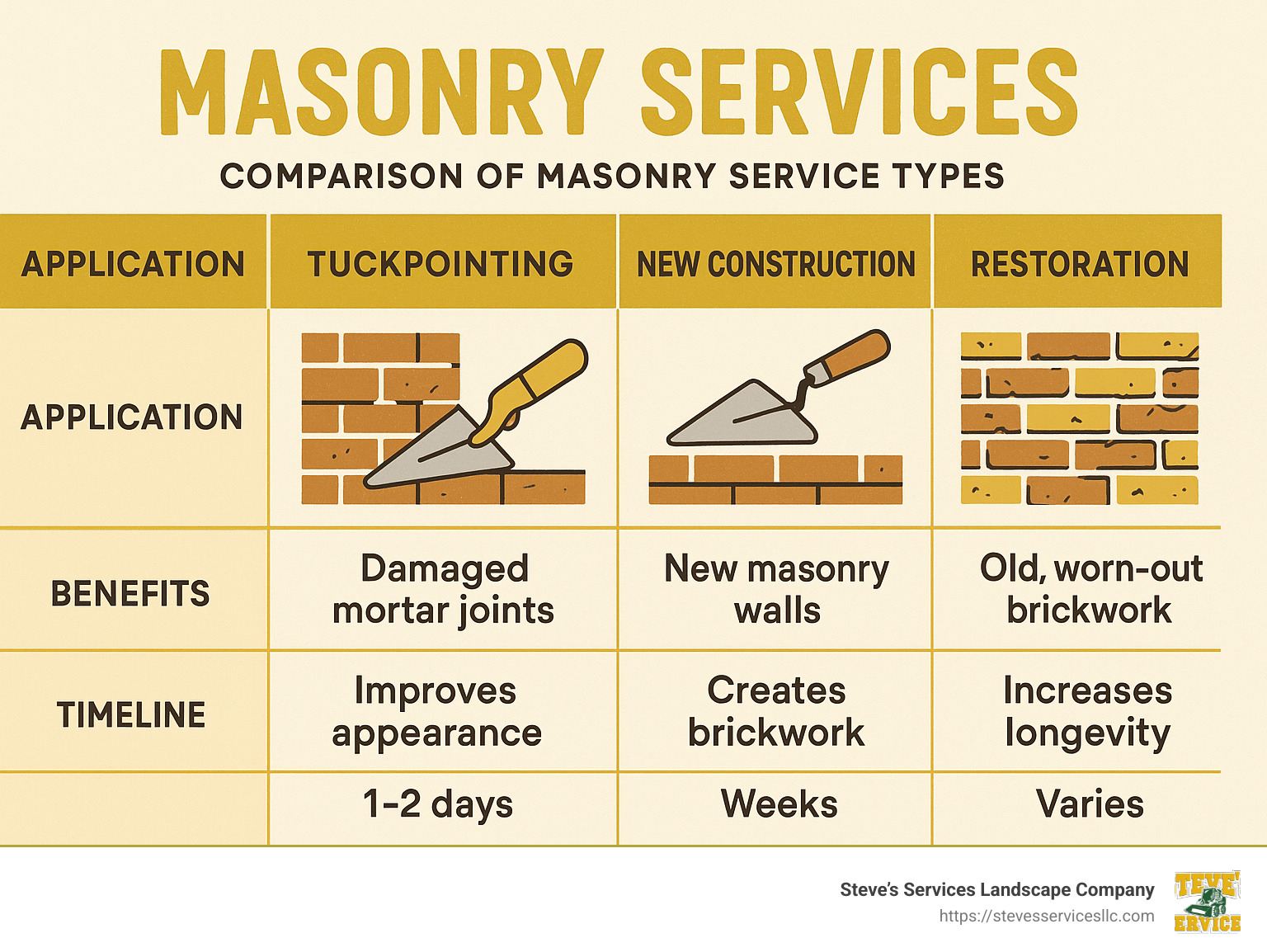
Masonry Repair vs. Restoration vs. New Construction
Understanding the differences between these three service categories helps you make smarter decisions about your property needs.
Masonry repair targets specific problem areas while leaving the majority of the structure untouched. Think of it as spot treatment – fixing a cracked brick here, patching a deteriorated section of mortar there, or replacing a rusted lintel above a window. Repairs address immediate concerns without the scope (or cost) of more extensive work.
Masonry restoration takes a more comprehensive approach, breathing new life into structures that have significant deterioration. Restoration work honors the original character of the building while bringing it back to sound condition. This might involve carefully cleaning decades of grime from brick, rebuilding portions of a wall, or completely repointing all the mortar joints to match the original style.
New construction gives you a blank canvas. Starting fresh means incorporating all the latest techniques for energy efficiency, moisture management, and structural integrity. New masonry can be designed to complement an existing structure or make a bold statement all its own. The advantage here is that you’re not working around existing problems – you’re building exactly what you want from the ground up.
Tuckpointing: Keeping Mortar Joints Watertight
If masonry units (bricks, stones, blocks) are the stars of the show, mortar is the unsung supporting actor that actually holds everything together. Tuckpointing is perhaps the most essential masonry service for maintaining existing structures.
The process involves carefully grinding out deteriorated mortar joints, cleaning away all debris, and then skillfully replacing that mortar with fresh material that matches both the composition and color of the original. The final step – tooling the joints – isn’t just about appearances. Properly shaped mortar joints actually direct water away from the building.
I like to explain tuckpointing with a simple analogy: your brick wall is like a suit of armor, and the mortar joints are the leather straps holding it together. Over time, those straps wear out faster than the armor itself. Tuckpointing replaces those worn straps before the whole suit falls apart.
Want to know if your home needs tuckpointing? Try the “key test” – simply take your house key and gently scrape it against the mortar between bricks. If the mortar crumbles or produces powder, it’s time to call in professionals for an evaluation.
For help finding qualified experts, explore our guide to masonry contractors in your area.
Waterproofing & Sealants for Longevity
The final piece of the masonry puzzle involves protecting your investment from its greatest enemy: water. Without proper protection, water can undermine even the finest masonry work.
Siloxane and silane sealers create an invisible shield that repels liquid water while still allowing the masonry to “breathe” – letting water vapor escape rather than becoming trapped inside. This breathability is crucial in our Massachusetts climate, where trapped moisture can freeze and cause serious damage.
Joint sealants work at the transitions between different materials or at expansion joints. These flexible materials accommodate the natural movement that occurs as buildings expand and contract with temperature changes, preventing water from finding its way inside.
Damp-proofing and waterproofing systems protect below-grade masonry from groundwater pressure. As a contractor friend of mine likes to say, “Water always wins unless you plan for it.” These systems ensure that moisture stays where it belongs – outside your foundation walls.
At Steve’s Services, we understand the importance of these protective measures, especially in our challenging New England climate. Every masonry service we provide includes appropriate water management strategies to ensure your brick, stone, and concrete structures stand the test of time.
Choosing & Vetting Your Masonry Contractor

Let’s face it – the mason you hire will make or break your project. You could have the finest imported stone or premium brick, but without skilled hands to install it, you might as well be building a sandcastle at high tide. Finding the right Masonry Services provider requires a bit of homework, but I promise it’s worth every minute spent.
Credentials & Certifications to Demand
When I’m helping clients connect with quality masons, I always start with the basics. First, verify they have proper licensing. Here in Massachusetts, legitimate contractors must have their Home Improvement Contractor (HIC) registration for residential work. This isn’t just paperwork – it’s your first line of defense against fly-by-night operators.
Insurance is non-negotiable. Your mason should carry robust general liability coverage (at least $1 million), workers’ compensation, and business vehicle insurance. I’ve seen uninsured contractors leave homeowners holding the bag for thousands in damages or medical bills. Don’t let that be you!
Professional memberships tell you a lot about a contractor’s commitment to their craft. Look for affiliations with the Mason Contractors Association of America or local masonry associations. Many of our best Masonry Services partners proudly display their Better Business Bureau accreditation too.
Many manufacturers offer specialized training programs for their materials. A contractor who’s invested time in becoming certified to install specific products shows dedication to getting things right. As my grandfather used to say, “The person who knows how will always have a job; the person who knows why will be their boss.”
OSHA compliance might seem like bureaucratic red tape, but it signals a company that values safety – for their team and your property. A messy, dangerous worksite is usually a red flag for messy, dangerous workmanship.
Questions to Ask Before You Hire
When you’re interviewing potential Masonry Services providers, think of it like a job interview – because that’s exactly what it is. You’re hiring someone for an important position: caretaker of your home’s structural integrity and curb appeal.
Start by asking about their experience. How long have they been working with masonry? Can they show examples of similar projects? A seasoned mason will happily share their portfolio and might even light up when discussing particularly challenging or creative past work.
Request references from both recent projects and ones completed several years ago. New work often looks good, but how does it hold up over time? Massachusetts winters can be brutal on masonry, so longevity matters tremendously here.
Discuss timeline expectations upfront. When can they start? How long will the project take? What might cause delays? Honest contractors won’t promise unrealistic timelines just to get your business.
Ask who’ll actually be doing the work. Will the owner be on-site? Is there a dedicated foreman? Will any portion be subcontracted? The answer isn’t necessarily right or wrong, but you deserve transparency.
Material discussions reveal a contractor’s expertise. They should readily explain why certain bricks, stones, or mortars are best for your specific project rather than taking a one-size-fits-all approach.
The change order process matters because surprises happen, especially in renovation projects. How will they handle unexpected issues or your mid-project inspiration? The best contractors have clear, fair processes for these situations.
Cleanup practices vary widely. Some leave a spotless site daily; others save major cleanup for the end. Neither approach is wrong, but knowing what to expect prevents frustration.
Finally, warranty terms speak volumes about a contractor’s confidence in their work. Get it in writing, and understand if it transfers should you sell your home.
Comparing Bids & Understanding Scope
When those bids arrive, resist the urge to immediately choose the lowest price. Instead, pull out your detective hat and look for what’s actually being offered.
A proper bid should outline specific preparation methods, materials (including brands and grades), installation techniques, cleanup procedures, and warranty terms. Vague proposals often hide unpleasant surprises.
Pay close attention to material specifications. The difference between standard and premium brick isn’t just aesthetic – it can mean decades of additional service life. If one bid is substantially lower than others, they might be cutting corners on materials that will cost you dearly later.
Labor calculations matter too. An experienced crew might charge more hourly but finish faster with better results than a cheaper, less skilled team. Ask each bidder how many workers they’ll assign and their anticipated timeline.
The payment schedule reveals a lot about a company’s financial stability and fairness. Be wary of anyone demanding large upfront payments. Reputable Masonry Services providers typically request a reasonable deposit (10-30%), followed by progress payments tied to completion milestones.
Where to Find Trusted Pros
Finding quality masons requires looking beyond flashy ads. Start with trade associations like the Mason Contractors Association of America, which maintains directories of vetted professionals who meet industry standards.
Online reviews can be helpful, but dig deeper than star ratings. Read the detailed comments and pay attention to how contractors respond to criticism. A thoughtful response to a negative review often tells you more than a dozen five-star ratings.
Don’t overlook local masonry supply yards. These businesses know which contractors consistently purchase quality materials and maintain good standing accounts. A quick chat with the manager might lead you to hidden gems not spending thousands on advertising.
Personal recommendations remain golden. Talk to neighbors, especially those whose masonry has weathered several seasons. They’ll share not just who did good work, but who was pleasant to work with, respected their property, and stood behind their craftsmanship.
For our Massachusetts neighbors in Burlington, Danvers, Everett, Lynnfield, Medford, Melrose, North Reading, Reading, Revere, Saugus, Stoneham, Winchester, Woburn, Malden, and Wakefield – we’re happy to connect you with our trusted network of masonry professionals who meet our exacting standards.
Learn more about finding qualified masonry contractors near me in your area.
Recognizing Damage & Scheduling Timely Repairs
Your home’s masonry is constantly battling the elements, especially in our harsh Massachusetts climate. Catching problems early isn’t just about aesthetics—it’s about preventing small issues from becoming structural nightmares that can cost thousands to repair. Let me walk you through what to watch for and when to call in the professionals.
Top Warning Signs Your Home Needs Help
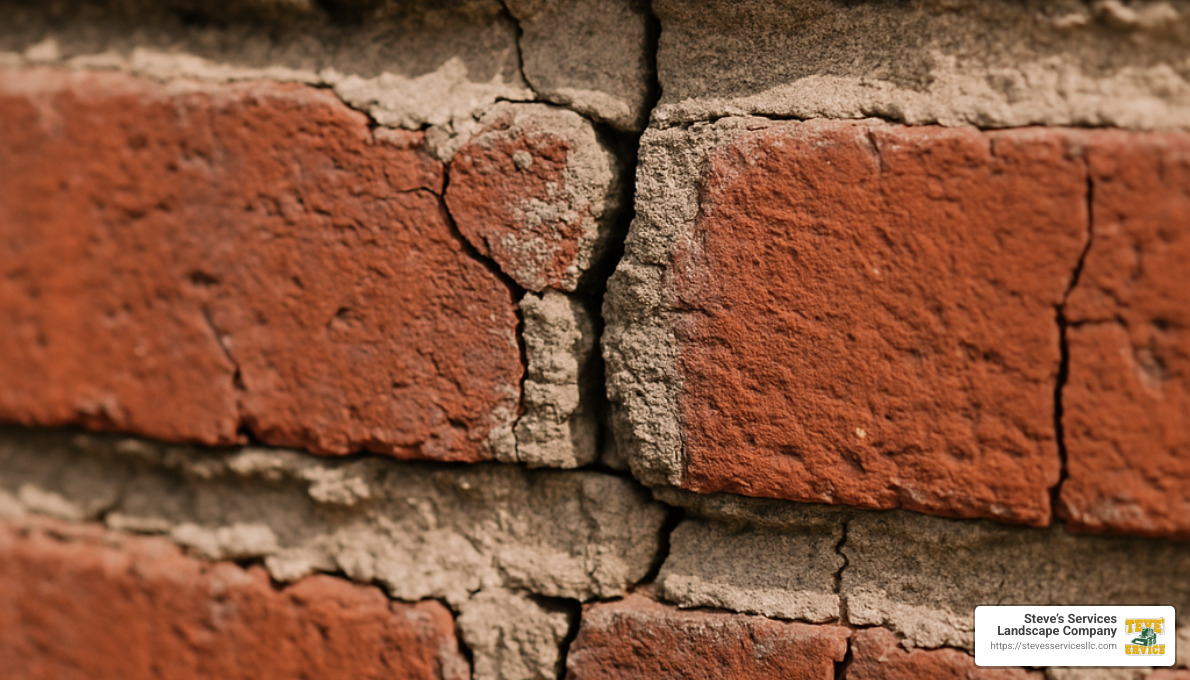
That beautiful brick exterior speaks a language all its own when something’s wrong. Powdery or crumbling mortar is perhaps the most common cry for help—if you can rub your key against the mortar joints and they disintegrate into powder, water is already working its way into your walls.
I’ve seen many homeowners ignore stair-step cracks thinking they’re just cosmetic, but these diagonal cracks following mortar joints actually signal potential foundation movement. Similarly, any bowed brick walls need immediate attention—they’re not just settling, they’re failing structurally.
After our Massachusetts winters, watch for spalling—when the face of bricks pop off like they’re shedding their skin. This happens when water freezes inside the masonry, expanding and literally pushing the brick face off. Its cousin, efflorescence (those white, chalky deposits), might look merely annoying, but it’s telling you water is moving through your wall—a problem that never resolves itself.
A leaning chimney is never something to ignore. I remember one homeowner who thought their tilting chimney was “just settling”—until it partially collapsed during a winter storm, causing thousands in damage that could have been prevented with earlier intervention.
Don’t overlook rusted lintels above windows and doors. That rust staining isn’t just unsightly—the metal is expanding as it rusts, pushing against the surrounding masonry and creating cracks. And those foundation cracks? Even small ones can be gateways for water infiltration that will worsen with every freeze-thaw cycle.
DIY Checks vs. Professional Inspections
There’s plenty you can do yourself to monitor your masonry’s health between professional inspections. The key rub test I mentioned earlier is something I encourage all homeowners to do annually—just take a house key and firmly rub it against mortar joints in different areas. Solid mortar will resist; deteriorating mortar will crumble or powder.
After heavy rainstorms, take a walk around your home’s exterior. Look for darker spots on brick or stone that might indicate water absorption, and then check the corresponding interior walls for dampness. A simple tap test can also reveal loose masonry units—they’ll sound hollow compared to securely bonded ones.
That said, professional inspections bring tools and expertise that go beyond the DIY approach. Professionals use thermal imaging cameras that can detect moisture invisible to the naked eye and employ specialized moisture meters to quantify exactly how wet your masonry is beneath the surface.
One of my clients insisted nothing was wrong with their chimney despite some minor cracking—until our inspector showed them thermal images revealing extensive water infiltration that was about to cause major damage during the next freeze. The professional eye knows what to look for and can develop comprehensive repair strategies based on root causes rather than just treating symptoms.
When to Plan Tuckpointing or Full Restoration
Timing is everything with masonry repairs, especially in our New England climate. The ideal window for tuckpointing and most masonry repairs is late summer through early fall. This gives fresh mortar and sealants plenty of time to cure properly before freezing temperatures arrive. Many homeowners make the mistake of waiting until they see the first fall leaves, but by then, we’re often racing against the thermometer.
Spring is the perfect time for a post-winter assessment. After the snow melts and before the summer rains, have your masonry inspected to catch any damage from winter’s freeze-thaw cycles. This gives you plenty of time to schedule repairs during the optimal summer weather.
If you’re planning to sell your home, address masonry issues before listing. Nothing kills a sale faster than a home inspector pointing out deteriorating brick or a failing chimney. These issues almost always appear on inspection reports, and they can complicate or derail your sale entirely.
Pay special attention after severe weather events. Heavy rains, high winds, and especially winter storms can accelerate masonry damage. I’ve seen more chimney problems after a single harsh winter than during five years of normal weather.
For preventive maintenance, newer masonry (under 25 years) generally needs inspection every 3-5 years, while older masonry (25-75 years) should be checked every 2-3 years. If your home is historic (over 75 years), annual inspections are your best insurance against costly surprises.
As one of our masonry partners with over 20 years of experience often says, “In masonry, a $500 repair today prevents a $5,000 repair next year.” Those words have saved our clients countless dollars over the years, and they might just save your home too.
Project Timeline, Costs, Maintenance & FAQs
Understanding the practical aspects of masonry projects helps you plan effectively and maintain your investment for decades to come. Let’s walk through what you can expect from start to finish.
Typical Workflow From Quote to Cleanup
When you hire professional Masonry Services, your project will typically follow a well-established sequence. It begins with an initial consultation where the contractor assesses your needs, takes measurements, and provides a detailed written estimate—often including material samples so you can visualize the finished product.
Once you’re ready to proceed, you’ll sign a contract outlining the scope, materials, timeline, and payment schedule. This is when your project gets scheduled, usually based on a combination of contractor availability and suitable weather conditions.
Behind the scenes, your contractor orders materials (some specialty items may have lead times) while preparing your site with protective coverings for landscaping, windows, and other vulnerable areas. For restoration projects, this phase includes careful removal of damaged masonry.
The real change begins with proper foundation preparation—ensuring a solid, level base that will support your masonry for decades. Then comes the core construction phase, where skilled masons set up scaffolding, mix mortar, and carefully install each masonry unit according to your design specifications.
After installation, your new masonry needs time to cure properly—typically 7-28 days depending on weather and project specifications. During this critical period, the mortar develops its strength and durability. The final touches include cleaning all surfaces and applying sealants if specified, followed by a thorough site cleanup and walkthrough.
As one delighted customer shared, “They expertly handled numerous problems posed by the replacement of the old brick facade. The final product is a beautiful building where you cannot differentiate between the old building and the new addition.”
Average Costs & Budget Ranges*
Masonry project costs vary significantly based on materials, complexity, accessibility, and regional labor rates. While every project is unique, these general price ranges can help with your initial budget planning:
Brick Veneer Installation typically runs $15–$45 per square foot, with standard brick at the lower end ($15–$25) and premium or specialty brick commanding higher prices ($25–$45).
Stone Masonry represents the premium end of masonry work, ranging from $30–$90 per square foot. Cultured stone offers the look of natural stone at a more accessible price point ($30–$50), while natural stone creates an best authentic appearance at $45–$90 per square foot.
Concrete Block Construction provides excellent value at $10–$30 per square foot, with standard CMUs at the lower end and decorative or specialized blocks at the higher end.
For existing structures, Tuckpointing/Repointing typically costs $5–$25 per square foot, with the higher end reflecting historic or intricate detail work.
Chimney Repair or Rebuild varies dramatically based on scope—from minor repairs ($750–$2,500) to partial rebuilds ($2,500–$8,000) or complete reconstructions ($8,000–$30,000).
Retaining Walls serve both practical and aesthetic purposes, with costs ranging from $25–$50 per square foot for concrete block, $35–$60 for brick, and $40–$80 for natural stone.
Fireplace Construction creates a stunning focal point, with prefabricated inserts featuring masonry facing starting around $5,000–$10,000, while custom masonry fireplaces typically range from $10,000–$30,000.
*These are internet averages; actual quotes vary widely based on specific project requirements, site conditions, and regional factors. At Steve’s Services, we provide detailed, customized quotes for each project based on your specific needs and circumstances.
Maintaining Your Masonry for Decades
With proper care, your masonry investment can last for generations. Start with annual inspections, particularly after winter, looking for cracked mortar, spalling brick, water staining, efflorescence, vegetation growth, and damaged flashing or sealants.
Different masonry materials require specific cleaning approaches. Brick responds well to gentle cleaning with mild detergent and a soft-bristle brush. Natural stone requires material-specific cleaners—what works for granite might damage limestone. Concrete typically tolerates pressure washing, but only at appropriate pressure settings.
Keep plants at least 12 inches away from masonry walls, and promptly remove any ivy or climbing plants. While they may look charming, their roots can penetrate and damage mortar joints over time. Equally important is proper drainage—ensure your gutters, downspouts, and ground grading direct water away from masonry structures.
Depending on exposure conditions, protective sealants typically need reapplication every 5-10 years. And perhaps most importantly, address small issues immediately. A single damaged brick or small area of deteriorated mortar is much easier and less expensive to fix than waiting until the damage becomes widespread.
Learn more about our approach to hardscape construction and maintenance.
Emerging Trends & Materials to Watch
The Masonry Services industry continues to evolve with exciting innovations. Thin brick and stone panels now offer the appearance of traditional masonry with easier installation and reduced structural requirements—perfect for certain renovation projects.
Scientists have developed self-healing concrete containing bacteria that produce limestone when exposed to water, automatically filling small cracks as they develop. Meanwhile, computer-controlled 3D-printed masonry allows for complex geometric forms that would be extremely difficult to create by hand.
Sustainability has become a major focus, with eco-friendly options including recycled content in concrete and CMUs, locally sourced stone to reduce transportation impact, and alternative binders that reduce the carbon footprint of mortar.
For tech enthusiasts, smart masonry integrates sensors to monitor structural health, moisture levels, and temperature. And for the energy-conscious, improved insulation systems now make it possible to improve energy efficiency while maintaining traditional masonry appearances.
Frequently Asked Questions about Masonry Services
What’s the difference between tuckpointing and repointing?
While often used interchangeably in everyday conversation, there is a technical difference. Tuckpointing traditionally refers to a decorative technique where mortar of a similar color to the brick is applied, and then a thin line of contrasting mortar is inserted to create the illusion of very fine joints. Repointing simply means removing and replacing deteriorated mortar. In modern American usage, most contractors use “tuckpointing” to refer to any mortar joint repair or replacement.
How long will a typical masonry project disrupt my home?
The good news is that most masonry work occurs outside your home, minimizing interior disruption. A chimney tuckpointing might be completed in 1-2 days, while brick veneer installation for an average home typically takes 1-2 weeks. Complete chimney rebuilds usually require 3-5 days, and stone patio installations range from 1-3 weeks depending on size and complexity. A reputable contractor will use plastic sheeting and other protective measures to control dust and debris, making the process as non-intrusive as possible.
Do brick homes really need waterproofing treatments?
While brick itself is incredibly durable, it’s also naturally porous and can absorb water. In freeze-thaw climates like Massachusetts, this can lead to damage over time. Modern breathable sealers offer an excellent solution—they repel liquid water while allowing water vapor to escape, providing protection without trapping moisture. Not every brick home needs sealing, but those in exposed locations or with previous moisture issues often benefit significantly from appropriate sealer application.
Can masonry work be done during winter in Massachusetts?
While not ideal, some masonry work can be performed during winter with proper precautions. As industry experts note, “Winter masonry projects often include chimneys, staircases, interior foundations, fireplaces, and rip rap stone walls.” Special additives can be used in mortar to prevent freezing, and temporary enclosures with heaters can create suitable working conditions. That said, most extensive exterior masonry projects are best scheduled during warmer months when materials can cure properly.
How long should professional masonry work last?
With proper installation and maintenance, brick walls and structures can last 100+ years, as can stone masonry. Concrete block typically lasts 50-100 years, while mortar joints generally require repointing after 25-50 years. Concrete patios and walkways typically provide 30-50 years of service. As one industry expert puts it, “Masonry is one of the toughest and most tried and tested construction methods around.”
Conclusion
Investing in quality masonry services is truly one of the smartest decisions you can make for your property. This isn’t just about aesthetics—though brick and stone certainly create stunning visual appeal—it’s about making a long-term investment in your home or business.
When you choose professional masonry work, you’re adding significant value to your property in ways that few other improvements can match. Real estate professionals consistently note that quality masonry features command premium prices when it’s time to sell. There’s something timeless about the look and feel of natural stone and brick that vinyl siding or wood simply can’t replicate.
The curb appeal factor can’t be overstated. Whether it’s a classic brick facade that gives your home character, an neat stone entry that makes a statement, or a custom outdoor kitchen that transforms your backyard, masonry creates that distinctive “wow factor” that makes neighbors stop and stare (in the best possible way).
Beyond the visual benefits, let’s talk durability. When properly constructed and maintained, masonry structures often outlast the buildings they’re attached to. Think about it—many of the world’s oldest surviving structures are masonry. Your great-grandchildren could be enjoying that brick fireplace or stone wall you install today.
Masonry services also offer surprising environmental benefits. The substantial thermal mass of brick and stone helps regulate temperature fluctuations, potentially reducing your energy costs throughout the year. And because masonry lasts for generations, you’re creating less construction waste over time compared to materials that need frequent replacement.
At Steve’s Services, we see masonry as more than just building with brick and stone—it’s about creating lasting structures that improve your property’s value, appearance, and functionality for decades to come. Our team partners with skilled masonry professionals throughout Massachusetts who understand our climate challenges and how to build accordingly.
Whether you need subtle tuckpointing for an aging chimney, a stunning new stone patio for summer entertaining, or complete masonry restoration for a historic property, we’re here to guide you through every step. We believe in doing things right the first time, using proper techniques and quality materials that stand the test of time.
Contact us today to discuss your masonry needs and find how our comprehensive approach to hardscaping can transform your property into something truly special.
Learn more about our full hardscaping service and how we integrate masonry with complete landscape solutions.