What Does Hydroseeding Cost Near Me?
Hydroseeding cost near me typically ranges from $0.07 to $0.60 per square foot, depending on your location, yard size, and site conditions. Here’s a quick snapshot to help you budget:
| Yard Size | Typical Cost Range* |
|---|---|
| Small (2,000 sq. ft.) | $200 – $1,200 |
| Average (5,000 sq. ft.) | $400 – $3,000 |
| Large (10,000 sq. ft.) | $700 – $6,000 |
| 1 Acre | $2,100 – $10,000+ |
Minimum service fees often apply for small yards, typically $300 – $500.
*Based on average internet pricing data, not actual Steve’s Services pricing.
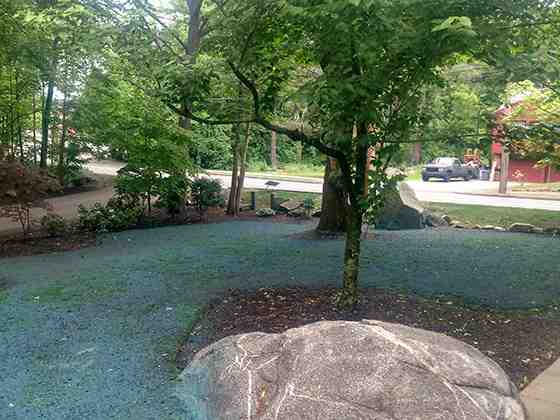
Hydroseeding is one of the most cost-effective ways to establish a healthy lawn from scratch. Instead of laying expensive sod or hand-broadcasting dry seed, a professional sprays a liquid mix — called a slurry — of grass seed, mulch, fertilizer, and tackifier directly onto prepared soil. The result? Faster germination, better coverage, and a fraction of the cost of sod.
It works especially well for larger areas, slopes, and properties that need erosion control. And because the slurry binds to the soil, seeds stay in place and germinate more evenly than with traditional seeding methods.
But here’s the catch: the price you see online rarely matches what you’ll actually pay. Your specific location, soil condition, yard size, and the quality of materials used all push that number up or down — sometimes significantly.
I’m Steve Sylva, owner of Steve’s Services Landscape Company in Malden, MA, with over 25 years of hands-on experience helping homeowners across Massachusetts find the right lawn installation solutions, including understanding hydroseeding cost near me for their specific property. In this guide, I’ll break down exactly what drives the price so you can budget with confidence.

Relevant articles related to hydroseeding cost near me:
Factors That Influence Hydroseeding Cost Near Me
When you start searching for a quote, you’ll quickly realize that no two yards are the same. Several variables play a role in determining the final price of your project. We see this every day in towns like Melrose and Winchester—one neighbor might have a flat, square lot, while the other has a steep hill that requires a completely different approach.
Yard Size and Scale
The total square footage is the biggest driver of cost. However, it’s important to note that the price per square foot often drops as the project size increases. This is because the “mobilization cost”—the time and fuel it takes to get the heavy equipment to your site—is a fixed expense. For very small patches, many companies charge a minimum fee of $300 to $500 just to show up. To get a better idea of local options, you can explore hydroseeding services near me.
Grass Seed Types
The “flavor” of grass you choose matters. Different seeds have different market prices. For example:
- Kentucky Bluegrass: Known for its lush, deep green color and ability to self-repair. It is often on the higher end of the price spectrum, sometimes ranging from $8 to $13 per pound.
- Tall Fescue: A hardy, drought-tolerant option that handles foot traffic well. This typically costs less, often between $4 and $8 per pound.
- Custom Blends: We often recommend a mix tailored to the specific sun and shade patterns of your yard in places like Lynnfield or Reading.
Soil Quality and Preparation
You can’t just spray hydroseed on hard-packed clay and expect a golf course finish. How to prepare lawn for hydroseeding is a critical step that impacts your budget. If your soil is poor, you may need to add 2 to 4 inches of fresh topsoil, which can cost an average of $35 per cubic yard. A soil test is a smart $35–$100 investment to ensure your pH levels are balanced before we begin.
Slope Gradient and Accessibility
If your yard looks more like a ski jump than a lawn, expect the price to rise. Hydroseeding is excellent for erosion control, but steep slopes (over 20 degrees) often require a thicker slurry or specialized “tackifiers” to keep the seed from washing away in the rain. This can double the material and labor costs for those specific sections.
On-Site Water Availability
Hydroseeding equipment requires a lot of water to mix the slurry. If we can hook up to your local water supply in Medford or Saugus, the process is much faster. If we have to haul water to a remote site, the additional labor and transport fees will be reflected in the quote.
Calculating Hydroseeding Cost Near Me by Yard Size
To help you visualize the potential investment, we’ve put together a table based on average internet data. These are estimates and can vary based on the factors mentioned above. For a deeper dive, check out our cost-of-hydroseeding-complete-guide.
| Project Size | Estimated Square Footage | Average Cost Range* |
|---|---|---|
| Small Suburban Yard | 2,000 sq. ft. | $200 – $1,200 |
| Medium Residential | 5,000 sq. ft. | $400 – $3,000 |
| Large Residential | 10,000 sq. ft. | $700 – $6,000 |
| Half Acre | 21,780 sq. ft. | $1,500 – $7,500 |
| Full Acre | 43,560 sq. ft. | $2,100 – $12,000+ |
Pro Tip: If you have a massive property, ask about volume discounts. Projects over an acre often see the per-square-foot rate drop significantly because the equipment stays on-site longer, maximizing efficiency.
Comparing Hydroseeding Cost Near Me to Sod and Seeding
If you’re debating between different methods, it helps to see how they stack up. While you can find local pros to give you specific quotes, here is the general breakdown of the “Big Three” lawn installation methods.
- Sod Installation: This is the “instant gratification” route. You get a green lawn today, but you pay for it. Sod typically costs $0.30 to $0.85 per square foot for materials alone, and when you add labor, the price can easily hit $1.00 to $2.00 per square foot.
- Hydroseeding: The middle ground. It costs about 60-80% less than sod but grows much faster and more reliably than dry seeding. It offers a fantastic long-term ROI because the roots establish directly into your native soil.
- Broadcast (Dry) Seeding: This is the cheapest method, often costing $0.05 to $0.10 per square foot. However, it is labor-intensive to do right, prone to bird theft, and easily washed away by a single heavy thunderstorm.
Regional Price Variations and Additional Expenses
While we focus on serving our neighbors in Malden, Burlington, and the surrounding North Shore areas, it’s interesting to see how hydroseeding cost near me fluctuates across the country. These regional differences are usually driven by local labor rates, the cost of water, and the availability of specialized mulch.
Location-Specific Market Rates
In high-cost-of-living areas like New York, NY, prices can range from $0.12 to $0.57 per square foot. Down south in Atlanta, GA, you might see ranges from $0.08 to $0.36. Even within Washington state, there’s a gap between the Seattle average of $500 for a typical lawn and other outlying areas. In our neck of the woods—from Revere to Stoneham—prices are influenced by our specific New England soil (hello, rocks!) and the shorter growing seasons.
Site Preparation Labor
Don’t forget the work that happens before the truck arrives. If we need to remove an old, weed-choked lawn, that labor can cost $1 to $3 per square foot. If your land needs resloping to prevent drainage issues, a professional landscaping company might charge $1,000 to $3,000 for that task.
Permits and Travel Fees
In some municipalities, large-scale land disturbance requires a permit. Additionally, many companies charge travel surcharges if the property is outside their standard service radius. For example, some pros charge a flat fee plus $4.00 per mile beyond a 25-mile home base. We always recommend checking with your local town hall in places like Wakefield or Woburn to see if any specific bylaws apply to your project.
Once the application is done, your costs aren’t quite over. You’ll need to account for a temporary spike in your water bill. Learning how to care for a hydroseeded lawn involves watering 2-4 times a day for the first few weeks, which can add $50 to $150 to your monthly utility costs.
Professional Service Inclusions and Long-Term Value
When you pay for a professional hydroseeding service, you aren’t just paying for “green spit” on your dirt. You are paying for a scientifically engineered environment designed to make grass grow where it otherwise wouldn’t.
What’s in the Slurry?
A high-quality professional mix includes:
- 100% Wood Fiber Mulch: This is far superior to cheap paper mulch. It holds more water and creates a better “blanket” for the seeds.
- Tackifiers: Think of this as an organic glue that keeps the seeds from blowing away or sliding down hills.
- Starter Fertilizer: A high-phosphorus boost to encourage immediate root development.
- Certified Seeds: We use NTEP-rated seeds that are tested for high germination rates and disease resistance.
Warranties and Guarantees
One of the biggest values of hiring a pro is the peace of mind. Many reputable companies offer a germination guarantee—typically 30 days. If the grass doesn’t sprout due to a product or workmanship issue (and you’ve followed the watering instructions!), they will often re-spray the patchy areas at no cost. This is a huge safety net that you simply don’t get with a DIY approach.
Seasonal Timing: When to Save
The best time to plant a new lawn in Massachusetts is late summer to early fall (August 15th to October 1st). The soil is warm, but the air is cooling down, and there is less competition from weeds. Spring is the second-best window. If you book during the “off-peak” summer months, you might find more flexible scheduling, but your watering costs will be much higher to keep the seedlings alive in the heat.
For more expert advice on maintaining that investment, check out these hydroseeding pro tips.
Frequently Asked Questions About Hydroseeding Cost Near Me
We get a lot of questions about the specifics of hydroseeding. Here are the most common ones we hear from clients in Malden and the surrounding North Shore communities. Please remember that all pricing mentioned is based on average internet data and does not represent actual quotes from Steve’s Services.
What is the average hydroseeding cost near me for a standard yard?
For a standard 5,000 square foot residential lawn, the national average typically falls between $700 and $2,200. However, depending on the complexity of the site and the quality of the seed blend, we have seen ranges as wide as $0.07 to $0.60 per square foot. If you have a very small area, expect to pay a minimum service fee of $300 to $500. You can find more details on the cost of hydroseeding a lawn in our dedicated guide.
How long does it take for hydroseeded grass to grow?
You should start seeing “green fuzz” within 7 to 14 days, depending on the weather and how well you water. The lawn is usually ready for its first mowing once the grass reaches about 3 to 4 inches in height, which typically takes 4 to 6 weeks. It is vital to follow a strict watering schedule during this time to ensure the roots take hold.
Is professional hydroseeding more cost-effective than DIY?
While it’s tempting to try a do-it-yourself-hydromulch kit, the results often fall short. Professional equipment can spray up to 200 feet and applies the slurry with much higher pressure and uniformity. When you factor in the cost of renting a professional-grade hydroseeder ($300–$500 per day), the cost of high-quality materials, and the risk of a failed crop, most homeowners find that hiring a pro is actually more cost-effective in the long run. Professionals bring the expertise to know exactly which grass seed will thrive in your specific soil.
Can I hydroseed over an existing lawn?
It is possible, but generally not recommended if you want the best results. For the seeds to germinate, they need “seed-to-soil” contact. If you spray over thick existing grass or weeds, the seeds get stuck in the blades and never reach the dirt. For a successful hydroseeding of an existing lawn, it’s best to kill off the old vegetation and power-rake the area first.
Is hydroseeding environmentally friendly?
Yes! Most hydroseeding slurries are made from non-toxic, biodegradable materials. The mulch is often recycled wood fiber or paper, and the tackifiers are usually plant-based. It’s a great way to prevent erosion on hillsides, which protects local waterways from sediment runoff.
Conclusion
Establishing a beautiful lawn shouldn’t feel like a gamble. By understanding the factors that drive hydroseeding cost near me, you can make an informed decision that balances your budget with your desire for a lush, green landscape. Whether you are in Burlington, Everett, or right here in Malden, hydroseeding offers a high-performance, cost-effective alternative to sod that—with the right care—will last for years.
At Steve’s Services Landscape Company, we’ve spent over two decades perfecting the art of the New England lawn. We know the soil, we know the climate, and we know exactly what it takes to get grass to grow in Middlesex and Essex counties. From the initial soil prep to the final spray, we handle every step with the professional care your property deserves.
Ready to transform your yard? Whether you need a new lawn installation or help with irrigation systems to keep that new grass hydrated, we are here to help. Contact us today for a consultation, and let’s get started on the lawn you’ve always wanted.