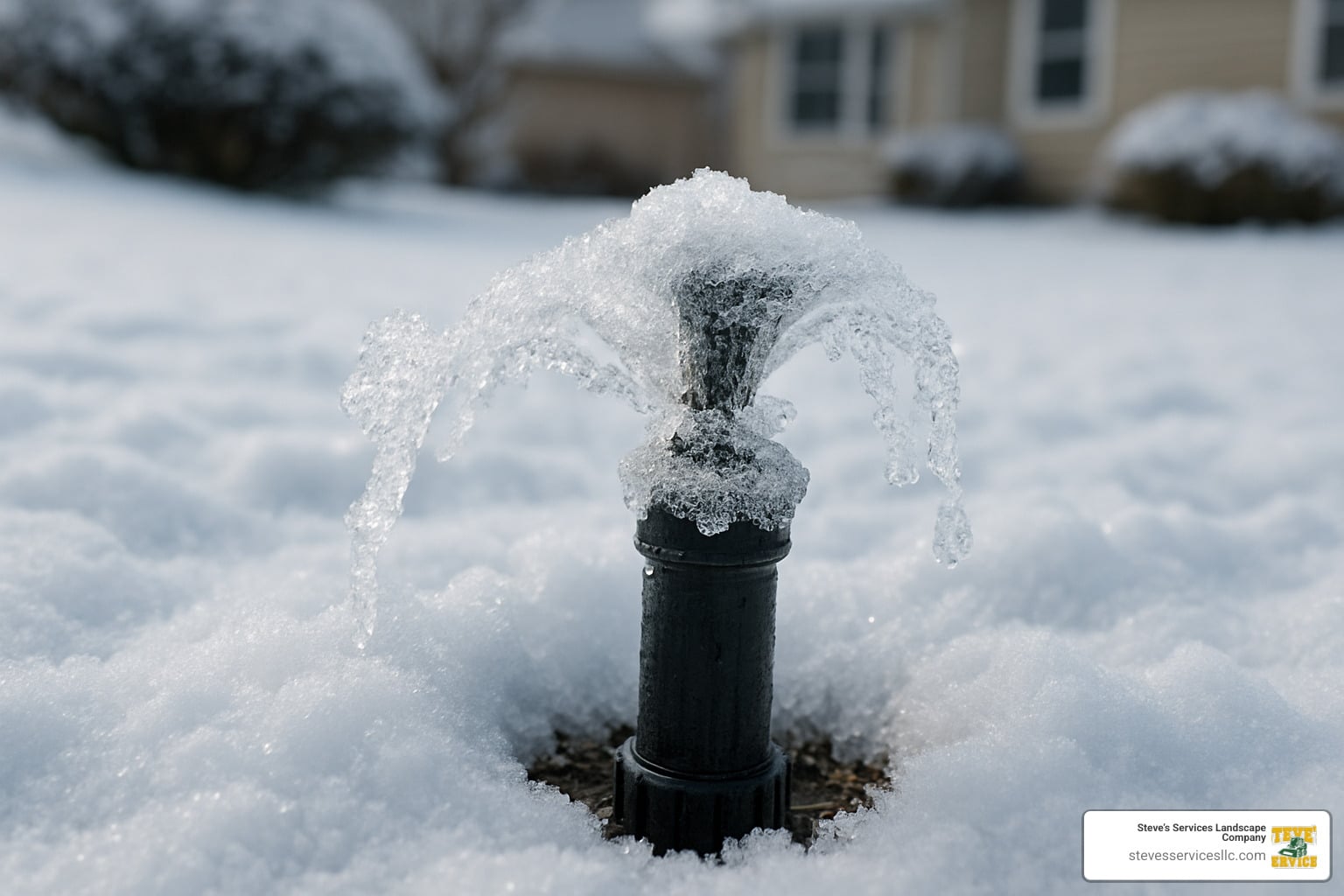
Cost to Repair Frozen Sprinkler System: 2025 Shocking Prices
Understanding the Cost of Freeze Damage to Your Sprinkler System
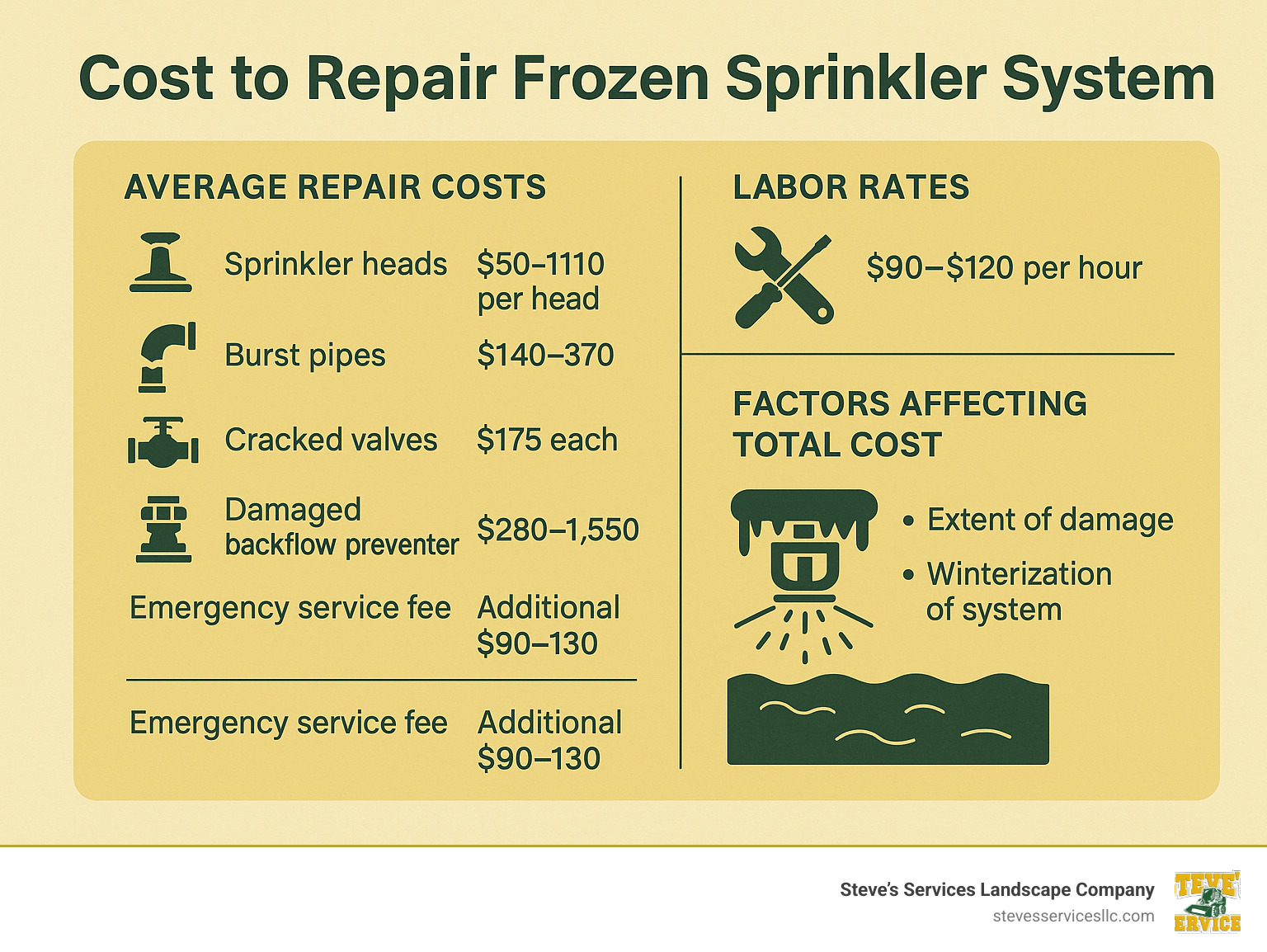
The cost to repair frozen sprinkler system typically ranges from $170 to $420 for most homeowners, though repairs can cost anywhere from $50 to $850 depending on the extent of damage and components affected.
| Component | Average Repair Cost |
|---|---|
| Sprinkler heads | $50-$110 per head |
| Burst pipes | $140-$370 |
| Cracked valves | $175 each |
| Damaged backflow preventer | $280-$1,550 |
| Emergency service fee | Additional $90-$130 |
Note: These are average costs based on internet data and not actual costs for Steve’s Services. Actual prices may vary significantly based on your specific system and location.
When winter temperatures plummet in Massachusetts, your irrigation system becomes vulnerable to freezing. Water expands as it freezes, creating pressure that can crack pipes, split valves, and damage expensive components like backflow preventers. Unfortunately, many homeowners don’t find this damage until spring activation, when they’re faced with unexpected repair bills and soggy lawns.
The severity of freeze damage largely depends on whether your system was properly winterized before the first hard freeze. A properly drained and blown-out system significantly reduces the risk of expensive repairs, while neglected systems often suffer extensive damage requiring multiple component replacements.
I’m Steve Sylva, owner of Steve’s Services with over 25 years of experience handling the cost to repair frozen sprinkler system issues for homeowners throughout Everett, MA and surrounding communities. Having seen the difference between minor freeze repairs and complete system overhauls, I can help you understand what to expect when facing winter damage to your irrigation system.
Why Sprinkler Systems Freeze & Warning Signs
That sinking feeling when you turn on your sprinkler system in spring only to find geysers of water shooting up from your lawn is something I’ve seen countless Massachusetts homeowners experience. Understanding why sprinklers freeze isn’t just technical knowledge—it’s protection for your wallet and landscape.
Unlike your home’s plumbing with its constantly moving water, irrigation systems sit dormant with static water inside during winter. This stillness makes them particularly vulnerable when temperatures drop below 32°F. The science is simple but powerful: water expands by about 9-10% when frozen, creating enormous pressure inside your pipes—up to 2,000 pounds per square inch! That’s more than enough force to crack even commercial-grade PVC or polyethylene pipes.
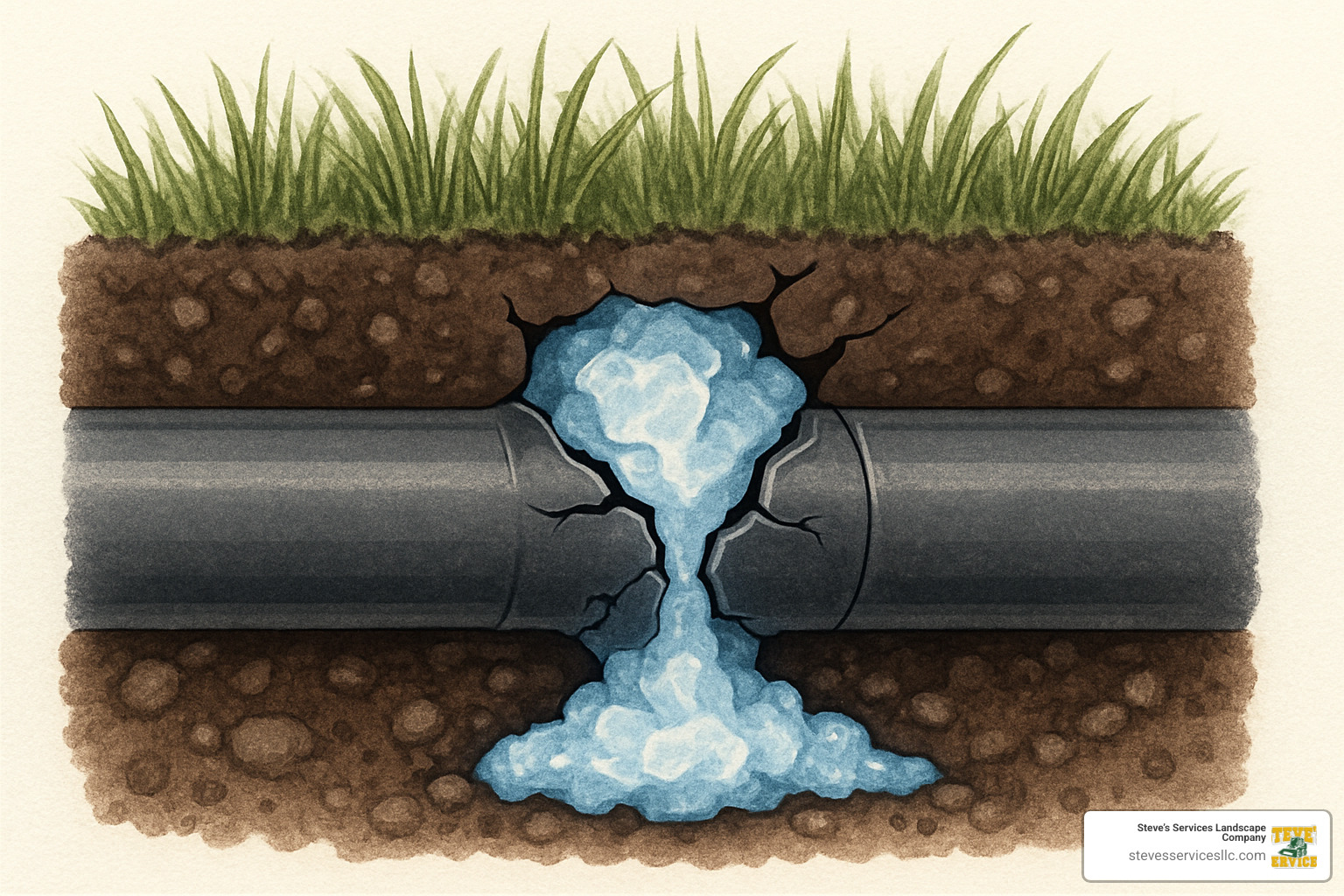
Common Causes of Freeze Damage
I’ve seen it all when it comes to sprinkler freeze damage in our New England winters. The most common culprit? Simply forgetting to winterize before the first hard freeze. Even a brief cold snap can split pipes when water remains in your lines.
Exposed backflow preventers are particularly vulnerable since they’re typically installed above ground. Here’s a sobering fact: a standard 1-inch backflow preventer at normal pressure can discharge nearly 500 gallons in just 15 minutes if it bursts! I remember one Massachusetts property manager who learned this lesson the hard way when a burst pipe affected multiple units in their building. Their repair bill? Over $30,000 after the insurance deductible.
Inadequate insulation around pipes in crawl spaces or attics can lead to freezing even in properly winterized systems. And the type of system matters too—wet systems (which most residential properties have) keep water in the pipes year-round, making them much more susceptible to freeze damage than dry systems that use compressed air to expel water.
Early-Stage Red Flags to Watch For
Catching freeze damage early can save you hundreds in repair costs. Here’s what to look for:
When certain zones aren’t activating during spring startup, it often indicates frozen pipes, burst lines, or damaged valves. One of my Winchester clients noticed a small wet spot in their yard in early spring and called us immediately. We fixed a single cracked pipe for about $200—had they waited until the damage worsened, repairs could have easily exceeded $500.
Pooling water or soggy patches in your lawn when your system isn’t running typically point to underground leaks from burst pipes. Listen for hissing sounds from valve boxes—these unusual noises often indicate cracked valves or pressure problems.
Modern controllers often display error codes when they detect pressure problems that could stem from freeze damage. Keep an eye on your water bill too—a sudden spike might be your first clue that something’s wrong underground.
Finally, if you notice low pressure in certain zones while others work fine, this usually indicates partial blockage or damage in specific areas. This uneven performance is a classic symptom of freeze damage that’s affected just part of your system.
The cost to repair frozen sprinkler system damage can escalate quickly when left unchecked. At Steve’s Services, we’ve seen simple fixes turn into complete system overhauls simply because warning signs were ignored for too long. A little vigilance goes a long way toward protecting your irrigation investment.
Cost to Repair Frozen Sprinkler System: Average Prices & Component Breakdown
When Jack frost visits your irrigation system, your wallet often feels the chill too. The cost to repair frozen sprinkler system damage varies considerably based on which parts took the hit and how severely. From my years helping Massachusetts homeowners recover from winter damage, I’ve found most repairs typically fall between $170 and $420.
That said, Mother Nature can sometimes be particularly harsh. When multiple components suffer damage or you need emergency service during that first warm weekend everyone finds their system issues, costs can climb toward the higher end of the $50 to $850 range. In worst-case scenarios involving backflow preventer replacement combined with extensive pipe damage, you might be looking at bills exceeding $1,500.
Average Part Prices for Frozen Components
Let’s break down what you might expect to pay for various freeze-damaged components:
Sprinkler Heads: $50-$110 installed per head
Those seemingly simple plastic heads are often the first casualty of freezing temperatures. They retain water even after basic drainage, and when that water expands, the plastic bodies crack easily. Replacing heads is almost always more cost-effective than attempting repairs, with basic spray heads running $37-$67, rotary heads $60-$110, and pop-up varieties $50-$90 each.
Burst Pipes: $140-$370 per repair
Pipe repairs hit the wallet harder not because of material costs (PVC runs just $1.30-$3.90 per foot and polyethylene even less at $0.45-$1.30), but because of the labor involved. Most repairs require excavation, with typical costs between $186-$338. The clay-heavy soils common in many Massachusetts communities make digging more challenging than in sandier regions, often adding to labor hours.
Cracked Valves: $175 each on average
Valves are freeze damage magnets because they contain small chambers where water hides even after winterization. While the basic valve might only cost $49-$88, installation labor, possible valve box replacement ($75-$200), and solenoid repairs ($85-$150) quickly add up.
Backflow Preventers: $280-$1,550 for replacement
These critical safety devices prevent contaminated water from flowing back into your drinking supply, and they’re unfortunately among the most expensive components to replace. A standard 3/4-inch device runs $280-$750, while a 1-inch unit costs $603-$1,097, plus an additional $100-$450 for proper installation and mandatory testing.
Manifold Rebuilds: $150-$400
When multiple valves clustered together in your manifold suffer damage, a complete rebuild often makes more sense than individual repairs. Costs vary based on how many valves are involved and how accessible the manifold is.
Typical Labor Rates and the Cost to Repair Frozen Sprinkler System Components
Labor typically accounts for 60-70% of your total cost to repair frozen sprinkler system damage. Here in Massachusetts, skilled irrigation technicians generally charge between $60 and $120 per hour, with most companies requiring at least a one-hour minimum charge.
If you’re in a rush to get your system fixed during peak demand times (like early spring) or need after-hours emergency service, expect labor rates to jump to $150-$250 hourly. Many companies also add travel fees of $25-$75, especially if you’re outside their primary service area.
Time-wise, simple repairs like replacing a few heads or a single valve usually take 1-2 hours. More complex work involving pipe replacement or backflow work can stretch to 3-6 hours, particularly when technicians need to break out the shovels for excavation.
One money-saving tip I always share with homeowners: since many irrigation companies (including ours) charge a minimum service fee of $50 to $150, try to bundle multiple repairs into a single visit whenever possible. That spring startup check is the perfect time to address any freeze damage you’ve noticed rather than scheduling separate visits.
Note: These are average costs based on internet data and not actual costs for Steve’s Services. Actual prices may vary significantly based on your specific system and location.
Key Factors Influencing the Cost to Repair a Frozen Sprinkler System
When that first spring inspection reveals freeze damage, several factors will affect how deep you’ll need to dig into your wallet. Understanding these can help you better prepare for the reality of what you might face when repairing your irrigation system.
System Type makes a significant difference in your repair bill. Above-ground systems typically cost between $80-$370 to repair, as components are easily accessible. In-ground systems, however, push that range to $90-$470 because of the additional labor needed to excavate and access damaged components. This is something we see regularly with Massachusetts properties.
Soil Conditions in your yard matter more than you might think. If you’ve got that dense clay soil common in parts of Massachusetts, expect to pay an additional $50-$100 compared to repairs in sandy soil. Clay requires more time and effort to excavate properly, which translates directly to higher labor costs.
The Zone Count of your system also affects potential damage extent. More zones mean more valves, pipes, and heads that could have suffered damage during winter freezes. A simple 3-zone system might have isolated damage, while a 12-zone system could have multiple failure points across the property.
Seasonal Demand plays a surprising role in pricing. If you’re calling for repairs during the peak spring rush (March-May), expect to pay a premium of 10-30% more than off-peak times. Everyone wants their system running when the weather warms, creating a supply-and-demand situation that affects pricing.
Your Insurance Coverage might help with larger repairs, particularly if the damage resulted from extreme weather events. However, with typical homeowner’s insurance deductibles ranging from $500-$2,500, smaller repairs will likely remain out-of-pocket expenses. It’s always worth checking your policy details before scheduling repairs.
System Age often complicates repairs. Systems over 10 years old frequently have additional wear that makes freeze damage repairs more complex. Older components may no longer be available, requiring adapters or section replacements to current standards.
Water Pressure Issues can worsen freeze damage effects. According to EPA guidance on water pressure, systems should maintain pressure between 30-50 psi for optimal performance and durability. Pressure outside this range can create weak points in your system that are more vulnerable to freezing.
For a comprehensive look at various repair options, you might want to check out our detailed guide on Sprinkler System Repair.
Is the Cost to Repair a Frozen Sprinkler System Higher Than Replacement?
Sometimes, replacing your entire system makes more financial sense than repairing extensive freeze damage. This is particularly true if your system is showing its age.
For systems over 15 years old with widespread freeze damage, replacement costs ranging from $1,500 to $3,600 might actually be the more economical long-term choice. The exact price depends on your yard size and the complexity of the system you need.
Consider replacement as your best option when:
- Your system has suffered multiple freeze events damaging various components
- The system is over 15 years old with deteriorating infrastructure
- Repair costs would exceed 50% of what a new system would cost
- You’re interested in upgrading to more water-efficient technology
Modern irrigation systems offer impressive water-efficiency improvements over older models, potentially saving 20-30% on water usage. These ongoing savings help offset the higher initial investment of replacement versus repair.
I recently worked with a homeowner in Medford facing this exact dilemma. Their 18-year-old system had suffered significant freeze damage with an estimated repair cost of $1,200. After discussing options, they opted for a new $2,800 system featuring smart controllers and high-efficiency heads. The result? Their water usage dropped by approximately 25%, providing substantial ongoing savings that will eventually make up for the higher upfront cost.
When facing the cost to repair frozen sprinkler system damage, sometimes looking forward rather than backward makes the most financial sense.
Prevention & Maintenance: Winterization, Tune-Ups, Long-Term Savings
The most cost-effective approach to handling freeze damage is preventing it in the first place. Professional winterization is a small investment that can save thousands in repair costs.
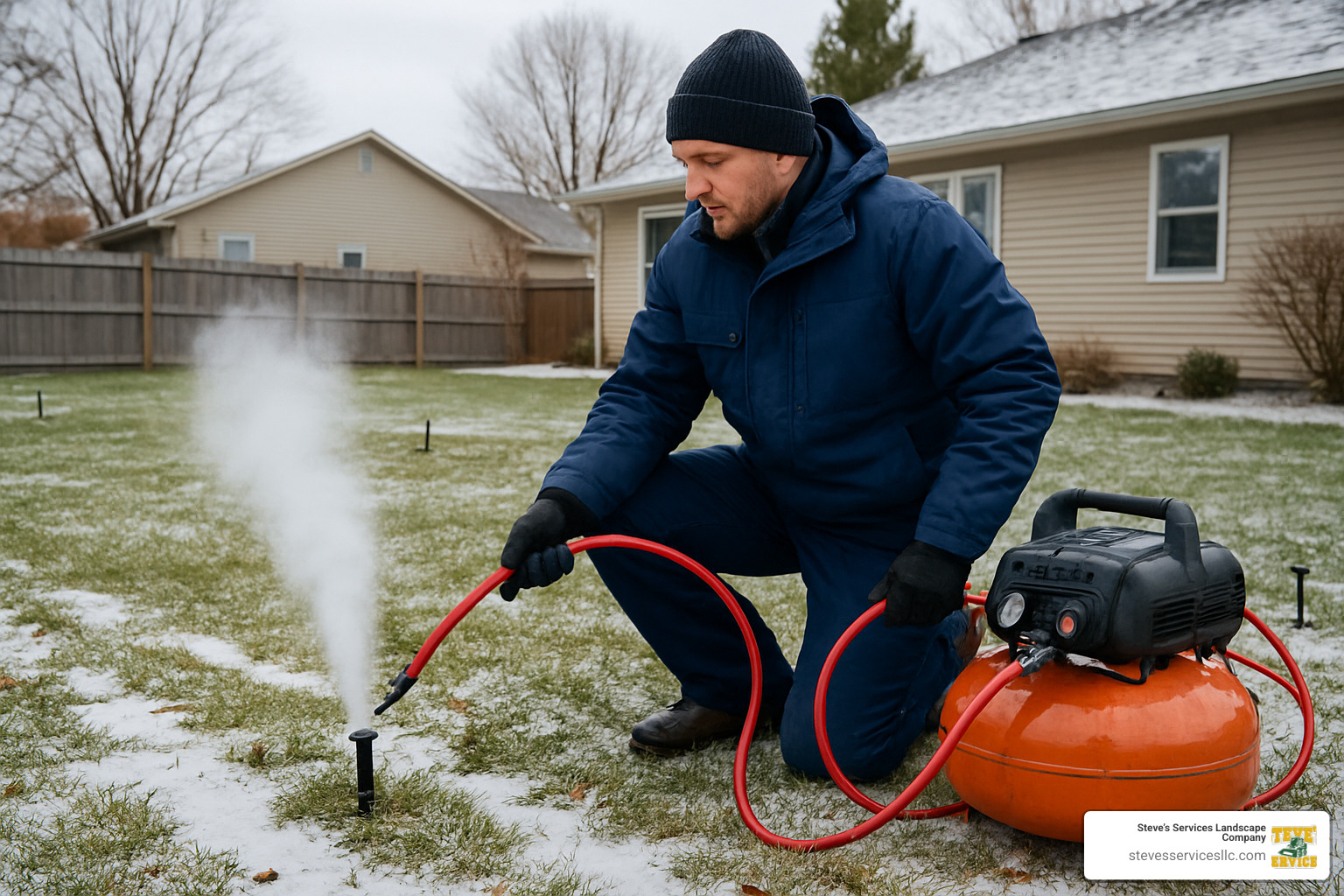
What Does It Cost to Winterize?
I’ve seen countless Massachusetts homeowners face steep repair bills that could have been avoided with simple winterization. The typical cost to repair frozen sprinkler system damage far exceeds the modest investment in prevention.
Winterization typically costs between $56 and $133, with most homeowners paying around $91. If your property has more than 8 zones, you might pay about $5 extra per zone. That’s a small price compared to the hundreds or even thousands you might spend fixing freeze damage.
When we winterize a system, we do much more than just “blow out the lines.” A proper winterization includes a complete system blowout using commercial-grade air compressors that remove all water from pipes, heads, and valves. We also carefully drain and inspect your backflow preventer, set your controller to winter mode (or disconnect power if needed), and perform a thorough system inspection to catch potential issues before they turn into costly freeze damage.
Many of our clients opt for annual maintenance contracts that bundle spring activation with fall winterization for $140-$400 per year, depending on system size. These packages often pay for themselves with the problems they prevent.
While renting an air compressor for DIY winterization might seem like a money-saver at $30-$60 per day, it’s actually quite risky. Home compressors typically lack the necessary air volume (not pressure) to properly clear all water from your system. Professional equipment delivers high volumes of air at appropriate pressures to ensure complete water removal without damaging components. As the Red Cross research on winterization safety points out, incomplete winterization can sometimes cause more harm than good.
For a more detailed explanation of the process, check out our guide on How to Blow Out Irrigation System.
How Regular Service Cuts Future Repair Bills
Beyond winterization, regular maintenance significantly reduces both the likelihood and severity of freeze damage. I’ve seen this with clients whose systems remain trouble-free for decades thanks to consistent care.
Annual tune-ups typically cost $60-$165 and include much more than just checking for obvious problems. We thoroughly inspect and clean sprinkler heads, check and adjust system pressure, test all valves and electrical components, and look for minor leaks before they become major headaches. We also install insulation sleeves on exposed pipes and components that might be vulnerable to freezing.
This preventative approach pays off tremendously over time. Not only does it reduce the cost to repair frozen sprinkler system damage, but it can extend your system’s lifespan by 5-10 years. I’m proud to say one of our long-term clients in Lynnfield has maintained the same system for over 22 years with only minor repairs by following our recommended maintenance schedule.
Smart controllers represent another worthwhile investment, costing $200-$500 but offering freeze protection features and water-saving benefits. These modern controllers can detect unusual flow patterns that might indicate leaks and can shut down zones automatically to prevent damage. The water savings typically pays for the controller within 2-3 years, making it a smart investment for both your wallet and the environment.
Regular pressure checks and valve testing are particularly important in our New England climate, where seasonal temperature swings can stress system components. Routine inspections allow us to catch small issues – like hairline cracks or loose fittings – before they turn into emergency repairs during the spring thaw.
The cost to repair frozen sprinkler system damage is almost always higher than the cost of preventing it in the first place. A small investment in maintenance now can save you from an unexpected repair bill later.
Hiring a Sprinkler Repair Professional + FAQs
Finding the right professional to handle your frozen sprinkler system repairs can make all the difference in both cost and quality. As someone who’s seen countless DIY repair attempts go wrong, I strongly recommend working with specialists who understand the unique challenges of Massachusetts winters.
When selecting a repair service, look for licensed irrigation technicians who have formal training and understand local building codes. Always verify they carry proper liability insurance to protect your property in case something goes wrong during repairs. Quality companies will also offer warranties on both parts and labor—typically 90 days to a year for most repairs.
One often-overlooked qualification is specific experience with freeze damage. A technician familiar with New England’s harsh freeze-thaw cycles will spot issues that others might miss. I’ve seen professionals from warmer climates completely overlook subtle signs of secondary freeze damage that later caused major problems.
“I hired the cheapest company I could find last spring,” one Melrose homeowner told me, “and by July, I had geysers in my lawn because they missed hairline cracks in several pipe connections. The money I ‘saved’ ended up costing me twice as much in the long run.”
Smart homeowners often bundle multiple repair needs into a single service call. This approach avoids paying repeated minimum service charges and typically results in a more thorough system evaluation. If you notice several issues after spring startup, addressing them all at once is almost always more economical.
How Long Will Repairs Take?
Repair timeframes depend heavily on the extent of damage to your system:
Simple repairs involving sprinkler head replacements or minor valve work typically take just 1-2 hours to complete. These straightforward fixes rarely require special parts or extensive troubleshooting.
Moderate repairs like pipe replacements or electrical issues usually require 2-4 hours. These jobs often involve some excavation and more complex diagnosis.
Complex repairs such as backflow preventer replacements or complete manifold rebuilds can take anywhere from 4-8 hours, sometimes spanning multiple days for extensive damage.
Parts availability can significantly impact your timeline. While most professionals keep common components in their service vehicles, specialized parts might need ordering. During peak spring season, this can add several days to your repair timeline as suppliers struggle to keep up with demand.
Will Emergency After-Hours Service Cost More?
Yes—and significantly so. Emergency or after-hours service typically costs 2-3 times the standard labor rate. In Massachusetts, expect to pay $150-$250 per hour versus the standard $60-$120 for regular service calls.
Holiday or weekend emergency service may carry even steeper premiums, sometimes reaching $300 per hour during particularly busy periods. These higher rates reflect both the disruption to technicians’ personal time and the priority handling your emergency receives.
If your situation isn’t truly urgent (no active flooding or property damage), scheduling repairs during off-peak seasons like fall or winter can result in lower rates and more flexible scheduling options. Many companies offer discounted rates during their slower periods to keep their teams busy.
What Should I Ask Before Signing a Contract?
Before committing to any repair service, I recommend asking these critical questions:
“What specific experience do you have with freeze damage repairs?” Listen for concrete examples rather than vague assurances.
“What is your hourly rate, and do you have a minimum service charge?” Many companies have a one-hour minimum, even for 15-minute repairs.
“Do you mark up replacement parts?” A markup of 25-50% is typical in the industry, but some companies charge significantly more.
“What warranty do you provide on repairs?” Quality work should be guaranteed for at least 90 days, ideally longer.
“What’s your typical response time for emergency situations?” In freezing conditions, every hour matters.
“Will you provide a written estimate before beginning work?” This protects both parties from misunderstandings.
“Are there additional charges for travel to my location?” This is particularly important if you live in outlying communities away from the company’s base.
Getting clear answers to these questions helps avoid unpleasant surprises and ensures you’re working with a reputable professional who values transparency. At Steve’s Services, we believe educated customers make the best long-term clients.

Conclusion
The cost to repair frozen sprinkler system damage varies widely depending on what’s broken and how badly. While you might escape with a $50-$100 bill for minor repairs, extensive damage can quickly climb to $850 or more when multiple components need replacement.
Here’s the simple truth I’ve learned after 25 years in this business: prevention is always cheaper than repair. Professional winterization typically costs between $56-$133—pennies compared to the hundreds or even thousands you might spend fixing a system that froze and burst over winter. It’s like getting your oil changed versus replacing your entire engine.
Regular maintenance doesn’t just prevent costly repairs—it extends your system’s lifespan. Many of my long-term clients have systems running smoothly for 15+ years because they’ve committed to proper seasonal care. Their neighbors, meanwhile, are on their second or third system replacement.
When freeze damage does strike (and in Massachusetts, it eventually will), hiring professionals who understand our unique New England freeze-thaw cycles makes all the difference. We’ve seen too many DIY fixes or inexperienced repairs that end up costing more in the long run.
At Steve’s Services, we’ve been helping homeowners throughout Everett and surrounding communities protect their irrigation investments for over two decades. We understand the soil conditions, the climate challenges, and the specific components that tend to fail in our region.
Whether you’re facing an emergency repair situation with water pooling in your yard or simply want to establish a preventative maintenance plan before the next winter hits, our team of irrigation specialists is ready to help. We proudly serve communities throughout our service area, including Burlington, Danvers, Everett, Lynnfield, Medford, Melrose, North Reading, Reading, Revere, Saugus, Stoneham, Winchester, Woburn, Malden, and Wakefield.
That beautiful green lawn you enjoy all summer depends on a properly functioning irrigation system. A small investment in prevention now can save thousands in repairs later—while ensuring your landscape remains the envy of the neighborhood throughout the growing season.
That’s not just good for your property; it’s good for your wallet too.