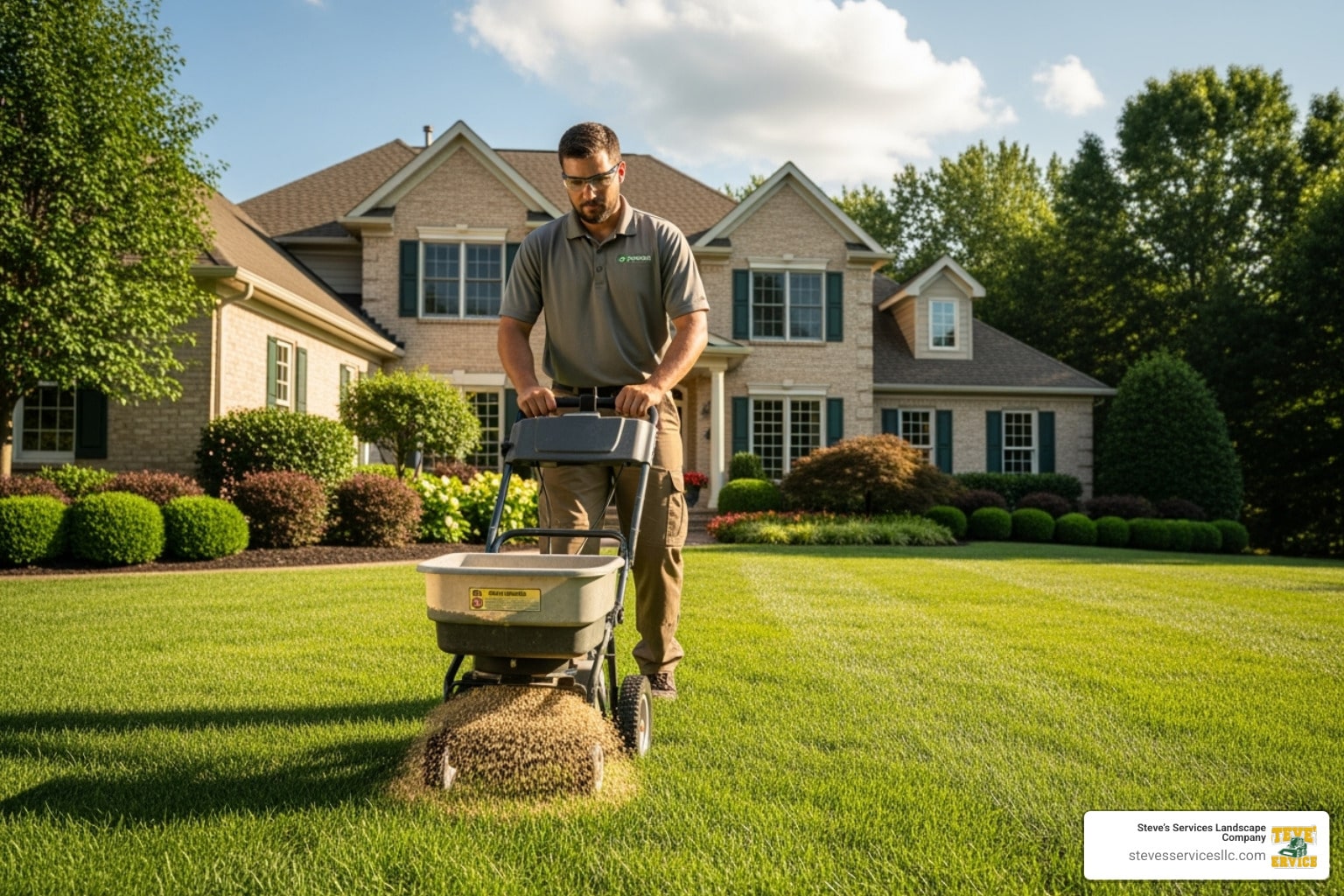
Lawn Fertilizer Service: Best Guide for 2025
Why Your Lawn Needs More Than Just Water and Sunlight
Lawn Fertilizer Service is a professional treatment that delivers essential nutrients to your grass, promoting dense, vibrant growth while naturally preventing weeds and disease. Here’s what you need to know:
Key Benefits:
- Healthier, Greener Grass – Professional-grade fertilizers deliver balanced nutrients (nitrogen, phosphorus, potassium) that grass can’t get from soil alone
- Natural Weed Prevention – Thick, well-fed turf crowds out weed seeds by blocking sunlight and outcompeting for resources
- Stronger Root Systems – Proper fertilization builds durability and improves water retention
- Customized Treatment – Professionals analyze your soil, identify grass type, and create custom application schedules
Typical Service Schedule:
- Spring application (growth boost)
- Summer treatment (stress resistance)
- Fall feeding (root strengthening)
- 4-6 applications per year for optimal results
Getting your lawn to look like the professionally maintained properties you admire isn’t just about watering and mowing. Your grass needs nutrition—and most suburban Massachusetts lawns simply can’t get the nutrients they need naturally from the soil. That’s where professional fertilization makes all the difference.
The U.S. lawn and garden care market is projected to reach $11.4 billion by 2027, reflecting how many homeowners recognize that professional care delivers results DIY methods can’t match. But fertilization isn’t just about aesthetics. It strengthens root structure, improves water retention, helps your lawn resist disease and pests, and creates a natural barrier against weeds.
The challenge? Over-fertilizing can permanently burn your grass, while under-fertilizing wastes your time and money with no visible improvement. Professional lawn fertilizer services solve this by analyzing your specific soil conditions, grass type, and seasonal needs—then applying the right products at the right time with professional-grade equipment.
This guide will walk you through everything you need to know: the real benefits of professional fertilization, how it differs from DIY approaches, what types of fertilizers and application methods work best, seasonal timing, environmental considerations, and what you should expect to invest. You’ll also learn how fertilization fits into a comprehensive lawn care program that includes aeration, overseeding, and pest management.
I’m Steve Sylva, owner of Steve’s Services in Malden, MA, and I’ve spent over 25 years helping homeowners throughout Everett and surrounding Massachusetts communities achieve healthy, beautiful lawns through customized Lawn Fertilizer Service programs. My team uses only professional-grade products and equipment to deliver results that last, and we tailor every treatment plan to the unique conditions of your property.
Similar topics to Lawn Fertilizer Service:
The Core Benefits of Professional Lawn Fertilization
Think of your lawn like your body—it needs the right nutrition to truly thrive. Water and sunlight help, but without essential nutrients, your grass will always struggle to reach its full potential. That’s the fundamental difference between a lawn that looks “okay” and one that makes people stop and ask, “How do you get your grass to look like that?”
When you invest in a professional Lawn Fertilizer Service, you’re not just making your grass greener (though that’s definitely a nice perk). You’re promoting lush, vigorous growth that creates a denser, more uniform turf. This isn’t just about aesthetics—density is what separates a resilient lawn from one that’s constantly fighting an uphill battle.
A well-fed lawn develops that vibrant green color that practically glows in the sunlight. But what you can’t see is even more impressive: the stronger root systems growing beneath the surface. These deep, robust roots act like an anchor system, making your grass more durable and better equipped to handle whatever Massachusetts weather throws at it.
This strength shows up in practical ways. Your lawn becomes more disease resistant and pest resistant, naturally defending itself against common problems that plague undernourished turf. The improved root structure also means better water retention, so your grass stays healthier during dry spells and you might even reduce your watering schedule. During those hot Massachusetts summers, that’s a real game-changer.
Here’s something that surprises many homeowners: proper fertilization actually provides natural weed control. When your grass is thick and healthy, it physically crowds out weed seedlings before they can establish themselves. The dense canopy blocks sunlight from reaching the soil surface, and your vigorous grass outcompetes weeds for available nutrients and water. You’re essentially feeding the good guys (your grass) so they can starve out the bad guys (weeds).
The result? Increased durability that lets your lawn handle foot traffic, recover quickly from minor damage, and bounce back from environmental stress with impressive speed.
Telltale Signs Your Lawn is Crying Out for Nutrients
Your lawn talks to you—you just need to know what to listen for. When grass isn’t getting the nutrition it needs, it sends clear distress signals.
Yellowing grass, technically called chlorosis, is one of the most obvious red flags. If your lawn looks pale, yellowish, or has brownish patches instead of that healthy green color, it’s often screaming for nutrients—particularly nitrogen or iron. This discoloration means your grass is literally starving.
Slow or patchy growth tells a similar story. When certain areas refuse to fill in or your entire lawn seems to be growing at a snail’s pace, it’s usually because the grass lacks the essential nutrients needed for vigorous development.
Thinning turf where you can see soil between grass blades is another warning sign. Sparse lawns aren’t just unsightly—they’re vulnerable. Without dense coverage, weeds move in quickly, and the grass that remains struggles even more.
Brown spots can have various causes (like pet waste or disease), but widespread browning—especially when combined with other symptoms—often points to inadequate fertilization.
An increase in weeds is perhaps the most frustrating signal. When dandelions, crabgrass, and other unwanted plants suddenly take over, it means your grass is too weak to compete. A healthy, well-fed lawn naturally keeps these invaders at bay.
Finally, watch how your lawn handles stress. Poor recovery from summer heat, heavy use, or even regular mowing indicates that your grass doesn’t have the nutritional reserves it needs to bounce back. A properly fertilized lawn recovers quickly and stays resilient through challenging conditions.
How Professional Fertilization Services Naturally Control Weeds
This is where fertilization becomes almost magical—by feeding your grass, you’re simultaneously fighting weeds without harsh chemicals.
The process works beautifully: professional fertilization promotes dense turf growth that creates a thick, lush canopy covering every inch of soil. When grass grows this densely, there’s simply no physical space for weed seeds to germinate and establish themselves. They get crowded out before they even have a chance.
That thick grass also acts as a natural umbrella, blocking sunlight from reaching weed seeds on the soil surface. Since most weeds need light to sprout, this darkness becomes their enemy. Meanwhile, your healthy, vigorous grass is aggressively absorbing nutrients and water from the soil, outcompeting any opportunistic weeds for these essential resources.
Think of it like this: you’re creating an environment where your grass thrives and weeds struggle, rather than the other way around. This proactive approach significantly reduces the need for chemical herbicides, creating a healthier environment for your family and pets while still maintaining that pristine appearance you want.
For more information on how we integrate fertilization into comprehensive lawn care, check out our page on fertilizing services.
The Full Spectrum of Fertilization Benefits
The advantages of professional Lawn Fertilizer Service reach far beyond just making your grass greener. It’s truly an investment in your entire outdoor space.
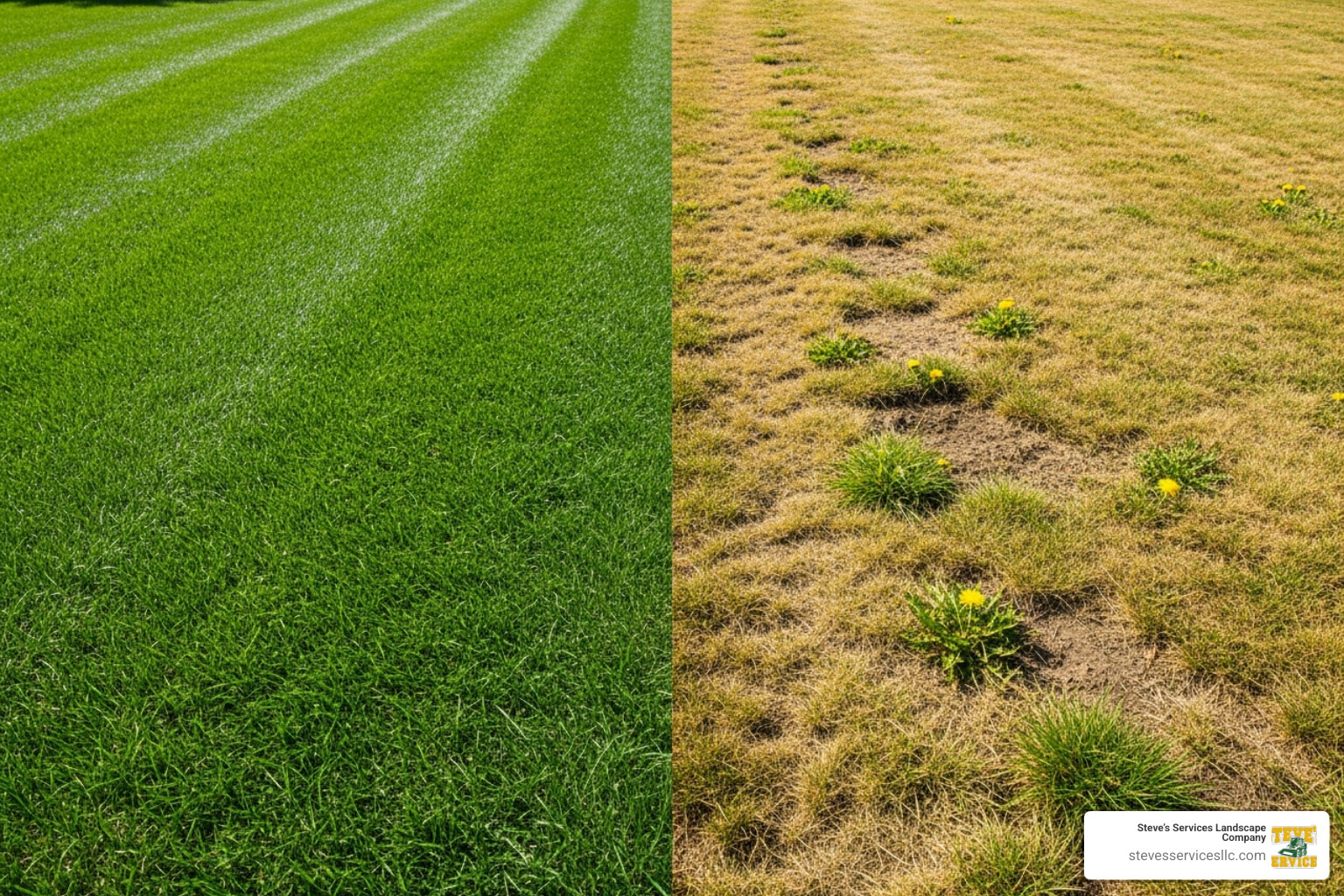
Improved aesthetics is the benefit you notice immediately. A professionally fertilized lawn has that vibrant color, uniform texture, and dense growth that makes your entire property look carefully cared for. It’s the difference between a yard and a showpiece—the kind of lawn that makes neighbors ask for your secret.
But improved lawn health goes much deeper than appearances. A properly nourished lawn is fundamentally stronger and more resilient. It resists common diseases, discourages pests, and handles environmental stresses—heat, drought, cold, heavy use—with remarkable grace. This isn’t just cosmetic; it’s building genuine strength from the ground up.
There’s also a financial upside: increased property value. A beautiful, well-maintained lawn significantly boosts curb appeal, which directly impacts what buyers are willing to pay. That lush green lawn creates an immediate positive impression and suggests that the entire home has been carefully maintained.
Perhaps most importantly, professional fertilization means reduced long-term problems. By addressing nutrient deficiencies early and promoting strong growth, you prevent many common lawn issues before they start. This saves you time, effort, and money on costly interventions down the road. A healthy lawn means less battling with weeds, diseases, and pests—and more time actually enjoying your outdoor space.
At Steve’s Services, we’ve seen these benefits transform lawns throughout Everett, MA, and surrounding Massachusetts communities. When you give your grass the professional nutrition it needs, everything else falls into place naturally.
Why Choose Professional Lawn Fertilizer Services Over Going It Alone
Picture this: You’re standing in the lawn and garden aisle, surrounded by dozens of fertilizer bags with confusing numbers and claims. One promises “quick green-up,” another boasts “slow-release technology,” and you’re thinking, “Can’t I just pick one and spread it around?” I get it—the DIY approach seems simpler and cheaper. But here’s the reality: lawn fertilization is one of those tasks where good intentions can backfire spectacularly.
The U.S. lawn care market is thriving as a multi-billion dollar industry because homeowners have finded something important: there’s a real difference between guessing and knowing. Professional Lawn Fertilizer Service isn’t just about convenience—it’s about precision, safety, and results you can actually see without the stress of wondering if you’ve just accidentally poisoned your grass.
The Pitfalls of Untrained Fertilization
Let me be honest with you: I’ve seen plenty of well-meaning homeowners create problems they never anticipated. Lawn burn tops the list—that heartbreaking moment when your grass turns yellow or brown because you applied too much fertilizer or distributed it unevenly. It’s like salting food; a little improves everything, but too much ruins the entire meal. And unlike dinner, you can’t just throw your lawn away and start over.
Incorrect product selection is another common trap. That bag promising miraculous results might be formulated for Kentucky bluegrass in Colorado, but you’re growing a mix of fescues in Massachusetts. The nitrogen-phosphorus-potassium ratios that work beautifully for one grass type can be completely wrong for another. Different seasons require different formulations too—what your lawn needs in spring isn’t what it needs in fall.
Then there’s the uneven application problem. Without professional spreaders and calibrated equipment, you’ll likely end up with stripes: some areas burned from too much fertilizer, other spots barely touched, and maybe a few patches that look just right. It’s the lawn equivalent of a DIY haircut—you might save money, but everyone can tell.
Nutrient runoff matters more than most people realize. When you apply fertilizer at the wrong time or use too much, rain washes those chemicals into storm drains and eventually into our local waterways. You’re not just wasting product—you’re contributing to environmental problems that affect all of us.
All of this adds up to wasted time and money. You’ve spent your Saturday spreading fertilizer, invested in products and equipment, and weeks later your lawn looks worse than before. Or maybe it looks exactly the same, which is almost more frustrating. Either way, you’re out the cost of materials and the value of your time, with nothing to show for it.
The Professional Advantage: Customized Plans from a Lawn Fertilizer Service
Here’s where professional Lawn Fertilizer Service changes everything. We don’t guess—we know. And that knowledge starts before we ever open a bag of fertilizer.
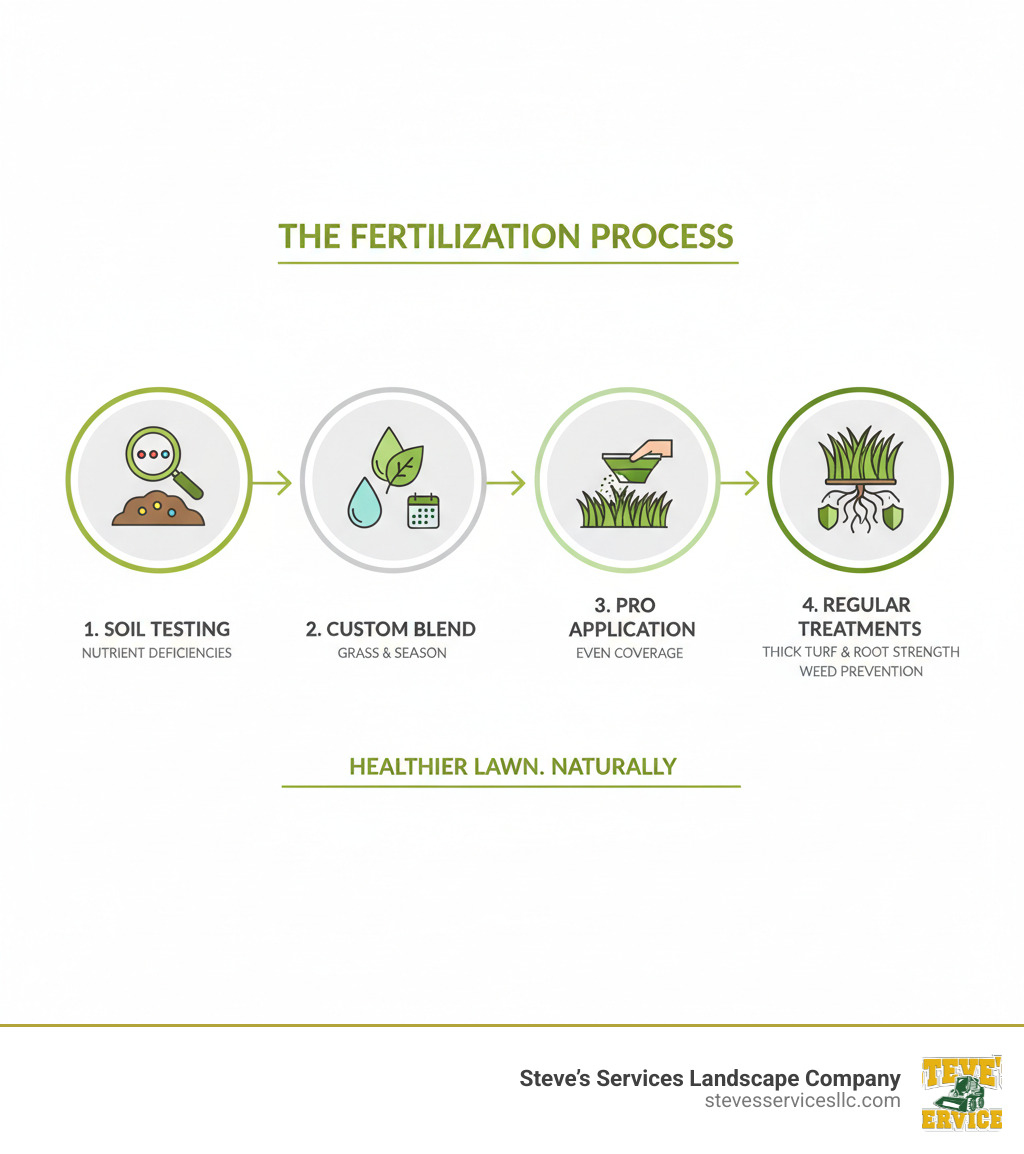
Soil analysis is the foundation of everything we do. Think of it like getting bloodwork before starting a vitamin regimen. We test your soil to see exactly what nutrients are missing, what’s abundant, and what the pH balance looks like. Without this information, any fertilization program is just wishful thinking. We’re essentially reading your lawn’s medical chart before prescribing treatment.
Grass type identification matters more than you might expect. Here in Massachusetts, we’re primarily working with cool-season grasses—varieties that thrive in our climate and have specific nutritional needs. These grasses need different care than the warm-season varieties you’d find in Georgia or Texas. We identify your specific grass mix and tailor everything accordingly. If you’ve recently installed new sod, this becomes even more critical—you can learn more about this specialized approach on our Best Fertilizer for New Sod page.
Climate considerations play into every decision we make. Everett and surrounding Massachusetts communities experience distinct seasonal changes, and your lawn’s nutritional needs shift throughout the year. We factor in local weather patterns, seasonal transitions, and even the unique microclimates within your own property—that shady corner under the oak tree needs different care than the sunny patch by your driveway.
Custom nutrient blends are where science meets artistry. Based on our soil analysis and grass identification, we formulate or select fertilizer blends with the precise balance your lawn actually needs. No more, no less. This targeted approach means every application delivers maximum benefit without waste or risk of burning.
Professional-grade equipment makes the difference between patchy results and uniform coverage. We use calibrated spreaders that ensure even distribution across every square foot of your lawn. This precision eliminates those telltale stripes and prevents the hot spots that lead to burned grass. Our equipment is maintained, calibrated, and operated by trained professionals who know exactly how to achieve consistent results.
The safety advantage can’t be overstated either. Professional applicators understand proper handling, timing, and application rates that protect your family, pets, and the environment. We know when it’s safe to allow foot traffic after application and how to prevent runoff.
Convenience is simpler than you might think. Instead of spending your weekends researching products, loading bags into your car, struggling with spreaders, and hoping for the best, you get to enjoy your lawn while we handle the technical details. We show up on schedule, complete the work efficiently, and you see the results without lifting a finger.
Guaranteed results mean you’re not gambling with your lawn’s health. We stand behind our work. If something doesn’t look right, we address it—no questions asked. You’re not stuck with a garage full of unused fertilizer and a lawn that looks worse than before.
Most importantly, expertise developed over decades means we’ve seen it all. We know what works in Massachusetts soil, with Massachusetts grass, through Massachusetts seasons. At Steve’s Services, we’ve spent over 25 years perfecting lawn care for properties just like yours. That experience translates directly into a healthier, more beautiful lawn for you. For more information about how we integrate fertilization into our comprehensive approach, visit our More info about fertilizing services page.
A Deep Dive into Your Professional Lawn Fertilizer Service
Understanding the “how” and “why” behind professional fertilization helps you appreciate the science and care that goes into creating a truly healthy lawn. It’s not just about spreading green pellets; it’s about a sophisticated process that considers fertilizer composition, application science, soil interaction, and environmental responsibility.
Understanding Fertilizer Types and Application
The world of fertilizers can seem complex, but professionals simplify it by selecting the right tools for the job. We primarily work with two main types of fertilizers: granular and liquid, and differentiate between quick-release and slow-release formulations.
| Feature | Slow-Release Fertilizers | Quick-Release Fertilizers – | – |
| Nutrient Release | Nutrients are released gradually over several weeks or months. | Nutrients are available to the plant almost immediately. |
| Growth Pattern | Promotes steady, even growth. Less risk of sudden growth spurts. | Provides a quick green-up and rapid growth. |
| Application Frequency | Fewer applications needed throughout the season. | Requires more frequent applications. |
| Risk of Burn | Very low risk of burning the lawn, even if slightly over-applied. | Higher risk of burning the lawn if not applied correctly. |
| Leaching Risk | Lower risk of nutrients washing away into groundwater. | Higher risk of leaching, especially with heavy rain. |
| Cost | Generally higher initial cost per bag, but cost-effective over time. | Typically less expensive per application. |
Granular fertilizers are the most common type used in professional lawn care. These are small, dry pellets that are spread evenly over the lawn. We almost always use slow-release granular products because they provide a steady diet for your turf over 6-8 weeks, building deep root systems and consistent color without the risk of burning. They are the workhorses of a healthy lawn program.
Liquid fertilizers, often applied via a hose-end sprayer in DIY settings, are used by professionals for specific situations. A Liquid Lawn Feed can provide a very quick green-up for a special event or help correct a specific micronutrient deficiency identified in a soil test. Because they are fast-acting, they require expert application to avoid burning the grass.
We also use organic options for clients who prefer them. These fertilizers are derived from natural sources like compost, bone meal, or other plant and animal materials. They work by improving the soil’s structure and microbial life, which in turn feeds the grass. While they often work more slowly, they are an excellent choice for building long-term soil health.
Understanding the N-P-K ratio (Nitrogen-Phosphorus-Potassium) on a fertilizer bag is key. Nitrogen (N) promotes lush, green top growth. Phosphorus (P) is crucial for root development and energy transfer. Potassium (K) helps with overall plant health, stress tolerance, and disease resistance. A professional service doesn’t just grab a bag of “10-10-10”; we select a specific ratio based on your lawn’s needs for that particular time of year.
The Importance of Soil Health and Testing
Great lawns start with great soil. You can apply all the fertilizer in the world, but if your soil’s health is poor, you’ll never get the results you want. That’s why we don’t just treat the grass; we treat the entire ecosystem it lives in.
Soil pH is a critical factor. Most turfgrasses in Massachusetts thrive in slightly acidic soil (a pH between 6.0 and 7.0). If the soil is too acidic or too alkaline, it “locks up” essential nutrients, making them unavailable to the grass roots, no matter how much fertilizer you apply. A soil test tells us the exact pH, and we can apply lime or sulfur to adjust it to the optimal range. The University of Massachusetts Amherst’s Soil and Plant Nutrient Testing Laboratory is an excellent resource for understanding the specific soil characteristics in our region.
Our soil testing also reveals specific nutrient deficiencies. Is your soil low in iron, causing that yellowish look? Does it lack the phosphorus needed for new seed to establish strong roots? A professional analysis answers these questions, allowing us to create a truly customized fertilizer blend that gives your lawn exactly what it’s missing.
Finally, we look at soil compaction. Over time, soil can become hard and dense, preventing water, air, and nutrients from reaching the root zone. This is why we often recommend core aeration as a companion service to fertilization. Aeration pulls small plugs of soil from the lawn, relieving compaction and creating channels for those vital elements to penetrate deep into the ground. It’s a crucial step for revitalizing a struggling lawn, especially when preparing for a new lawn install.
The Ideal Lawn Fertilization Schedule
Timing is everything in lawn care. Applying the right product at the right time is what separates a thriving lawn from a stressed one. Our service is built around a seasonal schedule designed specifically for Massachusetts’s climate and cool-season grasses.
- Early Spring (March-April): We apply a balanced fertilizer to wake up the lawn from dormancy and promote early green-up. This application often includes a pre-emergent crabgrass control to prevent this pesky weed before it can germinate.
- Late Spring (May-June): As the grass enters its peak growing season, we apply a slow-release nitrogen fertilizer to sustain healthy, dense growth and continue to build a strong root system.
- Summer (July-August): This is a stressful time for cool-season grasses. We use a special formulation designed to help the lawn withstand heat and drought stress, often with a focus on potassium and iron to maintain color and resilience without forcing excessive growth.
- Early Fall (September-October): This is arguably the most important feeding of the year. A Fall Lawn Fertilizer application helps the lawn recover from summer stress and encourages robust root development, which is critical for winter survival and a quick start next spring.
- Late Fall (October-November): A final “winterizer” application provides the lawn with essential nutrients to store over the winter, ensuring it has the energy reserves for a healthy start when the snow melts.
This schedule typically involves 4-6 applications per year, ensuring your lawn receives a consistent supply of nutrients for optimal health from spring to fall.
Eco-Friendly Lawn Treatment and Environmental Considerations
Being a responsible lawn care provider means protecting our local environment. We are committed to practices that deliver beautiful results while safeguarding our waterways and ecosystems in communities like Reading and Wakefield.
One of the biggest concerns with fertilization is nutrient runoff, where excess fertilizer is washed away by rain or irrigation into storm drains, eventually polluting local ponds, rivers, and lakes. We combat this in several ways:
- Using Slow-Release Products: These release nutrients gradually, so the grass has time to absorb them, minimizing what’s left to wash away.
- Precise Application: Our calibrated equipment ensures fertilizer stays on the lawn and out of impervious surfaces like driveways and sidewalks.
- Soil Testing: By applying only what the lawn needs, we avoid over-fertilization, which is the primary cause of runoff.
- Proper Timing: We never apply fertilizer before a heavy rainstorm is forecast.
We also offer a full range of Eco-Friendly Lawn Treatment options. These programs use natural and organic-based products to nourish the soil and grass. This approach focuses on building a healthy soil food web, which in turn supports a resilient, self-sustaining lawn that requires fewer inputs over time. It’s a holistic strategy that works with nature, not against it, to create a beautiful and environmentally-conscious landscape.