Your Guide to Sprinkler System Installation Costs

The cost of home sprinkler system installation typically ranges from $1,800 to $5,200 for most residential properties, with the national average around $2,500. Here’s what you might pay based on common scenarios:
- Small lawn (5,000 sq ft): $1,400–$3,000
- Medium lawn (10,000 sq ft): $2,200–$4,700
- Large lawn (1 acre): $7,200–$12,600+
- Cost per square foot: $0.20–$1.00 (average $0.50–$0.75)
Key factors affecting your total cost:
- Number of watering zones
- System type (in-ground, above-ground, drip)
- Labor and trenching requirements
- Permits and backflow preventers
- Smart technology features
These prices represent average costs based on industry data and can vary based on your property, location, and material choices.
A professional irrigation system delivers consistent watering to keep your lawn green, but the initial investment can be a hurdle. Sprinkler system costs vary dramatically based on property size, soil, and features. A basic setup can be under $2,000, while extensive systems with smart tech may exceed $10,000. Understanding these factors is key to budgeting.
Also, consider ongoing expenses like maintenance, winterization (crucial in Massachusetts), and water bills. Smart technology can reduce water usage by 20-30%, offsetting some costs.
I’m Steve Sylva, owner of Steve’s Services. With over 25 years of experience installing irrigation systems across Massachusetts, I have deep insight into the real cost of home sprinkler system installation. In this guide, I’ll break down what you’ll pay and where your money goes.
Cost of home sprinkler system installation terms to know:
- installing irrigation system
- underground sprinkler system maintenance
- cost of sprinkler system control box
Breaking Down the Cost of Home Sprinkler System Installation
The national average cost for a home sprinkler system installation is around $2,500, with a typical range of $1,800 to $5,200 for standard properties. Larger or high-end systems can exceed $10,000. Please note these are average estimates based on industry data, not actual costs for Steve’s Services.
In Massachusetts, most homeowners pay between $0.50 and $0.75 per square foot. However, complexity and site conditions can push the price from $0.20 to $1.00 per square foot or more. Investing in an irrigation system installation is an investment in your lawn’s health and beauty, saving you time and effort.
Average cost of home sprinkler system installation by lawn size
Lawn size is a major cost factor for any home sprinkler system installation. The cost per square foot often decreases on larger properties as fixed costs (like permits and the controller) are spread out.
Here’s a general breakdown of average estimated costs by lawn size:
- Small lawn (up to 5,000 sq ft): For properties of this size, you’re typically looking at an estimated range of $1,400 to $3,000 for a complete system. This might include smaller city lots common in areas like Everett or Revere.
- Medium lawn (5,000 – 10,000 sq ft, or about a quarter-acre): As your lawn approaches a quarter-acre, the estimated cost range typically jumps to $2,200 to $4,700. A standard quarter-acre property in Massachusetts usually requires 3-5 watering zones.
- Large lawn (1 acre or more): For expansive properties of an acre or more, the investment can be substantial, with estimated costs ranging from $7,200 to upwards of $12,600. These larger systems require more materials, more complex designs, and more labor.
These are average estimates, and the specific characteristics of your lawn sprinkler systems will heavily influence the final price.
The Impact of Watering Zones on Your Budget
The number of watering zones is a primary driver of the cost of home sprinkler system installation. Zones are distinct yard sections watered independently to meet the unique needs of sunny lawns, shady areas, and flower beds, which all require different amounts of water.
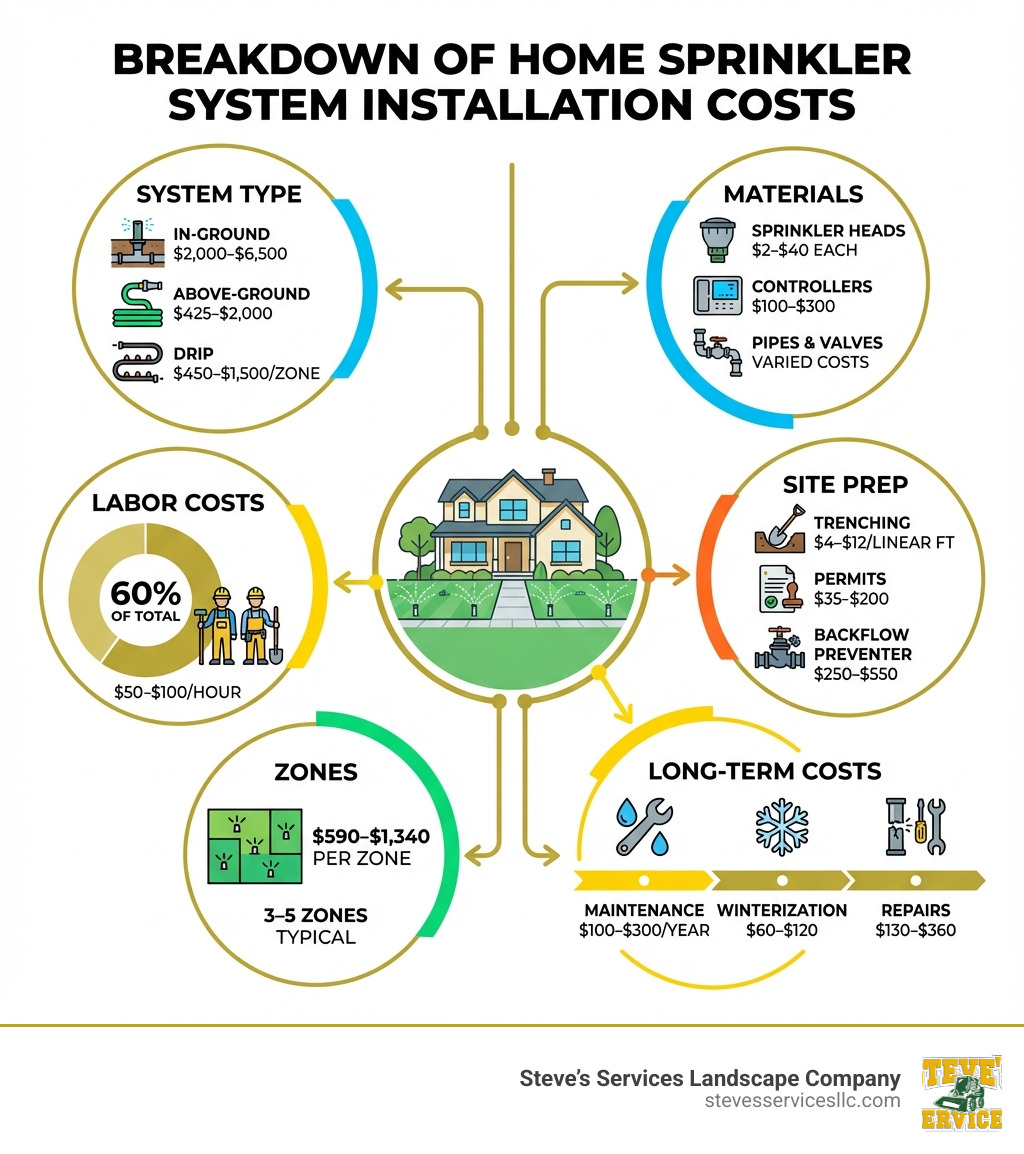
Professionals often charge per watering zone, with average estimated costs ranging from $590 to $1,340 per zone. A standard quarter-acre yard in Massachusetts usually needs at least 3 to 5 zones for proper coverage. This method, called hydrozoning, is key to designing an effective and water-efficient automatic sprinkler system installation that prevents waste.
Labor, Permits, and Site Preparation Costs
Labor and site preparation are a significant part of the cost of home sprinkler system installation, often accounting for about 60% of the total project.
- Professional Labor Rates: Our skilled irrigation contractors generally charge between $50 and $100 per hour. Most residential in-ground installations require approximately 8 to 16 hours of labor, varying by yard complexity.
- Trenching Costs: Installing an in-ground system requires trenching. Expect to pay an estimated $4 to $12 per linear foot. This cost can climb if your soil is rocky or clay-heavy, which is common in Massachusetts.
- Permit Fees: Permits are required in most Massachusetts towns to ensure safe, code-compliant installation, typically adding an estimated $35 to $200 to your cost. A reputable contractor will handle this process for you. For more information on local requirements, you can refer to resources like Travis County’s irrigation permit guidelines (note: this link is for example purposes; similar processes are required in Massachusetts).
- Backflow Preventer: A backflow preventer is a non-negotiable safety device required by code to protect your drinking water. It prevents irrigation water from flowing back into your home’s water supply, adding an estimated $250 to $550 to the project. You can learn more about the sprinkler backflow preventer replacement cost if you ever need to replace an existing one.
Key Variables: System Types, Components, and Upgrades
The choices you make regarding your sprinkler system’s type, components, and smart technology will significantly influence the overall cost of home sprinkler system installation. It’s a balance between upfront investment and long-term efficiency and convenience.
Comparing System Types: In-Ground, Above-Ground, and Drip
Choosing the right irrigation system is crucial, as each has its own cost, benefits, and drawbacks.
| System Type | Estimated Cost Range | Pros | Cons rype | :————— | :————————————————- | :—————————————————————————————————————————————————————————————————————————————————————————————————————————————————————————————————————————————————————————————————————————————————————————————————————————————————————————————————————————————————————————————————————————————————————————————————————————————————————————————————————————————————————————————————————————————————————————————————————————————————————————————————————————————————————————————————————————————————————————————————————————————————————————————————————————————————————————————————————————————————————————————————————————————————————————————————————————————————————————————————————————————————————————————————————————————————————————————————————————————————————————————————————————————————————————————————————————————————————————————————————————————————————————————————————————————————————————————————————————————————————————————————————————————————————————————————————————————————————————————————————————————————————————————————————————————————————————————————————————————————————————————————————————————————————————————————————————————————————————————————————————————————————————————————————————————————————————————————————————————————————————————————————————————————————————————————————————————————————————————————————————————————————————————————————————————————————————————————————————————————————————————————————————————————————————————————————————————————————————————————————————————————————————————————————————————————————————————————————————————————————————————————————————————————————————————————————————————————————————————————————————————————————– | :—————————————————————————————————————————————————————————————————————————————————————————————————————————————————————————————————————————————————————————————————————————————————————————————————————————————————————————————————————————————————————– |
| In-Ground | $2,000–$6,500 (average yards); up to $10,000+ for large/complex | – Invisible design preserves lawn aesthetics. – Durable (15-20+ years). – Efficient, precise watering. – Fully automated convenience. – Increases property value. t For |
| Above-Ground | $425–$2,000 | – Lower initial cost. – Easy, quick setup. – Portable components. – No trenching required. a Cons an Best For |
| Drip Irrigation | $450–$1,500 per zone | – Highly water-efficient (up to 50% less water). – Delivers water directly to roots. – Keeps foliage dry, preventing disease. – Great for gardens and irregular shapes. – Lowers water bills. a Cons a Best For |
Sprinkler Heads and Smart Technology Add-Ons
The sprinkler heads and smart technology you choose impact both the upfront cost of home sprinkler system installation and long-term water use. Heads alone range from an estimated $2 to $40 each.
Here are common sprinkler head types:
- Pop-up Spray Heads: Spray a fixed pattern, ideal for smaller lawns and garden beds (3-15 ft radius). Estimated cost: $3–$16 each.
- Rotary Heads: Rotate to cover medium to large lawns (15-35 ft radius), delivering water slowly, which is good for slopes and clay soils. Estimated cost: $5–$20 each.
- Gear-Driven Rotors (or Impact Rotors): Heavy-duty rotary heads for very large areas (up to 150 ft). Estimated cost: $10–$35 each.
- Bubbler Heads: Deliver a slow stream of water at the base of plants, trees, and shrubs. Estimated cost: $5–$10 each.
- Micro-Misting Heads: Produce a fine mist for delicate gardens or new seeds. Estimated cost: $2–$10 each.
Beyond physical components, smart technology offers impressive benefits:
- Smart Wi-Fi Controllers: Manage your system via smartphone, with automatic adjustments for weather and soil conditions. Estimated cost: $100–$300. Upgrading your cost of sprinkler system control box can lead to significant water savings.
- Rain and Soil Moisture Sensors: These devices prevent unnecessary watering. Rain sensors stop the system during rain, while soil sensors measure ground moisture to water only when needed. Estimated costs: Rain sensors $25–$75, Soil moisture sensors $30–$350. Smart technologies can reduce water usage by up to 30%. We recommend exploring water-efficient options through the EPA WaterSense program to maximize savings.
How Lawn Condition and Location Affect Price
Your lawn’s unique characteristics and location in Massachusetts significantly impact the final cost of home sprinkler system installation.
- Soil Quality and Composition:
- Sandy Soil: Easier to trench, which can lower labor costs.
- Clay Soil: Common in Massachusetts, this soil is tougher to trench and may add an estimated $0.20–$0.40 per square foot to the cost.
- Rocky Soil: A New England classic, rocky soil is difficult to trench and can increase costs by an estimated $0.40 per square foot, requiring more time and specialized equipment.
- Yard Slope and Terrain: Flat yards are simplest to irrigate; sloped properties are more complex.
- Moderate Slopes: Require special heads to prevent runoff, adding an estimated $0.10–$0.30 per square foot.
- Steep Terrain: May need complex zoning or drainage solutions like French drains (estimated $10–$65 per linear foot), increasing project cost.
- Regional Price Differences: Installation costs vary regionally due to labor rates and climate. For example, Northeast installations may average around $2,000, while costs can be higher in other regions due to factors like deeper pipe burial requirements.
- New Construction vs. Retrofit Installation: New construction installation is typically cheaper than retrofitting an existing landscape. Trenching is simpler before a lawn is established. Retrofitting requires navigating existing plants and utilities, adding complexity and labor. This can increase costs from a new-construction rate of $0.50–$0.75 per square foot to an estimated $0.75–$1.50 per square foot for retrofits. As experts in lawn sprinkler systems in Medford, MA, we understand these local challenges.
The Long-Term Value: Maintenance, Savings, and ROI
While the initial cost of home sprinkler system installation is a key factor, it’s crucial to see it as a long-term investment. A quality system should perform reliably for 15-20 years or more with proper care. This means understanding ongoing costs, potential savings, and the return on investment (ROI).
Ongoing Maintenance and Repair Costs
Regular maintenance is essential for your sprinkler system. Neglecting it can lead to inefficiency, higher water bills, and costly repairs.
- Annual Maintenance Packages: Many homeowners opt for annual maintenance packages, which typically run an estimated $100–$300. These packages often include spring startup, a mid-season check, and winterization.
- Winterization: This is absolutely crucial in our Massachusetts climate. To prevent pipes from freezing and bursting, we blow all water out of the system. This service typically costs an estimated $60–$120 annually and can save you thousands in freeze damage. Learn more about how to blow out irrigation system to protect your investment.
- Typical Repair Costs: Even with proper maintenance, components can wear out. Expect to pay an estimated $130–$360 for typical fixes like replacing a broken head or repairing a minor leak. For a deeper dive, see our guide on how much does it cost to fix a sprinkler system.
Does a Sprinkler System Add Value to Your Home?
Absolutely! A professionally installed sprinkler system can significantly improve your home’s value and appeal.
- Home Value Increase: Irrigation systems add tangible home value. Homeowners often recover about 83% of their investment upon selling. Some studies suggest a value increase of 7-15% of property value, with an ROI around 86%, according to the National Association of Realtors reports on ROI.
- Curb Appeal: A lush, green, well-maintained lawn instantly boosts your home’s curb appeal and creates a welcoming first impression.
- Marketability to Buyers: Many buyers seek low-maintenance homes. A sprinkler system signals that the lawn will be easy to care for and look great year-round.
Professional vs. DIY: The real cost of home sprinkler system installation
Many homeowners consider DIY to save on the cost of home sprinkler system installation. While tempting for above-ground systems, we strongly advise against a DIY in-ground system installation without professional experience.
- Risks of DIY: Installing an in-ground system is complex. Without expertise, you risk:
- Leaks and Poor Coverage: Incorrect installation can cause leaks, dry spots, and water damage.
- Code Violations: DIY systems may not meet local Massachusetts codes, requiring costly rework.
- Damaged Utilities: Digging without marking utilities can lead to dangerous and expensive damage to gas, water, or electrical lines.
- Expensive Repairs: DIY mistakes often lead to higher long-term repair costs.
- Lack of Warranty: Professional installations include warranties; DIY projects do not.
- Long-Term Value of Professional Design: A professional design ensures optimal water pressure, proper zoning, and complete coverage, leading to a more efficient and durable system that saves you money on water bills and repairs.
- Trust Your Local Experts: We have years of experience as lawn sprinkler system installers near me in our Massachusetts service areas. Our team understands the local soil, climate, and municipal requirements.
Frequently Asked Questions about Sprinkler System Costs
We often hear common questions from homeowners about the cost of home sprinkler system installation. Here are some of the most frequent inquiries:
How much will my water bill increase with a sprinkler system?
The increase in your water bill depends on your watering habits, local water rates, lawn size, and system efficiency. Most homeowners see a monthly increase of $50-$100 in peak season. However, an efficient, professional system can actually lower water bills compared to manual watering by preventing waste.
Smart systems with Wi-Fi controllers and sensors can reduce water usage by an estimated 30% or more by watering only when needed, based on real-time weather and soil conditions. Regular maintenance to prevent leaks also helps keep water costs down.
How many watering zones will my property need?
The number of zones needed depends on more than just lawn size. Key factors include:
- Water Pressure: Available pressure dictates how many heads can run on one zone.
- Lawn Size and Shape: Larger or irregular lawns need more zones for even coverage.
- Sun/Shade Exposure: Sunny and shady areas need separate zones.
- Plant Types: Lawns, gardens, and shrubs should be on separate zones (hydrozoning).
- Soil Type: Sandy soils need different watering cycles than clay soils.
A professional assessment is crucial. A standard quarter-acre yard usually requires 3-5 zones, but a complex landscape might need more.
How long does a professionally installed sprinkler system last?
A professionally installed and maintained system is built to last, with a typical lifespan of 15 to 20 years or more. Proper maintenance is key to longevity.
While main pipes are durable, some components have shorter lifespans:
- Sprinkler Heads: Typically need replacement every 5-10 years due to wear.
- Controllers: May last 7-10 years before needing an upgrade, though smart controllers are often more durable.
The key to maximizing your system’s lifespan is regular maintenance, including proper winterization in Massachusetts. Our guide on irrigation system maintenance: how to keep your lawn healthy and green offers more tips.
Get a Precise Quote for Your Massachusetts Lawn
Understanding the factors that influence the cost of home sprinkler system installation—from property size and complexity to system type and smart features—is the first step toward a lush, healthy lawn.
While the initial investment might seem substantial, a professionally installed irrigation system is an investment in your home’s value, your lawn’s health, and your peace of mind. It saves you time, conserves water, and boosts curb appeal, offering a strong return on investment.
With over 25 years of experience serving homeowners across Massachusetts, Steve’s Services understands our local climate’s unique challenges. We are experts in navigating everything from rocky soils to the critical need for proper winterization in communities like Burlington, Danvers, Everett, Lynnfield, Medford, Melrose, North Reading, Reading, Revere, Saugus, Stoneham, Winchester, Woburn, Malden, and Wakefield.
Ready to stop dragging hoses and start enjoying a consistently beautiful lawn? Let our team design a customized, efficient, and long-lasting sprinkler system for your property and budget.
Contact us for a professional lawn sprinkler system installation quote today, and let’s bring your dream lawn to life!