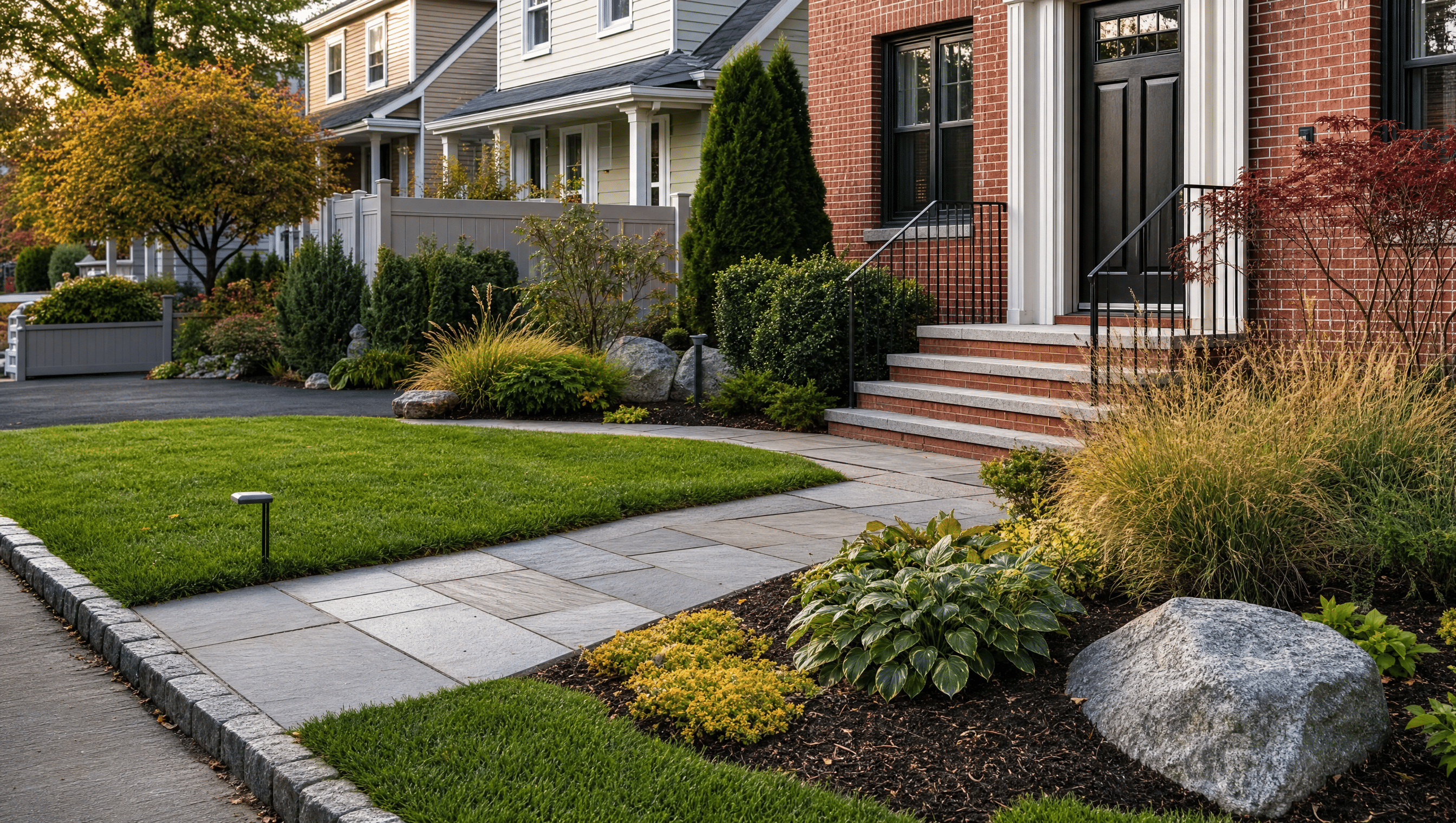
Low-maintenance front yard landscaping is not about removing every plant. It is about using a simple layout, durable materials, and plants suited to the actual light, soil, moisture, and snow conditions. The front yard should be easy to care for while still guiding visitors to the entry and fitting the house.
Begin with circulation and winter use
Map the route from driveway and sidewalk to the front door before choosing plants. Keep the main path clear, visible, and wide enough for normal use. In Greater Boston, account for snow storage, plowing, shoveling, road salt, and roof runoff. A planting bed that blocks winter snow placement will create recurring work.
Simplify the bed shapes
Long, deliberate bed edges are easier to mow and maintain than many tight curves or isolated lawn pockets. Connect small foundation beds where the layout supports it. Avoid narrow strips that are difficult to irrigate, mulch, or reach with equipment.
| Site condition | Lower-maintenance response | Common mistake |
|---|---|---|
| Full sun and heat near pavement | Use plants suited to sun, reflected heat, and available water | Choosing by flower color without checking exposure |
| Deep shade | Reduce struggling turf and use shade-suited planting or mulch where appropriate | Repeatedly reseeding a location that lacks enough light |
| Roof runoff or low area | Address drainage and choose materials for the actual moisture pattern | Hiding standing-water symptoms with new mulch |
| Snow-storage edge | Leave durable open space and use salt-tolerant selections where exposure warrants | Placing brittle shrubs in the plow or shovel path |
| Entry foundation | Choose plants by mature size and keep sightlines and access clear | Installing fast-growing plants too close to walks, windows, or utilities |
Choose plants by mature size
A plant that fits on installation day may require frequent pruning after it matures. Check expected height and width, then allow space from siding, windows, meters, walkways, and neighboring plants. Repeating a limited palette can create a more cohesive design and simpler care than using one of everything.
Use mulch and edging as systems
Mulch can suppress weeds, moderate soil moisture, and give beds a finished surface when installed at an appropriate depth and kept away from trunks and stems. A defined edge keeps lawn and bed materials from mixing. The edge should follow the mowing pattern and remain repairable after freeze-thaw movement.
Reduce problem lawn instead of eliminating useful lawn
Lawn can be a practical, durable surface where it receives enough light and has a simple shape. The highest-maintenance sections are often narrow slopes, deep shade, disconnected corners, and small pieces surrounded by obstacles. Rework those areas first rather than assuming the entire front yard needs replacement.
Plan irrigation and establishment
Even drought-tolerant plants need water while establishing. Decide how new material will be watered and who will monitor it. Grouping plants with similar needs makes watering more predictable and reduces the chance that one zone is overwatered to satisfy another.
Use a maintenance test before approving the design
- Can the lawn be mowed without repeated hand trimming?
- Can windows, meters, and utilities remain accessible?
- Where will snow be placed?
- Can every plant fit at mature size?
- How will leaves and road debris be removed?
- What needs pruning, dividing, or seasonal cutting back?
- Who waters during the first growing seasons?
Steve’s Services offers landscaping services in Greater Boston. A site-based plan can reduce difficult edges, mismatched plants, and recurring maintenance conflicts while preserving a welcoming front yard.