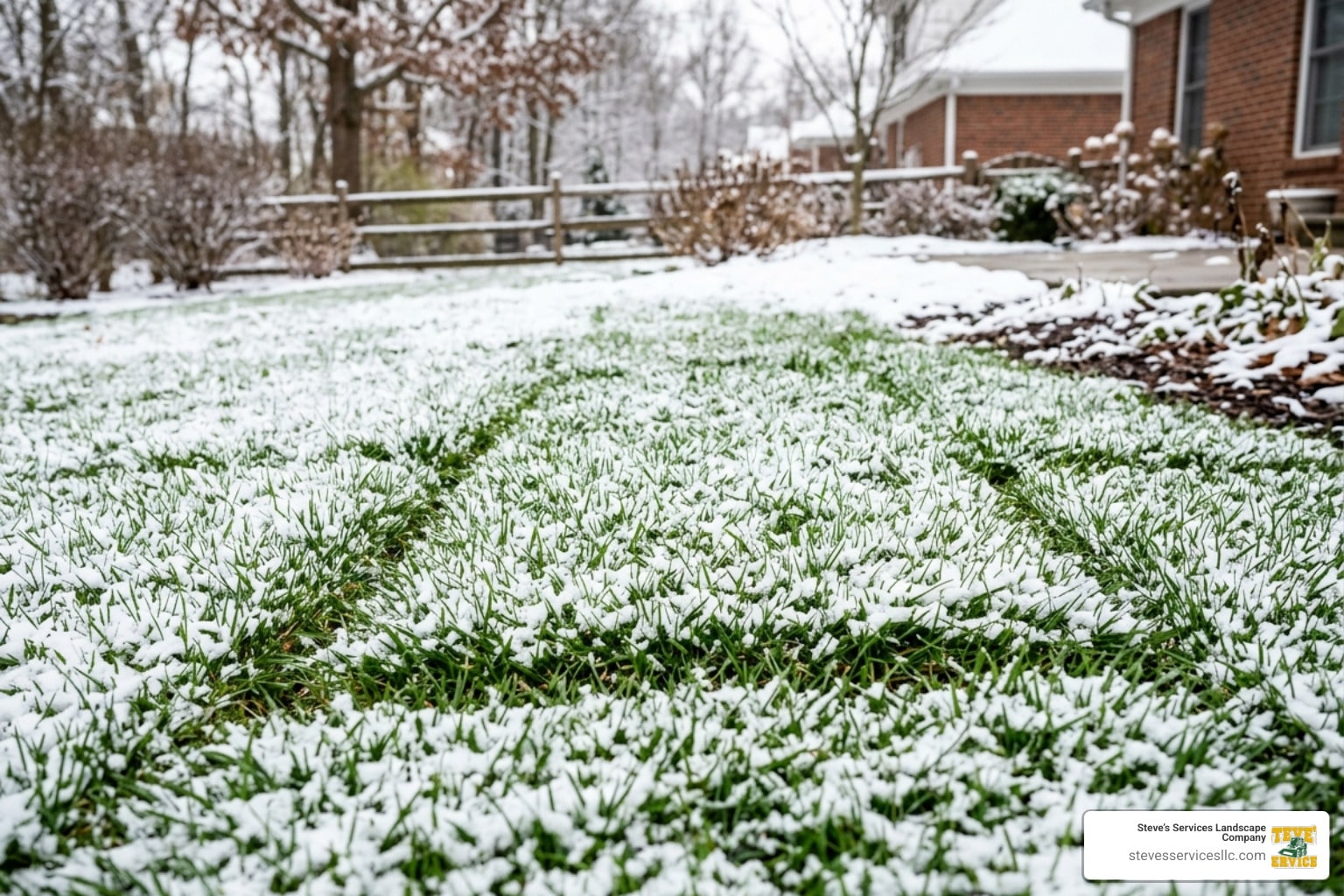
Winter Sod Installation: Is It a Good Idea?
Knowing how to care for new sod in winter is the difference between a lush lawn come spring and a patchy, dead mess you have to redo from scratch.
Here’s a quick summary of what new winter sod needs:
| Care Task | What To Do |
|---|---|
| Watering | At least 1 inch every two weeks; keep top 1-2 inches of soil moist |
| Foot traffic | Minimize completely; use stepping stones or designated paths |
| Fertilizing | Hold off on nitrogen; wait until soil temps hit 65°F in spring |
| Snow removal | Use a plastic shovel gently; never use rock salt near sod |
| Frost protection | Water before hard freezes; avoid watering late in the day |
| Mowing | Skip it for warm-season grass; mow cool-season grass high if needed |
| Weed control | No pre-emergents yet; hand-pull only until roots establish |
Most people assume dormant sod takes care of itself. It doesn’t. Newly installed sod has shallow roots and almost no energy reserves. It’s far more vulnerable than an established lawn, and winter stress — from drying winds, freezing temps, and foot traffic — can quietly kill it before spring ever arrives.
I’m Steve Sylva, owner of Steve’s Services Landscape Company in Malden, MA, with over 25 years of hands-on experience helping New England homeowners navigate exactly this challenge of how to care for new sod in winter. Let’s walk through everything you need to know to protect your investment until the ground warms up.
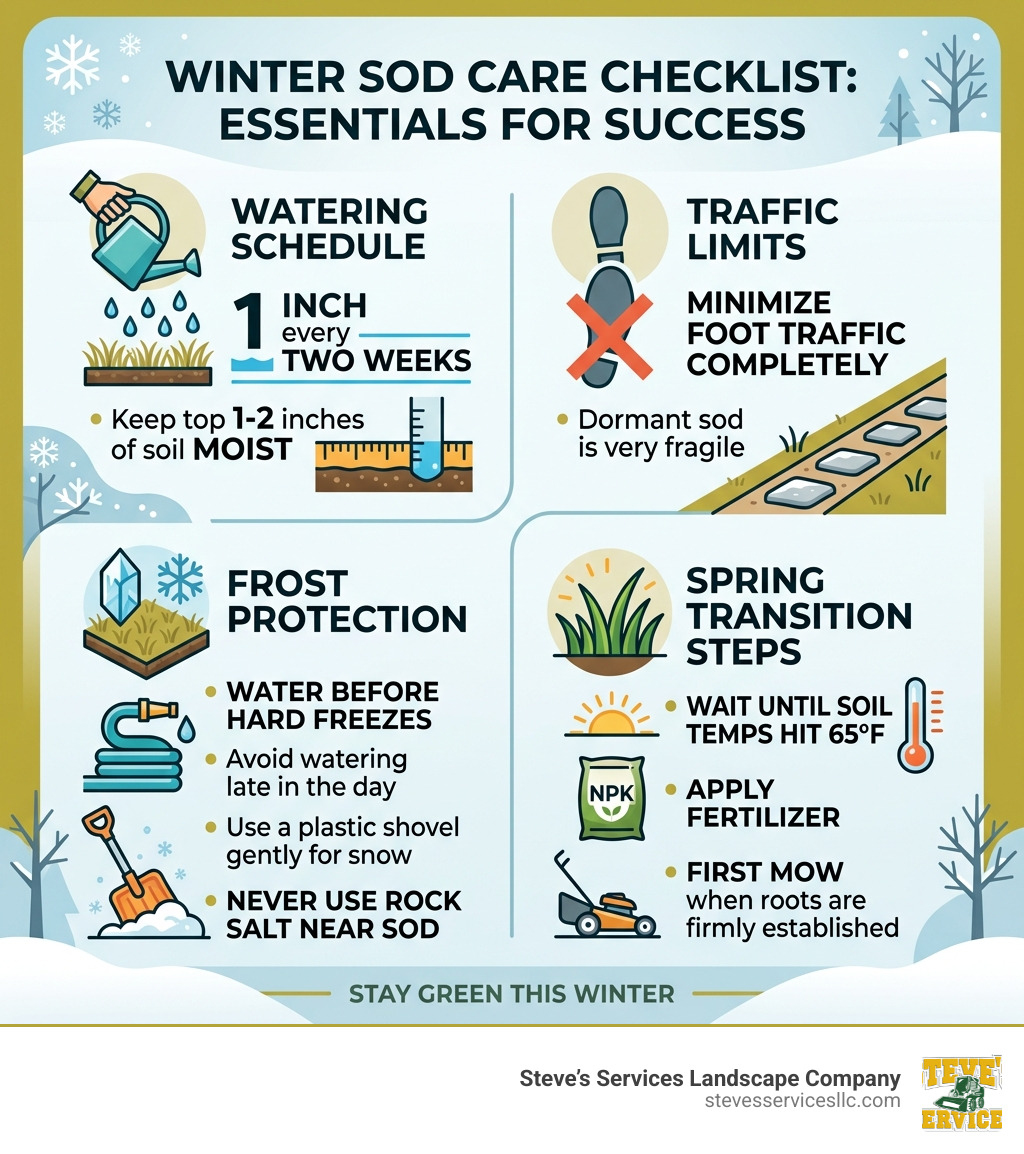
How to care for new sod in winter vocab explained:
You might get a few funny looks from the neighbors when they see a flatbed of grass pulling up in December, but installing sod in winter is actually a very smart move for many Massachusetts homeowners. While the grass might look brown and sleepy (dormant), the ground is often still workable before the deep freeze sets in.
One of the biggest reasons we recommend winter installation is for soil stabilization. If you’ve just finished a construction project in Melrose or Medford, leaving bare dirt exposed all winter is a recipe for a muddy disaster. New sod provides immediate erosion control, keeping your topsoil where it belongs instead of washing down the storm drain during a January thaw. Plus, because demand is lower in the off-season, you often get fresher sod and more flexible scheduling from your local professional installers.
Selecting the Best Grass Types for Cold Climates
In our neck of the woods—places like Reading, Wakefield, and Stoneham—we primarily deal with cool-season grasses. These varieties are built for New England.
- Kentucky Bluegrass: The gold standard for Massachusetts lawns. It handles the cold exceptionally well and has a “creeping” growth habit that helps fill in any small gaps come spring.
- Tall Fescue: This is a hardy workhorse. It has a deeper root system than most, which provides excellent thermal insulation against the biting winter winds.
- Fine Fescue: Great for those shadier spots in Winchester or Lexington where other grasses struggle.
The key is ensuring the sod is harvested and installed within 24 hours. Even though it’s cold, those roots can still dry out if they sit on a pallet for too long.
Professional Soil Preparation for Winter Success
You can’t just slap sod onto frozen, compacted dirt and expect a miracle in April. Proper caring for new sod starts with what’s underneath. We recommend tilling the soil to a depth of at least 4 to 6 inches. This breaks up compaction and allows the new roots to penetrate easily once the ground warms up.
We also suggest a soil test to check pH levels. If your soil is too acidic—common in our region—adding lime during the prep phase is much more effective than doing it later. Once tilled and amended, the area must be leveled and smoothed to ensure 100% root-to-soil contact. Any air pockets left under the sod will act like little refrigerators, freezing the roots and killing the plant.
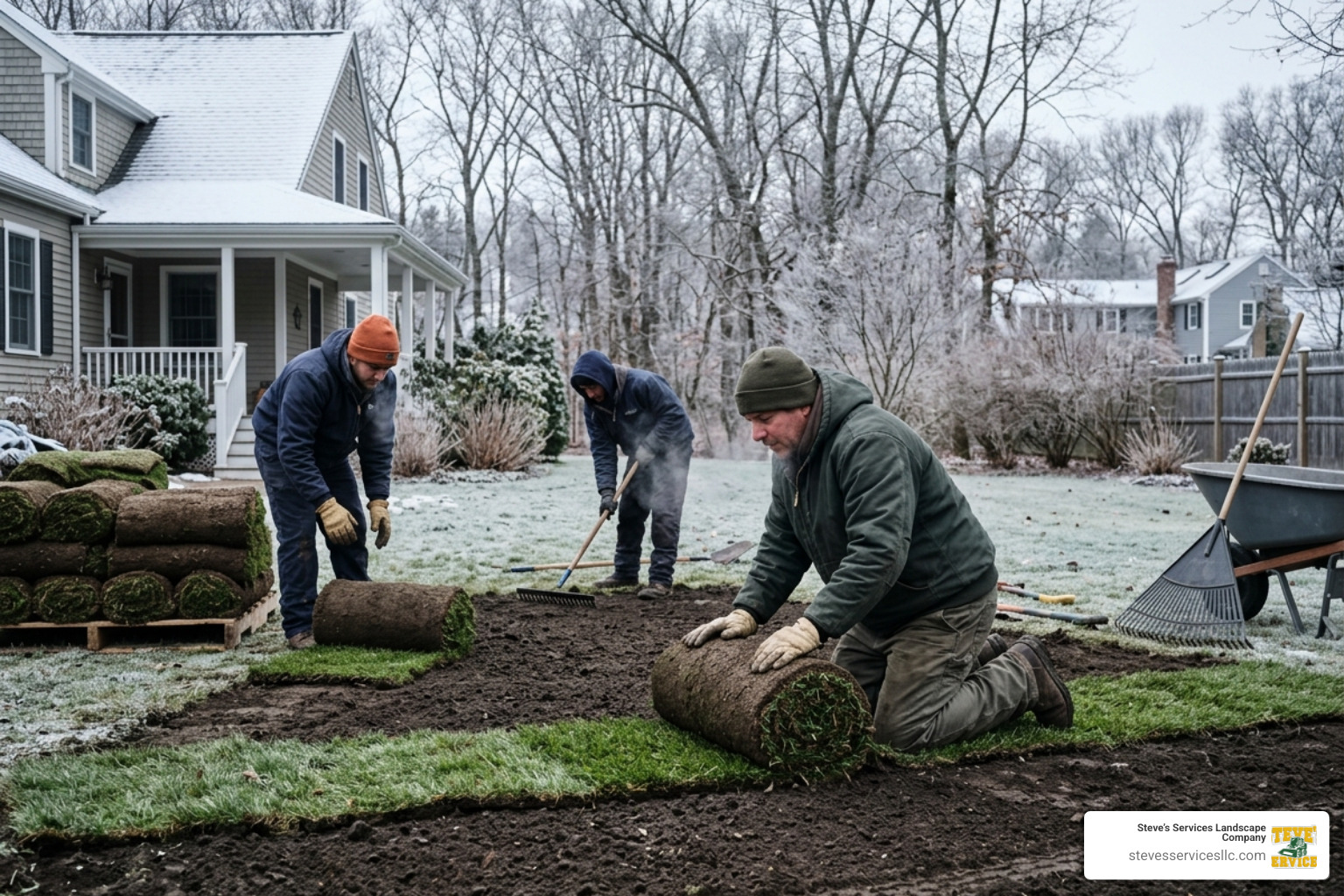
Essential Steps for How to Care for New Sod in Winter
The biggest myth about winter sod is that it doesn’t need water. While it’s true the grass isn’t actively growing blades, the roots are still living organisms. They need moisture to stay hydrated and to stay insulated against the cold. How to care for new sod in winter requires a shift in mindset: you aren’t watering to grow; you’re watering to protect.
Monitoring Moisture to Prevent Winter Desiccation
Desiccation is just a fancy word for “drying out,” but it’s the number one killer of new sod in places like Woburn and Burlington. Cold, dry winter winds act like a giant hair dryer, sucking moisture out of the grass blades and the top inch of soil.
Follow the “One-Inch Rule”: your new sod needs at least one inch of water every two weeks. If we get a good snow or a soaking rain, Mother Nature has done the work for you. But during those dry, “brown” stretches of winter, you’ll need to pull out the hose.
The Screwdriver Test: Not sure if it’s wet enough? Try to push a screwdriver into the ground. If it slides in easily and comes back damp 2 to 3 inches down, you’re in good shape. If the ground is rock hard (and not frozen), it’s time to water. Check out our new sod watering guide for more specifics on timing.
Protecting Root Systems During Hard Freezes
It sounds counterintuitive, but wet soil is actually warmer than dry soil. Water in the soil holds radiant heat from the earth and creates a buffer around the roots. To protect your investment before a predicted “Polar Vortex” hits Saugus or Revere, give the lawn a light watering a day or two before the deep freeze.
However, be careful with your equipment. Make sure you drain your hoses and check your sprinkler backflow valves to prevent freezing pipes. Never water so late in the day that the water sits on top of the grass and turns into a sheet of ice overnight; this can lead to “ice suffocation.”
Protecting and Maintaining Your Winter Investment
Once the sod is down, it’s vulnerable. It hasn’t “knitted” into the soil yet, meaning it can shift, slide, or be crushed easily.
Managing Snow and Ice on New Turf
Snow is actually your friend. It acts as a natural insulation blanket, protecting the sod from extreme temperature swings and drying winds. However, how you handle that snow matters:
- No Heavy Piles: Don’t let your plow guy stack 6 feet of heavy, wet snow on the corner of your new lawn. The weight can cause lethal soil compaction.
- Gentle Removal: If you need to clear a path for the dog, use a plastic shovel. Metal shovels can snag the edges of the new sod and peel it right up.
- Salt is the Enemy: Standard rock salt (sodium chloride) is toxic to grass. It sucks the moisture out of the roots. If you must use a de-icer near the lawn in Lynnfield or Everett, use sand or a salt-free alternative. Also, be mindful of drip pipes in winter that might be discharging salty runoff onto your new grass.
Mowing and Traffic Guidelines for New Sod in Winter
Keep off the grass! We can’t stress this enough. When the grass blades are dormant or frosted, they are brittle. Walking on them can actually break the plant’s crown. On new sod, foot traffic also creates ruts and depressions because the root system isn’t there to hold the soil structure together. If you must cross the lawn, install temporary stepping stones or a plywood path.
As for mowing, you generally won’t need to touch it until spring. However, if you installed cool-season sod in the late fall and it grew a bit long, you can give it one last trim. Keep the blade height high—around 3 inches. This extra length provides a bit more insulation for the root zone. Never mow when the grass is wet or covered in frost.
Fertilization and Long-Term Health Transitions
When it comes to how to care for new sod in winter, less is often more when it relates to chemicals. You want the grass to sleep, not try to run a marathon in the middle of a blizzard.
Weed Management and Pre-Emergent Timing
It’s tempting to want to kill every weed the moment you see it, but hold your horses. Pre-emergent herbicides work by stopping root development. Since your new sod is desperately trying to grow roots, applying these chemicals too early can stunt or even kill your new lawn.
- The Rule of Three: Wait at least three weeks after installation before even considering a mild herbicide, but ideally, wait until the grass has been mowed three times in the spring.
- Hand Pulling: This is your best bet for winter weeds. It’s tedious, but it doesn’t harm the sod’s root establishment.
- Temperature Triggers: For most of our service areas like North Reading and Wilmington, you’ll want to look at fertilizer for new sod and pre-emergents in late February or early March, specifically before the soil temperature hits 55°F.
Spring Transition for Winter-Installed Sod
The “Green-Up” phase is the most exciting part of the process. As the soil in Malden and surrounding towns begins to warm, you’ll see the brown start to fade into a vibrant green.
- Increase Water: As the sun gets stronger, you’ll need to transition from bi-weekly watering to a more frequent schedule.
- First Feeding: Wait to apply your first nitrogen-heavy fertilizer for new sod until the soil temperature at a 4-inch depth is consistently 65°F.
- Core Aeration: In the first full fall after installation, we recommend aeration to help manage any compaction that occurred during the winter months.
Investment and Professional Service Expectations
Installing a new lawn is a significant investment in your property’s curb appeal and value. While it might seem cheaper to throw down some seed, winter sod gives you a functional lawn months faster.
| Feature | Winter Sod Installation | Spring Seeding |
|---|---|---|
| Erosion Control | Immediate | 6-8 weeks minimum |
| Weed Competition | High (Sod blocks weeds) | Low (Weeds grow with seed) |
| Water Needs | Low (Dormancy/low evap) | Very High (Multiple times daily) |
| Visual Appeal | Instant “Finished” Look | Patchy/Thin for months |
| Success Rate | Very High with proper care | Moderate (Weather dependent) |
Understanding Sod Installation Pricing
When budgeting for your project, it’s important to understand the market. Pricing for professional sod installation typically ranges from $1.50 to $5.50 per square foot depending on site prep requirements and grass variety. Please note that these are internet-based averages for the New England region and not a specific quote for our services. Factors like the amount of grading required, the removal of old debris, and the accessibility of your yard in towns like Winchester or Lexington can all influence the final cost. For a complex site with significant drainage issues, costs can easily reach $10.00 to $15.00 per square foot.
Frequently Asked Questions about Commercial Snow Management
As a full-service company, we also handle commercial snow management for businesses throughout Malden and the North Shore. New sod on commercial properties requires extra vigilance during the winter.
How does professional snow removal protect new commercial turf?
Commercial-grade equipment with adjustable heights prevents blades from scraping the crown of new sod, while strategic snow stacking avoids heavy weight loads that cause lethal soil compaction on unestablished roots. We map out all “sensitive” turf areas before the first flake falls to ensure our drivers stay on the pavement.
What de-icing agents are safe for new sod near walkways?
While rock salt (sodium chloride) can cause chemical burns and dehydration in new sod, professional managers often utilize urea or calcium magnesium acetate (CMA) which are significantly gentler on dormant root systems. These alternatives are more expensive, but they save you from the cost of replacing dead grass along every sidewalk in the spring.
When should a business schedule snow clearing to prevent sod compaction?
Clearing should occur promptly after 2 inches of accumulation to prevent the “freeze-thaw-crush” cycle, where heavy, wet snow turns to ice and bonds with the sod blades, making them susceptible to breaking under foot or vehicle traffic. Regular clearing keeps the weight off the new root systems.
Conclusion
Mastering how to care for new sod in winter isn’t about constant labor; it’s about consistent observation. By keeping an eye on moisture levels, protecting the lawn from heavy salt and foot traffic, and being patient with fertilizers, you’re setting the stage for a spectacular spring.
Whether you’re in Malden, Burlington, or any of our surrounding communities, the team at Steve’s Services Landscape Company is here to help. We’ve spent decades perfecting the art of New England lawn care, and we know exactly what it takes to get your grass through a harsh winter.
Ready to give your property the upgrade it deserves? From expert sod installation to comprehensive snow management, we’ve got you covered. Contact us today to discuss your next project!