Cost of Removing a Pool: Top 7 Shocking Facts 2024
Cost of removing a pool can vary significantly, with prices often ranging from $6,000 to $15,000 or more for an in-ground pool. However, several factors like pool size, type, location, and removal method can influence these costs. To make a well-informed decision, seek multiple estimates and consider what permits and regulations may apply.
Understanding the financial and logistical aspects of removing a pool is crucial for homeowners and commercial property managers who want an outdoor space that suits their needs. Whether you’re looking to free up backyard space, improve safety, or increase property value, the decision to remove a pool involves a careful assessment of costs.
I’m Steve Sylva, your guide through the intricate process of pool removal. With over 25 years of experience in landscaping and excavating, I have helped numerous clients steer the complexities and costs of removing a pool effectively.
Glossary for cost of removing a pool:
– pool demolition
– pool removal service
– above ground pool removal
Factors Influencing the Cost of Removing a Pool
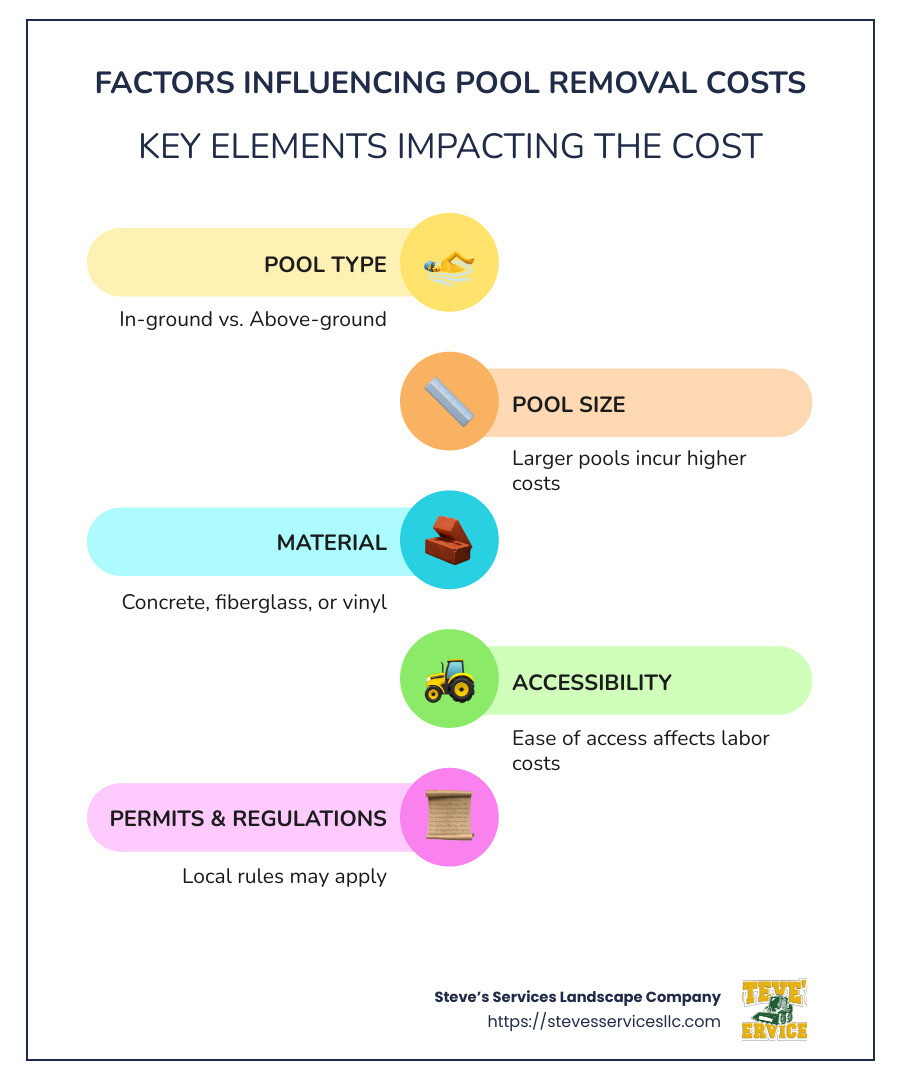
When it comes to the cost of removing a pool, several factors come into play. Understanding these can help you budget effectively and avoid surprises.
Pool Type
The type of pool you have—above-ground or in-ground—affects removal costs. Above-ground pools generally cost less to take down, ranging from $300 to $5,000, depending on whether there’s a deck involved. In-ground pools, on the other hand, can cost between $4,000 and $16,000, depending on the removal method.
Pool Size
Bigger pools require more work and materials to remove, so size is a major cost factor. A larger pool means more debris to haul away and more fill material needed, increasing both labor and disposal fees.
Pool Material
The material your pool is made of—concrete, fiberglass, or vinyl—also influences costs. Concrete pools are the most expensive to remove, ranging from $3,000 to $15,000. Fiberglass pools cost $5,000 to $15,000, while vinyl pools range from $3,000 to $10,000.
Accessibility
If your pool is in a hard-to-reach area, expect higher costs. Difficult access can require special equipment or additional labor, driving up the price.
Location
Your geographic location matters too. Urban areas often have higher labor and disposal costs compared to rural locations. Local regulations can also impact the overall expense.
Permits
Permits are usually required for pool removal. These can cost around $200, but prices vary by location. It’s crucial to check local regulations to avoid fines.
Fill Material
After removing a pool, the hole needs to be filled. The type of fill material—dirt, gravel, or a mix—can affect costs. Using gravel as a base layer might save money compared to all dirt.
Disposal Fees
Disposing of the debris from a pool removal can be costly. Fees depend on the volume of waste and local disposal rates. Always include these in your budget.
Labor Costs
Labor is a significant part of the pool removal expense. Hiring experienced professionals ensures the job is done safely and correctly, but it comes at a price. Getting multiple estimates can help you find a competitive rate.
Structural Engineer
For complex removals, hiring a structural engineer might be necessary. They ensure that the removal process doesn’t affect your home’s foundation or cause drainage issues. While this adds to the cost, it can prevent future problems.
Each of these factors contributes to the overall cost of removing a pool. By understanding them, you can make informed decisions and plan your budget effectively.
Cost of Removing a Pool: Inground vs. Above Ground
When it comes to the cost of removing a pool, the type of pool—inground or above-ground—plays a crucial role. Let’s explore the differences and what you can expect in terms of costs and processes.
Inground Pool Removal
Removing an inground pool is generally more complex and costly than an above-ground pool. The price range typically falls between $4,000 and $16,000. This wide range is due to various factors, including the pool’s size, material, and the chosen removal method.
Full Removal vs. Partial Removal
- Full Removal involves completely demolishing the pool structure and removing all debris. It’s the most thorough method and allows for future construction on the site. However, it’s also the most expensive option, often reaching the higher end of the cost spectrum.
- Partial Removal is less costly, as it involves breaking down the top portion of the pool and filling it in with dirt and gravel. While cheaper, it may limit future use of the space, such as building structures like a guest house.
Above Ground Pool Removal
Above-ground pools are generally easier and cheaper to remove. Costs range from $300 to $5,000, depending on whether additional features like decks are involved.
Factors Affecting Cost
- Size and Complexity: Larger pools with elaborate decking or fencing will cost more to dismantle and dispose of.
- Material: Different materials require different disposal methods, affecting the cost.
Cost Comparison
Inground vs. Above Ground
- Inground Pools: More expensive due to the complexity of demolition and disposal. Full removal offers flexibility for future use but at a higher cost.
- Above Ground Pools: Less expensive and simpler to remove. Ideal for homeowners looking for a quick and budget-friendly option.
Understanding these differences can help you make an informed decision about the best removal option for your needs and budget. Whether you choose full or partial removal, knowing the costs involved will help you plan effectively.
Detailed Breakdown of Pool Removal Costs
When considering the cost of removing a pool, understand the various components that contribute to the overall expense. Here’s a detailed look at the elements involved in pool removal costs:
Average Costs and Ranges
The average cost to remove an inground pool ranges from $4,000 to $16,000. The final price depends on the pool size, type, and removal method. Above-ground pool removal is more budget-friendly, with costs between $300 and $5,000.
Draining the Pool
Before any demolition, the pool needs to be drained. This step is relatively inexpensive but necessary. Draining can cost around $70 to $150, depending on local water disposal regulations.
Demolition
Demolition is one of the most significant parts of pool removal. For inground pools, this involves breaking up the pool structure. A full demolition can cost between $5,000 and $17,000, while partial removal ranges from $4,000 to $8,000. Above-ground pool demolition is simpler, costing much less.
Backfilling
After demolition, the pool area needs to be backfilled with dirt and gravel. The cost for backfilling can range from $3,000 to $10,000, depending on the pool’s size and the fill material used. Using a gravel base can help reduce costs.
Deck and Fence Removal
If your pool includes a deck or fence, removing these structures will add to the total cost. Deck removal can cost between $500 and $2,000, while fence removal may add another $300 to $1,000.
Landscaping
Once the pool is removed, landscaping the area can improve your yard’s appearance. Landscaping costs vary widely, depending on your plans. Basic seeding and sod installation might cost a few hundred dollars, while more elaborate designs can run into the thousands.
Disposal Fees
Disposing of pool materials and debris is another cost factor. Some contractors include disposal fees in their estimates, while others charge separately. Expect to pay $500 to $1,500 for proper disposal, depending on the volume and type of material.
Understanding these cost components will help you budget effectively and choose the best removal option for your needs. Whether you opt for full or partial removal, being informed about each step will make the process smoother and more predictable.
Cost of Removing a Pool by Material
When it comes to the cost of removing a pool, the material of your pool plays a significant role. Each type of pool material—concrete, fiberglass, vinyl, gunite, and shotcrete—has its own removal challenges and costs.
Concrete Pools
Concrete pools are the most durable but also the most expensive to remove. The process involves heavy machinery to break up the concrete, which is labor-intensive and time-consuming. On average, removing a concrete pool can cost between $5,000 and $17,000. This range covers both partial and full removal options. Partial removal involves breaking down the top few feet and filling in the rest, while full removal requires complete demolition and disposal.
Fiberglass Pools
Fiberglass pools are easier and cheaper to remove compared to concrete. Since fiberglass pools are pre-formed shells, the removal process involves breaking up the shell and hauling it away. The cost to remove a fiberglass pool typically ranges from $3,000 to $7,000. The lower cost is due to the less intensive demolition process compared to concrete.
Vinyl Pools
Vinyl pools are generally the least expensive to remove. The process involves dismantling the vinyl liner and the supporting structure. Since vinyl pools are often less robust than concrete or fiberglass, the removal is simpler and less costly. Expect to pay between $3,000 and $6,000 for vinyl pool removal. That any metal or wood structures supporting the liner will also need to be disposed of.
Gunite Pools
Gunite pools are similar to concrete pools in terms of removal costs and complexity. As a type of concrete, gunite requires heavy machinery for demolition. The cost for removing a gunite pool falls within the same range as concrete, around $5,000 to $17,000. The robust nature of gunite means the process is labor-intensive, contributing to higher costs.
Shotcrete Pools
Shotcrete pools, like gunite, are a type of concrete pool. The removal process involves similar steps and costs. Removing a shotcrete pool can also range from $5,000 to $17,000. The costs are influenced by the pool’s size and the level of removal—partial or full.
Understanding the specific costs associated with your pool’s material helps in planning and budgeting for removal. Whether opting for a partial or full removal, knowing what to expect can make the process less daunting and more predictable.
Additional Costs and Considerations
When planning for the cost of removing a pool, it’s important to consider several additional expenses that can arise. These costs can vary depending on the complexity of the project and local requirements.
Permits
Before removing a pool, securing the necessary permits is crucial. Permit costs can average around $200, but this can vary based on local regulations. Check with your local authorities to determine what permits are required for your project. Some contractors handle permits for you, so confirm this when hiring.
Structural Engineer
Hiring a structural engineer might be necessary, especially if you plan to build on the site afterward. A structural engineer ensures proper drainage and soil stability, preventing future issues like sinking or swelling. Expect to pay between $100 and $200 per hour for their expertise.
Equipment Rental
Pool removal often requires heavy machinery. If your contractor doesn’t provide equipment, you might need to rent it. Costs for equipment rental can add up quickly, so discuss this with your contractor to avoid surprises.
Safety Gear
Safety is paramount during pool removal. Ensure that all workers have the necessary safety gear, such as helmets, gloves, and goggles. While this is typically the contractor’s responsibility, double-check to ensure compliance with safety standards.
Professional Landscaping
After removing a pool, the surrounding landscape may need attention. Hiring a professional landscaper can help restore your yard. Landscaping costs vary but generally range from $100 to $200 per hour.
Soil Compaction
Proper soil compaction is crucial to prevent future settling. This process ensures the ground is stable and ready for any new construction or landscaping. It’s often included in the pool removal cost, but verify this with your contractor.
Seeding and Sod Installation
To restore the removed pool area, you might need to reseed or install sod. Seeding is a cost-effective option, while sod provides instant results. Costs for sod installation can range from $1 to $2 per square foot, while seeding is generally cheaper but takes longer to establish.
These additional costs and considerations are essential for a successful pool removal project. Planning for these expenses ensures a smooth process and helps avoid unexpected financial burdens.
Frequently Asked Questions about the Cost of Removing a Pool
Does removing a pool decrease home value?
Removing a pool can actually increase your property’s value in certain situations. If the pool is old, requires significant repairs, or dominates the yard, removing it can make the space more appealing to potential buyers. According to experts, a pool that is more than 30 years old or lacks safety features might deter buyers, especially if it’s the only one in the neighborhood. On the other hand, if most homes in the area have pools, removing yours might not be the best move. Always consider local market trends before making a decision.
Is it worth it to get rid of a pool?
Whether or not it’s worth removing a pool depends on several factors. If the pool is seldom used, costly to maintain, or poses safety concerns, removal might be a wise choice. High operating costs and frequent repairs can also make keeping a pool less attractive. By removing a pool, homeowners can free up space for other uses like a garden or patio, potentially increasing the property’s appeal. However, if you live in an area where pools are highly desirable, maintaining it might be more beneficial.
How do you remove an old inground pool?
Removing an old inground pool involves several steps:
- Draining the Pool: First, the pool must be emptied of water. This often requires a permit and adherence to local regulations regarding water disposal.
- Demolition: The pool structure is then broken apart. This involves heavy machinery and skilled labor to safely dismantle concrete, fiberglass, or vinyl materials.
- Backfilling: The empty space is filled with dirt and gravel, ensuring proper compaction to prevent future settling. This step is crucial for maintaining ground stability.
- Landscaping: Once the area is level, it can be landscaped according to your preferences, whether that means planting grass, installing a patio, or creating a garden.
Hiring a professional pool removal company is recommended, as they handle permits, demolition, and ensure safe practices. This can protect your property and save you from costly DIY mistakes.
Conclusion
Removing a pool can be a big decision, but it often brings valuable benefits. By eliminating an old or unused pool, homeowners can reduce maintenance costs and increase their property’s appeal. This space can be transformed into a beautiful garden, a play area, or even a new patio, offering more functional and enjoyable outdoor living.
At Steve’s Services Landscape Company, we take pride in guiding our clients through the cost of removing a pool. Our team is dedicated to providing personalized solutions custom to your needs. We handle everything from securing permits to executing a seamless demolition and landscaping process. With our experienced crew and commitment to exceptional customer service, we ensure your pool removal project is completed efficiently and safely.
If you’re considering removing your pool, partnering with us means you’re choosing a company that values precision and integrity. Our mission is to help you transform your outdoor space into something truly special.
To learn more about our services and how we can assist with your pool removal needs, please visit our excavation services page. Let us help you turn your vision into reality, from dirt to dollars.