In Ground Pool Removal Cost: Top Tips & Savings 2024
Explaining In-Ground Pool Removal Costs
In ground pool removal cost can be quite a mystery for many homeowners. If you’re planning to remove that old pool from your yard, it’s crucial to understand the cost implications. Typically, full pool removal ranges from $4,000 to $16,000, while partial removal might cost between $4,500 and $6,250. Consider these figures as a starting point to budget wisely.
Understanding the costs involved is not just about budgeting but making informed decisions. Several factors influence pricing, such as pool size, type of fill material, and contractor expertise. It’s essential to recognize these elements to choose the right option for your needs.
I’m Steve Sylva, owner of Steve’s Services Landscape Company. With 25 years in landscaping, I’ve overseen many in-ground pool removal projects across Massachusetts, helping clients steer costs and issues effectively. This experience ensures you’ll get clear insights into the in ground pool removal cost in this article.
Know your in ground pool removal cost terms:
– how much does it cost to remove a pool
– pool demolition
– pool removal service
How Much Does It Cost to Remove a Pool?
In-Ground Pool Removal Cost
Removing an in-ground pool can be a significant investment. On average, in-ground pool removal costs range from $7,000 to $16,000 for a full removal. If you’re considering a partial removal, expect to pay between $4,000 and $10,000. The national average cost hovers around $10,000. These figures can fluctuate based on several factors.
Cost Factors:
– Pool Size and Type: Larger pools or those made from complex materials like concrete might cost more to remove.
– Demolition Method: Full removal involves completely demolishing the pool structure, while partial removal uses the rubble as backfill.
– Location and Access: Hard-to-reach areas may incur higher costs due to increased labor and equipment needs.
– Contractor Expertise: Hiring a skilled contractor can affect the price but ensures quality work and adherence to regulations.
Above-Ground Pool Removal Cost
Above-ground pools are generally less expensive to remove. The average cost for removing an above-ground pool ranges from $400 to $900. However, if you have a deck or need backfill, the price can rise significantly.
Cost Breakdown for Above-Ground Pool Removal:
– Pool Only: $400 – $900
– Pool and Deck: $1,000 – $7,000
– Pool, Deck, and Backfill: $2,000 – $5,500
Removal Types:
– Basic Removal: Involves dismantling the pool structure and disposing of the materials.
– Comprehensive Removal: Includes removing any surrounding structures like decks and filling the area with dirt or gravel.
Factors to Consider:
– Size of the Pool: Larger pools require more labor and disposal fees.
– Additional Features: Decks or landscaping around the pool can increase costs.
– Accessibility: Easily accessible pools are cheaper to remove due to lower labor costs.
For both in-ground and above-ground pool removal, it’s wise to get multiple contractor quotes. This ensures you receive a fair price and understand the scope of work involved. Always check for licensing and insurance to protect yourself during the project.
Next, we’ll dig into the Factors Influencing Pool Removal Costs, helping you understand what can drive prices up or down.
Factors Influencing Pool Removal Costs
When planning for pool removal, various factors can significantly impact the cost. Understanding these elements can help you budget effectively and make informed decisions.
Pool Type
The type of pool you have is a major cost driver. In-ground pools, especially those made from concrete, often require more labor and specialized equipment for removal. This makes them pricier than above-ground pools, which are generally easier and cheaper to dismantle.
Pool Size and Depth
Larger and deeper pools naturally incur higher removal costs. A big pool requires more time and effort to demolish and dispose of, which adds to the expense. The depth also matters, as deeper pools can be more challenging to fill and stabilize.
Access and Location
The location of your pool and how easy it is to access can also affect costs. If your pool is in a hard-to-reach area, contractors may need additional equipment or labor, which increases the price. Urban areas might have higher costs due to stricter regulations and disposal fees.
Demolition Method
Full demolition involves completely removing the pool structure, which is more expensive but allows for new construction on the site. Partial demolition is cheaper, as it uses debris as backfill, but limits future use of the area.
Material Disposal
Disposing of pool materials can be costly. Some contractors include disposal in their quotes, while others charge separately. Check if they offer recycling services, as salvaging materials like metal can offset some costs.
Permits and Regulations
Obtaining the necessary permits is crucial and can add to the overall cost. Permit fees vary by location, and some areas have strict regulations that require additional inspections or documentation.
Geographic Location
Where you live can greatly influence pool removal costs. Labor rates, disposal fees, and permit costs differ across regions. For instance, urban areas might have higher costs due to stricter regulations and disposal fees.
Contractor Expertise
Hiring an experienced contractor might seem costly upfront, but it ensures quality work and compliance with local regulations. Skilled contractors prevent issues like improper drainage, which could lead to future problems.
Cleanup and Site Restoration
After pool removal, the site often needs restoration. This includes filling the pool area, regrading, or landscaping. These tasks can add to the overall cost but are necessary for a stable and visually appealing yard.
Understanding these factors helps in effective budget planning and ensures a smooth pool removal process. Next, we’ll explore the Cost Breakdown for Pool Removal, detailing each component that contributes to the overall expense.
Cost Breakdown for Pool Removal
Removing a pool involves several steps, each contributing to the total cost. Let’s break down these components to understand where your money goes.
Permits
Before starting the pool removal, you need to secure the necessary permits. These can cost around $200, depending on your location and the type of removal. Some areas may also require additional permits, like an encroachment permit if public access is needed.
Pool Draining
Draining the pool safely is crucial, especially if it contains chemicals. The pool water must be disposed of according to local regulations, which might involve draining into the sewer system. This step is often included in the contractor’s estimate.
Fill Materials
After removing the pool, you’ll need materials to fill the hole. Options include gravel, dirt, or concrete, with costs varying based on material type and amount needed. Using a gravel base can be a cost-effective option.
Labor
Labor costs can range from $1,000 to $3,000 or more. This depends on the complexity of the project, pool size, and location. Urban areas often have higher labor costs due to the increased cost of living.
Licensed Engineer
Hiring a structural engineer ensures that the filled area is stable and has proper drainage. This might be required by local codes. Engineers typically charge $100 to $200 per hour.
Dumpster Rental
You’ll need a dumpster to manage debris. Rental costs range from $220 to $500 per week. Some contractors include this in their quote, while others may charge separately.
Debris Haul-Off
Removing debris from the site can cost between $150 and $380, depending on the volume and disposal fees. Like dumpster rental, this might be included in the contractor’s estimate.
Removing Pool Enclosure
If your pool has an enclosure, removing it can cost $800 to $2,000. The price varies based on the material and size. Sturdier materials like steel are more expensive to dismantle.
Removing Pool Deck
If you have a concrete deck, removing it costs $2 to $5 per square foot. Replacing it with new concrete can cost $4 to $8 per square foot if desired.
Landscaping
Restoring your yard after pool removal is essential. This might involve replanting grass or shrubs and can cost between $100 and $200 per hour for a landscaper.
Understanding these costs can help you budget for your pool removal project effectively. Next, we’ll dive into the Pool Removal Methods, exploring full and partial demolition options.
Pool Removal Methods
When it comes to removing an in-ground pool, you have two main options: Full Pool Demolition and Partial Pool Demolition. Each method has its own process, equipment needs, cost range, and pros and cons. Let’s explore these in detail.
Full Pool Demolition
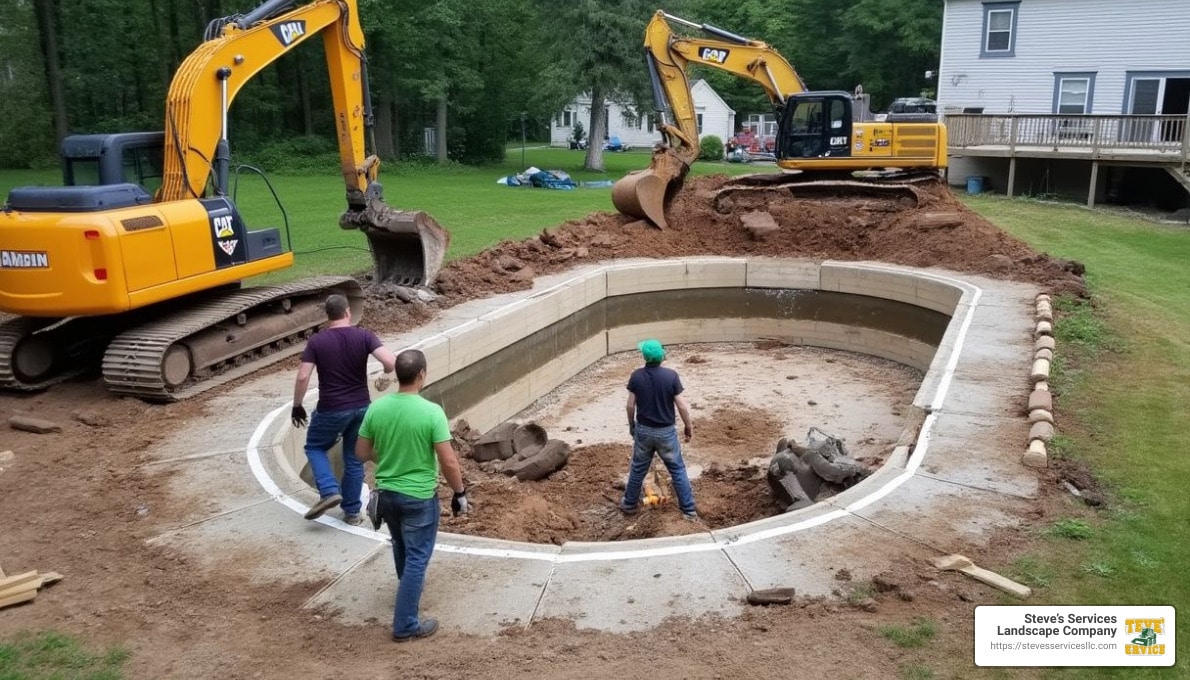
Process: Full pool demolition involves completely removing all pool materials, including concrete, fiberglass, or vinyl liner. Once the pool is demolished, the area is filled and compacted with soil or gravel to ensure stability.
Equipment Needed: This method requires heavy machinery like excavators and jackhammers to break up the pool structure. Dump trucks are also needed to haul away debris.
Cost Range: The cost for full pool demolition typically ranges from $5,000 to $17,000. Factors affecting the cost include pool size, location, and accessibility.
Benefits:
– Increased Property Value: Full removal can increase property value by providing more usable outdoor space.
– No Construction Restrictions: You can build on the land without worrying about underlying structures.
Drawbacks:
– Higher Costs: Full demolition is more expensive than partial removal.
– Time-Consuming: The process can take longer, often requiring several days to complete.
Partial Pool Demolition
Process: Partial pool demolition involves breaking holes in the pool’s bottom and removing the top layer of the pool structure. The remaining structure is then backfilled with soil or gravel.
Equipment Needed: This method requires less heavy machinery than full demolition, but still needs tools like jackhammers and backhoes.
Cost Range: Partial removal is more budget-friendly, with costs ranging from $4,000 to $8,000. It’s a quicker process, often completed in 1-5 days.
Benefits:
– Lower Costs: Partial demolition is less expensive and faster than full removal.
– Quicker Process: The project can be completed in a shorter time frame.
Drawbacks:
– Limited Future Use: You can’t build structures on the filled area due to potential sinking issues.
– Potential Decrease in Property Value: Some buyers may see partial removal as less desirable, affecting resale value.
Both methods have their place, depending on your budget and future plans for the space. Consider these factors carefully to choose the best option for your needs.
Next, we’ll discuss the Cost to Fill in a Pool After Demolition, exploring different materials and their costs.
Cost to Fill in a Pool After Demolition
Once you’ve decided on either full or partial pool demolition, the next step is filling the empty space. The cost to fill in a pool depends on the materials you choose and the amount needed. Let’s break down the options: gravel, dirt, and concrete.
Gravel
Gravel is a popular choice for pool fill due to its affordability. It costs between $6 to $10 per cubic yard. However, gravel doesn’t compact well, which may lead to sinkholes over time. It’s often used as a base layer with dirt on top to minimize costs and improve stability.
Dirt
Dirt, often mixed with a gravel base, is the most common fill material. It costs about $10 to $15 per cubic yard. Using dirt is generally recommended because it compacts better than gravel, reducing the risk of future settling. For a standard-sized pool, expect the cost to range from $600 to $7,200, depending on the pool’s volume.
Concrete
Using concrete as a fill material is rare due to its high cost. However, broken-up concrete from the pool demolition can be reused as part of the fill, which can help reduce expenses. Concrete is typically not used alone but can be mixed with dirt for added stability.
Average Cost by Type
The average cost to fill in a pool varies based on the type of fill material:
- Gravel: $600 to $8,000
- Dirt: $1,200 to $7,200
- Concrete: Typically not used due to high costs
The cost also depends on the size of your pool. For example, filling a 12×24-foot pool with dirt can cost between $900 to $2,600, while a larger 20×40-foot pool might range from $2,400 to $7,200.
When planning your pool fill, consider consulting with a licensed engineer to ensure proper drainage and compaction. This step can help prevent future issues like sinking or swelling, which might affect your property.
Next, we’ll address some Frequently Asked Questions about In-Ground Pool Removal Cost, including what to do with a pool you don’t want and how removal might affect your home’s value.
Frequently Asked Questions about In-Ground Pool Removal Cost
What to do with an inground pool you don’t want?
If you have an inground pool that’s no longer in use, you have several options to reclaim your backyard space. Here are a few ideas:
- Deck: Transform the area into a beautiful deck where you can relax and entertain guests. A deck can offer a seamless transition from your home to your outdoor space.
- Garden: Consider turning the pool area into a lush garden. It can be a vegetable garden or a flower garden, adding greenery and life to your backyard.
- Sunken Fire Pit: A sunken fire pit can be a cozy spot for family gatherings. It’s a unique feature that can make your backyard a favorite hangout place.
- Pond: If you love the idea of a water feature, consider converting the pool into a pond. This can add a serene and natural feel to your garden.
- Patio: A patio can provide a versatile outdoor living space for dining, lounging, or other activities. It’s a practical and stylish use of the area.
- Complete Removal: For those who prefer a clean slate, complete removal of the pool can open up the space entirely, allowing for new landscaping or construction projects.
Does removing an inground pool decrease home value?
Removing an inground pool can actually increase your property value in certain situations. Here’s why:
- Backyard Space: A pool can take up a significant portion of your backyard. Removing it can create more usable space, which many potential buyers find appealing.
- Pool Age: Older pools, especially those over 30 years old, may require significant maintenance or updates. Removing them can save future owners from these expenses.
- Neighborhood Trends: If pools are uncommon in your neighborhood, removing one might align your property with local preferences, potentially increasing its value.
However, if pools are a common feature in your area and yours is well-maintained, keeping it might be beneficial. It’s essential to consider local real estate trends and consult with a real estate professional for personalized advice.
Is it worth getting rid of the pool?
Deciding whether to remove your pool involves weighing several factors:
- Maintenance Costs: Pools can be expensive to maintain, with costs running several hundred dollars a month, not to mention repairs. Removing the pool can eliminate these ongoing expenses.
- Yearly Expenses: Beyond maintenance, there are additional costs like heating and water treatment. Removing the pool can significantly reduce your yearly household expenses.
- Yard Space: If you’re not using the pool, it might be worth considering removal to gain more yard space for other purposes, like gardening or outdoor activities.
The decision depends on your lifestyle, budget, and future plans for your property. Consider both the financial and personal benefits before making your choice.
Conclusion
In conclusion, deciding to remove an inground pool is a significant choice that involves careful consideration of various factors. It’s not just about the cost, although understanding the in ground pool removal cost is crucial. It’s also about envisioning what you want for your backyard and how this change aligns with your future plans.
Summary of Key Points:
- Cost Considerations: Pool removal costs can vary widely depending on factors like pool size, location, and method of removal. It’s essential to get multiple quotes and ask about potential cost-saving measures like recycling materials.
- Decision-Making Tips: Consider the future use of your backyard space, maintenance costs, and potential impact on property value. Evaluate if removing the pool aligns with your lifestyle and financial goals.
- Steve’s Services Landscape Company: At Steve’s Services, we specialize in providing expert guidance and personalized solutions for all your landscape needs, including pool removal. Our skilled team is committed to delivering exceptional customer service and ensuring your project is handled with precision and care.
If you’re ready to transform your backyard and explore the possibilities beyond your old pool, we invite you to learn more about our services. Let’s work together to create a space that meets your needs and improves your property’s value.
By understanding the costs and benefits of pool removal, you can make an informed decision that best suits your needs. Whether you choose to repurpose the space or enjoy the newfound openness, the choice is ultimately yours to make.