Lawn Removal Service: Top 5 Eco-Friendly Options 2025
Transform Your Yard with Professional Lawn Removal
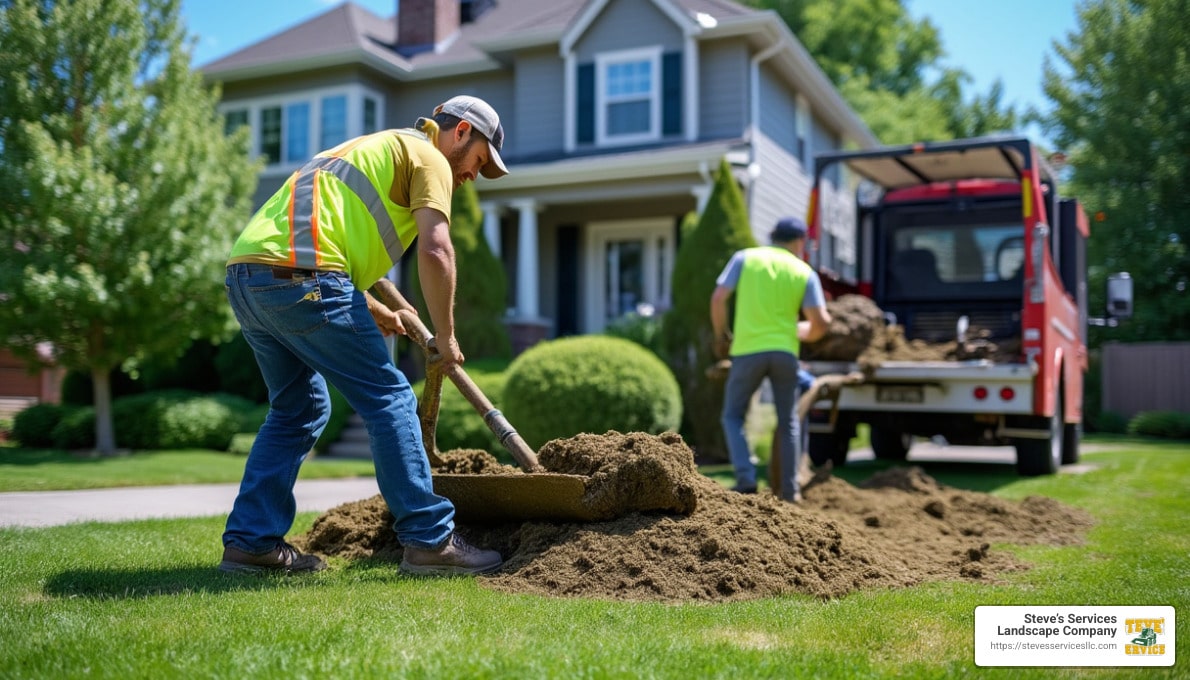
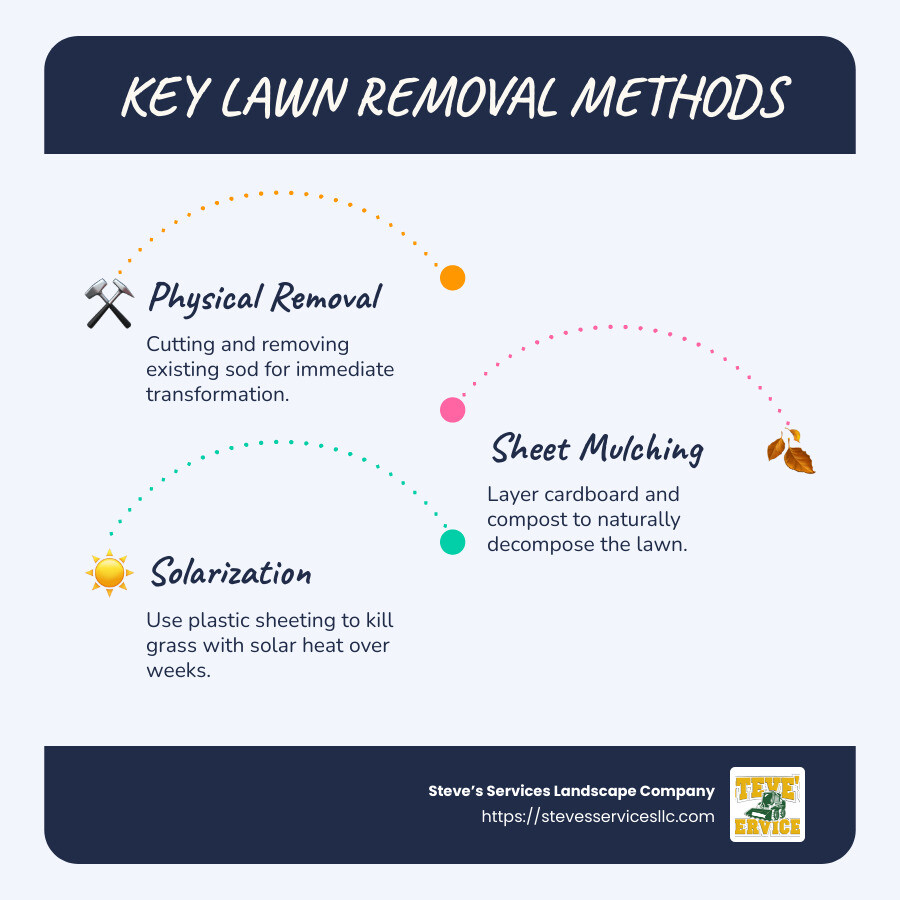
Lawn removal service costs between $0.50 to $2.00 per square foot on average, with total project costs typically ranging from $250 to $1,000 for a 500-square-foot area. Services include:
- Physical removal: Cutting and removing existing sod
- Sheet mulching: Layering cardboard and compost over existing lawn
- Solarization: Using plastic sheeting to kill grass with heat
- Disposal: Proper removal of old lawn materials
Are you considering changing your traditional grass lawn into something more sustainable and water-efficient? You’re not alone. Nearly half of residential water consumption goes toward outdoor landscaping, making lawn removal an increasingly popular choice for homeowners looking to reduce water bills, minimize maintenance, and create more environmentally friendly outdoor spaces.
Traditional lawns require significant resources to maintain—frequent watering, regular mowing, fertilizing, and weed control. By replacing your lawn with drought-resistant landscaping or other alternatives, you can dramatically reduce your water usage while creating a beautiful, low-maintenance yard that stands out in your neighborhood.
I’m Steve Sylva, owner of Steve’s Services Landscape Company with over 25 years of experience providing professional lawn removal service throughout Massachusetts, helping countless homeowners transform their thirsty lawns into beautiful, sustainable landscapes that save water and reduce maintenance.
Why Consider Lawn Removal Services?
The picture-perfect green lawn has been a cornerstone of American homes for generations. But as times change, so do our priorities. Across Massachusetts, homeowners are taking a fresh look at those thirsty grass lawns and asking: “Is there a better way?”
Water Conservation Benefits
Did you know that roughly half of all the water used in residential homes goes straight to outdoor landscaping? That’s an eye-opening statistic, especially during those hot Massachusetts summers when water restrictions become more common.
By replacing your traditional lawn with drought-resistant alternatives through lawn removal service, you can slash your outdoor water consumption by 50% or more. The numbers speak for themselves, but the real stories come from our clients.
One family in Winchester shared their experience: “After replacing our front lawn with native plants, our summer water bill dropped by nearly 40%. We were shocked at the difference, and honestly, our yard has never looked better. The variety of textures and colors beats a plain green lawn any day.”
Environmental Advantages
Water savings are just the beginning. When you choose to remove your traditional lawn, you’re making a positive impact on the environment in multiple ways:
Your new landscape will require fewer chemicals, reducing the fertilizers and pesticides that often find their way into local streams and ponds. You’ll run your lawnmower less frequently (or not at all), cutting down on carbon emissions. Native plants create habitats for local pollinators like bees and butterflies, supporting the ecosystem right in your backyard. And beneath the surface, alternative landscapes build healthier, more vibrant soil that better absorbs rainwater.
Financial Savings
Yes, lawn removal has an upfront cost, but the long-term math works strongly in your favor. After the initial investment, you’ll see savings year after year through reduced water bills, fewer lawn care products, and potentially eliminating the need for regular lawn service.
Many Massachusetts communities also offer rebate programs for homeowners who convert water-thirsty lawns to sustainable alternatives, making the financial picture even brighter.
As one client in Melrose told us: “We invested about $800 in our lawn removal project, but we’re saving around $300 every year on water and maintenance. It paid for itself faster than we expected, and we love how our yard stands out in the neighborhood now.”
Less Maintenance, More Enjoyment
Let’s be honest about traditional lawns – they’re demanding. The endless cycle of mowing, edging, fertilizing, and watering consumes precious weekends and evenings that could be spent actually enjoying your outdoor space.
Many of our clients report a surprising benefit after lawn removal: they’ve reclaimed their free time. Instead of pushing a mower every weekend, they’re hosting barbecues, reading in a hammock, or simply enjoying the diverse beauty of their new landscape.
Understanding the Lawn Removal Process
When you decide it’s time to say goodbye to your traditional lawn, knowing what to expect makes all the difference. At Steve’s Services, we’ve guided hundreds of Massachusetts homeowners through this change, and I’ve seen how a thoughtful approach leads to stunning results.
Assessing Your Lawn with Professional Lawn Removal Services
Before we touch a blade of grass, we take time to really get to know your yard. Think of this assessment as your landscape’s physical exam – it reveals important details that shape our approach.
We’ll examine your soil type and quality – whether you’ve got clay that holds water, sandy soil that drains quickly, or rich loam. This affects not just how we remove your lawn, but what will thrive in its place. During a recent project in Arlington, we finded heavily compacted clay soil that needed significant amendment before planting – catching this early saved the homeowner from future plant loss.
Your lawn size and shape naturally impacts the project scope and cost. Those charming curved edges that look so nice? They often require more detailed attention than square corners. And slopes present their own challenges – what looks like a simple removal can become more complex on hillsides.
We carefully note existing landscape features too. That mature maple tree, your irrigation system, and the stone path your kids follow to the backyard swing – all deserve protection during the removal process.
Understanding your yard’s drainage patterns helps prevent future problems. As one Malden client told me, “I had no idea my yard had a low spot until Steve pointed it out. Addressing that during our lawn removal prevented what would have been a muddy mess every spring.”
We also map your yard’s sun exposure and microclimates. That sunny spot by the fence might be perfect for drought-tolerant plants, while the shaded area near your house might need different treatment entirely.
Choosing the Right Lawn Removal Service Method
There’s no one-size-fits-all approach to lawn removal. Each method has its place, and we’ll help you choose what makes sense for your specific situation.
Sheet mulching is nature’s way of changing your lawn. We start by mowing your grass super short, then layer cardboard or newspaper to block sunlight. Next comes a generous layer of compost, followed by mulch on top. The grass and cardboard gradually break down, creating rich soil for your new plants.
This method is ideal if you’re not in a rush and want to improve your soil quality. It takes 3-6 months for complete decomposition, though we can often cut through the layers to plant earlier. Many of our environmentally-minded clients prefer this approach because it generates minimal waste and actually builds soil health rather than depleting it.
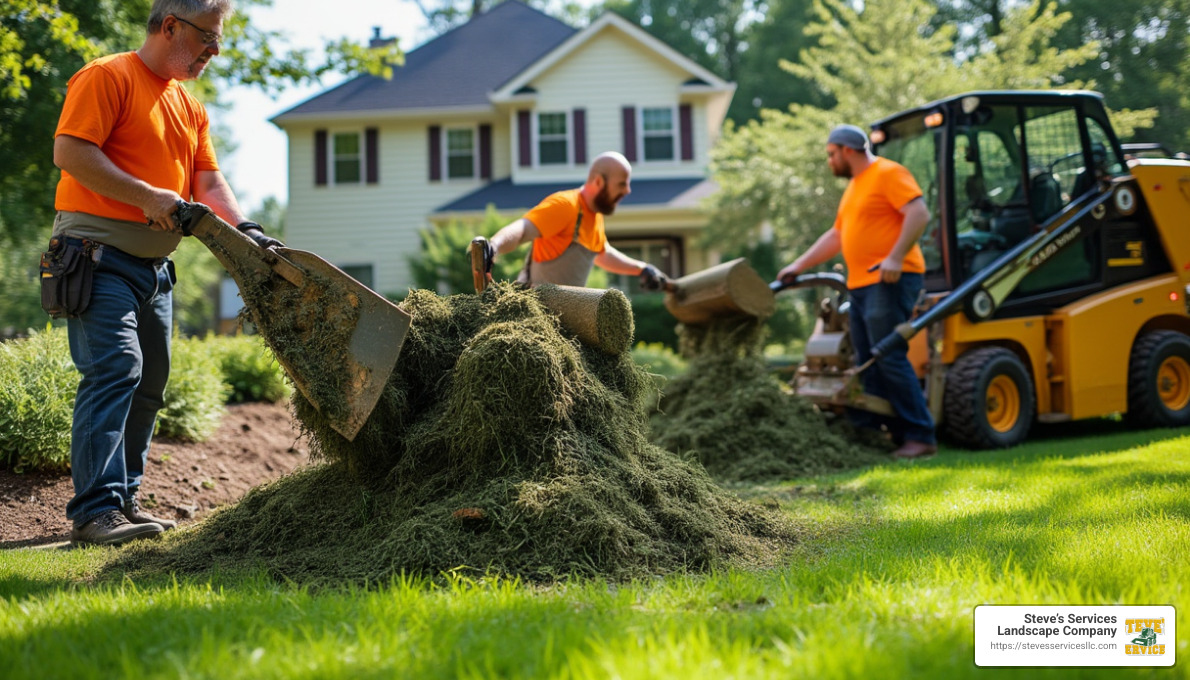
Physical removal offers immediate results when you’re ready for a clean slate. We use specialized equipment to slice beneath the grass roots, roll up the sod, and haul it away. This exposes fresh soil that’s ready for your new landscape design.
A Medford homeowner recently chose this method for her front yard change: “I wanted to be ready for spring planting, and physical removal gave me that fresh start. Within a week, my boring lawn was replaced with a colorful mix of native plants.”
Solarization harnesses the power of the sun to naturally kill grass and weeds. After mowing your lawn short and giving it a good soaking, we cover the area with clear plastic sheeting, sealing the edges tightly. The sun’s heat gets trapped underneath, effectively cooking the grass and many weed seeds.
This method works beautifully during our Massachusetts summers and is particularly effective for lawns with persistent weed problems. It does require patience – typically 4-8 weeks of sunny weather – but the results can be impressive without using chemicals.
Preparing Your Yard for Change
The success of your lawn change often hinges on proper preparation. Before we begin the actual removal, we take several important steps to ensure everything goes smoothly.
Safety comes first, so we always mark underground utilities by calling 811. This simple step prevents accidental damage to gas, electric, or water lines – a precaution that’s not just smart but required by law.
We carefully protect existing features you want to keep. That might mean flagging sprinkler heads, fencing off prized shrubs, or covering your stone walkway. Our goal is to change your lawn, not damage the landscape elements you love.
Most traditional lawns rely on sprinklers, but your new landscape will likely have different watering needs. We’ll help you address irrigation modifications, often converting conventional sprinklers to more efficient drip systems that deliver water directly to plants’ roots with minimal waste.
Proper drainage planning prevents future headaches. As one Wakefield client finded, “Redirecting water flow during our lawn removal project solved the puddle problem we’d had for years. Now rainwater actually benefits our plants instead of creating a soggy mess.”
We also thoughtfully consider access routes for both removing old materials and bringing in new ones. Using the right pathways prevents unnecessary damage to your property and keeps the project running efficiently.
Following recommendations from the UCCE Master Gardeners of Sacramento County, we encourage “hydrozoning” – grouping plants with similar water needs together in your new landscape. This smart practice ensures each plant gets just the right amount of water, preventing both waste and plant stress.
With careful assessment, the right removal method, and proper preparation, your lawn change sets the stage for a beautiful, sustainable landscape that will thrive for years to come.
Factors Influencing the Cost of Lawn Removal Services
When homeowners call us about lawn removal service, their first question is almost always about cost. And I get it! Before starting on any home improvement project, you want to know what you’re getting into financially. Let’s break down what influences these costs in a way that helps you plan your budget.
Understanding Lawn Removal Service Costs
I always tell my clients that lawn removal costs can vary quite a bit – like buying a car, there’s a range depending on what you need and want. Based on internet data (not Steve’s Services specific pricing), here’s the landscape of costs you might encounter:
The size of your lawn is naturally the biggest factor. A small 100 square foot area might cost between $50-$200, while a medium 500 square foot lawn typically runs $250-$1,000. Larger projects of 1,000 square feet could range from $500-$2,000. And if you’re talking about a full acre? That could range anywhere from $21,800 to $87,000.
The method you choose makes a significant difference too. Sheet mulching tends to be more affordable at roughly $0.50-$1.50 per square foot including materials. Physical removal with sod cutters usually costs more, running $0.75-$2.25 per square foot because of the labor and equipment involved. Solarization falls somewhere in between at approximately $0.40-$1.20 per square foot.
One of our Reading clients shared a perfect example: “We were surprised by how much the quotes varied. The sheet mulching option saved us nearly $400 compared to physical removal, and in the end, we got better soil quality too!”
Disposal costs are often overlooked in initial estimates. Getting rid of all that grass and soil can add $0.25-$0.75 per square foot to your project. Some clients are shocked when they learn that disposal can sometimes add up to 30% to the total project cost!
Site Complexity Matters
Your yard’s unique characteristics play a huge role in determining costs. I remember a job in Malden where we had to steer a narrow side yard with a single 36-inch gate. We had to use smaller equipment and make many more trips, which added about 20% to the labor costs.
Steep slopes require special handling techniques to prevent erosion and ensure worker safety. One hillside property in Winchester required additional erosion control measures that added about $300 to the project.
If your lawn has been heavily treated with chemicals or has persistent weed issues, we might recommend more intensive removal methods, which can influence the final price. As one Melrose homeowner finded: “Our lawn had been treated with weed killers for years. The team recommended a deeper soil removal that cost more upfront but saved us headaches with the new plantings.”
Additional Services to Consider
Most homeowners combine lawn removal with other improvements. Adding soil amendments typically costs $0.20-$0.60 per square foot but dramatically improves your new landscape’s success. New irrigation systems range from $1.50-$4.50 per square foot, and installing new plants can run $2.00-$6.00 per square foot depending on plant selections.
Labor rates for professional services typically range from $50-$150 per hour, and equipment rental adds $100-$300 per day to the project. Most companies, including ours, have minimum service fees ranging from $90-$270 for consultations and small projects.
Government Rebates Can Help
Here’s some good news! Many Massachusetts communities offer rebates for lawn removal projects that conserve water. While not as extensive as the California Turf Removal and Replacement Rebate Program, local programs can significantly offset your costs.
These rebates typically range from $1-$3 per square foot of lawn removed. Most require pre-approval before work begins and have specific replacement requirements focusing on water-efficient landscaping options.
I still remember the excitement of a Wakefield family who received a $1,200 rebate after completing their front yard change. “The paperwork seemed daunting at first,” they told me, “but Steve’s team helped us through every step. The rebate covered almost half our project cost!”
When you’re getting quotes, be sure to ask about potential rebates in your area. A good lawn removal service provider will know what’s available locally and can help you steer the application process.
While the upfront costs of lawn removal might seem significant, the long-term savings on water, maintenance, and time often make it a wise investment for your home and the environment.
Sustainable Alternatives to Traditional Lawns
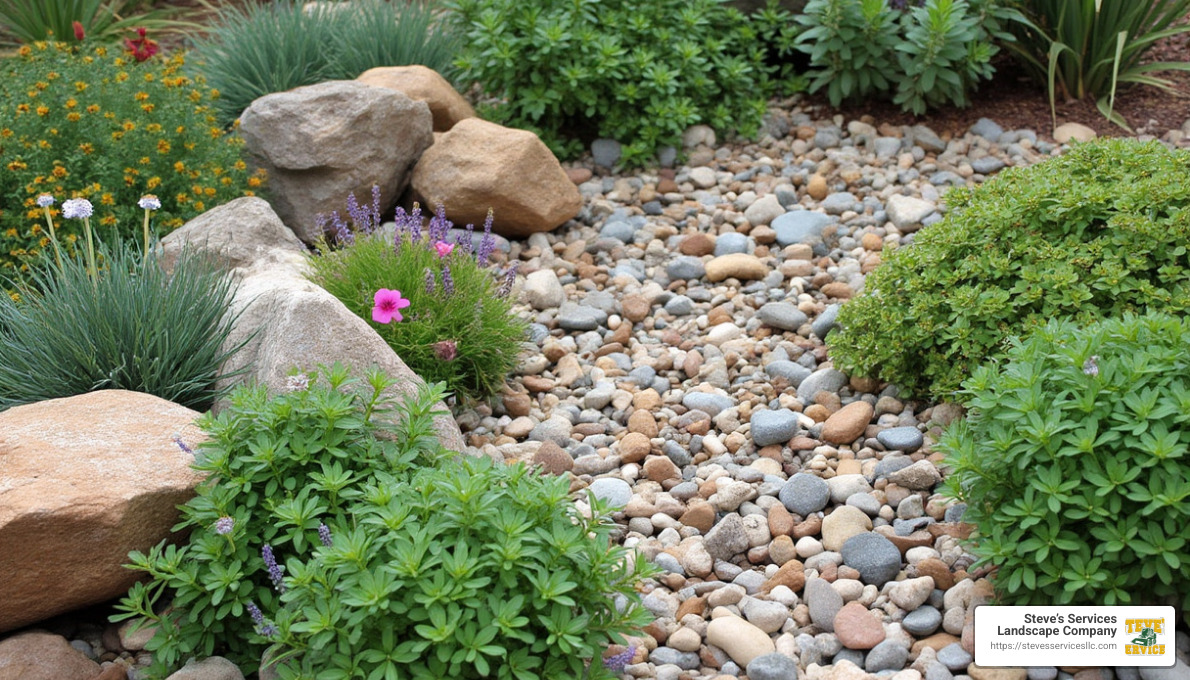
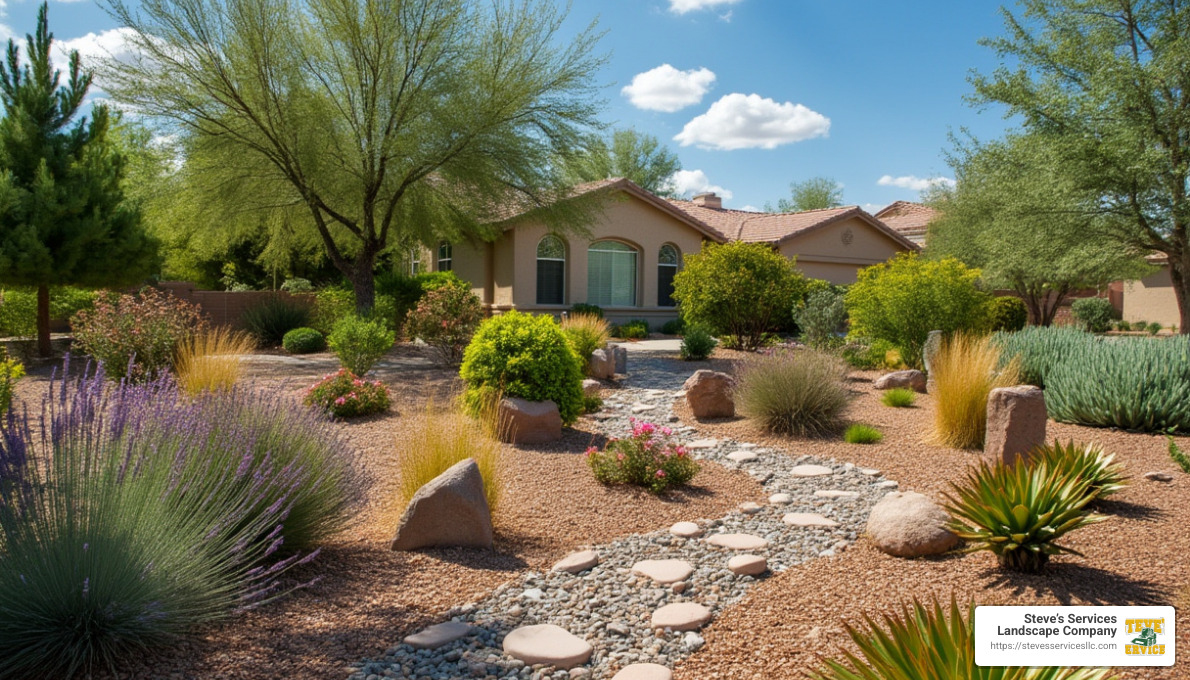
The most exciting part of your landscape change comes after the lawn removal service is complete. Now you get to reimagine your outdoor space with beautiful, sustainable alternatives that match your personal style while being kinder to the environment.
Native Plant Gardens
There’s something special about plants that naturally belong in Massachusetts. They’ve spent thousands of years adapting perfectly to our local conditions, which means they know how to handle our weather without constant babysitting.
Native plants establish deep root systems that require minimal watering once they’re settled in. They’ve evolved alongside local wildlife, creating natural habitats for butterflies, bees, and birds that chemical-dependent lawns simply can’t provide.
“My native garden brings me joy every morning,” shares one of our Medford clients. “I wake up to goldfinches visiting my coneflowers and hummingbirds darting around my cardinal flower. My old lawn never gave me that kind of daily wonder.”
Massachusetts favorites like Black-eyed Susan bring cheerful yellow blooms, while New England Aster provides stunning purple fall color. Ornamental grasses like Little Bluestem and Switchgrass add movement and winter interest when most gardens have gone dormant.
Xeriscaping
Don’t let the fancy name intimidate you—xeriscaping simply means creating a landscape that thrives with minimal water. This approach makes perfect sense in a world where water conservation matters more every year.
The beauty of xeriscaping lies in its thoughtful design. Strategic plant placement, efficient irrigation methods, and proper mulching create a garden that stays gorgeous without constant watering. Many of our clients incorporate decorative stones and hardscaping elements that require zero water while adding year-round structure.
A Burlington homeowner told us, “Our xeriscaped front yard has become a neighborhood conversation piece. People stop to ask about the plants and are surprised when we tell them we water only once a month in summer.” That’s the kind of change that makes neighbors take notice!
Groundcover Alternatives
If you still want that carpet of green without the water demands, groundcovers offer the perfect middle ground. These low-growing plants create a living mix that suppresses weeds while staying lush with minimal care.
Clover remains green even during dry spells and actually improves your soil by fixing nitrogen—nature’s own fertilizer factory! Creeping thyme releases a wonderful fragrance when you walk on it and handles light foot traffic like a champ. For shady spots, various moss varieties create a woodland feel, while sun-loving sedum offers drought-resistant succulence with seasonal flower displays.
One Winchester client shared, “My kids actually prefer playing on our clover lawn. It’s softer than grass was, stays green all summer without watering, and they love finding the occasional four-leaf clover—something our old turf never provided!”
Decorative Hardscaping
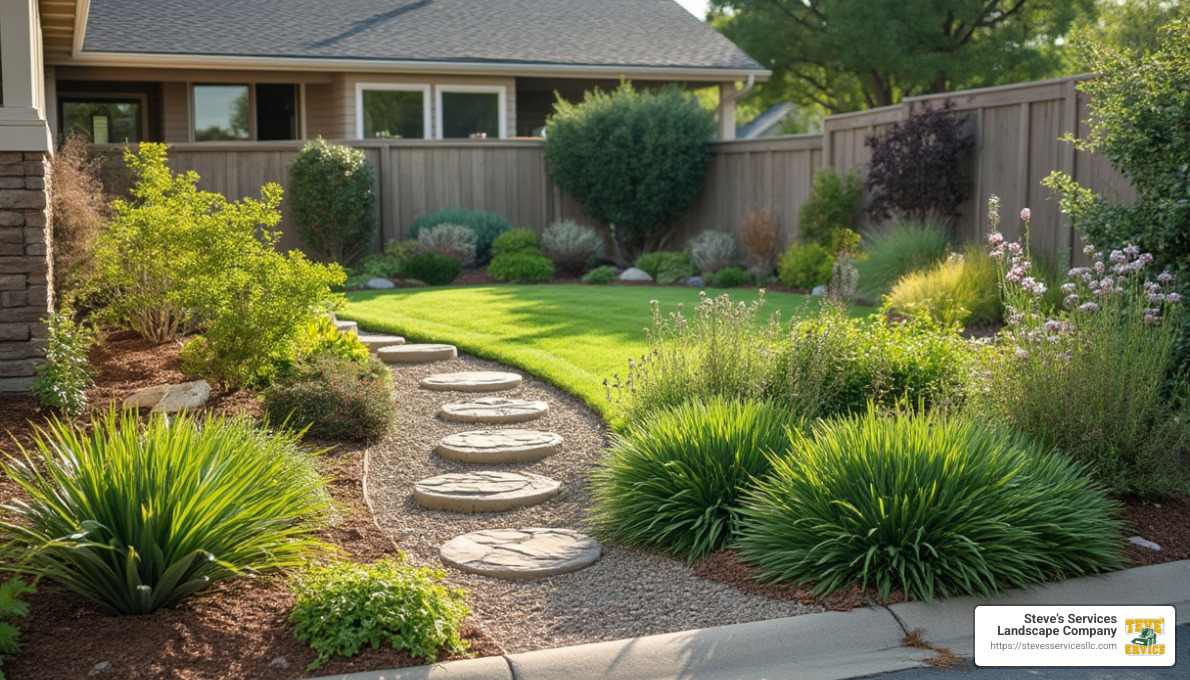
Incorporating non-plant elements can dramatically reduce your landscape’s water needs while adding structure and visual interest. Permeable pathways made of gravel or spaced pavers allow rainwater to soak into the ground rather than running off, helping recharge groundwater supplies.
Decorative gravel and river rock create maintenance-free areas that look fantastic year-round, while stepping stones guide visitors through planted areas without compacting soil. Many of our clients incorporate dry creek beds that not only look beautiful but also manage rainwater runoff during storms.
“The stone pathway and dry creek bed we installed has eliminated the muddy spots in our yard,” a Malden homeowner told us. “It looks intentional and artistic, not like we’re trying to solve a drainage problem—though it certainly does that too!”
Edible Landscapes
Why not make your yard productive while it’s being beautiful? Many Massachusetts homeowners are finding the joy of growing their own food in spaces formerly devoted to resource-hungry grass.
Raised vegetable beds can be architectural features in their own right, while herb gardens offer fragrances no ornamental garden can match. Berry bushes like blueberry and raspberry provide seasonal treats, and dwarf fruit trees bring spring blossoms followed by fall harvests.
“Converting part of our lawn to an edible garden has been rewarding beyond just saving water,” a Reading client explained. “We’re teaching our kids about growing food, and nothing beats the taste of vegetables you’ve grown yourself.”
The California Native Plant Society offers excellent resources on native plant gardening with principles that apply beautifully to Massachusetts conditions. Their guidance on water conservation and supporting biodiversity can help you create a truly sustainable landscape that thrives in our New England climate.
Choosing the Right Lawn Removal Service
Finding the perfect professional to transform your lawn isn’t just about getting the lowest price—it’s about finding a partner who understands your vision and can execute it flawlessly. After helping hundreds of Massachusetts homeowners transform their yards, I’ve learned that the right relationship makes all the difference.
Questions to Ask Potential Service Providers
When you’re interviewing lawn removal service companies, think of it as a job interview—because it is! You’re hiring someone to transform a significant part of your property, and you deserve complete confidence in their abilities.
Start by asking about their experience with projects similar to yours. At Steve’s Services, we love sharing before-and-after photos of our previous changes. A company that’s proud of their work will be eager to show it off.
“How many lawn removal projects have you completed in my area?” is another powerful question. Local experience matters because soil conditions, regulations, and rebate programs can vary even between neighboring towns.
Don’t forget to verify licensing and insurance! This isn’t just a formality—it protects you from liability if something goes wrong. A reputable company will readily provide proof of both general liability insurance and workers’ compensation coverage.
One Melrose homeowner told me, “What sealed the deal was when Steve explained exactly how they would protect my prized hydrangeas during the removal process. Other companies just gave vague assurances, but he had a specific plan.”
Timeline questions are crucial too. Ask not just when the project will start, but how long each phase will take. Will there be days when your property is inaccessible? How will weather delays be handled? Clear communication about these details prevents frustration later.
Red Flags to Watch For
In my 25+ years in the landscape business, I’ve heard too many stories about projects gone wrong. Watch out for these warning signs when choosing your lawn removal service provider:
The disappearing act—contractors who are hard to reach before you’ve signed a contract will be impossible to find when problems arise. If they take days to return your initial inquiry, that’s telling.
Beware of quotes that seem too good to be true. When a company offers to remove your lawn for half what others are charging, they’re likely cutting corners somewhere—maybe by improperly disposing of materials or using inexperienced workers.
“If it’s Outside, It’s Our Business.” This motto guides everything we do at Steve’s Services. It means we take responsibility for every aspect of your outdoor space during a project—not just the specific area we’re working on.
A vague contract is another major red flag. Your agreement should spell out exactly what will be done, when, and for how much. It should address contingencies and clearly state what happens if unexpected issues arise.
One Arlington client shared this wisdom: “I almost went with a company that was $200 cheaper, but their contract had so many loopholes that I realized they could have hit me with hundreds in extra charges once the work started.”
The Importance of a Detailed Contract
Think of your contract as a roadmap for your project. A good one protects both you and the service provider by clearly documenting expectations.
At minimum, your contract should include:
A detailed scope of work that specifies the removal method, area dimensions, and depth of removal. Will they be removing just the grass or also addressing the root zone? Will they be amending the soil afterward?
Clear pricing that breaks down labor, materials, equipment, and disposal costs. If there are potential variable costs, the contract should explain what might trigger them and provide estimates.
A realistic timeline with start and completion dates, plus any factors that might cause delays.
Protection measures for existing features like irrigation systems, trees, hardscaping, and garden beds.
Disposal methods that comply with local regulations. Responsible disposal matters—both environmentally and legally.
A Winchester homeowner once told me, “What I appreciated most was that Steve walked through the entire contract with me, explaining each section in plain English instead of legal jargon. I never felt pressured or rushed.”
The right lawn removal service isn’t just removing something unwanted—they’re helping you create the foundation for your dream landscape. Choose a partner who shares your vision and has the skills to make it reality.
Maintaining Your New Sustainable Landscape
After changing your yard with professional lawn removal service, the real journey begins. Your beautiful new sustainable landscape needs proper care to thrive while using minimal resources. Think of this first year as the foundation for decades of enjoyment to come.
Establishment Period
That first year after installation is absolutely critical for long-term success. Even the toughest drought-tolerant plants need some TLC while they’re getting established.
During the first month, plan to water deeply 2-3 times per week. Your new plants are developing their root systems and need consistent moisture. In months 2-3, you can dial back to 1-2 waterings weekly. By months 4-12, you’ll gradually extend the time between waterings as your plants become more self-sufficient.
Weed management is another crucial task during this period. That fresh soil is prime real estate for opportunistic weeds that will compete with your new plants for water and nutrients. A good layer of mulch works wonders for suppressing these unwanted visitors. When weeds do appear, hand-pull them promptly before they can set seed and spread. Try to avoid disturbing the soil around your new plantings when removing weeds.
“I was amazed at how quickly my native garden established itself,” shares one of our Danvers clients. “Following Steve’s maintenance schedule made all the difference. Even during last summer’s heat wave, my plants stayed healthy while my neighbor’s traditional lawn turned brown.”
Gentle pruning during this establishment phase helps plants develop strong structures. Remove any damaged or crossing branches, and pinch back certain perennials to encourage bushier growth. However, it’s best to wait until plants are well-established before doing any heavy pruning.
Seasonal Maintenance for Long-Term Success
Spring
Spring is when your sustainable landscape wakes up and shows its potential. Start by cutting back any dead foliage from the previous season. This is also the perfect time to apply a fresh layer of mulch (1-2 inches) to suppress weeds and retain moisture. If you notice any perennials becoming overcrowded, spring is ideal for dividing them. Don’t forget to check and adjust your irrigation systems before the heat arrives.
Summer
Summer requires vigilance. Monitor for signs of water stress such as wilting or discoloration, especially during heat waves. Removing spent flowers (deadheading) encourages continued blooming in many species. Check your mulch levels regularly and replenish as needed – those summer storms can wash away protective layers. Summer weeds grow quickly, so manage them promptly before they can take hold.
Fall
Fall might be my favorite season for sustainable landscapes in Massachusetts. The cooler temperatures and typically reliable rainfall make it the ideal planting time for new native perennials and shrubs. You can reduce watering as temperatures cool, letting nature take over more of the work. Consider leaving some seed heads on plants for winter interest and to provide food for birds. Fall is also when you’ll want to clean and store any irrigation equipment if needed.
Winter
Winter is the season of rest for your landscape, but there are still considerations. Avoid heavy foot traffic on dormant areas, which can compact soil and damage crowns of sleeping perennials. Use this quieter time to plan for spring improvements. And most importantly, take time to enjoy the structural elements and winter interest of your sustainable landscape – the seed heads with snow caps, ornamental grasses swaying in winter winds, and evergreen groundcovers providing color in the coldest months.
Water-Efficient Irrigation Strategies
One of the main reasons you removed your lawn was likely to conserve water, so make sure your irrigation strategy supports this goal.
Drip irrigation delivers water directly to plant roots with minimal waste. It’s a game-changer for sustainable landscapes, reducing water use by up to 70% compared to traditional sprinklers. Smart controllers take efficiency even further by adjusting watering based on actual weather conditions.
Timing matters too. Water early in the morning to reduce evaporation losses. And remember that deep, infrequent watering encourages plants to develop deeper root systems, making them more drought-resistant over time.
“The drip irrigation system we installed uses about 70% less water than our old sprinklers did,” a Medford homeowner told us, “and our plants are actually healthier because the water goes right to the roots.”
Sustainable Maintenance Practices
Maintaining your new landscape sustainably goes beyond water conservation. When possible, use hand tools rather than gas-powered equipment. This reduces emissions and provides a peaceful gardening experience.
Consider leaving leaf litter in planted areas to serve as natural mulch and habitat for beneficial insects. Instead of chemical fertilizers, use compost and organic amendments to nourish your soil. And perhaps most importantly, learn to accept some imperfection – a few insects or minor plant damage is part of a healthy ecosystem.
A Reading client summed it up perfectly: “My sustainable garden isn’t perfect, and that’s what makes it perfect. It changes with the seasons, attracts wildlife I never saw before, and connects me to nature in a way my old lawn never did. Plus, I spend my weekends enjoying it now instead of mowing it!”
Frequently Asked Questions about Lawn Removal Services
How much does lawn removal service cost?
When budgeting for your lawn change project, cost is naturally a top concern. Based on internet data (not specific to Steve’s Services pricing), lawn removal service typically costs between $0.50 and $2.00 per square foot. For perspective, this translates to roughly:
- $50-$200 for a small 100 sq ft area
- $250-$1,000 for a medium 500 sq ft area
- $500-$2,000 for a larger 1,000 sq ft area
I’ve seen prices vary dramatically depending on your specific situation. One of our Wakefield clients initially received quotes ranging from $400 to $1,500 for the same project! Why such variation? Each property presents unique challenges, and different companies calculate their costs differently.
For the most accurate assessment of what your project might cost, I always recommend scheduling an on-site evaluation. This allows us to see exactly what we’re working with and provide a fair, transparent quote without surprises.
What factors influence the cost of lawn removal?
When we provide quotes for lawn removal service, several key elements affect the final price:
Size and configuration of your lawn plays a major role – not just square footage, but also shape. Those irregular curves or oddly-shaped sections require more careful work than simple rectangles.
Your chosen removal method significantly impacts cost. Physical removal with sod cutters typically costs more upfront than sheet mulching but gives you that immediate blank canvas many homeowners prefer.
Site conditions can quickly adjust pricing upward. A client in Revere had a beautiful sloped yard that required specialized equipment and safety measures, adding about 30% to the typical cost. Similarly, rocky soil, extensive tree roots, or limited access points for equipment all require additional labor.
Local disposal regulations vary considerably across Massachusetts communities. Some towns have strict (and sometimes costly) requirements for yard waste disposal, while others offer more economical options.
Soil quality matters tremendously for what comes next. If your soil needs significant amendments to support your new landscape, this becomes part of the overall project cost.
Seasonal timing can affect pricing too. During peak spring and fall seasons, demand for services increases, sometimes affecting availability and rates.
How do I choose the right lawn removal service?
Finding the perfect partner for your lawn change shouldn’t feel overwhelming. In my 25+ years helping Massachusetts homeowners, I’ve noticed the most successful projects happen when you select a service provider who:
Has proven experience with lawn removal specifically. Don’t hesitate to ask for before-and-after photos or to drive by previous projects. A company confident in their work will happily share examples.
Carries proper licensing and insurance. This isn’t just bureaucratic paperwork—it protects you from liability if something goes wrong during your project. Always verify coverage before work begins.
Offers comprehensive services from removal through installation. The transition between these phases is critical, and having one team handle both ensures continuity and accountability.
Understands sustainable practices and can explain them clearly. Your provider should comfortably discuss water conservation principles and help you make informed choices about your new landscape.
Communicates transparently about their process, timeline, and potential challenges. Clear communication from the start typically indicates how the entire project will proceed.
Provides references from past clients with similar projects. A quick conversation with previous customers can reveal insights no website or brochure will tell you.
Offers a detailed written contract that clearly outlines all aspects of the work. Verbal agreements leave too much room for misunderstanding.
One of our Arlington clients shared: “What ultimately sold me was how patiently Steve answered all my questions—even the ones I thought might be silly. That told me everything about how they’d handle my project.”
How long does lawn removal take?
Timing expectations should align with your chosen removal method and lawn size:
With physical removal, we typically complete an average residential lawn in just 1-2 days. This method is perfect when you’re eager to start your new landscape immediately.
Sheet mulching installation takes a similar 1-2 days, but then nature needs time to work. The cardboard and organic materials require 3-6 months to fully break down and create that rich planting medium. However, you can often plant directly through the layers earlier if you’re eager to get started.
Solarization offers a middle ground—installation takes just a day, but then the sun needs 4-8 weeks to effectively kill the grass and weeds. This method works beautifully during our hot Massachusetts summers but takes longer in spring or fall.
I remember a family in Woburn who needed their front yard transformed quickly before hosting a wedding. We used physical removal and completed the entire project—including new native plantings—in just three days. The wedding photos turned out beautifully with their new sustainable landscape as the backdrop!
Will removing my lawn affect my property value?
In most cases, replacing a traditional lawn with a thoughtfully designed sustainable landscape actually increases property value. Real estate agents increasingly report that attractive, low-maintenance yards have become strong selling points.
Water-efficient designs particularly appeal to environmentally conscious buyers and those looking to minimize ongoing maintenance costs. One realtor I work with in Melrose estimates that well-executed sustainable landscapes can add 5-10% to property values in their market.
That said, balance matters. While extremely unconventional designs might perfectly suit your personal taste, keeping some familiar elements can help maintain broad buyer appeal. The sweet spot is creating something distinctive and sustainable while respecting some neighborhood aesthetic norms.
Can I remove my lawn myself?
While DIY lawn removal is certainly possible, professional lawn removal service offers several advantages worth considering:
Professional-grade equipment makes a tremendous difference in efficiency. The sod cutters we use can accomplish in hours what might take days with consumer-grade tools.
Disposal solutions can be particularly challenging for homeowners. Many are surprised by the sheer volume of material generated and the regulations around disposal. We have established relationships with proper disposal facilities and know the most cost-effective, environmentally responsible options.
Soil preparation knowledge proves invaluable for long-term success. Our team can identify underlying issues that might affect your new landscape and address them before they become problems.
Experience navigating challenges pays dividends when unexpected situations arise—from finding old buried landscape fabric to dealing with drainage issues revealed once the lawn is removed.
Time efficiency is perhaps the biggest advantage. What might take a homeowner several weekends of hard labor, we can often complete in a single day, allowing you to enjoy your new landscape sooner.
If you’re still considering the DIY route, be realistic about the physical demands. Lawn removal is surprisingly strenuous work, especially for larger areas. Several customers have told me they started as DIY projects only to call us midway when they realized the scope of the effort involved!
Conclusion
Saying goodbye to your traditional lawn and embracing a sustainable, water-efficient landscape isn’t just an environmental choice—it’s a lifestyle upgrade that pays dividends in multiple ways. When you make this change, you’re not only conserving precious water resources but also creating an outdoor space that truly reflects your personal style and values.
Throughout Massachusetts, homeowners are finding the joy of stepping outside to landscapes that demand less of their time and money while giving back more beauty and ecological benefits. The reduced maintenance alone—no more weekend mowing marathons or constant battle with weeds—gives you back hours of your life to actually enjoy your outdoor space rather than constantly maintaining it.
At Steve’s Services Landscape Company, we’ve walked alongside hundreds of Massachusetts homeowners through this transformative journey. Our clients consistently tell us how their new sustainable landscapes have become neighborhood conversation pieces and sources of personal pride. We’ve seen how these landscape changes bring people closer to nature, with many homeowners reporting increased bird and butterfly activity in their yards after switching to native plantings.
Lawn removal service is just the beginning of this exciting change. The real magic happens in the months and years that follow, as your new landscape matures and evolves into a dynamic, living system that works with nature rather than against it.
Whether you’re motivated by drought concerns, environmental consciousness, or simply the desire to stand out from the sea of conventional grass lawns in your neighborhood, we’re here to help make your vision a reality. Our experienced team handles every step with care and precision—from the initial assessment through professional removal and installation of beautiful alternatives.
With over 25 years of experience changing outdoor spaces across Massachusetts, we understand the unique challenges and opportunities of our local climate and soil conditions. Our service areas include Burlington, Danvers, Everett, Lynnfield, Medford, Melrose, North Reading, Reading, Revere, Saugus, Stoneham, Winchester, Woburn, Malden, and Wakefield.
Ready to reimagine your outdoor space? Let’s start the conversation today. For more information about our comprehensive landscape services, including landscape cleanup, visit our website or give us a call. Your dream landscape is closer than you think—and we’d be honored to help bring it to life.
As we like to say at Steve’s Services: “If it’s Outside, It’s Our Business.” Your new sustainable landscape trip is waiting—let’s begin.