Repair irrigation tubing: 3 Easy Expert Steps
Why Repair Irrigation Tubing Matters for Your Property
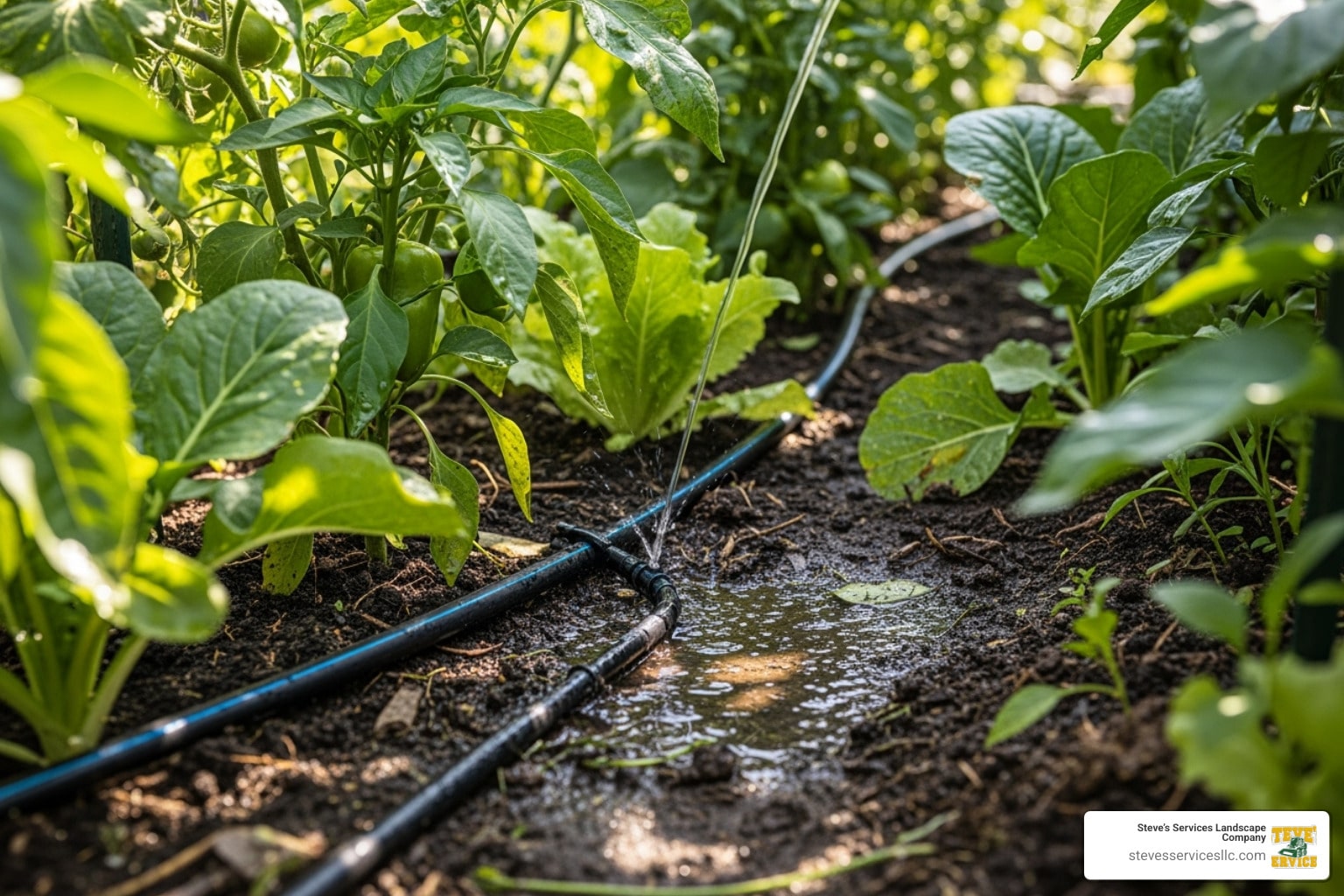
When you need to repair irrigation tubing, quick action can save your landscape and your wallet. A damaged line can lead to water waste, dying plants, and even property damage.
Professionals have a range of techniques to address different types of damage. For small holes, specialized plugs or tapes might be used. For larger breaks or crushed sections, the damaged portion is typically cut out and a new piece is spliced in using high-quality couplers. The key is matching the repair method to the specific problem to ensure a durable, leak-free fix. After any repair, it’s also crucial to flush the system to remove any debris that could clog emitters.
Irrigation systems are the backbone of healthy landscapes, but they’re not bulletproof. As one expert notes, “Drip irrigation tubing is tough stuff and can withstand a lot of abuse (e.g., being walked on, being left in the cold or heat), but it isn’t bulletproof.”
Common causes of tubing damage include:
- Lawn equipment accidents
- Shovels and garden tools
- Animal bites and chewing
- Frost damage from improper winterization
- Tree roots and general wear
The good news? Most tubing damage can be reliably fixed when you bring in a professional with the right techniques. Whether you’re dealing with a small puncture or a crushed section, an expert approach can restore your system quickly.
I’m Steve Sylva, and over my 25+ years running Steve’s Services in Massachusetts, I’ve helped countless property owners repair irrigation tubing and maintain healthy landscapes. From small residential fixes to complex commercial systems, I’ve seen every type of tubing problem you can imagine.
Identifying the Problem: Common Causes and Telltale Signs of Damaged Tubing

Over my years in the landscape business, I’ve learned that irrigation problems rarely announce themselves politely. One day your lawn looks perfect, and the next you’re wondering why there’s a swamp forming near your roses while the other side of your yard looks like the Sahara.
The truth is, even the toughest irrigation tubing can take a beating from everyday life. Lawn equipment is probably the biggest troublemaker I see. That weekly mowing session can turn dangerous when your mower blade catches a line, and don’t get me started on what happens when someone gets enthusiastic with a shovel during spring planting. I’ve seen plenty of “oops” moments that turned into emergency repair calls.
Mother Nature throws her own curveballs too. Animal bites are more common than you’d think – rabbits, squirrels, and even curious dogs can chew through tubing like it’s their personal chew toy. Frost heave during harsh New England winters can push pipes right out of the ground, and tree roots have a sneaky way of slowly crushing lines as they grow.
Sometimes the problem goes back to the beginning. Improper installation can create weak spots that fail months or even years later. It’s like a ticking time bomb in your yard.
So how do you know when you need to repair irrigation tubing? Your landscape will usually tell you, but you need to know what to look for.
Dry lawn patches are often the first red flag. When part of your lawn starts looking crispy while the rest stays green, there’s likely a break cutting off water to that area. Low water pressure across your system or malfunctioning sprinkler heads that won’t pop up properly can signal a major leak somewhere in the line.
Your wallet might notice before your eyes do. Unusually high water bills often mean water is escaping somewhere it shouldn’t be. I’ve had customers find leaks after their monthly bill doubled for no apparent reason.
The most obvious signs are wet spots and puddles where they shouldn’t be. That muddy patch that never dries out? That’s probably not a natural spring – it’s more likely a broken irrigation line creating its own little ecosystem.
Early detection makes all the difference. The sooner you spot these warning signs, the easier and cheaper the fix will be. For a deeper dive into diagnosing system problems, check out our comprehensive guide on Irrigation System Troubleshooting: Common Issues and Solutions for a Healthy Lawn.
The Professional’s Toolkit: Essential Tools and Materials for Repair
A professional repair is only as good as the tools and materials used. Having a well-stocked kit is about more than convenience—it’s about ensuring every fix is durable and reliable.
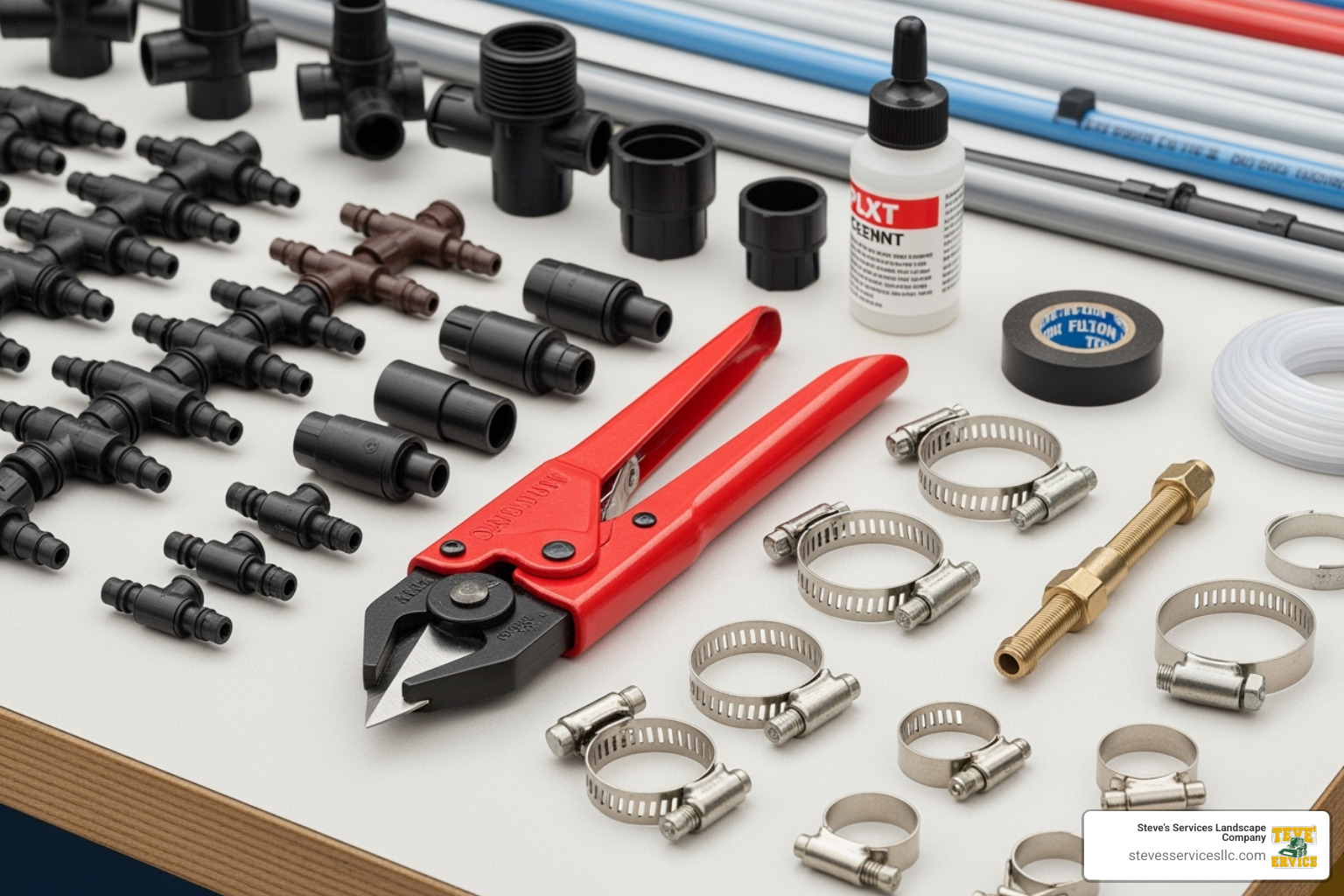
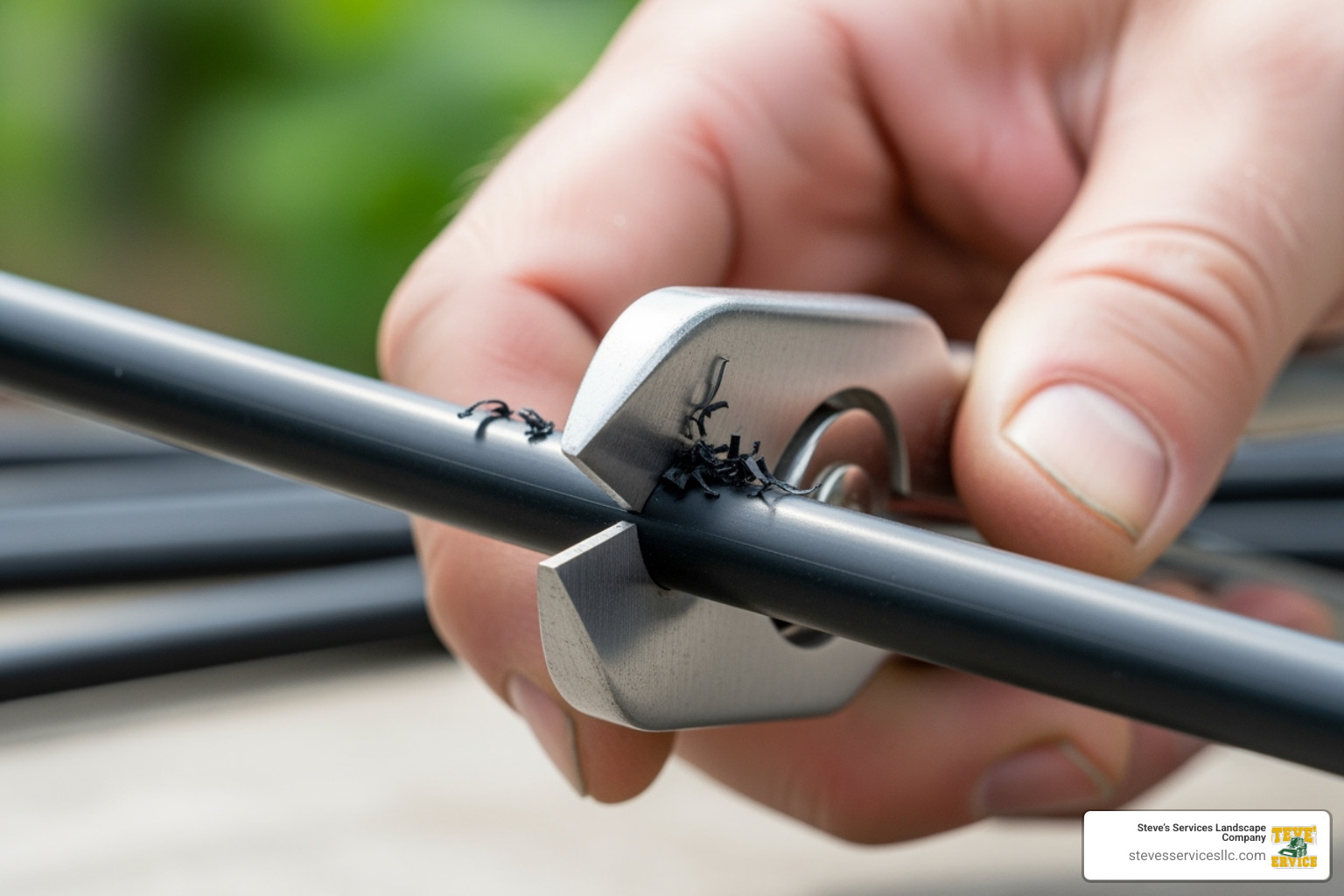
To properly repair irrigation tubing, success starts with a clean, precise cut. Professionals rely on a dedicated tubing cutter, not utility knives or scissors. Why? Because only a specialized cutter can create the perfectly square edge needed for a leak-proof seal. It’s a small detail that prevents major headaches down the line. For buried lines, careful excavation with a shovel is just as important to avoid causing more damage.
The materials themselves are critical. A professional will carry a variety of replacement tubing to perfectly match the diameter and type of your existing system, often durable polyethylene tubing. The real expertise comes in selecting the right fittings. Couplers and clamps must be high-quality to withstand constant pressure and temperature changes. There are three main types a pro will choose from, depending on the situation:
| Fitting Type | Best For | Key Benefits |
|---|---|---|
| Compression | Permanent repairs | Full flow, can’t be removed, no interior restriction |
| Barbed | Micro-tubing, secure connections | Strong grip, works with clamps for larger sizes |
| Lock Fittings | Removable repairs | Easy install/removal, slight flow reduction |
A pro’s kit also includes items for specific situations, like goof plugs to seal small, clean holes from removed emitters, and high-adhesion repair tape for minor surface nicks.
One often-overlooked detail is replacing replacement washers in threaded connections. These small rubber seals are a common failure point, and a professional service includes checking and replacing them to prevent future leaks.
When you’re dealing with more complex repairs or want professional-grade results, consider our Sprinkler System Repair services. Sometimes having the right tools is just the beginning—experience knowing how to use them makes all the difference.
The Anatomy of a Professional Repair for Irrigation Tubing
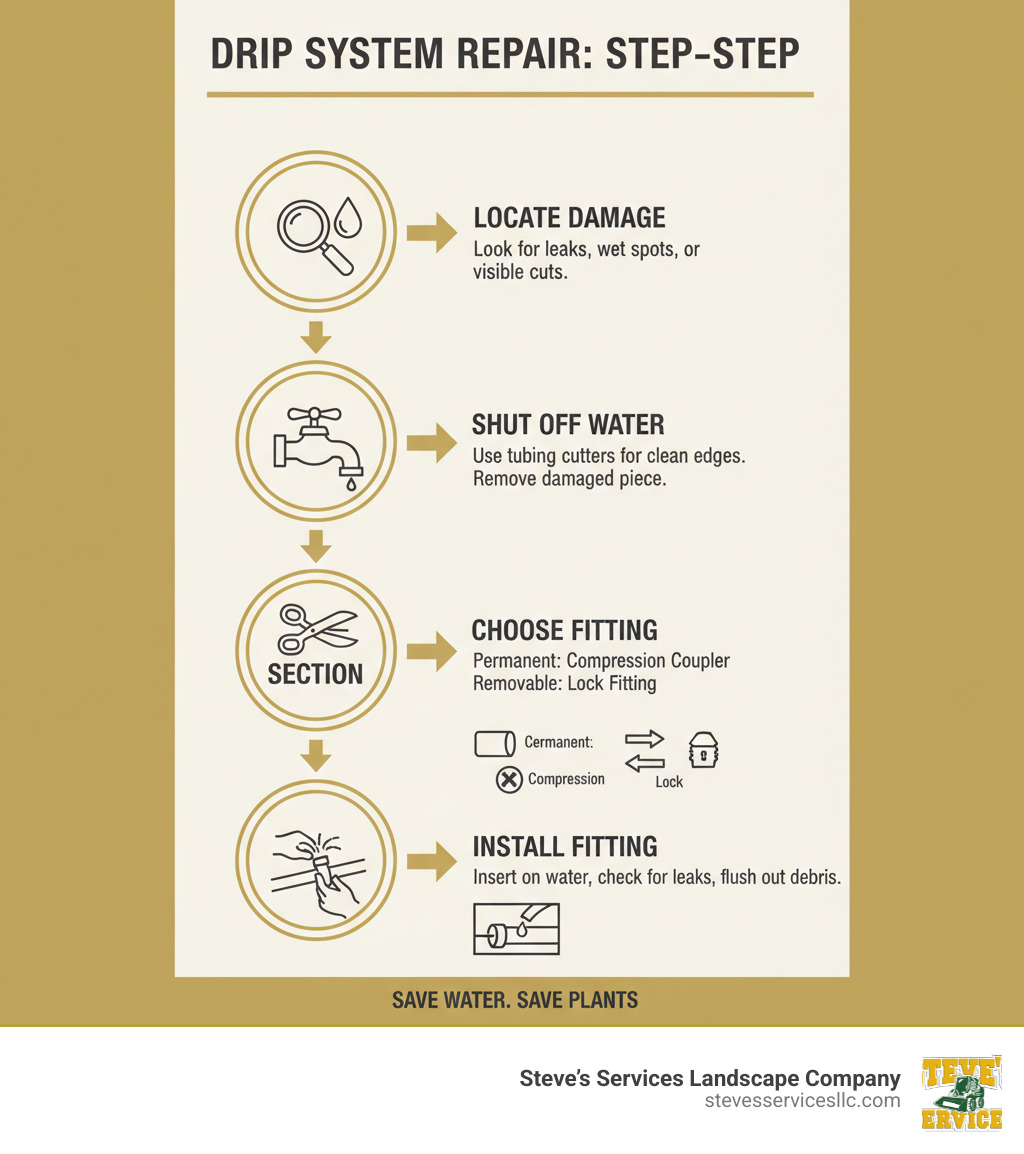
When our team is called to repair irrigation tubing, we follow a meticulous process to ensure the fix is not just a patch, but a long-term solution that restores the system’s integrity. Irrigation systems operate at lower pressures than home plumbing, but they still require specific techniques for a reliable repair.
Every professional repair begins with safety and preparation: shutting off the water supply and carefully excavating the damaged area to provide ample room to work without damaging adjacent lines.
Addressing Small vs. Large Damage
The repair strategy depends entirely on the nature of the damage. For small punctures, such as a hole left by a removed emitter, a professional will use a specialized goof plug to create a perfect seal. For minor gashes, high-quality repair tape can be an effective solution. The key is a proper assessment to choose the right method.
When the damage is more extensive—perhaps from a shovel strike or crushing by tree roots—the compromised section must be completely removed. A professional uses a specialized cutter to make clean, square cuts on either side of the break. This is non-negotiable for a leak-proof connection. A new section of matching tubing is then spliced in using appropriate couplers. The choice between a single coupler for a small gap or two couplers for a longer section is based on experience.
The Hallmarks of a Professional Repair
The difference between a DIY patch and a professional repair lies in the details that ensure longevity:
- Perfect Connections: Professionals know that fittings must be fully seated. For polyethylene tubing, they may gently warm the ends to make the material more pliable, ensuring a tight, secure seal with barbed or compression fittings. This technique prevents slow leaks that can appear weeks or months later.
- System Flushing: After any repair, flush the entire line. This process removes dirt, plastic shavings, and other debris that inevitably enter the tubing during the work. Skipping this step is a primary cause of clogged drip emitters and sprinkler heads down the line.
- Thorough Testing: Before any excavation is backfilled, the repair is put under pressure. A professional will slowly restore water flow and carefully inspect the new connections to confirm they are completely leak-free.
These best practices are second nature to an experienced technician and are fundamental to a successful repair. For comprehensive system repairs, our team can handle any Fix Lawn Sprinkler System challenge you might face.
Special Considerations and Preventive Maintenance
A truly professional approach to irrigation repair goes far beyond simply patching holes. The best repairs consider the bigger picture—understanding different materials, planning for seasonal challenges, and most importantly, preventing problems before they start. After decades in this business, I’ve learned that the systems that last longest are the ones that receive thoughtful, proactive care.
Your irrigation system is an investment in your property, and like any investment, it deserves protection. The difference between a system that serves you well for years versus one that constantly needs attention often comes down to understanding these special considerations. For comprehensive guidance on keeping your system healthy year-round, check out our detailed Irrigation System Maintenance: Tips and Tricks for a Healthy Lawn.
Repairing Poly Tubing vs. Drip Tape
When you need to repair irrigation tubing, the approach varies significantly depending on whether you’re working with poly tubing or drip tape. This is a key area where professional knowledge is vital.
Poly tubing is the thick-walled, flexible workhorse of most systems. Repairs often involve durable couplers or specialized goof plugs. Drip tape, however, is much thinner and has tiny, integrated emitters that are highly susceptible to clogging. It requires specialized tape couplings for repairs, and a clogged section often needs to be replaced entirely. Understanding these material differences is crucial for a lasting fix.
Above-Ground vs. Buried Tubing Repairs
The location of your tubing—above ground or buried—creates entirely different repair scenarios.
Above-ground systems are easy to access but are constantly exposed to UV rays, foot traffic, and animals. Buried systems are protected from these threats but face their own risks. Finding a leak becomes detective work, and damage from rodents, digging accidents, and frost heave is common. In Massachusetts, frost heave is a major concern, which is why proper Irrigation System Installation at the correct depth is so important.
Preventing Future Damage
The smartest repair is the one you never have to make. A proactive maintenance plan is the best way to protect your irrigation system. While homeowners can help by performing regular visual inspections for obvious issues like wet spots or dry patches, a comprehensive prevention strategy involves several key professional services.
- Professional Winterization: This is non-negotiable in Massachusetts. A professional service ensures every drop of water is blown out of the lines with compressed air, preventing the catastrophic damage that occurs when water freezes and expands. Our Drip Pipes in Winter guide explains why this is so critical.
- System Flushing: Professionals regularly flush systems to clear out sediment and debris that can clog delicate emitters. They can also install devices like Flush Valve End Caps to make this maintenance easier.
- Component Checks: A maintenance visit includes checking and replacing small but vital parts like the 3/4″ washer seals in threaded connections, which dry out over time and cause leaks. They also ensure the system’s filter is clean and effective.
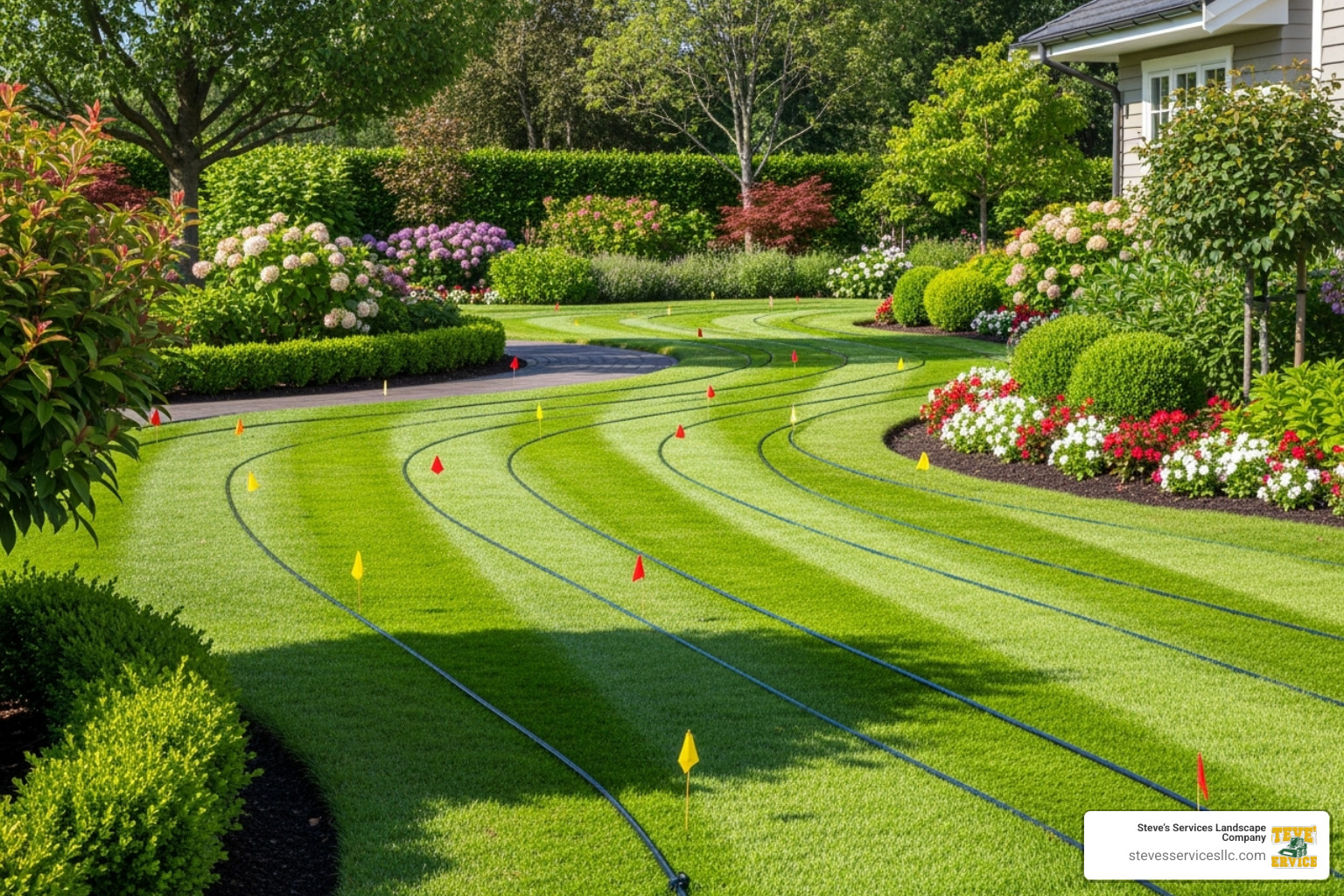
- Mapping and Marking: For new installations or major repairs, we recommend creating a map of buried lines. This simple step can prevent countless accidental cuts from future landscaping projects.
When to Call a Professional for Irrigation System Repairs
Sometimes, the best decision when you need to repair irrigation tubing is knowing when not to do it yourself. After 25+ years in the business, I’ve seen plenty of well-intentioned DIY attempts that turned a simple fix into a much bigger (and more expensive) problem. Don’t get me wrong—I admire the DIY spirit! But some situations really do call for professional expertise.
Extensive or undiagnosed damage is one of those times. If you’re dealing with multiple leaks scattered across your property, widespread dry spots that don’t make sense, or you’ve spent hours trying to figure out where that mysterious puddle is coming from, it’s time to call in the cavalry. We have specialized leak detection equipment and the experience to quickly identify problems that might take a homeowner days to find.
Mainline breaks are definitely in professional territory. These aren’t like the smaller tubing repairs we’ve been discussing—mainline breaks involve higher water pressure, larger pipes, and often require excavation equipment. A botched mainline repair can flood your yard, damage your foundation, or leave you without water to your entire irrigation system.
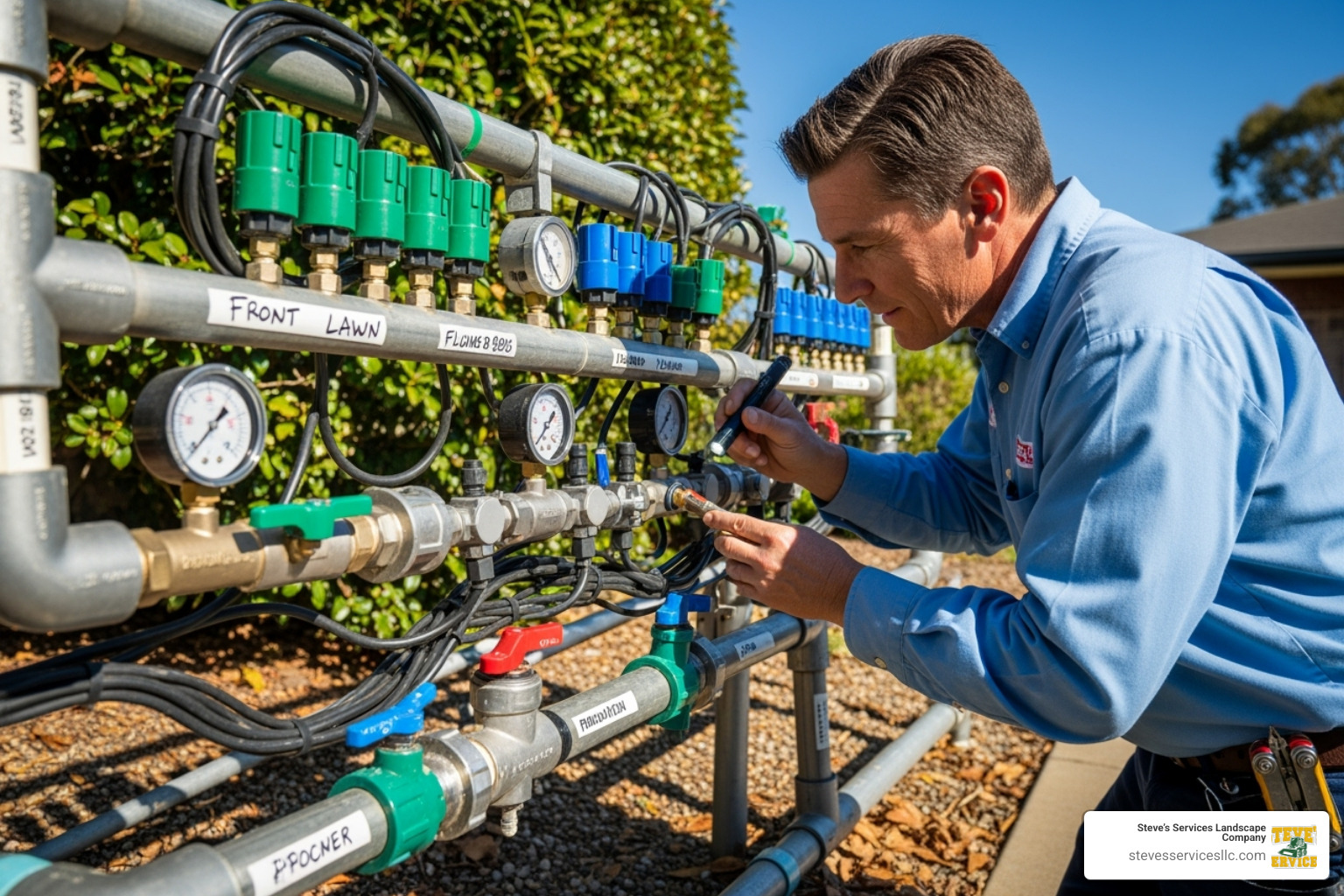
Electrical issues are another clear sign to step back. If your controller isn’t responding, valves aren’t opening, or you’re seeing sparks anywhere near water, please don’t attempt repairs yourself. Water and electricity don’t play nice together, and irrigation systems have both in close proximity.
Here’s something we see often: recurring leaks in the same spot. You fix it, it holds for a week or two, then starts leaking again. This usually means there’s an underlying issue—maybe the pipe is moving due to poor support, there’s excessive pressure in that zone, or the soil conditions are causing ongoing stress. We can identify and fix the root cause, not just the symptom.
Complex systems with multiple zones, smart controllers, or integrated landscape lighting often benefit from professional attention. These systems have intricate relationships between components, and changing one thing can affect everything else. We understand how all these pieces work together.
If you’re dealing with a Frozen Irrigation System, please call us before attempting any repairs. Frozen pipes are fragile, and the wrong approach can turn a minor issue into a major replacement project.
Finally, there’s the tool and expertise factor. Professional-grade repair tools can cost more than hiring us for the repair itself. Plus, we stock the right parts and fittings, so there’s no guessing about compatibility or multiple trips to the supply store.
Don’t hesitate to seek professional help to avoid costly mistakes. We’re not just fixing the immediate problem—we’re ensuring your entire system continues to work efficiently for years to come. For homeowners in Everett, MA and surrounding areas looking for reliable Irrigation System Repairs Near Me, Steve’s Services is here to help get your system back to peak performance.
Conclusion
Maintaining your irrigation system is essential for a healthy, beautiful landscape. While a leak or break in the line can be frustrating, understanding the complexities involved in a proper repair of irrigation tubing is the first step toward a lasting solution.
As we’ve explored, a professional repair is more than just patching a hole. It involves correctly identifying the problem, using specialized tools to ensure clean connections, and selecting the right materials—from compression fittings for permanent seals to the correct couplers for different tubing types. Techniques like warming tubing ends and thoroughly flushing the system after a repair are hallmarks of a quality job that prevents future issues like clogged emitters.
The most effective strategy is always prevention. While homeowners can keep an eye out for trouble spots, professional maintenance, especially proper winterization in the Massachusetts climate, is the best way to protect your investment and avoid costly repairs.
While it can be tempting to try a quick fix, there is wisdom in knowing when to call for expert help. Extensive damage, mainline breaks, or recurring problems often point to underlying issues that require a professional’s diagnostic skill and specialized equipment.
For over 25 years, we’ve been helping homeowners throughout Everett, MA, and surrounding communities—from Burlington to Wakefield, Medford to Winchester—keep their irrigation systems running smoothly. Whether you’re dealing with a simple leak or a complex system overhaul, our team brings the experience and dedication needed to get your landscape back to thriving.
Your lawn and garden depend on a reliable irrigation system. Don’t let a small problem turn into an expensive disaster. Contact us for professional sprinkler system repair and let us help you maintain the beautiful landscape you’ve worked so hard to create.