Sewer line excavation: Your Reliable 2025 Guide
Understanding Sewer Line Excavation
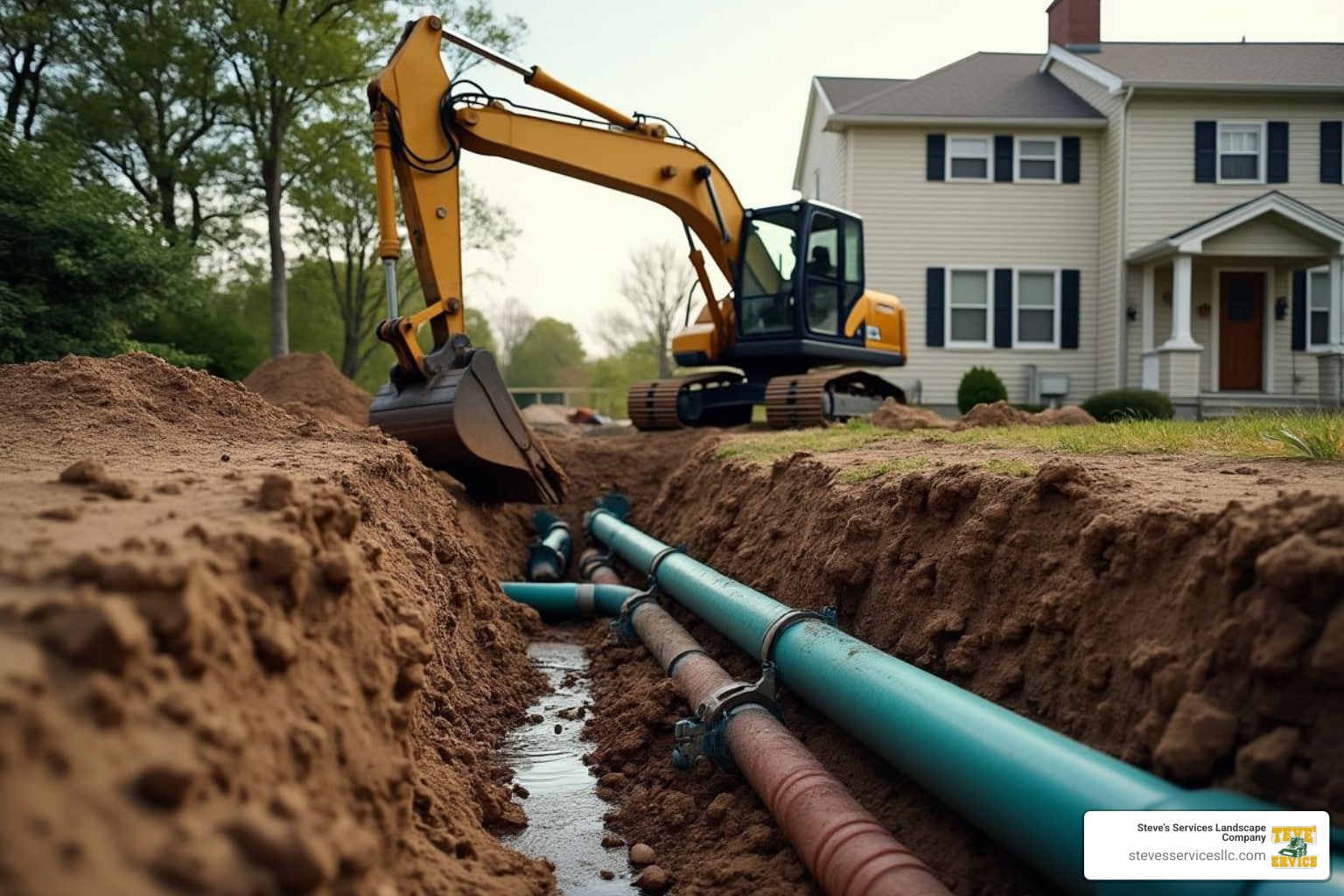
Sewer line excavation involves digging a trench to access, repair, or replace the pipes that carry wastewater away from your property. While less invasive methods are often preferred, excavation is sometimes the only reliable solution for severe issues.
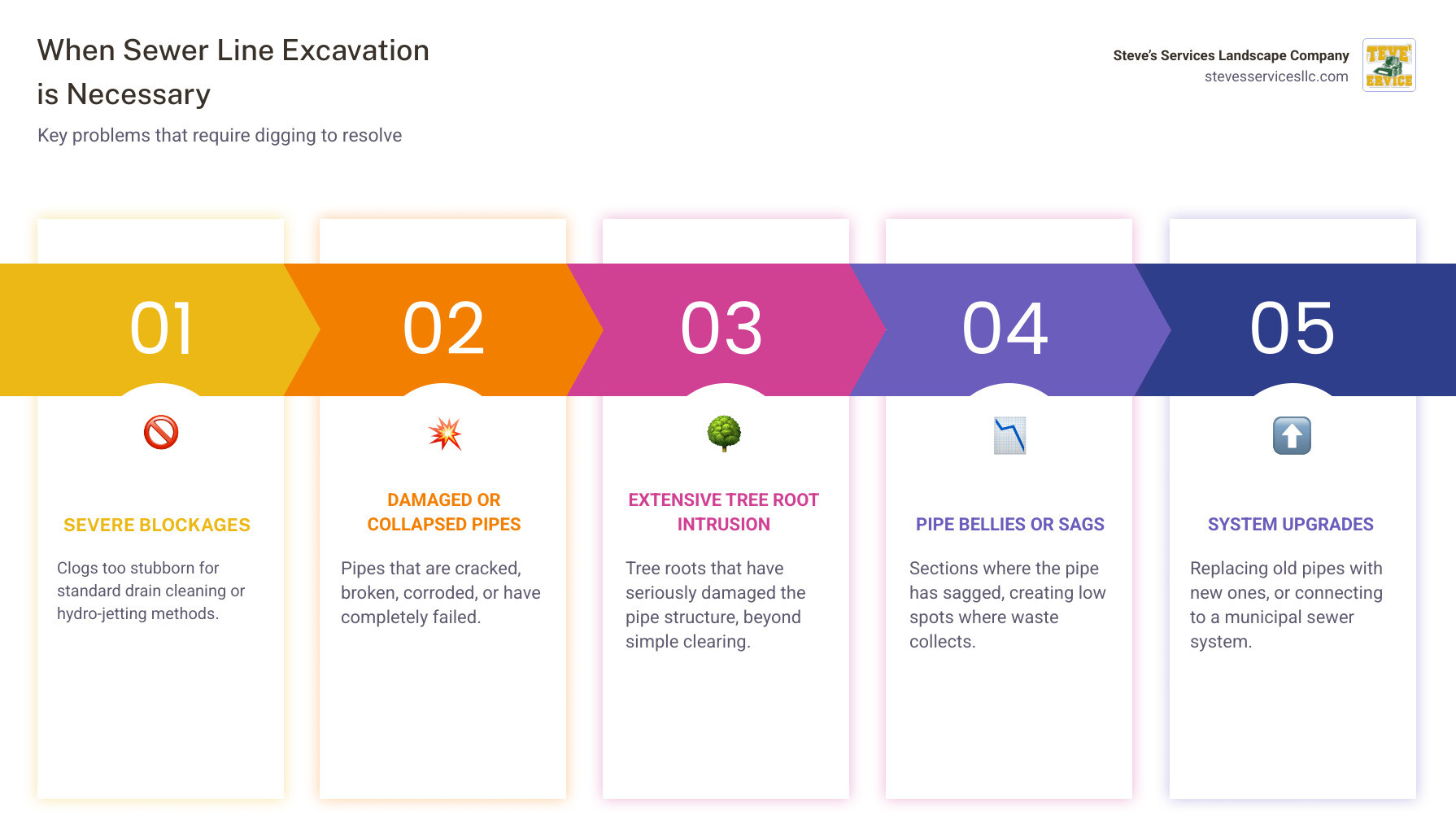
You might need excavation for problems like:
- Severe Blockages: Clogs too stubborn for standard drain cleaning or hydro-jetting.
- Damaged or Collapsed Pipes: Pipes that are cracked, broken, corroded, or have collapsed.
- Extensive Tree Root Intrusion: When roots have seriously damaged the pipe’s structure.
- Pipe Bellies or Sags: Sagging sections where waste collects and causes blockages.
- System Upgrades: Replacing old pipes or connecting to a municipal sewer system.
Steve Sylva has over 25 years of experience ensuring outdoor spaces are well-maintained. His expertise includes overseeing projects that require precise sewer line excavation and restoration.
Simple guide to Sewer line excavation terms:
Your Guide to Sewer Line Repair and Replacement
When your home’s sewer line has a serious problem, from unpleasant odors to the risk of water damage, quick attention is critical. Understanding what sewer line excavation involves is the first step toward finding a lasting solution.
What is Sewer Line Excavation?
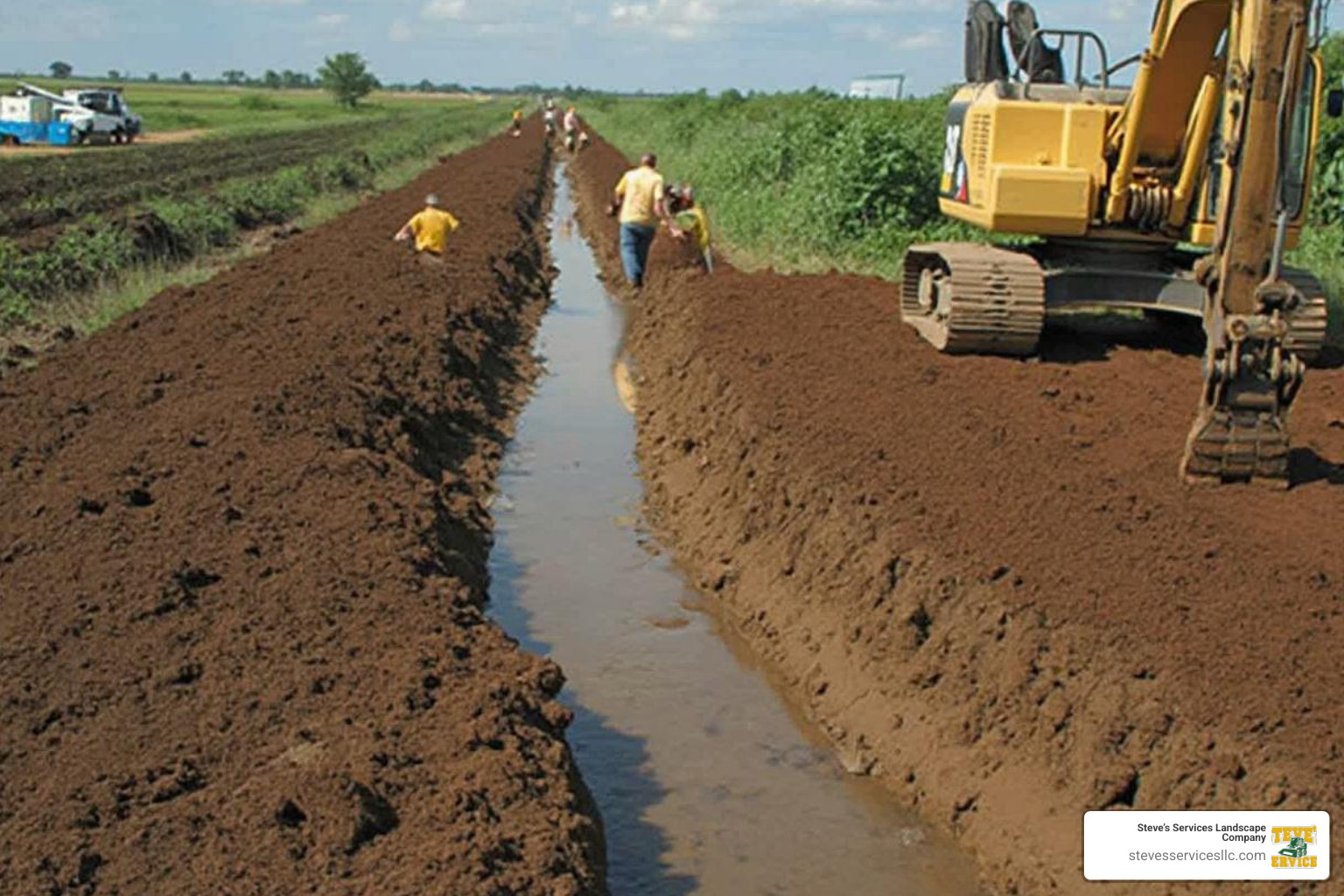
Sewer line excavation is the process of digging trenches to reach your home’s underground sewer pipeline. This allows professionals direct, hands-on access to inspect, repair, or perform a complete replacement. While digging up your yard can seem daunting, it is often the most reliable and efficient method for complex sewer issues. It’s typically recommended only when less invasive techniques, like drain cleaning or hydro-jetting, are insufficient to resolve the root cause of the problem.
Why is Excavation Necessary?
While we always explore minimally invasive options first, excavation becomes essential in several key situations to maintain your plumbing system’s health.
- Collapsed or Severely Damaged Pipes: If pipes are crushed, fractured, or have missing sections due to shifting soil or age, excavation is the only way to replace them.
- Extensive Tree Root Intrusion: When tree roots cause major structural damage or create dense, recurring blockages, excavation allows for the physical removal of the damaged pipe and installation of new, root-resistant piping.
- Upgrading Outdated Sewer Lines: Older homes often have pipes made of clay or cast iron that corrode and crack over time. Excavation is required to upgrade these to modern, durable PVC pipes.
- Pipe Bellies or Incorrect Slope: A “belly” is a sag in the line where waste collects, causing blockages. Similarly, if a pipe was installed with an incorrect slope, gravity cannot move waste effectively. Excavation is necessary to re-grade the trench and correct the pipe’s position.
Ignoring these issues can lead to significant property damage and health hazards from leaking sewage. Harmful gases like hydrogen sulfide and methane can pose serious health risks, making swift action crucial. You can learn more about harmful sewer gases and why it’s important to address these problems promptly.
Diagnosing the Problem: Signs and Inspections
Before we ever think about digging, our top priority is to accurately diagnose the problem. Catching clues early can save you time, money, and worry.
Telltale Signs of a Sewer Line Problem
Your home’s sewer system often sends signals when something is wrong. Don’t ignore these red flags:
- Multiple Clogged Drains: If your toilet, shower, and kitchen sink are all slow or backed up, the problem is likely in your main sewer line.
- Sluggish Drainage: Water taking a long time to go down the drain often means a blockage is building in your main line.
- Gurgling Noises: Strange sounds from your drains or toilets can indicate trapped air trying to escape past a sewer line obstruction.
- Sewage Odors: A foul smell from drains or in your yard is a serious indicator of a leak or blockage and can signal harmful sewer gases.
- Soggy Spots in Your Yard: Unusually wet or lush, green patches of grass could be from a leaking sewer pipe.
- Foundation Cracks: A damaged sewer line can erode soil, potentially leading to cracks in your home’s foundation or sinkholes in your yard.
- Pest Infestations: An increase in rodents or insects could be linked to a sewer line break that provides them easy access.
The Critical Role of a Sewer Camera Inspection
Once you spot any warning signs, a professional diagnosis is the next step. Before we recommend sewer line excavation, our team uses a sewer camera inspection to pinpoint the exact problem without digging.
Here’s how this non-invasive technology works:
A special, high-resolution, waterproof camera is inserted into your sewer line through an existing access point. It sends a real-time video feed to a monitor, allowing our technicians to see exactly what’s happening inside your pipes.
This technology lets us precisely locate blockages, cracks, tree root intrusion, pipe bellies, corrosion, or collapsed sections. By identifying the exact problem and its location, a camera inspection helps us determine the most cost-effective repair method and avoid unnecessary digging, saving you time and money.
Repair Methods: Traditional Excavation vs. Trenchless Technology
Once we’ve diagnosed the issue, it’s time to discuss solutions. The two main paths are traditional sewer line excavation or modern trenchless methods. The right choice depends on your specific situation, the level of disruption you’re comfortable with, and the need for long-term durability.
Understanding Traditional Sewer Line Excavation
Traditional sewer line excavation, or “open-top excavation,” involves digging a trench for direct access to the sewer pipe. This method’s main advantage is that it allows for a thorough inspection and complete replacement of severely damaged or collapsed sections. For complex issues like significant pipe bellies or correcting an improper slope, excavation is often the most reliable and permanent fix. It is a versatile solution suitable for all pipe materials and types of damage. To learn more, you can visit our page on excavation services.
An Overview of Trenchless Methods
Trenchless methods are designed for minimal property disruption, typically requiring only one or two small access points.
- Pipe Lining (CIPP): A flexible, resin-coated liner is inserted into the damaged pipe. It’s then inflated and cured, creating a new, seamless “pipe within a pipe” that seals cracks and leaks.
- Pipe Bursting: A new, durable high-density polyethylene (HDPE) pipe is pulled through the old one. A bursting head fractures the old pipe, pushing it into the surrounding soil and making way for the new pipe, which can last 50 to 100 years.
Here’s a quick side-by-side look at these methods:
| Feature | Traditional Excavation | Pipe Lining (CIPP) | Pipe Bursting |
|---|---|---|---|
| Disruption | High (full trench) | Minimal (1-2 access points) | Minimal (2 access points) |
| Old Pipe | Removed | Remains (lined) | Fractured and pushed aside |
| New Pipe | Brand new | New inner pipe | Brand new (HDPE) |
| Lifespan | 50+ years | Up to 50 years | 50-100 years |
| Cost | Higher upfront | Lower to moderate | Moderate |
| Applicability | All damage types | Cracks, leaks, minor breaks | Severely damaged, collapsed |
Cost Comparison: Excavation vs. Trenchless
When deciding between sewer line excavation and trenchless methods, cost is a key consideration. Please note that the prices discussed here are industry averages based on general internet data and are not actual costs for Steve’s Services. Your final quote will depend on many factors, including pipe length and depth, damage severity, soil type, and the extent of landscape restoration needed.
- Traditional excavation costs can range widely, with industry averages from $3,000 to $25,000. Complex projects, such as digging under a driveway or patio, can significantly increase costs.
- Trenchless repair costs are often 30-40% less than traditional excavation on average, as they involve less labor and property restoration. However, they may not be suitable for all types of sewer line problems.
Additional costs can include landscaping to restore your yard or driveway repairs. We provide clear, detailed quotes and discuss all potential costs upfront. For more general information on sewer line repair costs, you can consult resources like Angi’s cost data.
When is Traditional Excavation the Better Choice?
While innovative trenchless technologies offer great benefits, they aren’t the perfect solution for every sewer problem. Sometimes, traditional sewer line excavation is the necessary and superior choice to ensure a lasting, reliable repair.
Factors That Make Sewer Line Excavation the Best Choice
Even with advancements in trenchless technology, there are situations where the traditional approach makes the most sense. Here’s when sewer line excavation is the clear winner:
- Completely Collapsed or Severely Damaged Pipes: Trenchless methods require a somewhat intact host pipe. If a pipe is crushed or has large sections missing, it must be dug up and replaced.
- Bellied or Sagging Pipes: A “belly” is a low spot in your sewer line where waste pools. Lining a bellied pipe won’t fix the underlying sag. Excavation is needed to re-grade the ground and lay a new pipe with the correct slope for proper drainage.
- Proximity to Other Utilities: In many of our Massachusetts communities (Burlington, Danvers, Everett, Lynnfield, Medford, Melrose, North Reading, Reading, Revere, Saugus, Stoneham, Winchester, Woburn, Malden, Wakefield), sewer lines often run close to water, gas, or electrical lines. Excavation allows our team to visually identify and carefully work around these utilities, preventing dangerous and costly accidents.
- Certain Pipe Materials: While trenchless methods work for many pipe types, some older or specific types of pipe materials aren’t suitable for lining or bursting.
- Severe Tree Root Damage: If tree roots have completely infiltrated and destroyed large sections of your pipe, excavation is required to physically remove the stubborn roots and the damaged pipe.
- Homeowner Preference: Some homeowners simply prefer the peace of mind that comes with a complete pipe replacement via sewer line excavation, knowing the old system is gone and a new one is in its place.
The Excavation Process and Aftercare
Once we determine that sewer line excavation is the best solution for your property, our team at Steve’s Services will manage the entire process with precision and care. We prioritize clear communication, safety, and thorough restoration.
What to Expect During the Project
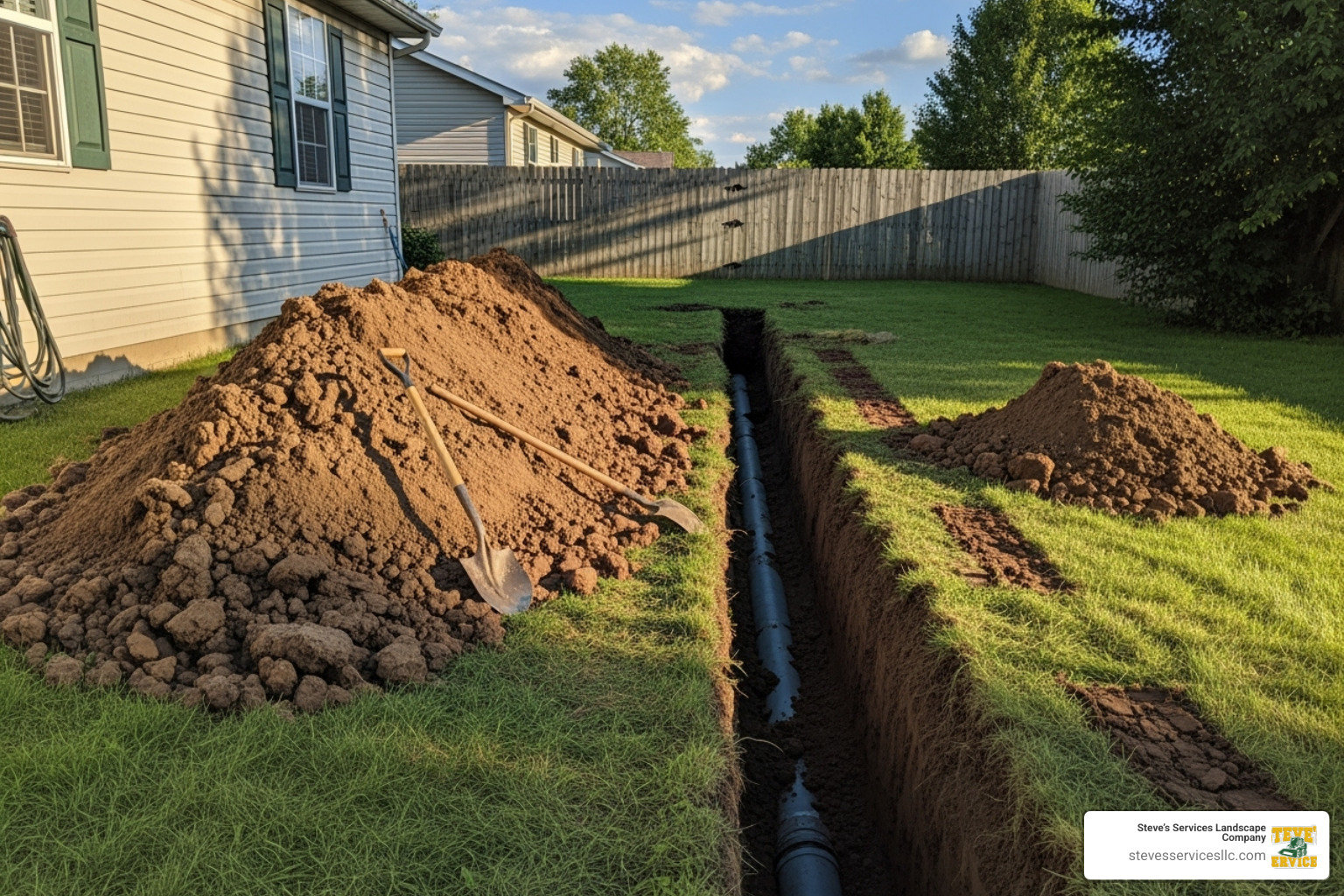
Here’s an overview of the steps in a typical sewer line excavation project:
- Permits and Utility Marking: Before digging, we handle all necessary local permits and contact 811 (Dig Safe) to have all underground utilities marked on your property. This is a vital safety step.
- Heavy Machinery Mobilization: Our team will bring in the necessary equipment, such as excavators, taking precautions to minimize the impact on your property.
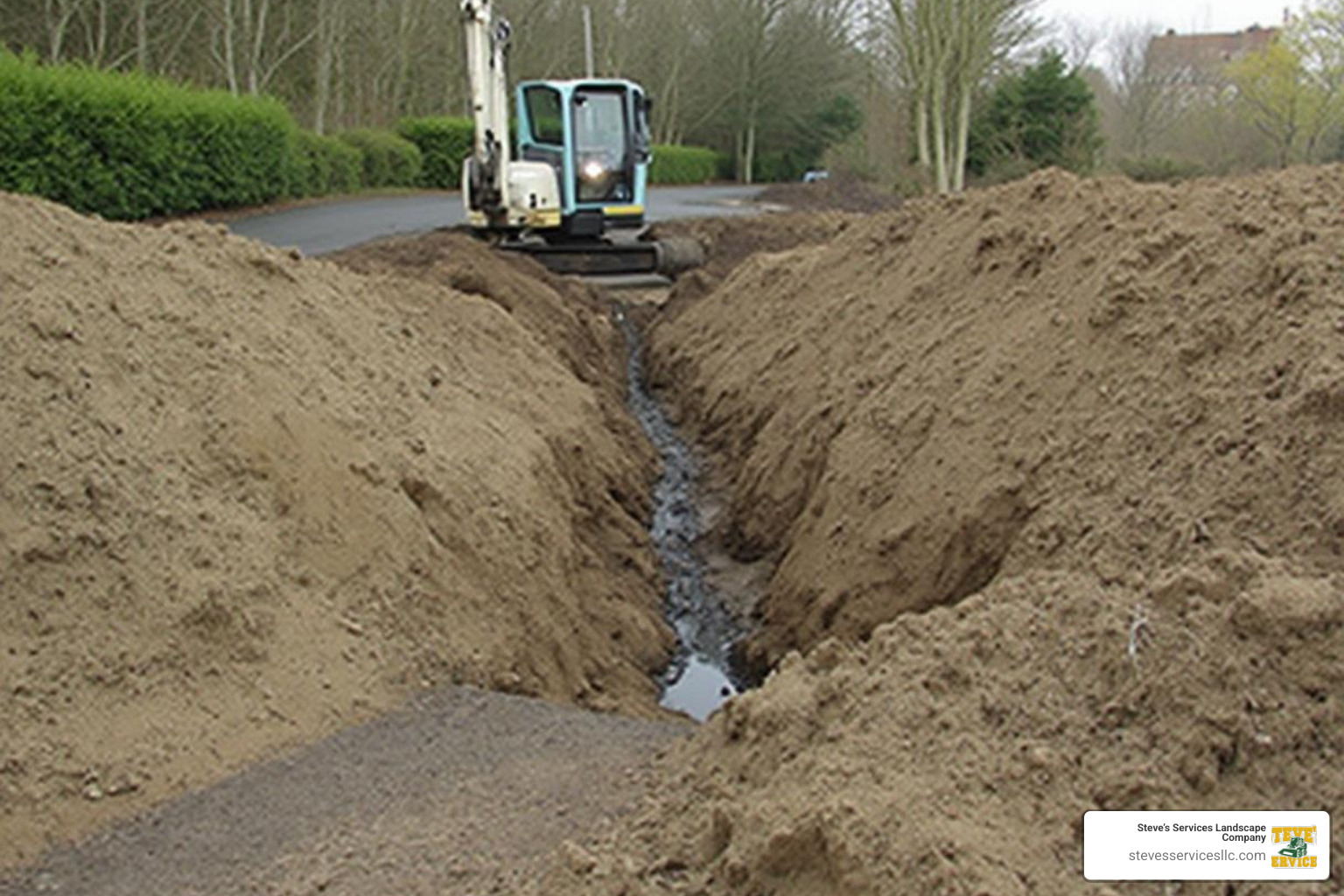
- Trench Digging: The trench is dug directly to the specified depth and location of the damaged sewer line.
- Pipe Repair or Replacement: Once the line is exposed, our plumbers will perform the necessary repairs or install entirely new pipe segments using durable, modern materials.
- Backfilling the Trench: After the repair is complete and tested, the trench is carefully backfilled with soil.
Post-Excavation: Yard Restoration and Ground Settling
Our commitment doesn’t end when the pipe is fixed. Restoring your yard is a key part of our service.
- Ground Settling: After backfilling, a mound of dirt is left over the trench. This is normal and allows for natural ground settling, which typically takes 6-9 months. It’s crucial not to remove this mound prematurely.
- Professional Restoration: Once the ground has fully settled, our landscaping and hardscaping experts can begin the full restoration of your yard. We specialize in comprehensive solutions, from seeding and sodding to repairing driveways and patios. Explore our full range of landscaping and hardscaping restoration services.
Frequently Asked Questions about Sewer Line Excavation
It’s normal to have questions when facing a sewer line excavation project. Here are some of the most common ones we hear.
How long does sewer line excavation take?
The timeline for a sewer line excavation project can vary, but the active work of digging, repairing, and backfilling typically lasts several days. The total duration depends on factors like the pipe’s length and depth, the extent of the damage, soil conditions, and weather. Required municipal inspections can also affect the schedule. Final landscape restoration happens later, after the ground has settled. We will always provide a clear, personalized timeline after assessing your specific situation.
How can I prevent future sewer line problems?
That’s a fantastic question. While not all issues are avoidable, you can take steps to keep your sewer line healthy and reduce the chances of needing another sewer line excavation.
- Be Mindful of Drains: Never pour cooking grease, oils, or fats down the sink. Avoid flushing anything other than human waste and toilet paper—so-called “flushable” wipes, paper towels, and feminine hygiene products can create severe clogs.
- Manage Tree Roots: If you have large trees near your sewer line, be aware that their roots are drawn to the water in your pipes. When planting new trees, try to place them away from your sewer lines.
- Consider Periodic Professional Cleanings: Regular inspections and cleanings, like hydro-jetting, can help keep your pipes clear of buildup, especially in older homes. This can catch small issues before they become big problems.
How deep are residential sewer lines buried?
In Massachusetts, residential sewer lines are typically buried between five to six feet deep. However, to prevent freezing in our cold climate, some lines may be buried up to eight feet deep to stay below the frost line. The exact depth is also influenced by local municipal codes. Before any sewer line excavation, our team always verifies the precise depth and location to ensure we dig safely and accurately.
Trust the Experts for Your Excavation and Restoration Needs
When your sewer line fails, it’s not just a plumbing problem—it’s a disruption to your entire life. The smell, the mess, the worry about your home’s foundation, and the daunting prospect of digging up your beautiful yard can feel overwhelming. But here’s the good news: you don’t have to steer this challenge alone.
Sewer line excavation is both an art and a science. It requires the right equipment, extensive experience, and a deep understanding of everything from soil conditions to local building codes. More importantly, it demands a team that sees the bigger picture—not just fixing your pipes, but restoring your property to its former beauty.
At Steve’s Services, we’ve been helping Massachusetts homeowners through these challenging situations for over 25 years. Based right here in Everett, we understand the unique soil conditions, weather patterns, and municipal requirements across our service area, including Burlington, Danvers, Lynnfield, Medford, Melrose, North Reading, Reading, Revere, Saugus, Stoneham, Winchester, Woburn, Malden, and Wakefield.
What sets us apart isn’t just our expertise in sewer line excavation—it’s our comprehensive approach to your entire outdoor space. We don’t just dig, fix, and leave. Our skilled team handles everything from that first camera inspection to the final touches of landscape restoration. We specialize in lawn care, landscape maintenance, hardscaping, and even snow management, which means we understand how all these elements work together to create the outdoor space you love.
Think of us as your partners in this process. We’ll walk you through every step, explain your options clearly, and work with you to find solutions that fit both your needs and your budget. Our personalized approach means we’re not just fixing a pipe—we’re protecting your investment and ensuring your peace of mind.
The truth is, dealing with sewer problems is never convenient, but it doesn’t have to be a nightmare. With the right team handling your sewer line excavation and restoration, you can actually come out ahead with a more reliable system and a beautifully restored yard.
Don’t let sewer line problems turn your home into a source of stress. Contact us for excavation and landscape restoration today, and let’s get your property—and your peace of mind—back on solid ground.