
Commercial General Contracting: Master 2025!
Understanding Commercial General Contracting
Commercial general contracting is a vital part of the construction industry. A commercial general contractor acts as the main manager for a business construction project, overseeing the entire process from planning to completion for spaces like offices, retail stores, or industrial sites.
The U.S. construction industry is growing, valued at $1.74 trillion in 2023 and expected to grow 4.2% annually until 2030. Commercial construction spending alone reached over $107 billion in March 2024, with a projected 4.5% increase this year. This growth creates significant opportunities for those who can lead complex building projects. A commercial general contractor ensures these projects run smoothly, bringing blueprints to life. This guide will walk you through the journey to becoming a key player in this field.
I’m Steve Sylva, owner of Steve’s Services. With over 25 years in landscape and hardscaping, I understand the precise project management and client satisfaction critical to successful commercial general contracting. My experience in delivering high-quality, personalized solutions in the outdoor construction sector has given me a deep understanding of what it takes to bring a vision to life, from initial concept to final execution, ensuring every detail aligns with client needs and expectations.
Relevant articles related to commercial general contracting:
Understanding the Role: What Does a Commercial General Contractor Do?
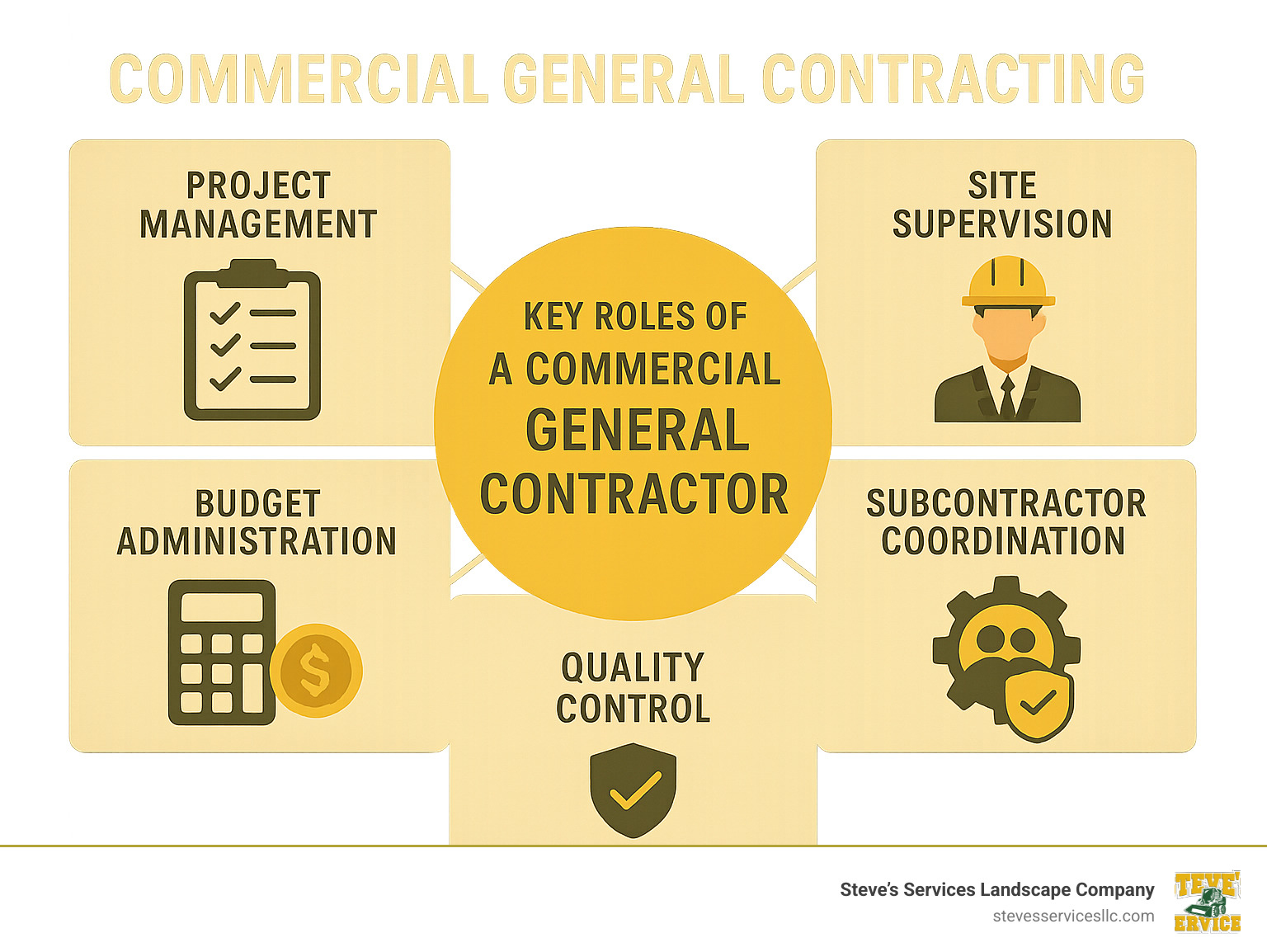
A commercial general contractor is the central orchestrator of a construction project, responsible for the entire lifecycle, from initial concept to final completion. We coordinate and supervise every aspect, including managing the site, daily operations, and a diverse team of vendors and trades. A contractor typically manages 10-15 subcontractors per project, communicating with architects, plumbers, and electricians to ensure everyone works toward the same goal.
Our responsibilities also include securing all necessary permits and licenses, handling logistics like liability and workers’ compensation insurance, and being financially responsible for any property damage. We ensure job site supplies are available and manage worksite cleanup, serving as the single point of contact and accountability to deliver the project safely, on time, and within budget.

To dig deeper into specific construction roles, you might find our article on What Does an Excavating Contractor Do? insightful.
The Daily Duties of a Contractor
A commercial general contractor’s day is dynamic. We direct daily site operations, coordinating subcontractor tasks to meet schedules and quality standards. This involves securing equipment and supplies, managing waste, and ensuring every aspect of the project is covered. A critical part of our role is ensuring compliance with all building codes and regulations by liaising with government agencies for licenses and permits.
Effective communication is paramount. We are the main point of contact for clients, architects, and subcontractors, ensuring transparency and keeping everyone informed. When unexpected issues arise, we are the primary problem-solvers, finding efficient solutions to keep the project on track.
Key Skills for Success
To excel in commercial general contracting, a diverse skill set is essential.
- Leadership: Inspiring teams and making decisive choices under pressure.
- Communication: Clearly articulating goals, negotiating contracts, and resolving conflicts to foster a collaborative environment.
- Financial Acumen: Expertise in cost estimation, budgeting, and managing cash flow to ensure projects remain profitable.
- Technical Knowledge: A fundamental understanding of construction methods, materials, and engineering principles to evaluate plans and quality of work.
- Negotiation: Securing the best prices from suppliers and establishing fair contract terms with clients.
- Risk Management: Proactively identifying and mitigating potential job site issues, safety hazards, and financial risks.
For more information about our comprehensive contracting services, please visit our general contracting services page.
Laying the Foundation: Essential Qualifications and Licensing
Becoming a commercial general contractor requires a strong foundation of experience, education, and formal qualifications. Many successful contractors start with hands-on experience in trades like carpentry, electrical work, or plumbing. These roles provide practical, ground-up knowledge of how a job site functions.
Apprenticeships are an excellent way to start, combining classroom knowledge with paid, on-the-job training to learn best practices and safety protocols. While hands-on experience is vital, formal education is increasingly common. Construction management degrees offer in-depth knowledge of project planning, scheduling, budgeting, and construction law. A bachelor’s degree typically takes four years, with master’s programs available for further specialization.
Regardless of your path, licensing and insurance are non-negotiable. They are the bedrock of any legitimate commercial general contracting business.
The Path to Becoming a Licensed Commercial General Contracting Professional
The journey to becoming a licensed commercial general contracting professional involves several key steps, which can vary by state. You’ll generally need to meet specific experience or education requirements set by your state’s licensing board.
Next, you must pass comprehensive exams covering business laws for the construction industry and detailed building codes. This knowledge is crucial for building safe, compliant structures. You will also need to secure proper liability insurance to protect your business from claims and workers’ compensation insurance if you hire employees. For larger projects, understanding bonding is also essential, as it provides a financial guarantee to clients that the project will be completed as agreed. Connecting with other contractors and industry pros through professional networks can also provide invaluable insights and mentorship.
Why Being Licensed and Insured is Non-Negotiable
Operating without proper licenses and insurance is not an option for any aspiring commercial general contractor. It is a non-negotiable requirement for several reasons.
First, it protects your business. Adequate liability insurance can prevent a financial disaster from a single accident, while workers’ compensation safeguards your employees and your company.
Second, it protects your clients. Being licensed and insured offers clients peace of mind, knowing you are held to industry standards. This builds immense credibility and trust. It is nearly impossible to secure project financing or permits without being licensed. Furthermore, being licensed and insured opens doors to larger, more complex projects, as many commercial and government clients require it. It signals your professionalism, dedication to safety, and commitment to doing things right.
If you’re looking for licensed home improvement contractors in your area, you can find more information on our page: Licensed Home Improvement Contractors Near Me.
Building Your Business in commercial general contracting
Once you have your education and licensing, the next step is building your own commercial general contracting business. This requires careful planning and smart decision-making.
Start with a solid business plan outlining your company’s mission, target clients, services, and financial projections. Next, choose a business structure (sole proprietorship, LLC, or corporation) that fits your tax and liability needs; consulting a professional is wise. Securing startup capital—whether from savings, loans, or investors—is often a major hurdle. Finally, effective marketing is key. Develop a professional brand, a capable website, and network with architects and developers to build relationships that lead to referrals.
Finding Your Niche: The Power of Specialization
Trying to be a jack-of-all-trades can hinder a new contracting business. Specializing and becoming an expert in a specific area is often more effective.
The commercial construction world offers many niches to specialize in, such as:
- Retail spaces
- Office buildings
- Healthcare facilities
- Industrial warehouses
- Restaurants
- Multi-family housing
- Auto dealerships
- Self-storage facilities
- Public buildings
Specialization makes your marketing more targeted (e.g., “we are healthcare construction experts”) and can lead to higher profits, as specialized expertise often commands premium pricing and increases efficiency.
Creating a Winning Bid for Commercial General Contracting Projects
A winning bid in commercial general contracting demonstrates that you understand the project and can deliver exceptional value, not just the lowest price.
The process begins with a thorough review of the blueprints to understand every specification. You’ll then need to get accurate pricing on materials and calculate labor costs, including wages, benefits, and insurance. Next, gather competitive quotes from your network of subcontractors. A critical step is to properly include your overhead and profit margins. Based on industry data, contractor fees typically range from 10% to 25% of the total project cost, with net profit margins usually between 1% and 5%. For example, on a $500,000 project, fees might be $50,000 to $125,000. These are industry averages and not actual costs for Steve’s Services. Finally, present everything in a professional proposal that clearly outlines the scope, timeline, and payment schedule.
For more information about working with experienced local commercial contractors, visit our Local Commercial Contractors page.
Mastering Project Execution and Client Relationships
Once you’ve won the bid, project execution begins. This is where a commercial general contractor turns blueprints into tangible structures by managing all the moving parts. Success relies on smart management tools and strong client relationships.
At Steve’s Services, we use modern project management software to monitor progress, manage schedules, and track budgets in real-time. Regular progress meetings with our team and clients ensure everyone is aligned and decisions are made efficiently. We believe in transparent communication, providing daily updates and being available to answer your questions.
Proper document control for contracts, permits, and change orders is also vital. We manage any changes to the original plan carefully, ensuring they are documented, priced, and approved by you to avoid surprises. This entire process is designed to build lasting trust with our clients.

Managing Timelines and Budgets Effectively
Expertly managing project timelines and budgets is a hallmark of a skilled commercial general contractor. This requires meticulous planning and vigilant oversight.
We start by creating a detailed master schedule outlining every project phase. We use techniques like the critical path method (CPM) to identify essential tasks that must stay on schedule to prevent delays. Daily expense tracking against the budget helps us spot potential cost overruns early. We also employ value engineering, looking for ways to reduce costs without compromising quality.
Effective cash flow management is crucial. We ensure timely payments from clients and strategically handle payments to subcontractors and suppliers. While the average profit margin for general contractors is 1% to 5%, our fees, which cover overhead and management, typically range from 10% to 25% of the total project cost. On a $500,000 project, these fees could be $50,000 to $125,000. Please remember, these are average costs based on internet data and not actual costs for Steve’s Services.
Upholding a Culture of Safety
In construction, safety is a core value. As commercial general contractors, we are responsible for upholding a rigorous culture of safety on every job site to prevent injuries, fines, and legal issues.
Our commitment begins with a comprehensive, project-specific safety plan that outlines hazards and emergency procedures. We strictly follow all OSHA (Occupational Safety and Health Administration) compliance rules. Regular safety training is mandatory for our team and all subcontractors, covering topics like equipment operation and fall protection. We also ensure proper personal protective equipment (PPE) is provided and used by everyone on site. For a detailed overview of federal safety requirements, consult the official OSHA guidelines.
A strong safety record helps complete projects safely, on time, and within budget. It also reduces insurance costs and protects your reputation, demonstrating our professionalism and commitment to ethical practices.
Frequently Asked Questions about Becoming a Commercial Contractor
How much can a commercial general contractor earn?
The earnings for a commercial general contractor vary based on location, project size, specialty, and experience.
Based on industry data, contractor fees typically range from 10% to 25% of the total project cost. For a $1 million project, fees might be $100,000 to $250,000. However, these fees are not pure profit; they cover significant overhead costs like office staff, insurance, and equipment.
After all costs, the actual net profit margins for commercial general contractors typically range from 1% to 5% of the total project cost. This reflects the high costs and risks involved in managing complex construction projects. Success depends on efficient project management, cost control, and securing profitable contracts.
Important note: These figures are industry averages based on publicly available data and don’t represent the actual costs or earnings of Steve’s Services.
What are the biggest challenges for a new contractor?
Starting as a commercial general contractor is rewarding but comes with significant challenges:
- Securing Initial Funding: Construction requires large upfront capital for equipment, materials, and payroll.
- Building a Portfolio: It’s hard to get projects without past work to show. Starting with smaller jobs can help build credentials.
- Finding Reliable Subcontractors: Your reputation depends on your team. Building a network of skilled, trustworthy professionals takes time.
- Managing Cash Flow: Long payment cycles and daily expenses make balancing cash flow essential for survival.
- Navigating the Bidding Process: Creating competitive yet profitable bids is a highly competitive skill.
- Regulatory Compliance: Mastering complex building codes, safety regulations, and licensing requirements is crucial.
With persistence and a commitment to building strong industry relationships, these challenges can be overcome.
Do I need a college degree to become a commercial contractor?
While a college degree can be beneficial, it’s not always a strict requirement to become a successful commercial general contractor.
A bachelor’s degree in construction management or a related field provides a strong theoretical foundation in project planning, cost control, and law. This formal education can accelerate your career.
However, many successful contractors build their careers through hands-on experience, working their way up from laborer or tradesperson. This provides invaluable real-world knowledge. Apprenticeship programs also offer a great path, combining structured learning with on-the-job training.
Regardless of your path, you must meet state-specific licensing requirements, which typically involve passing exams on business law and building codes. A combination of practical experience, continuous learning, and proper licensing defines a successful contractor.
Conclusion
Becoming a commercial general contractor is a challenging but immensely rewarding path. It involves moving from understanding the role and qualifications to building a business and executing projects. You are not just putting up buildings; you are creating spaces where businesses and communities can thrive.
The construction industry demands continuous learning and adaptation to new technologies and practices. While a career in large-scale commercial general contracting is a significant undertaking, many successful paths begin with mastering specialized trades. My own journey at Steve’s Services, rooted in over 25 years of landscape and hardscaping, taught me the precision and project management critical to any construction endeavor. That hands-on experience is the foundation we bring to every project.
If you’re ready to partner with a team that understands the dedication and expertise needed to bring your vision to life, we invite you to explore the Contracting Services offered by Steve’s Services. We’re here to build something great, together.
