Why Proper Cotoneaster Hedge Trimming Makes All the Difference
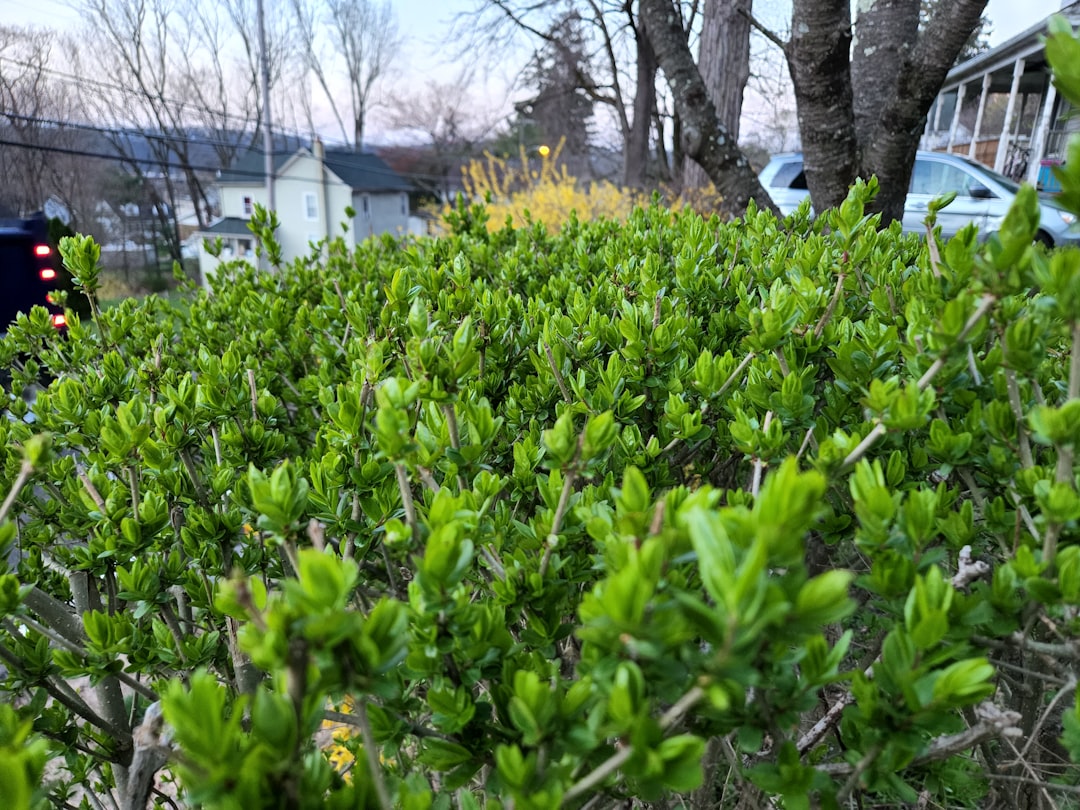
A professionally trimmed cotoneaster hedge showcasing dense, healthy foliage and clean lines.
Quick answer: How to trim a cotoneaster hedge
- Prune in early spring before new growth appears, while the plant is still dormant.
- Remove deadwood first — about 80% of your cuts should target dead, damaged, or diseased branches.
- Shape from the bottom up — keep the base wider than the top so light reaches the lower branches.
- Use selective pruning (thinning cuts) rather than shearing to preserve the plant’s natural arching form.
- Summer trim lightly after flowering to maintain shape without sacrificing berry production.
- Use pick pruning on dense hedges — create small openings in the surface to let light into the interior.
- Rejuvenate neglected hedges by removing the largest, oldest canes to ground level each spring.
Cotoneaster is one of the hardest-working hedge plants you can grow. It offers dense foliage, vibrant berries in autumn, and — according to research on Cotoneaster franchetii — it even traps airborne pollutants, making it a smart choice for urban properties near busy roads. It tolerates dry soils, adapts to different light levels, and provides year-round visual interest. But like any hedge, it needs the right care at the right time to stay healthy, full, and attractive.
The problem? Most trimming mistakes happen before the first cut is even made. Shearing cotoneaster into tight, formal shapes is one of the most common errors — and it leads to bare patches, excessive straight shoot regrowth, and a hedge that quickly becomes difficult to manage. Knowing when and how to prune makes the difference between a thriving hedge and one that looks worse every season.
I’m Steve Sylva, owner of Steve’s Services Landscape Company, and with over 25 years of hands-on experience maintaining hedges across Malden, MA and surrounding communities, cotoneaster hedge trimming is something my team handles every season for both homeowners and commercial properties. In the sections below, I’ll walk you through exactly what we’ve learned works.
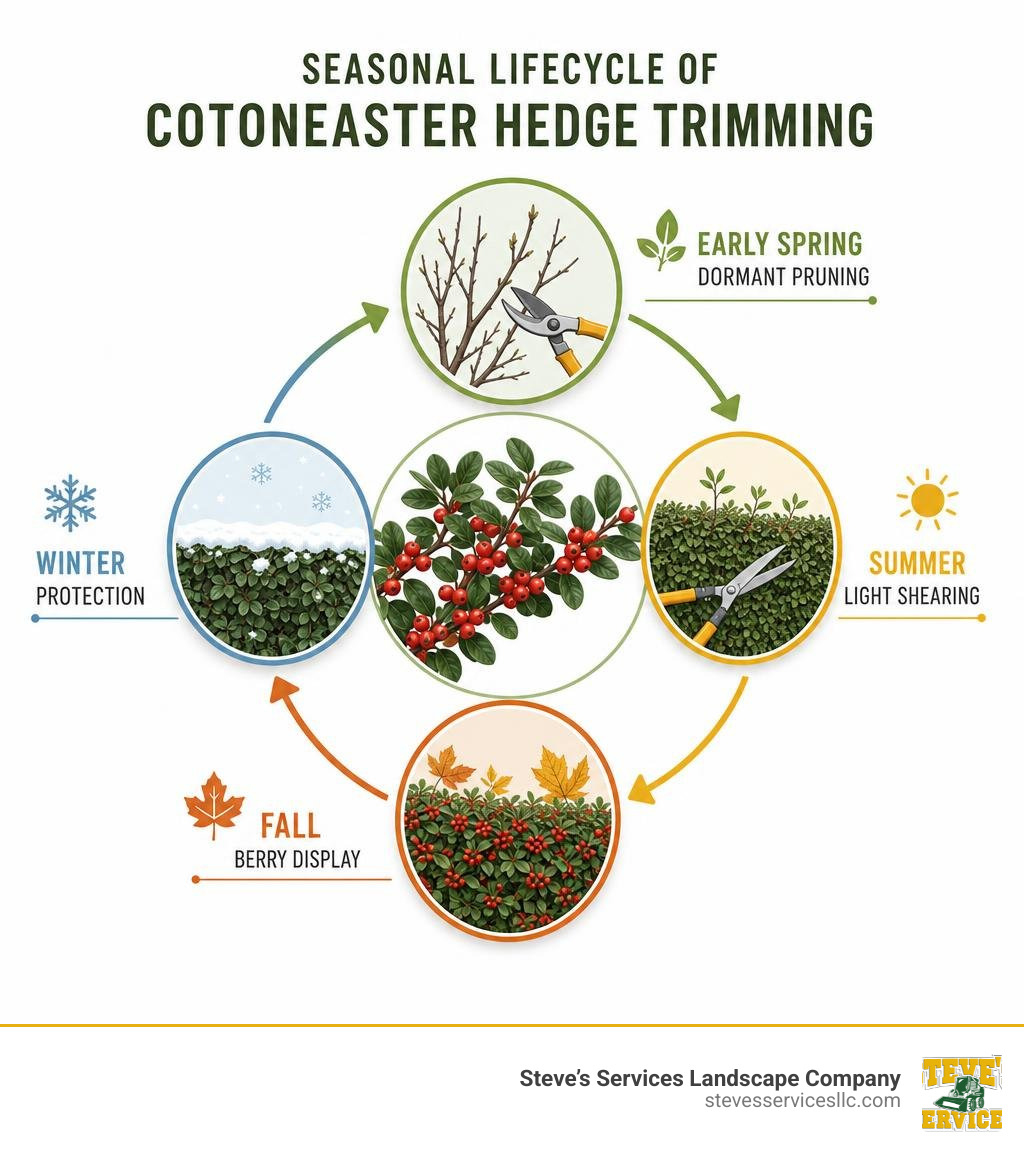
Simple guide to cotoneaster hedge trimming:
- Hedge Trimming Services
- beech hedge pruning
- hawthorn hedge pruning
The Best Time of Year for Cotoneaster Hedge Trimming
Timing is everything when it comes to keeping your shrubs happy. If you prune at the wrong time, you risk cutting off this year’s flower buds, which means you won’t get those beautiful red or black berries that local songbirds love to feast on during the winter.
For the vast majority of cotoneaster species, the absolute best time for major structural pruning is late winter or early spring while the plant is still dormant. According to the How to grow cotoneasters / RHS Growing Guide, pruning during dormancy gives the shrub a “roadmap” for vigorous spring growth. It also makes it much easier to see the skeletal structure of the plant without leaves in the way.
While major cuts are best left for the dormant season, light maintenance can be performed during the summer. If you want a pristine, neat look year-round, scheduling More info about professional hedge trimming ensures that growth is kept in check without damaging the plant’s overall health.
Early Spring Dormant Pruning
For deciduous varieties like Cotoneaster lucidus (Peking cotoneaster), early spring—just before bud break—is the sweet spot. During this window, the sap is starting to rise, but the plant hasn’t wasted energy producing leaves that will just end up on the ground.
Dormant pruning allows us to:
- Easily identify and remove winter-damaged wood or branches broken by heavy New England snow.
- Shape the main structural framework of the hedge.
- Perform heavy rejuvenation cuts on overgrown hedges without shocking the root system.
Summer Maintenance and Post-Flowering Trimming
Once the spring rush of growth slows down, a secondary, lighter round of trimming can be done in mid-to-late summer. This is primarily for “pinching back” unruly shoots that disrupt the clean lines of your hedge.
However, there is a catch: if you prune heavily after flowering, you will significantly reduce the autumn berry crop. For informal hedges where berries are the star of the show, we recommend waiting until right after the spring flowering period to do any light shaping, or simply leaving them alone until winter.
Essential Techniques: Shearing, Selective Pruning, and Renewal
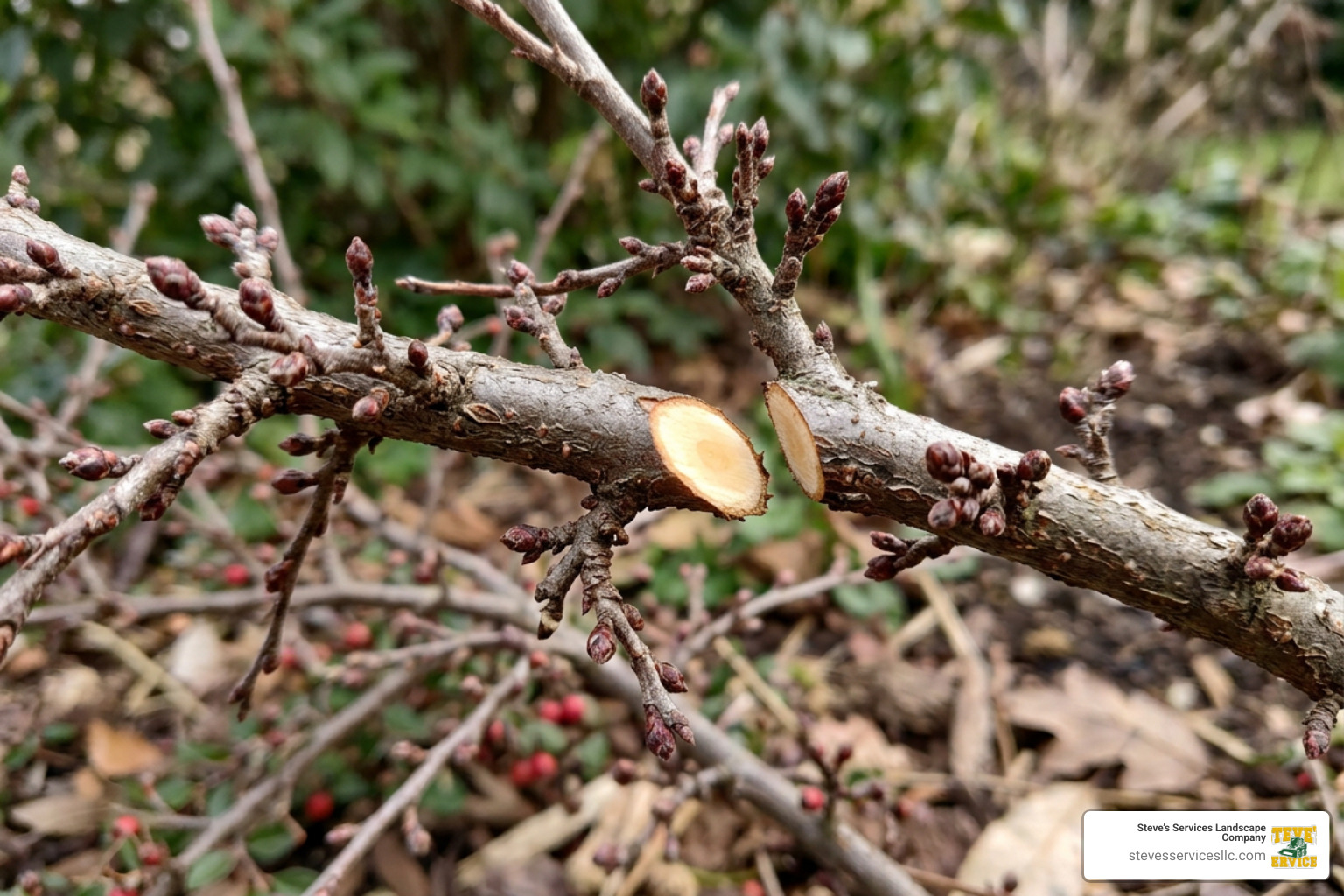
Understanding the difference between trimming styles is what separates a beautiful, long-lived hedge from a messy, bare-bottomed eyesore. There are three primary methods used in professional shrub care: shearing, selective pruning, and renewal pruning.
- Shearing: This involves using gas, electric, or manual hedge shears to cut back the outer tips of the branches to a uniform plane. While popular for formal hedges, over-shearing cotoneaster can cause problems. It stimulates a dense outer shell of foliage that blocks sunlight from reaching the interior.
- Selective Pruning: This is the art of using hand pruners (secateurs) to remove individual branches at their point of origin. By making selective “thinning cuts” rather than “heading cuts” (which leave ugly stubs), you maintain the plant’s natural grace. This is highly recommended by experts at PlantAmnesty because cotoneasters are notorious for producing straight, unsightly water sprouts when headed back to random stubs.
- Renewal Pruning: This involves removing a portion of the oldest, heaviest canes completely to ground level. This encourages fresh, vigorous new shoots to rise from the base, keeping the hedge young and productive.
To learn more about how we apply these custom techniques to different shrub varieties, check out our guide on More info about bush and shrub trimming.
Why Pick Pruning is Essential for Cotoneaster Hedge Trimming
If you have a formal cotoneaster hedge that is regularly sheared, it will eventually become so dense on the outside that the interior branches die from a lack of light. This is where “pick pruning” comes in.
Pick pruning is a highly effective technique where a professional gardener selectively cuts small “holes” or pockets into the sheared surface of the hedge. According to A Comprehensive Guide to Cotoneaster Pruning, this practice allows sunlight to penetrate deep into the center of the shrub. This light exposure stimulates dormant buds on the inner wood, keeping the interior of the hedge leafy and green rather than hollow and woody. It effectively extends the lifespan of a sheared hedge by years.
How to Avoid Common Mistakes in Cotoneaster Hedge Trimming
The most common mistake we see in Eastern Massachusetts landscapes is trying to force an arching cotoneaster variety (like Cotoneaster horizontalis or Cotoneaster salicifolius) into a perfectly square box. These plants naturally want to drape gracefully. When you shear them repeatedly, they respond by sending out dozens of vertical, whip-like water sprouts that look like a “row of soldiers” standing on top of the hedge.
Another major risk of over-shearing is the creation of a humid, airless interior environment. This makes the hedge highly susceptible to pests like woolly aphids and web worms, which thrive in dense, unventilated foliage. Always ensure that selective thinning cuts are integrated into your maintenance routine to keep air circulating freely.
How to Shape and Prevent a Leggy Cotoneaster Hedge

Have you ever seen a hedge that is thick and beautiful at the top but completely bare, woody, and leggy at the bottom? This is almost always caused by improper shaping.
Plants naturally grow toward the sun. If you trim a hedge so that the sides are perfectly vertical, or worse, wider at the top than the bottom, the top branches will cast a shadow over the lower ones. Deprived of light, those lower leaves will drop, and the lower branches will eventually die off completely.
To prevent this, we always shape cotoneaster hedges with a tapered profile (often called an A-shape or trapezoid). The base of the hedge should always be wider than the top.
Here is why this shape is a game-changer:
- Light Penetration: Sunlight can reach all the way down to the bottom branches, keeping them leafy and green.
- Snow Shedding: In our snowy Massachusetts winters, a tapered top allows heavy snow to slide off more easily, reducing the risk of broken structural branches.
- Wind Resistance: A wider base provides better structural stability during coastal storms.
For more details on keeping your ornamental shrubs in perfect proportion, read our expert advice on More info about shrub pruning and consult the How to Grow and Care for Cotoneaster Shrubs | Gardener’s Path for variety-specific growth habits.
Rejuvenating an Overgrown or Damaged Cotoneaster Hedge
If you have inherited a property with an ancient, overgrown, or animal-damaged cotoneaster hedge, don’t despair. You don’t necessarily have to rip it out and start over. Cotoneasters are incredibly resilient and respond beautifully to radical renovation.
For older hedges, we use renewal pruning. This is done in early spring by identifying the largest, thickest, and most unproductive canes and cutting them all the way down to ground level. We typically remove about one-third of these old canes per year. Over a three-year cycle, the entire hedge is completely replaced with fresh, healthy, berry-producing wood without ever leaving a massive gap in your privacy screen.
If the hedge is severely damaged—for example, if winter rabbits have chewed the bark off the main stems—you can perform a radical “rejuvenation cut.” This involves cutting the entire hedge down to 12 to 15 inches from the ground or to the first healthy, live bud. While it looks shocking at first, a healthy root system will quickly push out vigorous new growth, and within two seasons, you will have a dense, beautiful new hedge.
If you are considering a major renovation project, please note that professional hedge rejuvenation costs can vary. On average, internet-based pricing ranges from $200 to $1,500 depending on the size, accessibility, and level of neglect of the hedge. These are broad national averages and not specific quotes for Steve’s Services; a professional on-site assessment is always recommended to evaluate your hedge’s health. You can explore more about regional pricing trends in our guide on More info about hedge trimming costs.
Post-Pruning Care: Fertilization, Mulching, and Protection
Pruning is essentially surgery for plants. Once the cuts are made, your cotoneaster hedge needs a little extra care to recover quickly and resist diseases like fire blight.
- Watering: If the weather is dry after spring pruning, water the hedge deeply once a week. This is especially important for rejuvenated hedges that need to push out new foliage.
- Mulching: Apply a 2-to-3-inch layer of organic mulch (like shredded bark or compost) around the base of the hedge. This retains soil moisture and suppresses weeds. However, always leave a 4-inch, mulch-free circle around the woody stems to prevent rot.
- Fertilizing: Apply a balanced, slow-release fertilizer or a high-nitrogen organic compost in early spring to fuel new growth. Avoid heavy nitrogen fertilizers in late summer, as this encourages tender new shoots that will get nipped by winter frosts.
- Winter Protection: In areas like Lynnfield or North Reading where hungry rabbits are active in the winter, protect your freshly pruned hedges. Installing hardware cloth fencing around the base of the shrubs from late November to mid-April prevents animals from girdling the bark.
To ensure your entire landscape stays in peak condition throughout the changing New England seasons, you can read More info about landscape maintenance and check out the Our expert guide to growing cotoneaster, this versatile and glorious shrub for advanced care tips.
Frequently Asked Questions About Cotoneaster Care
How much can you safely cut back an old cotoneaster hedge?
You can safely remove up to one-third of the total foliage and wood in a single pruning session. If the hedge is extremely overgrown or damaged, you can cut it back even more radically—down to 12 inches from the ground—in early spring. While this severe rejuvenation works, it will temporarily eliminate flowers and berries for a season or two as the plant focuses its energy on rebuilding its canopy.
What tools are best to avoid damaging cotoneaster leaves?
For large-leafed cotoneaster varieties, always use sharp, clean hand pruners (secateurs) or loppers. Avoid using electric hedge trimmers on large-leafed plants, as they tend to slice the leaves in half, leaving ugly brown, shredded edges that invite disease. Electric trimmers should only be used on small-leafed varieties like Cotoneaster microphyllus. Always sanitize your blades with a disinfectant spray between plants to prevent spreading diseases like fire blight.
How do you repair a cotoneaster hedge damaged by animals?
Start by removing all dead, chewed, or split wood. Cut back damaged branches to the first healthy, green bud or all the way to the ground if the bark has been completely stripped around the circumference of the branch (girdling). Clear away any weeds or grass from the base of the hedge to eliminate hiding spots for pests, apply a fresh layer of mulch, and water the root system deeply to encourage rapid recovery.
Conclusion
A well-maintained cotoneaster hedge is a true asset to any property, offering privacy, wind protection, air filtration, and stunning multi-season beauty. By understanding the proper timing, utilizing selective pruning techniques, and maintaining a tapered shape, you can enjoy a healthy, dense hedge for decades.
At Steve’s Services Landscape Company, we have been keeping properties beautiful across Malden, MA and surrounding towns—including Burlington, Everett, Lynnfield, Medford, Melrose, Reading, Revere, Saugus, Stoneham, Wakefield, Winchester, Woburn, Danvers, and North Reading—since 1995. Whether your cotoneaster hedge needs a light seasonal shape-up or a major professional rejuvenation, our experienced team is here to help.
Ready to give your landscape the professional touch it deserves? Contact Steve’s Services for expert hedge care today, and let’s make your property the envy of the neighborhood!