
Why a Brown Lawn Doesn’t Mean Your Dream Yard is Gone
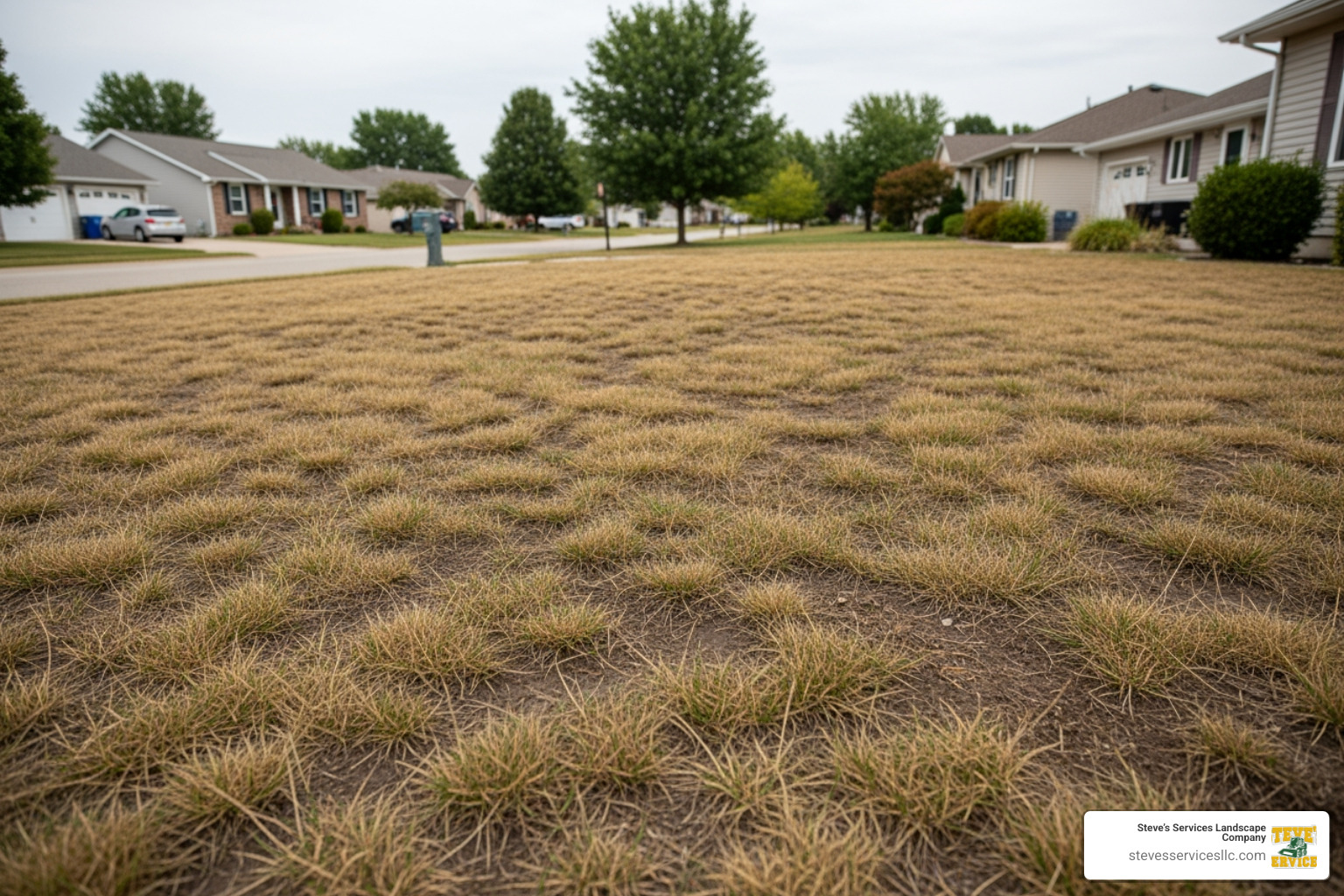
Revive dead grass by following these essential steps:
- Test if grass is truly dead – Tug grass blades; if roots hold firm and crowns are white, it’s dormant and savable
- Remove dead material – Clear thatch and genuinely dead patches with dethatching or raking
- Prepare the soil – Test pH, aerate compacted areas, and till to 12-15 cm depth
- Choose your method – Overseed for thin areas, hydroseed for larger spaces, or sod for instant results
- Time it right – Plant when temperatures reach 60-75°F (April or September in Massachusetts)
- Water properly – Keep soil moist for 2 weeks, then water deeply once weekly
- Maintain consistently – Mow at 3+ inches, fertilize during active growth, address underlying issues
When your lawn turns brown and patchy, it’s easy to assume the worst. Maybe you’re staring at dead spots from summer furniture, pet traffic, or those brutal New England drought weeks. Here’s the good news: brown doesn’t always mean dead. Research shows that healthy lawns can survive up to four weeks without water by entering dormancy—a natural survival mechanism where grass conserves resources until conditions improve.
The key is understanding what you’re dealing with. Truly dead grass has brown crowns and pulls out easily with no resistance. Dormant grass fights back when you tug it, with white crowns at the base signaling it’s just waiting for the right conditions to green up again. This distinction matters because it determines whether you need a simple watering schedule or a complete lawn restoration.
I’m Steve Sylva, owner of Steve’s Services, and over 25 years I’ve helped countless Massachusetts homeowners revive dead grass and transform brown, patchy lawns into thriving green spaces. Whether your lawn needs intensive restoration or just the right care to bounce back from dormancy, understanding the underlying causes and proper revival techniques makes all the difference.
Revive dead grass vocab to learn:
Is Your Lawn Dead or Just Dormant?
Before we start digging or spreading seed, we need to perform a little “lawn triage.” In places like Lynnfield and Reading, MA, our cool-season grasses often go dormant during the hottest parts of July and August to protect themselves.
To How to tell if grass is dormant or dead, we use two professional-grade tests:
- The Tug Test: Grab a handful of brown grass and give it a firm tug. If the grass resists and stays firmly in the ground, it’s likely dormant. If it pulls out with the ease of a loose wig, the root system has likely failed, and that patch is truly dead.
- The Crown Inspection: Look at the “crown” of the grass plant—the point where the blades meet the roots at the soil line. If the crown is still white or slightly green, the plant is alive. If the crown is completely brown and dried out, it’s time to revive dead grass through replacement.
A dormant lawn can typically survive for several weeks without rainfall or irrigation. However, if your lawn has been brown for more than four weeks without a drop of water, the grass may begin to transition from dormancy to death. If you see green at the base of the blades, there is hope! A consistent watering schedule—watering deeply once a week for 15-20 minutes between 6 a.m. and 10 a.m.—can often bring a brown lawn back to life.
Professional Strategies to Revive Dead Grass
If the tug test confirms the worst, don’t panic. We have professional strategies to turn that dirt back into a dream lawn. The first step isn’t buying seed; it’s understanding your soil. At Steve’s Services, we often recommend a professional soil test to check the pH balance and nutrient levels.
Thatch Management and Soil Prep
Dead grass often leaves behind a thick layer of “thatch”—organic debris that sits between the green blades and the soil surface. A little thatch is good, but more than half an inch blocks water and nutrients from reaching the roots. We use professional dethatching equipment to clear this layer so your new grass has a fighting chance.
For areas that are completely gone, we provide comprehensive lawn removal services to clear the way for a fresh start. Once the old debris is gone, we till the soil to a depth of 12 to 15 centimeters. This loosens compacted earth, which is a common issue in high-traffic areas across Everett and Malden.
The Role of Wetting Agents
Sometimes, soil becomes “hydrophobic,” meaning it actually repels water. This is common in sandy soils or areas with heavy compaction. We utilize Scientific research on wetting agents to solve this. These treatments change how water behaves, allowing it to penetrate deeper into the root zone rather than just running off the surface. For optimal results, these treatments should be applied once every six weeks during the recovery phase.
Comparison Table: Seeding vs. Hydroseeding vs. Sodding
| Method | Speed of Results | Cost Level | Best For |
|---|---|---|---|
| Overseeding | Slow (Weeks) | Low | Thinning lawns with some existing grass |
| Hydroseeding | Moderate (Days to sprout) | Moderate | Large areas, slopes, and erosion control |
| Sodding | Instant | High | Immediate curb appeal and high-traffic areas |
The Best Time to Revive Dead Grass
Timing is everything in Massachusetts. You can’t just throw seed down in the middle of a Medford heatwave and expect it to thrive. Grass seeds germinate best when daytime temperatures are consistently between 60 and 75 degrees Fahrenheit.
- Spring Window (April – May): This is a great time to revive dead grass as the soil wakes up, but you’ll be fighting against upcoming summer heat.
- Fall Window (Late August – September): This is the “Golden Window” for our region. The soil is warm, but the air is cooling down, and there’s usually more natural rainfall.
When preparing for new lawn installations, we always keep a close eye on soil moisture levels. If the soil is bone-dry, the seeds won’t wake up. If it’s a swamp, they’ll rot.
Choosing the Right Method to Revive Dead Grass
Depending on the extent of the damage in your yard—whether you’re in Saugus or Winchester—we tailor the method to the need.
- Overseeding: If your lawn is just looking a bit thin, we can aerate and spread high-quality seed over the existing turf. This fills in gaps and introduces more resilient grass varieties.
- Hydroseeding: This is a fantastic choice for large areas. We spray a “slurry” of seed, mulch, and fertilizer. Check out more info about hydroseeding services to see if this liquid application is right for your property.
- Sod Installation: When you need a lawn today, sod is the answer. It’s essentially a “lawn in a roll.” It’s important to know how to prep for sod properly, which includes leveling the ground and ensuring the soil is nutrient-rich. You can find more info about sod installation on our dedicated service page.
Essential Post-Revival Care and Maintenance
The work doesn’t stop once the seed is down or the sod is laid. In fact, the first 14 days are the most critical.
The Watering Rules
Newly seeded or sodded areas need to stay moist. This usually means light watering 2-3 times a day for the first two weeks. Once the grass is established, you transition to deep, infrequent watering to encourage deep root growth. For a detailed schedule, see our new sod watering guide.
If you find that certain spots in your lawn keep dying, it might be an issue with your irrigation coverage. We often find “dead zones” where sprinklers don’t reach. If your system is acting up, we provide irrigation system repairs to ensure every inch of your new grass gets the hydration it needs.
The 3-Inch Rule and Mowing
One of the biggest mistakes homeowners in Stoneham and Wakefield make is mowing too soon. Newly germinated grass should not be mowed until it reaches at least three inches in height. When you finally do mow, only remove the top 1/3 of the blade. Cutting it too short (scalping) stresses the young plants and can lead to new dead spots.
Fertilizing for Success
You can’t just set it and forget it. To support a lawn revival, you need the right nutrients at the right time. However, never fertilize a dormant lawn; it’s like trying to feed someone who is asleep—they can’t use the nutrients, and you might actually cause “fertilizer burn.” Wait until the grass is actively growing. We offer specialized fertilizing services to ensure your lawn gets the nitrogen, phosphorus, and potassium it needs without the risk of damage.
Understanding the Costs of Lawn Restoration
When considering how to revive dead grass, budget is always a factor. It’s important to note that the following prices are average costs based on internet data and do not represent the actual project costs for Steve’s Services. Every lawn in the North Reading and Woburn area has unique soil conditions and accessibility factors.
The cost of lawn restoration can vary wildly based on the method chosen and the size of the area. Here is a general range of what homeowners might expect to see in the industry:
- Overseeding: $0.10 – $0.40 per square foot.
- Hydroseeding: $0.20 – $0.80 per square foot.
- Sod Installation: $1.50 – $4.50+ per square foot.
As you can see, the high end of professional installation can be more than 3x the average starting price, especially when you factor in extensive soil preparation, old lawn removal, and high-quality materials. For a deeper dive into the financial side, check out our sod installation cost complete guide.
Factors that influence your final price include:
- Labor: Professional grading and debris removal take time.
- Materials: High-quality, drought-resistant seed mixes cost more but save money in the long run.
- Accessibility: Can we get our professional equipment into your backyard easily?
- Soil Amendments: Does your soil need significant pH adjustment or compost?
Frequently Asked Questions about Lawn Revival
How long does it take for a revived lawn to become established?
If you are seeding, you’ll see sprouts in 7-21 days, but it takes a full growing season for the roots to become deeply established. For sod, the lawn looks “finished” immediately, but it takes about 2-3 weeks for the roots to knit into the soil. Avoid heavy foot traffic during this time!
Can I apply fertilizer to a brown, dormant lawn?
No. Fertilizing dormant grass is a waste of money and can harm the lawn. The grass isn’t growing, so it can’t absorb the nutrients. Wait until the lawn “wakes up” and turns green before applying fertilizer.
When is it safe to mow my newly seeded or sodded grass?
Wait until the grass reaches 3 inches. For sod, give it at least two weeks and check that the “rolls” have rooted by gently lifting a corner. If it stays stuck to the ground, you’re ready for a light trim.
Conclusion
A dead lawn is more than just an eyesore; it’s a missed opportunity for your family to enjoy your outdoor space. Whether you’re in Burlington, Danvers, or Revere, the team at Steve’s Services Landscape Company has the tools and the 25+ years of expertise to revive dead grass and bring your curb appeal back to life.
From professional core aeration and soil testing to expert sod installation and hydroseeding, we provide personalized solutions for every yard. Don’t spend another summer staring at brown patches.
Contact Steve’s Services today for an expert consultation on your landscaping services and let’s get your lawn back to its lush, green glory!
